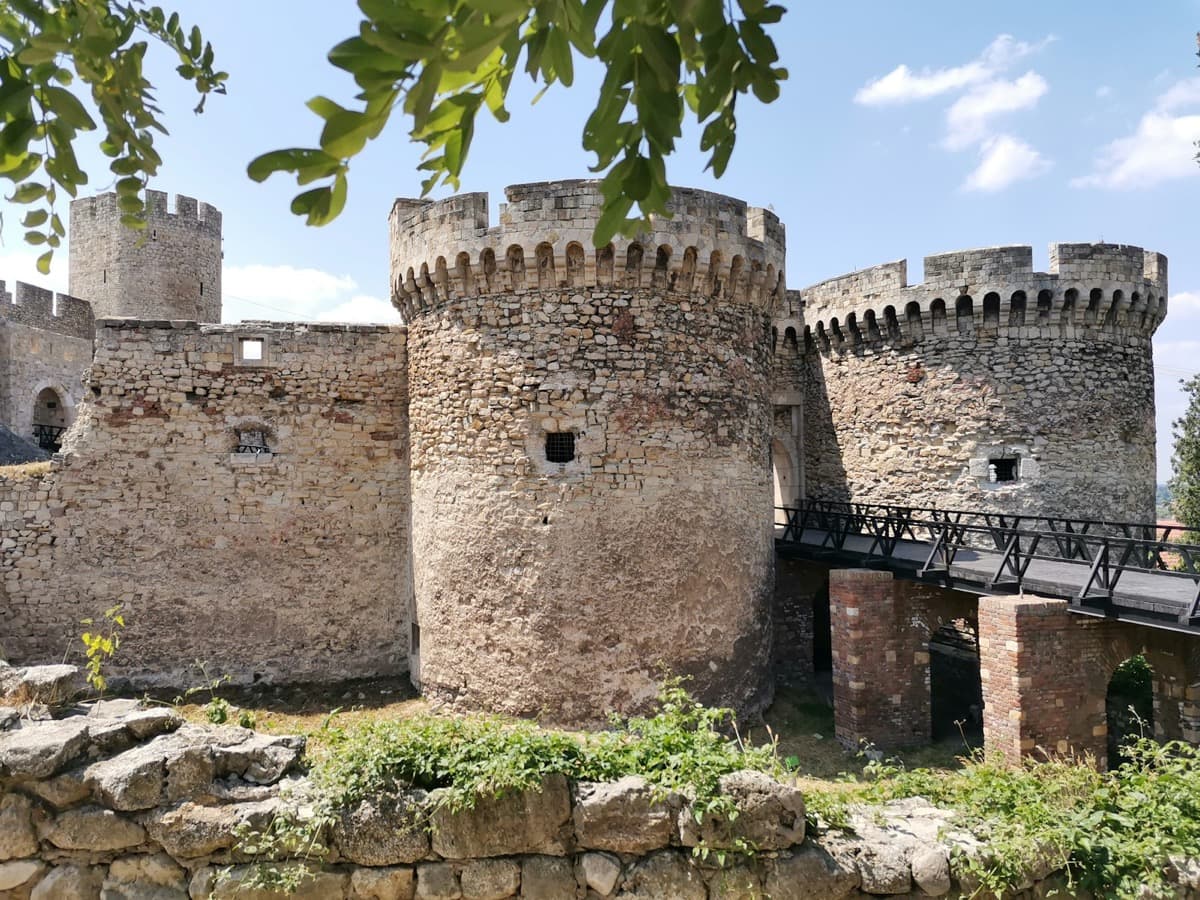
Walk the one hill that controls where the Sava meets the Danube, and read a fortress that Celts, Romans, medieval Serbs, Ottomans, and Habsburgs each rebuilt on the rubble of the last. This is Belgrade's deep-time story, told in stacked stone.
Start · The Inner Stambol Gate: The Newest Conqueror's Front Door
DirectionsStops
- 1
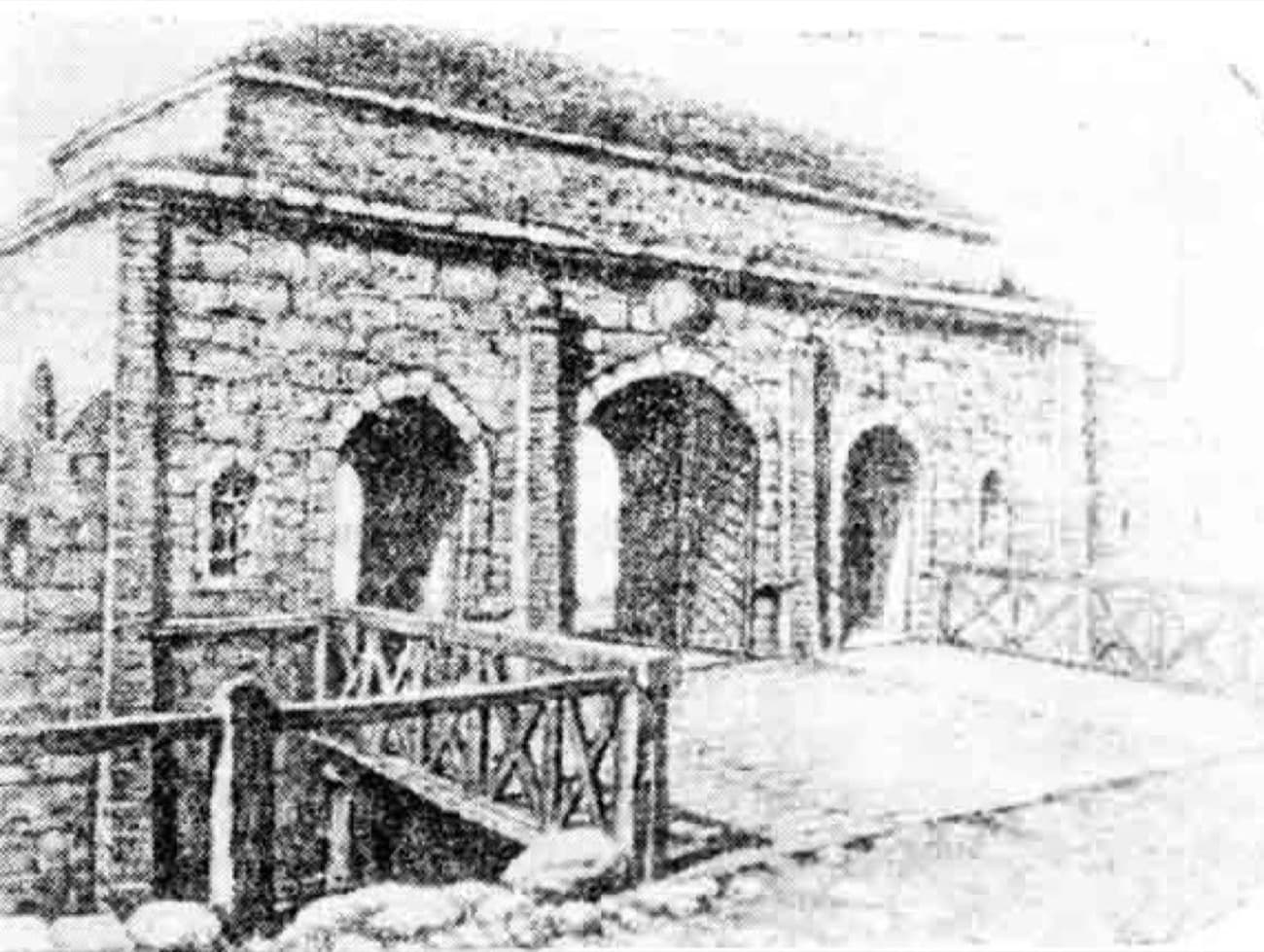
The Inner Stambol Gate: The Newest Conqueror's Front Door
The main baroque entrance to Kalemegdan, one of the most recent layers of stone, where the walk begins by stepping through the newest empires first.
- 2
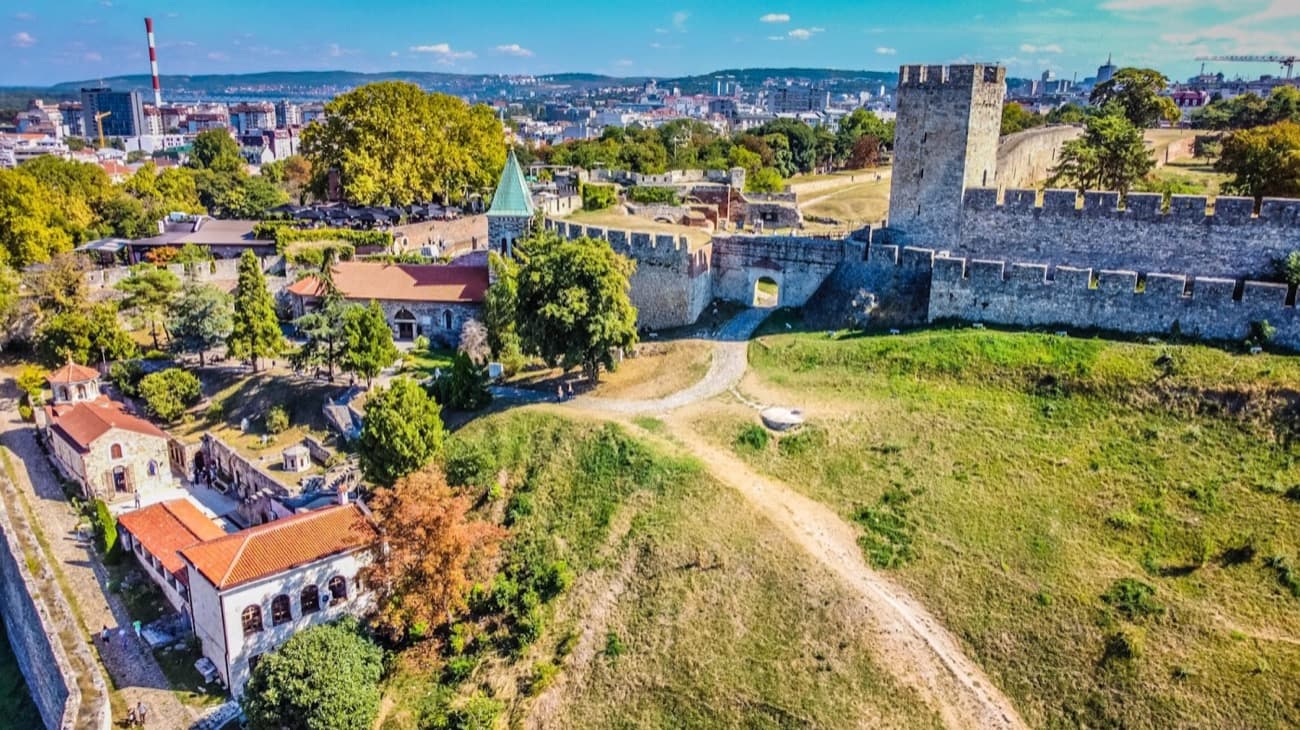
The Layered Fortifications: Rome to Despot Stefan to the Empires
One ridge in the Upper Town where Roman, medieval Serbian, Ottoman, and Austrian stone all touch, the thesis of the whole walk in a single view.
- 3
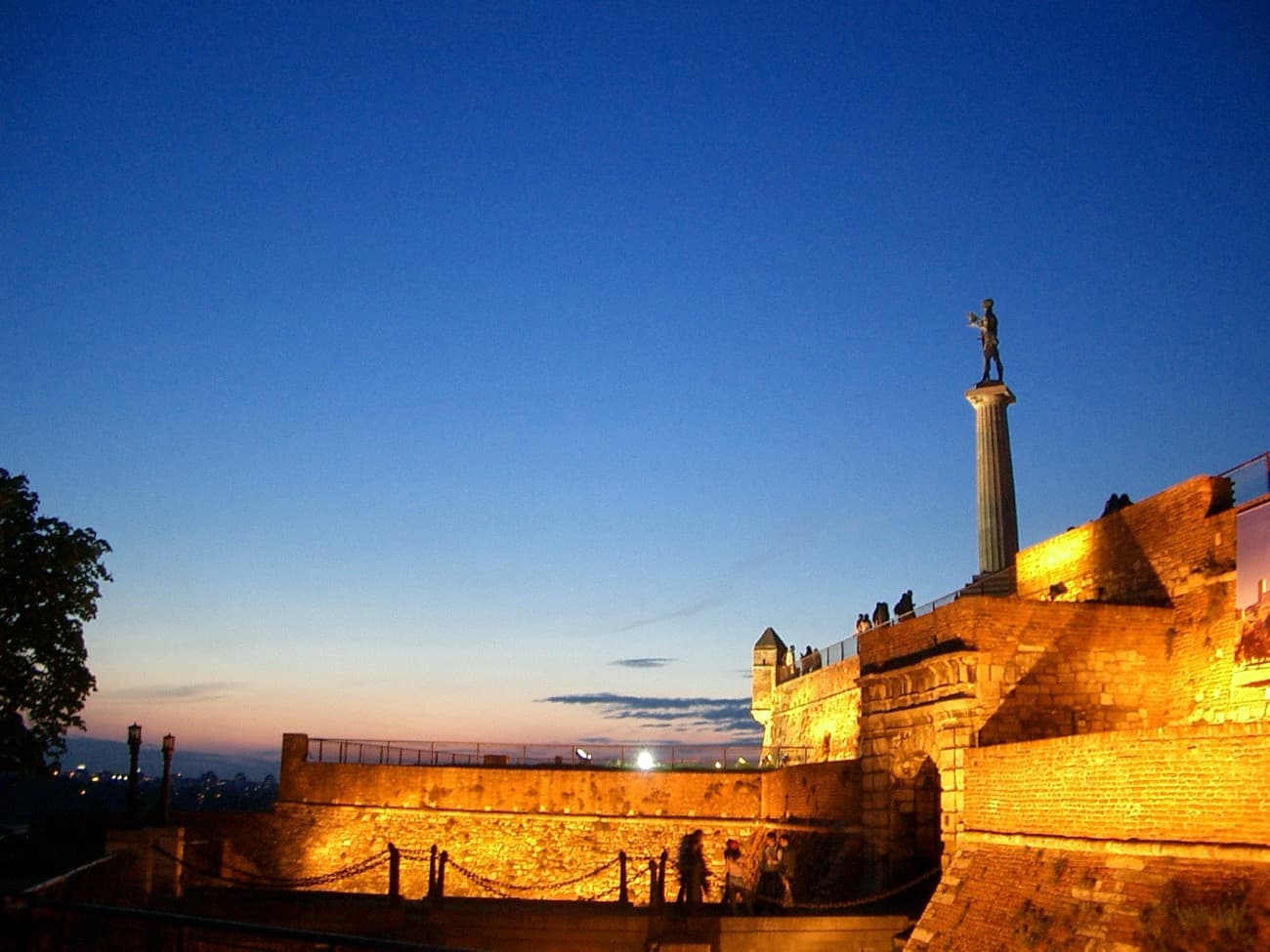
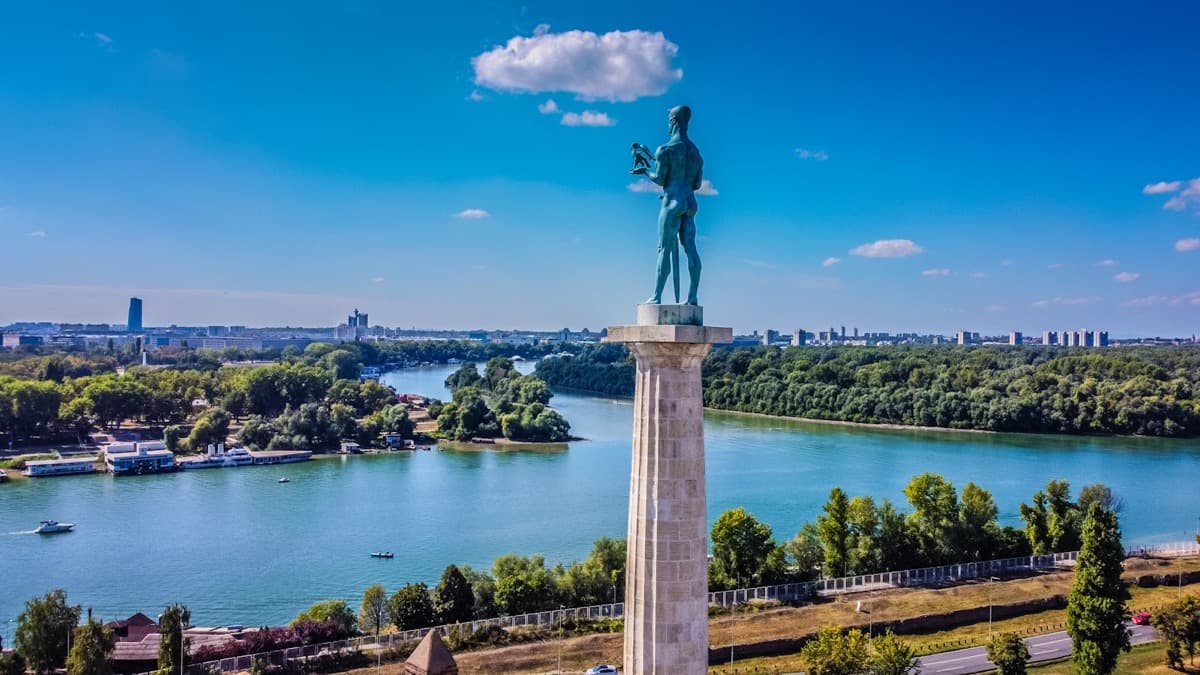
The Victor (Pobednik): A Nude Monument Exiled to the Ramparts
Ivan Mestrovic's bronze figure above the confluence, moved here from the city centre after objections to a nude statue in a public square.
- 4
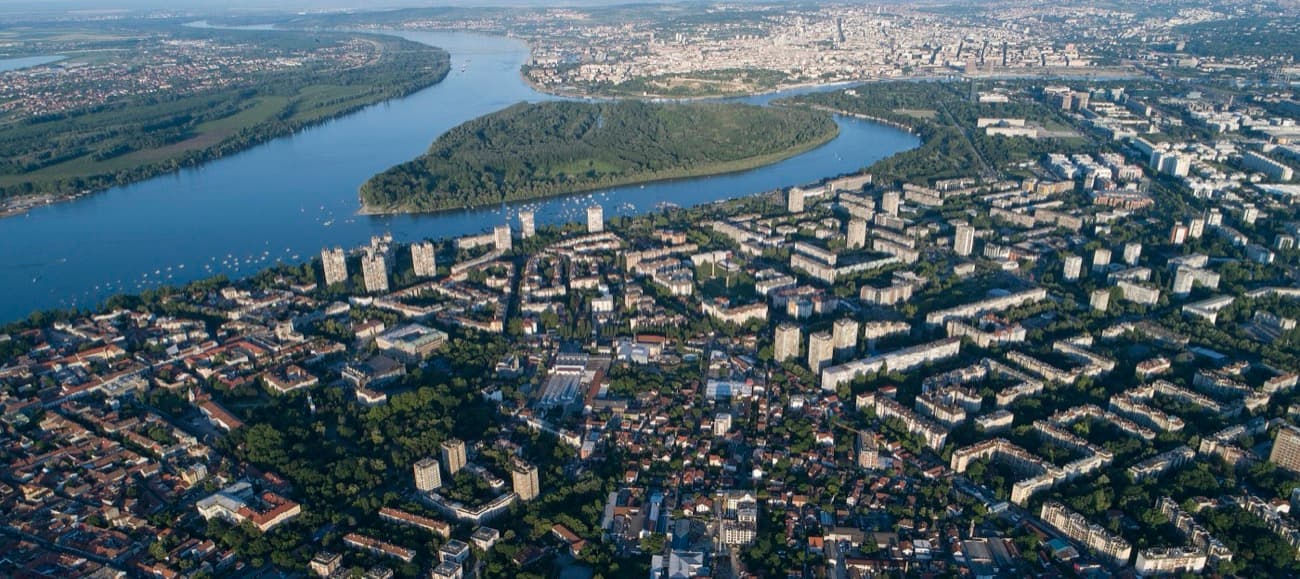
The Sava and Danube Confluence Terrace
The lookout where the Sava pours into the Danube, the single piece of geography that made this hill worth conquering dozens of times over.
- 5
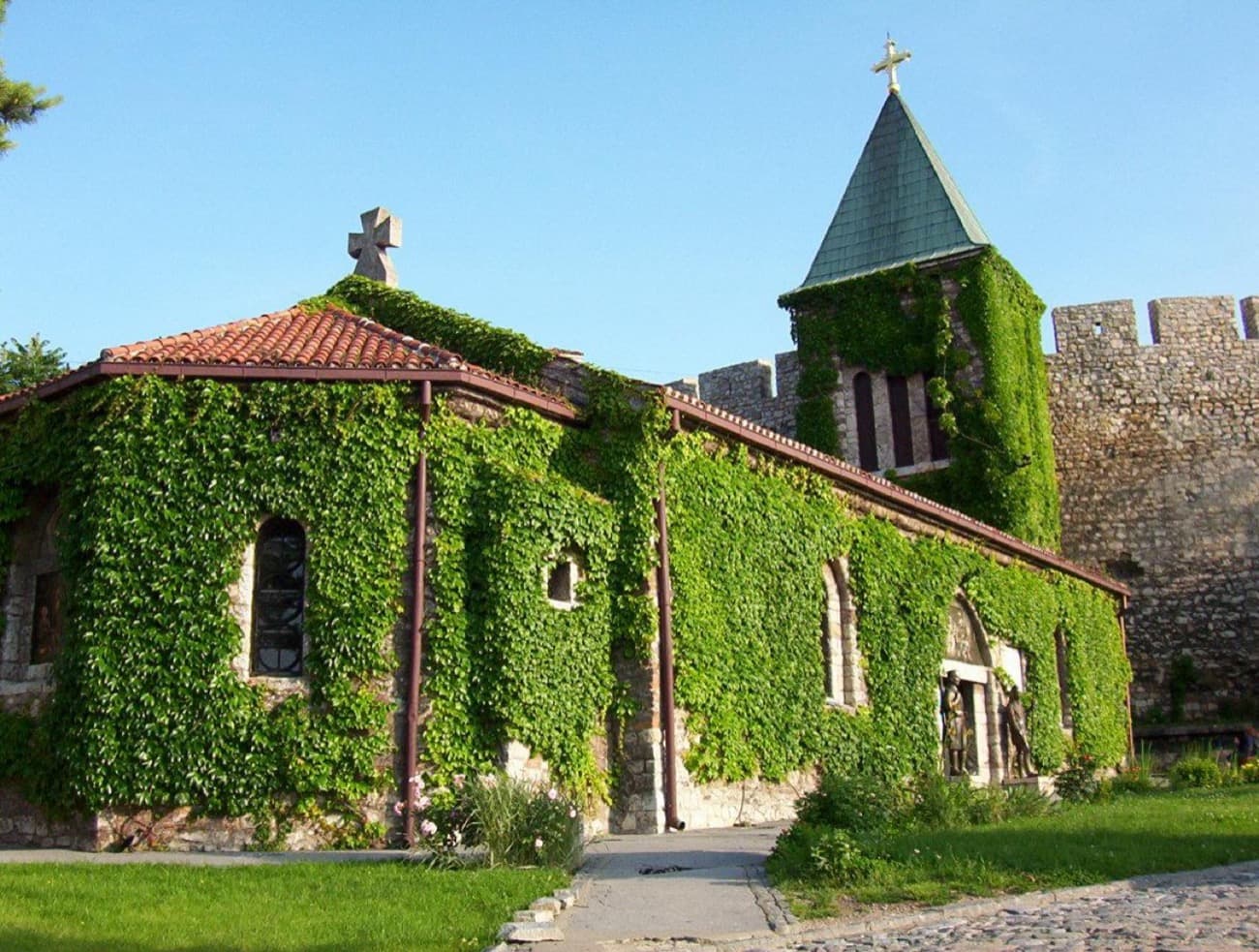
Ruzica Church and the Chapel of Saint Petka
A working Orthodox church in the fortress bailey whose chandeliers were cast from bullets, shell casings, and sabres, the scar-tissue thesis made literal.
- 6
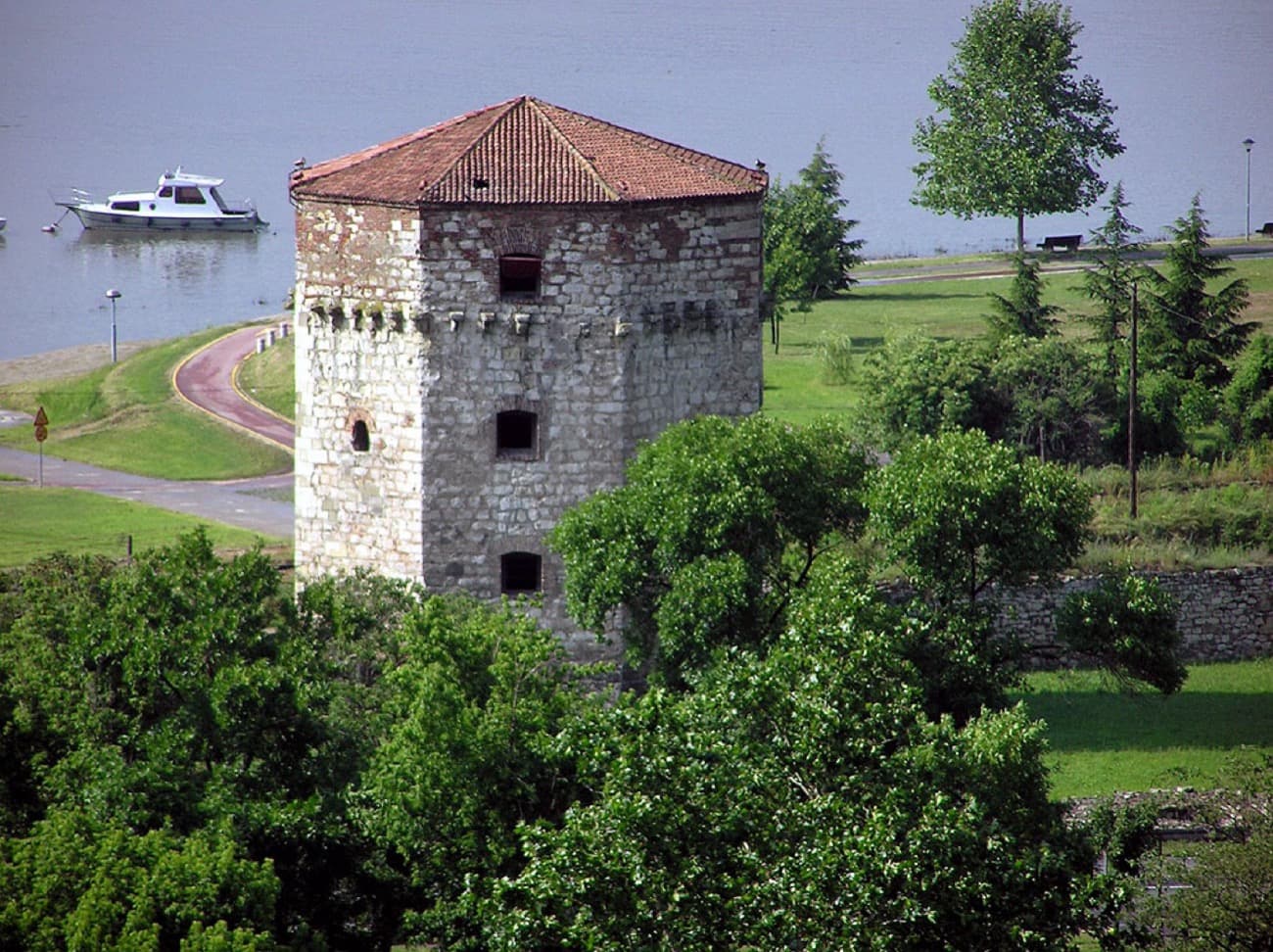
Nebojsa Tower (Kula Nebojsa): Cannon, Prison, Museum
A medieval artillery tower on the Danube bank that became an Ottoman dungeon, where the Greek Enlightenment figure Rigas Feraios was executed, now a multimedia museum.
- 7
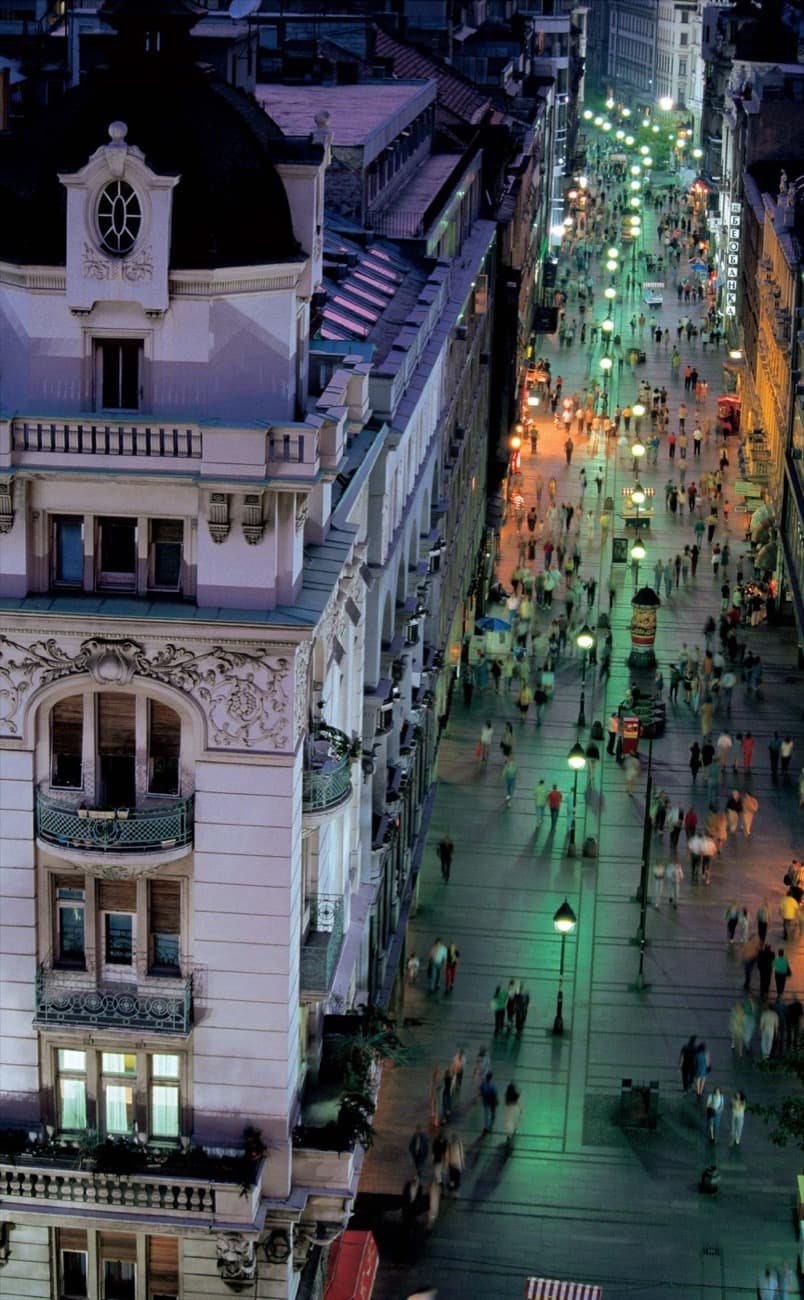
Knez Mihailova Street: The Living Axis Over the Roman Road
Belgrade's main pedestrian promenade, laid over the central axis of Roman Singidunum and the Ottoman main road, where the deep-time story continues into the modern city.
Details
Best Time to Visit
Late afternoon into early evening, when the light softens over the confluence and the Victor faces the sunset above the rivers. Spring and autumn are the most comfortable seasons for walking the ramparts. The fortress grounds are open and free year-round, so an early morning visit rewards you with near-empty walls and the best light for the river view.
Pro Tips
- •The fortress grounds, ramparts, and gate approaches are all free to wander. Only a few interior museum objects, such as Nebojsa Tower, the Roman Well, and the Clock Tower, need a ticket, roughly four hundred and fifty dinars.
- •Buy interior tickets at the Inner Stambol Gate, where the souvenir shop and ticket point sit at stop one, rather than backtracking later.
- •Wear proper walking shoes. The ramparts, cobbles, and the descent to Nebojsa Tower on the Danube bank are uneven underfoot.
- •This walk is yours to pace. Every stop is short and skippable, so linger at the confluence terrace and move quickly past anything that does not hold you.
- •Ruzica Church is a working place of worship. If a service is underway, step in quietly, keep your voice low, and let the congregation be.
- •Carry a little cash in dinars for museum entry and for a donation at Ruzica if you wish. Prices are best confirmed on-site, as they can change.
Safety & Precautions
- •The path drops steeply from the Upper Town down to Nebojsa Tower on the Danube bank. Take the descent slowly, and skip it in wet or icy conditions when the stone is slick.
- •Rampart edges and the confluence terrace are open and unfenced in places. Keep back from cliff edges, especially with children, and do not climb on the walls.
- •Interior museum object prices and opening hours change. Confirm current ticket costs and times on-site before committing to a paid interior.
- •Summer sun on the exposed ramparts is strong with little shade. Carry water, wear a hat, and pace the open sections in the heat.
- •Kalemegdan and the Knez Mihailova promenade draw dense crowds, and pickpockets work the busiest spots. Keep your phone and wallet in a front pocket or a zipped bag, and stay aware of your belongings at the confluence terrace and the Victor overlook.
Travel advisory: Exercise Increased Caution (Level 2).
Gallery
Related Reading
Go deeper on what you'll see, hear, and walk through.
Overview
Belgrade Travel Guide: How Many Days, Getting Around, Safety and Budget
7 min
Overview
Best Self-Guided Walking Tours in Belgrade (2026)
3 min
Overview
One Day in Belgrade: A Walkable Morning-to-Evening Itinerary
8 min
Thematic
Best History Walking Tours in Belgrade (2026)
2 min
Thematic
The White City That Overwrites: Reading Belgrade's Stacked Empires
7 min
Companion
The Stacked Stone of Kalemegdan: Reading Belgrade's Layered Fortifications
6 min
Deep dive
The Victor of Belgrade: Why a Nude Bronze Was Exiled to the Ramparts
6 min
Read
What to Eat in Belgrade: Dishes, Origins, and How to Order Like a Local
6 min
Read the walk
The full story of The White City: A Fortress Everyone Had to Have, in words. Prefer to listen? Play it narrated, from home or on location.
Introduction
Belgrade is the capital of Serbia, and it sits on a single commanding ridge above the point where the Sava River flows into the Danube. That confluence is the whole reason this city exists. Whoever held this hill held the door between central Europe and the Balkans, so nearly everyone tried. Celts, Romans, Byzantines, medieval Serbs, Ottomans, and Habsburgs each conquered this ground, and each rebuilt on the rubble of the empire before them. The name means white city, but the truer story is scar tissue: a capital that turned erasure into a construction method. This walk has seven stops and runs a little over four kilometres over about two hours, though it is yours to pace. Stop where a wall holds you, skip what does not, and let the stones do the arguing. You will enter through the newest layers first, a baroque gate rebuilt on the modern Austrian fortress, then walk backward in time into Roman, medieval, and Ottoman stone. You will rise to a monument above the rivers to see why the hill matters, stand at the confluence itself, then drop to a church whose fittings were cast from weapons, and to a Danube tower that was a cannon platform, a prison, and now a museum. You will finish on a living street laid over the Roman main road. The fortress grounds are free to wander. Only a few interior museum objects need a ticket. When you arrive at the Inner Stambol Gate, the main entrance to Kalemegdan Fortress off the Knez Mihailova approach, begin with stop one.
1. The Inner Stambol Gate: The Newest Conqueror's Front Door
Start here, at the gate you would use to enter the fortress today. This is the Inner Stambol Gate, the baroque front door of the fortress and one of its newest layers of stone. The bones underneath it are Austrian. When the Habsburgs occupied Belgrade between seventeen eighteen and seventeen thirty-nine, they rebuilt the whole fortress in the modern bastioned military style and raised a baroque gate on this front. When the Ottomans returned after seventeen thirty-nine, they rebuilt the gate on those same Austrian foundations, and the inner gate you are looking at, in its baroque form, dates to around seventeen fifty. Notice the two protruding bastions flanking it. The former drawbridge is now simply an embankment you walk across. Its name comes from the road, the old route that ran from here all the way to the city the Serbs call Stambol, which is Istanbul. Stand in the arch and you are standing in the most recent layers of the story, which is exactly why we begin here. On this walk you enter through the newest stone and then travel backward in time. There is a common confusion worth clearing up. Many people picture a different Stambol Gate, an outer one, notorious because rebellious Serbs were publicly executed there under Ottoman rule. That gate is gone. It stood down in the city at what is now Republic Square, near the monument to Prince Mihailo, and it was demolished in eighteen sixty-six by his decree. The gate you are looking at is the inner one, the fortress entrance, still doing its old job. The souvenir shop and ticket point are here, where you can buy entry to the interior objects like the Clock Tower and the Roman Well. But the grounds themselves are free. Walk through, and let the newest layer hand you off to the older ones waiting inside.
2. The Layered Fortifications: Rome to Despot Stefan to the Empires
This is the heart of the argument. Look closely at the walls around you in the Upper Town, because you are seeing more than one empire at once. The oldest layer is Roman. Before Rome, Celtic tribes called the Scordisci founded a settlement here in the third century before the common era, already fortified. Rome took the area in seventy-five before the common era, and in eighty-six of the common era the Fourth Flavian Legion arrived and stayed for centuries. That legion built a square Roman fort, a castrum, on this very Upper Town, with construction beginning around the turn of the second century. The Romans chose the ridge for the same reason everyone did: it commands the rivers below. Above the Roman course sits the medieval Serbian layer. In fourteen oh three, Despot Stefan Lazarevic made Belgrade the capital of medieval Serbia and launched a massive reconstruction. The base of the south-eastern rampart around this Upper Town was raised during his rule in the early fifteenth century. His chronicler, Constantine the Philosopher, recorded that the city had been, in his words, destroyed and neglected, and that the despot rebuilt its walls, towers, citadel, and palace. Then come the Ottomans, who held Belgrade from fifteen twenty-one to eighteen sixty-seven, and the Austrians, whose engineer Nicolas Doxat de Demoret reshaped the defenses in the seventeen hundreds. So here is the pattern the whole city is built on. Nobody started fresh. Each conqueror built on the wreckage of the last, on the same non-negotiable ridge, because the confluence below made this hill the door everyone had to hold. What looks like one fortress is every failed empire's attempt to keep it, stacked one atop another.
3. The Victor (Pobednik): A Nude Monument Exiled to the Ramparts
You have climbed to the highest edge of the Upper Town, and this is where the hill explains itself. Above you stands the Victor, in Serbian Pobednik, a bronze nude male figure sculpted by Ivan Mestrovic. In his left hand he holds a falcon, a symbol of peace. In his right he holds a sword, a symbol of war. He rises about fourteen metres on a Doric column and cubic base designed by the architect Petar Bajalovic. The figure was cast in nineteen thirteen and unveiled here on the seventh of October, nineteen twenty-eight. He commemorates Serbia's victory over the Ottoman and Austro-Hungarian empires in the Balkan Wars and the First World War. That is the whole of the war story, and it is enough. The better story is how he ended up on this rampart at all. He was never meant to stand here. The Victor was originally intended for Terazije Square, in the middle of the city, mounted on a fountain. But he is nude, and that provoked an outcry. In September of nineteen twenty-seven the Arts Commission decided to relocate him. The writer Petar Odavic and several women's organizations objected on moral and artistic grounds to a naked figure looming over a downtown square, and there were also complaints about the absence of Serbian national insignia. The Terazije location was rejected, and so the Victor was moved out here, to the fortress edge above the water, where he now faces the rivers instead of the shoppers. Turn and look where he looks, because the next stop is the reason he stands guard at all.
4. The Sava and Danube Confluence Terrace
This is why the city is here. Stand at the edge of this terrace and look out. Below you, the Sava River flows into the Danube, and that meeting of two great rivers is the strategic fact behind everything you have walked past. A fortress on this ridge watches both waterways at…
Full narration for this stop unlocks with the tour.
5. Ruzica Church and the Chapel of Saint Petka
Here the story of stacked empires turns physical in the most unexpected way. You are standing at Ruzica Church, a Serbian Orthodox church tucked into the eastern outer bailey of the fortress, wedged between two towers near a sacred spring. This building did not begin as a…
Full narration for this stop unlocks with the tour.
6. Nebojsa Tower (Kula Nebojsa): Cannon, Prison, Museum
Down here on the Danube bank stands one of the fortress's most storied structures, the Nebojsa Tower, in Serbian Kula Nebojsa, which means roughly the fearless tower. The present tower was built around fourteen sixty by the Hungarians as an artillery tower, a platform for…
Full narration for this stop unlocks with the tour.
7. Knez Mihailova Street: The Living Axis Over the Roman Road
You have walked out of the fortress and onto the street where the deep-time story keeps going. This is Knez Mihailova Street, Belgrade's main pedestrian promenade, running about one kilometre from Kalemegdan toward the Republic Square area. It feels entirely modern, all granite…
Full narration for this stop unlocks with the tour.