Old Town: Walking the Sultan's Sacred Line
150 min · 6 km · moderate
Yogyakarta was drawn as a single straight line. In seventeen fifty-five a rebel prince took the title Hamengkubuwono the First, founded a capital, and laid it out as one sacred axis running roughly six kilometres from a pillar in the north, down a market street, through his palace, and on toward the Indian Ocean in the south. UNESCO inscribed that axis as the Cosmological Axis of Yogyakarta in twenty twenty-three. Read that line on foot, then drive out to the two ninth-century monuments on the plains beyond, the Buddhist mountain of Borobudur and the Hindu towers of Prambanan, and you have the whole grammar of central Java: a living sultanate at the centre, and the deep temple past that surrounds it. All three can be walked slowly, in order, at your own pace.
A city you read like a sentence
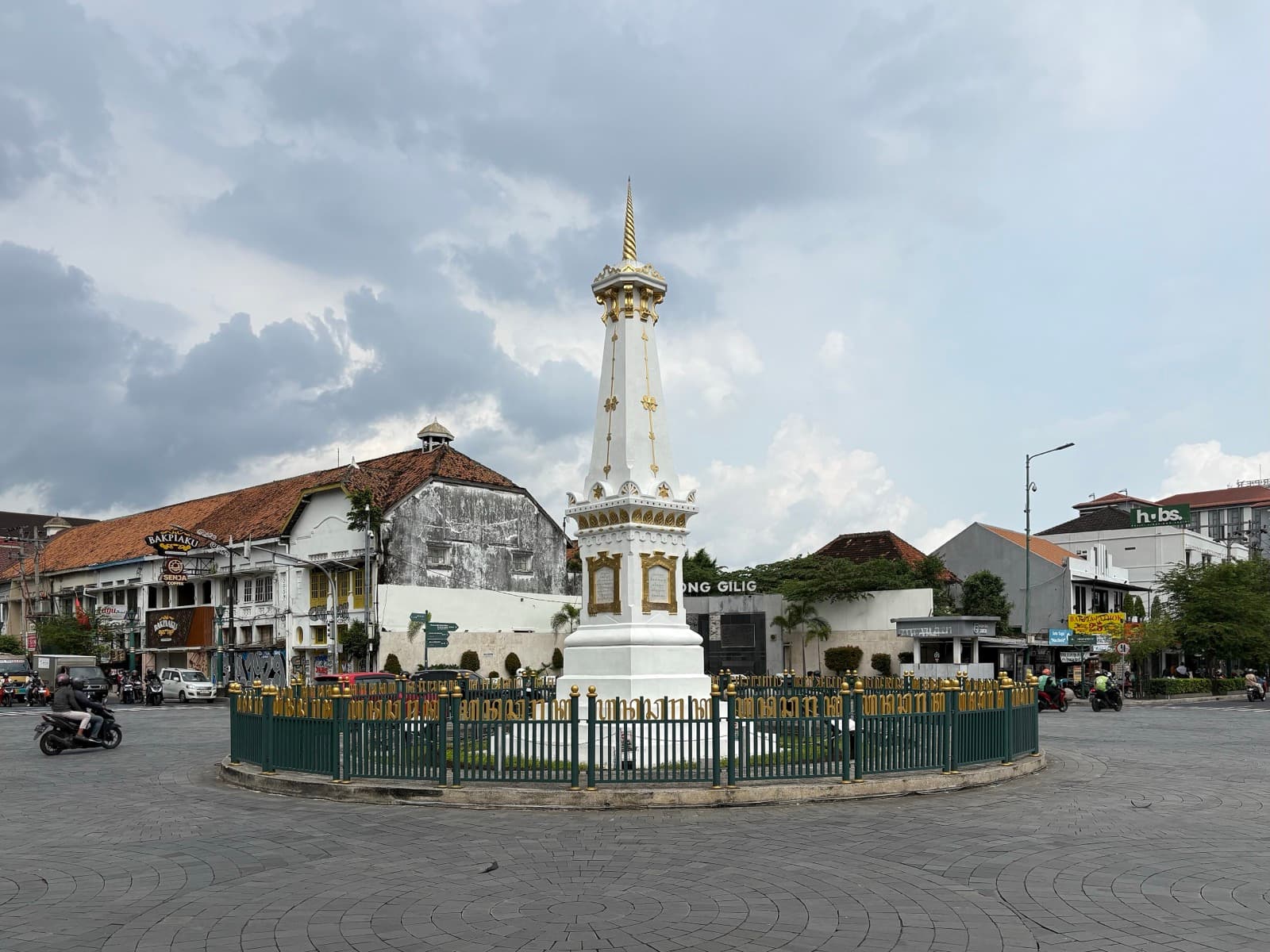
The founding sultan did something few city-builders ever attempt. He set his palace, the Kraton, on protected banyan-forest land between two rivers, and from that exact centre point he sighted a line outward, north to the volcano Mount Merapi and south to the sea. The mountains stand for the source of life, the ocean for the final return, and the palace sits between them. That is why the Old Town walking tour begins at the northern end, the tall white-and-gold Tugu pillar Hamengkubuwono the First raised in seventeen fifty-five, and moves south one landmark at a time.
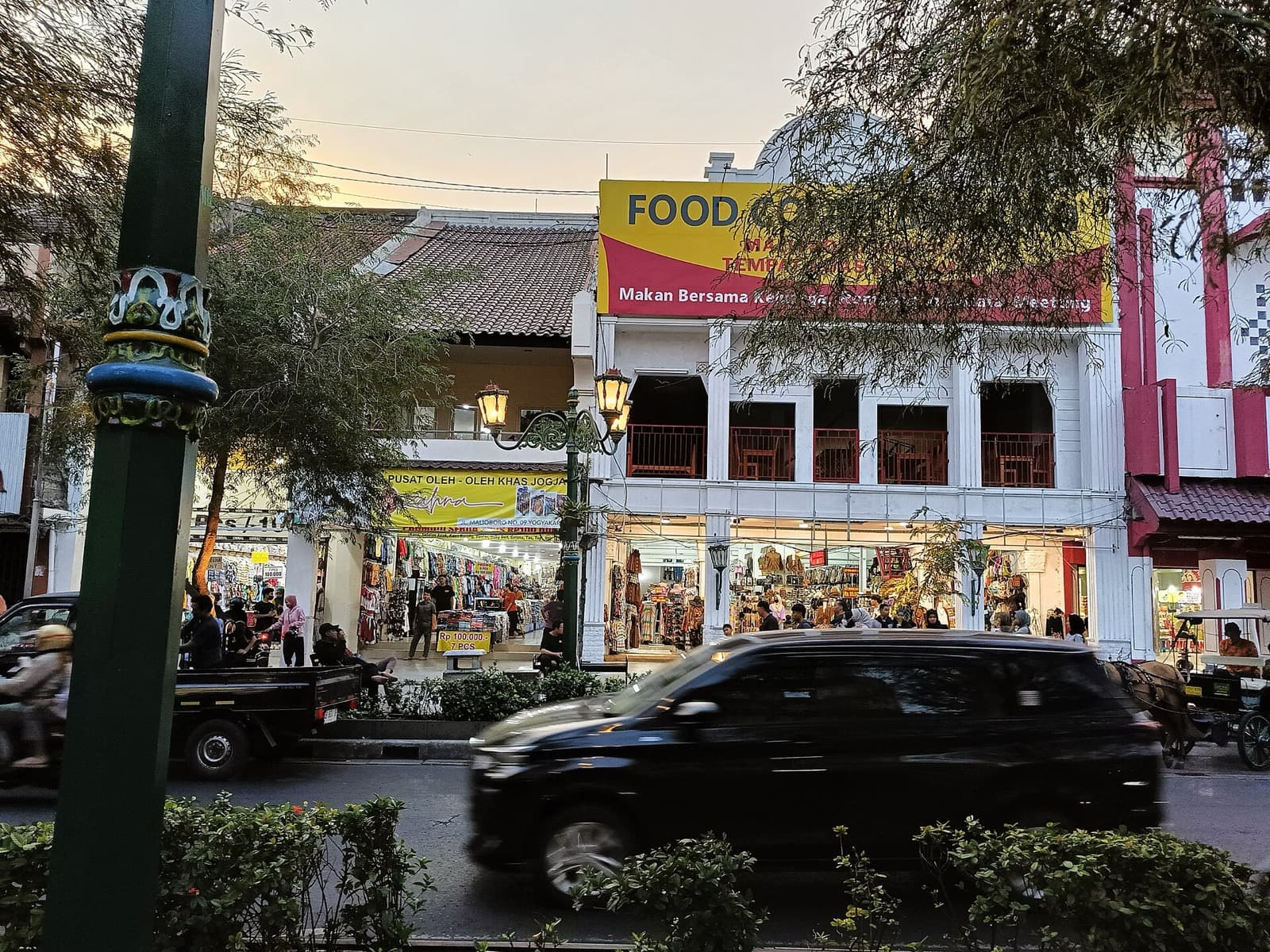
The line is not a museum abstraction. It is a real street you walk. From the Tugu, the axis runs down Malioboro, the market spine that the sultan drew as a ceremonial approach and that the Dutch later turned into the city's commercial artery, its southern end becoming a Chinatown by the nineteen tens. Even the street's name is unsettled: scholars cannot agree whether Malioboro comes from the Sanskrit malyabhara, a garland of flowers, or from the British figure Marlborough during the brief British interlude in Java. You can walk it holding both stories at once.
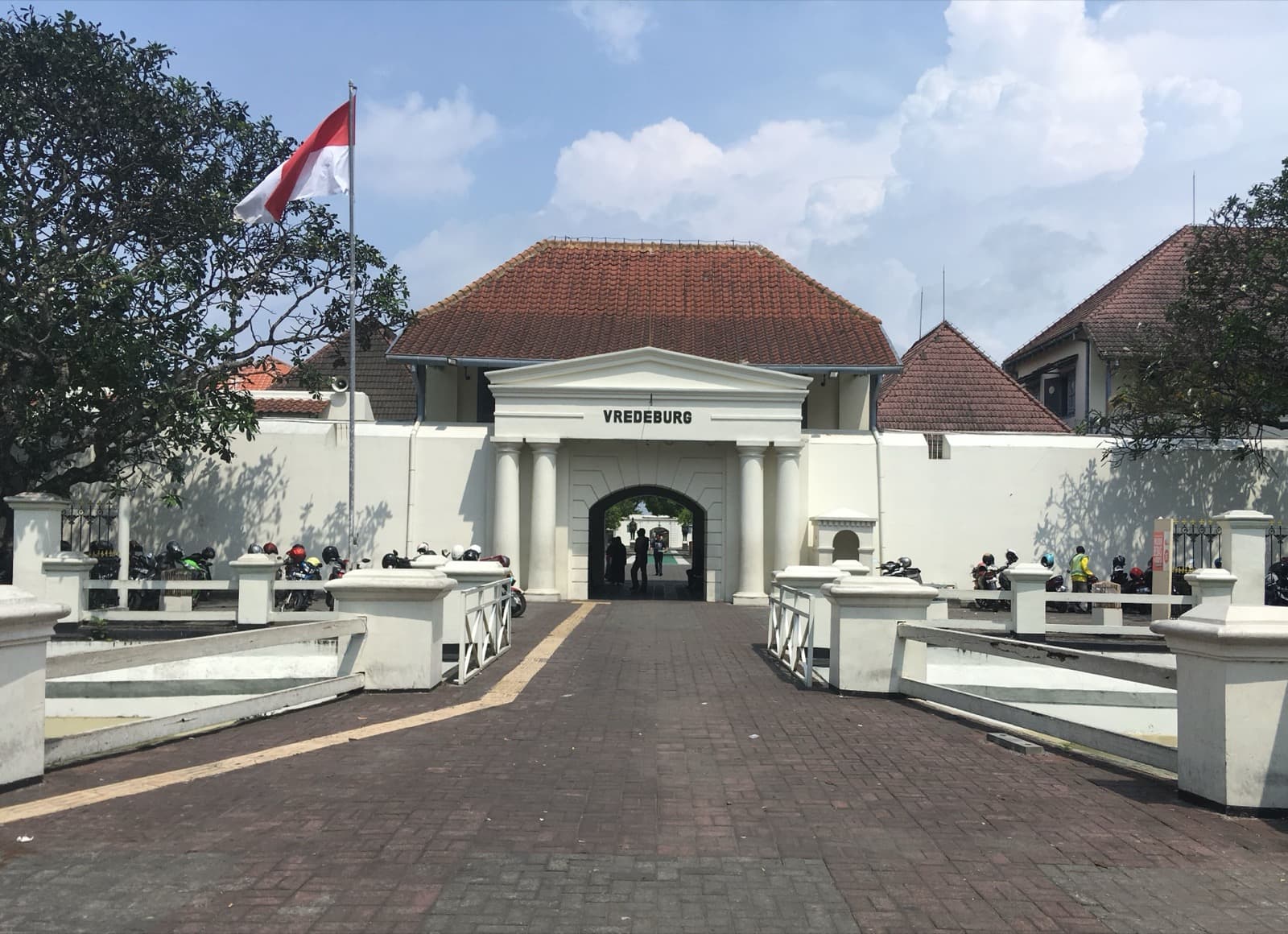
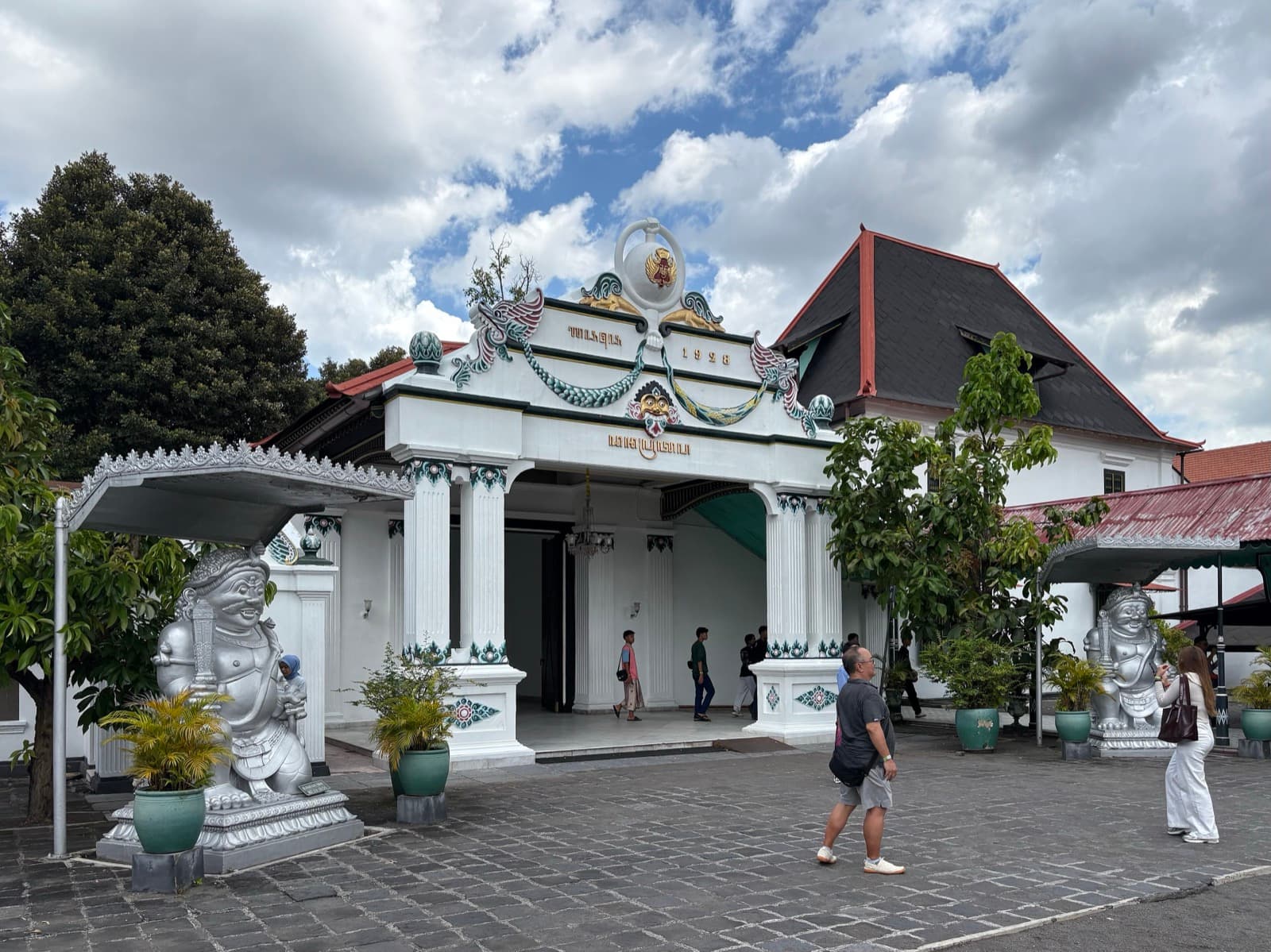
What makes the axis compelling is that sacred geometry and colonial power share the same pavement. Near the palace stands Fort Vredeburg, whose Dutch name means peace fort, a garrison the colonial authorities positioned so its guns could oversee the sultan's home. The land beneath the fort is still owned by the Yogyakarta Sultanate, though since nineteen ninety-two the building has held a history museum of the independence struggle. The palace itself remains a working royal residence, still home to the reigning sultan, Hamengkubuwono the Tenth, and still a centre of gamelan music, court dance, and shadow-puppet theatre. History has not always spared it: British forces under Sir Stamford Raffles sacked and burned the Kraton on the twentieth of June eighteen twelve.
The axis closes at two great squares. The northern Alun-Alun Utara holds two caged banyan trees, one named divine light facing the mosque and one named human light facing the market, framing the sultan between the spiritual and the worldly. About two kilometres south lies Taman Sari, the flooded water castle Hamengkubuwono the First built from around seventeen fifty-eight, with mirrored bathing pools and a circular underground mosque, Sumur Gumuling, reached by tunnel. The southern square, Alun-Alun Kidul, hands the sacred line back to ordinary life, where people still walk blindfolded between two banyan trees hoping to have a wish granted. Walk the whole thing and the city itself becomes the argument.
The Buddhist mountain you climb
Hear a stop from this walk
Alun-Alun Kidul: Where the Sacred Line Meets the Everyday
Forty kilometres northwest of the city, the second great text of central Java waits. Borobudur is not a building you enter. It is a mountain of stone you climb, and the whole meaning is the ascent. The Borobudur climb reads nine stacked platforms, six square terraces below and three circular above, all crowned by a single sealed dome about thirty-five metres up. UNESCO records that it was raised in the ninth century under the Sailendra dynasty, in roughly five stages between about seven eighty and eight thirty-three, and inscribed as a World Heritage Site in nineteen ninety-one. For centuries it lay buried under volcanic ash and largely forgotten before returning to wide attention in eighteen fourteen.
The monument is a diagram of the path to enlightenment, and it is meant to be read clockwise, level by level. At the concealed foot lies Kamadhatu, the world of desire, one hundred and sixty carved panels on karma that were deliberately hidden behind a stone casing, with only the southeast corner left open today. Rise onto the square galleries and you enter Rupadhatu, the world of form, carrying approximately two thousand six hundred and seventy bas-reliefs, about one thousand four hundred and sixty of them narrative, read like the pages of a life. Watch over the galleries are five hundred and four Buddha statues, each set in a hand gesture, or mudra, arranged by compass direction so the whole monument becomes a compass of hands.
Then the stone goes quiet. The three upper circular terraces, Arupadhatu, are deliberately plain, the carving stopping by design as form gives way to formlessness. Ringing them are seventy-two openwork bell-shaped stupas, each originally holding a Buddha glimpsed through a lattice rather than plainly shown. And at the summit, the great central dome is empty and imageless. An eighteen forty-two investigation of it found nothing, and it remains empty on purpose: the goal of the climb is formless, beyond image and desire. A monument that spends more than two and a half thousand carved panels teaching, then crowns itself with a sealed dome that shows you nothing.
The Hindu answer next door
About seventeen kilometres east of Yogyakarta stands the reply. The Prambanan tour walks Indonesia's largest Hindu temple compound, built around eight hundred and fifty under the Hindu Sanjaya line of the Mataram kingdom, only about fifty years after Borobudur, on the same plain. Its Shivagrha inscription dates the inauguration to eight hundred and fifty-six and names the compound the House of Shiva. Like Borobudur, it was inscribed as a UNESCO World Heritage Site in nineteen ninety-one, and like Borobudur, its reliefs are read clockwise from the eastern gate at a pilgrim's pace.
At the heart rises Candi Shiva, forty-seven metres tall, the tallest structure on the site, flanked by shrines to Brahma and Vishnu to complete the Trimurti of creator, preserver, and transformer. Around the inner galleries the Ramayana unfolds panel by panel, continuing from the Shiva temple onto the Brahma temple, so a worshipper literally walks the epic from one tower to the next. Facing the three great gods across a courtyard sit three smaller shrines for their animal mounts: Nandi the bull for Shiva, Garuda for Vishnu, and Hamsa the swan for Brahma.
A folk legend binds the whole plain together. The Loro Jonggrang tale says a prince, refused by a princess, was set the impossible task of building a thousand temples in a single night, and when she tricked his demon workers into fleeing before dawn, he cursed her into the final statue, the Durga figure that still stands in the north chamber of Candi Shiva. That legend even names a neighbouring Buddhist ruin: Candi Sewu, about eight hundred metres north, means a thousand temples in Old Javanese, though its Manjusrigrha inscription dates it to seven hundred and ninety-two and it actually holds two hundred and forty-nine structures. A Buddhist complex carrying a name given by a Hindu folk tale, the two faiths building side by side.
One region, three texts
Read together, the sultan's axis, Borobudur, and Prambanan tell a single story about central Java. A living Muslim court at the centre, drawn as a sacred line still walked today, ringed by the Buddhist and Hindu monuments of a deeper past that rose within a few decades of each other on the same volcanic plain. Each was built to be read slowly, in order, in the round. That is exactly what going solo lets you do: linger at a single relief while the tour groups move on, set your own return time, and let the stone do what it was made to do. Start with the Yogyakarta walking tours and take the region one text at a time.
Sources
- UNESCO World Heritage Centre, The Cosmological Axis of Yogyakarta and its Historic Landmarks (inscribed 2023)
- UNESCO World Heritage Centre, Borobudur Temple Compounds (inscribed 1991)
- UNESCO World Heritage Centre, Prambanan Temple Compounds (inscribed 1991)
- Kraton Ngayogyakarta Hadiningrat, official Yogyakarta Sultanate palace records
- Museum Sonobudoyo, Yogyakarta, provincial cultural heritage collections
Frequently asked questions
- What is the Cosmological Axis of Yogyakarta?
- It is a roughly six-kilometre straight line that Sultan Hamengkubuwono the First laid out when he founded the city in seventeen fifty-five, running from the northern Tugu pillar down Malioboro Street, through the Kraton palace, to the southern squares and on toward the Indian Ocean. The mountains at the north stand for the source of life and the sea for the final return, with the palace between them. UNESCO inscribed the axis as a World Heritage Site in twenty twenty-three.
- How far are Borobudur and Prambanan from Yogyakarta?
- Borobudur sits about forty kilometres northwest of Yogyakarta, and Prambanan is about seventeen kilometres east of the city. Both are a drive out rather than a walk from the city centre, so you arrange your own transport. Each monument itself is then walked at your own pace, roughly ninety minutes across about one and a half kilometres.
- Why is the top of Borobudur empty?
- The great central dome that crowns Borobudur is sealed and completely empty, holding no statue or image. An investigation of the dome in eighteen forty-two found nothing inside, and it remains empty by design. In Mahayana Buddhist understanding the goal at the summit is formless, beyond image and beyond desire, so the centre is left imageless on purpose.
- How tall is the main temple at Prambanan?
- The central Shiva temple, Candi Shiva, is forty-seven metres tall, the tallest structure on the site and the reason Prambanan looks the way it does. It is flanked by smaller temples to Brahma and Vishnu, completing the Trimurti of the three highest Hindu gods. The compound was built around eight hundred and fifty under the Hindu Sanjaya line of the Mataram kingdom.
- Is the Kraton palace still in use?
- Yes. The Kraton is a living palace, still the residence of the reigning sultan, Hamengkubuwono the Tenth, and a centre of Javanese court culture including gamelan music, court dance, and shadow-puppet theatre. Parts are the sultan's private home and closed to visitors, and the court is Muslim, so modest dress with shoulders and knees covered is expected.
Ready to experience it?
Old Town: Walking the Sultan's Sacred Line
150 min · 6 km · moderate
More from Yogyakarta
Explore more at your own pace.
One Day in Yogyakarta: A Walkable Itinerary
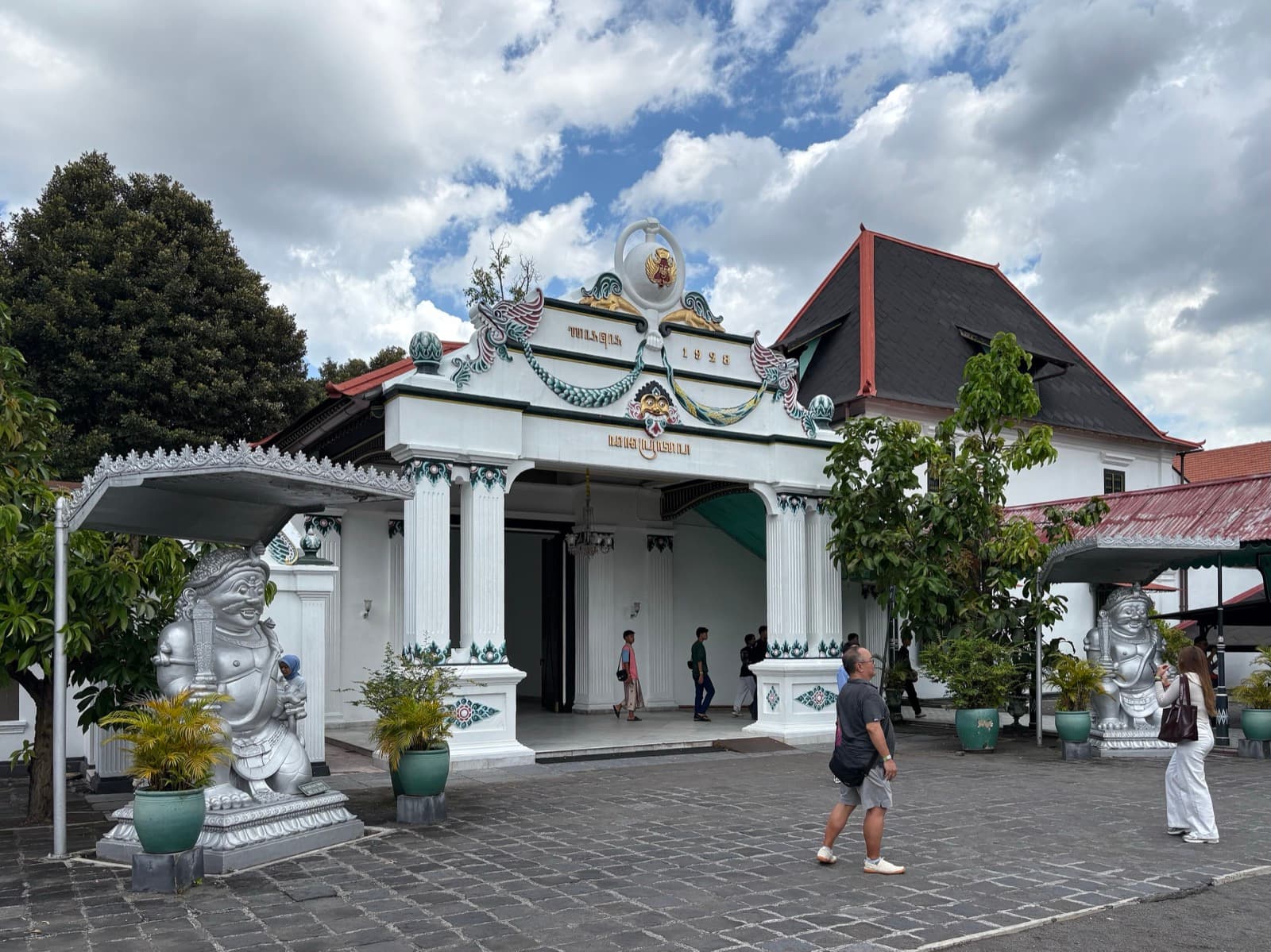
The Kraton at the Center: How Yogyakarta Was Drawn as a Single Straight Line
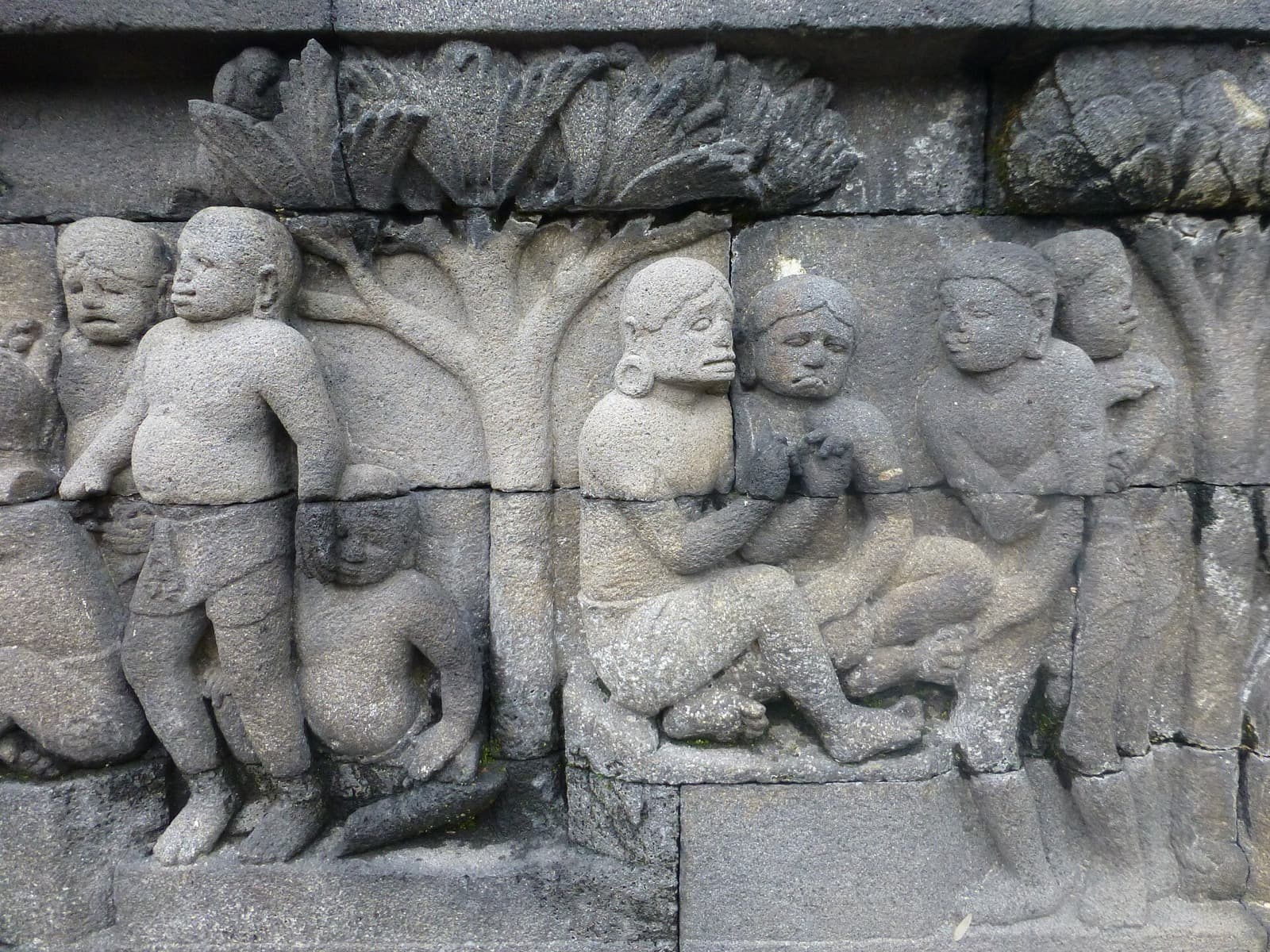
The Rupadhatu Galleries: How to Read Borobudur's 2,670 Carved Panels
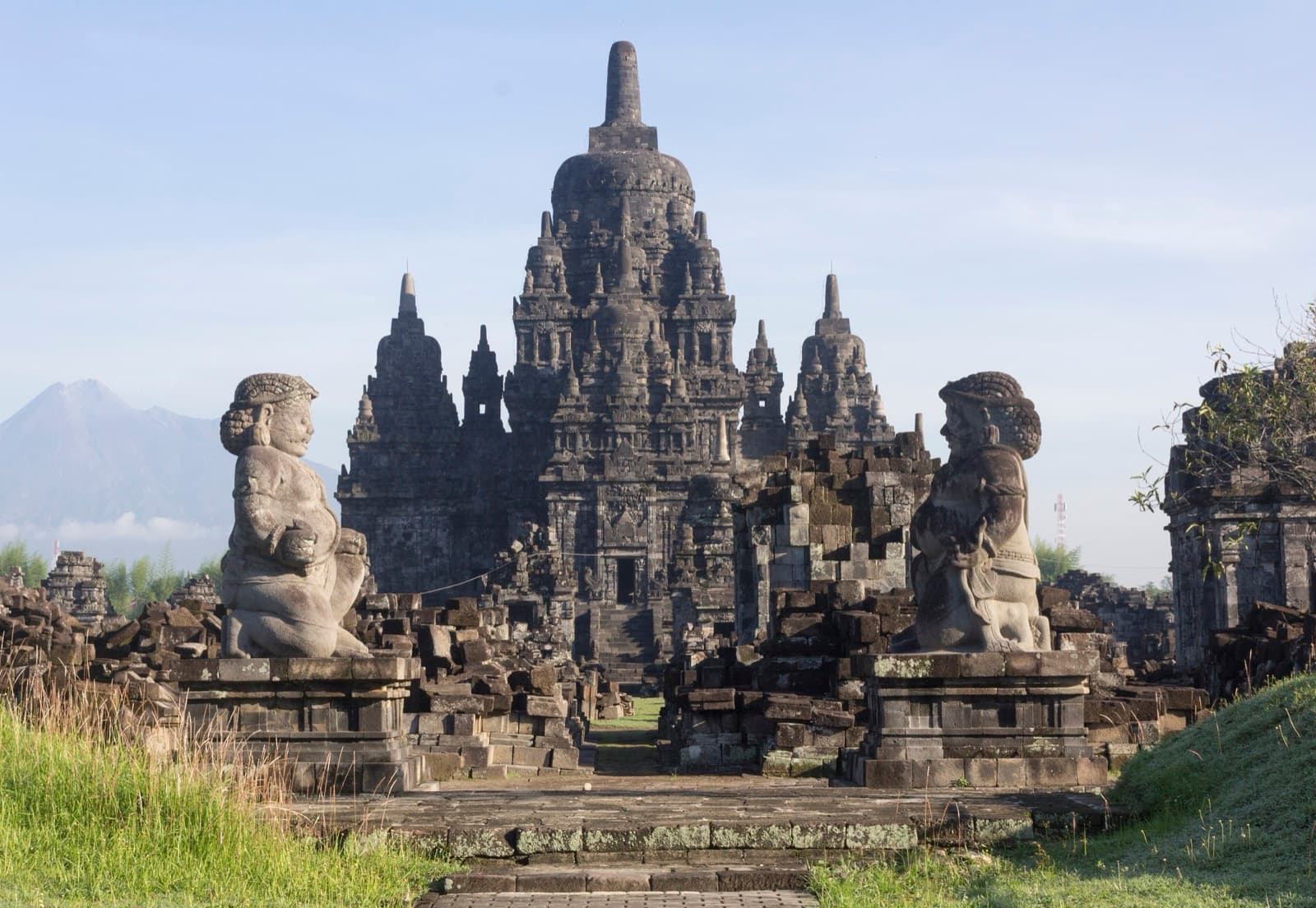
Candi Sewu: The Buddhist "Thousand Temples" That Number 249
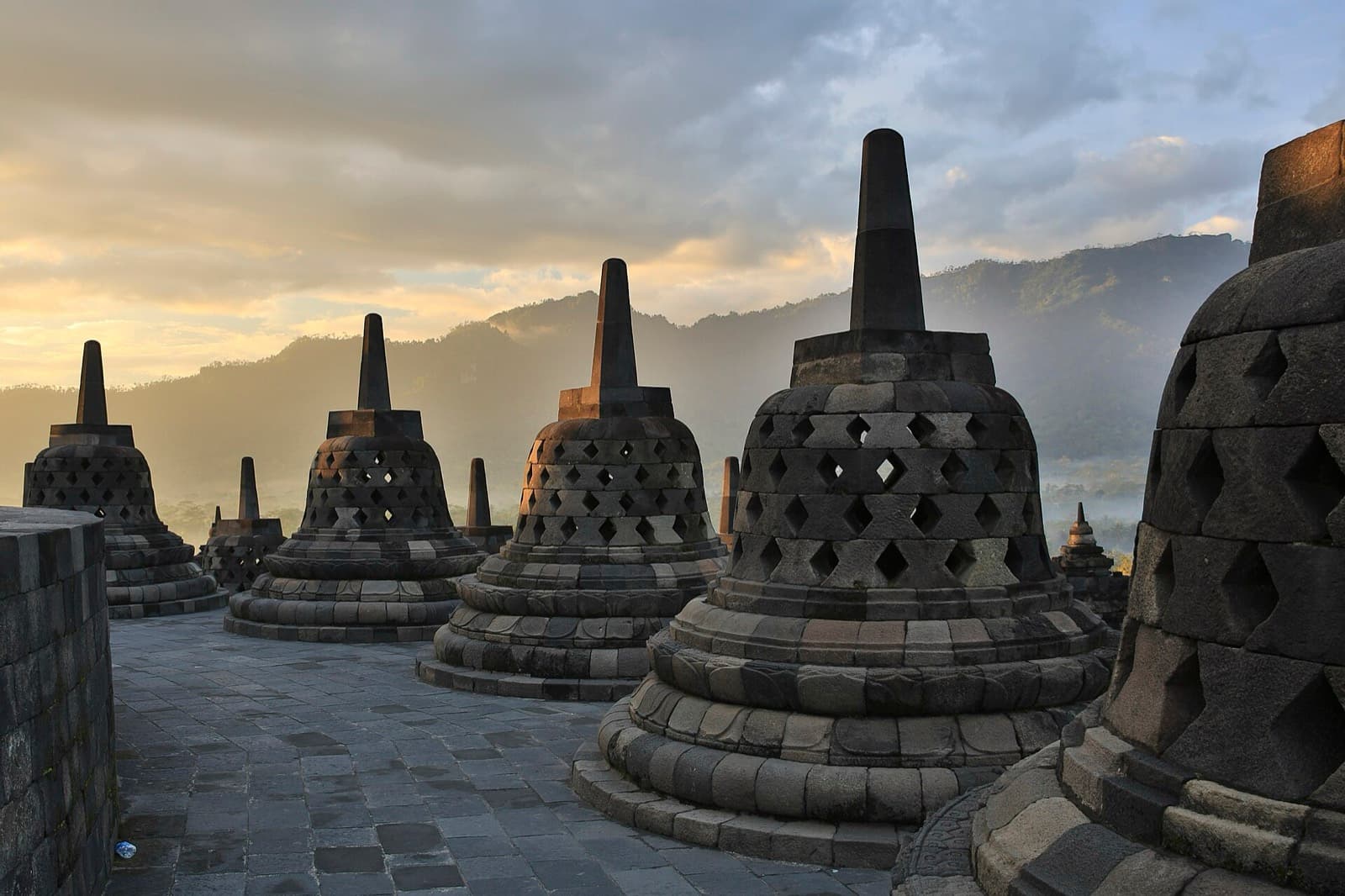
The 72 Perforated Stupas of Borobudur: Why the Buddha Is Half-Hidden