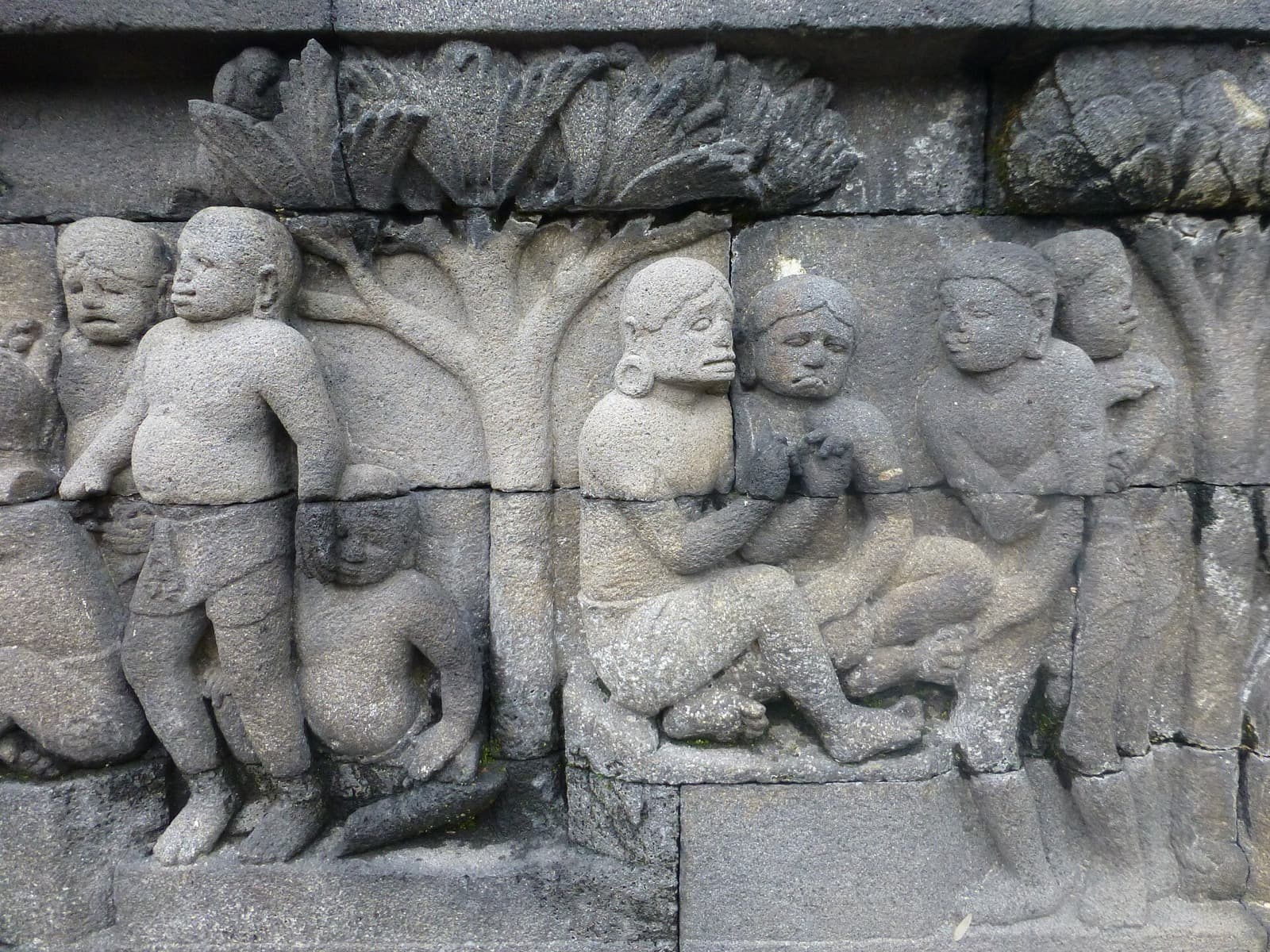
Borobudur hides its meaning in five square gallery corridors, walls carved with roughly 2,670 relief panels that were built to be read clockwise, slowly, one at a time, like the pages of a life. These corridors form the zone called Rupadhatu, the world of form, and they are the interpretive center of the whole ninth-century monument. If you understand what happens in these galleries, you understand why Borobudur is a climb rather than a building, and why coming at your own pace changes everything about the visit.
A monument you read, not enter
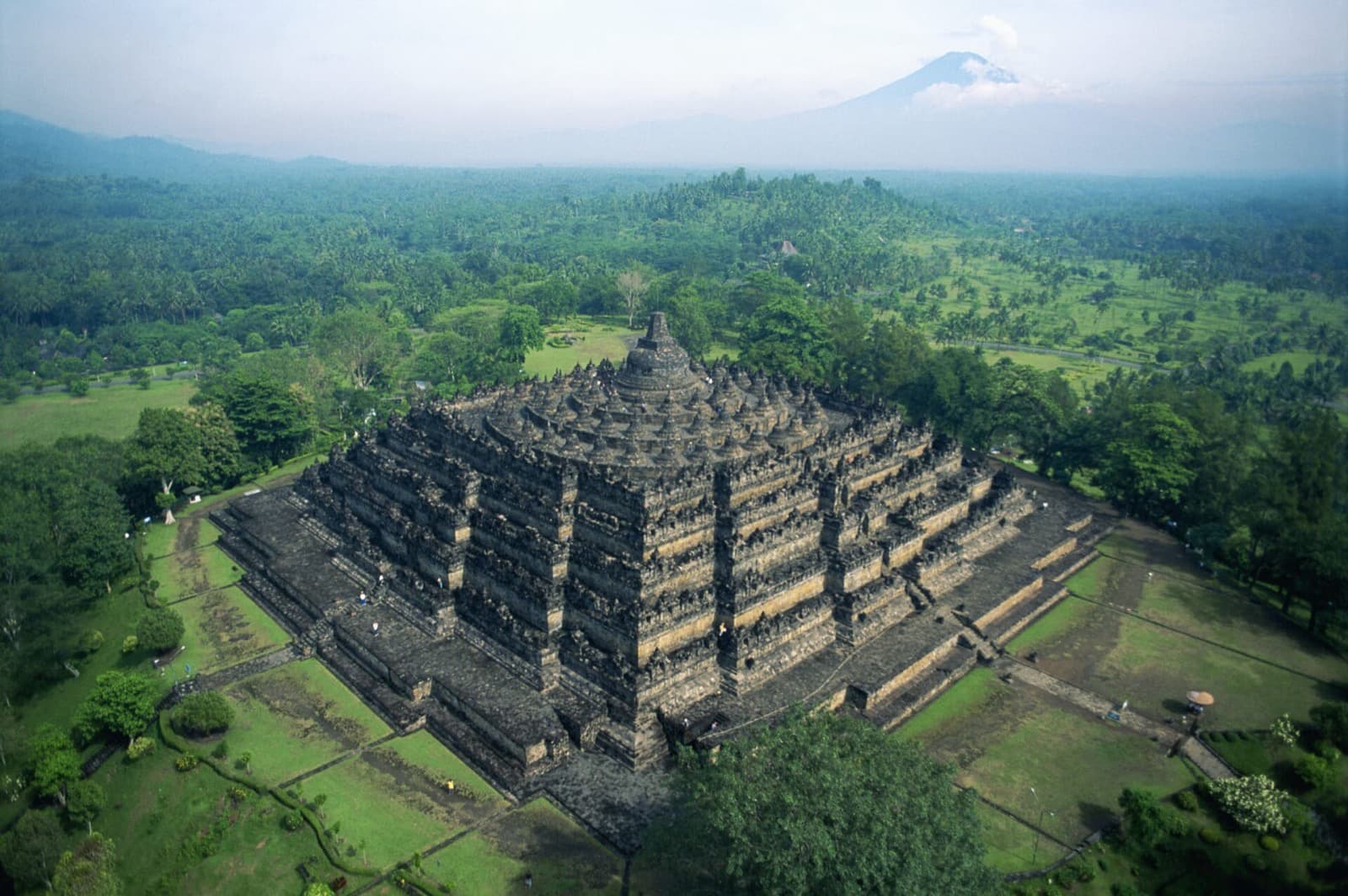
Start with the fact that surprises most first-time visitors: Borobudur has no inside. There is no hall, no nave, no dim interior chamber. The structure is essentially solid, nine stacked platforms of dark andesite stone, six square terraces below and three circular terraces above, crowned by a single great dome about thirty-five metres above the ground. You do not walk into it. You read it by circling its outer corridors and climbing as you go. The stone is the text.
UNESCO records that the monument was raised in the ninth century under the Sailendra dynasty, built in roughly five stages between about 780 and 833 AD. That places its construction more than eleven hundred years ago. For centuries afterward it lay buried under volcanic ash and largely forgotten, until it was brought back to wide attention in 1814. It was inscribed as a UNESCO World Heritage Site, the Borobudur Temple Compounds, in 1991.
The design moves in three vertical zones, and the galleries sit in the middle one. Below them, hidden inside the base, is Kamadhatu, the world of desire, where roughly 160 carved panels on karma were covered over and concealed. Above the galleries are the plain circular terraces of Arupadhatu, the formless realm, where the carving stops entirely. Between the buried foot and the silent crown sit the corridors that carry almost the entire visible message.
What the galleries actually hold
Hear a stop from this walk
Kamadhatu: The Hidden World of Desire
Rupadhatu is where the mass of the sculpture lives. Five square galleries run around the monument, one stacked above the next, and their walls hold the bulk of the carving. UNESCO records approximately 2,670 individual bas-reliefs in all: about 1,460 of them narrative panels and about 1,212 decorative ones. That is more than two and a half thousand carved scenes, which makes this one of the most extensive relief programs of any Buddhist monument.
The narrative panels are not decoration. They are sequential storytelling in stone. The series include the life of the Buddha, older tales of his past lives and of virtuous deeds, and the long account of a pilgrim named Sudhana who searches for enlightenment across many panels. To read them the way they were designed, you walk clockwise, keeping the monument on your right, in the slow circling that Buddhist practice calls circumambulation. As you move, the story unfolds panel by panel. Finish one gallery, climb to the next, and the narrative continues on the level above.
This is the design principle that explains the whole place. Borobudur was built for an unhurried body, reading in order, level by level. The corridors do not reward speed. A group hurried through in a timed session sees a blur of grey stone. Someone moving at their own pace can stop at a single panel, follow one small scene to its end, and notice how a single gesture repeats three galleries higher up. Attention is the currency the galleries were built to accept.
The gestures set to the compass
Along the balustrades of these same square terraces sit the wall Buddhas, and they add a second layer to what the galleries teach. Borobudur originally held 504 Buddha statues in all, counting those in the terrace niches and those enclosed in the stupas higher up. Each is carved in a specific mudra, a symbolic hand gesture that carries meaning in Buddhist art, and the gestures are organized by direction.
The two most clearly confirmed pairings are worth watching for as you circle. The east-facing Buddhas make the earth-touching Bhumisparsa mudra, one hand reaching down to touch the ground, the moment the Buddha called the earth to witness. The south-facing Buddhas make the Vara mudra, the gesture of giving, an open hand turned outward in charity. The other directions carry their own gestures in turn, and these directional hands correspond to the five meditation Buddhas of Mahayana cosmology. The whole monument becomes a compass of the hands. Round a corner and the gesture changes. It is a small, deliberate touch, and one of the easiest to miss if you are rushed.
Why the galleries are the way into the whole climb
The galleries make sense only as the middle act of a larger story, and reading them well sets up everything above. Once the corridors go quiet on the circular terraces, the monument stops speaking in pictures on purpose. Ringing those upper terraces stand 72 perforated bell-shaped stupas, each originally holding a seated Buddha glimpsed through a lattice of diamond and lozenge openings, half-seen rather than plainly shown. And at the very summit, the great central stupa is sealed and empty. An investigation of the dome in 1842 found nothing inside, and it remains empty and imageless to this day. The absence is the answer. A monument that spends more than two and a half thousand carved panels teaching then crowns itself with a dome that shows you nothing.
You cannot feel that arc if you skim the galleries. The empty summit only lands because the corridors below were so full. That is the case for walking Borobudur slowly, in order, at your own clock rather than a tour van's schedule. The full self-guided route runs seven stops over about ninety minutes and one and a half kilometres of circling and rising, from the western foot up to the sealed dome. If you are planning the trip, the Yogyakarta walking tours hub gathers the region's routes, and the Yogyakarta city page shows how Borobudur fits alongside the nearby monuments.
One practical note. The upper terraces today require a timed ticket, which comes with a licensed guide and provided woven sandals to protect the stone, and slots can sell out. If you do not have one, do not worry: the base and lower terraces still show the shape and logic of the whole climb, and the design reads clearly from there. Come early, keep the monument on your right, and let the galleries slow you down. That is exactly what they were carved to do.
Sources
- Borobudur Temple Compounds, UNESCO World Heritage Centre (List 592): the official inscription record, relief counts, and the 1991 World Heritage designation.
- Borobudur, Wikipedia: construction dates under the Sailendra dynasty, the approximately 2,670 reliefs, the 504 Buddha statues, the 72 perforated stupas, and the 1842 investigation of the empty central dome.
- Roamer tour "Borobudur: The Mountain of Merit": the fact-audited seven-stop route this article expands, including the Rupadhatu gallery narration and directional mudra pairings.
Ready to experience it?
Borobudur: The Mountain of Merit
90 min · 1.5 km · moderate
More from Yogyakarta
Explore more at your own pace.
One Day in Yogyakarta: A Walkable Itinerary
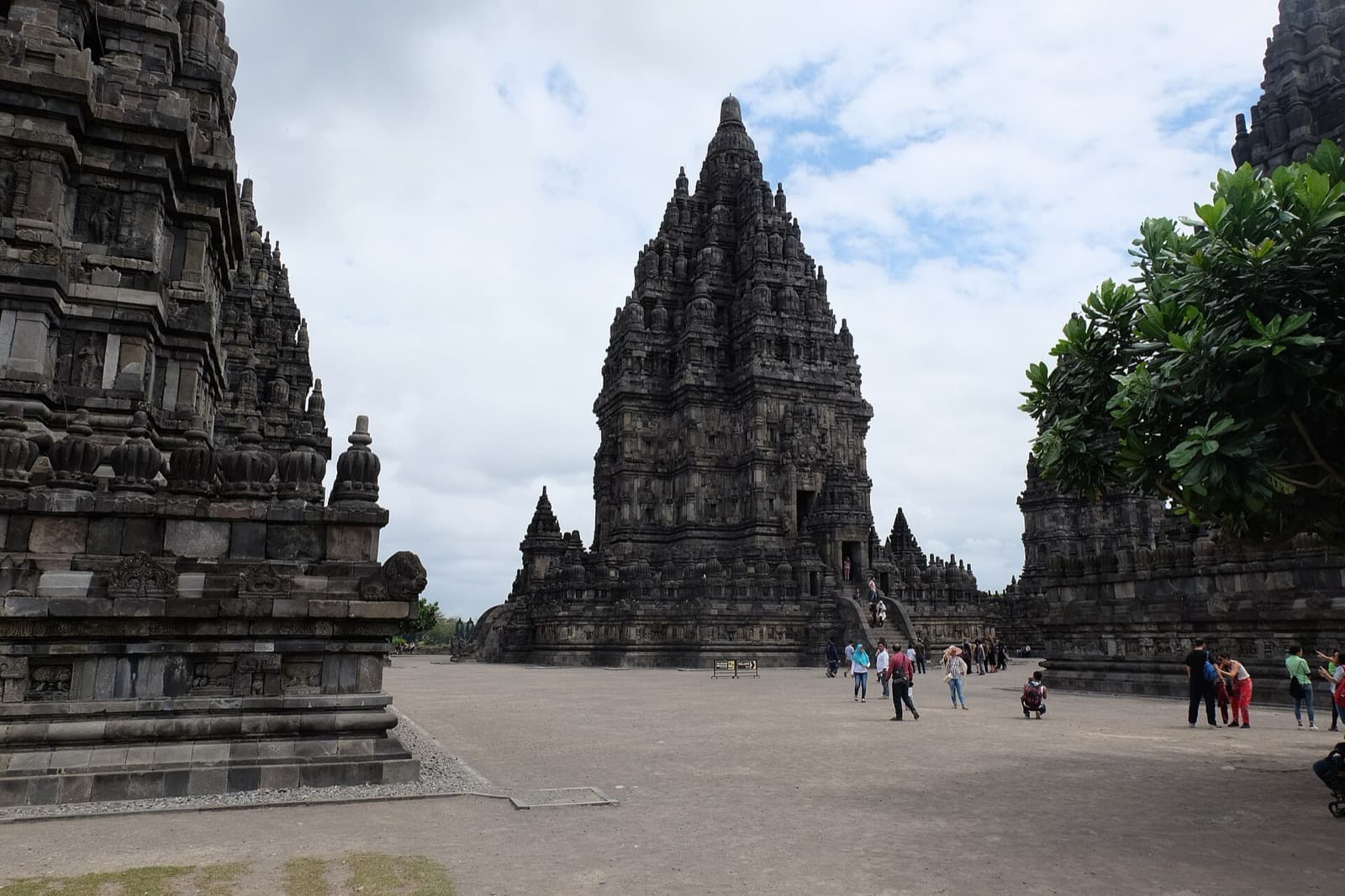
Candi Shiva: How Prambanan's Tallest Tower Organizes an Entire Temple City
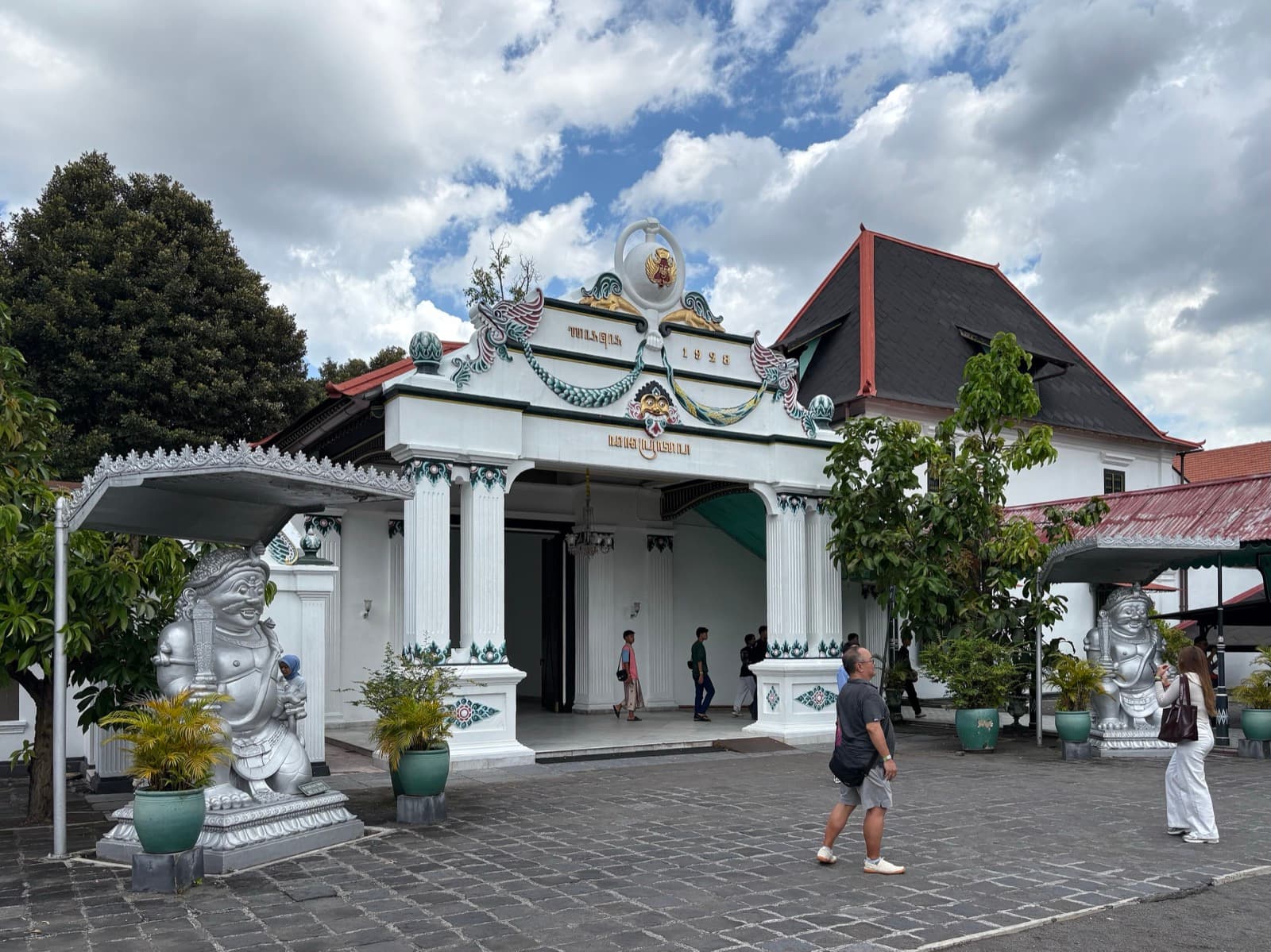
The Kraton at the Center: How Yogyakarta Was Drawn as a Single Straight Line
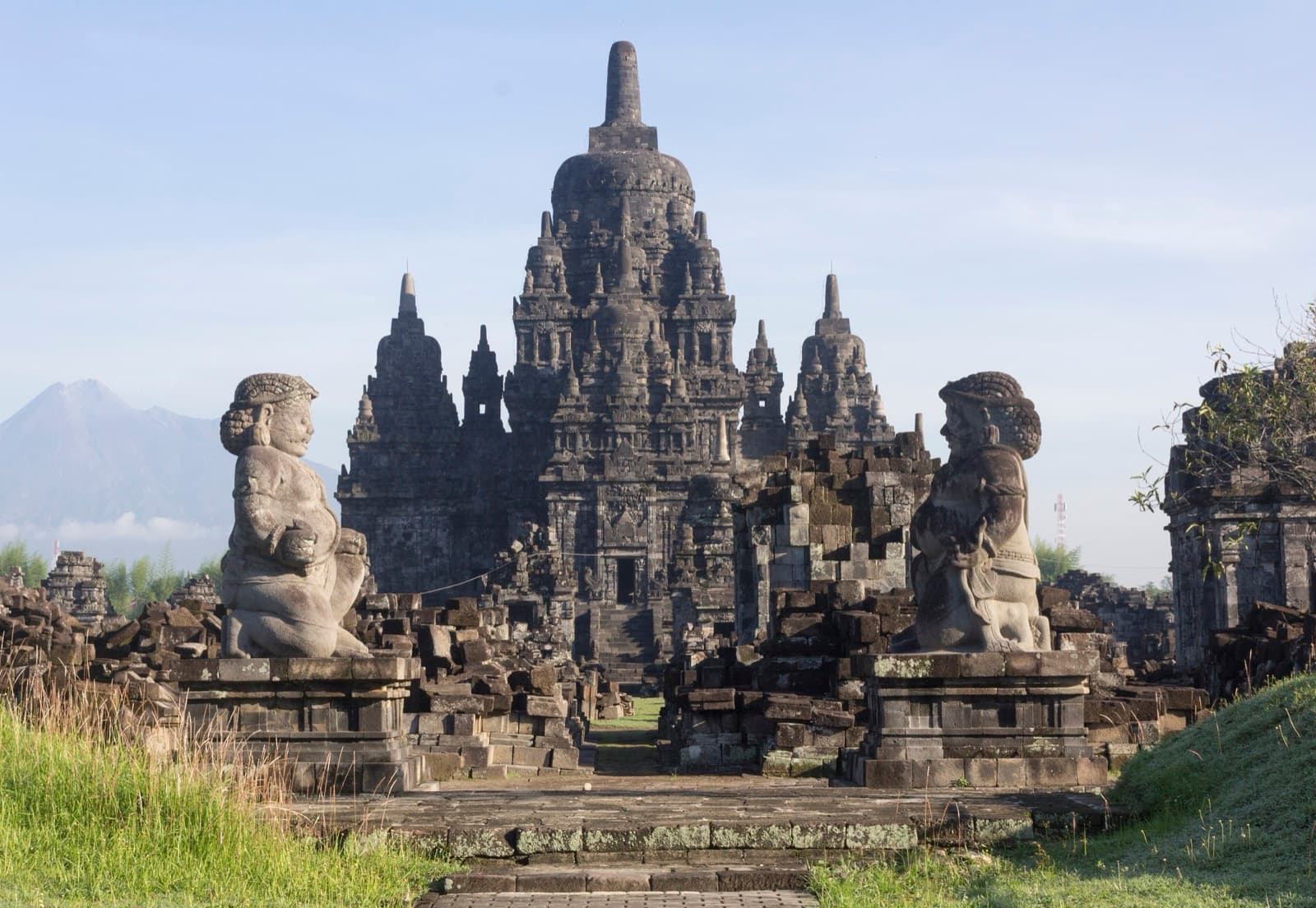
Candi Sewu: The Buddhist "Thousand Temples" That Number 249
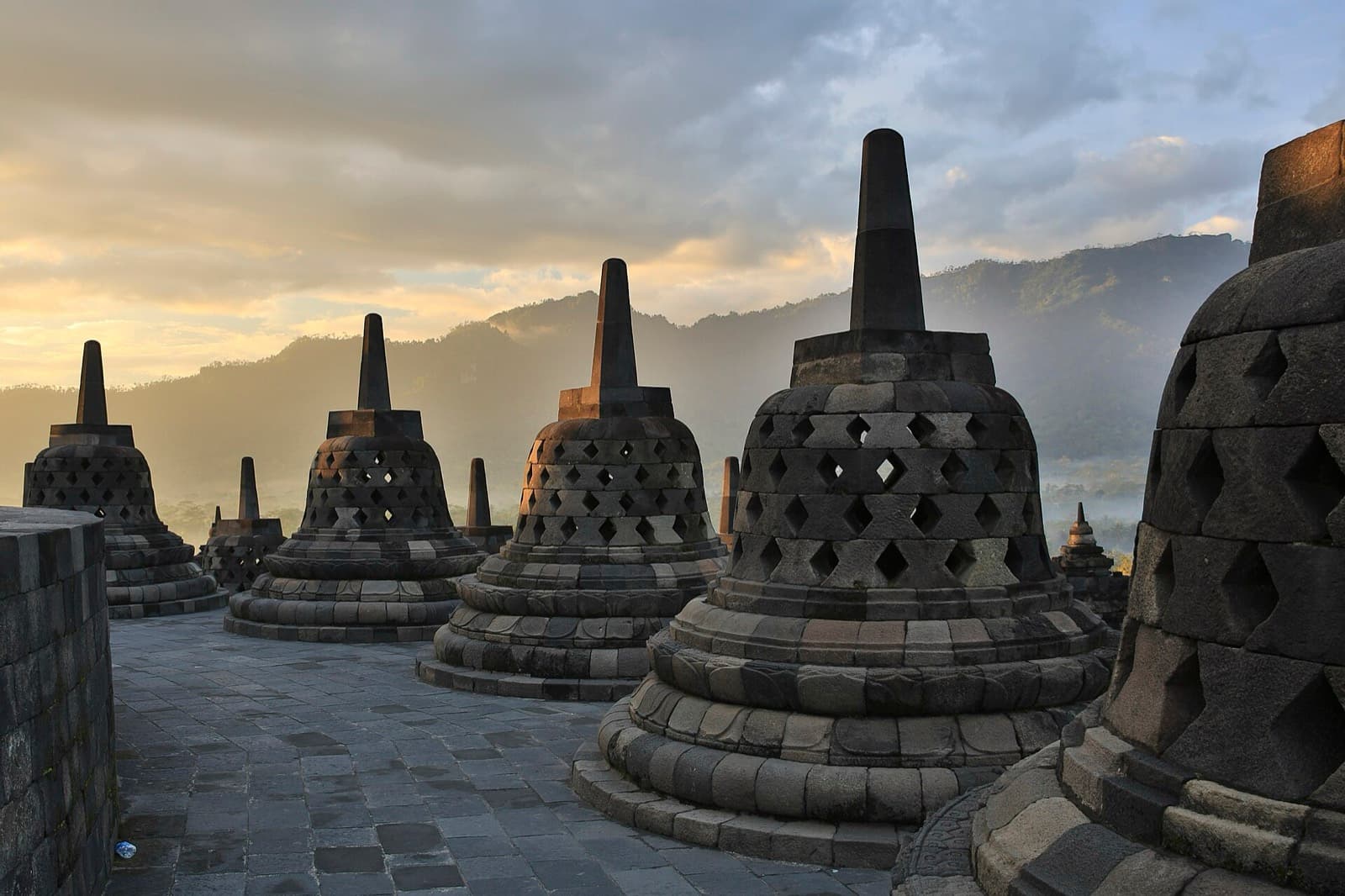
The 72 Perforated Stupas of Borobudur: Why the Buddha Is Half-Hidden