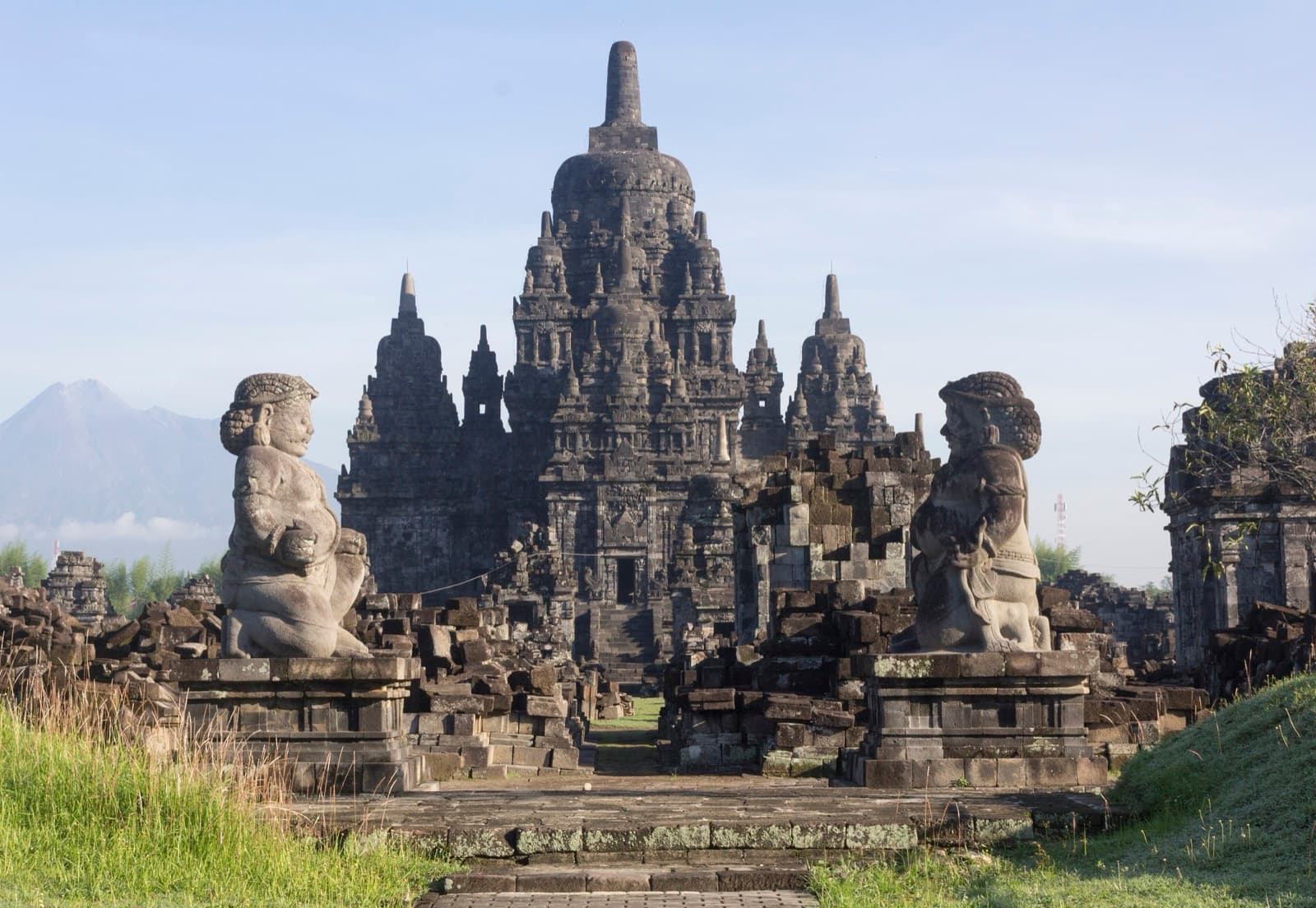
Candi Sewu is a Mahayana Buddhist temple complex of 249 structures that carries a Javanese name meaning "a thousand temples," a count it never actually reached, and it stands about eight hundred metres north of the Hindu towers of Prambanan on the same plain, built only a few decades apart by two different faiths. Understanding Sewu means holding both of those facts at once: a Buddhist monument that predates the Hindu compound beside it, and a Buddhist ruin whose popular name was handed to it by a Hindu folk legend. Standing at its central shrine, the one thing worth grasping is that the "thousand" in its name is arithmetic that was never true and mythology that stuck anyway.
A Buddhist monument older than its Hindu neighbour
Sewu belongs to the late eighth and early ninth centuries, and its own founding record, the Manjusrigrha inscription, dates the complex to 792 A.D. That single date reorders how most visitors imagine this landscape. Prambanan, the great Hindu compound to the south, was raised around 850 A.D. under the Sanjaya line of the Mataram kingdom. Sewu came first, by roughly half a century. So the plain east of Yogyakarta was not a Hindu site that later acquired a Buddhist annex, nor the reverse. It was a place where a Mahayana Buddhist monument and a Shaivite Hindu one went up almost as neighbours, a few decades between them, on the same flat ground.
That proximity is the first thing to register when you arrive. Most itineraries treat Prambanan as the destination and Sewu as an optional add-on, and most tour groups skip the eight-hundred-metre walk north entirely. But the two monuments are not really separable. They are part of one archaeological park and one UNESCO World Heritage property, the Prambanan Temple Compounds, inscribed in 1991 together with the smaller Bubrah and Lumbung ruins. Reading them as a pair is closer to what the ninth-century plain actually was: a working religious landscape where Buddhist and Hindu patronage overlapped rather than replaced one another.
The arithmetic of a thousand temples
Hear a stop from this walk
Candi Shiva: The Tallest Temple to a Broken Heart
The name is the puzzle. "Sewu" is Old Javanese for a thousand temples, and the complex delivers nothing of the sort. It has 249 structures, and the breakdown is precise: one central main temple, 240 smaller perwara temples arranged around it, and eight flanking temples. Two hundred and forty-nine, not a thousand. The number is not even close.
So where did "a thousand" come from? Not from a census. It came from the same Loro Jonggrang folklore that gives Prambanan its Javanese nickname. In that legend, told as legend and not as history, a prince named Bandung Bondowoso sought to marry a princess, who set an impossible condition: build a thousand temples in a single night. He nearly managed it, commanding an army of demon workers, until the princess and her maids faked the dawn by lighting fires in the east and pounding rice, sending the demon labourers fleeing before the last temple was finished. In the story, the temples the demons raised that night are these, at Sewu, left one short of the thousand the princess demanded. A Buddhist ruin, in other words, wears a name assigned by a Hindu folk tale. That is the detail worth carrying away from the site, and it is why this stop closes the walk so neatly: the legend you first hear at Prambanan's central Shiva temple loops back to name the Buddhist complex at the far end of the plain.
What the plan actually holds
Strip away the legend and the engineering underneath is impressive on its own terms. Sewu is the second largest Buddhist temple complex in Indonesia, after Borobudur. Its layout is a concentric plan, a large central temple ringed by the 240 perwara shrines in ordered rows, with eight guardian-style temples set at the flanks. This is the same organising instinct you see across the plain at Prambanan, where 224 perwara once surrounded the central Hindu towers in four concentric rings. Two monuments, two faiths, one shared vocabulary of a dominant central shrine encircled by ranks of smaller attendant shrines.
That repetition is not coincidence. It tells you these builders were working within a common ninth-century Javanese architectural language, applied to a Buddhist program at Sewu and a Hindu one at Prambanan. When you stand at the central temple and look outward at the field of perwara, you are reading the same idea the Prambanan builders used: a cosmological order expressed as geometry, the important shrine at the centre, the many lesser ones arrayed around it. The count of 249 is not a shortfall against the legend's thousand. It is a deliberate, symmetrical plan that later folklore inflated into a round mythic number.
Standing in front of it
The single thing to understand here is the collision the name preserves. Sewu is Buddhist, older than Prambanan, and physically separate by eight hundred metres, yet its identity in local memory is bound to a Hindu story about a broken engagement and a curse. Two religions, two centuries of construction across the plain, and one folk tale that reaches across the boundary to name the other side's monument. Very few sites let you see that overlap so plainly, and fewer still reward the short walk it takes to reach it.
Reaching Sewu on foot from the main Prambanan compound is what makes the point land. The eight-hundred-metre path north is exactly the stretch that packaged group tours cut, which is also why Sewu is usually quieter than the main towers. Walking it yourself, at your own pace, is the version of this site that actually works: you arrive at the Buddhist complex having just heard the Hindu legend, and the name over the ruin suddenly means something.
This deep dive is one stop on the self-guided Prambanan walking tour, which begins at the eastern gate, moves clockwise through the central Hindu towers, and ends here at Candi Sewu. To plan the wider visit and see how this fits alongside the other routes around the city, browse the full set of Yogyakarta walking tours. Walk the eight hundred metres north yourself, on your own clock, and read the legend where it was left.
Sources
- Sewu, Wikipedia: structure count (249: one main, 240 perwara, eight flanking), Old Javanese name meaning "a thousand temples," and its rank as second largest Buddhist complex in Indonesia after Borobudur.
- Manjusrigrha inscription, Wikipedia: dates the founding of the Sewu complex to 792 A.D., predating Prambanan.
- Prambanan Temple Compounds, UNESCO World Heritage Centre (whc.unesco.org/en/list/642): the 1991 inscription that groups Prambanan, Sewu, Bubrah, and Lumbung as one World Heritage property.
- Roamer tour transcript, "Prambanan: The Tallest Temple to a Broken Heart": fact-audited stop notes on Candi Sewu, the Loro Jonggrang legend, and its relationship to the Hindu compound.
Ready to experience it?
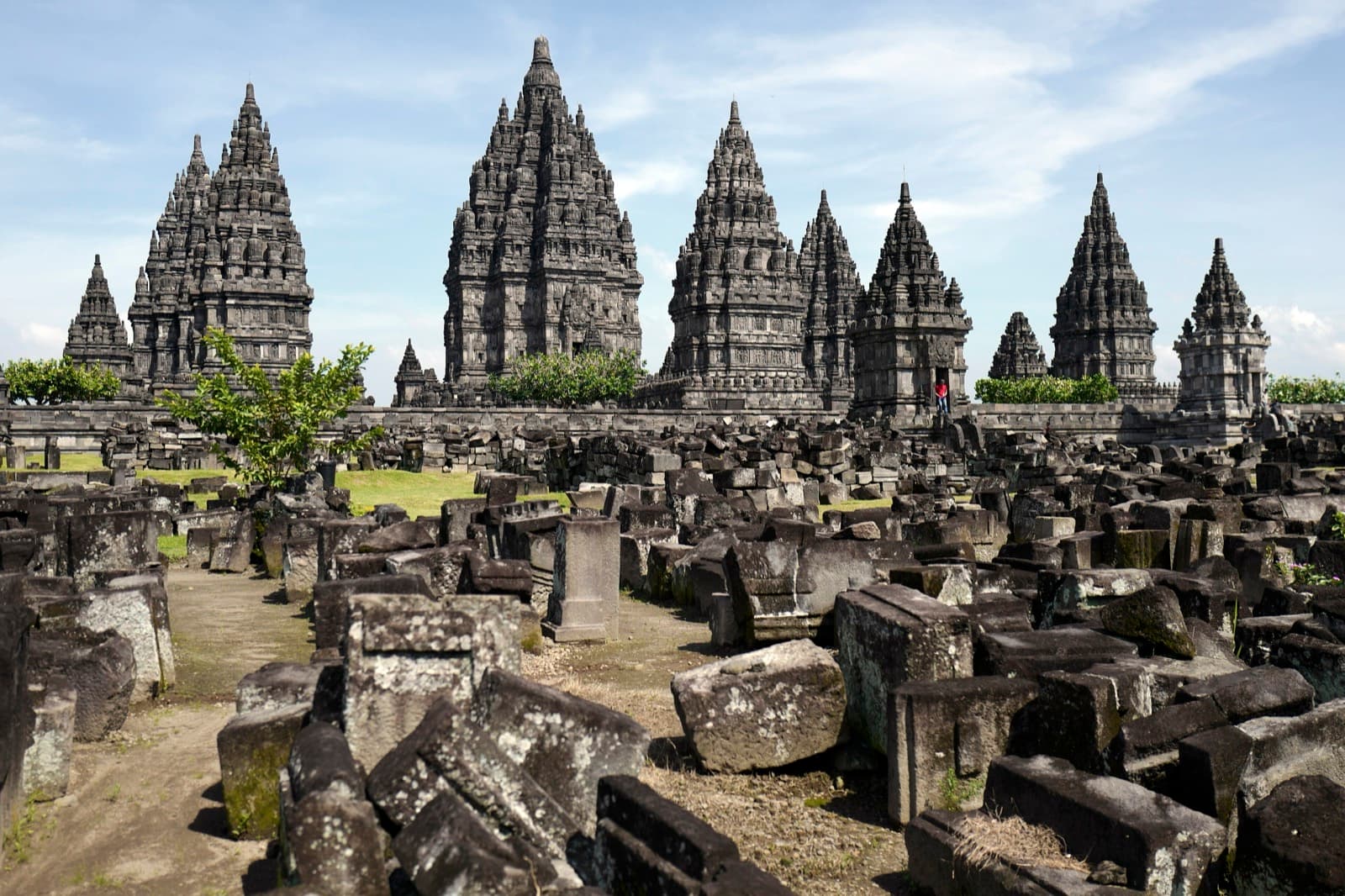
Prambanan: The Tallest Temple to a Broken Heart
90 min · 1.4 km · easy
More from Yogyakarta
Explore more at your own pace.
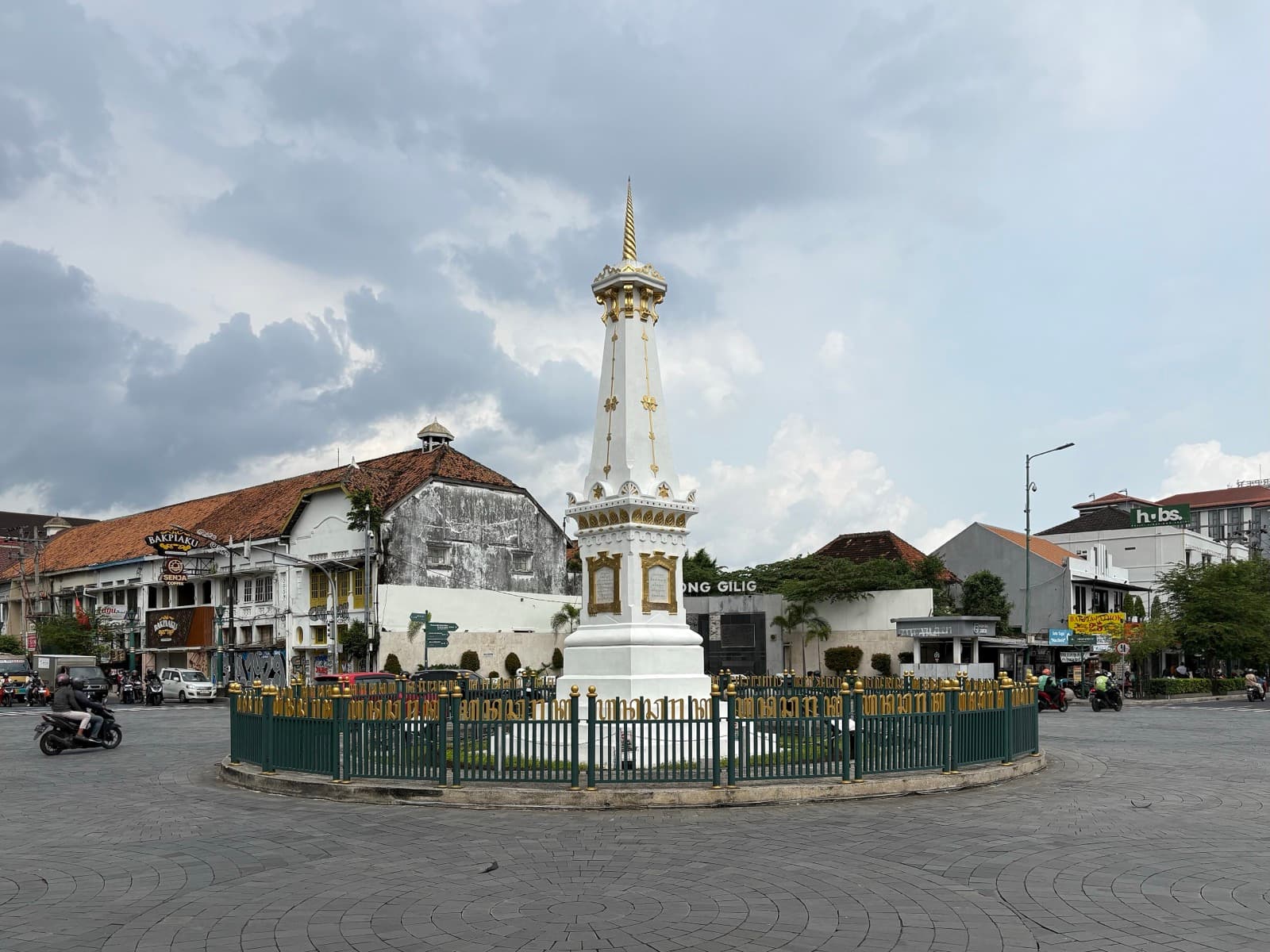
One Day in Yogyakarta: A Walkable Itinerary
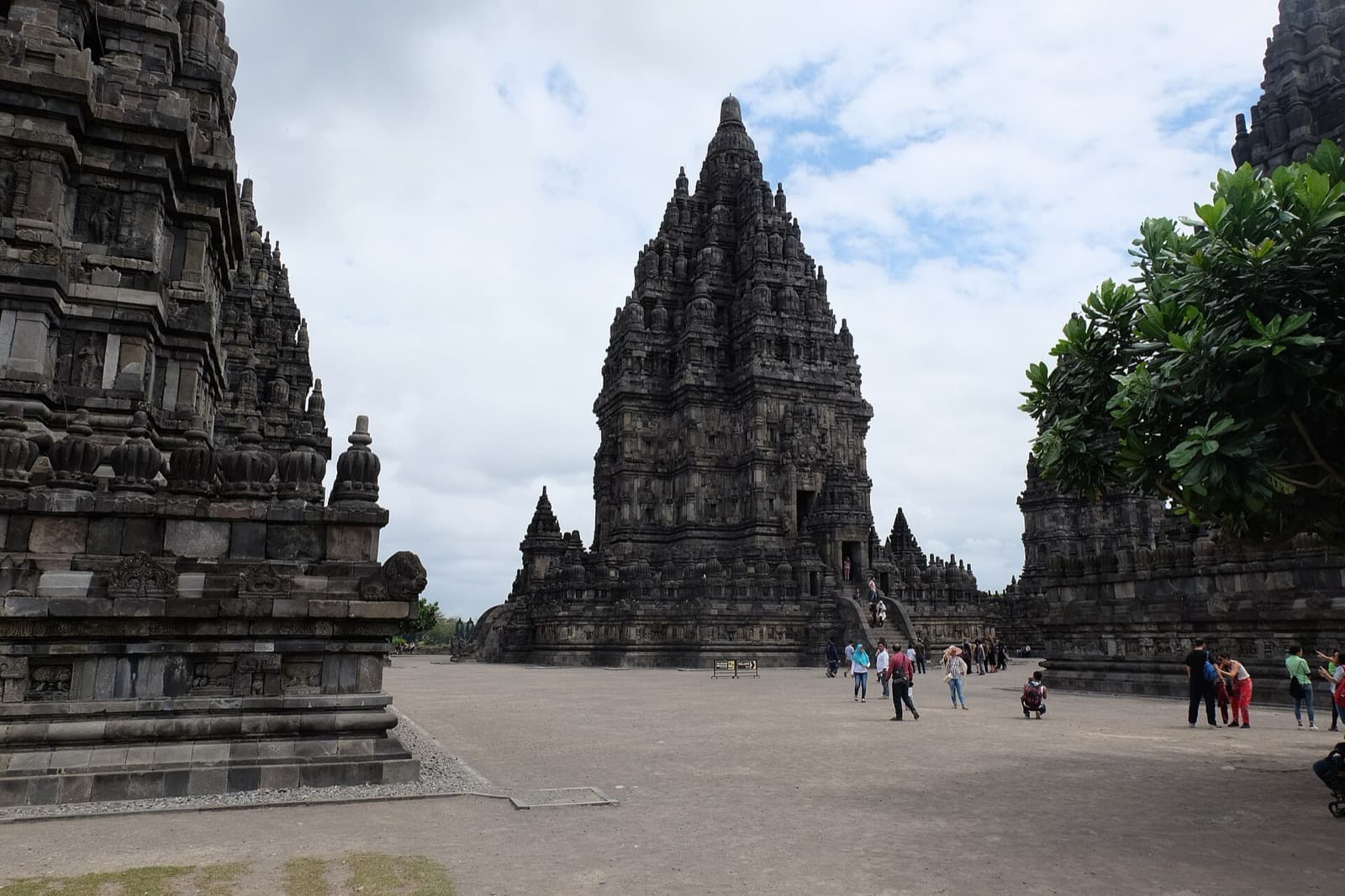
Candi Shiva: How Prambanan's Tallest Tower Organizes an Entire Temple City
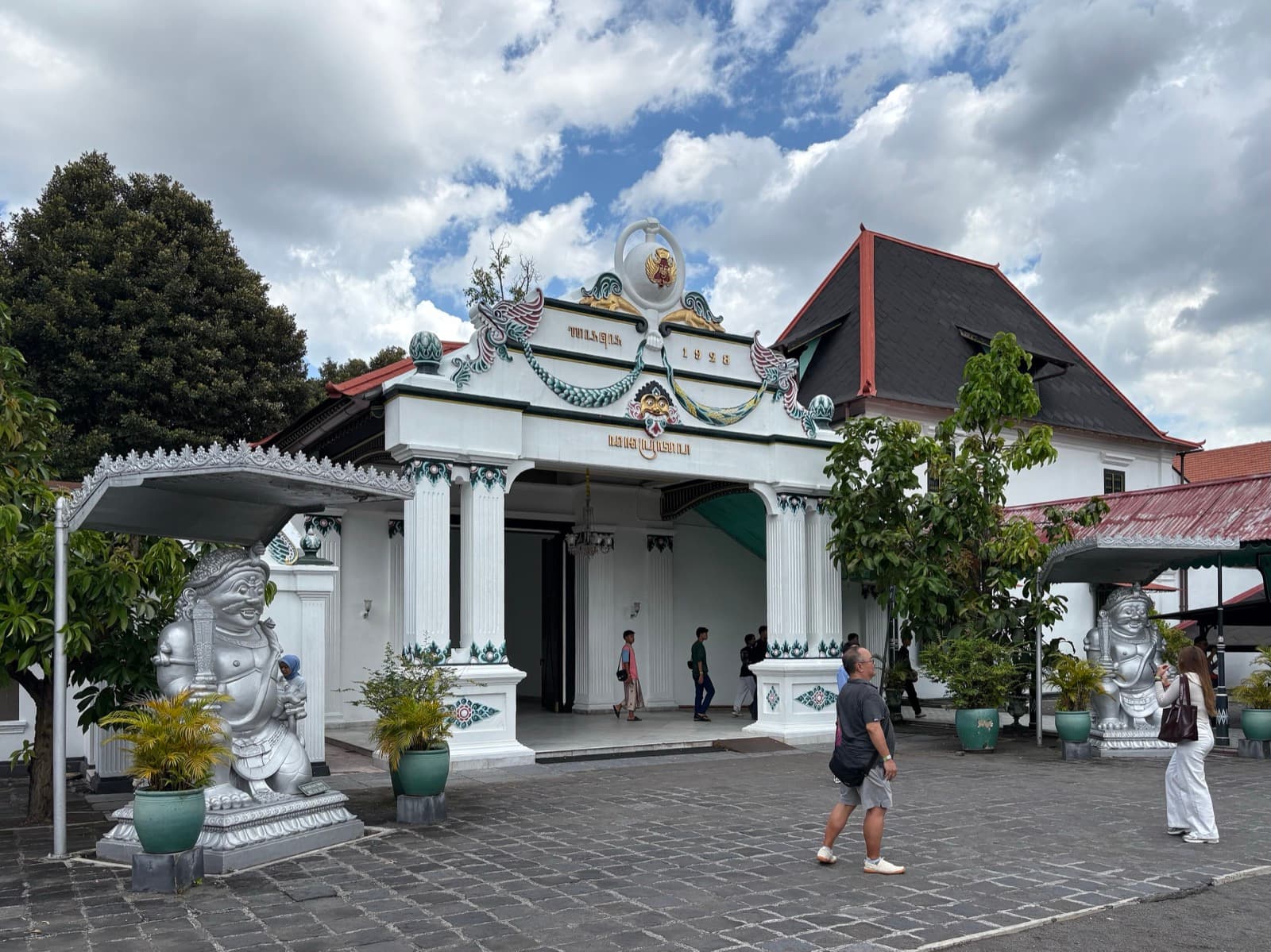
The Kraton at the Center: How Yogyakarta Was Drawn as a Single Straight Line
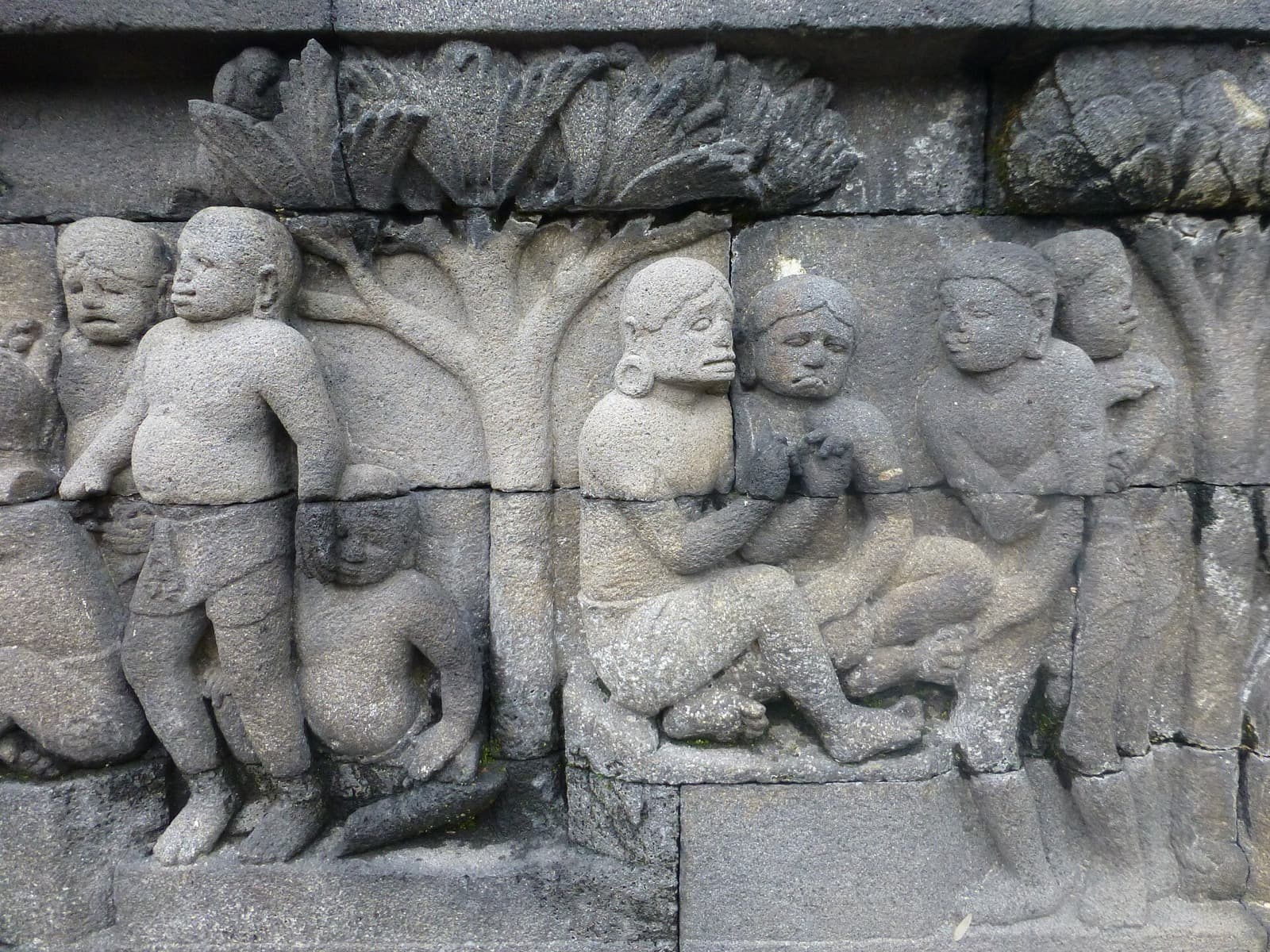
The Rupadhatu Galleries: How to Read Borobudur's 2,670 Carved Panels
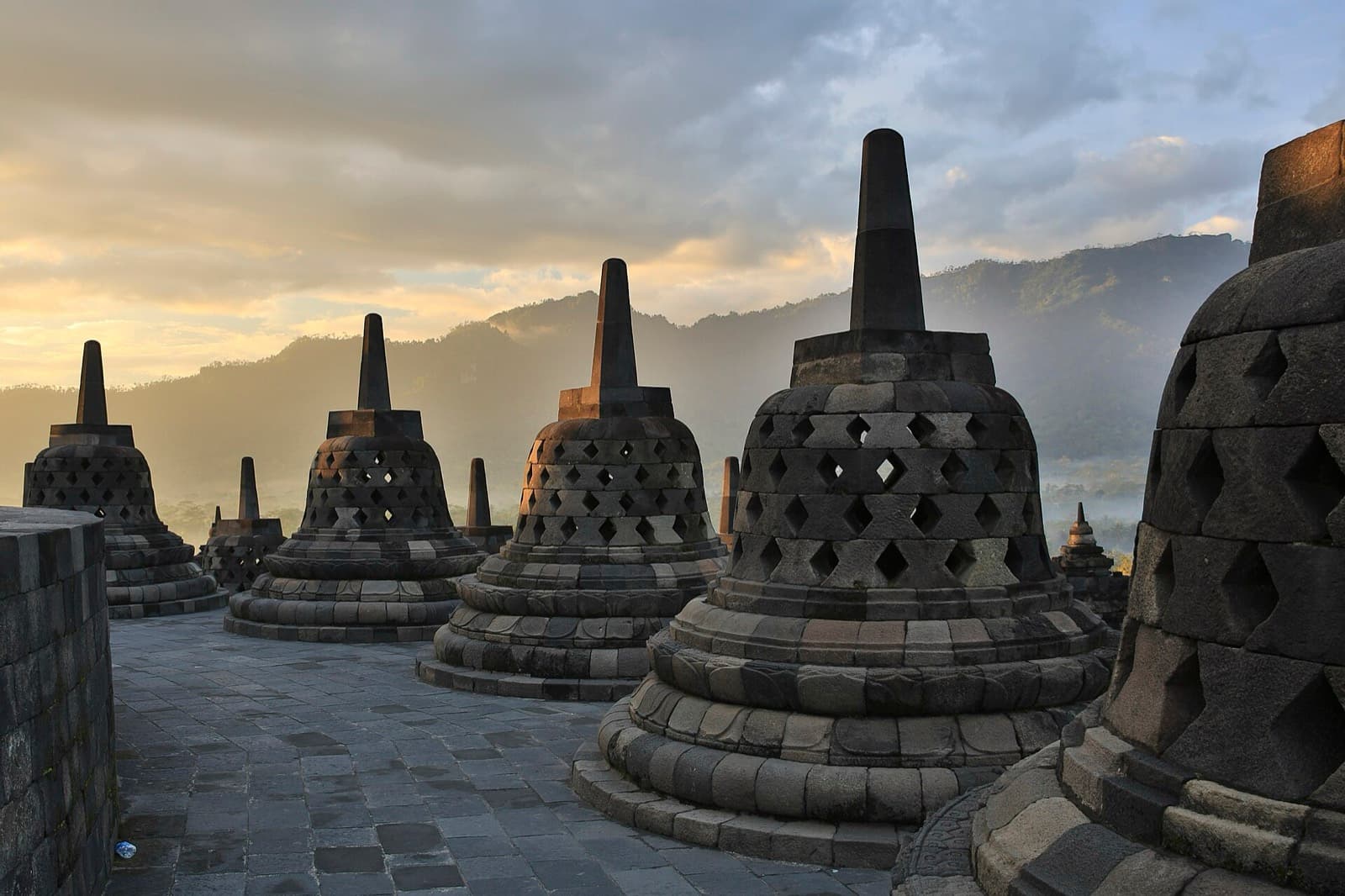
The 72 Perforated Stupas of Borobudur: Why the Buddha Is Half-Hidden