Old Town: Walking the Sultan's Sacred Line
150 min · 6 km · moderate
One honest day in Yogyakarta splits into two halves: a walkable morning down the Sultan's sacred axis through the old town, and an afternoon at one of two ninth-century temples reached by cheap public transport. The city center itself is genuinely walkable, a roughly six-kilometer line from the Tugu pillar in the north, down Malioboro, past the Kraton palace, to the southern square. Borobudur and Prambanan are not. They sit about 40 kilometers northwest and about 17 kilometers east of the center, so a real one-day plan walks the axis on foot and treats one temple as a half-day trip. Below is that plan, morning to evening, tied to three self-guided audio tours you can start with a tap.
The short version: spend the cool morning walking the old-town axis (self-guided, about two and a half to three hours), break for lunch, then take a train or shuttle out to either Prambanan (easiest by commuter train) or Borobudur (by tourist shuttle from Malioboro) for the afternoon, and return to the southern square in the evening when it comes alive. Trying to do both temples and the walk in a single day is possible but rushed. Pick one temple and give it room.
Morning: walk the Sultan's sacred line (about 7 to 10 a.m.)
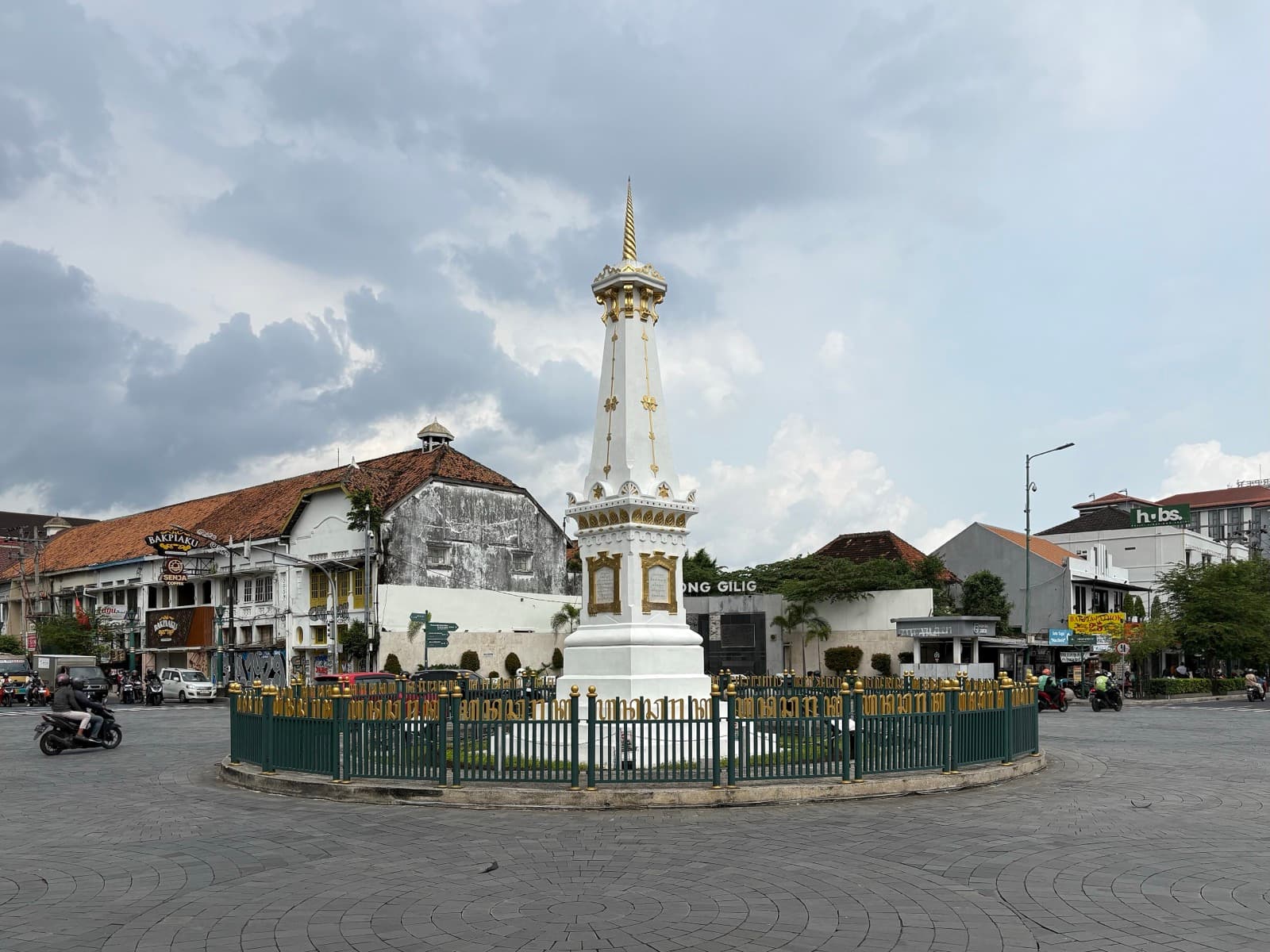
Start early. Yogyakarta sits close to the equator, and the midday sun on the open axis is fierce with little shade, so the cool end of the morning is when walking is pleasant. Begin at the Tugu Monument, the white-and-gold pillar at the northern crossroads that Sultan Hamengkubuwono the First raised in 1755, the year he founded the city. From there the Kraton and Malioboro self-guided tour reads the city the way its founder meant it to be read: a single straight line running roughly six kilometers south, from the pillar, down Malioboro market street, through Fort Vredeburg, into the palace, and on to the two royal squares. UNESCO inscribed this line as the Cosmological Axis of Yogyakarta in 2023.
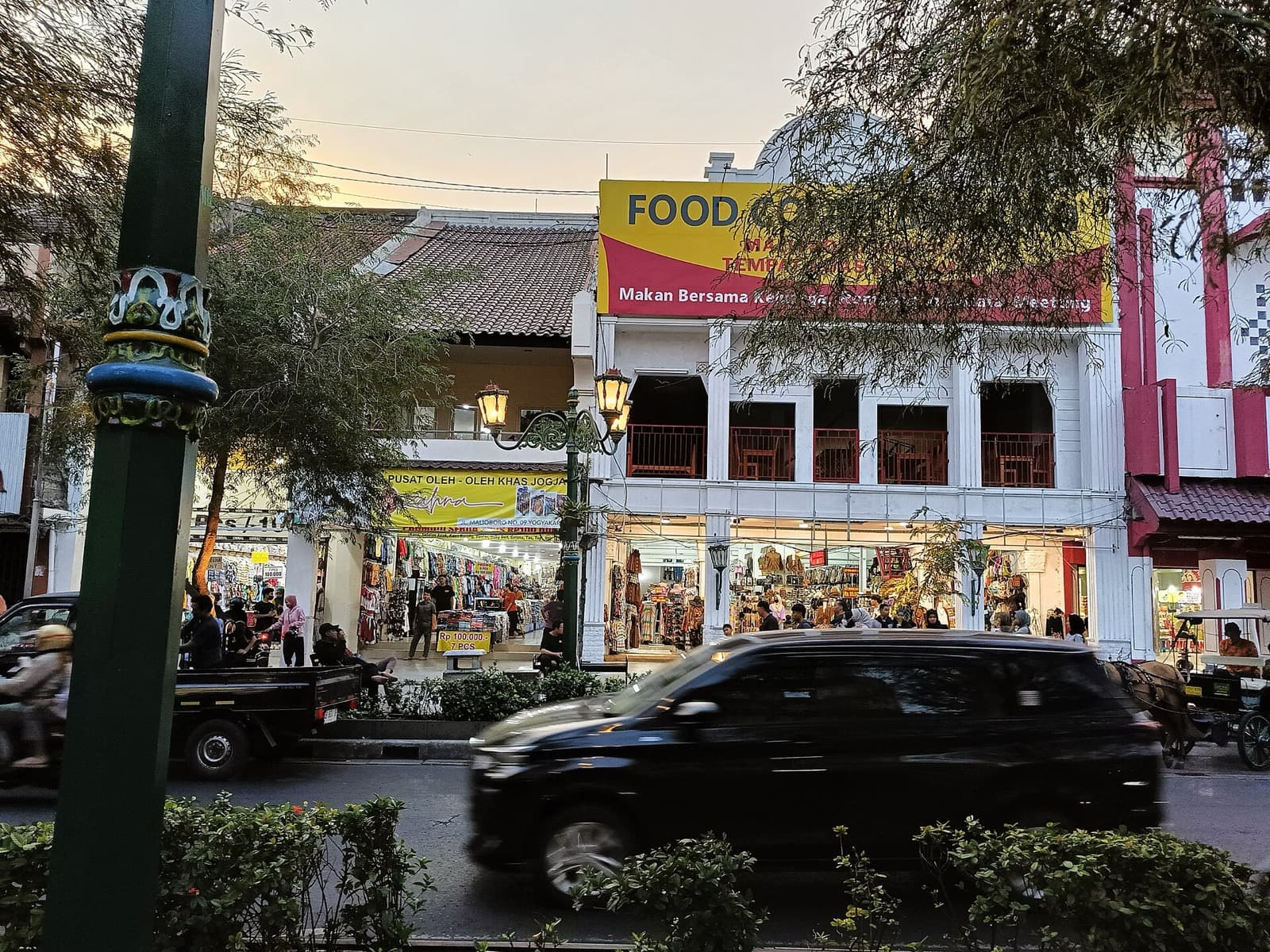
Walking south is the right direction, following the axis in the order it was designed. Malioboro is the middle segment, a market spine about two and a half kilometers long, thick with stalls and becak (the three-wheeled pedicabs). At its foot stands Fort Vredeburg, the low white Dutch fort now housing a history museum. Foreign entry there is a small fee, and it is optional. The audio tour covers all seven stops in roughly two and a half to three hours if you linger, and going self-guided means no group van and no one steering you into a particular shop.
Midday: the Kraton and Taman Sari before the heat peaks
Hear a stop from this walk
Alun-Alun Kidul: Where the Sacred Line Meets the Everyday
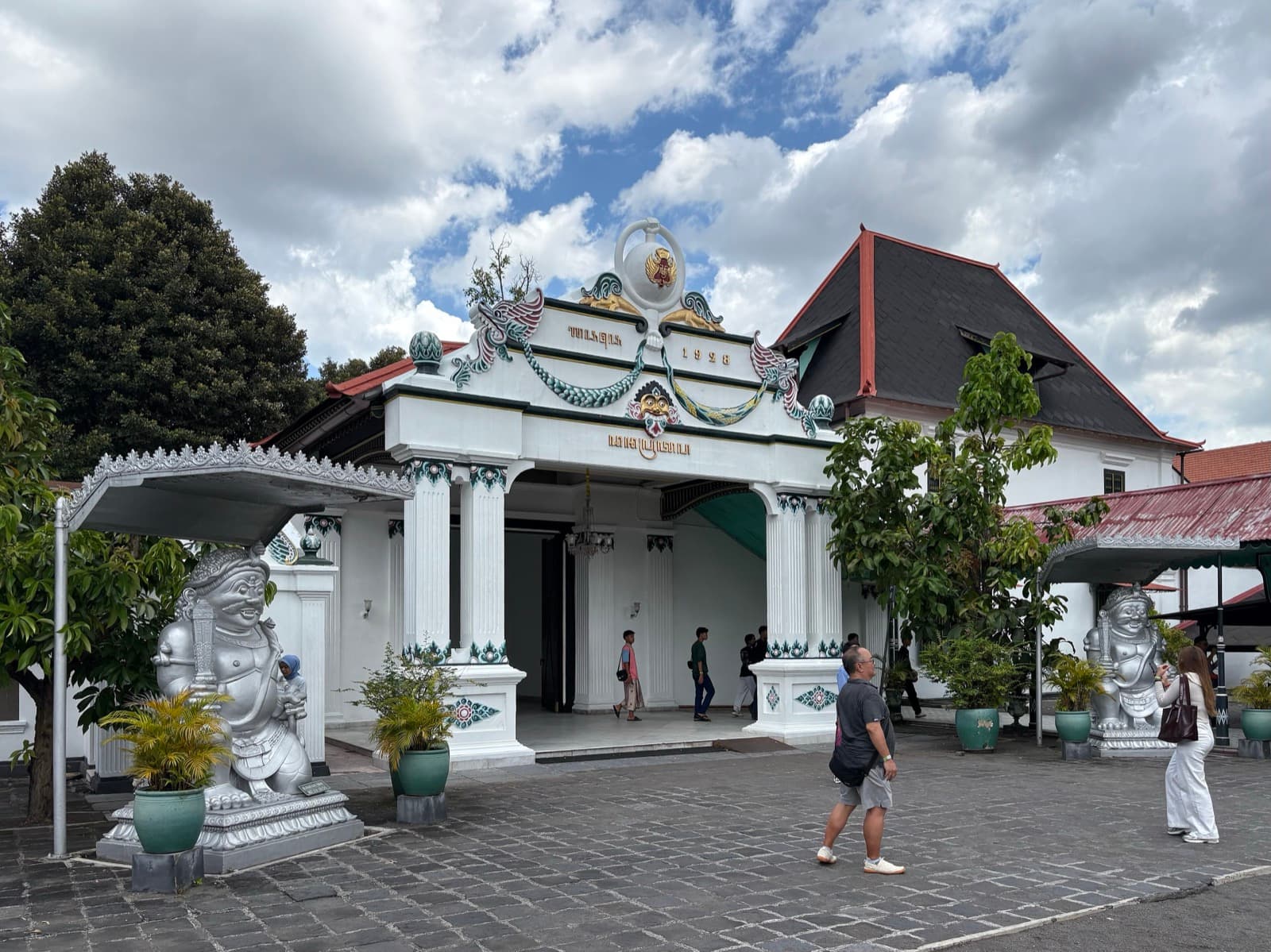
The two ticketed stops on the axis keep short daytime hours, so reach them before early afternoon. The Kraton, the walled palace at the center of the axis, is still the living residence of the reigning sultan, Hamengkubuwono the Tenth. It opens Tuesday through Sunday from about 8 a.m. to 2 p.m. and is closed Mondays, with foreign entry around 15,000 rupiah. Morning cultural performances (gamelan, court dance, wayang shadow puppetry) run on a rotating schedule. The court is Muslim, so cover shoulders and knees; a sarong is available at the entrance.
A short walk southwest brings you to Taman Sari, the sultan's water castle, with its mirrored bathing pools and the circular underground mosque of Sumur Gumuling. It opens daily from about 9 a.m. to 3 p.m., with foreign entry around 15,000 to 25,000 rupiah (check at the gate, as it was raised in recent years). Both sites draw large tour groups by late morning, which is a second reason to arrive early. Break for lunch near the palace after this stretch.
Afternoon: choose one temple
Both ninth-century temple complexes are day trips from the center, and each has its own self-guided audio tour. Do not try to squeeze in both plus the city walk in one day. Pick the one that fits your afternoon.
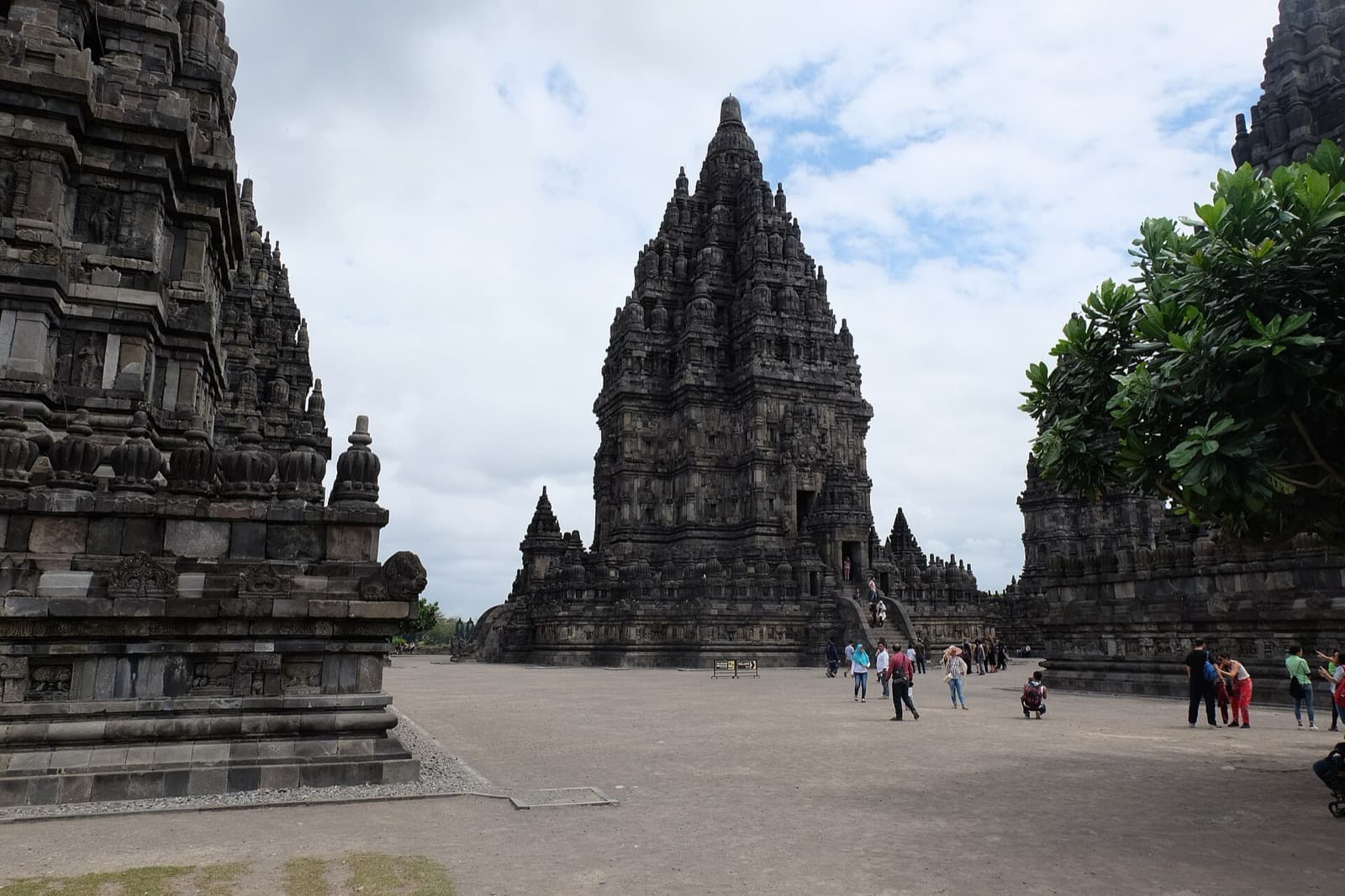
Prambanan is the easier choice for an independent afternoon. It sits about 17 kilometers east, and the simplest way there is the KRL commuter train from Tugu or Lempuyangan station to Brambanan station (a flat fare of 8,000 rupiah), then about a one-kilometer walk to the gate. Trans Jogja bus (route 1A) also runs there for a few thousand rupiah. The Prambanan self-guided tour walks the compound clockwise around the 47-meter tower to Shiva at its heart, past the Ramayana reliefs, and out to Candi Sewu, Indonesia's second-largest Buddhist complex, reachable on the same ticket. Prambanan opens daily from about 6:30 a.m. to 5 p.m., with last entry around 4:30 p.m. The inner courtyard around the three main towers closes on Mondays for maintenance, though the outer zones and Sewu stay open. Foreign admission runs in the low hundreds of thousands of rupiah, so carry enough cash or a card and confirm the current price at the gate.
Borobudur is the bigger commitment. It lies about 40 kilometers northwest, a one to one-and-a-half-hour ride each way. The cheapest independent route is the tourist shuttle from a stop on Malioboro near the Bank Indonesia building opposite Fort Vredeburg, with departures spread across the day. The grounds open from about 6:30 a.m. to 5:30 p.m. Note the crucial split: a general park-entry ticket lets you walk the grounds, but climbing the monument itself requires a separate timed upper-terrace ticket sold under a strict daily quota and closed on Mondays, so book that a week or two ahead if you want to go up. The Borobudur self-guided tour is built around the climb, reading the monument as a stone diagram from the hidden base up through the relief galleries to the perforated stupas and the sealed central dome at the summit. Both temple admissions are meaningfully more expensive than the city sites, in the range of a few hundred thousand rupiah for foreign adults, so plan cash accordingly.
Evening: back to the southern square
However you spend the afternoon, aim to return to the old town for the evening and close the loop at Alun-Alun Kidul, the southern royal square that ends the sacred axis. It is the liveliest part of the walk after dark, when locals gather around the twin banyan trees at its center and people attempt Masangin, the blindfold walk between the two trees for a wish. It is free and public. Standing here in the cool of the evening, you have read the whole city on foot, from the northern pillar to the sea's end.
Practical notes
Carry small rupiah cash for entry fees and shuttle fares, keep bags zipped and in front of you in the Malioboro crowds, and agree any becak fare before you set off. Bring water, a hat, and sunscreen, and be ready for sudden heavy rain in the wet season. For the full trip plan and to start any of the three audio walks, see the Yogyakarta walking tours hub and the city page at /indonesia/yogyakarta.
Sources
- The Cosmological Axis of Yogyakarta and its Historic Landmarks, UNESCO World Heritage Centre
- Borobudur Temple Compounds, UNESCO World Heritage Centre
- Prambanan Temple Compounds, UNESCO World Heritage Centre
- Borobudur Opening Hours & Fees, borobudurtemple.org
- Borobudur Guide 2026: How to visit independently by public transport, Minimalist Journeys
Frequently asked questions
- Can you see Borobudur and Prambanan in one day from Yogyakarta?
- It is possible but rushed, and it leaves little time for the city itself. Borobudur is about 40 kilometers northwest and Prambanan about 17 kilometers east, in opposite directions, each a temple that rewards slow walking. For a calmer day, walk the old-town axis in the morning and pick just one temple for the afternoon.
- How do you get from Yogyakarta city center to Prambanan?
- The easiest independent option is the KRL commuter train from Tugu or Lempuyangan station to Brambanan station, a flat fare of 8,000 rupiah, followed by about a one-kilometer walk to the gate. Trans Jogja bus route 1A also runs there for a few thousand rupiah. The trip takes well under an hour.
- How do you get to Borobudur from Yogyakarta on public transport?
- A tourist shuttle departs from a stop on Malioboro near the Bank Indonesia building opposite Fort Vredeburg, with departures spread across the day. The ride is about 40 kilometers and takes one to one and a half hours each way. A private car with driver is faster but costs far more.
- Is the Yogyakarta Kraton open every day?
- No. The palace opens Tuesday through Sunday, roughly 8 a.m. to 2 p.m., and is closed on Mondays. Foreign entry is around 15,000 rupiah. Because the court is Muslim, cover your shoulders and knees, and a sarong is available at the entrance if you need one.
- Do you need a separate ticket to climb Borobudur?
- Yes. A general park-entry ticket lets you walk the grounds, but climbing the monument itself requires a separate timed upper-terrace ticket sold under a strict daily quota, and the climb is closed on Mondays for maintenance. If you want to go up, book that ticket a week or two in advance.
- Is Yogyakarta's old town walkable?
- Yes. The historic axis from the Tugu pillar in the north, down Malioboro, through the Kraton, to the southern square is a roughly six-kilometer straight line designed to be walked. A self-guided route covers it in about two and a half to three hours at an easy pace.
Ready to experience it?
Old Town: Walking the Sultan's Sacred Line
150 min · 6 km · moderate
More from Yogyakarta
Explore more at your own pace.
Candi Shiva: How Prambanan's Tallest Tower Organizes an Entire Temple City
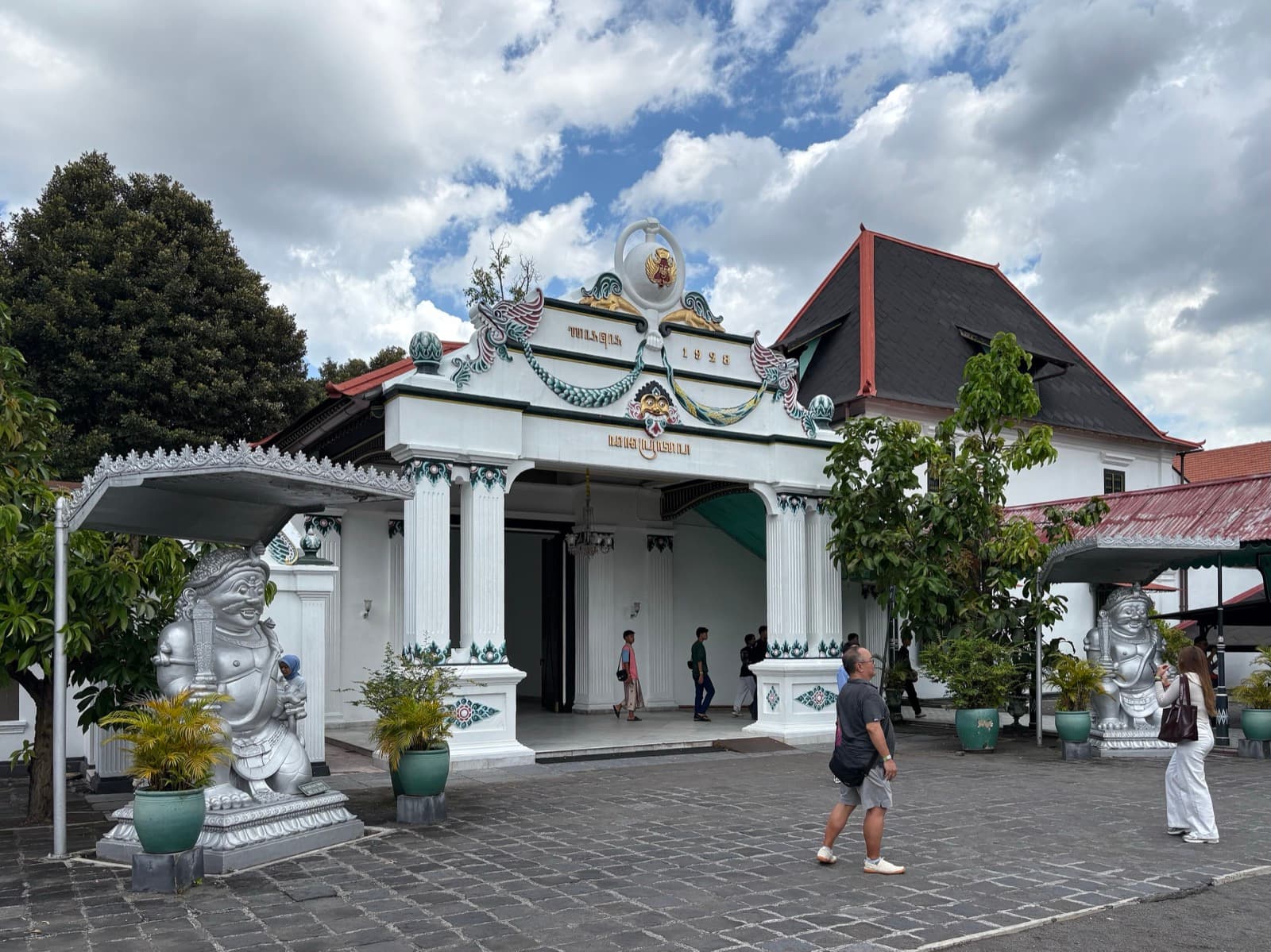
The Kraton at the Center: How Yogyakarta Was Drawn as a Single Straight Line
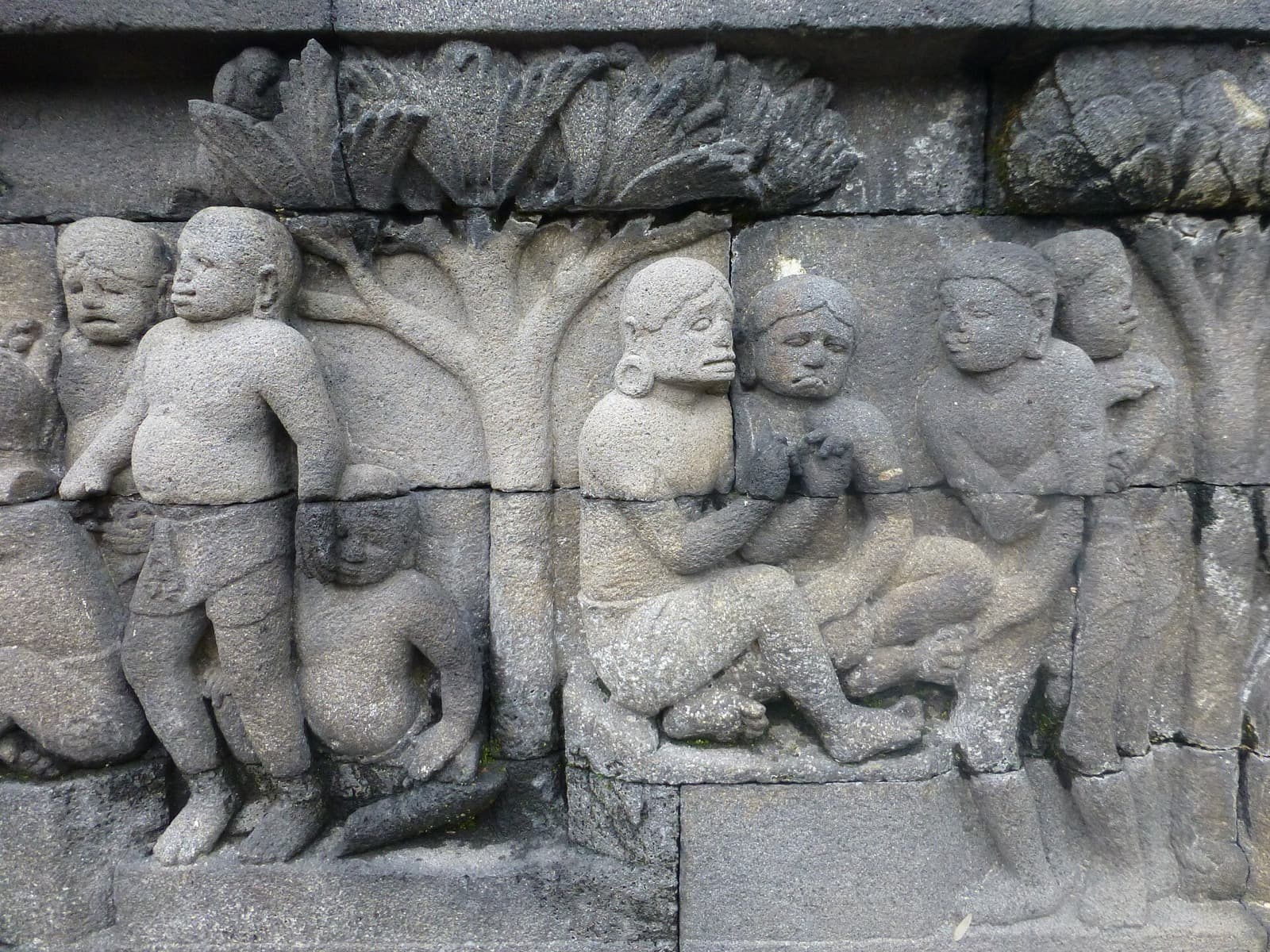
The Rupadhatu Galleries: How to Read Borobudur's 2,670 Carved Panels
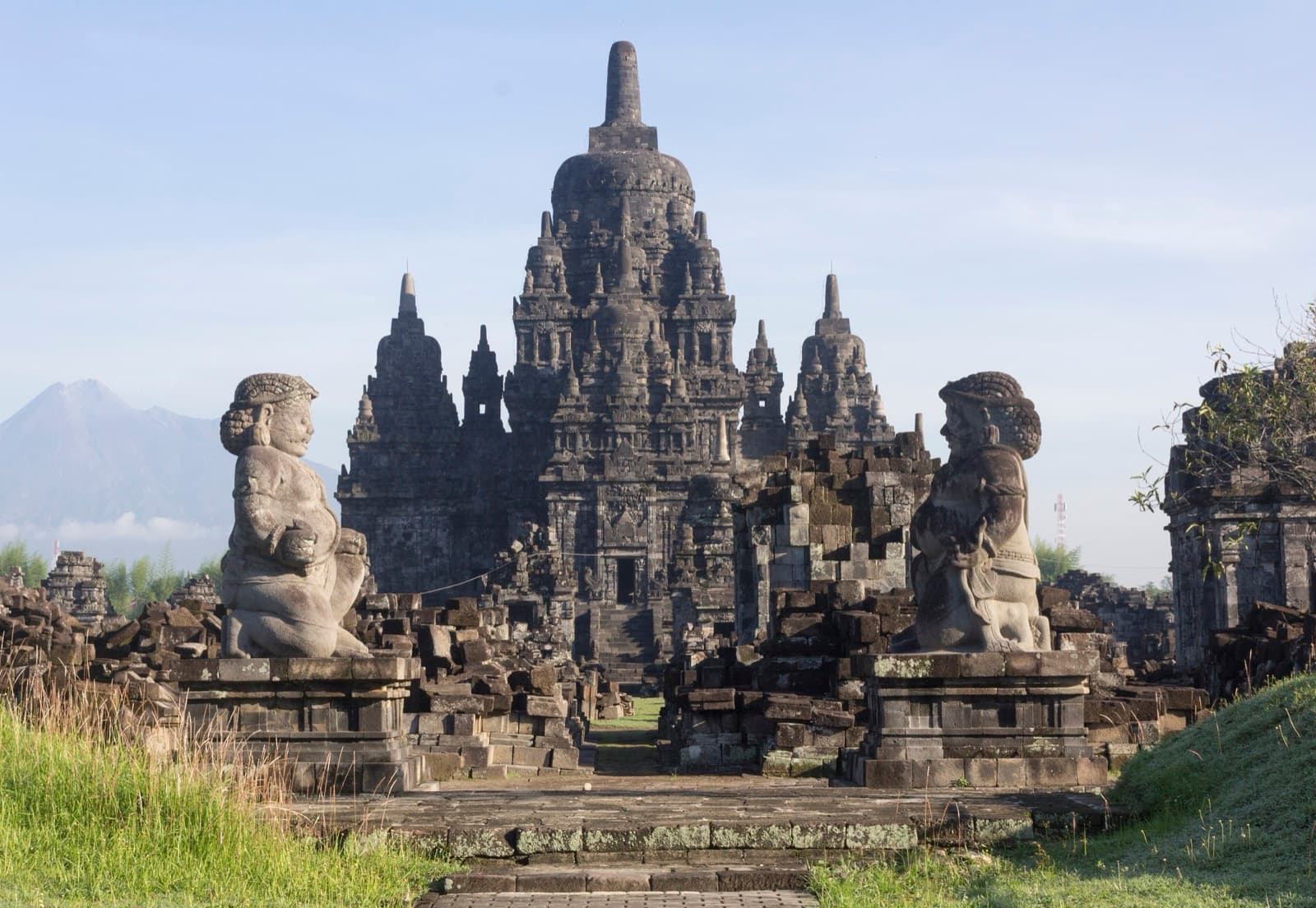
Candi Sewu: The Buddhist "Thousand Temples" That Number 249
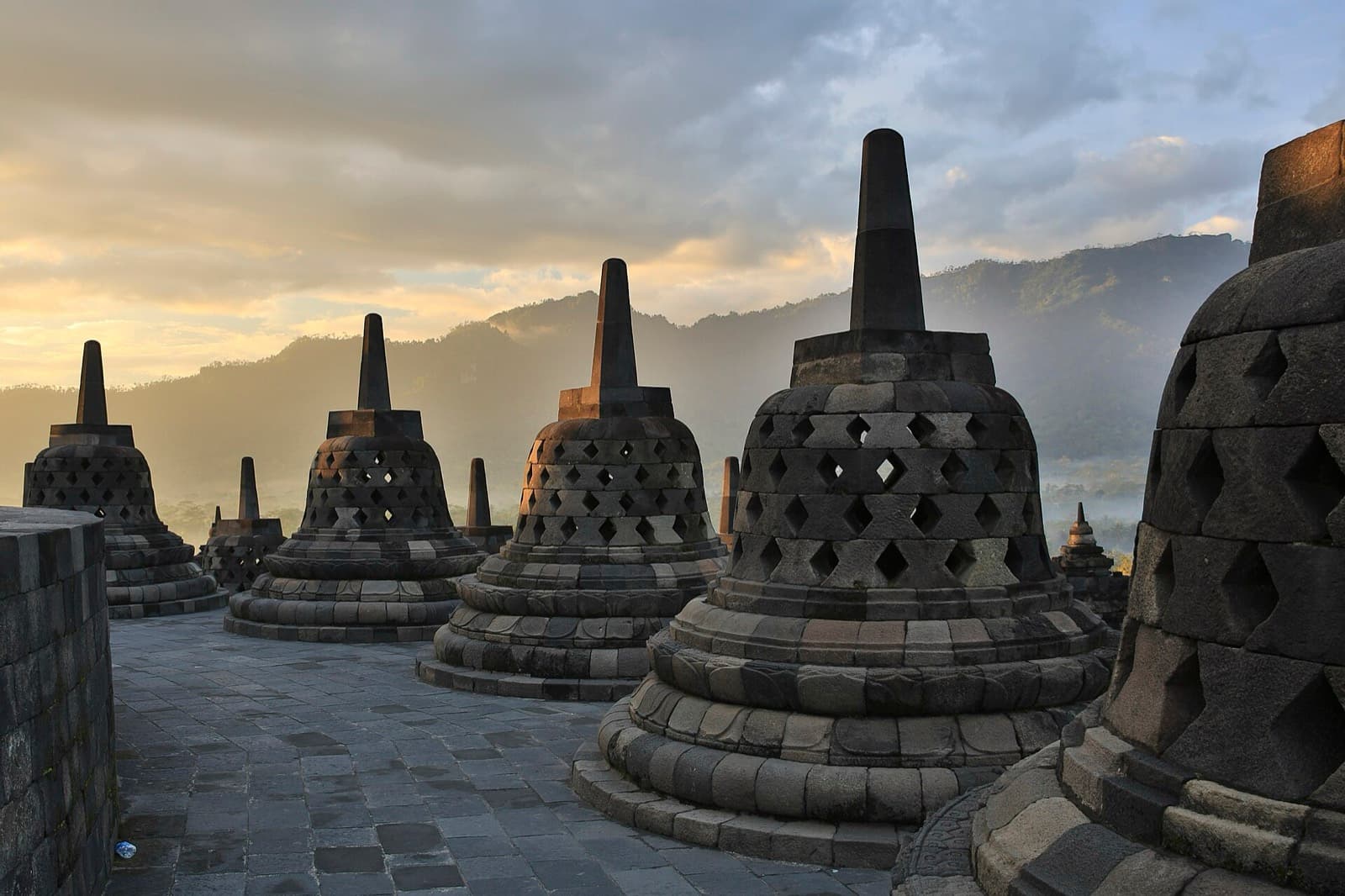
The 72 Perforated Stupas of Borobudur: Why the Buddha Is Half-Hidden