Old Town: Walking the Sultan's Sacred Line
150 min · 6 km · moderate
Yogyakarta's signature dish is gudeg, young jackfruit slow-cooked for hours with coconut milk, palm sugar, and spices until it turns sweet and reddish-brown, and the city eats it so constantly that Indonesians call Yogyakarta the City of Gudeg. Around that anchor sits a small, specific set of dishes you should order by name: gudeg with its beef-skin krecek and marbled egg, sate klathak grilled on iron bicycle spokes, bakpia mung-bean pastries sold by house number, and charcoal-dropped kopi joss from a street cart near the train station. This guide covers each dish, where the tradition comes from, and how to order it without guesswork, then hands you off to the walking routes through the streets where these foods actually live.
Gudeg: the sweet jackfruit stew the city is named for
Order gudeg first, because it is the dish that defines the place. It is made from young, unripe jackfruit stewed for several hours with palm sugar and coconut milk, spiced with garlic, shallot, candlenut, coriander seed, galangal, and bay leaves. Teak leaves are added to the pot, and they are what turn the stew its deep reddish-brown color. The taste leans sweet, which surprises people expecting Indonesian food to be fiery. That sweetness is the point of Yogyakarta cooking, not an accident.
The name tells you how it is made. Gudeg comes from the Javanese word for stirring (hangudek, sometimes written hangudeg), because the earliest versions were cooked in enormous pots stirred for hours with large wooden paddles. The dish is traditionally traced back to the era of the Mataram Kingdom, whose old seat at Kotagede is inside modern Yogyakarta, when an abundance of young jackfruit and coconut gave cooks the raw material for a stew that could feed many people at once.
You almost never eat gudeg alone. A standard plate is gudeg over white rice with several companions: opor ayam (chicken simmered in coconut milk), telur pindang (a hard-boiled egg cooked until the white marbles brown), and sambal goreng krecek, a spicy stew of crisp beef skin that adds the chili heat the jackfruit lacks. Ask for it "komplit" (complete) and you will get the full arrangement.
There are two textures to know before you order. Gudeg kering (dry gudeg) is cooked down further, with less liquid, so it keeps longer and travels well, which is why it is the version sold as a boxed souvenir. Gudeg basah (wet gudeg) keeps more of its coconut-milk sauce and is eaten fresh on the plate. If you want the softer, saucier bowl, say basah; if you want the concentrated, portable kind, say kering.
Where to eat it: the recognized center for gudeg is Wijilan, the short street just east of the northern royal square, the Alun-Alun Utara, where more than a dozen gudeg houses cluster together. This is a two-minute detour from the Kraton and the north square on the Yogyakarta walking tours route through the old town, so you can time your walk to end at a bowl of gudeg. Gudeg Yu Djum, one of the long-running names in the Wijilan area, has been serving since around 1950.
Sate klathak: goat grilled on bicycle spokes
Hear a stop from this walk
Alun-Alun Kidul: Where the Sacred Line Meets the Everyday
Sate klathak is Yogyakarta's most distinctive skewer, and it breaks nearly every rule of Indonesian satay. Most sate is bathed in a complex spice marinade and drowned in peanut or sweet-soy sauce. Sate klathak is the opposite: chunks of goat or mutton seasoned with almost nothing beyond salt, a little garlic, and pepper, grilled plain over charcoal, and served with rice and a bowl of savory gulai-style broth on the side. The simplicity is deliberate, meant to let the meat itself carry the plate.
The signature detail is the skewer. Instead of bamboo, the meat is threaded onto thin iron rods, and by tradition those rods were repurposed bicycle wheel spokes. The metal conducts heat into the center of the meat so the thick chunks cook evenly. The name klathak is said to imitate the crackling sound the salt and fat make on the charcoal, from the Javanese word for open-fire grilling.
The dish is local to a specific spot. It grew up in Jejeran, in the Wonokromo area of Pleret district in Bantul Regency, south of the city center, where roadside grills built it into a regional specialty. You will find sate klathak stalls in central Yogyakarta too, so you do not have to leave town to try it, but its home ground is south of the old city. Order it as "sate klathak" and expect two skewers per portion with rice and broth.
Bakpia: the mung-bean pastry you carry home
Bakpia is the pastry you buy in a box to take with you, and it is worth understanding before you pick a shop. It is a small, round, slightly crisp pastry with a soft filling, most classically a smooth sweet mung-bean paste, though you will now find chocolate, cheese, durian, and other fillings. The pastry is Chinese in origin: the name comes from a Hokkien term meaning something close to bean cake, and it was brought to Yogyakarta by a Chinese merchant around the 1940s, when the filling was still savory before the sweet mung-bean version took over.
The dish is named for a district. Pathok (also spelled Pathuk), a neighborhood just west of the southern end of Malioboro, is where the pastry became a Yogyakarta specialty, which is why the full name is often bakpia pathok. The makers there sort themselves out with a system you should recognize on the packaging: each shop labels its bakpia with its street house number. Bakpia Pathok 25 is the number you will see most on souvenir boxes, one of the pioneers of the Yogyakarta style. When someone recommends "bakpia 25" or "bakpia 75," they mean the shop at that house number, not a flavor. Buy it fresh and eat it within a few days; the freshest boxes are noticeably softer than shelf-stable ones.
Kopi joss and angkringan: charcoal coffee at a street cart
For the drink, order kopi joss, and order it where it was invented. An angkringan is a low, cart-based street stall, usually lit by a small lamp, that serves cheap snacks and drinks late into the evening, often near stations and night markets. Kopi joss is a glass of sweet black coffee into which the vendor drops a lump of glowing charcoal straight from the brazier. The name joss imitates the hiss the charcoal makes hitting the liquid. The charcoal is fished out or left to settle, and the result is a slightly smoky, mellowed cup.
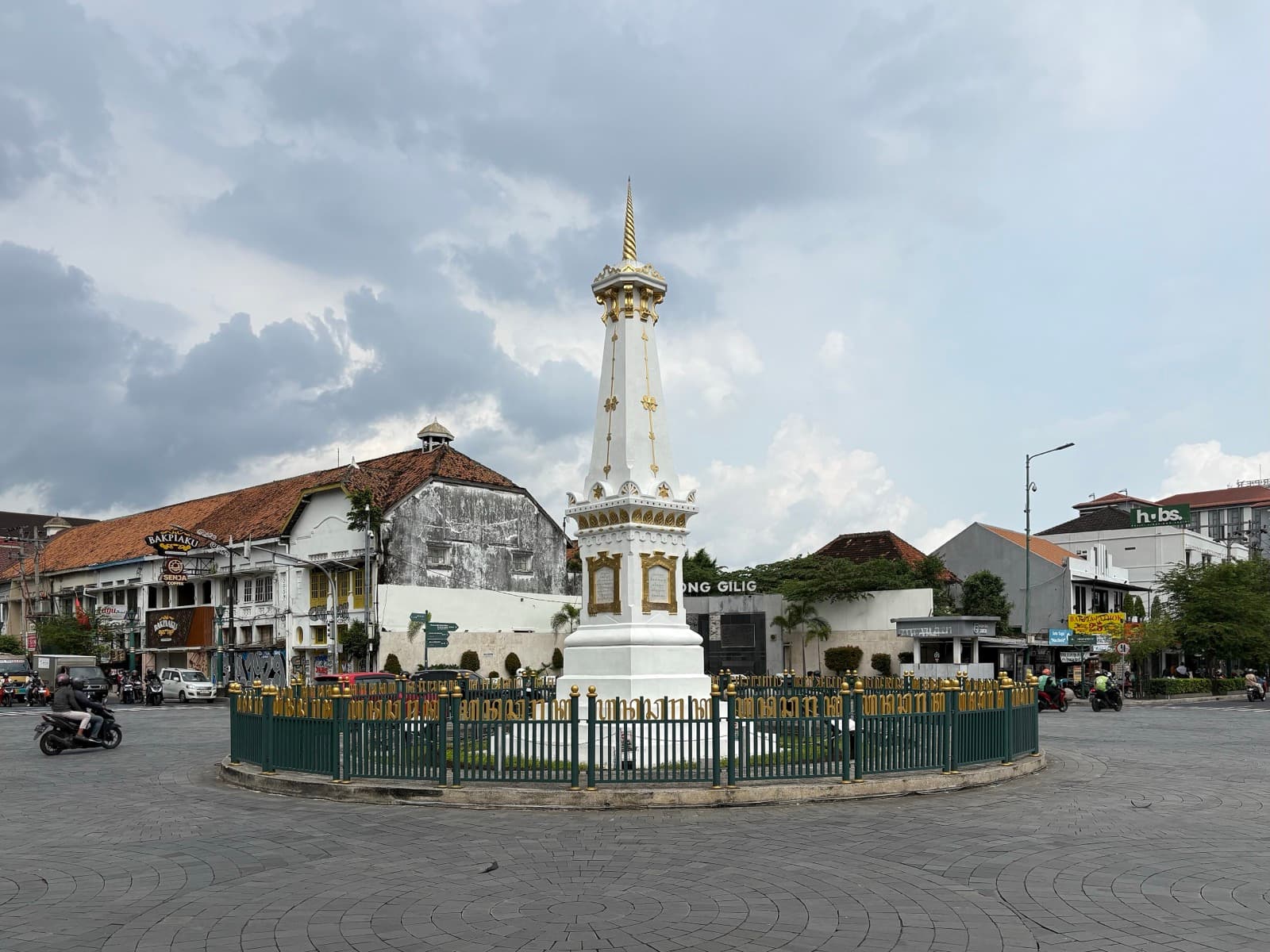
The drink was born at a single stall. Angkringan Lek Man, near Tugu train station at the north end of Malioboro, sat close enough to the railway that many customers were rail workers from East Java who ordered a boiled-coffee style called kopi kothok. The vendor took to dropping a burning coal into the glass, customers named it kopi joss, and the drink stuck. The angkringan also serves the classic cheap-eats spread, including nasi kucing, "cat rice," so called because each banana-leaf packet holds only a small palm of rice with a spoonful of sambal, anchovy, or vegetable. You buy a few packets, some skewers, and a coffee, and sit at the mat for very little money. This is the everyday, unhurried end of Yogyakarta eating, and it is a short walk from the Tugu monument where the old-town route begins.
How to order like a local
A few practical habits make ordering smoother. Gudeg is best at breakfast and lunch, when the pots are freshest, so plan it early. Say "komplit" for the full plate, "basah" for saucy or "kering" for dry. For sate klathak, expect a wait, since it is grilled to order, and eat it while the broth is hot. Bakpia is a take-away souvenir, not a sit-down meal, so buy it near the end of your day and keep it flat. Kopi joss belongs to the evening, when the angkringan carts open. Carry small rupiah notes, because these are cash places, and street prices are already low.
Most of these foods sit right on the walking spine of the old city, from the Tugu monument in the north, down Malioboro past the bakpia district of Pathok, to the Kraton and the Wijilan gudeg street beside the north square. You can build your eating around a walk rather than a taxi. Start with the self-guided route through that exact corridor on the Yogyakarta walking tours page, and see the full set of routes, including the temple day trips to Borobudur and Prambanan, on the city page at /indonesia/yogyakarta. Walking the axis solo means you set your own pace, stop at whichever gudeg house or angkringan cart pulls you in, and eat when you are hungry rather than when a group schedule says so.
Sources
Frequently asked questions
- What is Yogyakarta's most famous food?
- Gudeg, a stew of young jackfruit slow-cooked for hours with coconut milk, palm sugar, and spices until it turns sweet and reddish-brown. Yogyakarta is so associated with it that Indonesians call the city the City of Gudeg. It is usually served over rice with chicken in coconut milk, a marbled hard-boiled egg, and spicy beef-skin krecek.
- What is sate klathak and why is it grilled on bicycle spokes?
- Sate klathak is goat or mutton satay seasoned simply with salt, a little garlic, and pepper, grilled plain over charcoal, and served with rice and a savory broth. It is threaded onto thin iron rods rather than bamboo, and by tradition those rods were repurposed bicycle wheel spokes, because the metal conducts heat into the center of the thick meat chunks. The dish comes from the Jejeran area of Pleret in Bantul Regency, south of the city.
- What is bakpia and where does it come from?
- Bakpia is a small round pastry with a soft filling, most classically sweet mung-bean paste. It is Chinese in origin, with a name from a Hokkien term meaning bean cake, and it was brought to Yogyakarta by a Chinese merchant around the 1940s. It is named after the Pathok district and shops label themselves by house number, such as Bakpia Pathok 25.
- What is kopi joss?
- Kopi joss is sweet black coffee with a lump of glowing charcoal dropped into the glass, which gives it a slightly smoky, mellowed taste. The name imitates the hiss the hot charcoal makes hitting the liquid. It was invented at Angkringan Lek Man, a street cart near Tugu train station in Yogyakarta, and is sold at angkringan carts in the evening.
- Where is the best place to eat gudeg in Yogyakarta?
- Wijilan, a short street just east of the northern royal square (Alun-Alun Utara), is the recognized gudeg center, with more than a dozen gudeg houses clustered together. It is a two-minute detour from the Kraton on the old-town walking route. Gudeg Yu Djum in the Wijilan area has served the dish since around 1950.
- What is the difference between gudeg kering and gudeg basah?
- Gudeg kering (dry gudeg) is cooked down further with less liquid, so it keeps longer and is the version sold in souvenir boxes. Gudeg basah (wet gudeg) keeps more of its coconut-milk sauce and is eaten fresh on the plate. Ask for basah if you want the saucier bowl and kering if you want the concentrated, portable kind.
Ready to experience it?
Old Town: Walking the Sultan's Sacred Line
150 min · 6 km · moderate
More from Yogyakarta
Explore more at your own pace.
One Day in Yogyakarta: A Walkable Itinerary
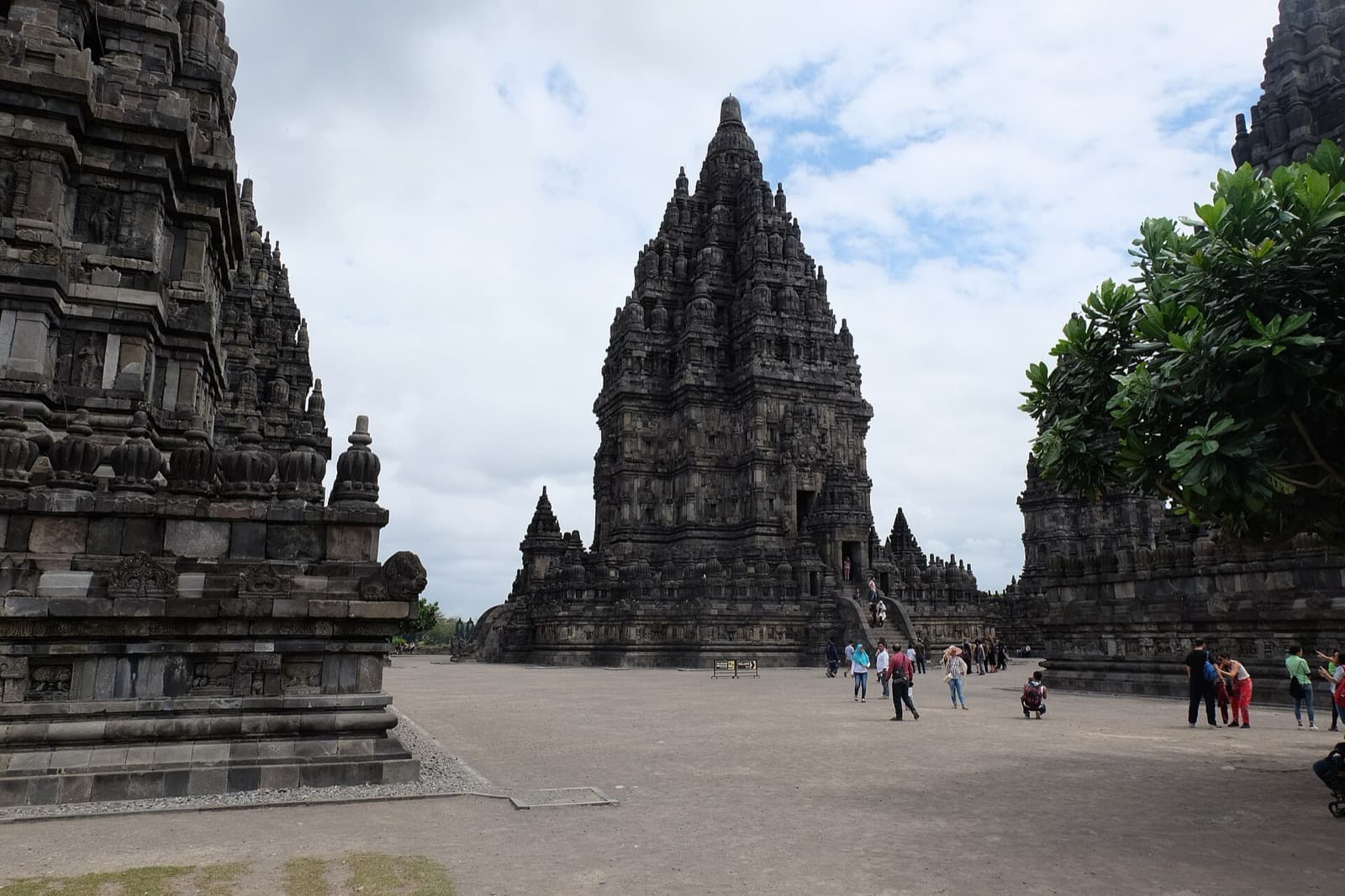
Candi Shiva: How Prambanan's Tallest Tower Organizes an Entire Temple City
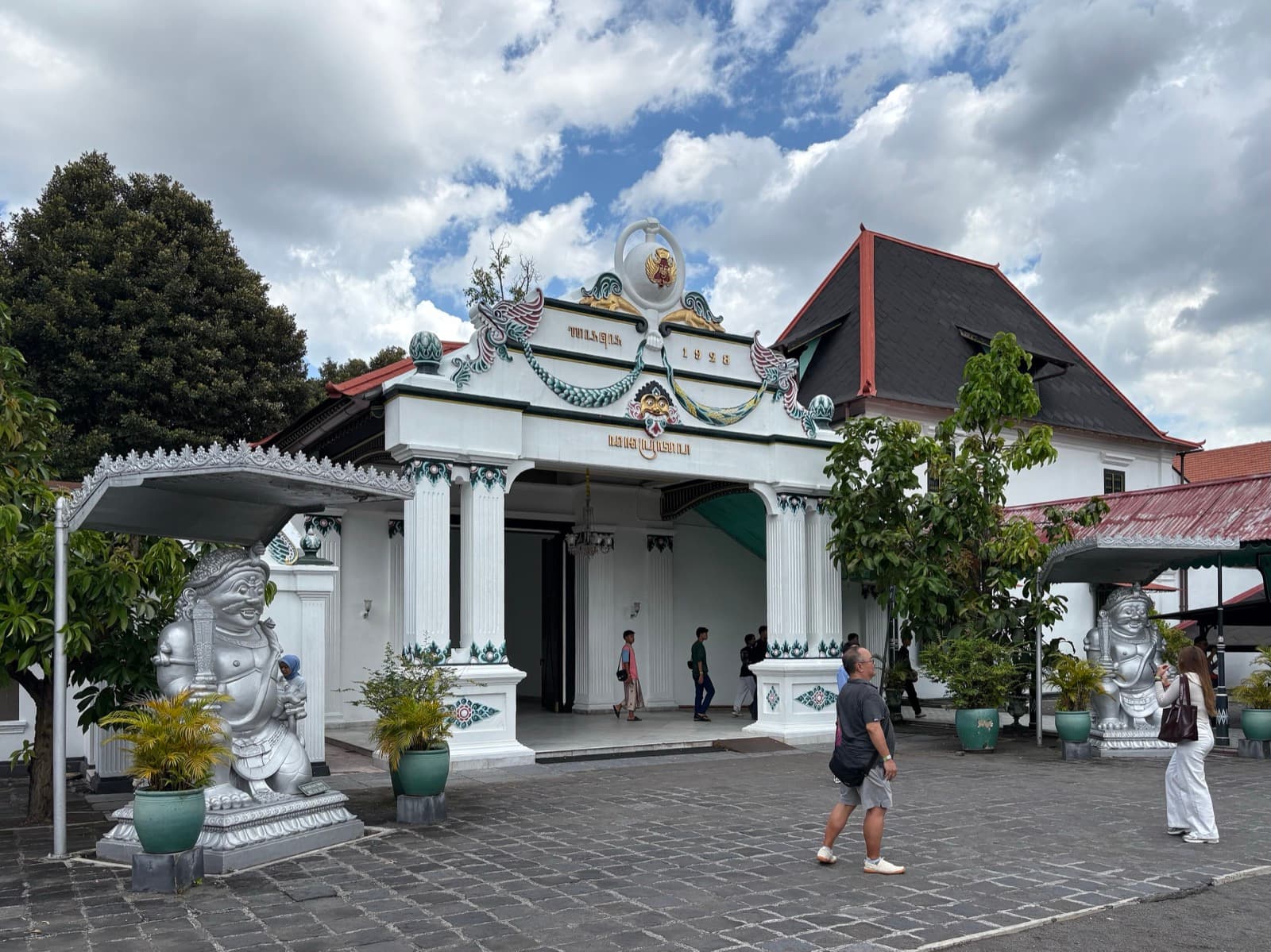
The Kraton at the Center: How Yogyakarta Was Drawn as a Single Straight Line
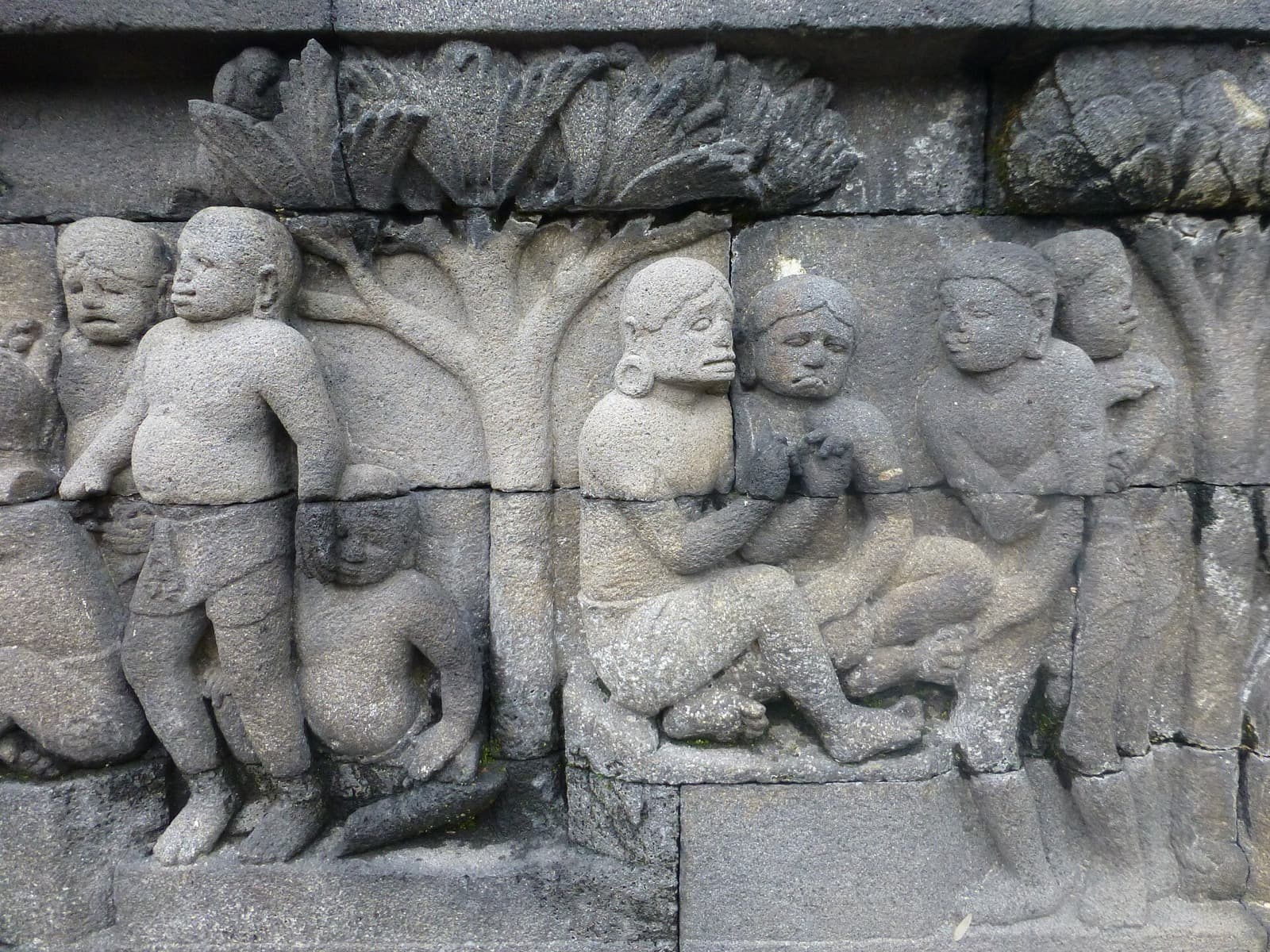
The Rupadhatu Galleries: How to Read Borobudur's 2,670 Carved Panels
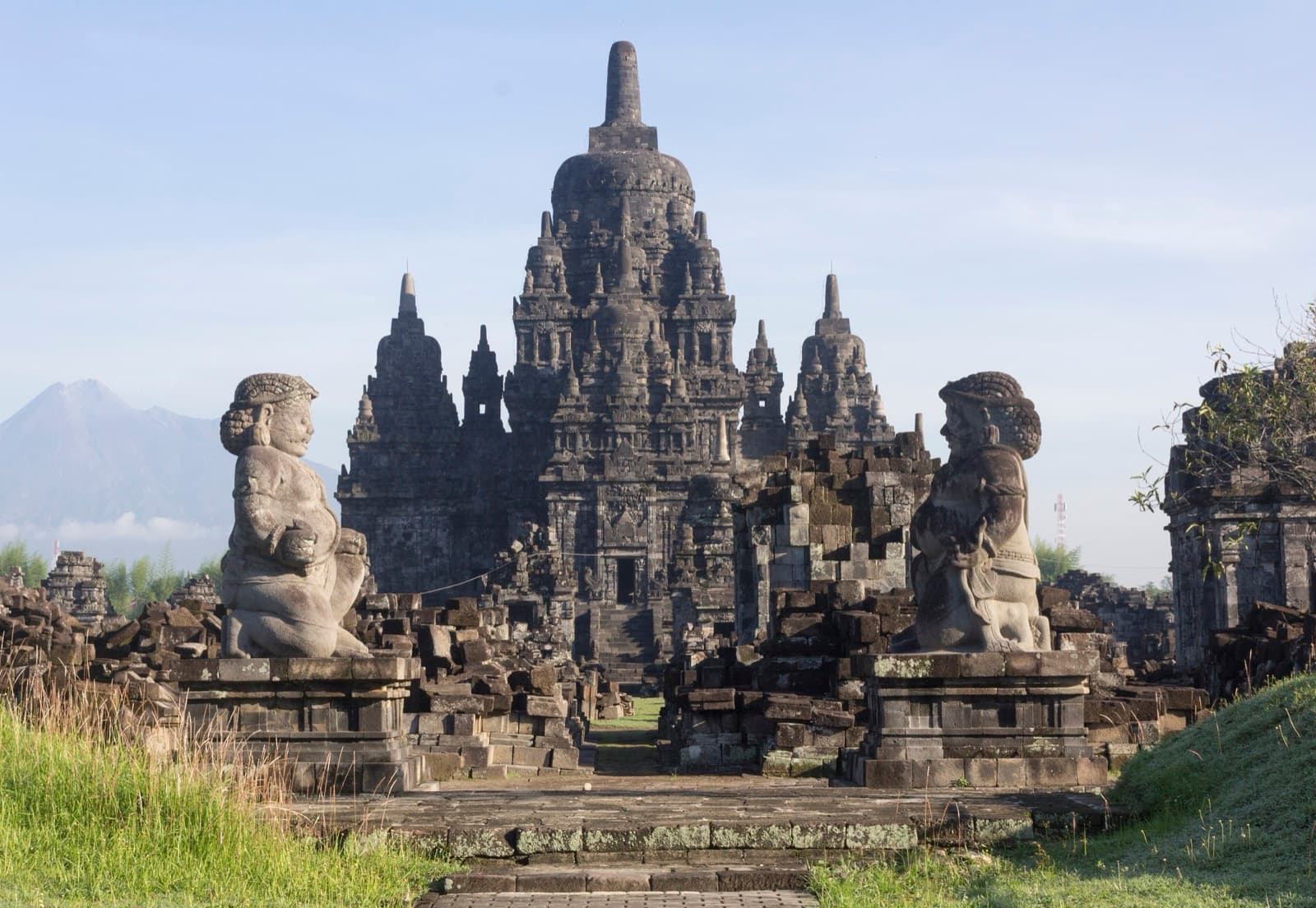
Candi Sewu: The Buddhist "Thousand Temples" That Number 249