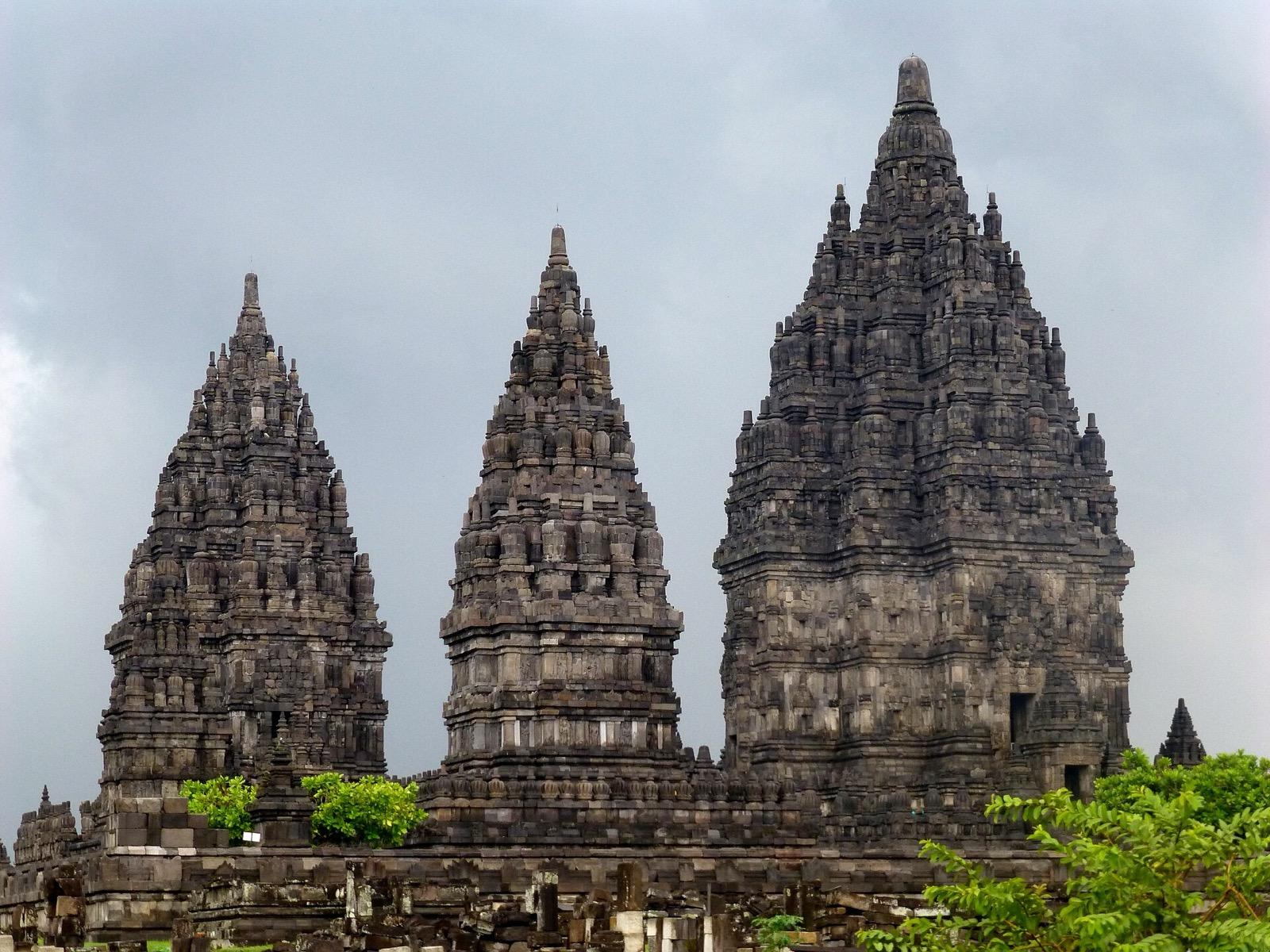
A slow, clockwise walk through Indonesia's largest Hindu temple compound, where a forty-seven metre tower to Shiva stands at the heart of a ninth-century plan and a folk legend of a princess turned to stone.
Start · The East Gate: Where the Epic Begins
DirectionsStops
- 1
The East Gate: Where the Epic Begins
The eastern gate of the Prambanan compound, where both the carved Ramayana story and your own clockwise walk begin.
- 2

The Field of Broken Shrines: The Perwara Ruins
The scattered field of ancillary shrines that once ringed the central towers in four concentric rows.
- 3
Candi Shiva: The Tallest Temple to a Broken Heart
The central Shiva temple, forty-seven metres tall, holding a Shiva statue and, in its north chamber, the Durga figure tied by legend to a cursed princess.
- 4
The Ramayana Reliefs: The Epic You Read by Walking
The bas-relief galleries where the Ramayana unfolds panel by panel, read clockwise from the east across the Shiva and Brahma temples.
- 5
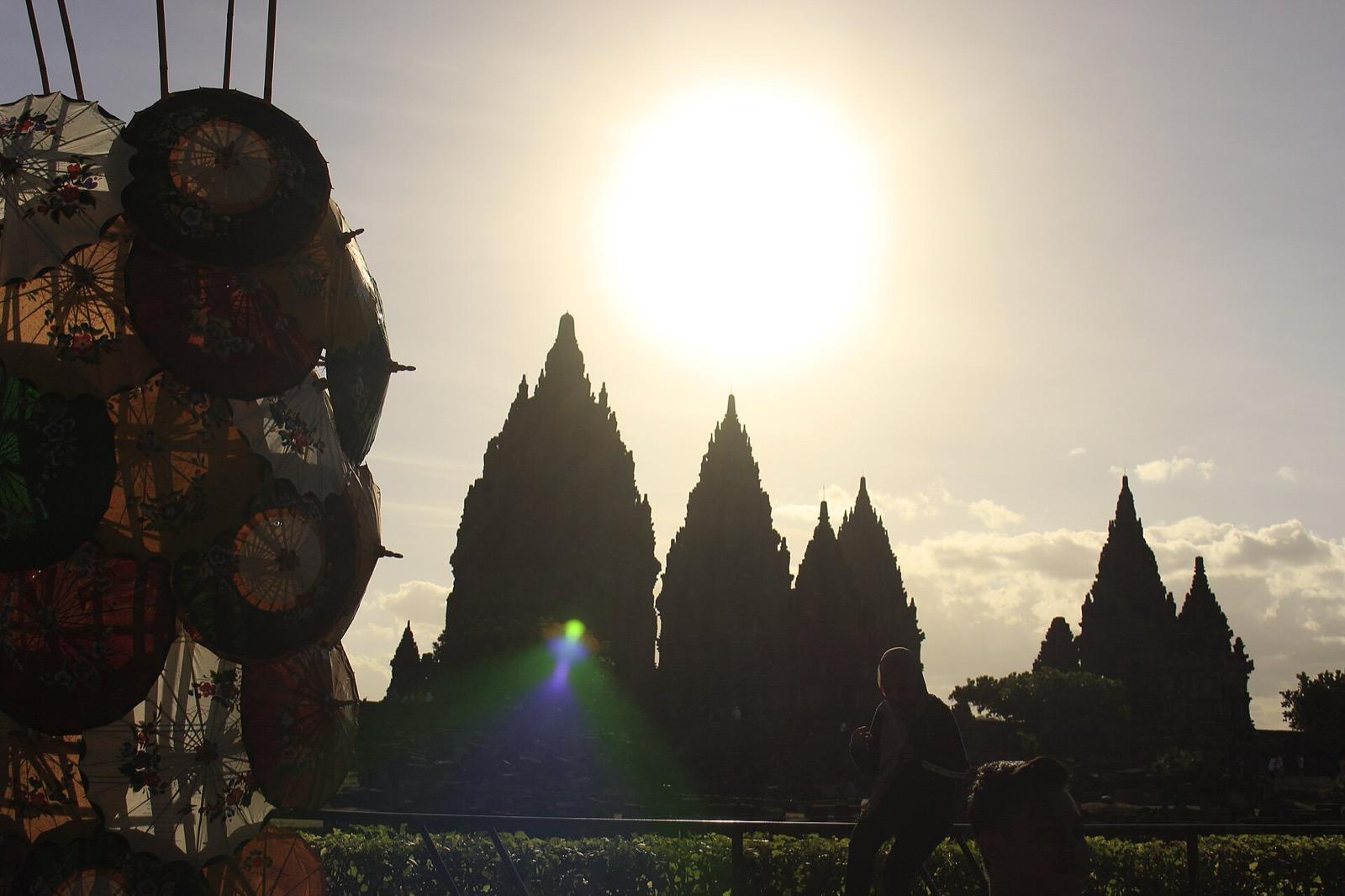
Candi Brahma and Candi Vishnu: The Three Great Gods
The two temples flanking the central Shiva shrine, completing the Trimurti of Brahma the creator, Vishnu the preserver, and Shiva the transformer.
- 6
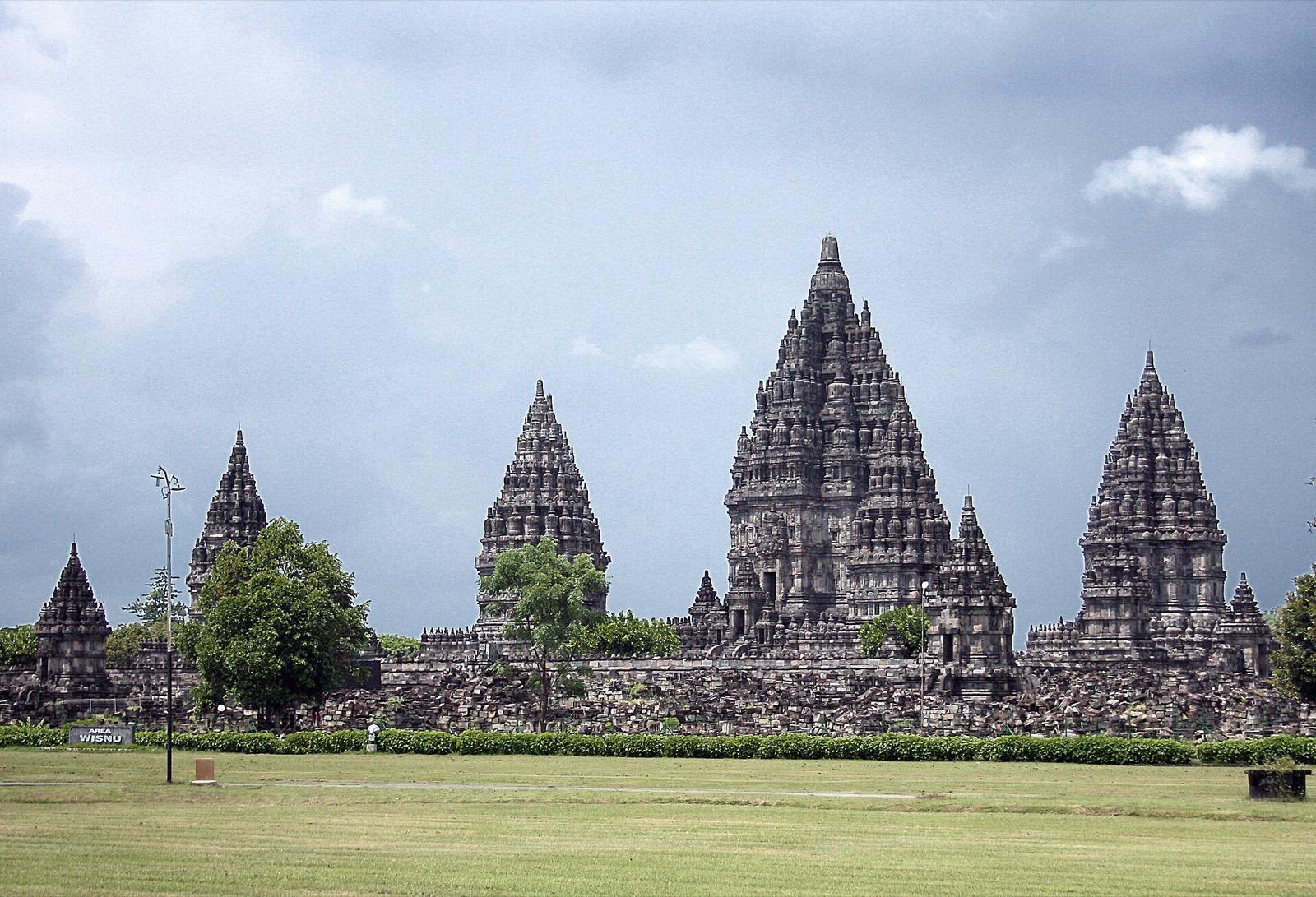
The Vahana Temples: Shrines for the Gods' Own Mounts
The three small shrines facing the main temples, each dedicated to the animal mount of the god across from it: Nandi, Garuda, and Hamsa.
- 7
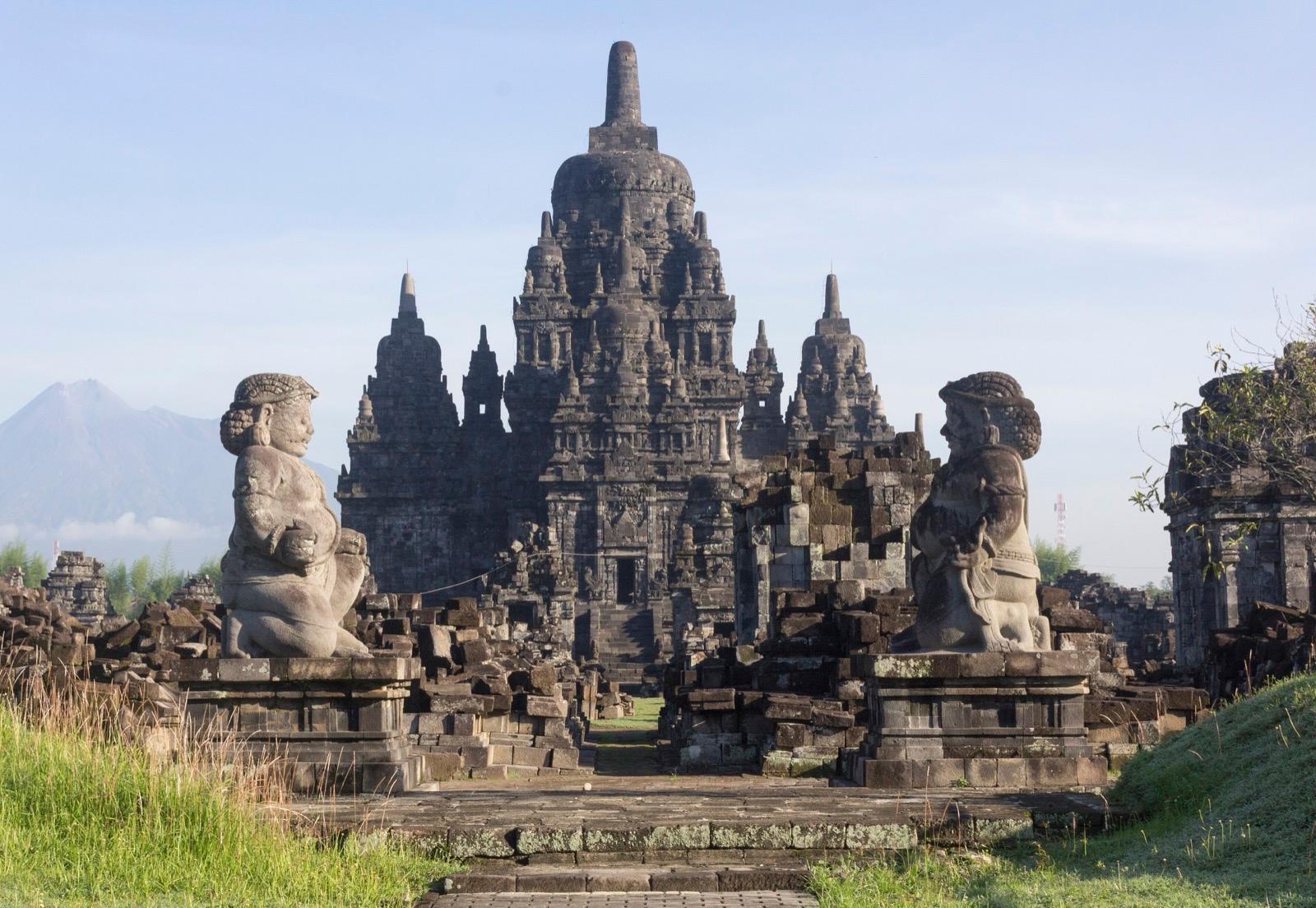
Candi Sewu: The Thousand-Temples Ruin the Legend Claims
The Buddhist thousand-temples complex about eight hundred metres north, whose name comes from the same Hindu folk legend that shaped Prambanan.
Details
Best Time to Visit
Arrive right at opening in the early morning or in the last two hours before closing, when the light is soft, the heat is bearable, and the tour buses have thinned. Weekday mornings are far quieter than weekends and Indonesian holidays. Avoid the harsh midday sun, when the open stone platform offers almost no shade, and note the inner courtyard around the three main towers is closed on Mondays for maintenance.
Pro Tips
- •Arrange your own transport out to Prambanan, about seventeen kilometres east of Yogyakarta, and set your own return time so no group van dictates how long you linger.
- •Begin at the eastern gate and walk clockwise with the temples on your left, which is exactly the order the Ramayana reliefs were carved to be read.
- •Give yourself real time at the inner galleries of the Shiva and Brahma temples, following the carved panels one at a time rather than rushing between towers.
- •Walk the eight hundred metres north to Candi Sewu, which most tour groups skip, for a quieter Buddhist counterpoint that completes the story.
- •Come at opening or in the late afternoon for softer light and thinner crowds, and check that you are not visiting on a Monday, when the inner courtyard around the main towers is closed.
- •Accept the sarong offered at the entrance and wear modest dress, since this remains an active Hindu heritage site.
Safety & Precautions
- •The central platform is open stone with almost no shade, so bring water, sun protection, and a hat, especially in the harsh midday heat.
- •Prambanan is one of the most tour-packaged sites in the region, thick with buses, guides, and photo-touts, so keep your own pace and be ready to decline unwanted help politely.
- •Some chambers of the main and vahana temples remain restricted for safety after the two thousand and six earthquake, so do not climb into any area that is closed off.
- •Carry small cash in rupiah and be prepared for sudden tropical rain, and remember the site sits a drive from the city, so plan your return ride before you lose track of time.
Travel advisory: Exercise Increased Caution (Level 2).
Gallery
Related Reading
Go deeper on what you'll see, hear, and walk through.
Overview
Best Self-Guided Walking Tours in Yogyakarta (2026)
3 min
Overview
One Day in Yogyakarta: A Walkable Itinerary
7 min
Overview
Yogyakarta Travel Guide 2026: Days, Transport, Cost, and Safety
8 min
Thematic
The Sultan's Line and the Temple Mountains: Reading Yogyakarta
8 min
Companion
Candi Shiva: How Prambanan's Tallest Tower Organizes an Entire Temple City
6 min
Deep dive
Candi Sewu: The Buddhist "Thousand Temples" That Number 249
6 min
Read
What to Eat in Yogyakarta: Gudeg, Sate Klathak, and How to Order Them
8 min
Read the walk
The full story of Prambanan: The Tallest Temple to a Broken Heart, in words. Prefer to listen? Play it narrated, from home or on location.
Introduction
Prambanan is a forest of stone towers on a plain about seventeen kilometres east of Yogyakarta, in Indonesia, and it rewards patience more than any other reason. This tour has seven stops and runs roughly ninety minutes across about one and a half kilometres of easy, flat walking inside the compound, all at your own pace. Because the monument sits a drive outside the city, the first task is simply logistics: take your own ride out to the eastern gate, on your own clock, with no group van waiting and no schedule steering you toward a shop. Once you are at the gate, the walking begins. Built around eight hundred and fifty A D under the Hindu Sanjaya line of the Mataram kingdom, Prambanan was raised as an answer to the Buddhist monument of Borobudur just up the road, and its central Shiva temple rises forty-seven metres, the tallest structure on the site. The Ramayana epic is carved around the inner galleries to be read panel by panel, clockwise, at a pilgrim's pace, which is exactly what a hurried tour cannot give you. A folk legend, Loro Jonggrang, says the whole compound was raised in a single night to win, and then curse, a princess. History and story here both unfold slowly and in the round, so linger where you like, skip what you do not, and let the towers reveal themselves. When you arrive at the eastern gate of the Prambanan compound, begin with stop one.
1. The East Gate: Where the Epic Begins
This is the eastern gate of the Prambanan compound, and it is the right place to begin for a reason built into the stone. The central square was entered through gates at each of the four cardinal points, and the outermost walled perimeter originally measured about three hundred and ninety metres on each side. The Ramayana epic carved along the inner galleries starts at this eastern entrance, where a visitor turns left and moves clockwise, the way a Hindu pilgrim circles a shrine. So the epic and your walk begin at the same threshold. Prambanan was built around eight hundred and fifty A D under the Hindu Sanjaya line of the Mataram kingdom, likely begun by the king Rakai Pikatan. The Shivagrha inscription dates the inauguration to eight hundred and fifty-six A D and describes a grand temple compound to Shiva called the House of Shiva. It rose only about fifty years after the great Buddhist monument of Borobudur nearby, a Hindu answer on the same plain. In its original form the compound held two hundred and forty structures. UNESCO records that the Prambanan Temple Compounds were inscribed as a World Heritage Site in nineteen ninety-one. A sarong is provided here at the entrance, and modest dress is expected inside. From this gate the whole plan opens ahead of you, the tall central towers and the scattered field of smaller shrines around them. There is no van to catch and no guide hurrying you toward the next tower. Set your own pace at this threshold, and take the walk the way it was designed to be taken: slowly, clockwise, and in the round.
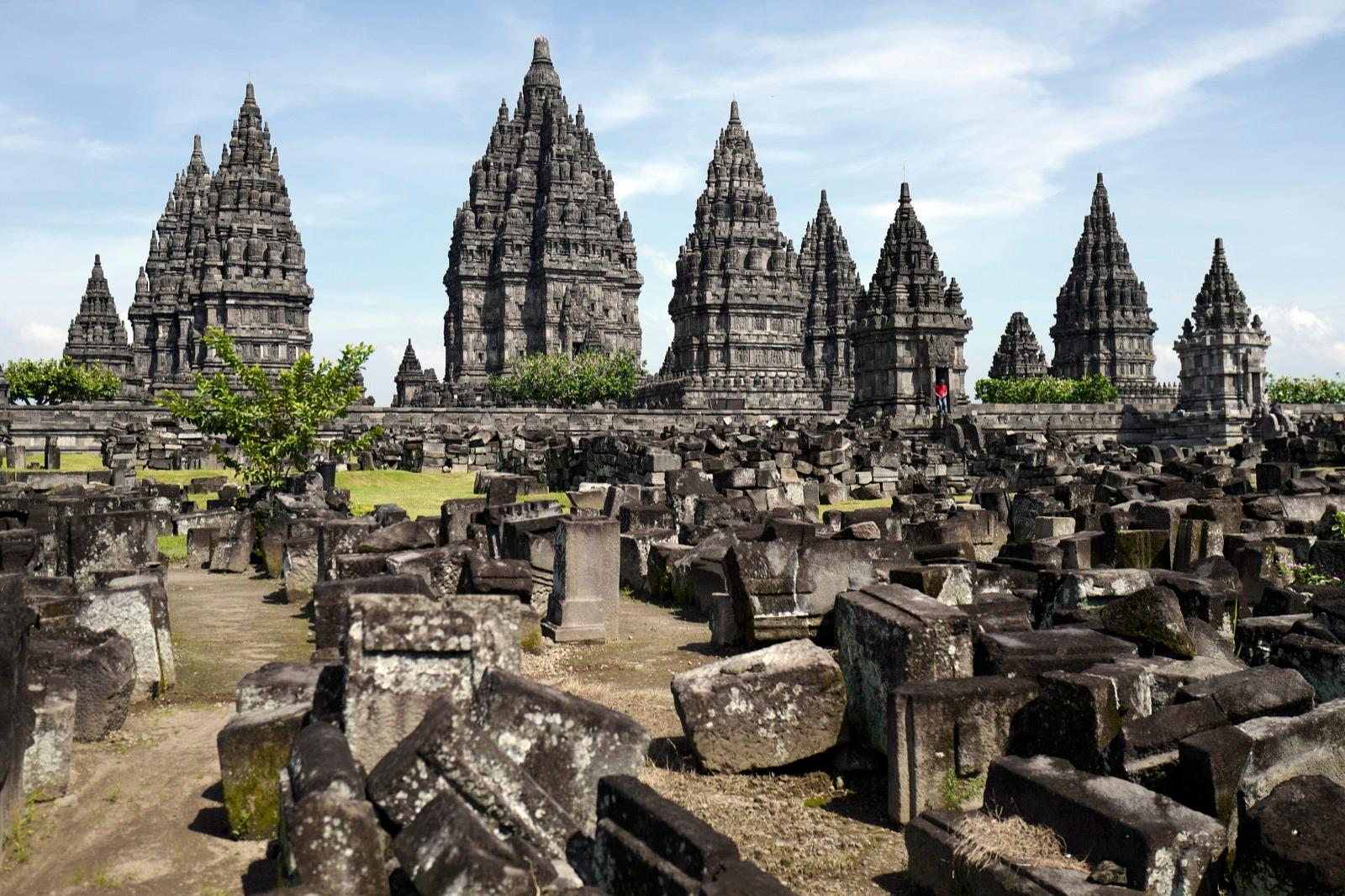
2. The Field of Broken Shrines: The Perwara Ruins
Spread around the raised central platform is a field of scattered stone that tells you how ambitious the original plan really was. These are the perwara, the ancillary shrines, and there were two hundred and twenty-four of them arranged in four concentric rows around the central temples. Most now lie in ruins, low platforms and tumbled blocks stretching across the open ground, but even ruined they map the scale of the ninth-century design. The six main temples sat on the elevated central platform you can see ahead, and these two hundred and twenty-four smaller shrines surrounded them like ranks of attendants. Together with the main temples and the gates, the whole compound originally consisted of two hundred and forty structures. Standing among the perwara, you get a sense of the labour and the wealth the Sanjaya line poured into this place, an entire built landscape rather than a single tower. The reasons so many of these shrines fell are layered. Prambanan was abandoned around the tenth century after the Mataram court shifted east to East Java, and a Mount Merapi eruption around the year one thousand and six possibly hastened the decline. Centuries of neglect, and later the two thousand and six Yogyakarta earthquake, left much of this outer ring as rubble. There is no group hurrying you across this open ground, so take your time reading the pattern in the stones. What looks at first like a plain scattered with debris is actually four ordered rings, and once you see the geometry, the whole ambition of the plan comes into focus at your own pace.
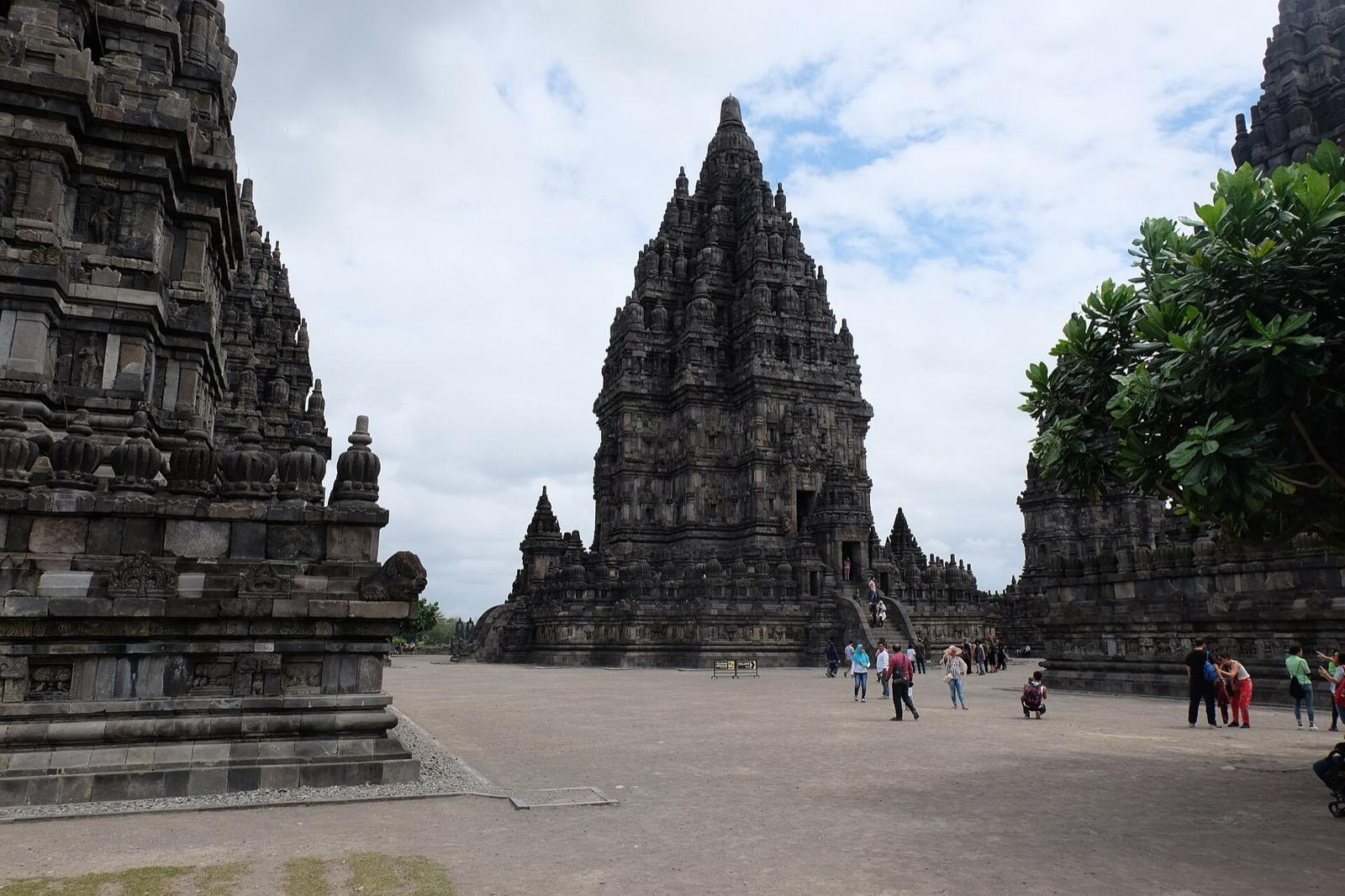
3. Candi Shiva: The Tallest Temple to a Broken Heart
This is Candi Shiva, the central temple, and it is the reason Prambanan looks the way it does. The word candi simply means a temple. It measures forty-seven metres tall and thirty-four metres wide, the tallest and largest structure on the site, at what sources call the largest Hindu temple site in Indonesia. Its inner sanctum has four chambers facing the cardinal directions. The main chamber holds a statue of Shiva Mahadeva, the great god to whom the whole compound is dedicated. Now turn your attention to the north chamber, because that is where history meets legend. The north chamber holds a statue of Durga Mahisasuramardini, the goddess Durga in the act of slaying the buffalo demon. Local tradition identifies this Durga figure with a cursed princess named Loro Jonggrang. Here is the legend, told plainly as legend, not as history. In the Loro Jonggrang tale, a prince named Bandung Bondowoso wanted to marry the princess, and she set an impossible condition: build a thousand temples in a single night. He nearly did it, commanding an army of demon workers. Near completion, the princess and her maids lit fires in the east and pounded rice to fake the dawn. The demon workers, thinking day had broken, fled. Enraged at the trick, the prince cursed the princess to become the final, thousandth statue, the very Durga image in this chamber. That is why this stop carries its name. It is the tallest temple in the land, and inside it, by legend, a princess turned to stone. Standing under the forty-seven metre tower on your own clock, with no van waiting, let both the fact and the folk tale settle.
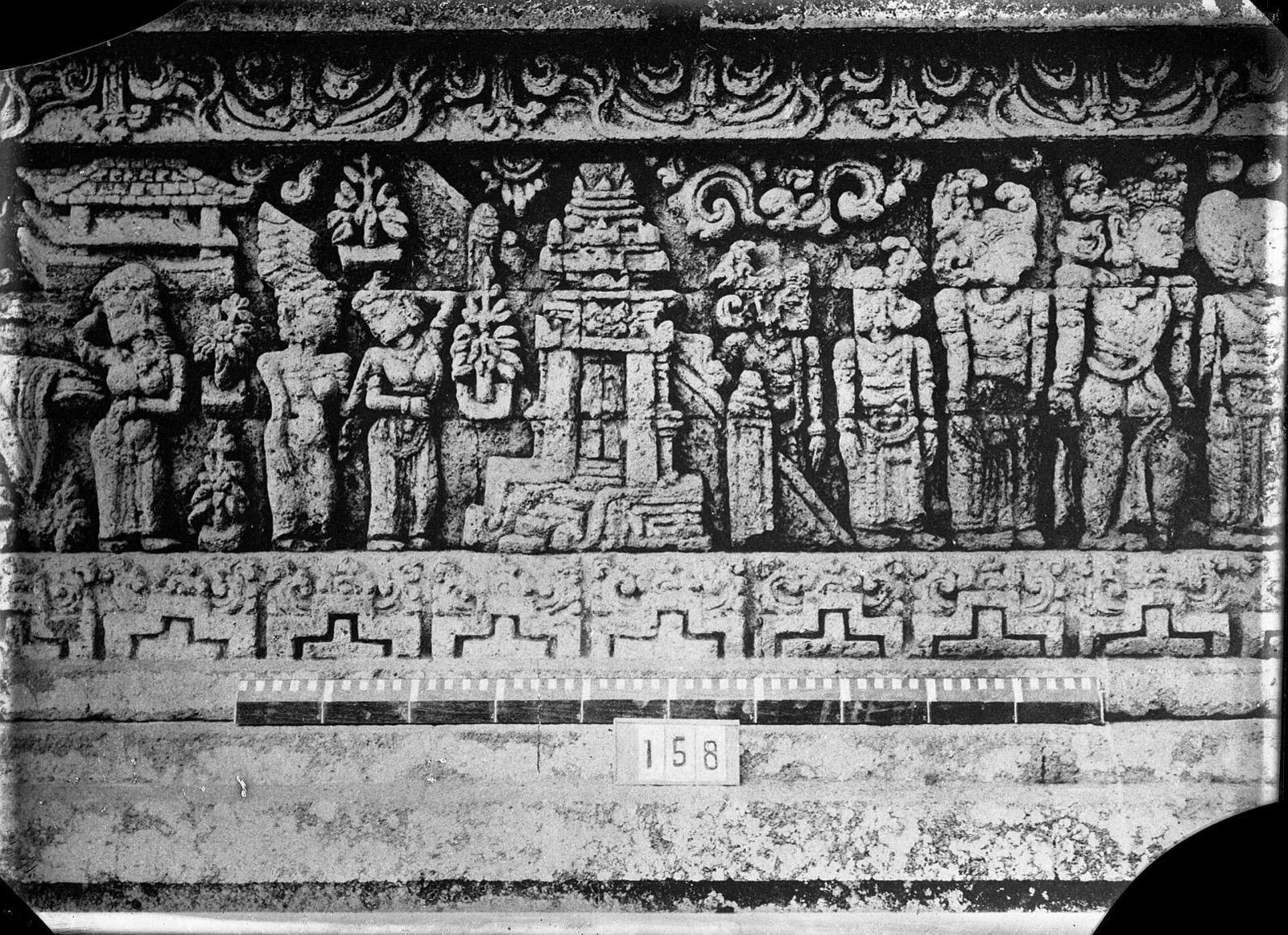
4. The Ramayana Reliefs: The Epic You Read by Walking
Along the balustrades of the inner galleries, the Ramayana epic unfolds in carved bas-relief, and this is where Prambanan's design speaks most directly to a solo traveler. The story is not meant to be glanced at. It is meant to be walked. It starts at the eastern entrance, where…
Full narration for this stop unlocks with the tour.
5. Candi Brahma and Candi Vishnu: The Three Great Gods
Flanking the central Shiva temple stand two more towers that complete the design. To the south of the Shiva shrine rises Candi Brahma, and to the north rises Candi Vishnu. Both are smaller than the towering Shiva temple between them, but together the three form the Trimurti,…
Full narration for this stop unlocks with the tour.
6. The Vahana Temples: Shrines for the Gods' Own Mounts
Facing the three main towers across a narrow courtyard stand three smaller shrines, and they hold one of Prambanan's most charming ideas. These are the vahana temples. A vahana is the animal mount of a Hindu god, the creature that carries the deity, and each of these small…
Full narration for this stop unlocks with the tour.
7. Candi Sewu: The Thousand-Temples Ruin the Legend Claims
About eight hundred metres north of the main compound, within the same archaeological park, stands Candi Sewu, and it makes a fitting close to this walk. Sewu is a Mahayana Buddhist temple complex from the late eighth and early ninth centuries, and its own Manjusrigrha…
Full narration for this stop unlocks with the tour.