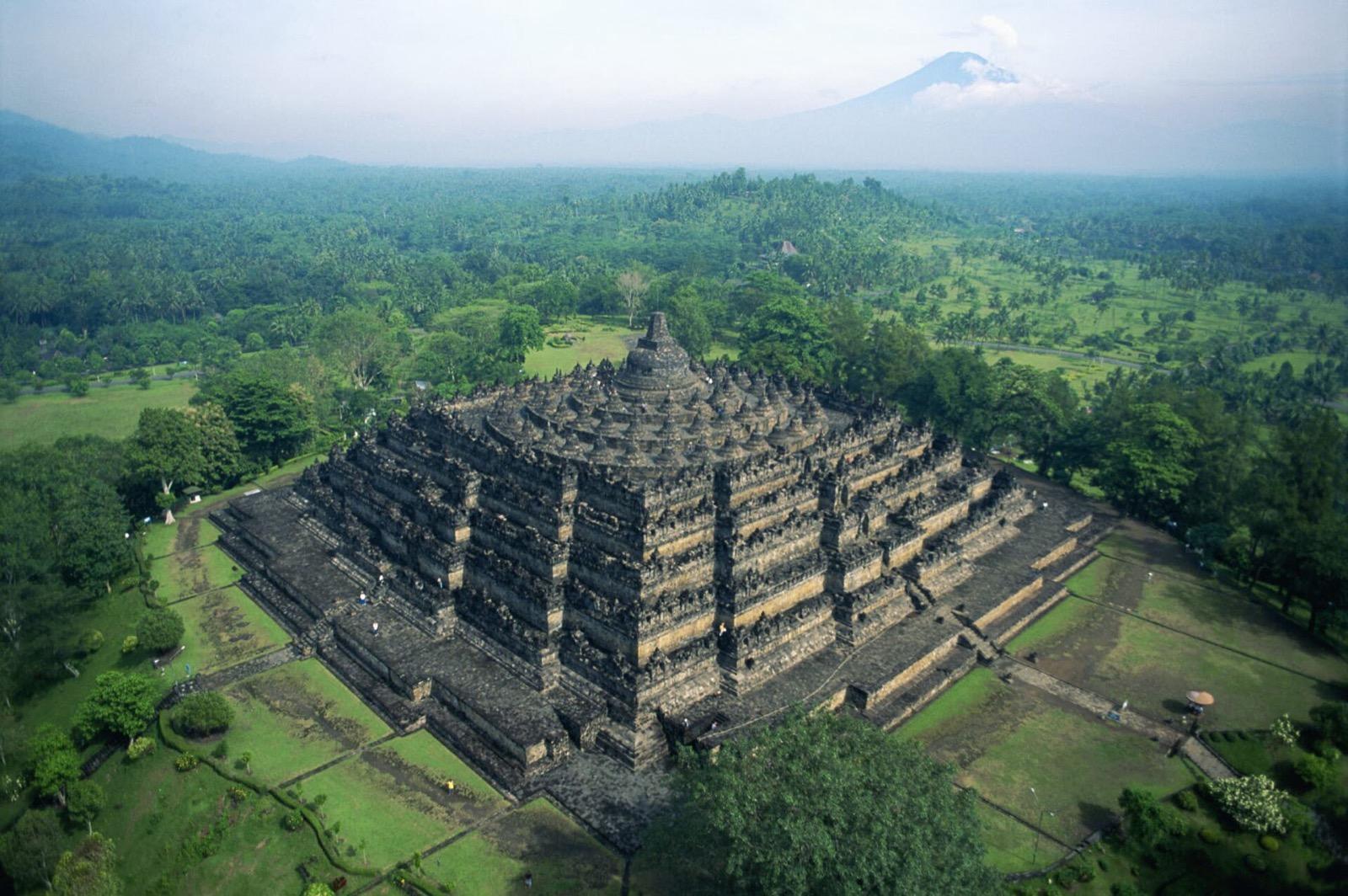
A ninth-century Buddhist monument you climb rather than enter, a stone diagram of the path from the world of desire up to formless enlightenment, carved in more than two and a half thousand relief panels and crowned by a single sealed dome.
Start · The Base and the West Approach: A Mountain of Merit in Stone
DirectionsStops
- 1
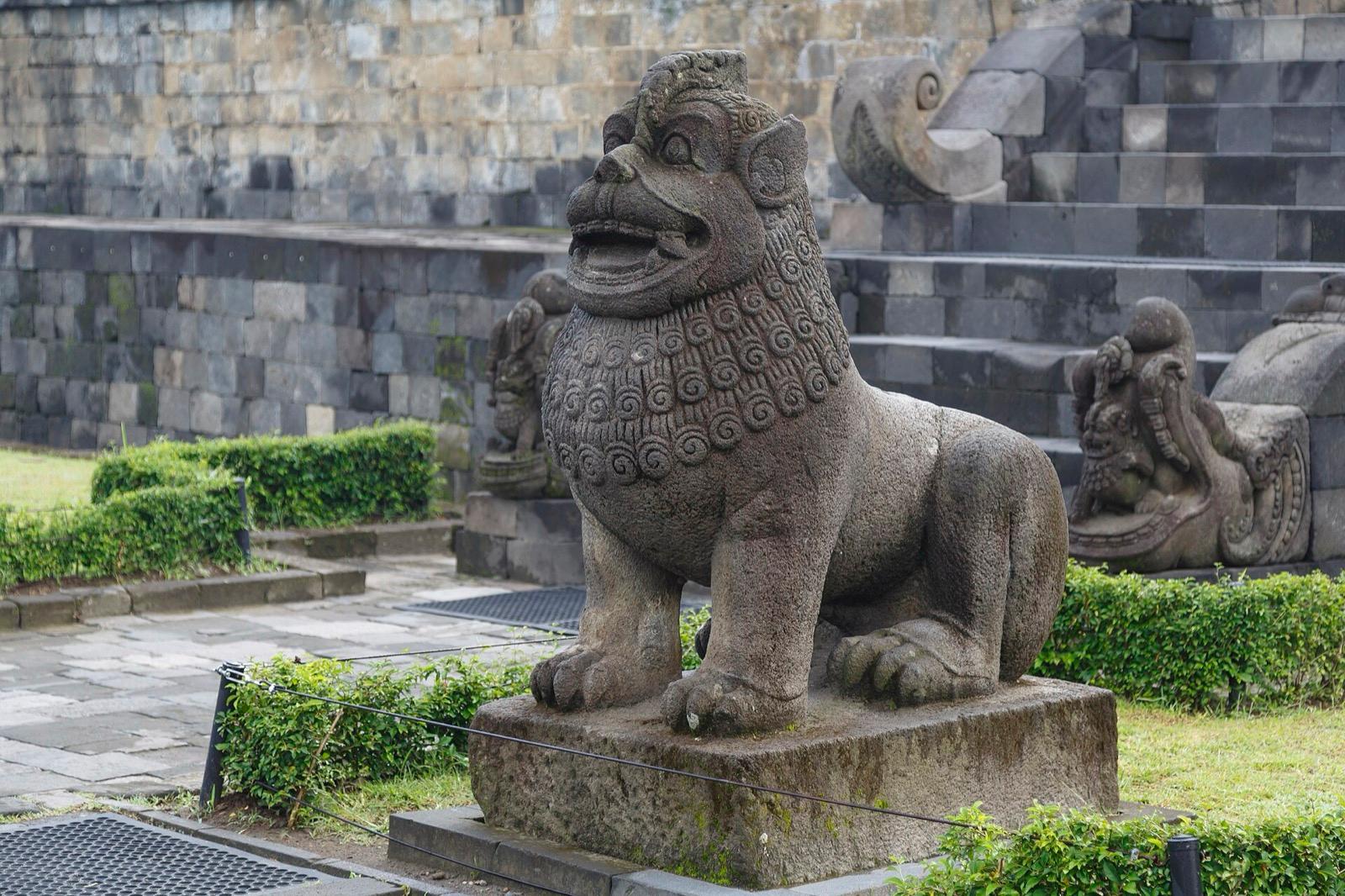
The Base and the West Approach: A Mountain of Merit in Stone
The western foot of the monument, where the shape of the whole climb first reveals itself.
- 2
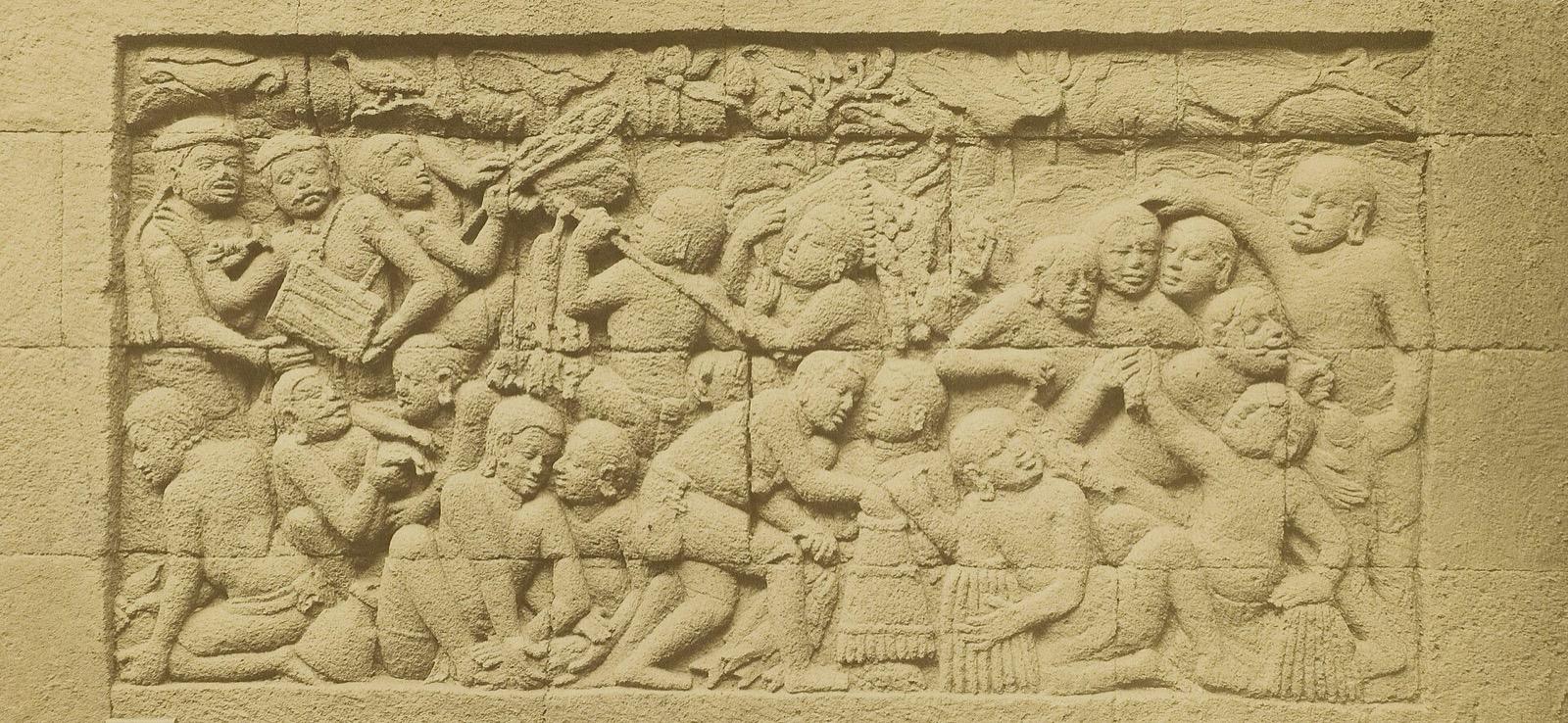
Kamadhatu: The Hidden World of Desire
The concealed foot of the monument, where the realm of desire is carved and then hidden from view.
- 3
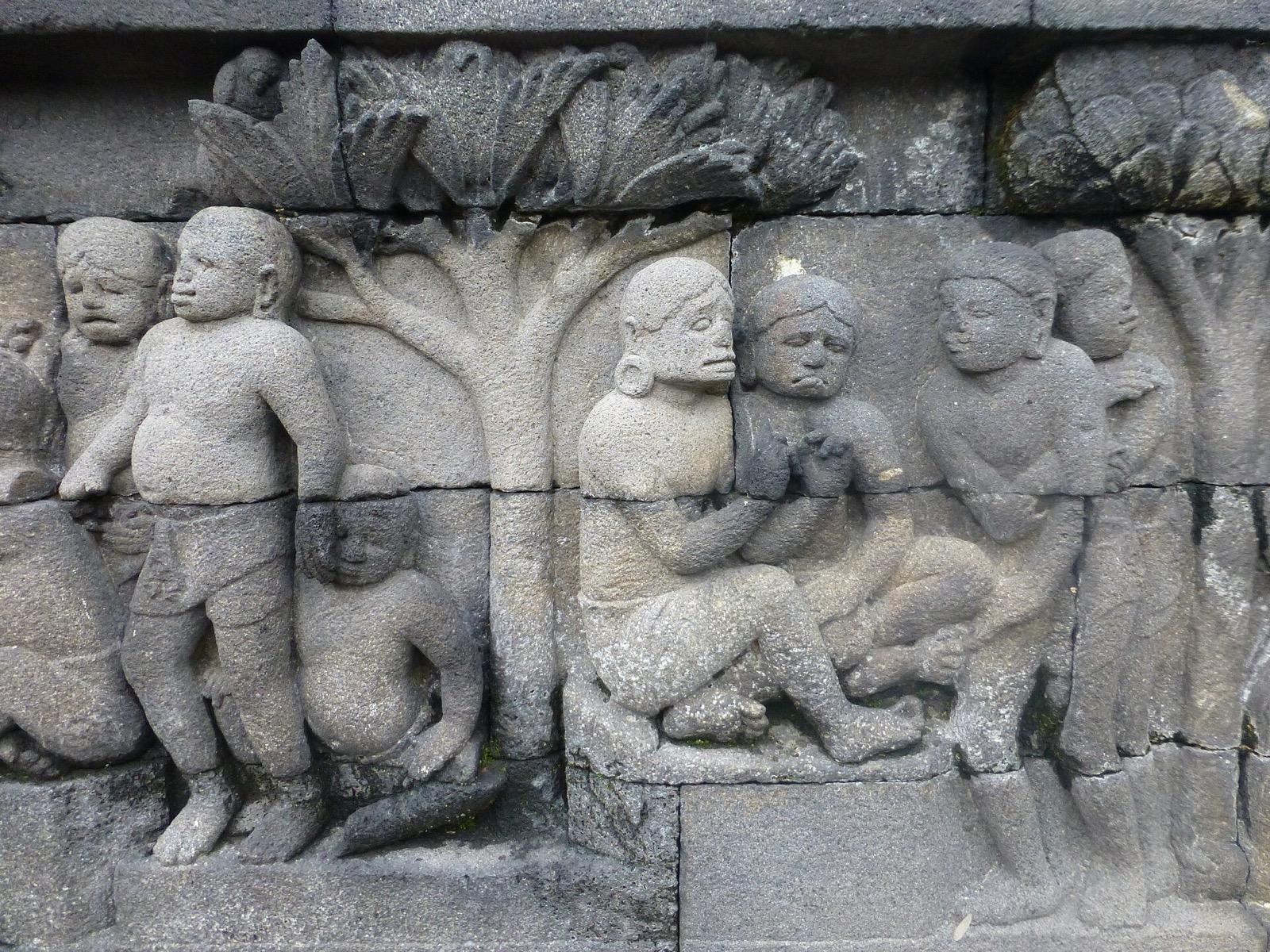
The Rupadhatu Galleries: Reading the Pages of a Life
The square gallery corridors, where narrative panels are read clockwise like the pages of a life.
- 4
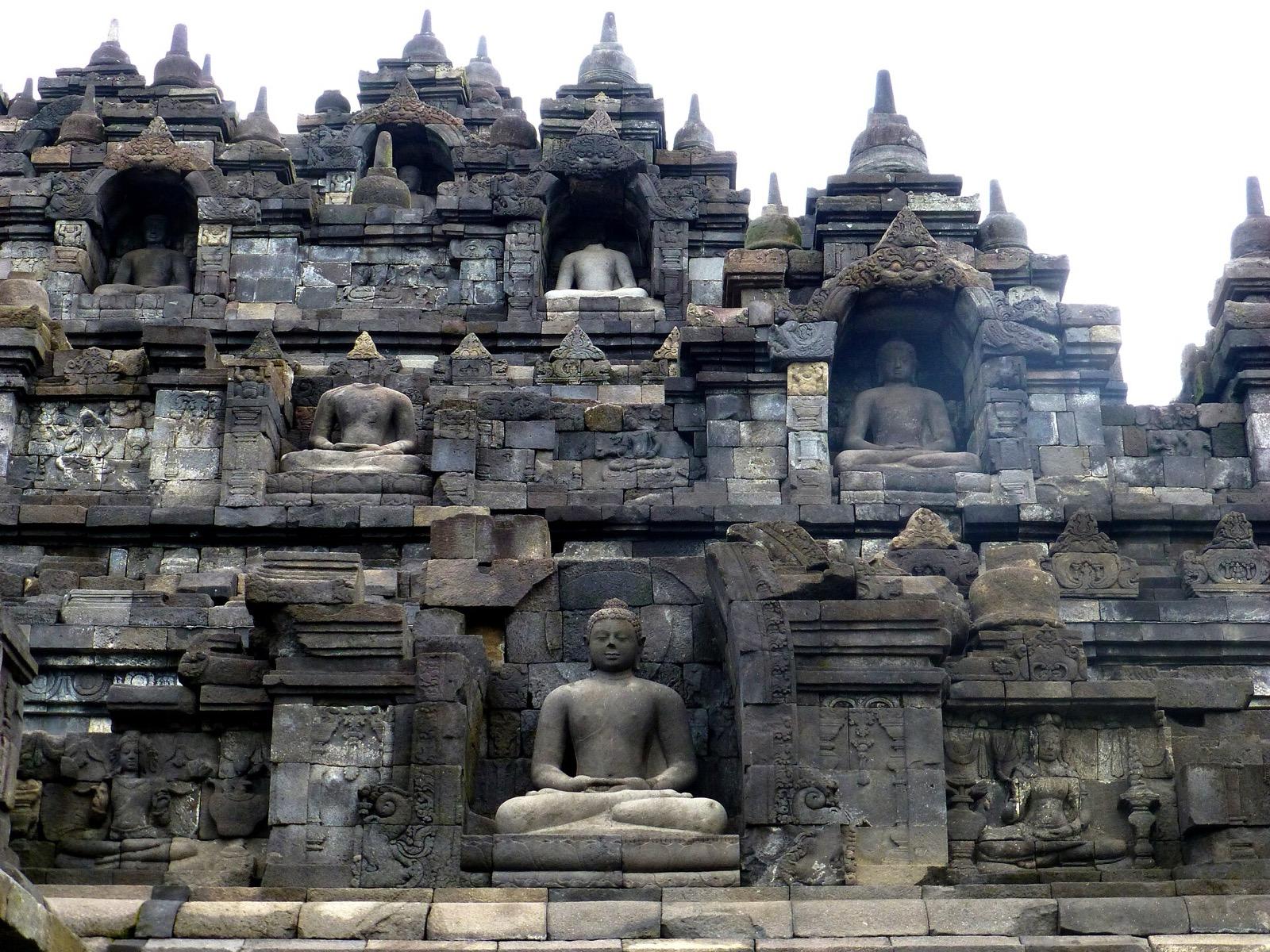
The Wall Buddhas: Five Hundred and Four Hands Set to the Compass
The Buddha statues in niches along the square balustrades, each with a hand gesture set to a direction.
- 5
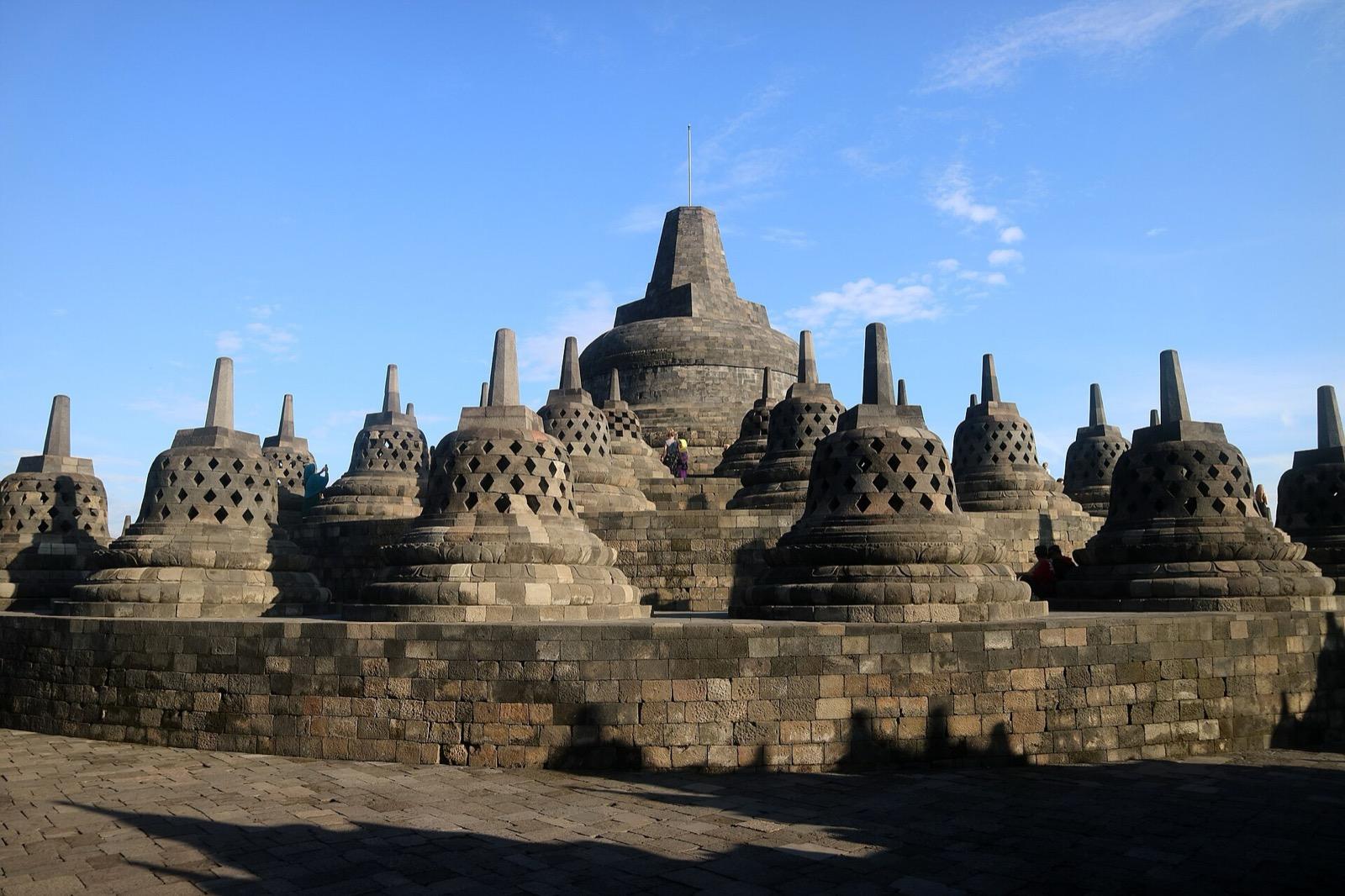
Arupadhatu: The Stone Goes Quiet
The three plain circular terraces above the galleries, where the carving stops by design.
- 6
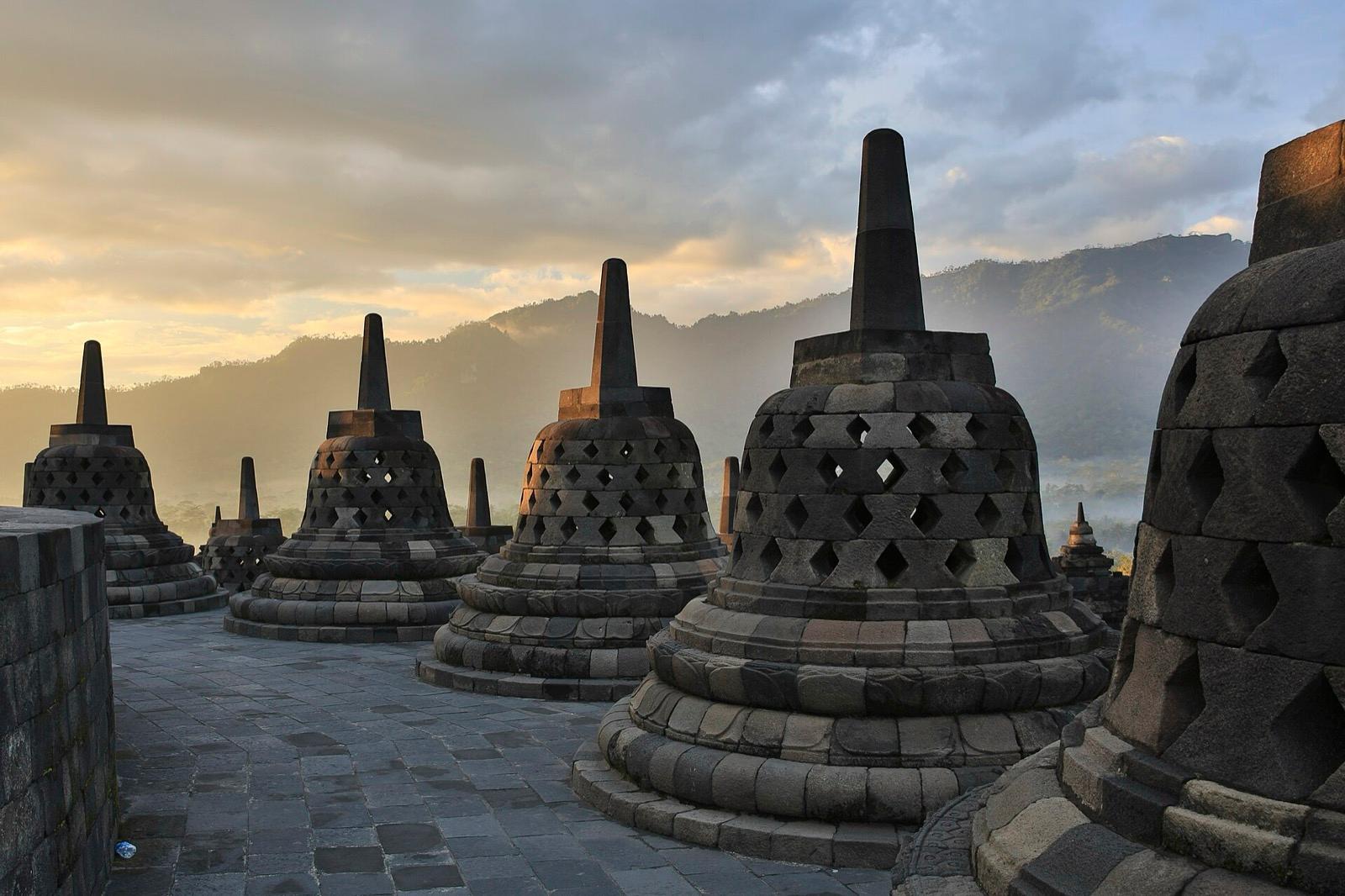
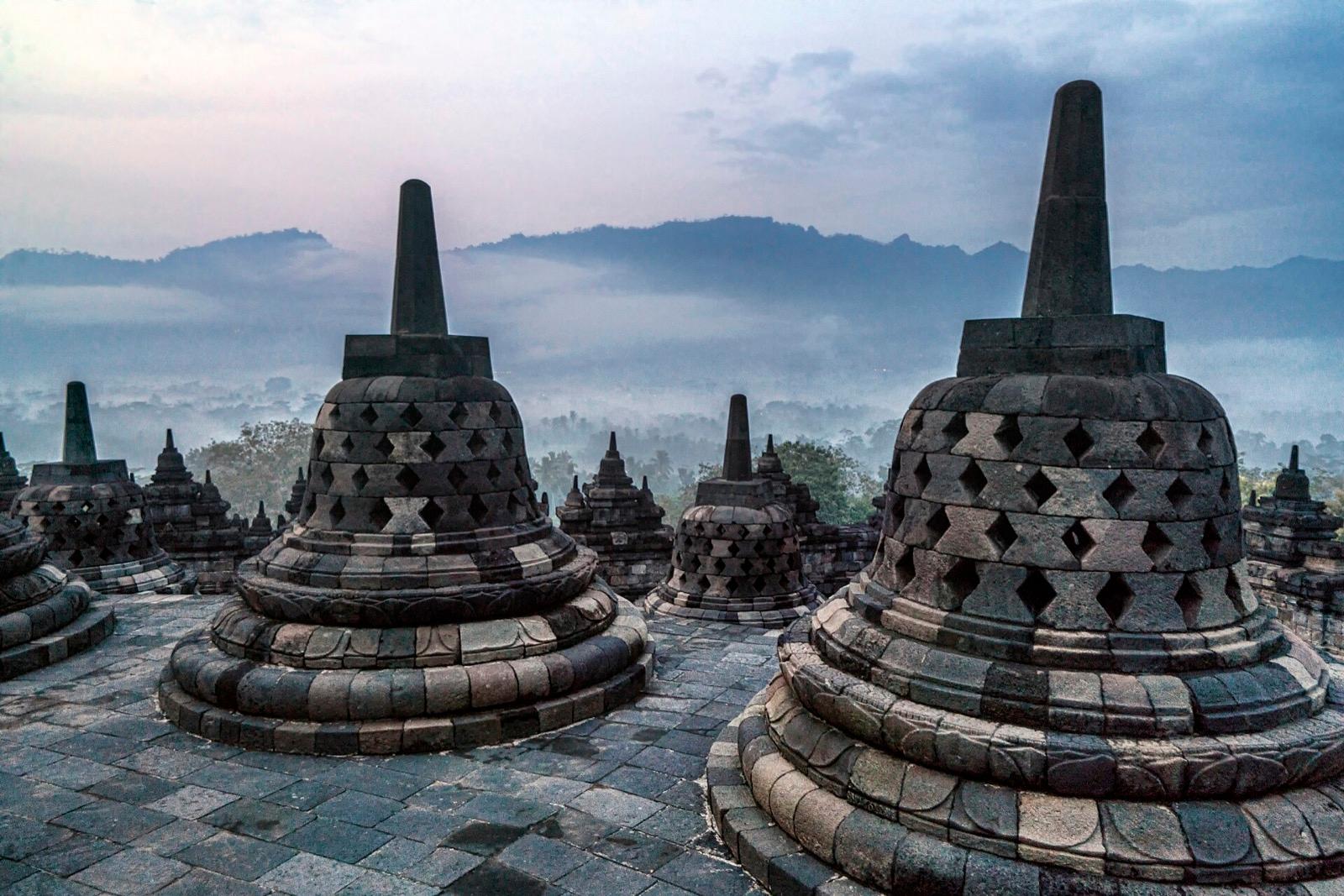
The Perforated Stupas: Seventy-Two Latticed Bells
The openwork bell-shaped stupas ringing the circular terraces, each with a Buddha half-seen inside.
- 7
The Central Stupa: The Empty Summit
The sealed crowning dome at the monument's apex, empty and imageless by design.
Details
Best Time to Visit
Come early in the morning, soon after opening, when the light is soft, the heat is bearable, and the tour groups have not yet filled the terraces. The dry season, roughly May through September, gives the most reliable weather, though it is also the busiest. A weekday visit is far calmer than a weekend. Whatever the season, the earlier you arrive, the more of the stone you will have to yourself.
Pro Tips
- •Arrange your own ride out from Yogyakarta, about forty kilometres northwest, so you arrive on your own clock with no fixed group departure and can linger as long as you like.
- •To climb the upper terraces you need a timed ticket, which comes with a licensed guide and provided woven sandals to protect the stone. Book the slot ahead if you want the summit, and pick an early session.
- •If you do not have an upper-terrace slot, the base and lower terraces still show the shape and meaning of the whole climb, and this tour is written to work from there.
- •Walk clockwise, keeping the monument on your right, the way the reliefs are meant to be read, and slow down at a single panel rather than rushing the corridors.
- •The reliefs of the hidden foot are covered over, but photographs of them are displayed at the on-site museum, worth a stop before or after your climb.
- •Bring water, a hat, and sun protection. There is very little shade on the open terraces.
Safety & Precautions
- •The terraces are open stone with almost no shade and the tropical sun is strong. Carry water, wear a hat and sunscreen, and pace yourself on the climb.
- •Access to the upper terraces is by timed ticket only, with a licensed guide and provided sandals, and slots can sell out. Plan ahead and do not count on climbing to the summit without one.
- •The site is a drive of about forty kilometres out from Yogyakarta and draws large tour crowds, so allow travel time and expect company, especially on weekends and mid-morning.
- •Carry small cash in rupiah and keep valuables secure in busy areas. Tropical weather can turn quickly, so be ready for sudden rain even in the dry season.
- •Unofficial guides and touts work the parking area and approach, sometimes quoting inflated rates or steering you toward a commission souvenir shop. The upper-terrace guide comes with your timed ticket, so you can decline others politely.
- •Agree the fare before you set off or use an app-based ride for the roughly forty-kilometre trip. Return cars are scarce out here, so arrange your ride back before you climb rather than after.
Travel advisory: Exercise Increased Caution (Level 2).
Gallery
Related Reading
Go deeper on what you'll see, hear, and walk through.
Overview
Best Self-Guided Walking Tours in Yogyakarta (2026)
3 min
Overview
One Day in Yogyakarta: A Walkable Itinerary
7 min
Overview
Yogyakarta Travel Guide 2026: Days, Transport, Cost, and Safety
8 min
Thematic
Best History Walking Tours in Yogyakarta (2026)
2 min
Thematic
The Sultan's Line and the Temple Mountains: Reading Yogyakarta
8 min
Companion
The Rupadhatu Galleries: How to Read Borobudur's 2,670 Carved Panels
6 min
Deep dive
The 72 Perforated Stupas of Borobudur: Why the Buddha Is Half-Hidden
7 min
Read
What to Eat in Yogyakarta: Gudeg, Sate Klathak, and How to Order Them
8 min
Read the walk
The full story of Borobudur: The Mountain of Merit, in words. Prefer to listen? Play it narrated, from home or on location.
Introduction
Borobudur is not a building you enter. It is a mountain of stone you climb, level by level, and the whole meaning of the place is the ascent itself. This self-guided tour has seven stops and takes about ninety minutes at an easy pace, covering about one and a half kilometres as you circle and rise through the monument. There is one thing to settle first. Borobudur sits about forty kilometres northwest of Yogyakarta, here in central Java, Indonesia, so it is a drive out from the city, not a stroll from your hotel. The autonomy is yours to arrange. Take your own ride, on your own clock, with no group van and no fixed departure, and make your way to the monument gate before you begin. Once you are at the base, this tour meets you there. A word on access. Reaching the upper terraces today uses a timed ticket, a licensed guide, and provided woven sandals to protect the stone, so if you do not have an upper-terrace slot, do not worry. This narration is written so it still lands from the base terraces, where the shape of the whole climb is already visible. The design assumes an unhurried body reading the stone clockwise, in order, which is exactly what moving at your own speed lets you do. You can linger at a single relief panel while the tour groups move on. When you arrive at the western foot of the monument, begin with stop one.
1. The Base and the West Approach: A Mountain of Merit in Stone
Stand at the western foot and look up. What rises in front of you is nine stacked platforms of dark andesite stone: six square terraces below, three circular terraces above, all crowned by a single great dome. The base runs about one hundred and eighteen metres to a side, and the central stupa sits about thirty-five metres above the ground. UNESCO records that Borobudur was raised in the ninth century A D under the Sailendra dynasty, built in roughly five stages between about seven eighty and eight thirty-three A D. That is more than eleven hundred years ago. A stupa, by the way, is a dome-shaped Buddhist monument, and here the entire monument is one continuous stupa you ascend. This is the first thing to understand about Borobudur. You do not go inside it. There is no hall, no nave, no dim interior. Instead the building is solid, and you read it by walking its outer corridors, circling clockwise and climbing as you go. The stone itself is the text. For centuries this mountain lay buried under volcanic ash and quietly forgotten, until it was brought back to wide attention in eighteen fourteen. It was inscribed as a UNESCO World Heritage Site, the Borobudur Temple Compounds, in nineteen ninety-one. Take a moment here at the bottom, before the climb, to feel the sheer scale of it. Everything above you was designed to be experienced slowly, on foot, in order. That is the gift of coming at your own pace. No one is going to hurry you up and out.
2. Kamadhatu: The Hidden World of Desire
Here at the very bottom of the monument lies its strangest secret. This lowest level is called Kamadhatu, the world of desire, and it is the beginning of the journey the climb will carry you away from. The realm of desire is where the whole Buddhist ascent starts, among the appetites and consequences of ordinary human life. What makes it remarkable is that most of it is hidden. Tucked inside the base, behind an outer casing of stone, are one hundred and sixty carved narrative panels. The site's history notes that they illustrate karma, the law of cause and effect: blameworthy acts and their punishments, praiseworthy acts and their rewards, scenes of heaven and hell, the whole turning wheel of ordinary existence. And then they were covered over. The encasing base was documented in eighteen eighty-five, and the reliefs were photographed around eighteen ninety to ninety-one, before the covering was put back. During twentieth-century restoration the casing was reinstalled once more. Today only the southeast corner is left open, so a small stretch of these hidden panels can still be seen. Scholars debate why the foot was concealed. One practical theory is structural, that the partly-carved base was encased to keep the monument stable and stop it sliding outward. A religious meaning has also been proposed. Notice the layered idea here. The very realm of desire, the level we are meant to rise above, is itself buried and out of sight. If you want to see the covered reliefs in full, photographs of them are displayed at the museum here on the grounds. Take your time at this corner. It is easy to walk straight past the most quietly telling part of the whole design.
3. The Rupadhatu Galleries: Reading the Pages of a Life
As you rise onto the square terraces, you enter Rupadhatu, the world of form, and this is the heart of Borobudur. Five square galleries run around the monument, one above the next, and their walls carry the great mass of the carving. UNESCO records that the monument holds approximately two thousand six hundred and seventy individual bas-reliefs in all: about one thousand four hundred and sixty of them narrative panels, and about one thousand two hundred and twelve decorative ones. That is more than two and a half thousand carved scenes. And they are meant to be read. Pilgrims walk these corridors clockwise, keeping the monument on their right, in an unhurried circling called circumambulation. As you move, the story unfolds panel by panel, the stone equivalent of turning the pages of a life. The narrative series include the life of the Buddha, older tales of his past lives and of virtuous deeds, and the long story of a pilgrim named Sudhana in search of enlightenment. This is the thesis of the whole place. Borobudur was designed for a slow, unhurried body, reading in order, level by level. Which is exactly why coming at your own pace matters so much here. A group hurried through in a timed session sees a blur of stone. You can stop at a single panel, follow one small scene, notice how a gesture repeats three galleries later. The corridors do not reward speed. They reward attention. Keep the wall on your right, let your eye travel along the carving, and walk the pages the way they were meant to be walked, one at a time.
4. The Wall Buddhas: Five Hundred and Four Hands Set to the Compass
As you circle the square terraces, look into the niches set along the balustrades. Seated Buddha figures watch over the galleries, and Borobudur originally held five hundred and four of them in all, counting those on the terraces and those inside the stupas higher up. Each one…
Full narration for this stop unlocks with the tour.
5. Arupadhatu: The Stone Goes Quiet
Something changes as you step up from the last square gallery onto the circular terraces. The stone goes quiet. This upper zone is called Arupadhatu, the formless realm, and it is made of three open circular platforms above the busy galleries below. And here, by design, the…
Full narration for this stop unlocks with the tour.
6. The Perforated Stupas: Seventy-Two Latticed Bells
This is the image the whole world knows Borobudur by. Ringing the three circular terraces stand rows of bell-shaped stone stupas, and unlike a solid dome, each of these is openwork, its surface pierced with a lattice of small openings. UNESCO records that there are seventy-two…
Full narration for this stop unlocks with the tour.
7. The Central Stupa: The Empty Summit
At the very top of the climb stands the great central stupa, the sealed dome that crowns the whole monument, about thirty-five metres above the ground where you began. And here is the resolution of everything you have walked through. The main stupa is empty. It holds no statue,…
Full narration for this stop unlocks with the tour.