Giza: The Pyramids and the Sphinx
150 min · 5 km · moderate
Eat koshari first. Cairo's food is a working-class layering of grains, beans, and bread, and the dish that carries the whole idea in one bowl is koshari: rice, macaroni, black lentils, and chickpeas piled together, topped with fried onions, dressed with a garlicky vinegar (daqqa) and a spiced tomato sauce. It emerged in Cairo in the late nineteenth century, when the city was a crossroads under British occupation, and it fused South Asian rice-and-lentils (the name traces to the Indian khichdi), Italian pasta, and local beans and onions into something entirely Egyptian. In December 2025, UNESCO inscribed "Egyptian Koshary" on its Representative List of the Intangible Cultural Heritage of Humanity, the first Egyptian dish to receive the designation. Order it, add the sauces yourself to taste, and you have understood the city's kitchen in about six minutes.
Below is what to eat, where the tradition comes from, and how to order it the way locals do. When you are done eating, the walking is the other half of the visit: the Islamic Cairo tour runs the medieval spine of Al-Muizz Street, and the food stalls cluster along the same route.
Start with the two-part breakfast: ful and ta'ameya
The morning plate in Egypt is fava beans two ways. Ful medames is slow-simmered fava beans mashed with lemon, olive oil, garlic, and cumin, scooped up with flat baladi bread. It is genuinely ancient: fava beans show up in the archaeological record of the Nile Valley, and the word medames points to the old method of burying the pot in embers to cook overnight. Alongside it comes ta'ameya, the Egyptian version of falafel, made from dried fava beans rather than chickpeas, which fries up green inside and is often flecked with leek and coriander and rolled in sesame. Many food writers argue ta'ameya is the older, original form of the fritter, with the chickpea version spreading later.
How to order: ask for "ful wa ta'ameya" and it arrives as a set, usually with bread, a little tahina, and pickled vegetables. It is cheap, filling, and vegan by default. Cairenes eat it for breakfast, but stalls run it all day.
The bowl that carries the city: koshari
Hear a stop from this walk
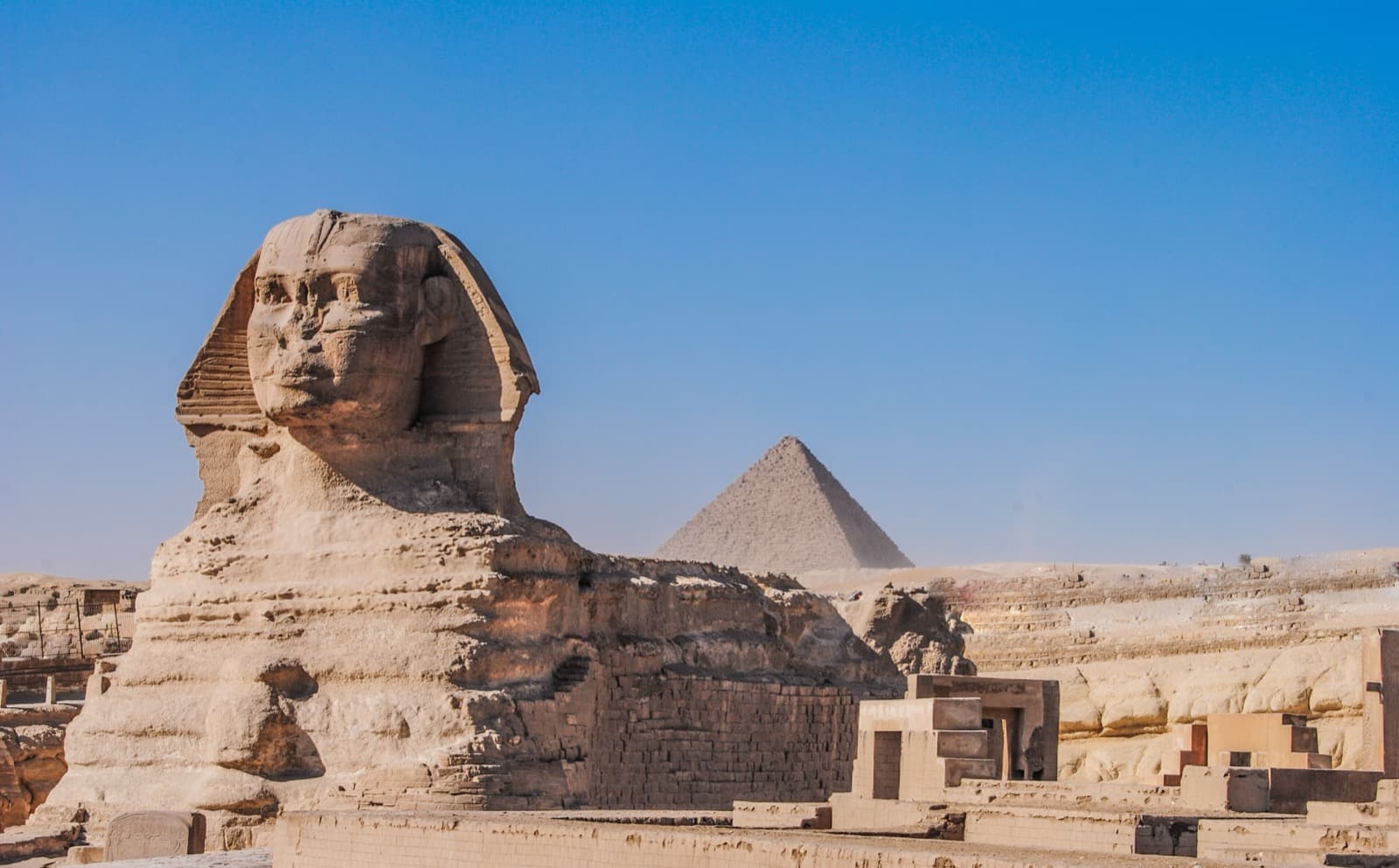
The Great Sphinx: The Guardian Facing the Sunrise
Koshari is the one to seek out deliberately. Every koshari shop layers the same components (rice, pasta, lentils, chickpeas, crisp onions) but the balance of the two condiments is where you make it yours: the tart garlic-vinegar daqqa and the tomato sauce, with a bottle of chili sauce (shatta) on the table if you want heat.
The most famous address is Koshary Abou Tarek, a downtown institution on the corner of Maarouf and Champollion streets that has served koshari and essentially nothing else since 1950. You do not need a menu; you pick a size, the sauces are yours to spoon, and the room turns tables fast. Plenty of neighborhood shops are excellent too, so treat the busy ones with local customers as your signal.
Molokhia, the green soup with a long story
Molokhia is a deep-green soup of finely chopped jute mallow leaves, cooked with garlic and coriander in a broth of chicken, rabbit, or beef, and eaten over rice or with bread. It is often called "the vegetable of the pharaohs," though that romantic origin is contested: the food historian Mennat-Allah El Dorry has found no evidence for the pharaonic-royal story, and the earliest firm record dates to the eleventh century, when the Fatimid caliph al-Hakim (whose mosque you pass on the Islamic Cairo walk) reportedly banned Egyptians from eating it. The texture is thick and slippery, and it divides visitors; try it once and decide honestly.
Street meat: hawawshi and hamam mahshi
Two dishes bracket Cairo's meat cooking. Hawawshi is spiced minced meat with onion, pepper, and parsley packed into baladi bread and baked or grilled until the crust crisps. It is a comparatively modern Cairo invention, generally traced to the twentieth century and to a butcher whose name the dish carries. Hamam mahshi is stuffed pigeon, the small birds filled with seasoned freekeh or rice, a dish that entered Egyptian tables during Ottoman rule and became a celebratory favorite. Hawawshi is the everyday street bite; hamam mahshi is more of a sit-down, order-ahead occasion.
Feteer meshaltet and the sweet side
For pastry, look for feteer meshaltet, a layered flaky "Egyptian pizza" of thin dough and ghee folded many times, served plain, sweet with honey and powdered sugar, or savory with cheese and meat. Egyptian sweets lean toward syrup and semolina: basbousa (semolina cake soaked in syrup) and om ali (a warm bread-and-milk pudding with nuts and coconut) are the ones to know. These turn up in bakeries and dessert shops rather than street carts.
What to drink
The signature cold drink is karkade, a tart, deep-red hibiscus infusion served hot in winter and iced in summer, poured at weddings and Ramadan tables and offered as a gesture of welcome. In cool weather, warm up with sahlab, a thick milky drink dusted with cinnamon and nuts. Fresh sugarcane juice (asab), pressed at bright-green corner stands, is a Cairo street staple. And tea (shai), served strong and sweet, sometimes with fresh mint, is the social lubricant of every cafe.
The place to drink it slowly is El Fishawy, one of the oldest continually running cafes in the city, wedged into the alleys of the Khan el-Khalili bazaar. It has been a gathering spot for generations, mirrors and mashrabiya woodwork on the walls, and it was a haunt of the Nobel laureate Naguib Mahfouz, who wove the surrounding quarter into his Cairo Trilogy. El Fishawy and Khan el-Khalili are both stops on the Islamic Cairo walking tour, so you can time a mint tea into the route.
How to eat it safely (calmly)
Cairo street food is enjoyable and, with a little judgment, low-risk. The practical rules are simple: choose busy stalls with high turnover and local customers, eat things cooked hot in front of you, and drink sealed bottled water rather than tap (check the cap seal). Skip raw salads and cut fruit that may have been rinsed in tap water, and be cautious with ice unless you know it is from purified water. Carry hand sanitizer and use it before eating. None of this should keep you from the good stuff: the koshari counter, the ful stall, the fresh-fried ta'ameya, and the sugarcane press are exactly where you want to be.
Plan the walk around the food
The food and the monuments share the same ground. Islamic Cairo, running from Bab al-Futuh down Al-Muizz Street through Khan el-Khalili to Bab Zuweila, is where the street-food density is highest and where El Fishawy sits. The Coptic Cairo tour and the Giza Pyramids and Sphinx tour are calmer on food but let you build a full day: eat a ful-and-ta'ameya breakfast, walk a morning, and end with koshari. For the full set of routes, start at the Cairo city page.
Sources
Frequently asked questions
- What is the national dish of Egypt?
- Koshari is widely considered Egypt's national dish. It layers rice, macaroni, black lentils, and chickpeas, topped with crispy fried onions and served with a garlic-vinegar sauce and a spiced tomato sauce. In December 2025, UNESCO inscribed Egyptian Koshary on its Representative List of the Intangible Cultural Heritage of Humanity, the first Egyptian dish to receive that recognition.
- What is the difference between Egyptian ta'ameya and falafel?
- Ta'ameya is Egypt's version of falafel, made from dried fava beans rather than chickpeas, which gives it a green interior. It is often mixed with leek and coriander and coated in sesame seeds. Many food writers consider the fava-bean version the older, original form, with the chickpea variety spreading elsewhere later.
- Where is the most famous koshari in Cairo?
- Koshary Abou Tarek in downtown Cairo, on the corner of Maarouf and Champollion streets, is the best-known koshari restaurant in the city and has served the dish since 1950. It essentially serves only koshari: you choose a portion size and add the sauces yourself. Many neighborhood shops are also excellent, so a busy counter full of locals is a reliable sign.
- Is street food safe to eat in Cairo?
- Yes, with basic precautions. Choose busy stalls with high turnover and local customers, eat food cooked hot in front of you, and drink sealed bottled water rather than tap water. Avoid raw salads and cut fruit that may have been washed in tap water, be careful with ice, and carry hand sanitizer to use before eating.
- What should I drink in Cairo?
- Karkade, a tart red hibiscus infusion served hot or iced, is the signature drink and a traditional gesture of hospitality. Also try sahlab (a warm, thick milky drink with cinnamon and nuts) in cooler weather, fresh sugarcane juice from corner presses, and strong sweet tea, often with mint. El Fishawy cafe in the Khan el-Khalili bazaar is a classic place to sit with a mint tea.
- What is molokhia and is it worth trying?
- Molokhia is a thick deep-green soup made from finely chopped jute mallow leaves cooked with garlic and coriander in a chicken, rabbit, or beef broth, eaten over rice or with bread. Its texture is slippery and divides visitors, so it is worth trying once. The popular claim that it was a pharaonic royal dish is contested by food historians, and the earliest firm record dates to the eleventh century.
Ready to experience it?
Giza: The Pyramids and the Sphinx
150 min · 5 km · moderate
More from Cairo
Explore more at your own pace.
Grand Egyptian Museum: What to See, From the Grand Hall to Tutankhamun
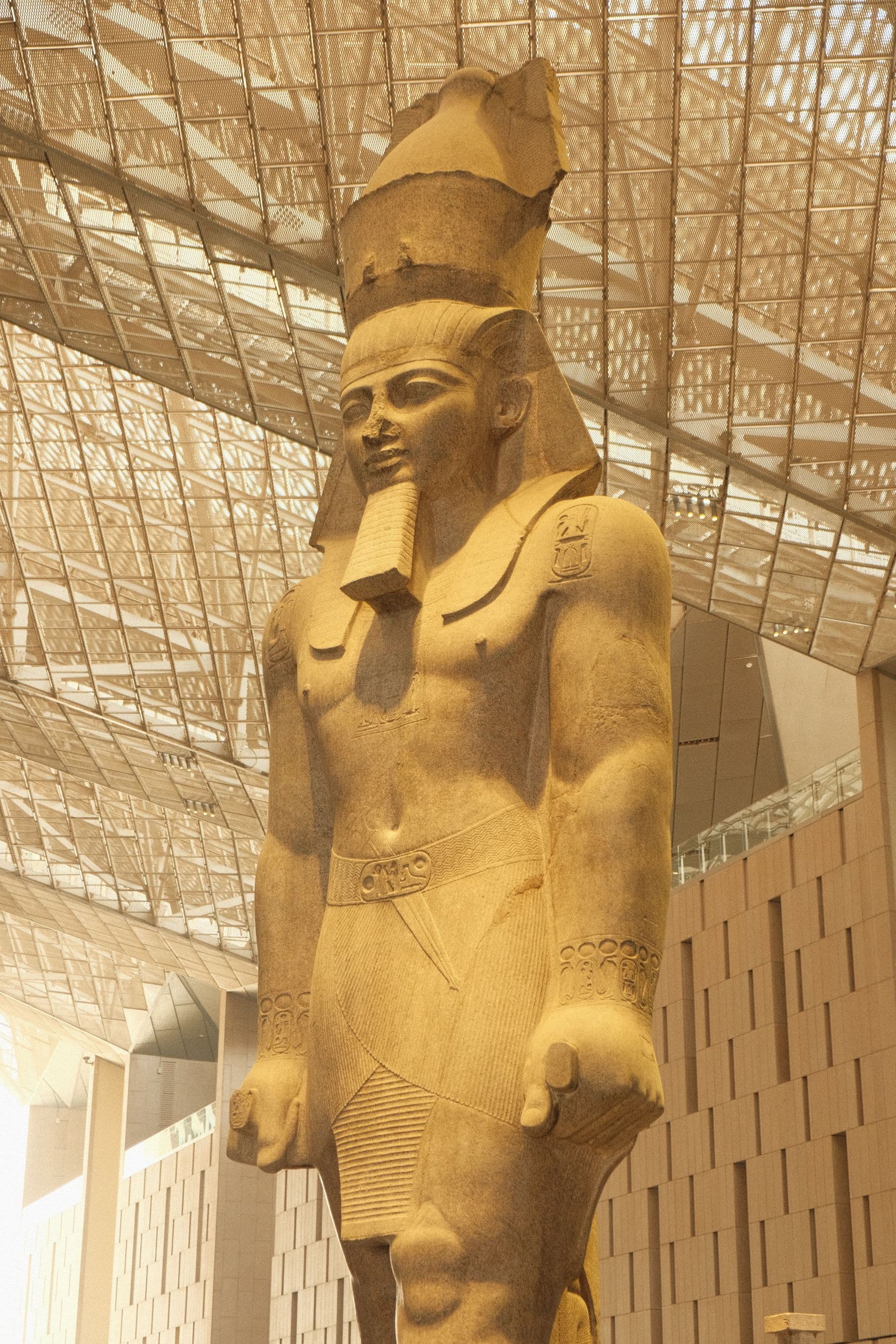
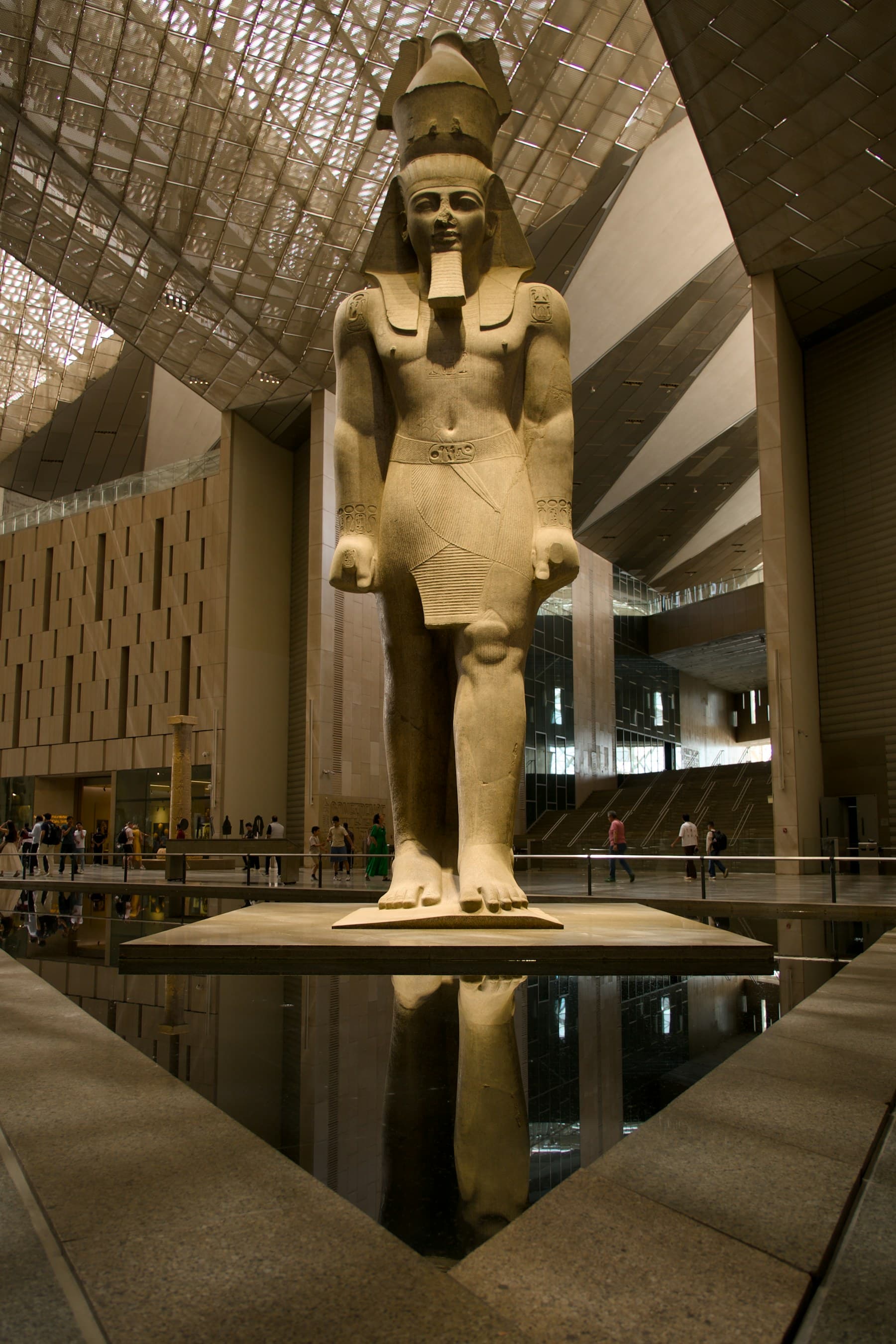
The Colossal Ramesses II at the Grand Egyptian Museum: From Memphis to Ramses Square to Giza
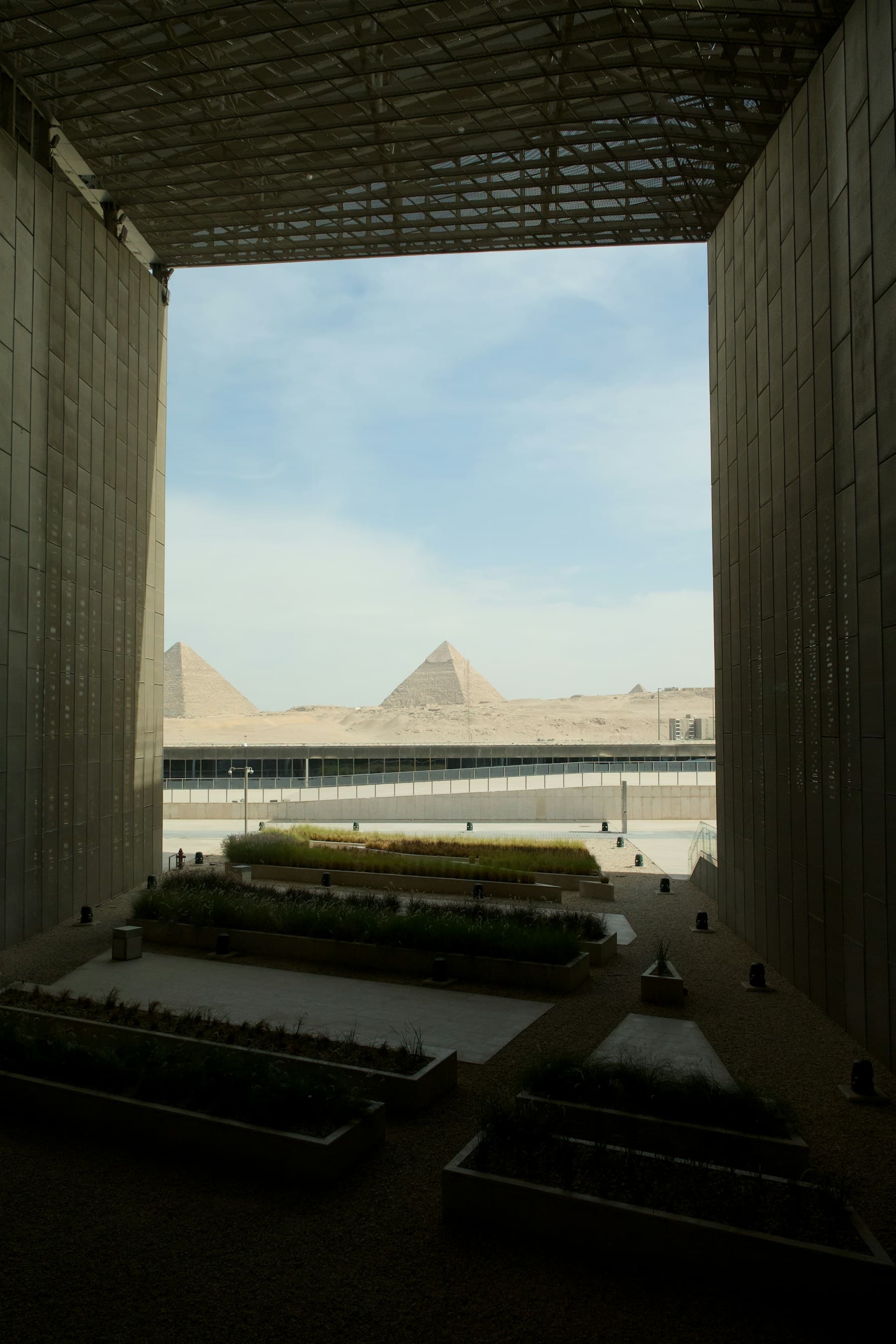
The Grand Staircase at the Grand Egyptian Museum: Six Storeys of Kings
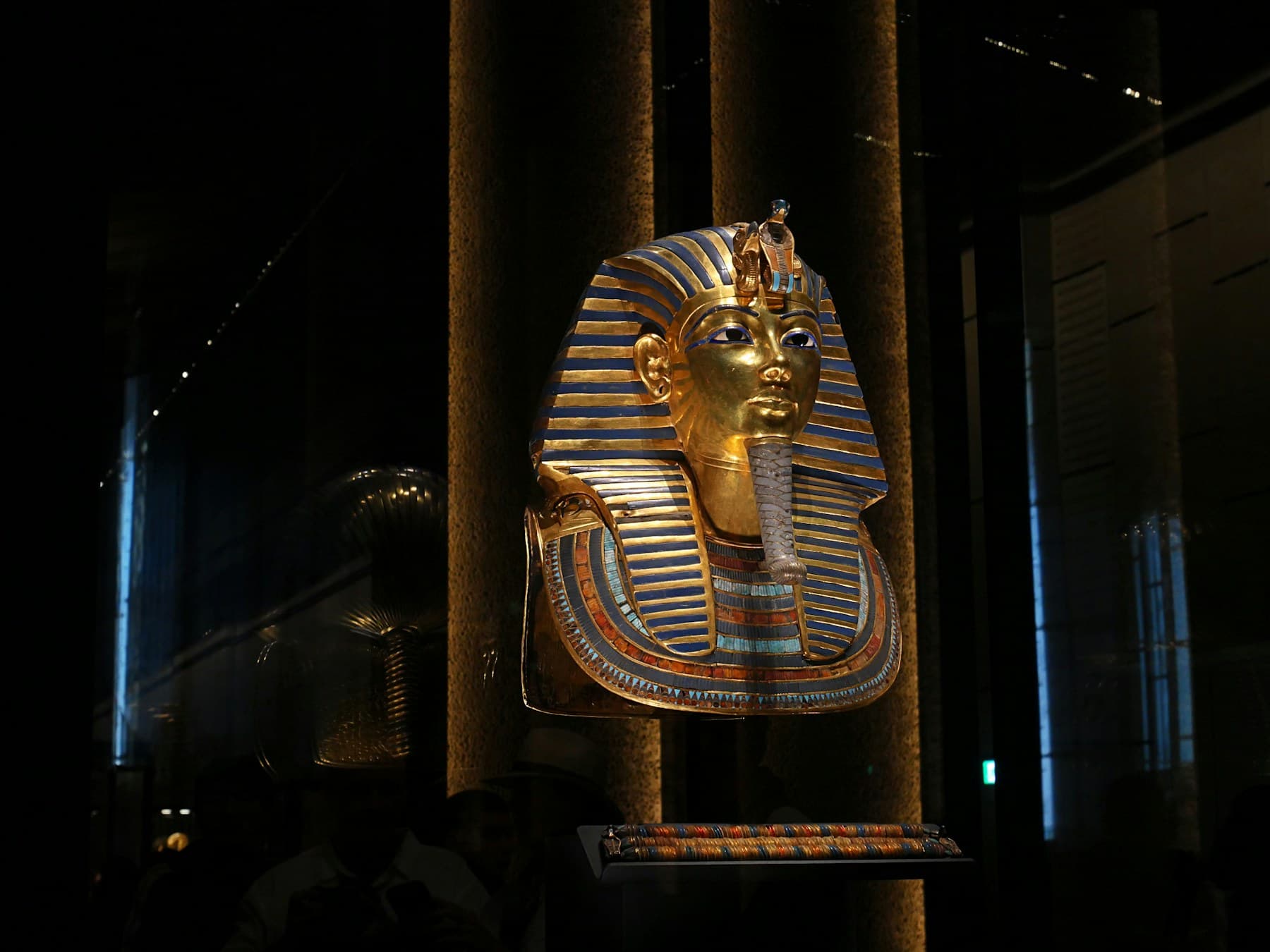
Tutankhamun's Gold Mask at the Grand Egyptian Museum: What to Look For
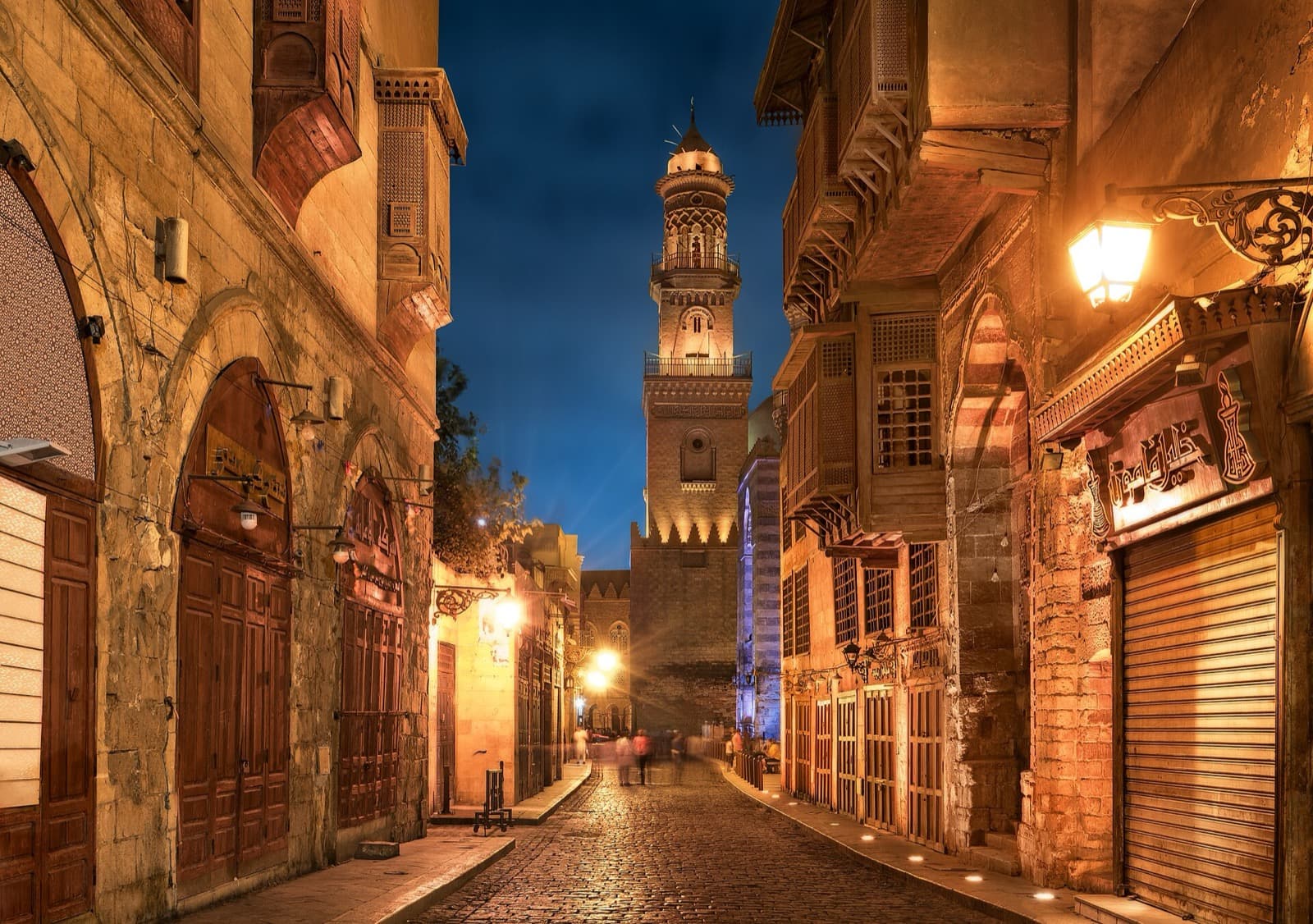
Al-Muizz Street: Reading a Thousand Years of Cairo on One Pavement