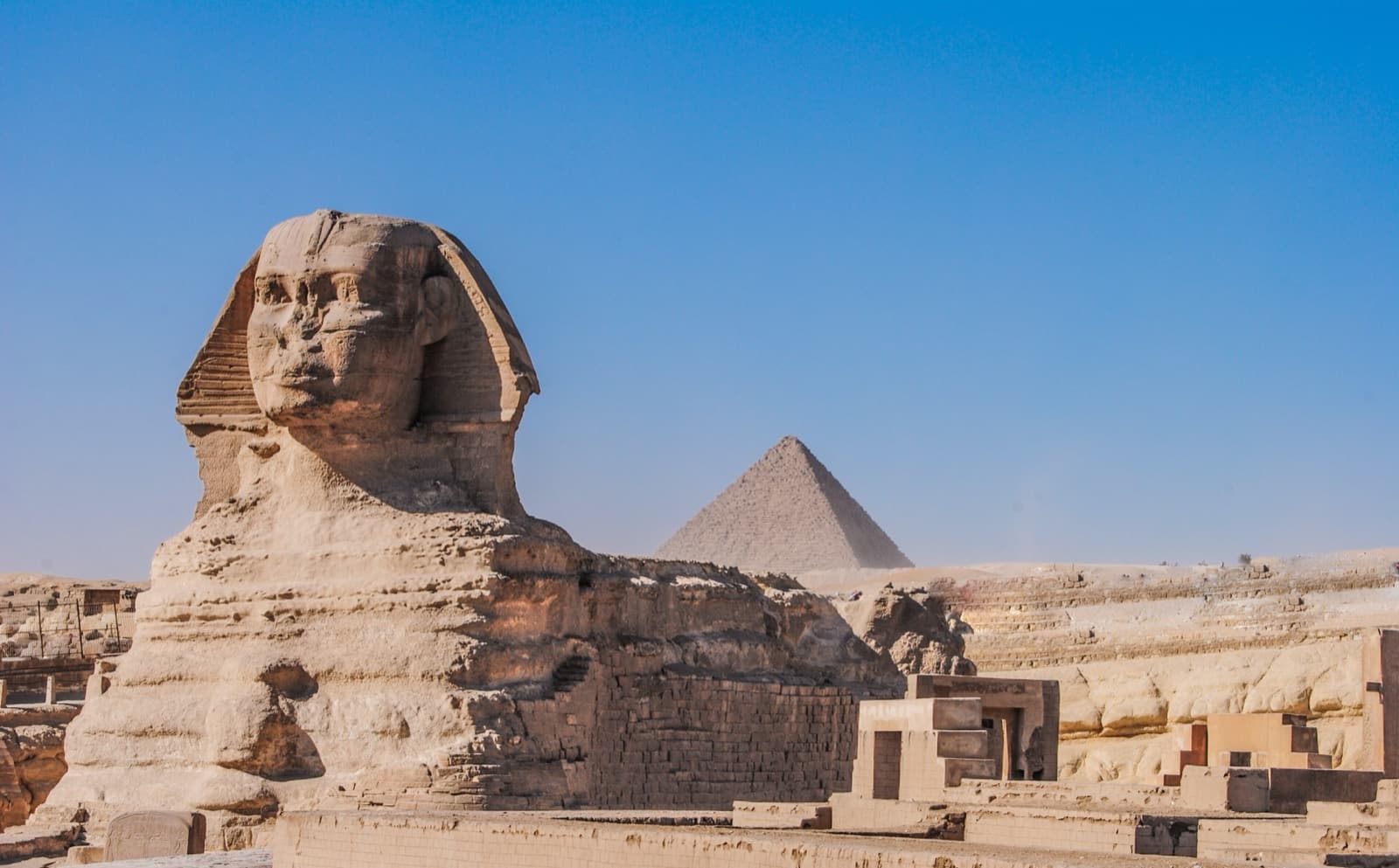
Read the Giza plateau not as three shapes on a poster but as a planned royal cemetery built to outlast time, from the mountain of stone Khufu raised to the guardian lion carved from living rock and the new museum that gathers the treasure home.
Start · The Great Pyramid of Khufu: The Mountain of Stone
DirectionsStops
- 1
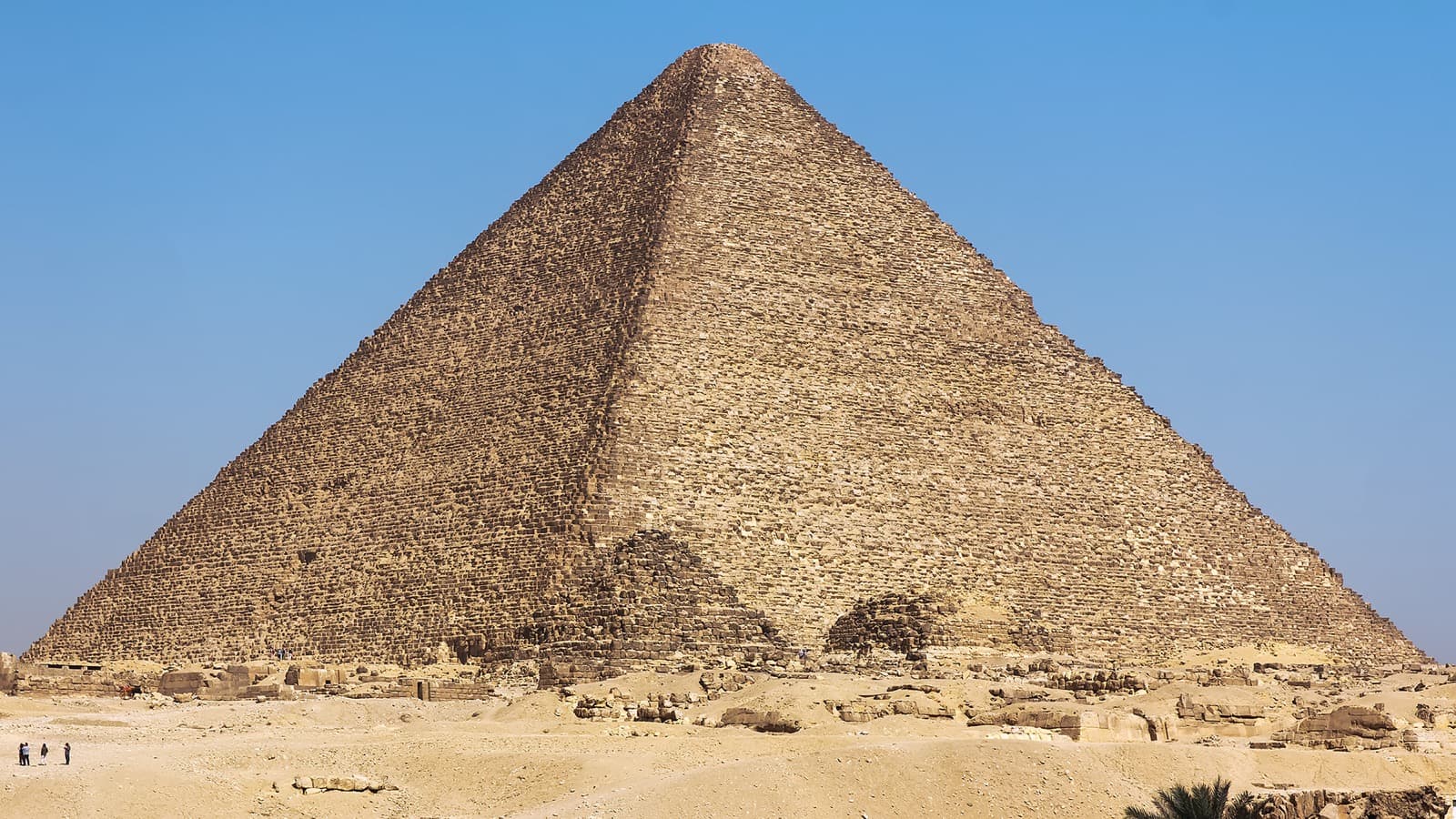
The Great Pyramid of Khufu: The Mountain of Stone
The oldest of the Seven Wonders and the only one still largely intact, the tomb of the pharaoh Khufu rises as a mountain of roughly two million three hundred thousand blocks.
- 2
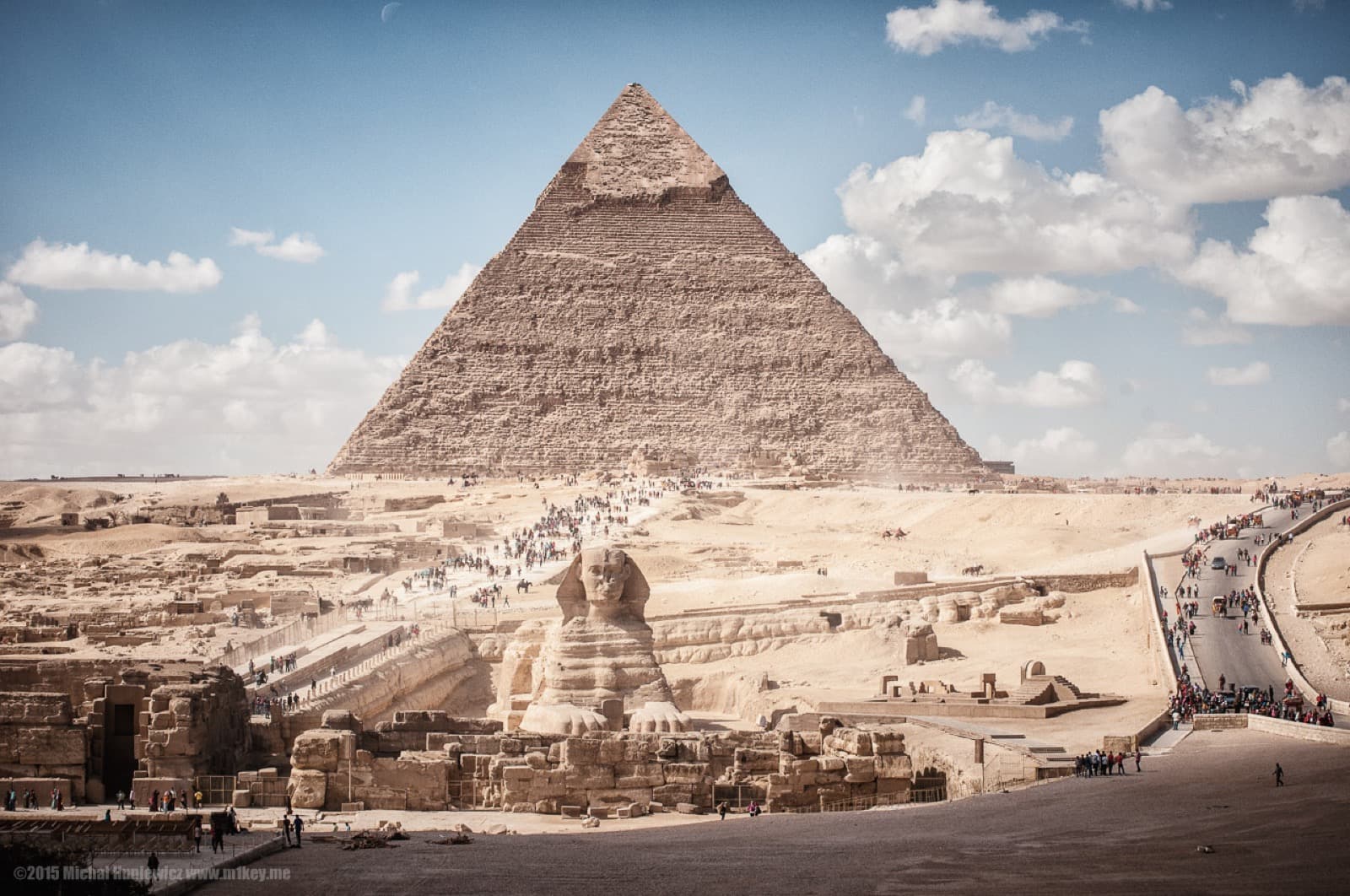
The Pyramid of Khafre: When They Gleamed White
The second pyramid keeps a cap of smooth white limestone at its summit, the last trace of the polished casing that once made all three pyramids shine.
- 3
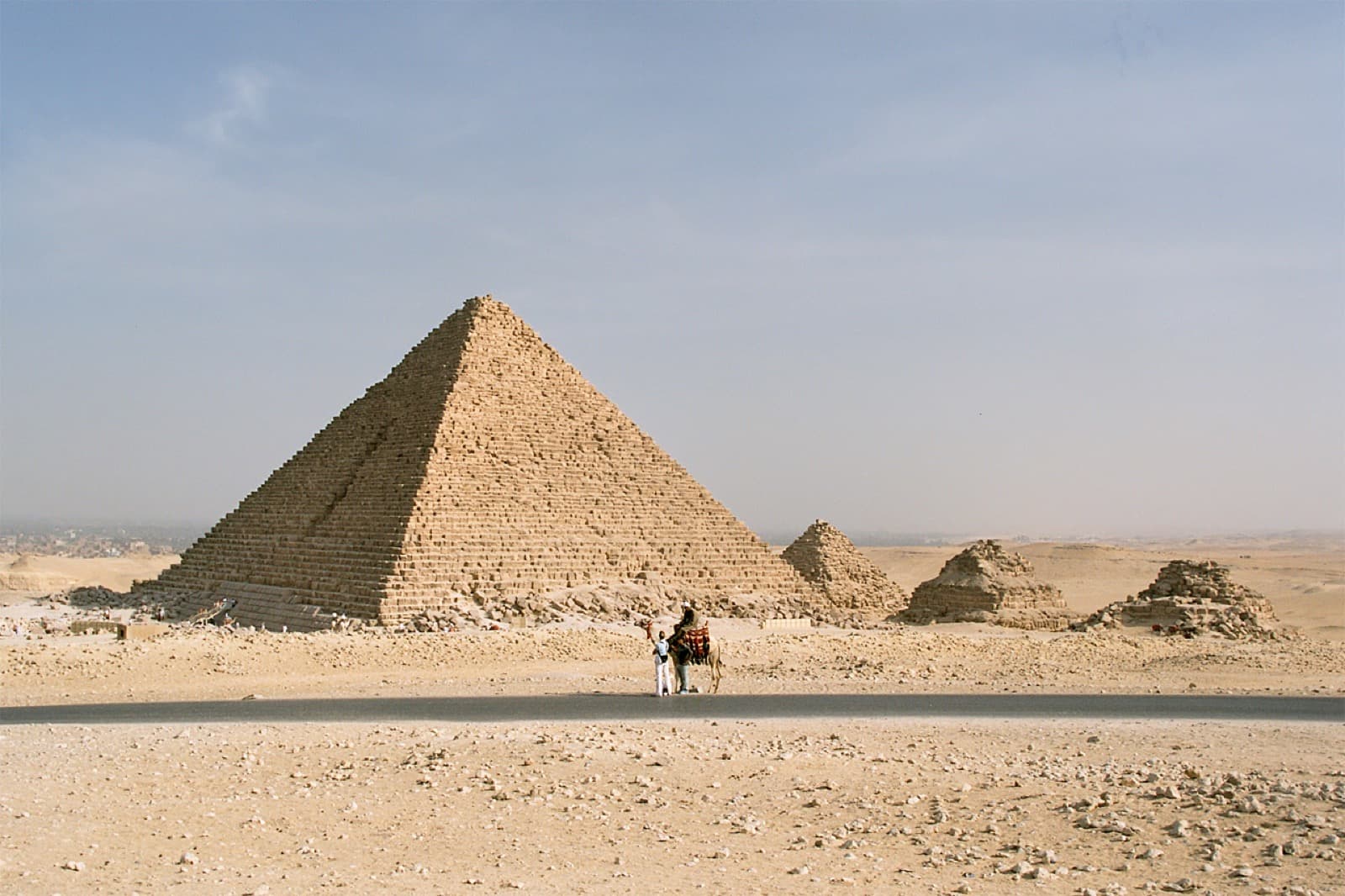
The Pyramid of Menkaure and the Queens: The Age Winds Down
The smallest of the three main pyramids, skirted in unfinished red granite and flanked by three small queens' pyramids, marks where the great pyramid age at Giza tapers to a close.
- 4
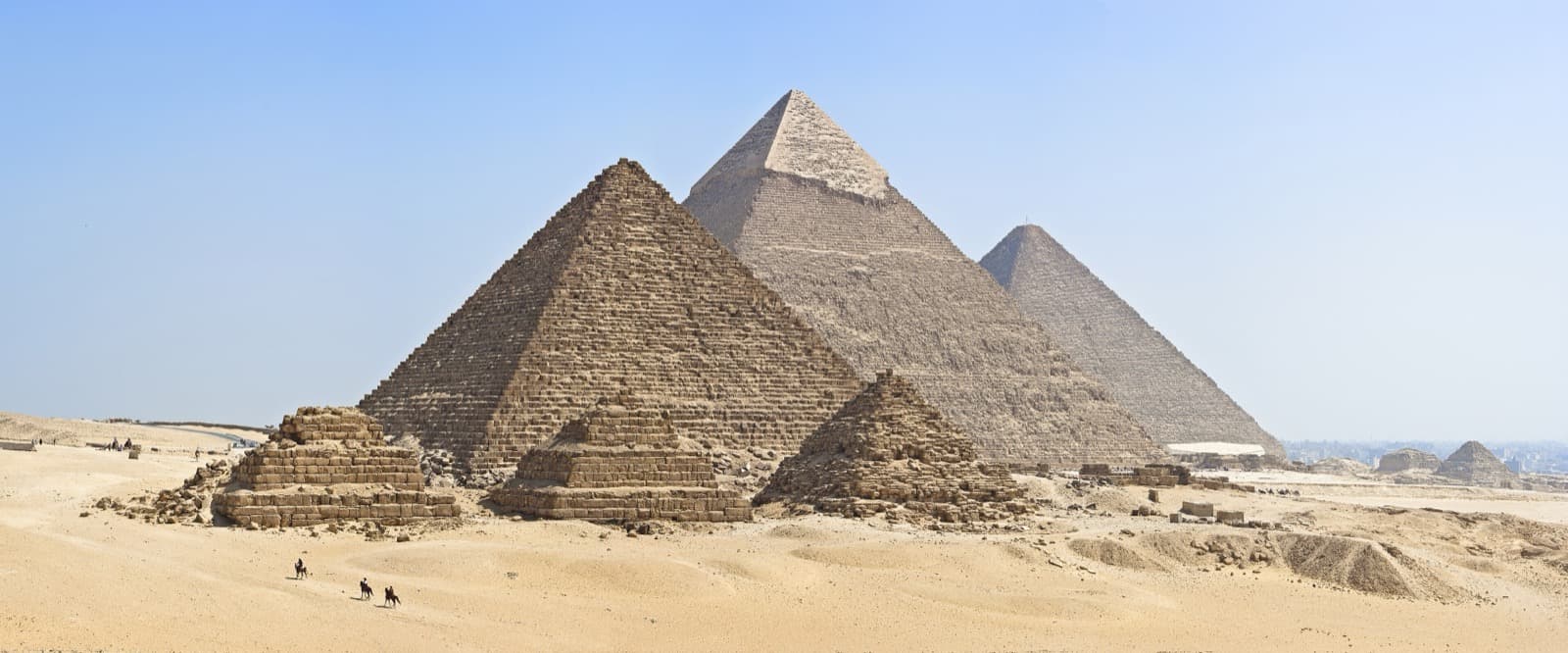
The Panorama: A City of the Dead
From the desert rise southwest of the pyramids, the three line up in the classic view and the plateau reveals itself as one planned royal necropolis, not three separate icons.
- 5
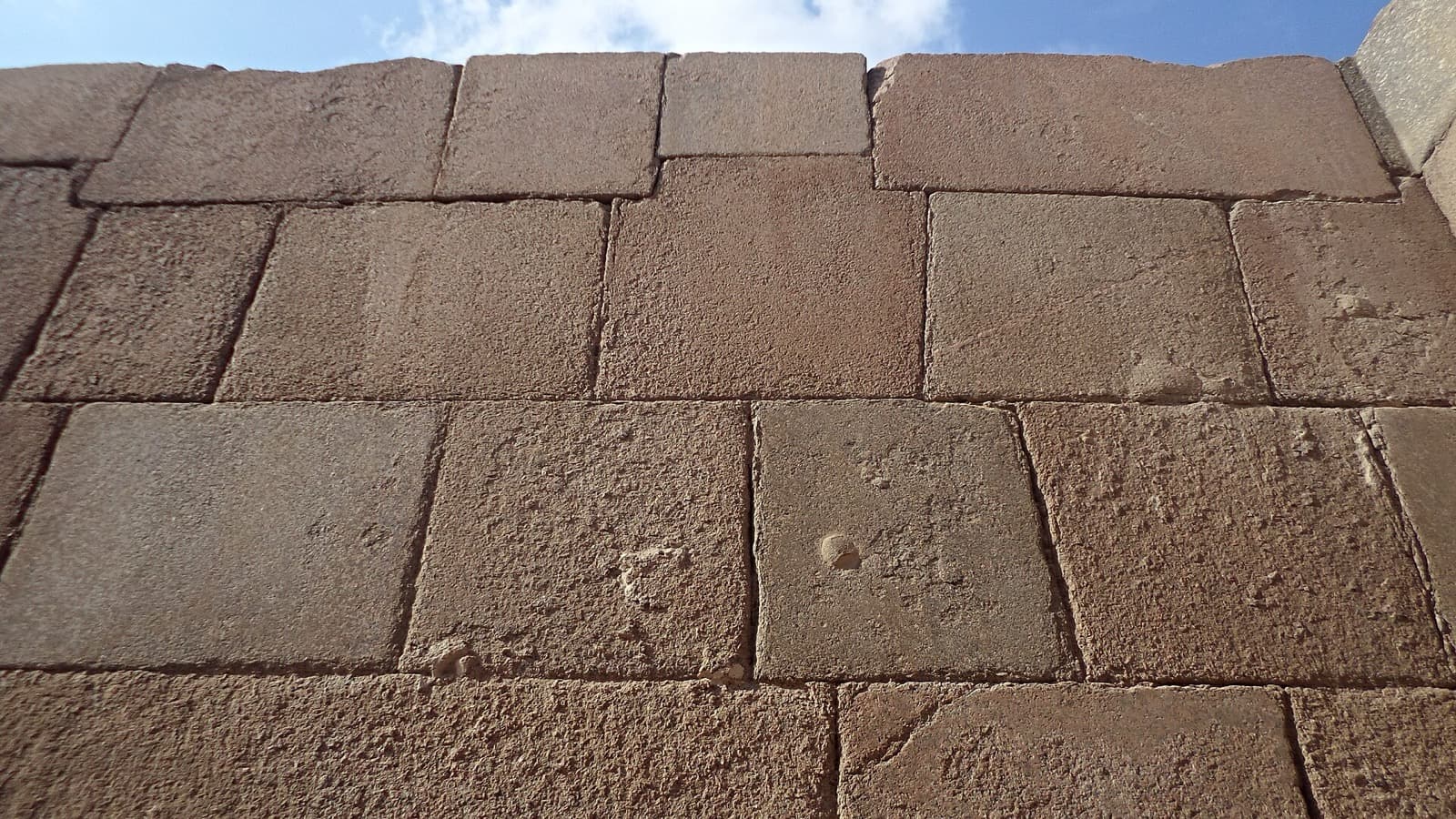
The Valley Temple of Khafre: The Machinery of Eternity
One of the best-preserved Old Kingdom temples, built of megalithic core blocks faced in red granite over an alabaster floor, where the rites of the royal funeral were performed.
- 6
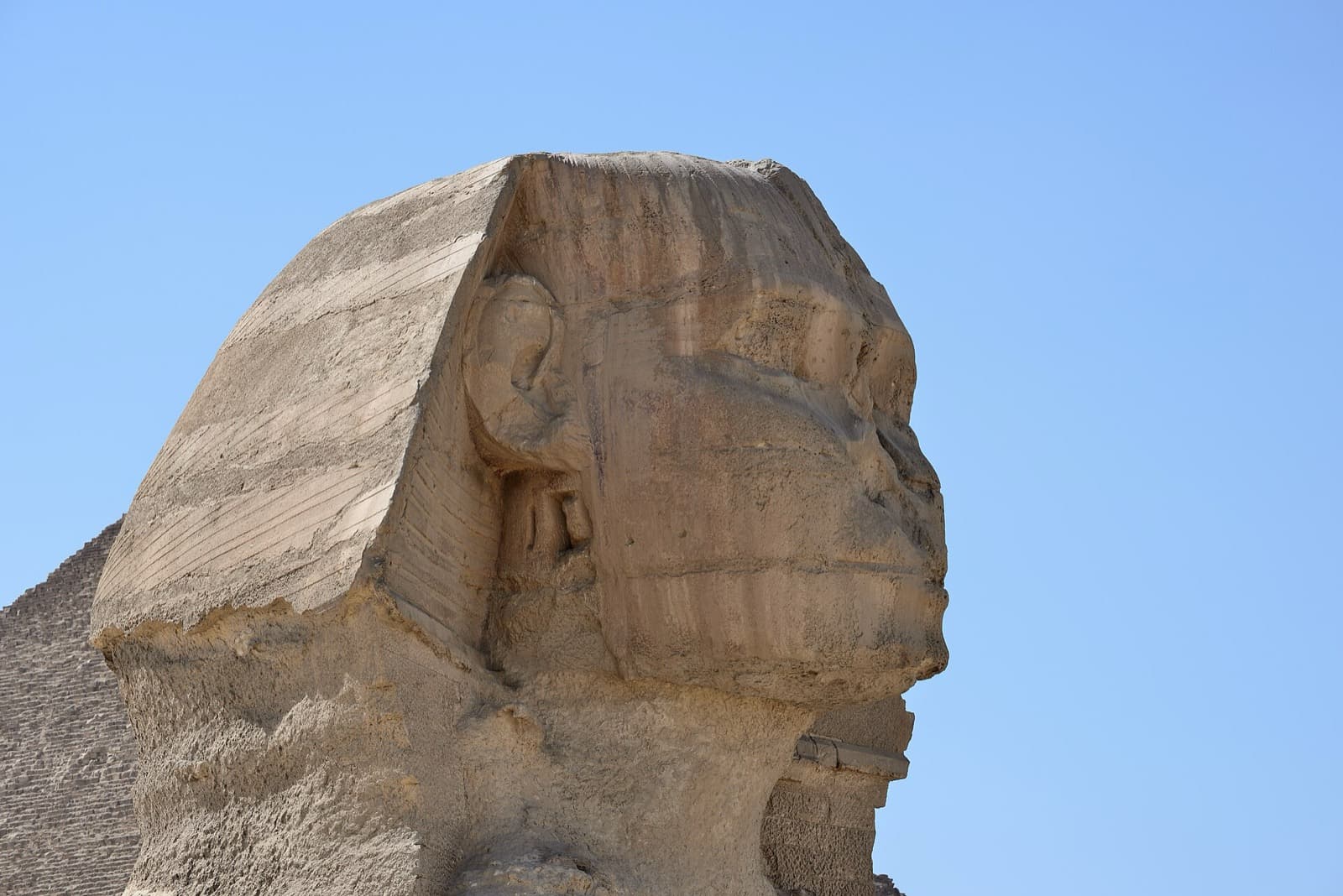
The Great Sphinx: The Guardian Facing the Sunrise
Carved from a single ridge of the plateau's living bedrock, the recumbent lion with a human head is the oldest known monumental sculpture in Egypt, facing east toward the dawn.
- 7
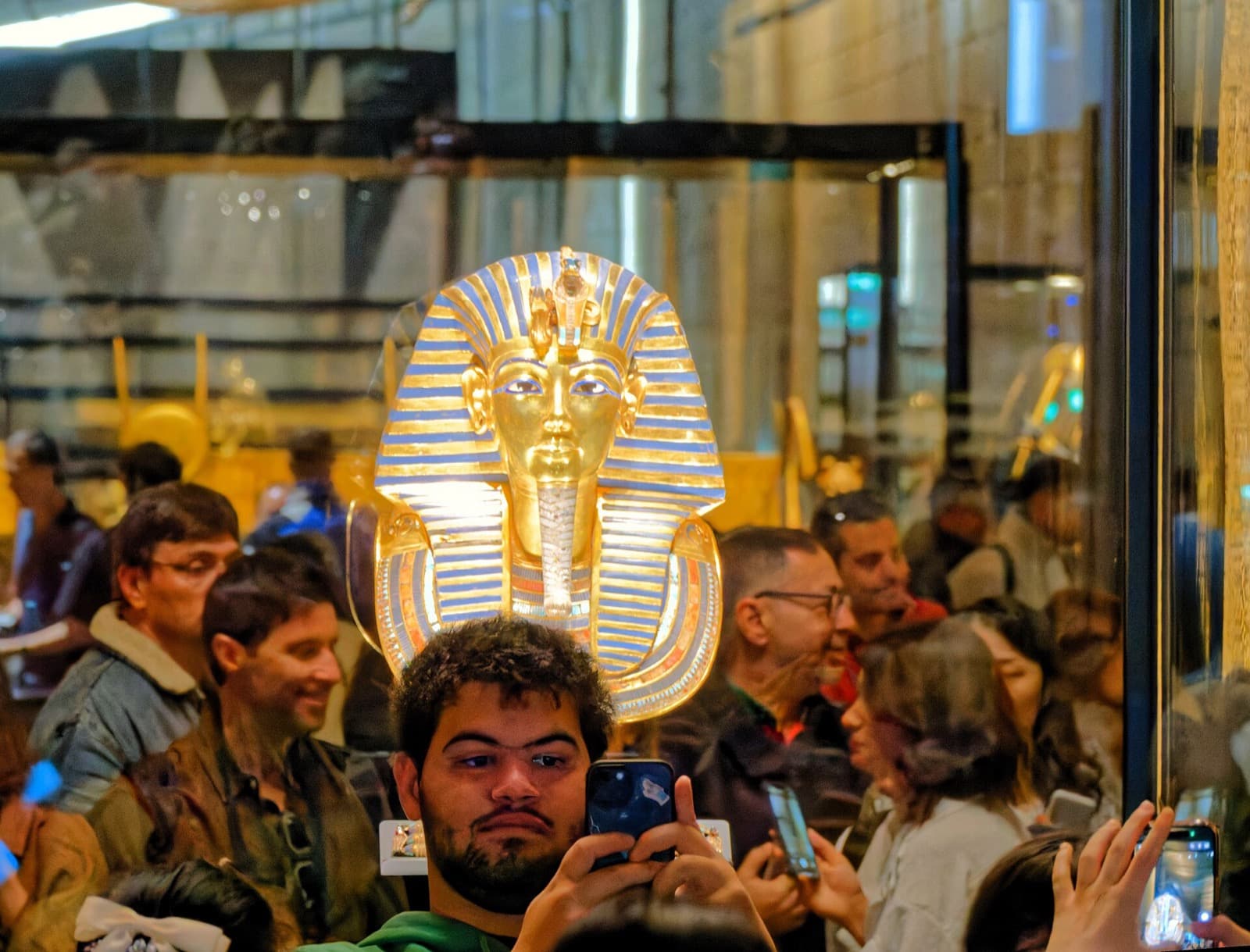
The Grand Egyptian Museum: The Treasure Comes Home
About two kilometres from the plateau, the museum aligns its walls with the pyramids and gathers the complete Tutankhamun collection and the Khufu solar boat beside the tombs their treasures came from.
Details
Best Time to Visit
Come early, at opening, or in the last two hours before closing. The Giza plateau is open desert with almost no shade, and the midday sun between late spring and early autumn is punishing, so morning light is both cooler and far better for photographs, with the Sphinx facing the rising sun. Winter, from November through February, is the most comfortable season overall. Allow a full half-day if you plan to add the Grand Egyptian Museum, ideally visiting the plateau first while it is cool and the museum in the heat of the afternoon.
Pro Tips
- •Buy the general plateau ticket at the entrance, and decide separately whether to pay the extra fee to enter a pyramid's interior. The passages are steep, low, hot, and airless, so skip them if you are claustrophobic; the Great Pyramid interior carries the highest separate charge.
- •Carry small cash in Egyptian pounds. Tickets, tips, and the restroom all run more smoothly with coins and small notes, and card acceptance on the plateau is unreliable.
- •The camel and horse handlers are persistent. A firm, friendly no works; if you do want a ride, agree the full price and the return trip out loud before you get on, never after.
- •Walk the plateau in the order that suits the light and your legs rather than a fixed line. The stops are close together and you can linger or skip freely, which is the whole advantage of going self-guided.
- •Save the Grand Egyptian Museum for a separate ticket and, ideally, the afternoon. It is about two kilometres from the plateau and needs a taxi or ride-hail; give the Tutankhamun galleries and the Khufu solar boat real time.
- •Bring more water than you think you need, plus a hat, sunglasses, and sunscreen. There is effectively no shade anywhere on the open plateau.
Safety & Precautions
- •The Giza plateau is open desert with strong sun and little shade, and vendors and camel and horse touts work it persistently. Carry water and sun protection, keep a firm polite no ready, and confirm any price in full before accepting a ride.
- •The sites on this walk are spread apart, and the Grand Egyptian Museum is about two kilometres from the plateau, reached by taxi or ride-hail rather than on foot. Agree the fare or use a metered app before you set off.
- •If you extend your trip to Cairo's mosques, dress and behave accordingly: active mosques such as al-Azhar, Sultan Hassan, Muhammad Ali, and Amr ibn al-As require modest dress, shoes removed, and quiet, women may be asked to cover their hair, and non-worshippers may be asked to wait during prayer times. Working churches and the Ben Ezra Synagogue also expect modest dress and quiet.
- •In crowds, whether on the plateau or later in a market such as Khan el-Khalili, keep ordinary big-city awareness of your bag and valuables. Pyramid interiors involve steep, narrow descents and often restrict photography, so check the rules before you raise a camera.
Travel advisory: Exercise Increased Caution (Level 2).
Gallery
Related Reading
Go deeper on what you'll see, hear, and walk through.

Overview
Best Self-Guided Walking Tours in Cairo (2026)
4 min
Overview
Cairo Travel Guide: Days, Transport, Safety, and Budget
7 min
Overview
One Day in Cairo: A Walkable Morning-to-Evening Itinerary
7 min
Thematic
Best History Walking Tours in Cairo (2026)
2 min
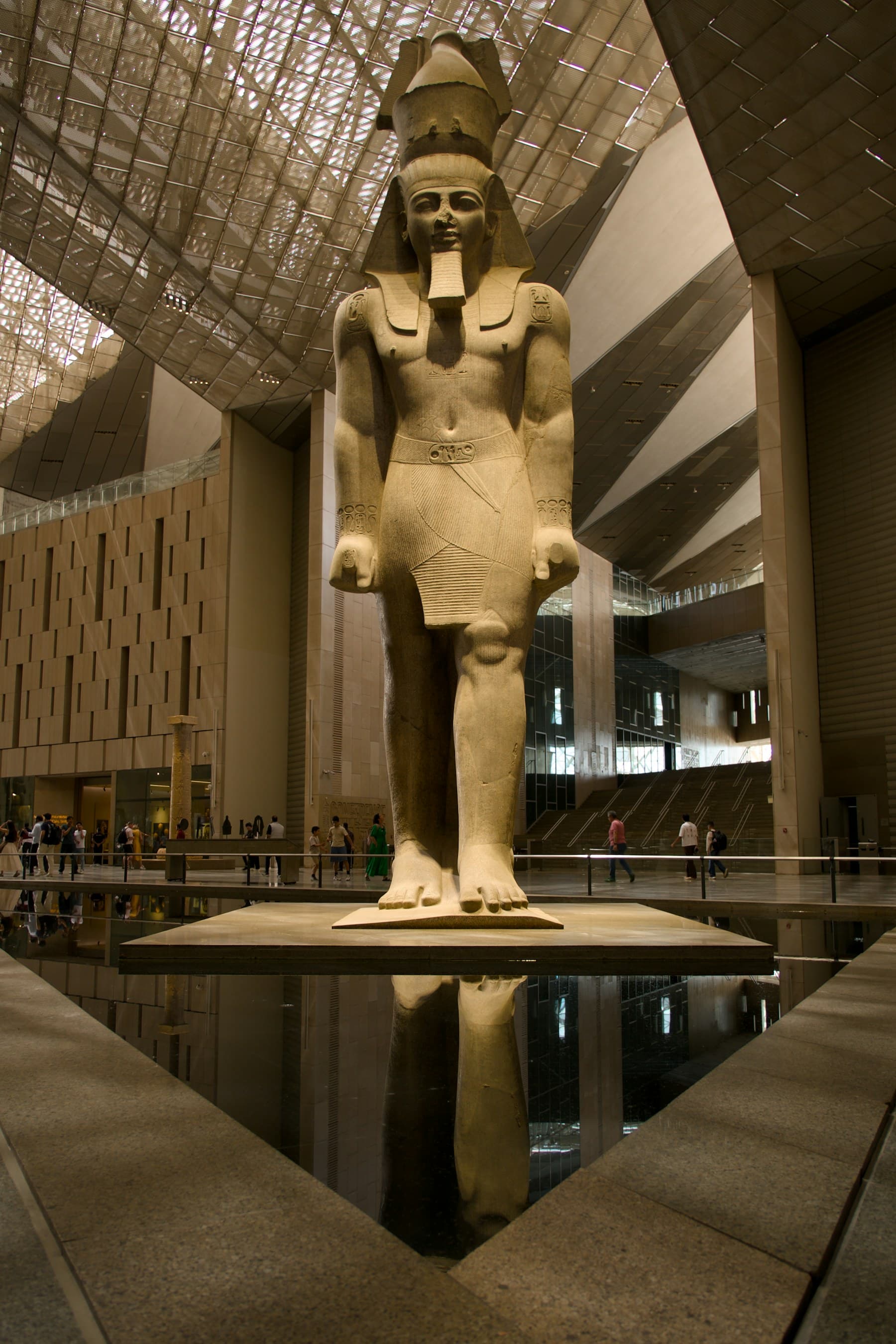
Thematic
Grand Egyptian Museum: What to See, From the Grand Hall to Tutankhamun
10 min
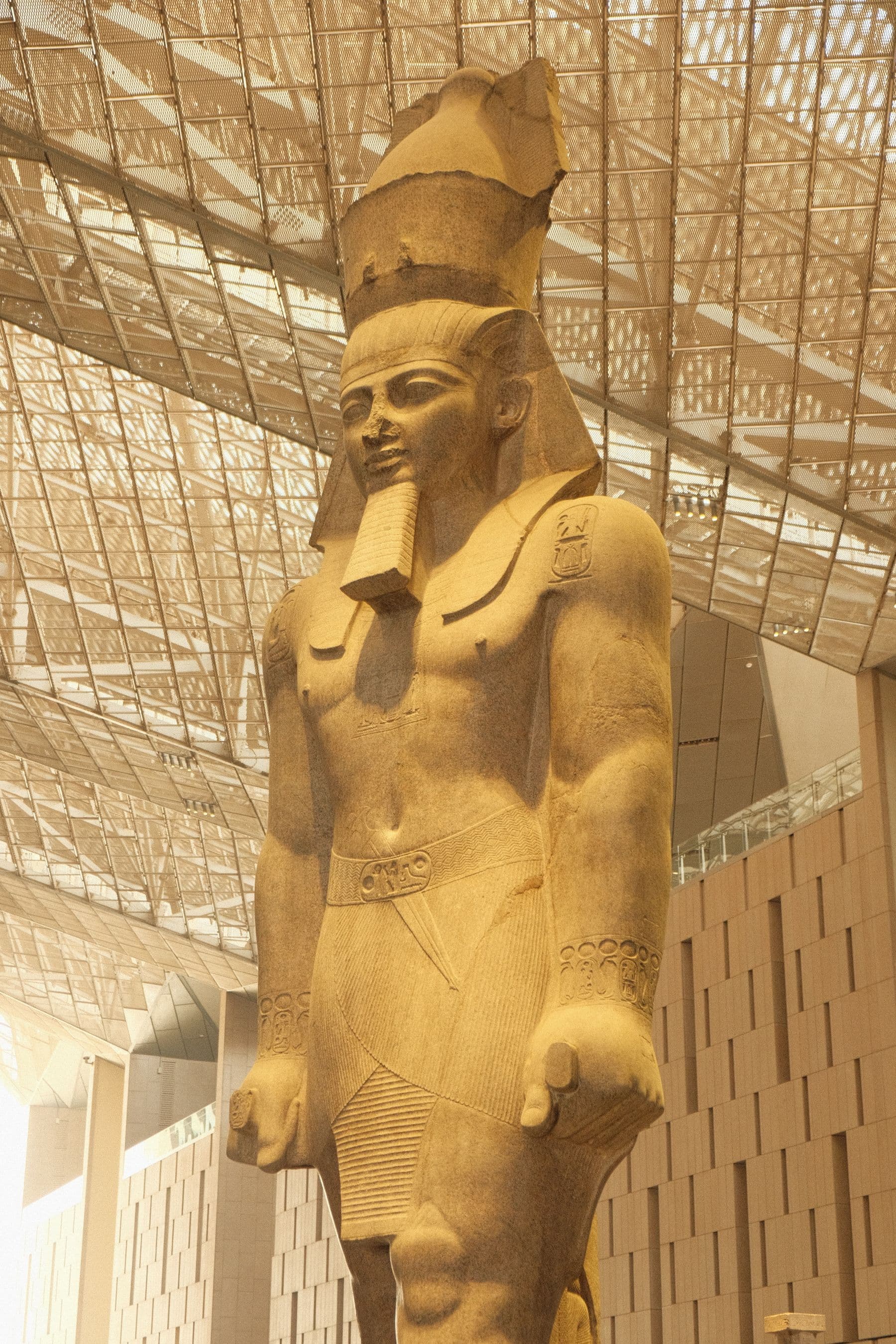
Thematic
The Colossal Ramesses II at the Grand Egyptian Museum: From Memphis to Ramses Square to Giza
5 min
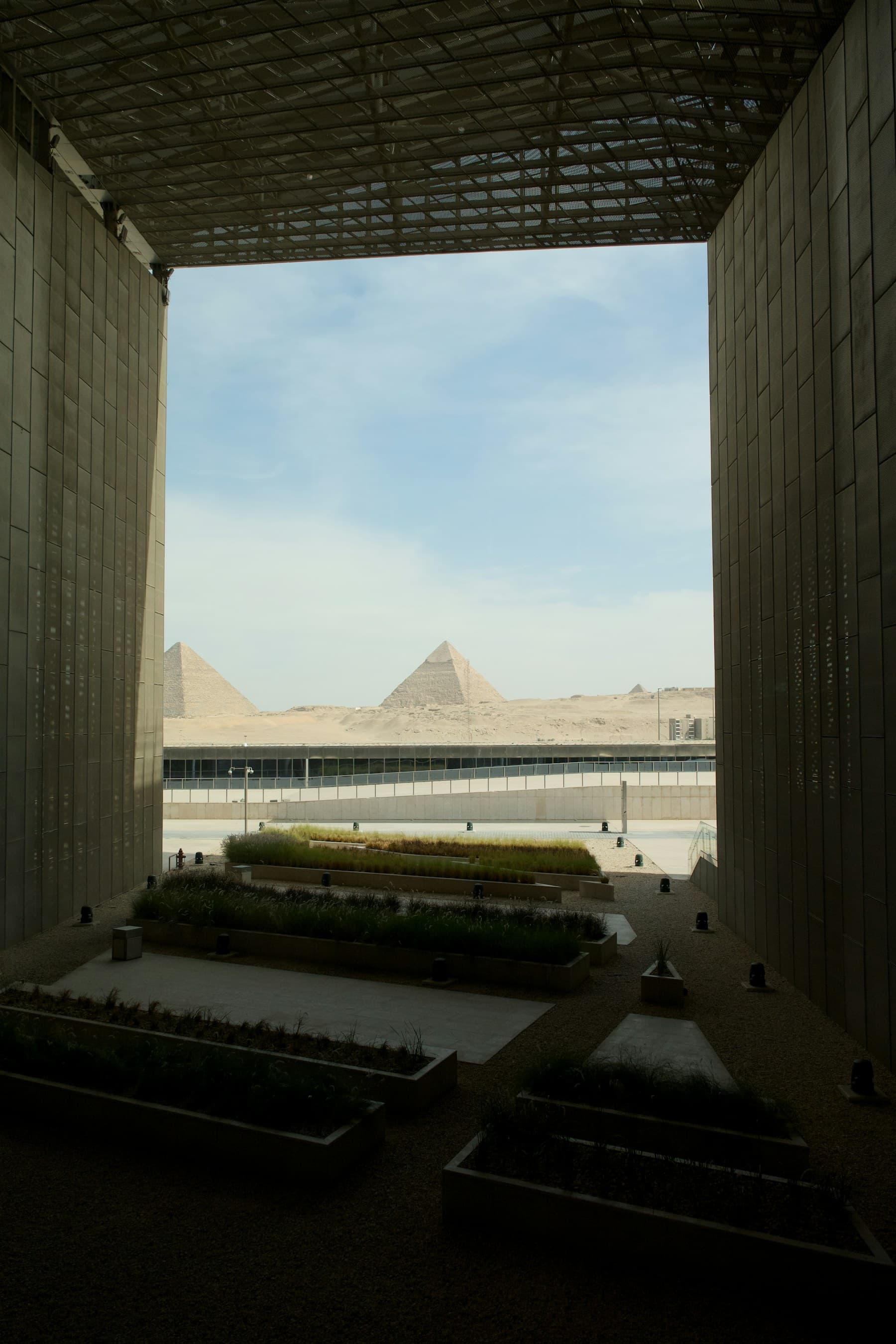
Thematic
The Grand Staircase at the Grand Egyptian Museum: Six Storeys of Kings
6 min
Thematic
Three Cairos on the Nile: Pyramids, the Medieval Street, and the Old Christian Quarter
8 min
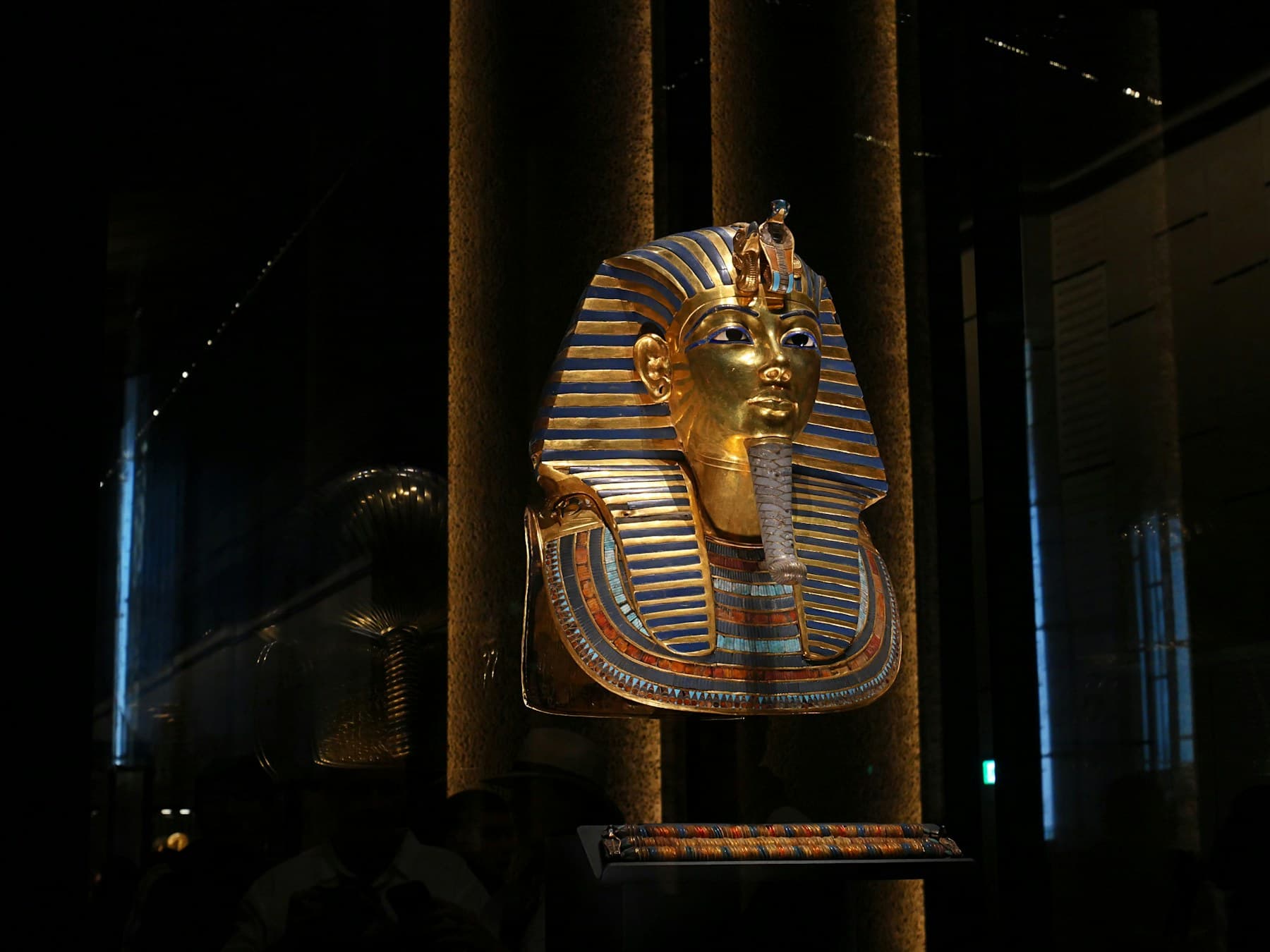
Thematic
Tutankhamun's Gold Mask at the Grand Egyptian Museum: What to Look For
6 min
Companion
The Great Pyramid of Khufu: How to Read the Whole Giza Plateau
7 min
Deep dive
The Great Sphinx of Giza: The Guardian Carved From Living Rock
7 min
Read
What to Eat in Cairo: Koshari, Ful, and How to Order Like a Local
7 min
Read the walk
The full story of Giza: The Pyramids and the Sphinx, in words. Prefer to listen? Play it narrated, from home or on location.
Introduction
The three pyramids on the edge of Cairo, Egypt, are so famous they can read as a backdrop, three shapes on a postcard against the desert. This self-guided walk is about seeing past that. What stands on the Giza plateau is a planned royal cemetery of the Fourth Dynasty, a whole city of the dead: three mountains of cut stone raised as tombs, their temples and causeways and boat pits, and a lion carved from the living rock to guard them, all engineered to defeat time. It has already outlived every empire that came to stare at it. Over seven stops and about two and a half hours, covering roughly three kilometres of open desert, you move from raw scale to human intention. You go at your own pace here, with no group and no schedule. Linger at the base of the Great Pyramid as long as you like, or skip ahead to the Sphinx if the sun is high. Each stop is short, and you decide the order that suits your legs and the light. The tour ends about two kilometres away at the Grand Egyptian Museum, where the treasure that once lay inside these tombs is now gathered beside them. Bring water, sun protection, and a firm, friendly no for the camel and horse touts who work the plateau. Small cash helps for tickets and tips. Your ticket to the plateau covers the grounds and the Sphinx, while entering the interior of a pyramid and the museum are separate. When you arrive at the base of the Great Pyramid of Khufu, begin with stop one.
1. The Great Pyramid of Khufu: The Mountain of Stone
Stand at the base and let your eye climb. What looks like a single triangle from the road is, up close, a mountain of cut stone, roughly two million three hundred thousand blocks stacked into the sky. This is the tomb of the pharaoh Khufu, known to the Greeks as Cheops, second king of the Fourth Dynasty, and it was raised around the twenty-sixth century B C, some four and a half thousand years ago, over roughly two decades of labour. Its original height was about one hundred and forty-six metres. Weathering and the loss of its outer casing have brought it down to around one hundred and thirty-eight metres today, still enormous. Hold this number in your mind: it was the tallest structure human beings had ever made, and it kept that record for more than three thousand seven hundred years, longer than the entire history that has passed since. UNESCO records the Great Pyramid as the only surviving wonder of the ancient world. Exactly how it was built, how those blocks were hauled and lifted into place, is still debated by engineers and archaeologists, so anyone who tells you they know for certain is telling you a story, not a fact. What is certain is the intention. This is not decoration and not a monument for its own sake. It is a grave, a machine for eternity, meant to carry one king safely out of time. The rest of the plateau, the temples and causeways and smaller pyramids you will meet, was laid out around this one purpose. So before you photograph it, feel the base under your feet, and understand what you are actually looking at: a bid, in stone, to outlast death itself.
2. The Pyramid of Khafre: When They Gleamed White
Now look at the second pyramid, and look at its very top. See that band of paler, smoother stone near the summit? That is the one detail that changes how you picture this whole plateau. This is the tomb of Khafre, known to the Greeks as Chephren, son of Khufu, fourth king of the Fourth Dynasty, who reigned in the twenty-sixth century B C. Of the three great pyramids, his is the only one that still keeps a cap of its original casing, the smooth white Tura limestone that once sheathed all three from base to peak. Picture that for a moment. These were not the bare brown stepped surfaces you see now. When they were finished, all three pyramids were cased in polished white limestone, dressed so precisely that they gleamed, three brilliant white mountains flashing back the desert sun, visible for miles. Over the centuries that casing was stripped away and carried off to build medieval Cairo, and only Khafre's cap survives to show you what has been lost. There is one more thing worth noticing. Khafre's pyramid looks taller than his father's Great Pyramid, and many first-time visitors assume it is. It is not. It is slightly shorter. It only appears taller because it stands on a shelf of bedrock roughly ten metres higher than its neighbour. A clever piece of siting, and a small reminder that these builders thought about how the monuments would read against the sky, not just how big they were. So hold the plateau in your imagination in white, and this stop has done its work.
3. The Pyramid of Menkaure and the Queens: The Age Winds Down
The third pyramid is noticeably smaller than the other two, and that difference is the whole point of this stop. This is the tomb of Menkaure, known to the Greeks as Mycerinus, son of Khafre and grandson of Khufu, built around the twenty-sixth century B C. Its original height was about sixty-five metres, less than half the Great Pyramid. Come close to its lower courses and you will see a change of stone and colour. Instead of pale limestone, the bottom of this pyramid is faced in red granite hauled all the way from Aswan, hundreds of kilometres up the Nile. Much of that granite was left rough and undressed, never given its final smooth finish. The likely reason is simple and human: the king seems to have died while the work was still underway, and it was completed in haste. Look just to the south and you will find three much smaller pyramids in a row, designated by archaeologists as G three a, b, and c, and commonly called the queens' pyramids. They are believed to be tombs for royal women, though the certainty about exactly who lay in each is not what you might wish. Stand here and feel the arc of it. Three generations, grandfather, father, and grandson, and the great pyramid age at Giza winding down in front of you: smaller, granite-skirted, unfinished. After Menkaure, no pyramid on this scale rose on the plateau again. The ambition that built a mountain to the height of a forty-storey tower had passed its peak. You are standing at the quiet end of an age.
4. The Panorama: A City of the Dead
From this rise in the desert, southwest of the pyramids, the three of them line up into the view you have seen your whole life. This is where most people take the photograph and move on. Take the photograph, then look harder, because this is the turn of the whole walk. What you…
Full narration for this stop unlocks with the tour.
5. The Valley Temple of Khafre: The Machinery of Eternity
Down here at the foot of the plateau, beside the Sphinx, stands something the pyramids alone can never show you: the machinery of the funeral, up close. This is the Valley Temple of Khafre, built in the twenty-sixth century B C at the lower end of his causeway, and it is one of…
Full narration for this stop unlocks with the tour.
6. The Great Sphinx: The Guardian Facing the Sunrise
And here is the guardian. The Great Sphinx is a recumbent lion with a human head, about seventy-three metres long and some twenty metres high, and the single most important thing to understand about it is how it was made. It was not built from blocks and set here. It was carved…
Full narration for this stop unlocks with the tour.
7. The Grand Egyptian Museum: The Treasure Comes Home
The walk ends about two kilometres from the plateau, at the Grand Egyptian Museum, and it ends on a kind of homecoming. For most of history, the tombs you have just seen stood empty. Their treasures had been robbed over the millennia, carried off, scattered, and in the colonial…
Full narration for this stop unlocks with the tour.