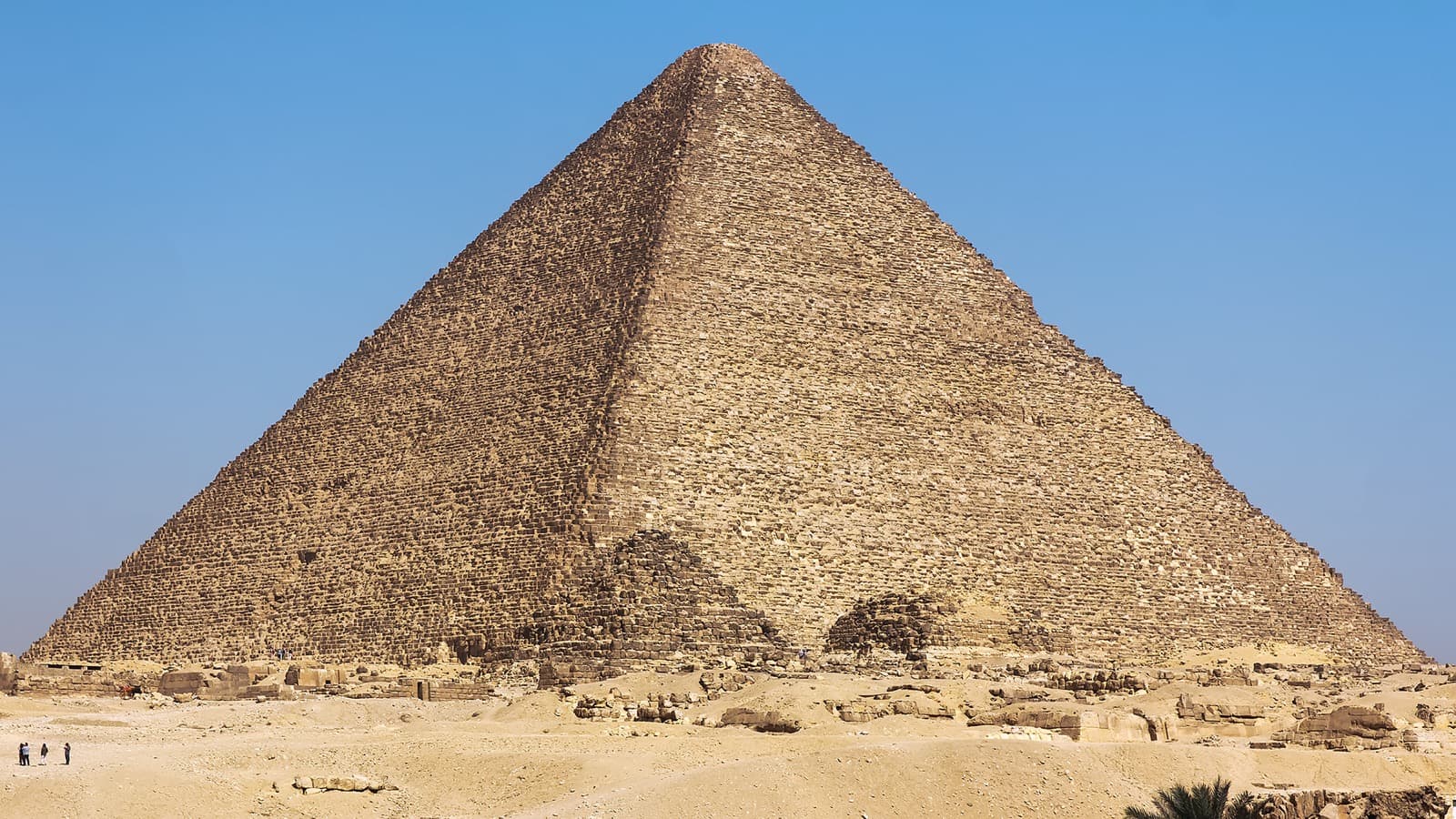
The Great Pyramid of Khufu is not a triangle on a poster. It is a mountain of roughly two million three hundred thousand cut stone blocks, raised as a tomb for one king around the twenty-sixth century B C, and engineered to defeat death itself. Read it that way, from its base upward, and the whole Giza plateau stops being three shapes on the sand and becomes what it always was: a single planned royal cemetery, a working machine for eternity. That reading is what the Giza self-guided walk is built to give you, and the Great Pyramid is where it begins.
Start With the Number
Stand at the base and let your eye climb. From the road the pyramid reads as one clean triangle. Up close it dissolves into stone: course after course of quarried block, roughly two million three hundred thousand of them, stacked into the sky. This is the tomb of the pharaoh Khufu, known to the Greeks as Cheops, second king of the Fourth Dynasty. It was raised around the twenty-sixth century B C, some four and a half thousand years ago, over roughly two decades of labour.
Hold one figure in your mind, because it reorders your sense of history. The Great Pyramid was the tallest structure human beings had ever made, and it kept that record for more than three thousand seven hundred years. That is longer than the entire span of history that has passed since. Its original height was about one hundred and forty-six metres; weathering and the loss of its outer casing have brought it down to roughly one hundred and thirty-eight metres today, still enormous. UNESCO records it as the only one of the Seven Wonders of the Ancient World to survive largely intact.
Exactly how it was built, how those blocks were hauled and lifted into place, is still debated by engineers and archaeologists. Anyone who tells you they know for certain is telling you a story, not a fact. What is certain is the intention. This is not decoration and not a monument for its own sake. It is a grave, a bid in stone to carry one king safely out of time. Everything else on the plateau, the temples, the causeways, the smaller pyramids, was laid out around that single purpose.
Why the Anchor Opens the Whole Argument
Hear a stop from this walk
The Great Sphinx: The Guardian Facing the Sunrise
The Great Pyramid is stop one because it teaches you how to look at the other six. Once you have felt its scale under your feet, the rest of the walk becomes an argument you can follow.
Move to the second pyramid, Khafre's, and look at its summit. A band of paler, smoother stone still clings near the top. That is the last surviving cap of the polished white Tura limestone that once sheathed all three pyramids from base to peak. Picture the plateau finished: not the bare brown stepped surfaces you see now, but three brilliant white mountains flashing back the desert sun, visible for miles. The casing was later stripped away and carried off to build medieval Cairo, and only Khafre's cap survives to show you what was lost. Khafre's pyramid also looks taller than his father's. It is not. It is slightly shorter, and only appears larger because it stands on bedrock about ten metres higher, a deliberate piece of siting by builders who thought about how the monuments would read against the sky.
Then comes Menkaure's pyramid, noticeably smaller, its lower courses faced in red Aswan granite hauled hundreds of kilometres up the Nile and left rough, never given its final finish. The king seems to have died while work was underway, and it was completed in haste. Three small queens' pyramids sit to its south. Stand here and you feel the arc: grandfather, father, grandson, and the great pyramid age at Giza winding down in front of you. After Menkaure, no pyramid on this scale rose on the plateau again.
From Icons to a City of the Dead
The fourth stop is the panorama, the desert rise southwest where the three pyramids line up into the view you have known your whole life. Take the photograph, then look harder, because this is the turn of the walk. What you are seeing is not three separate icons but one thing: a planned royal necropolis of the Fourth Dynasty. UNESCO inscribed the wider region, Memphis and its Necropolis, the Pyramid Fields from Giza to Dahshur, as a World Heritage Site, counting more than thirty-eight pyramids across the field and over nine thousand rock-cut tombs. Around the three great pyramids stood mortuary temples, long stone causeways, boat pits, and ordered fields of flat-topped mastaba tombs for nobles who wanted eternity near their kings. A whole city of the dead, streets and neighbourhoods and all.
The Valley Temple of Khafre, at the foot of the plateau beside the Sphinx, shows you the machinery up close. It is one of the best-preserved temples of the Old Kingdom: megalithic core blocks faced in red granite, a floor of pale Egyptian alabaster, sixteen single-block granite pillars, almost no decoration. Tradition holds this is where the rites of purification and funerary preparation of the king's body were carried out before it was carried up to the pyramid. The pyramids, you realise here, are the far end of a working system.
The Guardian and the Homecoming
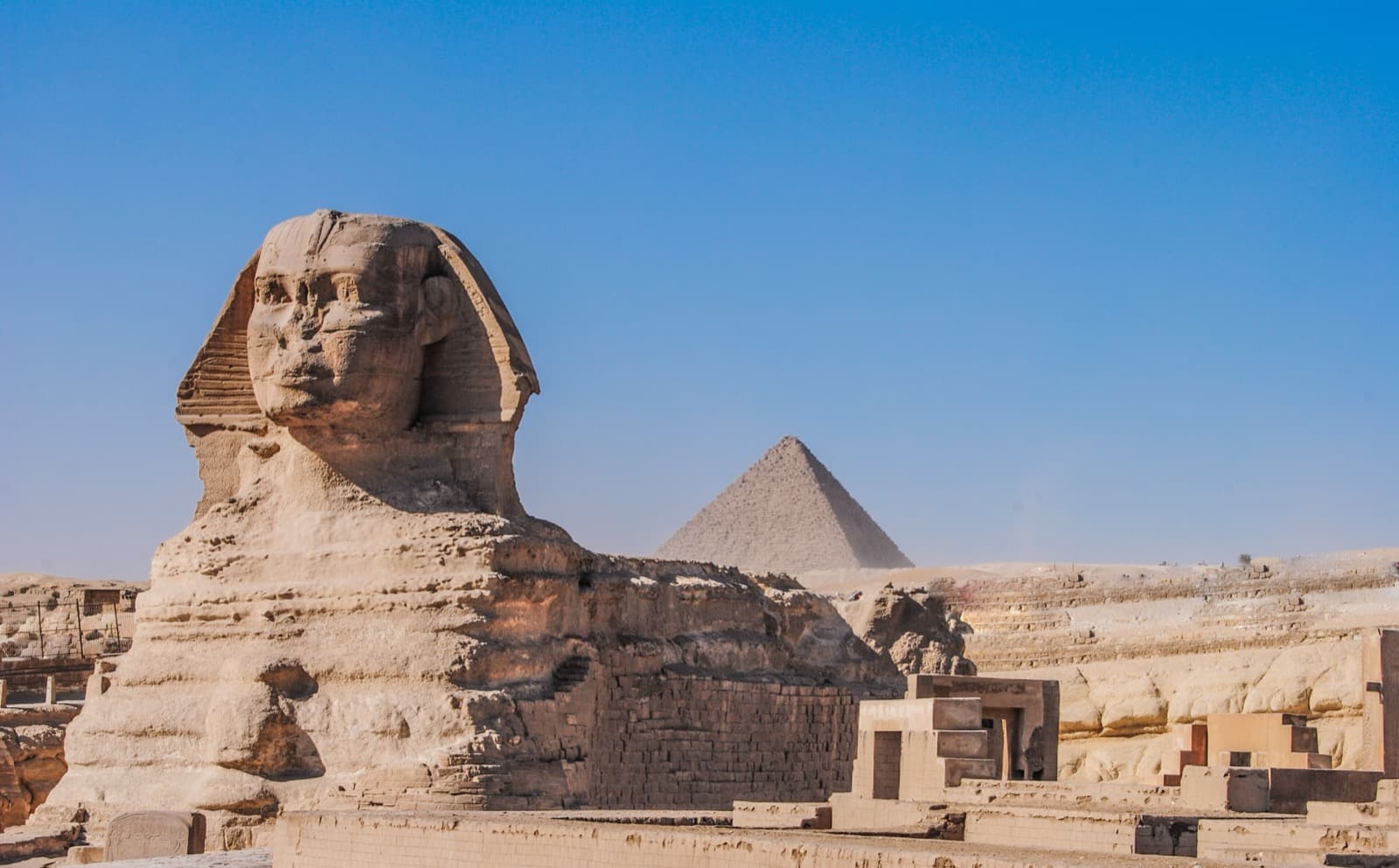
The Great Sphinx is the quiet emotional centre. About seventy-three metres long and some twenty metres high, it was not built from blocks but carved in place, cut directly from a single ridge of the plateau's own limestone bedrock. It is the ground itself, shaped into a lion. It is the oldest known monumental sculpture in Egypt, generally attributed to Khafre, facing due east toward the sunrise. Between its paws stands the Dream Stele, set there by Thutmose the Fourth of the Eighteenth Dynasty around fourteen hundred and one B C, more than a thousand years after the Sphinx was carved. As for the nose: the legend that Napoleon's soldiers shot it off is false. The nose was already missing, documented gone by the seventeen thirties.
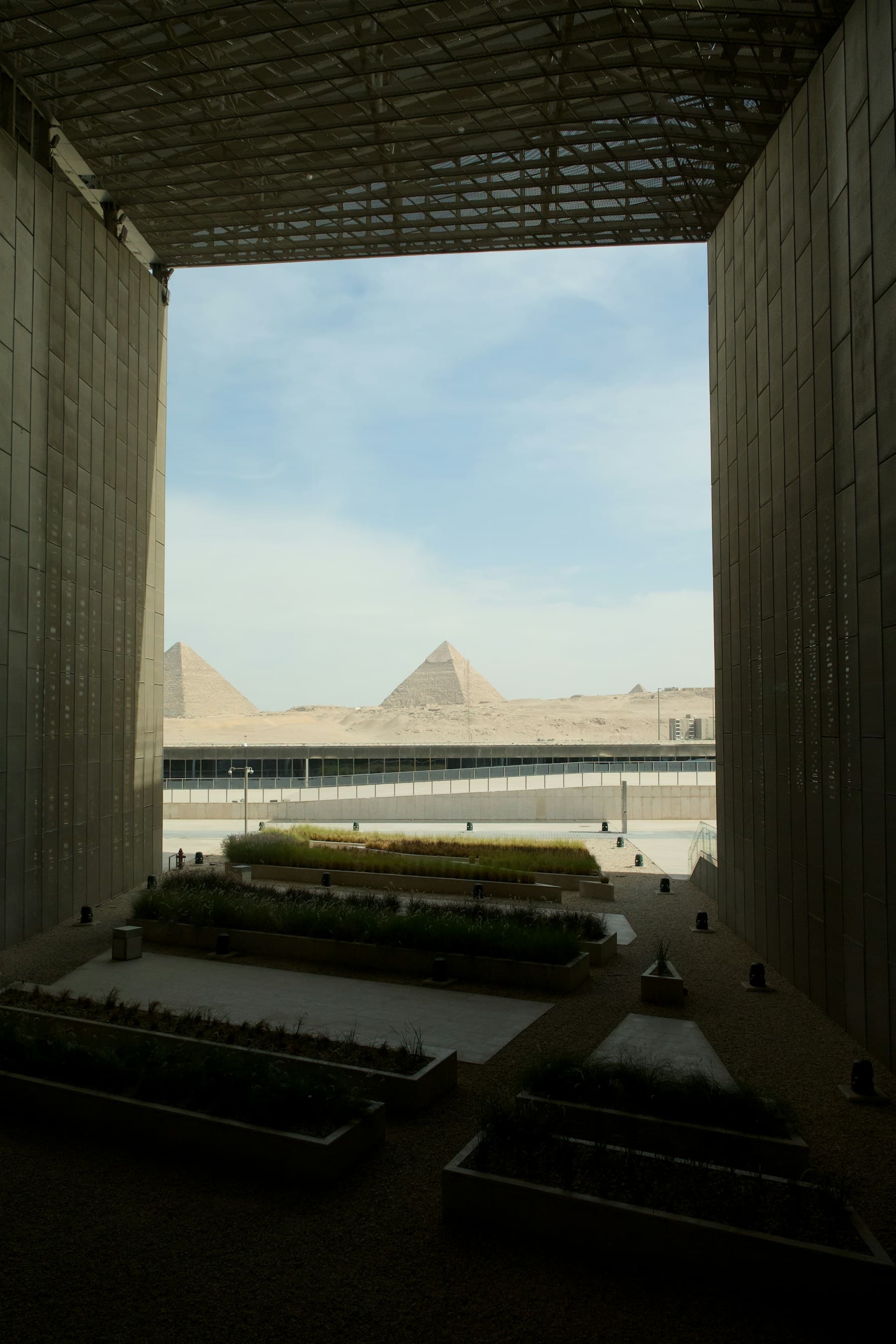
The walk ends about two kilometres away at the Grand Egyptian Museum, officially inaugurated on the first of November, twenty twenty-five. Its north and south walls align with the pyramids of Khufu and Menkaure, its facade turned toward the plateau. Inside, the complete treasure of Tutankhamun, five thousand three hundred and ninety-eight pieces, is displayed together for the first time, and the Khufu solar boat, found dismantled into more than twelve hundred pieces of Lebanese cedar beside the Great Pyramid, has been reassembled. The treasure emptied from these tombs over four and a half thousand years has finally been gathered back beside the plateau it came from.
That is the shape of the walk, seven stops over about two and a half hours across roughly three kilometres of open desert. Go at your own pace, with no group and no schedule. Bring water, sun protection, and a firm friendly no for the camel touts. Come early or in the last hours before closing, and winter is the most comfortable season. If you are planning a fuller trip, see the Cairo city page for more tours across the plateau and beyond.
Sources
- Great Pyramid of Giza, Wikipedia. Block count, height record, and construction dating for Khufu's tomb.
- Memphis and its Necropolis, the Pyramid Fields from Giza to Dahshur, UNESCO World Heritage Centre. The necropolis reading, pyramid and tomb counts, and the survival of the Great Pyramid as the sole intact ancient wonder.
- Great Sphinx of Giza and Dream Stele, Wikipedia. Bedrock carving, attribution to Khafre, Thutmose the Fourth's stele, and the missing-nose chronology.
- Grand Egyptian Museum, Wikipedia and France 24 coverage of the November 2025 inauguration. Museum orientation, Tutankhamun collection, and the Khufu solar boat.
- Egypt Ministry of Tourism and Antiquities, official Great Pyramid page. Site-authority context for the plateau monuments.
Ready to experience it?
Giza: The Pyramids and the Sphinx
150 min · 5 km · moderate
More from Cairo
Explore more at your own pace.
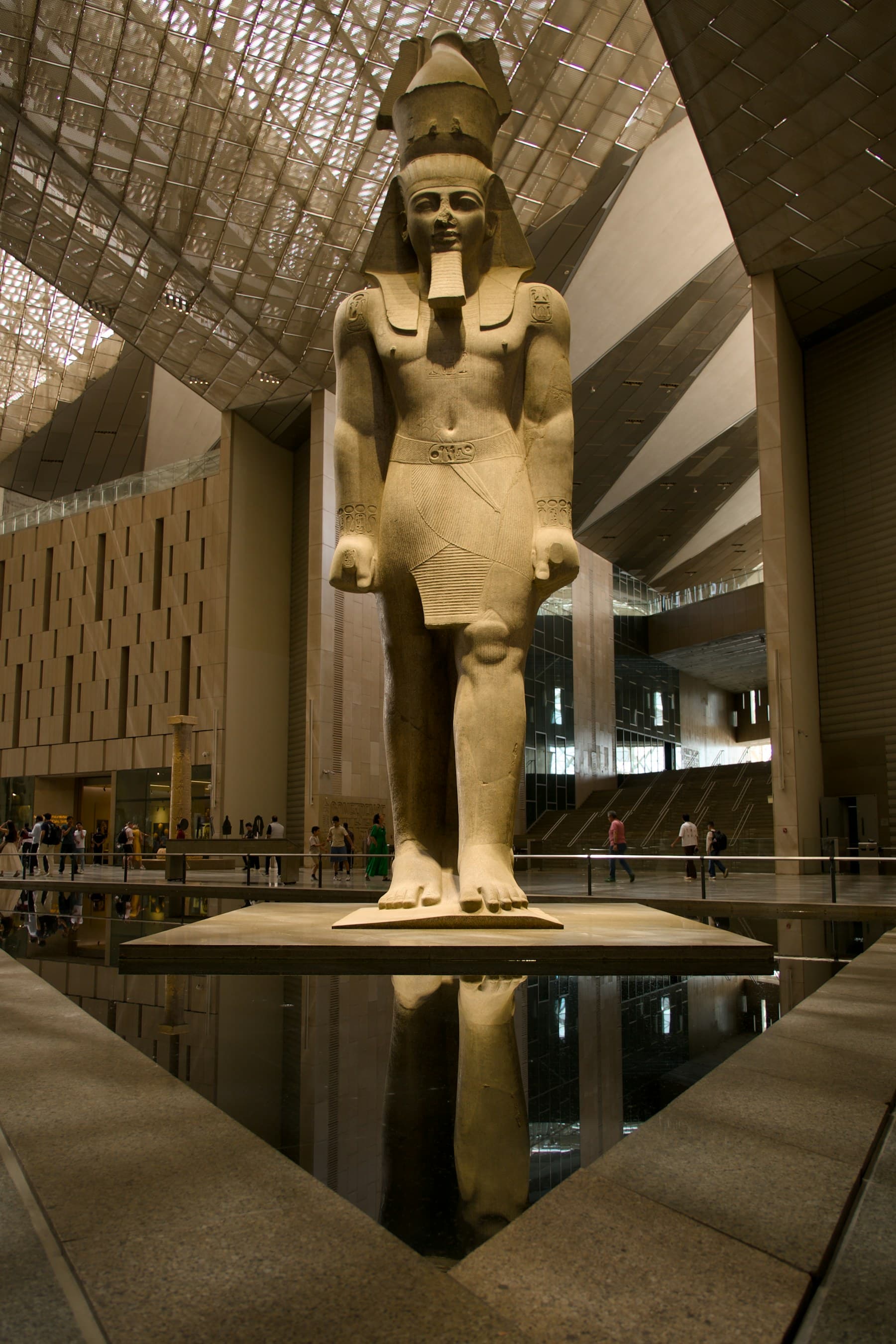
Grand Egyptian Museum: What to See, From the Grand Hall to Tutankhamun
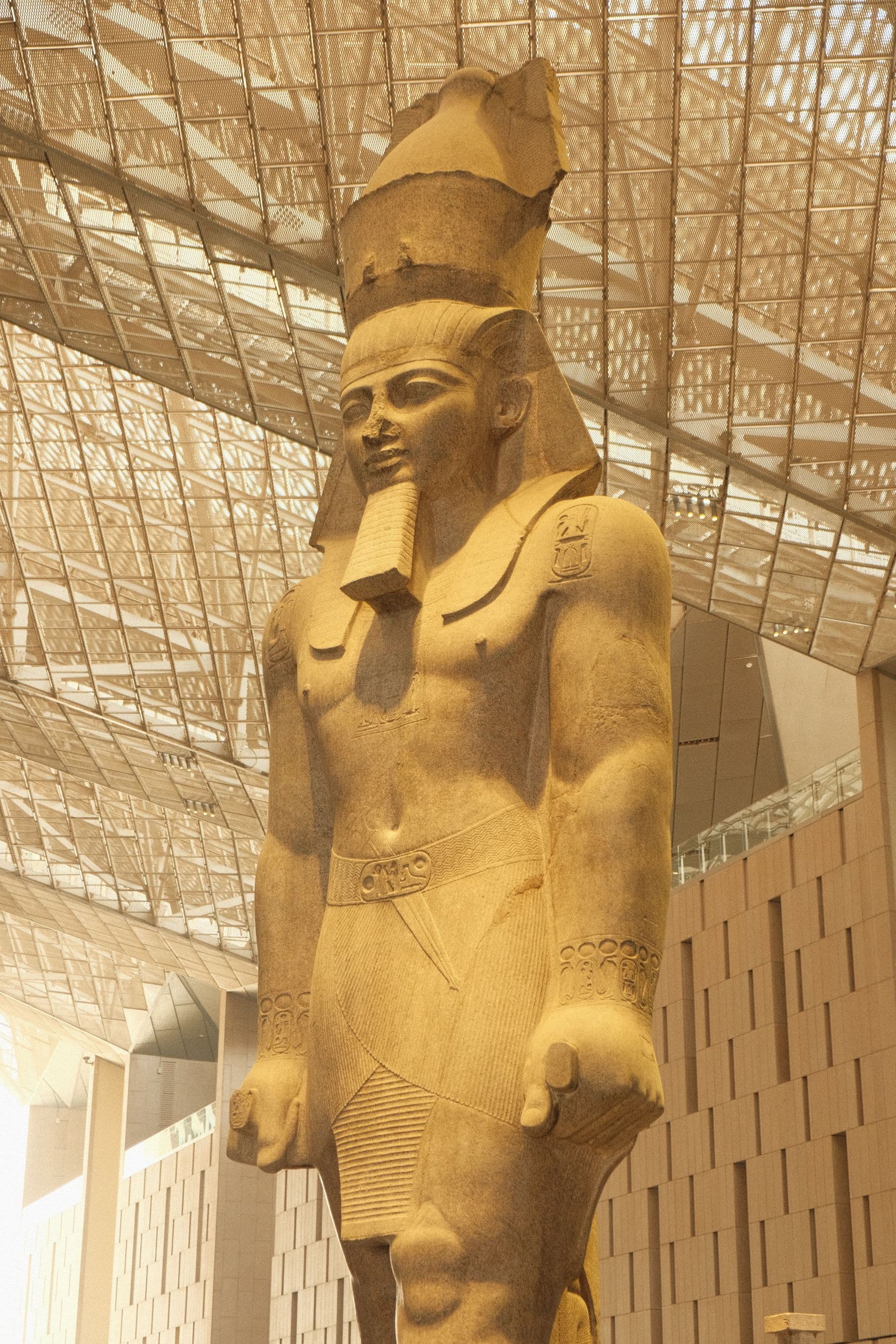
The Colossal Ramesses II at the Grand Egyptian Museum: From Memphis to Ramses Square to Giza
The Grand Staircase at the Grand Egyptian Museum: Six Storeys of Kings
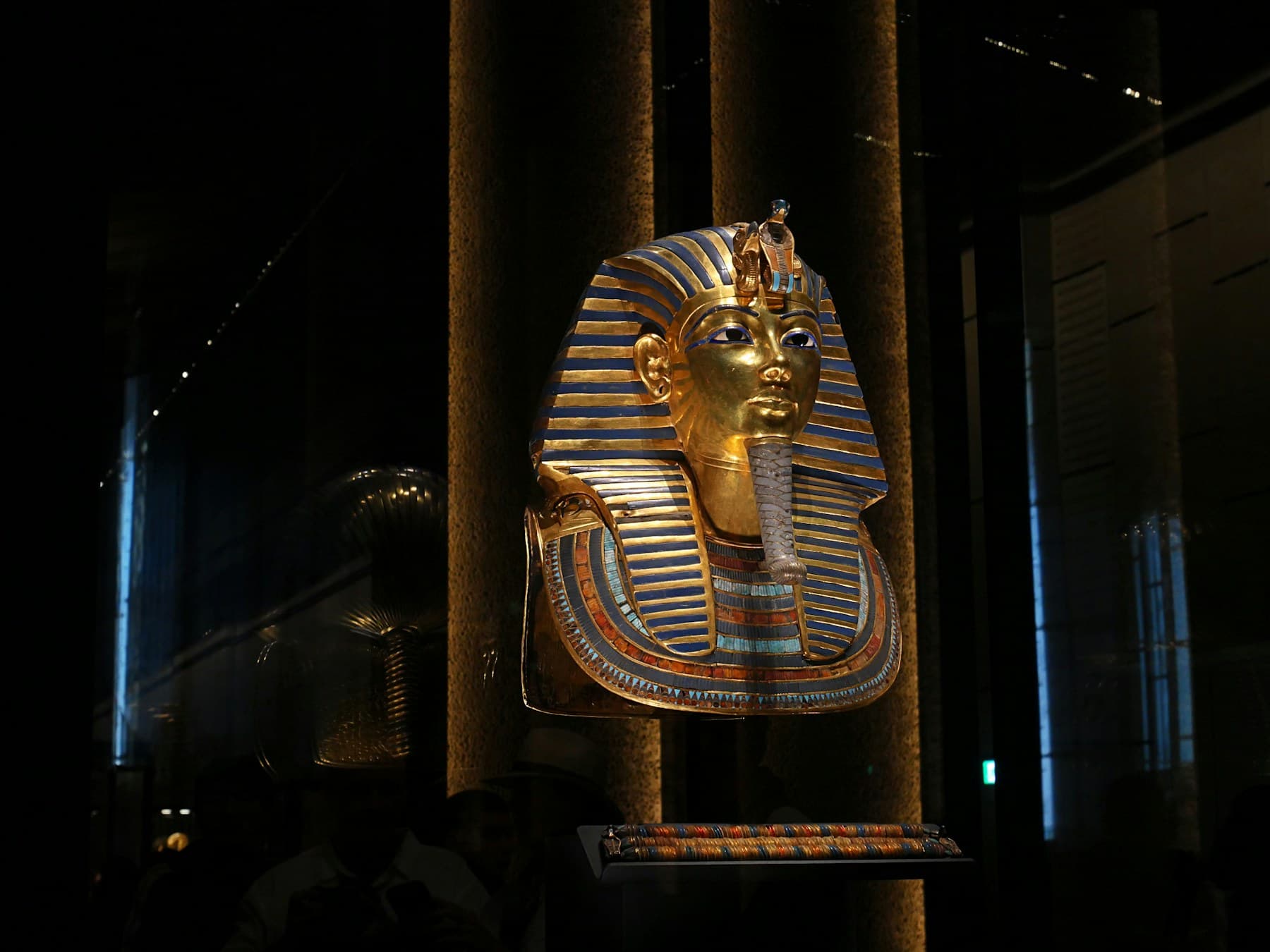
Tutankhamun's Gold Mask at the Grand Egyptian Museum: What to Look For
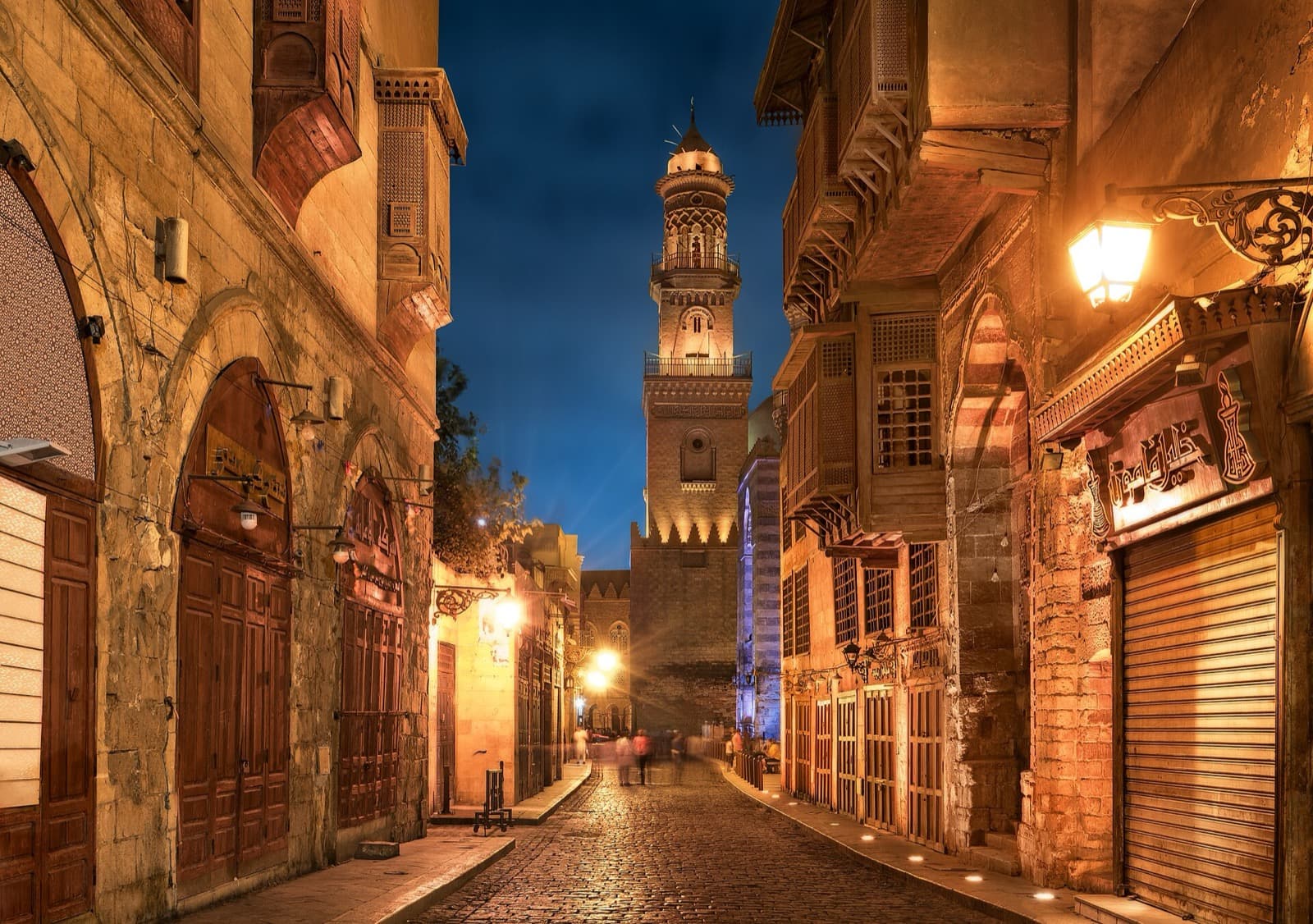
Al-Muizz Street: Reading a Thousand Years of Cairo on One Pavement