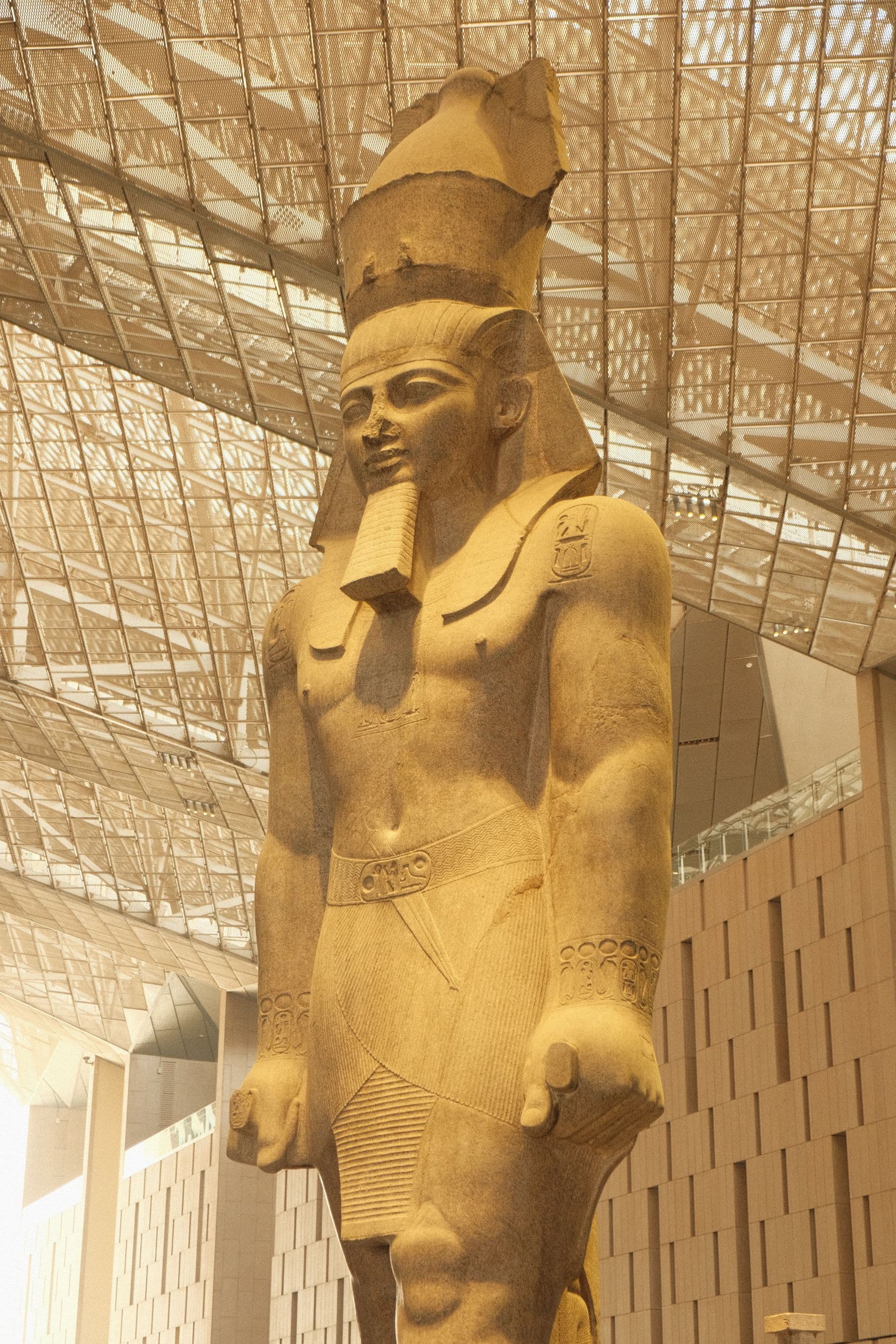
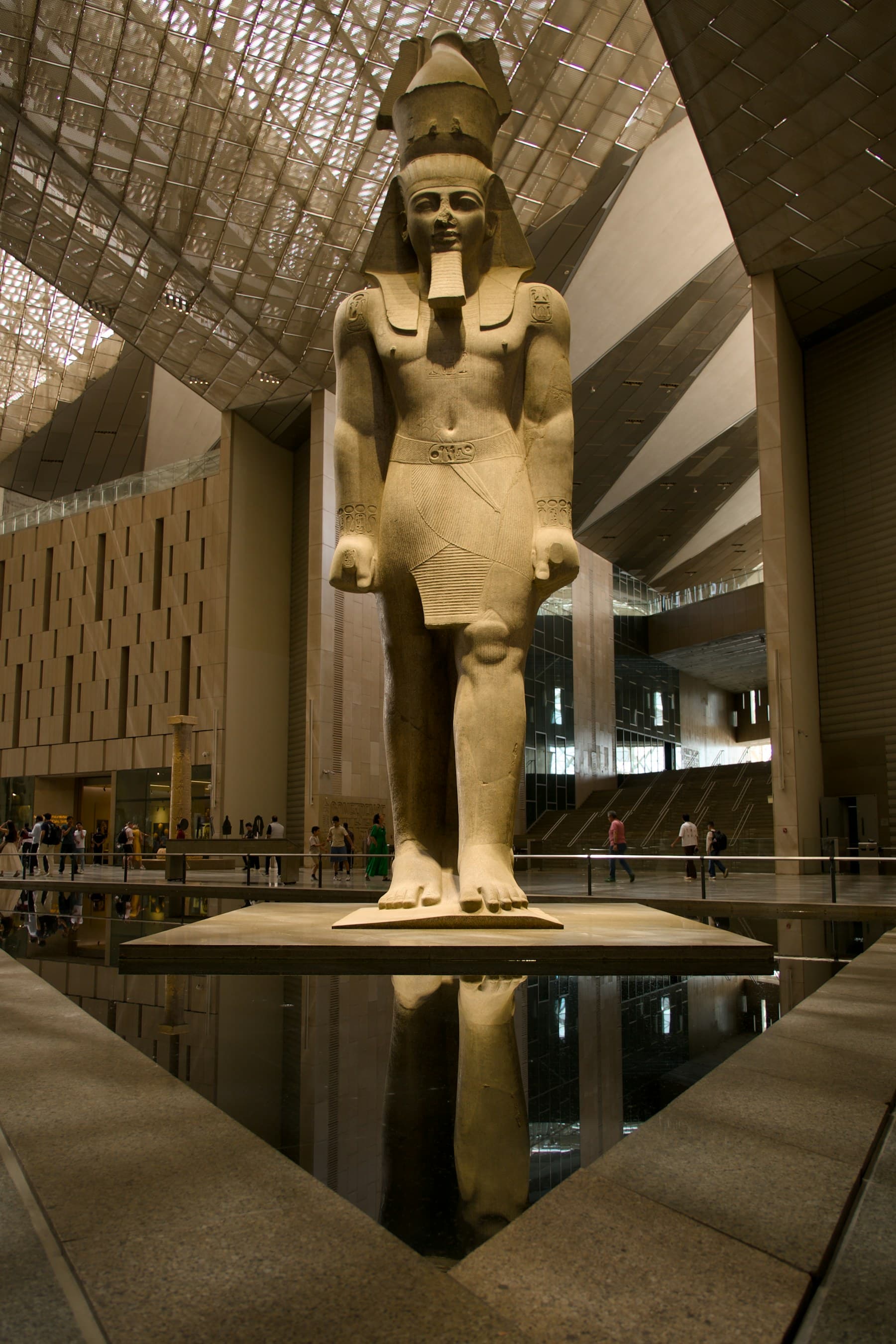
The colossal statue of Ramesses II in the Grand Hall of the Grand Egyptian Museum is red granite, about 11 metres tall (the museum gives 11.35 m) and about 83 tonnes. It was found at Memphis in 1820 in six pieces, set up in Cairo's Ramses Square in the mid 1950s, moved to Giza in 2006, and carried into the museum's Grand Hall on 25 January 2018, the first major piece to enter it.
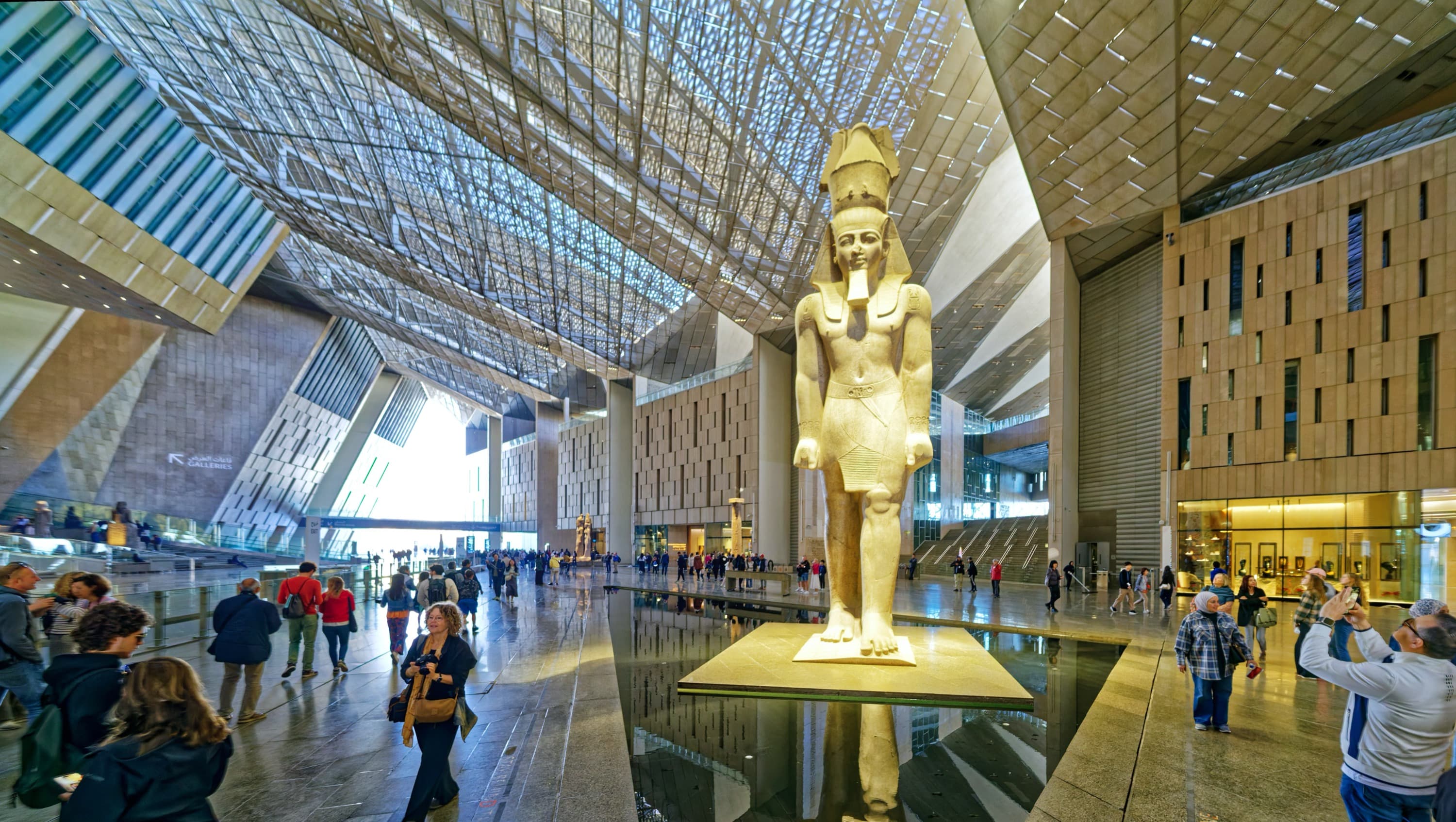
The first thing you see inside the Grand Egyptian Museum is a king. Ramesses II stands in the middle of the Grand Hall, about 11 metres of red granite, and the hall is built to make you feel small beside him. He is also the best-travelled object in the building. Before he reached Giza he spent more than three thousand years at Memphis and half a century in the middle of Cairo traffic.
First life: a temple statue at Memphis
Ramesses II ruled Egypt for about sixty-six years in the thirteenth century BC, and he filled the country with statues of himself. This one was carved in red granite around 1250 BC and set up at the temple of Ptah at Memphis, the old capital south of modern Cairo, on the site of today's Mit Rahina.
Stand in front of him and look at his feet. His left foot is set forward, the striding pose of a living king on the move. Then look up, and up again, to the crown. The museum gives his height as 11.35 metres. Published weights range from 82 to 91 tonnes; about 83 is the figure most reports use.
In 1820 the Italian explorer Giovanni Caviglia found him at Mit Rahina, lying on his side and broken into six pieces.
Second life: Ramses Square
Hear a stop from this walk
The Great Sphinx: The Guardian Facing the Sunrise
In the mid 1950s, Egypt's new republic had the statue reassembled in front of Cairo's main railway station, as a symbol of the nation. The square there is still called Ramses Square.
It was a hard place for granite. Concern that car exhaust was damaging the stone led to the statue being moved out in 2006. It made a ten-hour truck journey through the streets of Cairo to Giza, where it was to stand, eventually, at the entrance of the new museum being planned beside the pyramids.
Third life: the first piece in the museum
The museum was still being finished when Ramesses moved in. On 25 January 2018 engineers carried the whole statue about 400 metres into the Grand Hall, hung in a metal cage that swung like a pendulum to absorb the jolts so the granite would not crack. It was the first major piece to enter the museum's display areas, while the building was still being finished, and he now greets every visitor who comes in.
Father and son
Look for the tall red granite column nearby. It belonged to Merenptah, Ramesses' thirteenth son, who outlived so many older brothers that he was over fifty when he became king. The column is 5.6 metres tall and weighs 17 tonnes, and its carvings show Merenptah's names, scenes of him offering to the gods, and texts celebrating his victories over Libyan invaders. It was found in 1970 at Matariya in northeast Cairo, on the site of ancient Heliopolis, and in March 2018, two months after his father, it was brought here and set up nearby. Father and son stand together again.
The other Ramesses in the building
Once you have met him in the Grand Hall, you will keep meeting him.
- Outside, the Hanging Obelisk. The granite obelisk in the forecourt is his too, from Tanis in the Delta. It stands raised on four legs so you can walk underneath and see his names carved on the underside of the base, a surface no ancient visitor ever saw.
- The Glass Hall. At the far end of the shopping wing beside the Grand Hall stands another statue of Ramesses II from Tanis, a city that later kings filled with monuments carried from his own Delta capital.
- The Grand Stairs. In the theme called Kings and Gods, he stands between the gods Ptah and Sekhmet, three figures cut from one block. Nearby, a goddess, probably the war goddess Anath, reaches up to touch his crown. That statue carries no name; experts identify him by his face. And a sphinx carved for Amenemhat III, centuries earlier, carries his name as one of its later owners.
- The Main Galleries. In the New Kingdom galleries, look for a red granite head of Ramesses, more than a metre high, from the temple of the cat goddess Bastet at Bubastis. His crown carries horns, feathers and a sun disc, and his face is young and smooth, though he ruled for about sixty-six years. Royal portraits showed the king as he should look for eternity.
Size was his signature, and he was not shy about borrowing: he often had older kings' statues re-carved with his own name. The museum gives you both sides of that habit within a few minutes' walk.
Quick facts
- Where: the Grand Hall, Grand Egyptian Museum, Giza.
- Height: about 11 metres; the museum gives 11.35 m.
- Weight: about 83 tonnes (published figures range from 82 to 91).
- Material: red granite.
- Date: about 1250 BC.
- Found: 1820, at Mit Rahina (ancient Memphis), by Giovanni Caviglia.
- Ramses Square: from the mid 1950s to 2006.
- Into the Grand Hall: 25 January 2018.
How this fits the Roamer guide
Roamer's independent audio guide to the Grand Egyptian Museum, not affiliated with the museum, starts in the Grand Hall with Ramesses, and he is a stop on both "A Staircase of Kings" and "The Grand Egyptian Museum in Two Hours". You can find it in the Grand Egyptian Museum guide. For the whole museum, read what to see at the Grand Egyptian Museum, and for the climb behind him, the Grand Staircase.
Cover photo: Agung Pandit Wiguna, via Pexels.
Ready to experience it?
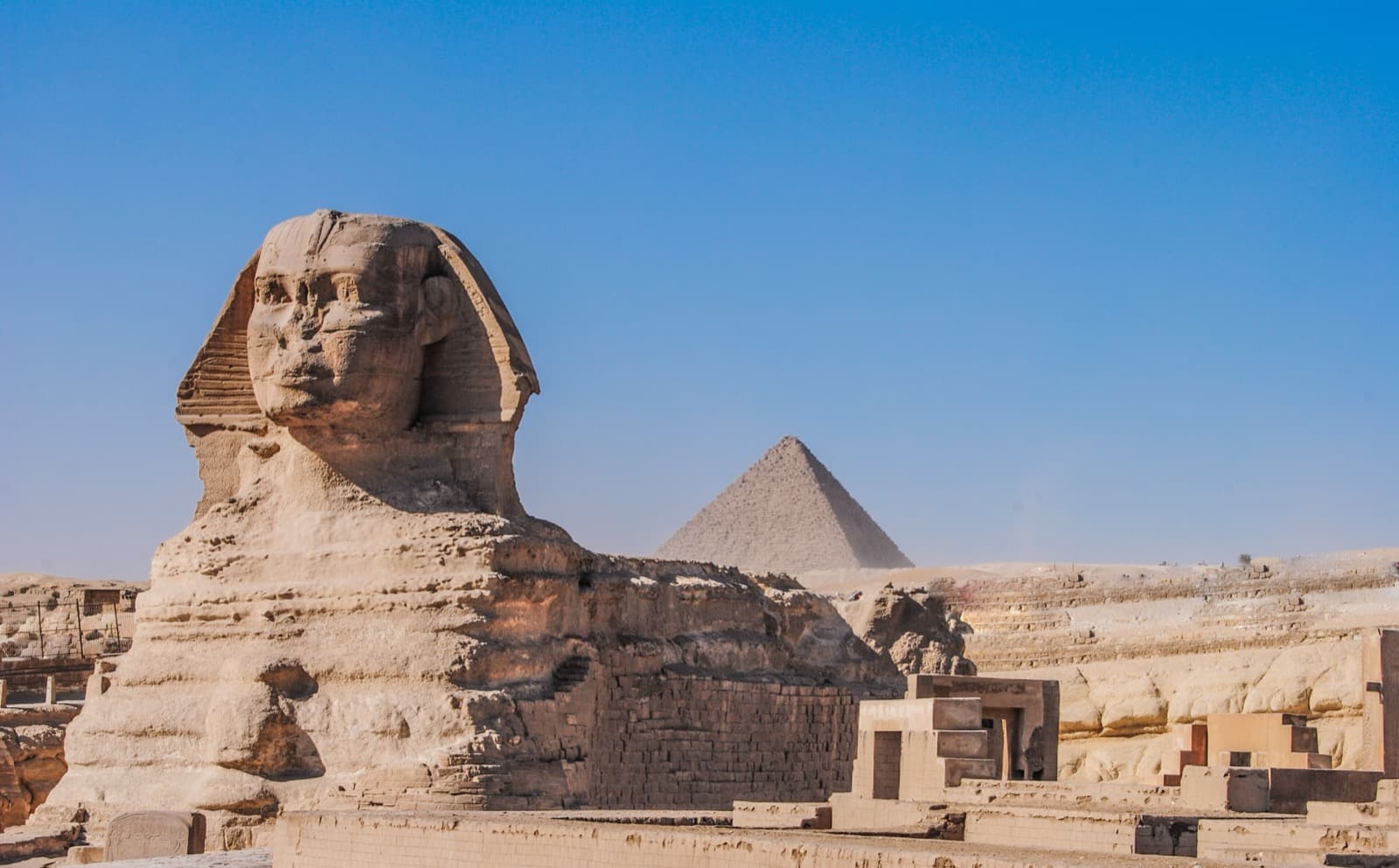
Giza: The Pyramids and the Sphinx
150 min · 5 km · moderate
More from Cairo
Explore more at your own pace.
Grand Egyptian Museum: What to See, From the Grand Hall to Tutankhamun
The Grand Staircase at the Grand Egyptian Museum: Six Storeys of Kings
Tutankhamun's Gold Mask at the Grand Egyptian Museum: What to Look For
Al-Muizz Street: Reading a Thousand Years of Cairo on One Pavement
The Great Pyramid of Khufu: How to Read the Whole Giza Plateau