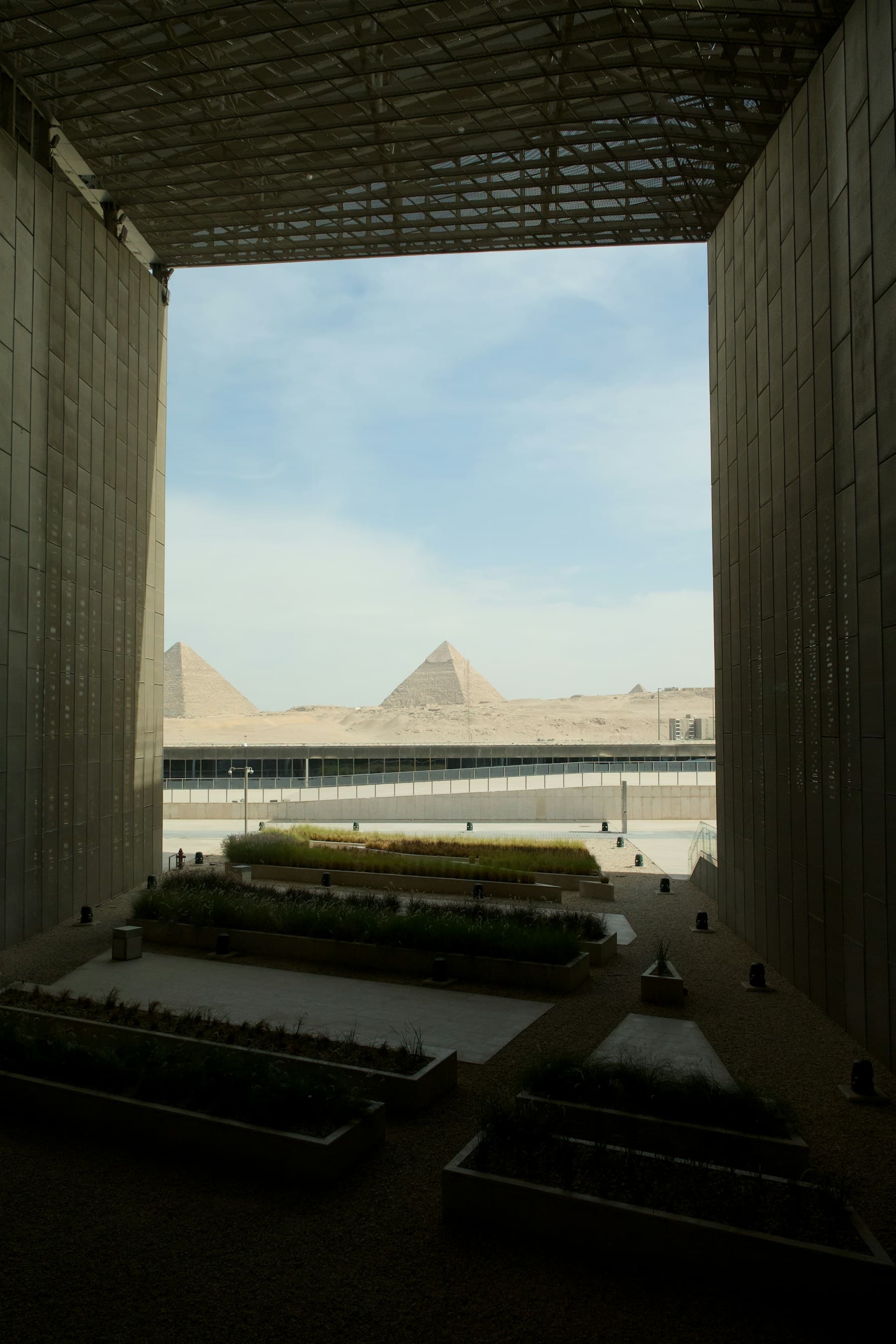
The Grand Staircase at the Grand Egyptian Museum in Giza climbs about six storeys from the Grand Hall to the galleries, lined with about sixty great statues and monuments in four themes: the Royal Image, Divine Houses, Kings and Gods, and the Journey to Eternity. It ends at a full-height window facing the pyramids of Giza, about two kilometres away. A moving walkway runs beside it.
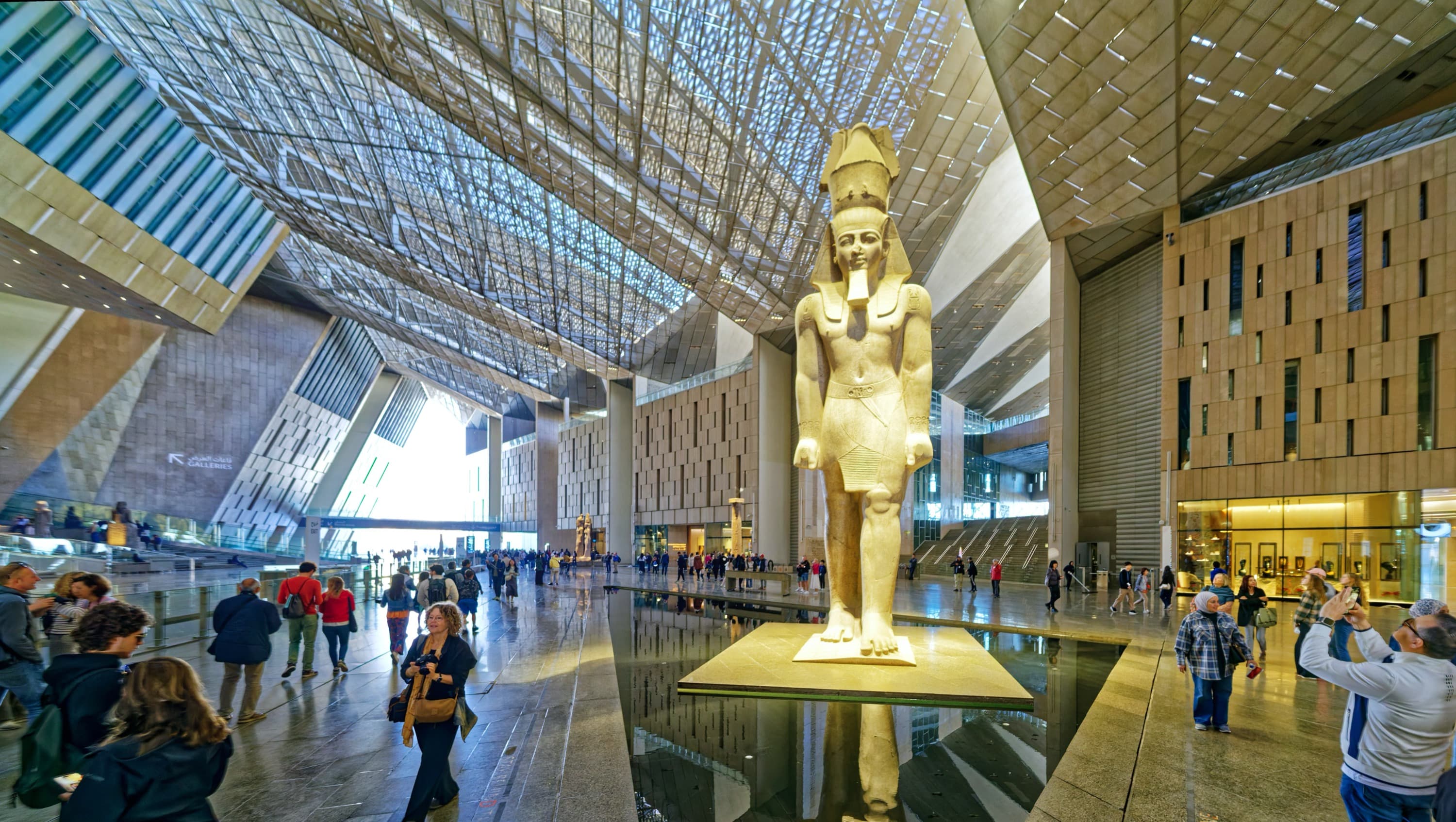
Most museums put their staircase between the exhibits. The Grand Egyptian Museum made its staircase the exhibit. From the Grand Hall the Grand Stairs climb about six storeys toward the light, lined with about sixty great statues and monuments, and at the top the wall turns to glass and the pyramids of Giza appear.
Why the museum climbs
The museum sits on a slope that falls about 50 metres from the edge of the desert plateau down to the Nile valley. The architects, heneghan peng of Dublin, put the entrance at the bottom and the galleries at the top, and designed the staircase as the museum's chronological route between them. They also set a rule: the building may sit between the valley and the plateau, but it never rises above the plateau. The pyramids stay on top.
So the climb has a meaning. You start at the level of the Nile valley, beside the obelisk in the forecourt. You climb past kings and gods. You arrive at the level of the plateau, the same level the pyramids stand on, and they are in front of you.
Four themes, bottom to top
Hear a stop from this walk
The Great Sphinx: The Guardian Facing the Sunrise
The statues on the stairs are grouped in four themes. Read in order, they move from how a king wanted to be seen to what he hoped would happen after death.
- The Royal Image. Granite kings, and a queen carved to look like one. Notice what the sculptors repeat: the striped nemes headcloth, the straight false beard, the pleated kilt, feet planted and face calm. These are statements of power, not portraits.
- Divine Houses. Pieces of the buildings where gods lived: a column top, a doorway, the tip of an obelisk, and sphinxes that guarded the way in.
- Kings and Gods. Kings standing beside the gods, crowned by them or taking their form. A lioness head means Sekhmet. A wrapped body with crossed arms is the shape of Osiris, god of the dead.
- The Journey to Eternity. Massive stone sarcophagi, their lids covered in protective gods and spells, just below the window.
The statues are lit from below, so faces read best in profile. They also stand on the steps themselves, so check behind you before stepping back for a photo.
What to stop for
Hatshepsut as king. A red granite statue, 2.7 metres high, from her temple at Deir el-Bahri, found in 1928. She was a king's daughter and a king's wife who took the throne herself, and here she wears the headcloth, beard and kilt of a male ruler. Her hands lie flat on the front of her kilt, a pose of devotion older than her reign.
Thutmose III, carved for someone else. Look at the cartouche on the belt. It names Thutmose III, Hatshepsut's stepson. But the stone around it has been roughened, and traces of an earlier name show underneath. The museum's reading is that this statue was probably made for Hatshepsut and later re-inscribed for him.
The tip of Hatshepsut's obelisk. This is only the pointed cap of an obelisk from Karnak, and it is more than three metres tall. The scene on it first showed Hatshepsut kneeling before the god Amun-Re as he blessed her crown. Later, probably under Thutmose III, her figure was cut away and replaced by two altars, and the columns of text with her name were erased. You are looking at the edited version.
The Hathor column top. A broad, calm woman's face in red granite, from Mendes in the Delta. Above her head a cobra rises from a small shrine. The museum explains that the complete column would have looked like a giant sistrum, the rattle that Hathor's priestesses shook in her rituals.
The sphinx of Amenemhat III. A full lion's body with only a human face, the style of the Middle Kingdom. Look for the names: a Hyksos ruler, then Ramesses II, then his son Merenptah all claimed it, before King Psusennes I moved it to his capital at Tanis. At least four rulers over about eight centuries, and the face is still the first king's.
Ramesses II between Ptah and Sekhmet. Three figures cut from one block of red granite, about 3.5 metres high, found in 1904 at Herakleopolis, south of Cairo. Ramesses stands in the middle, with Ptah, god of craftsmen, on one side and the lioness Sekhmet on the other. The inscriptions show that Sekhmet was not the original third figure: she replaced the local ram god, Heryshef.
The sarcophagus of Nitocris. Almost three metres of solid granite, made for a daughter of King Psamtik I who was installed at Thebes as the Divine Adoratrice of Amun-Re, a high priestess with real power. Her chapel was at Medinet Habu, yet the sarcophagus was found in 1885 in a pit at Deir el-Medina, probably reused centuries later.
The window at the top
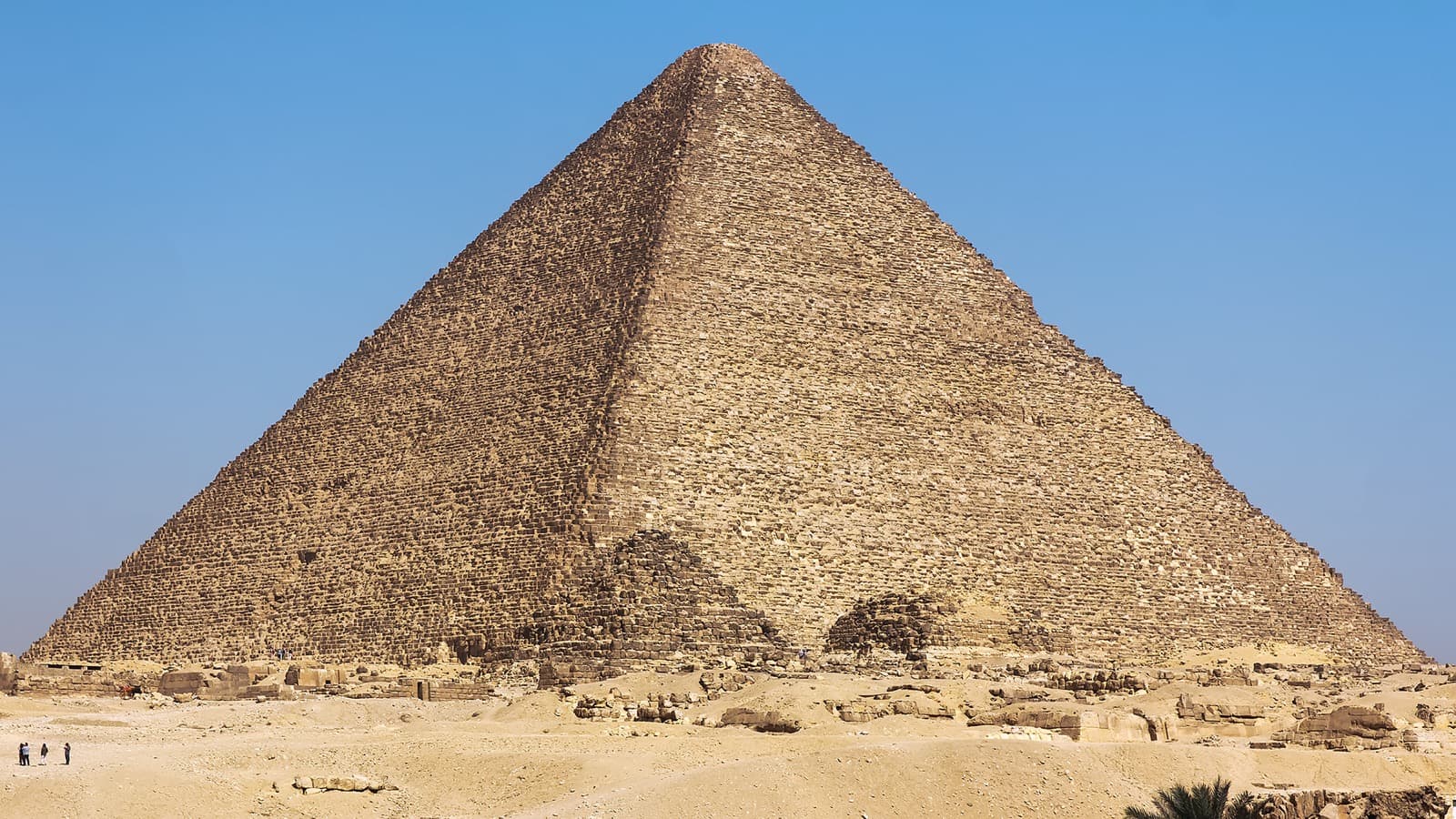
At the top of the stairs, stand in the middle of the glass and find all three pyramids. The largest is Khufu's Great Pyramid; the smallest of the three is Menkaure's. The architects drew the whole building from lines of sight to them, and this view is where the climb was always meant to end. From the landing, the Main Galleries lie on one side and the Tutankhamun Galleries on the other. Khufu's own cedar boat waits in a separate building behind the museum.
If you would rather not climb
A moving walkway runs beside the stairs, and there is a lift. Some visitors ride to the top first and walk down past the statues afterwards, which also gives you the view before the galleries.
Quick facts
- Where: between the Grand Hall and the galleries, Grand Egyptian Museum, Giza.
- Height: about six storeys.
- Pieces: about sixty great statues and monuments.
- Themes, bottom to top: the Royal Image, Divine Houses, Kings and Gods, the Journey to Eternity.
- At the top: a full-height window onto the pyramids of Giza, about two kilometres away.
How this fits the Roamer guide
Roamer's independent audio guide to the Grand Egyptian Museum, not affiliated with the museum, gives each stretch of the Grand Stairs its own story, and its route "A Staircase of Kings" climbs from the Hanging Obelisk and the colossal Ramesses II to the window in about 50 minutes. You can find it in the Grand Egyptian Museum guide. For the whole museum, read what to see at the Grand Egyptian Museum, and for the giant at the foot of the stairs, the story of the colossal Ramesses II.
Cover photo: Aleksei Filimonov, via Unsplash.
Ready to experience it?
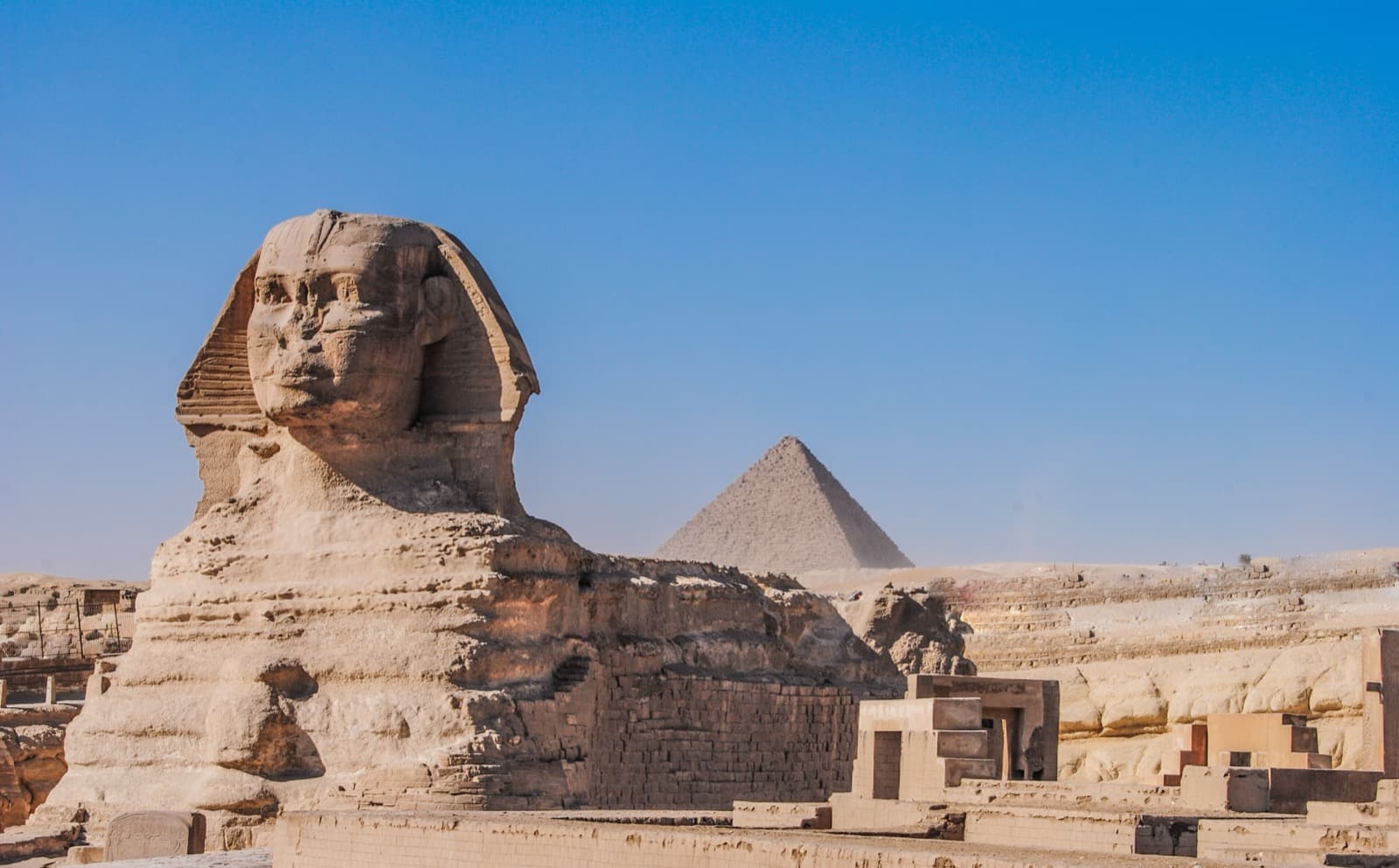
Giza: The Pyramids and the Sphinx
150 min · 5 km · moderate
More from Cairo
Explore more at your own pace.
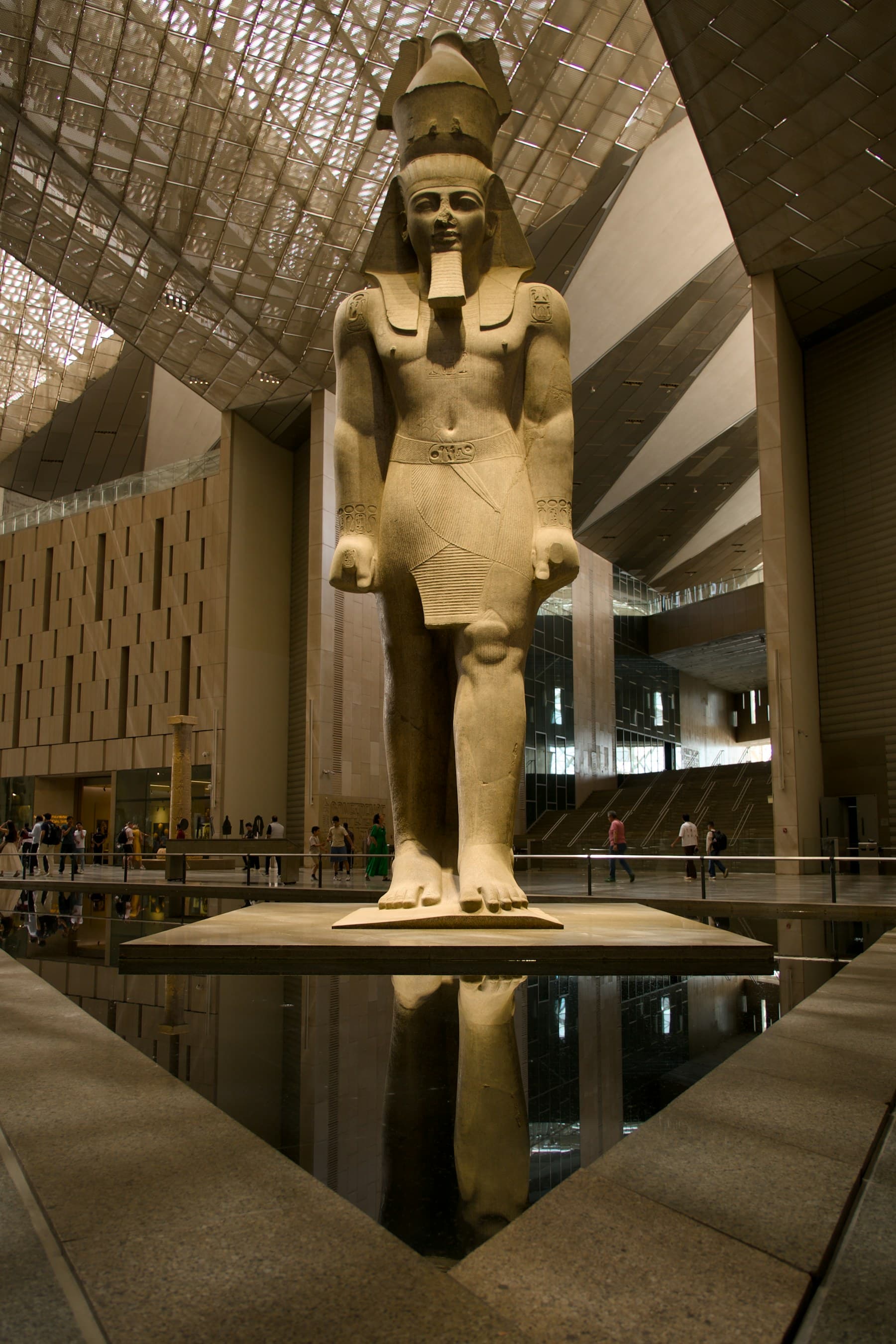
Grand Egyptian Museum: What to See, From the Grand Hall to Tutankhamun
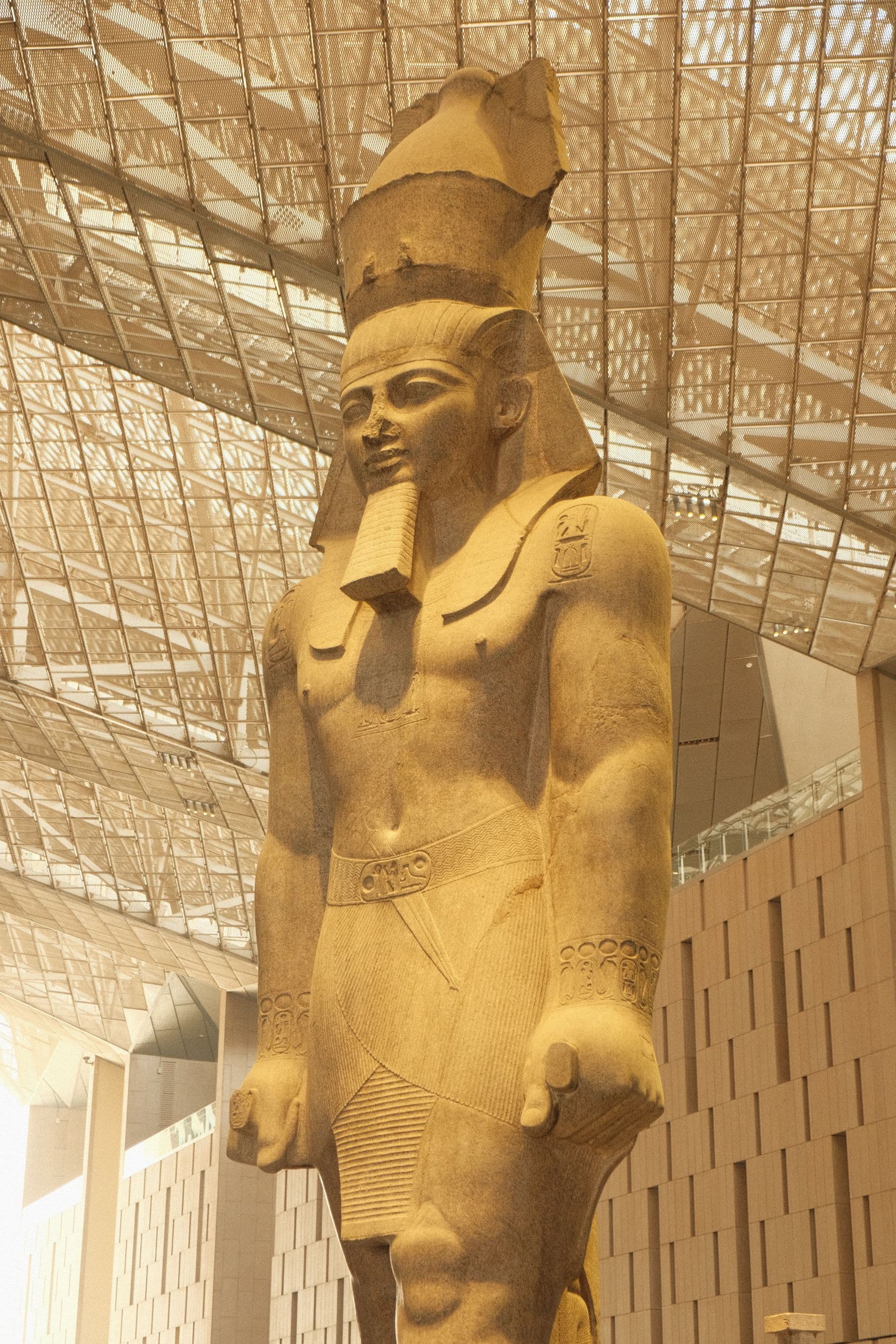
The Colossal Ramesses II at the Grand Egyptian Museum: From Memphis to Ramses Square to Giza
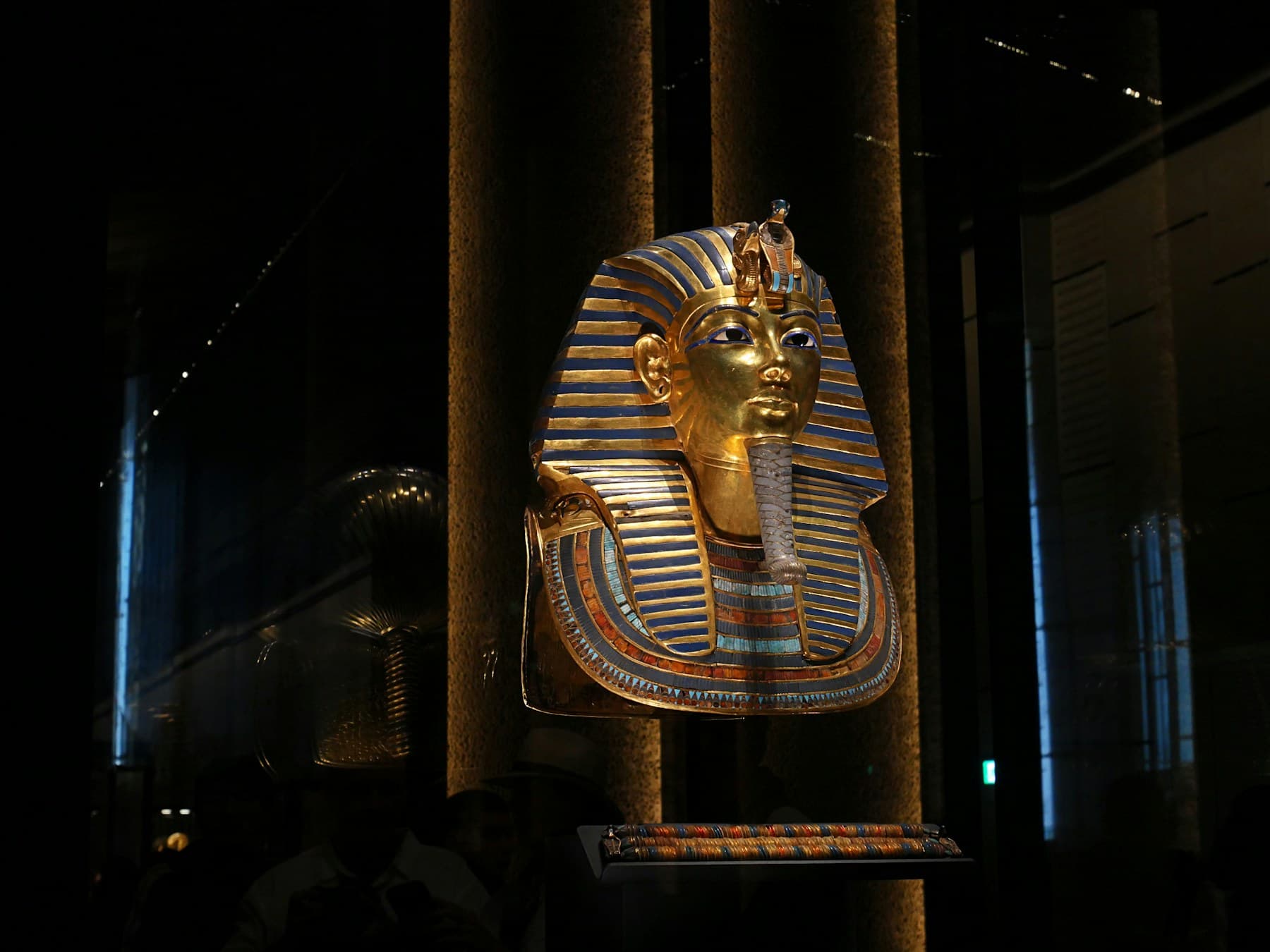
Tutankhamun's Gold Mask at the Grand Egyptian Museum: What to Look For
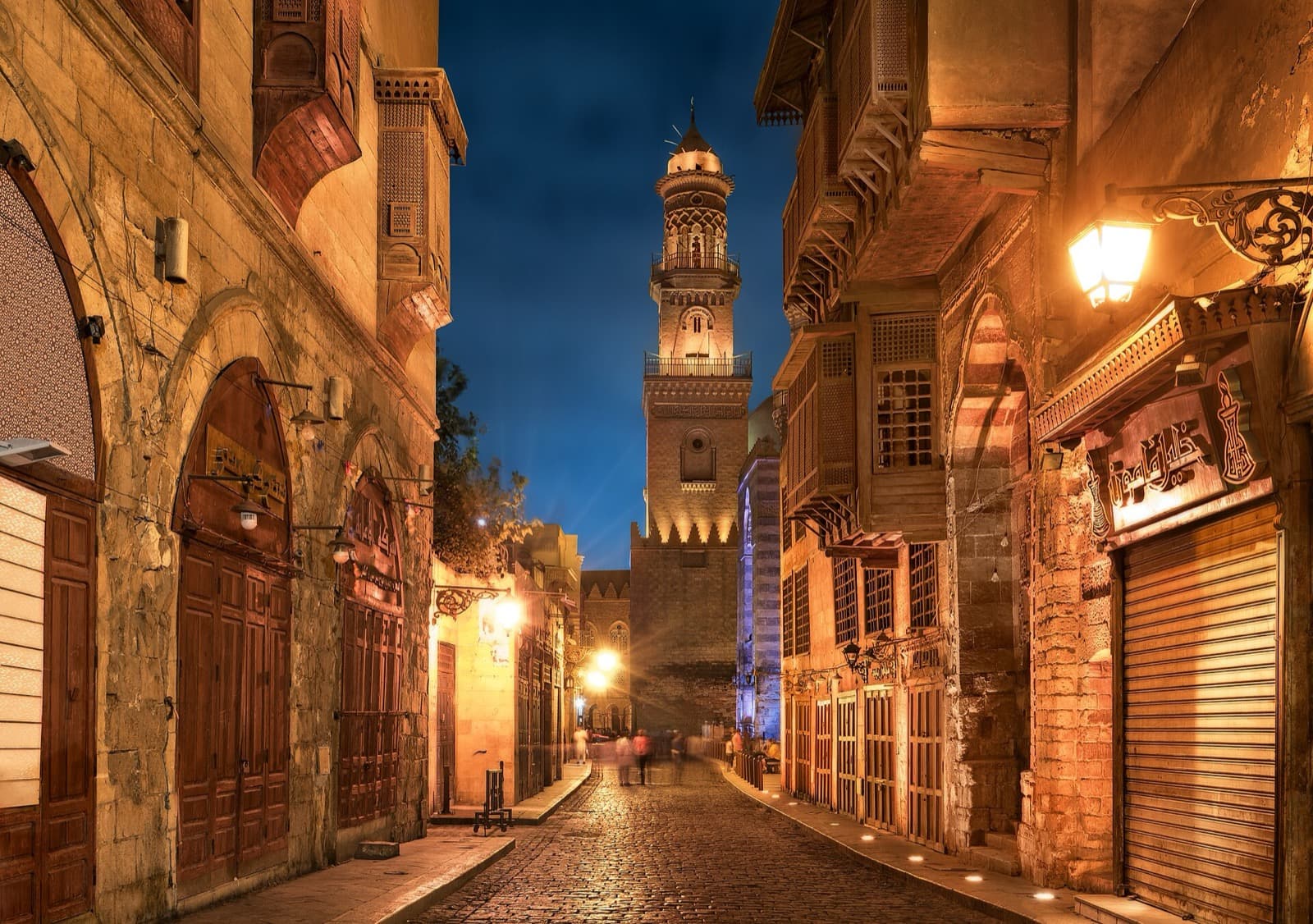
Al-Muizz Street: Reading a Thousand Years of Cairo on One Pavement
The Great Pyramid of Khufu: How to Read the Whole Giza Plateau