Giza: The Pyramids and the Sphinx
150 min · 5 km · moderate
Cairo layers three cities along one river, and the way to read the whole place is to read each layer at your own pace. On the desert edge at Giza, a planned royal cemetery of cut stone was built to defeat time. Inland, the medieval Islamic city runs mosque to mosque down a single thousand-year-old street that never became a museum. And in the quiet south, an old Christian quarter shelters inside a Roman fort where three faiths meet within a few hundred metres. Walk the pyramids, the medieval spine, and the old Christian quarter, and you read four and a half thousand years of one city, layer on lived-in layer.
These three walks are not variations on the same view. They are three different Cairos, built by different people for different reasons, and each one keeps working in its own way. The value of going self-guided is that you set the pace on all three: no group, no schedule, no meter running, no tip pressure at the end. You linger where something moves you and skip what does not.
The desert edge: a machine for eternity
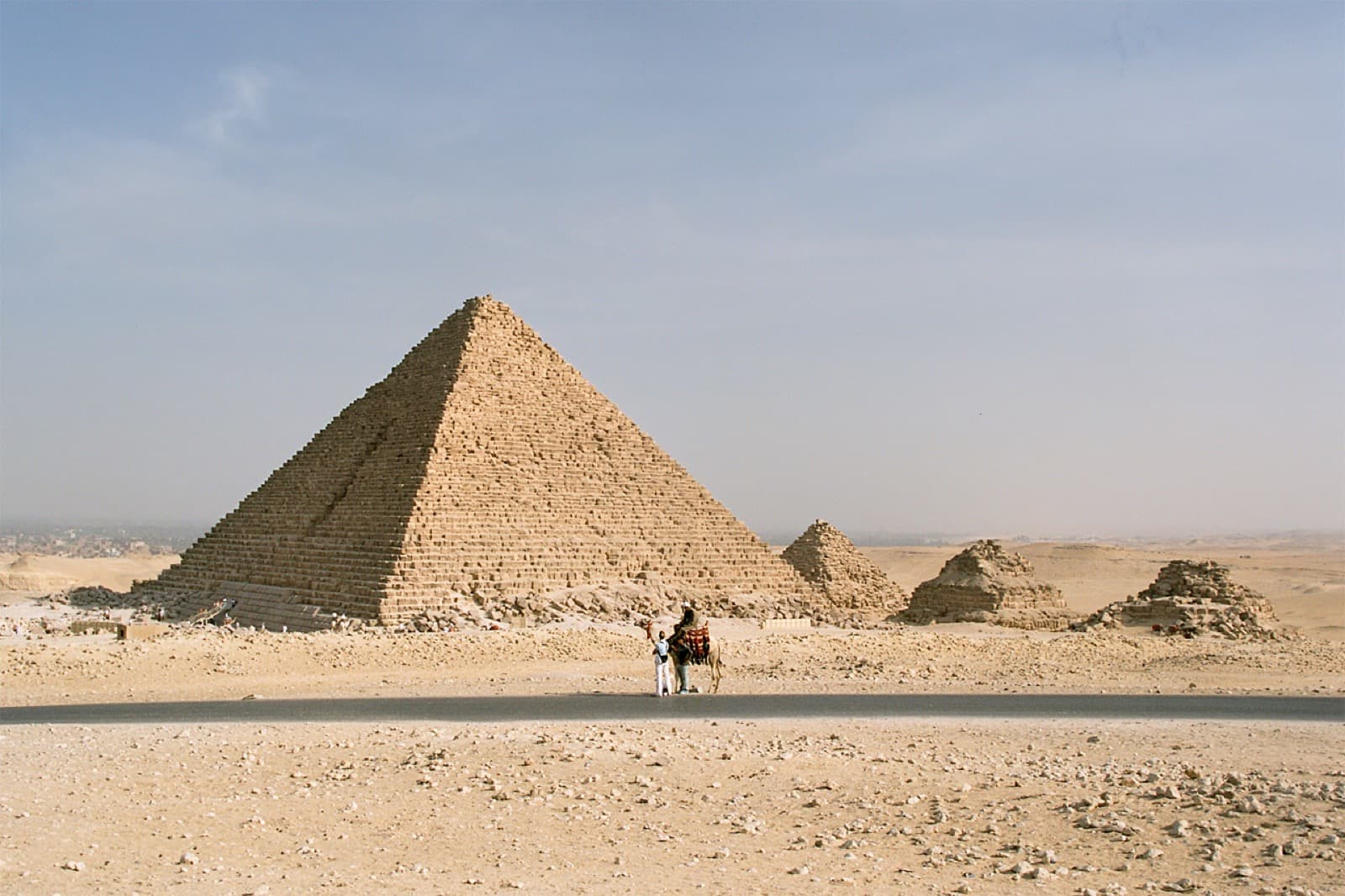
Start where the city faces the desert. The Giza pyramids and the Sphinx read from the road as three shapes on a postcard, but up close they are one thing: a planned royal cemetery of the Fourth Dynasty, engineered to carry kings out of time. The Great Pyramid of Khufu rises from roughly two million three hundred thousand stone blocks, raised around the twenty-sixth century B C. UNESCO records it as the only one of the Seven Wonders of the Ancient World to survive largely intact, and it held the record as the tallest human-made structure on earth for more than three thousand seven hundred years.
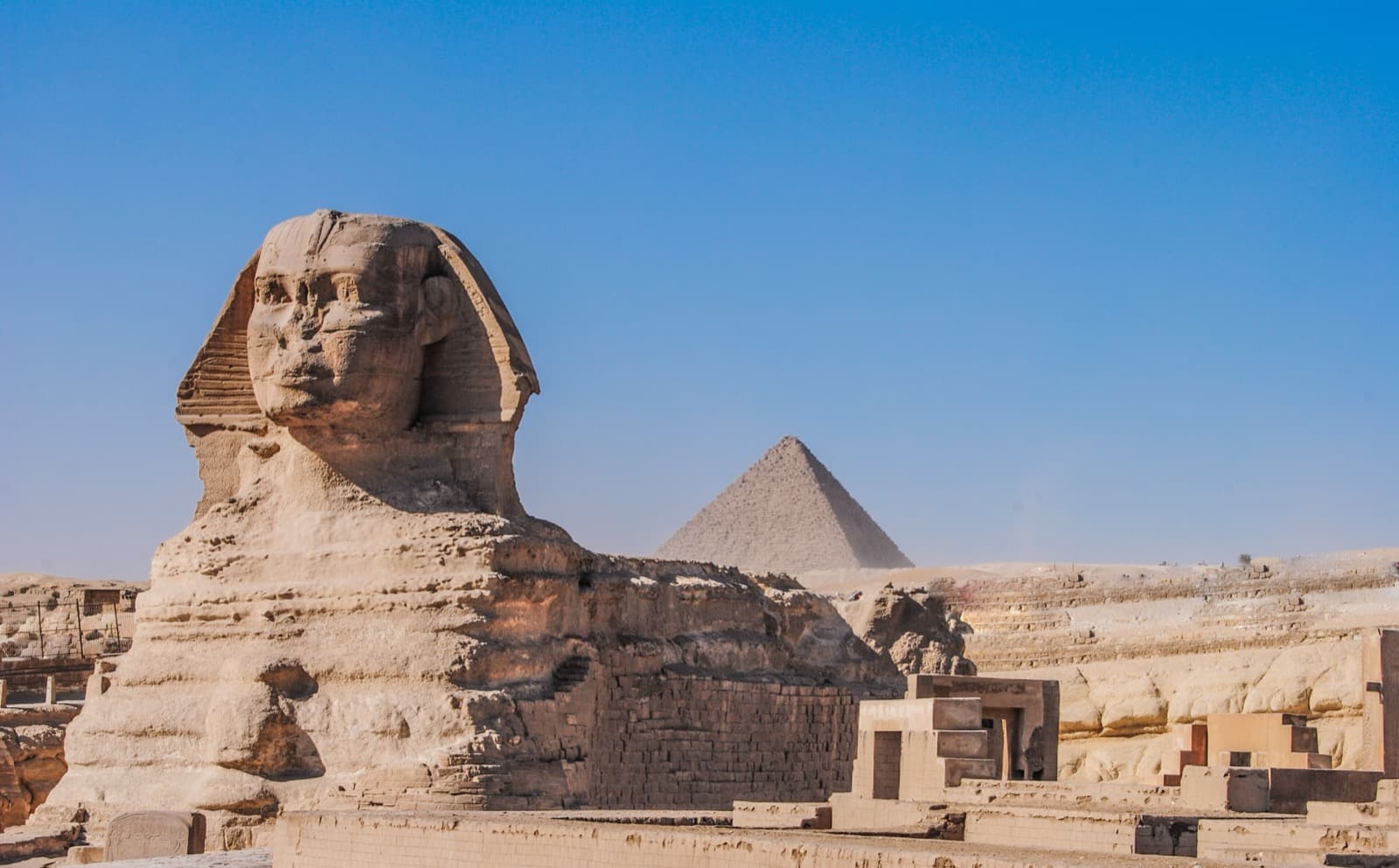
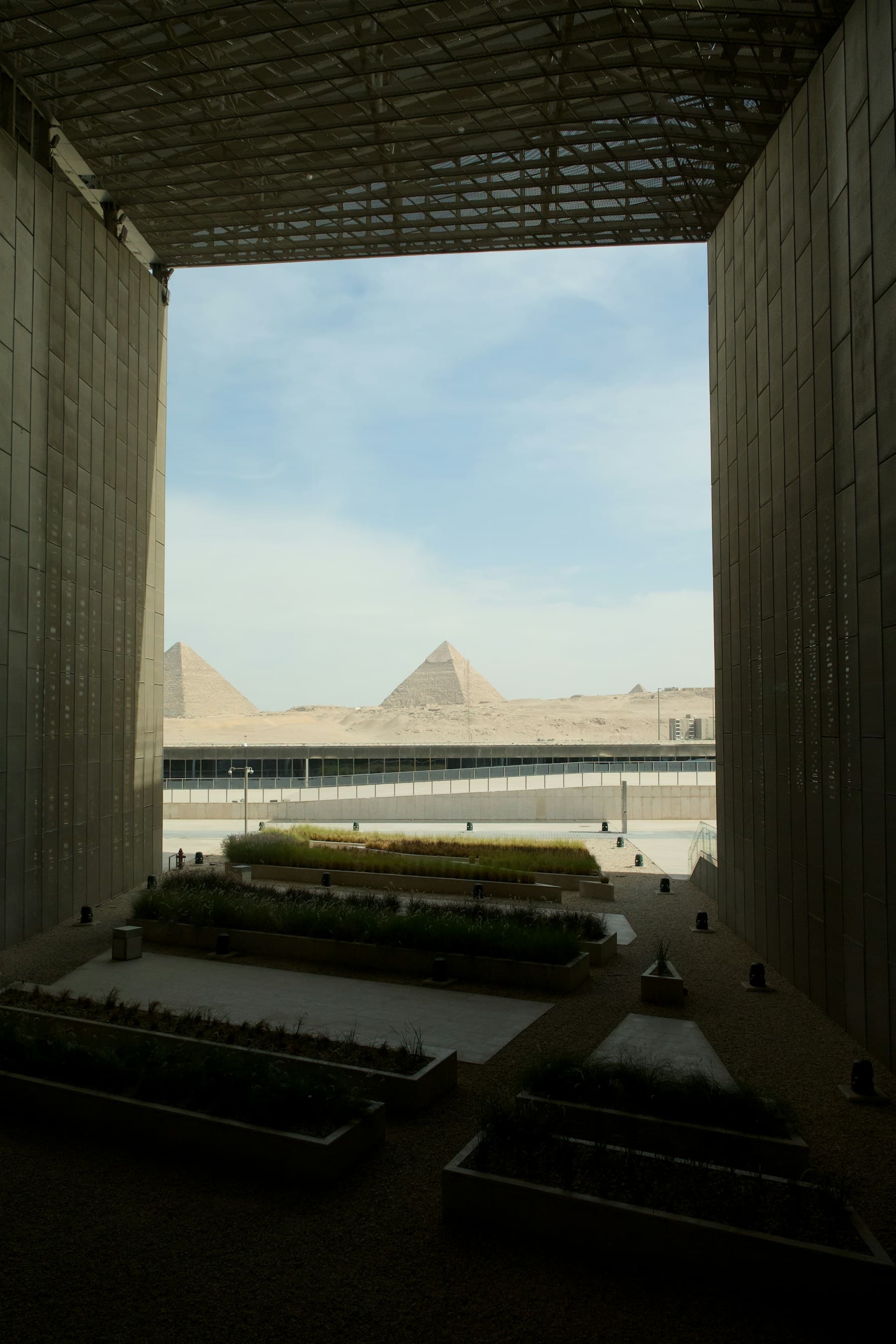
The plateau rewards slow reading. The second pyramid, Khafre's, still keeps a cap of the smooth white Tura limestone that once sheathed all three from base to peak, so the whole field once gleamed white in the sun before that casing was stripped away to build medieval Cairo. Menkaure's, the smallest, is skirted in rough red Aswan granite left unfinished, the great pyramid age winding down in front of you across three generations. Below, the Valley Temple of Khafre survives as one of the best-preserved temples of the Old Kingdom, its roof once carried on sixteen single-block granite pillars over an alabaster floor. And the Great Sphinx, about seventy-three metres long, was not built but carved in place from a single ridge of the plateau's own bedrock, the oldest known monumental sculpture in Egypt, facing due east toward the sunrise. The walk resolves about two kilometres away at the Grand Egyptian Museum, officially inaugurated on the first of November, twenty twenty-five, where the complete Tutankhamun collection of five thousand three hundred and ninety-eight pieces sits at last beside the plateau it came from.
The lesson of Giza is intention. This is not decoration. It is a grave built at civilisational scale, a single machine for eternity, planned block by block.
The medieval spine: a thousand years down one street
Hear a stop from this walk
The Great Sphinx: The Guardian Facing the Sunrise
Then move inland to a city that never stopped being used. Islamic Cairo along al-Muizz Street is a walk down a single kilometre of pavement that holds a thousand years of building. The Fatimids founded the walled city in the year nine hundred and sixty-nine, and UNESCO inscribed all of it as Historic Cairo in nineteen seventy-nine, calling it one of the world's oldest Islamic cities, one that reached its golden age in the fourteenth century.
What makes the street extraordinary is the density. Within a few strides you pass a Fatimid gate, an Ayyubid wall, a Mamluk mausoleum, and an Ottoman fountain, four dynasties standing within metres of one another. The route runs gate to gate: Bab al-Futuh, the great northern gate rebuilt in stone in ten eighty-seven by the vizier Badr al-Jamali, to Bab Zuweila, the southern gate rebuilt by the same builder, so the two ends are bookends by one hand. Between them stand the vast Fatimid Mosque of al-Hakim, inaugurated in the year ten thirteen; the Qalawun complex of twelve eighty-four and twelve eighty-five, which was at once a mausoleum, a religious school, and a hospital that functioned on the spot for over five hundred years; and the al-Ghuri complex of fifteen hundred and three to fifteen hundred and five, one of the last great Mamluk foundations, whose sultan built himself a fine tomb but died fighting the Ottomans in fifteen sixteen and was never laid in it.
The climax is the Mosque of al-Azhar, its construction begun on the fourth of April in the year nine hundred and seventy, its first Friday prayers held on the twenty-second of June in nine hundred and seventy-two. It grew into one of the oldest continuously operating universities in the world and the foremost centre of Sunni Islamic learning, and its courtyard carries five minarets added by different dynasties, so no two towers quite match. This is not a museum quarter behind glass. Coppersmiths still hammer in Khan el-Khalili, a bazaar begun as a merchants' inn in the thirteen eighties, and the call to prayer still empties into these lanes. Because there is no group hurrying you, you can sit in a courtyard for twenty minutes and read the next thousand years at your own pace.
The quiet south: three faiths inside a Roman fort
Finish where the city itself began. Coptic Cairo is the oldest layer of all, a compact quarter that grew up inside and around the towers of a Roman fortress on the Nile. The surviving fortress of Babylon, with its two great round towers, was rebuilt by Emperor Diocletian around three hundred A D, and after the Arab conquest of six hundred forty A D its military role faded and the Coptic Orthodox community, one of the oldest Christian communities on earth, sheltered in the strength of Rome. All of it belongs to the same UNESCO Historic Cairo listing of nineteen seventy-nine.
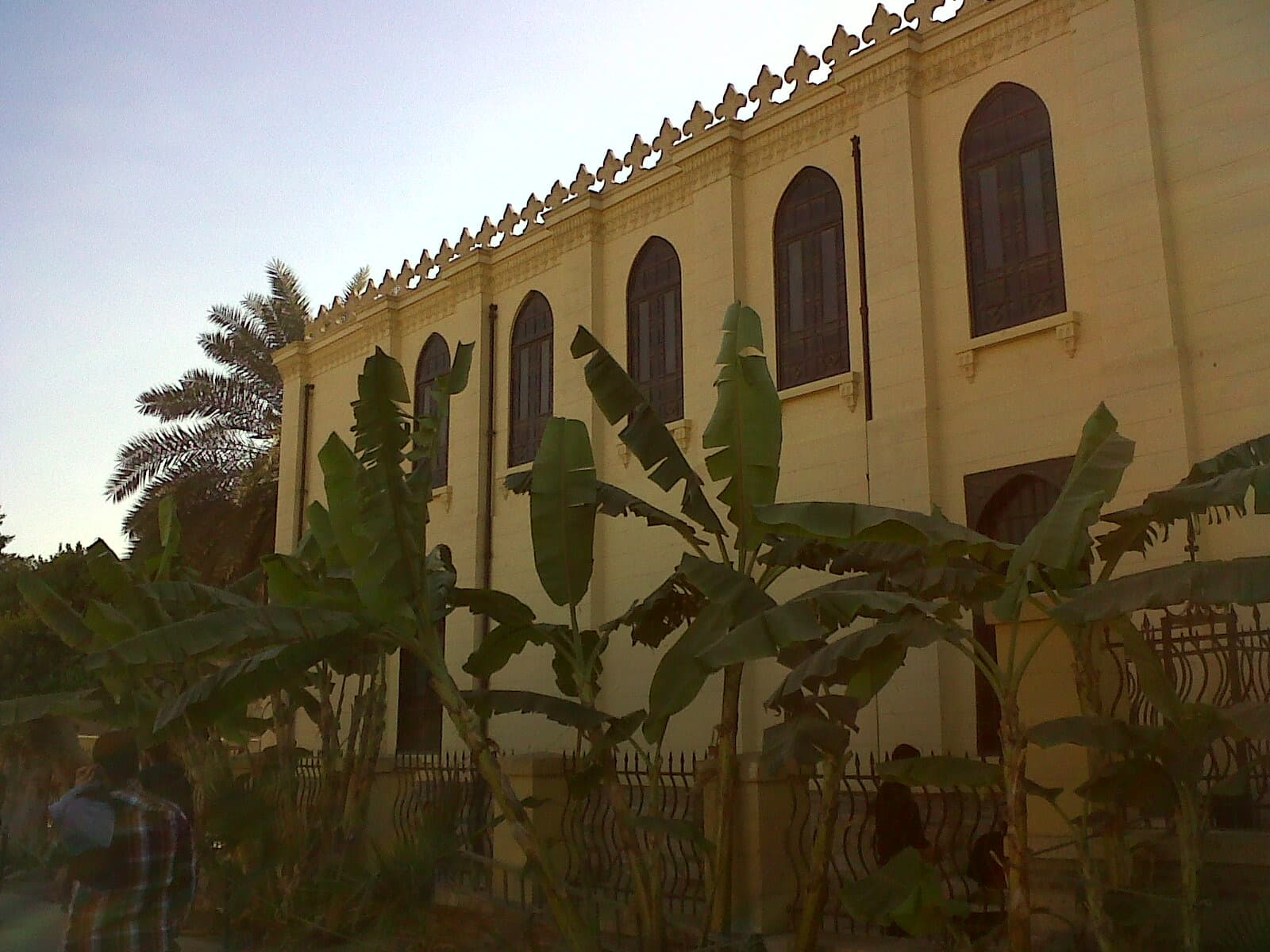
Within a few hundred metres, three faiths meet. The Hanging Church, al-Muallaqa, dates to about the third century and is built directly over the southern gate of the Roman fort, its nave suspended above the passage below; in ten forty-seven it became the official residence of the Coptic Orthodox Pope. Nearby, the Coptic Museum, founded in nineteen oh eight by Marcus Simaika, holds the largest collection of Coptic Christian art in the world and about one thousand two hundred fourth-century Nag Hammadi manuscripts. The Church of Saint Sergius, Abu Serga, of about the late seventh century, shelters a crypt honoured by tradition as a place the Holy Family rested during the flight into Egypt. The Ben Ezra Synagogue, the oldest in Cairo, held a geniza of roughly four hundred thousand manuscript fragments; in the eighteen nineties Solomon Schechter carried about one hundred ninety-three thousand of them to Cambridge University Library, where they transformed the study of medieval Mediterranean life. And a short way north stands the Mosque of Amr ibn al-As, founded about six hundred forty-one to six hundred forty-two A D on the site of Fustat, the first Islamic settlement in Egypt and the seed of Cairo. The Egyptian Ministry of Tourism and Antiquities calls it the oldest surviving mosque in Egypt and Africa.
Reading the three cities together
Take the three walks in any order, and the through-line holds. Giza is Cairo's answer to death, planned at monumental scale. Al-Muizz Street is Cairo alive and working, medieval time you can still hear and smell. Coptic Cairo is Cairo's beginning, the meeting of three faiths gathered around a Roman anchor. Each stop is short and skippable, each place is sacred or ancient or both, and modest dress and a quiet voice carry you gently through the active mosques, churches, and synagogue. Read the pyramids, the medieval street, and the old Christian quarter, and you have read one city across four and a half thousand years, best taken slowly and on your own clock. For where to begin, see the full guide to Cairo walking tours.
Sources
- UNESCO World Heritage Centre, Historic Cairo (inscribed 1979), and Memphis and its Necropolis, the Pyramid Fields from Giza to Dahshur (inscribed 1979).
- Egyptian Ministry of Tourism and Antiquities, on the Mosque of Amr ibn al-As as the oldest surviving mosque in Egypt and Africa.
- Grand Egyptian Museum official statements on the complete Tutankhamun collection and the museum's inauguration.
- Cambridge University Library, Taylor-Schechter Genizah Research Unit, on the Cairo Geniza and Solomon Schechter.
- Coptic Museum, Cairo, on its founding and collection of Coptic Christian art and Nag Hammadi manuscripts.
Frequently asked questions
- What are the three main historic areas to see in Cairo?
- The Giza plateau on the desert edge, with the pyramids and the Great Sphinx; Islamic Cairo along al-Muizz Street, the medieval walled city founded by the Fatimids in the year 969; and Coptic Cairo in the south, the old Christian quarter inside the Roman fortress of Babylon. Together they span roughly 4,500 years of the city's history.
- How old are the Giza pyramids and the Sphinx?
- The Great Pyramid of Khufu was raised around the 26th century B C, about four and a half thousand years ago, from roughly 2.3 million stone blocks. UNESCO records it as the only one of the Seven Wonders of the Ancient World to survive largely intact. The Great Sphinx, carved from a single ridge of the plateau's bedrock, is the oldest known monumental sculpture in Egypt and is generally attributed to the reign of Khafre.
- Why is al-Muizz Street significant in Islamic Cairo?
- Al-Muizz Street is the roughly one-kilometre medieval spine of the walled city the Fatimids founded in 969. Within a few strides it carries Fatimid, Ayyubid, Mamluk, and Ottoman monuments standing side by side, including the Mosque of al-Azhar, one of the oldest continuously operating universities in the world. UNESCO inscribed the surrounding Historic Cairo as a World Heritage Site in 1979.
- Which three faiths meet in Coptic Cairo?
- Christianity, Judaism, and Islam all sit within a few hundred metres inside and around the Roman fortress of Babylon. The Hanging Church and Abu Serga represent the Coptic Orthodox Church, the Ben Ezra Synagogue holds the memory of the ancient Jewish community and its famous Cairo Geniza, and the Mosque of Amr ibn al-As nearby is called the oldest surviving mosque in Egypt and Africa by the Egyptian Ministry of Tourism and Antiquities.
- Where is the Grand Egyptian Museum and what does it hold?
- The Grand Egyptian Museum sits about two kilometres from the Giza plateau, with its walls aligned to the pyramids of Khufu and Menkaure. It was officially inaugurated on 1 November 2025 and displays the complete Tutankhamun collection of 5,398 pieces together for the first time, along with the reassembled Khufu solar boat.
Ready to experience it?
Giza: The Pyramids and the Sphinx
150 min · 5 km · moderate
More from Cairo
Explore more at your own pace.
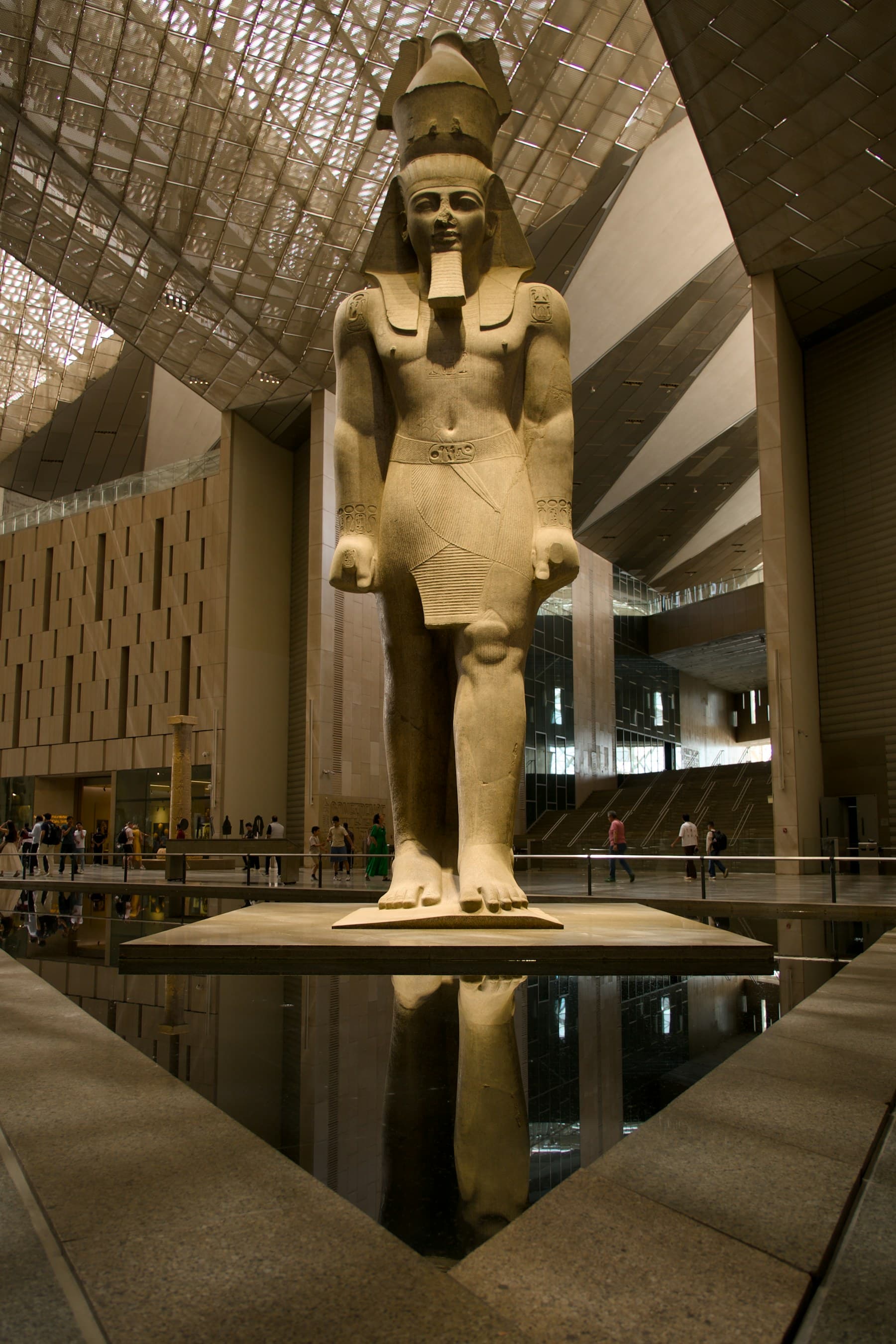
Grand Egyptian Museum: What to See, From the Grand Hall to Tutankhamun
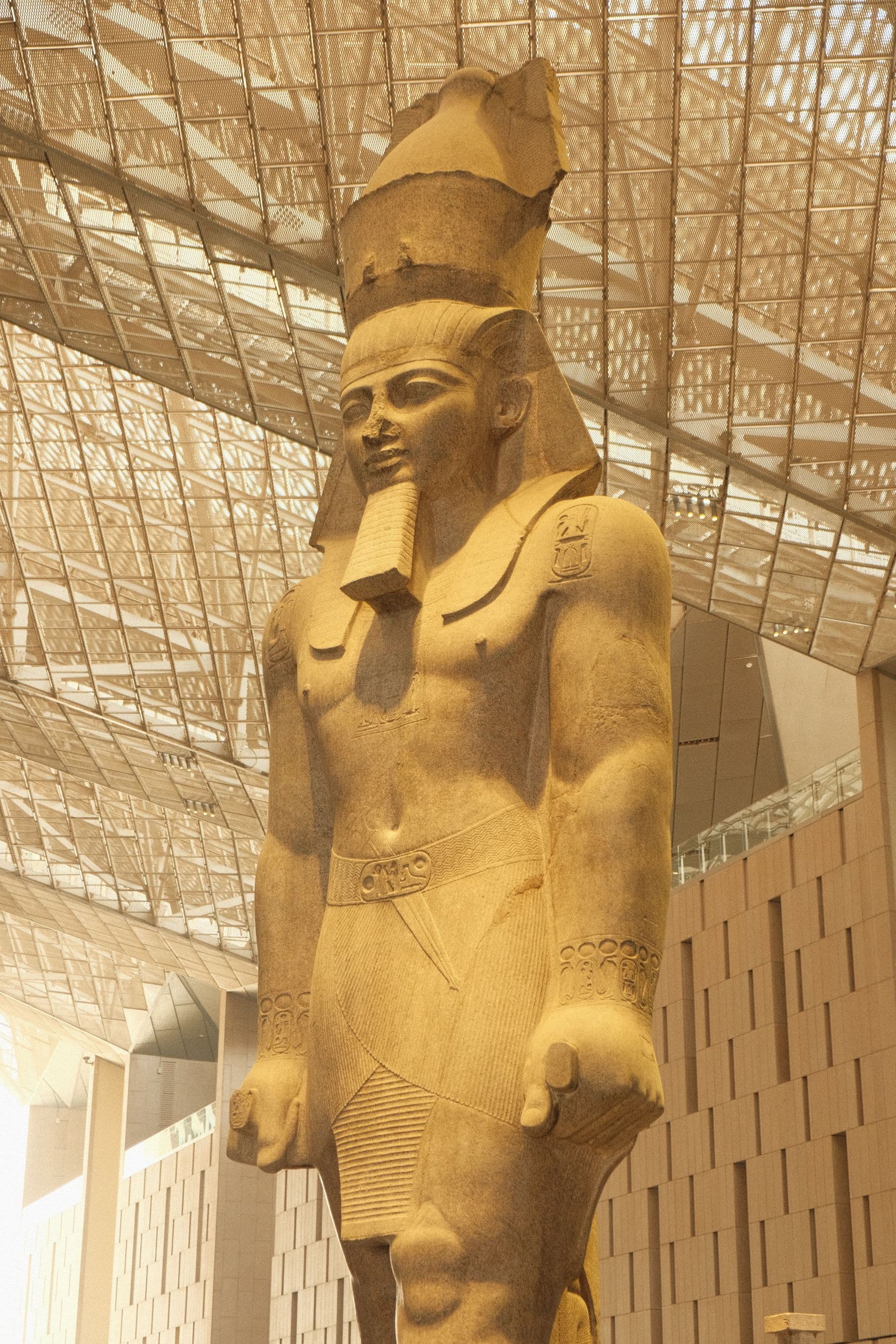
The Colossal Ramesses II at the Grand Egyptian Museum: From Memphis to Ramses Square to Giza
The Grand Staircase at the Grand Egyptian Museum: Six Storeys of Kings
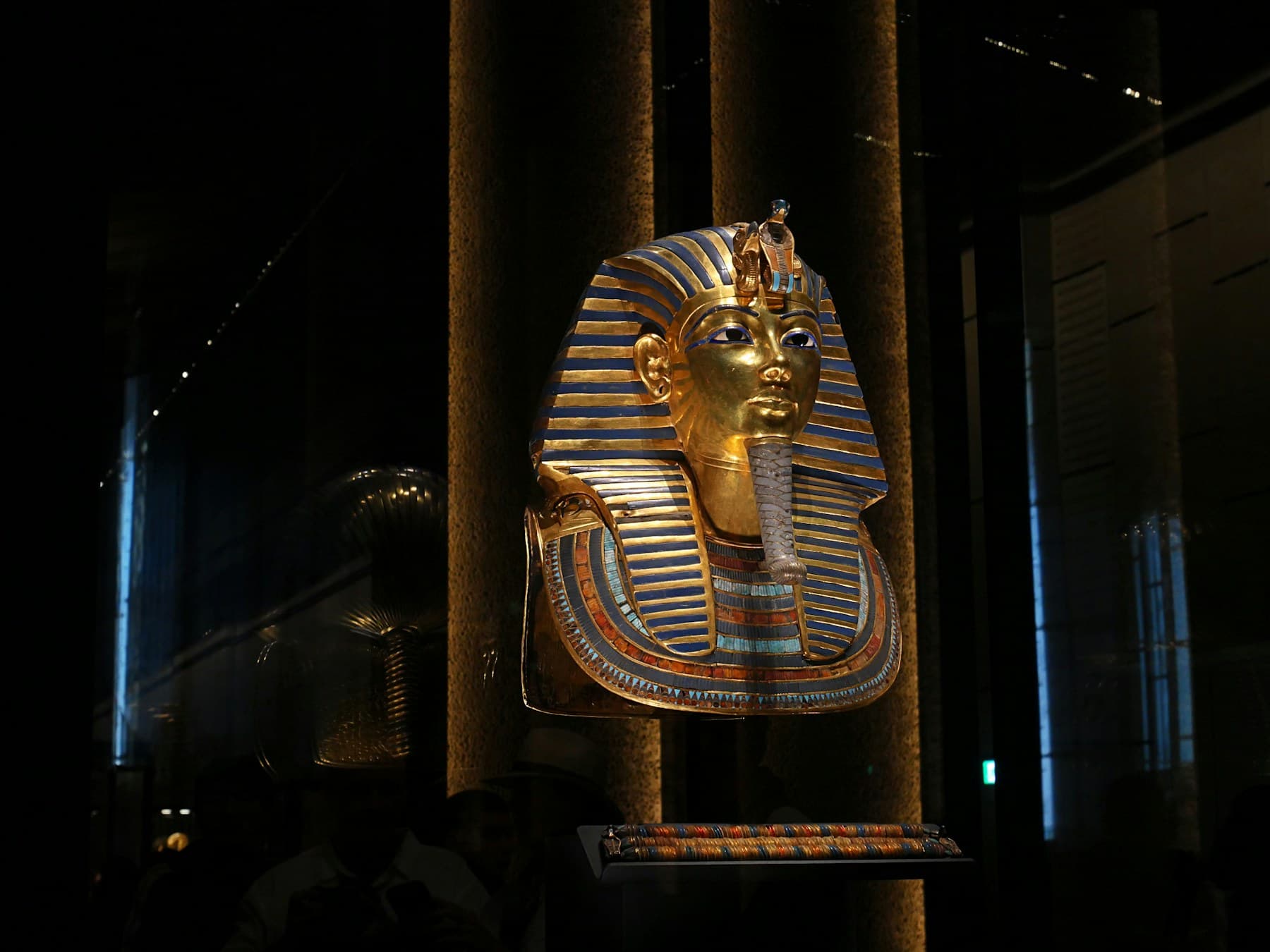
Tutankhamun's Gold Mask at the Grand Egyptian Museum: What to Look For
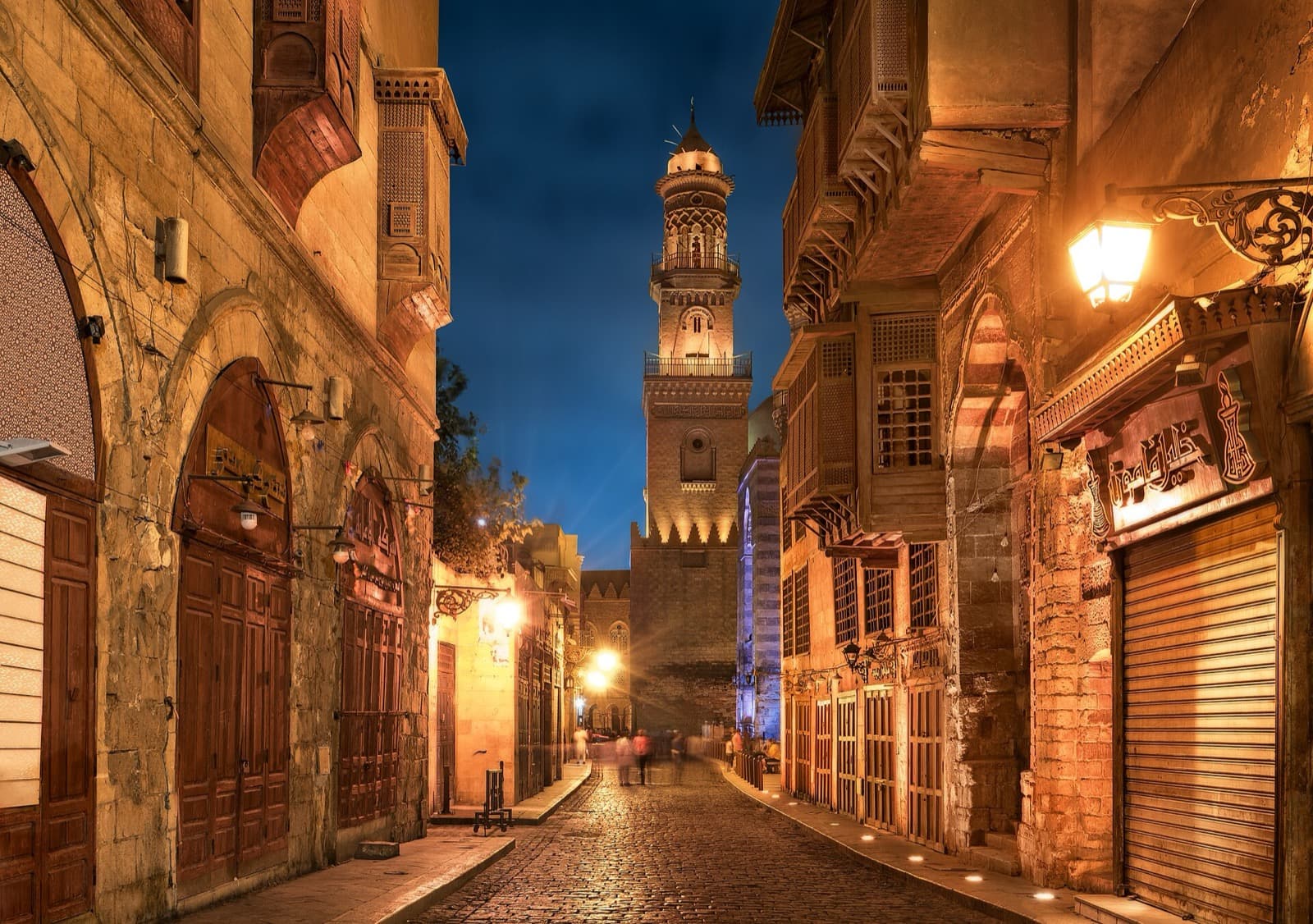
Al-Muizz Street: Reading a Thousand Years of Cairo on One Pavement