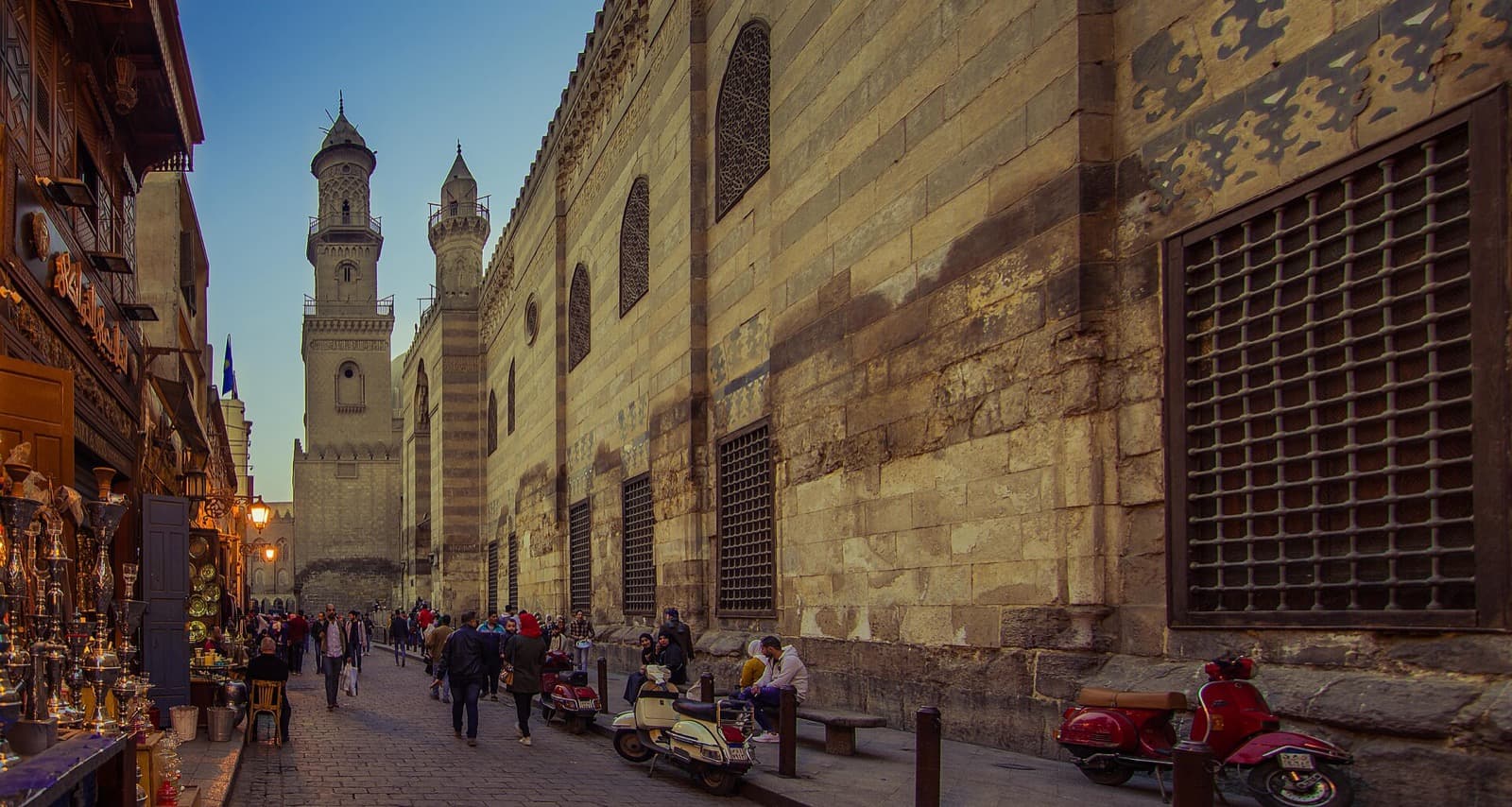
Read one of the world's oldest living Islamic cities along a single medieval street, from its northern gate to its southern one, past a thousand years of mosques, markets, and mausoleums that never stopped being used.
Start · Bab al-Futuh: Entering the Walled City
DirectionsStops
- 1
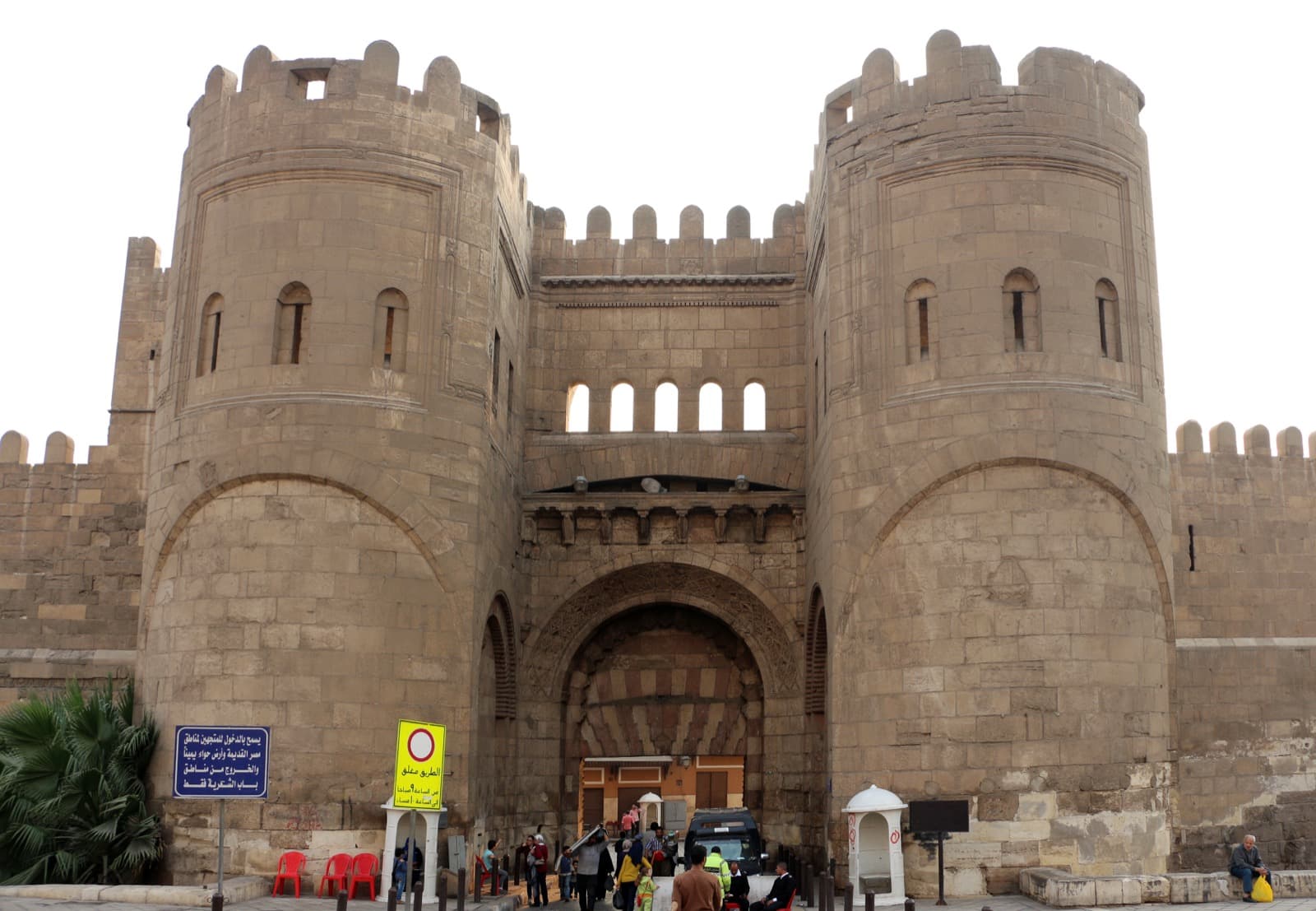
Bab al-Futuh: Entering the Walled City
The great northern gate of the Fatimid city, with two massive round stone towers, where the medieval walled city begins.
- 2
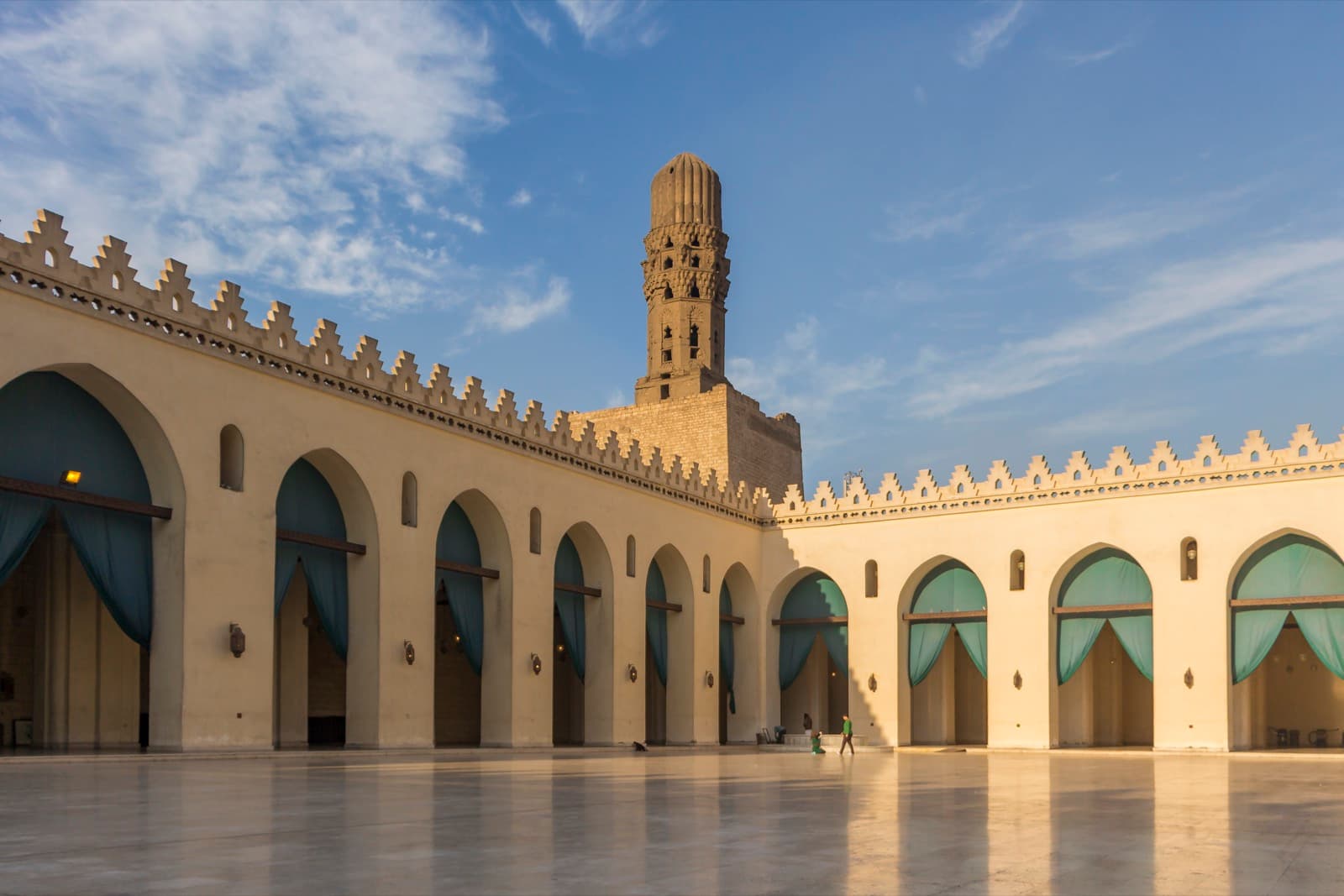
The Mosque of al-Hakim: The Fatimid Foundation
A vast early-eleventh-century Fatimid congregational mosque just inside the northern gate, famous for its two minarets encased in massive square stone bastions.
- 3
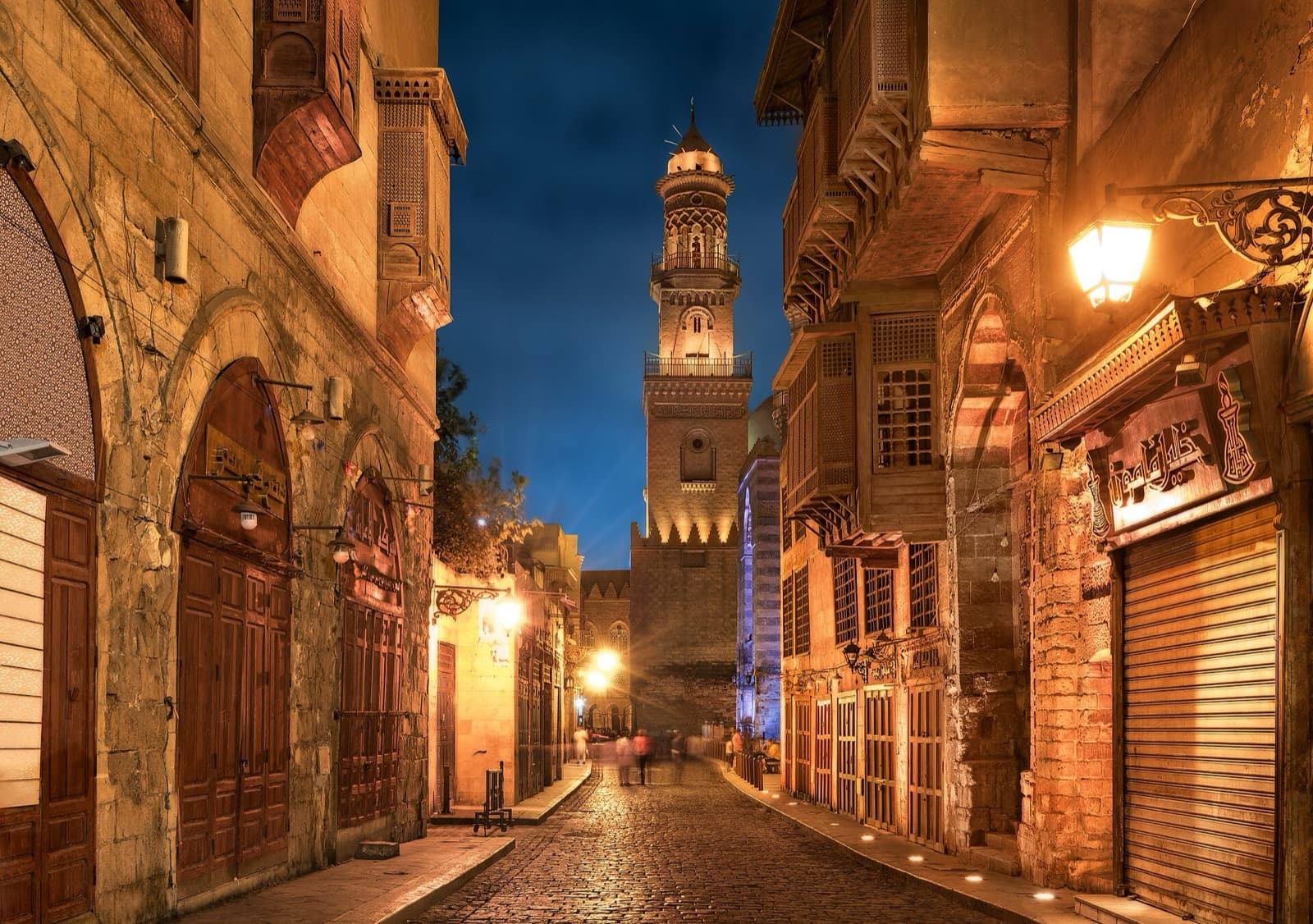
Al-Muizz Street: A Thousand Years Down One Street
The pedestrianized medieval spine of Islamic Cairo, lined for about a kilometre with monuments from four dynasties standing side by side.
- 4
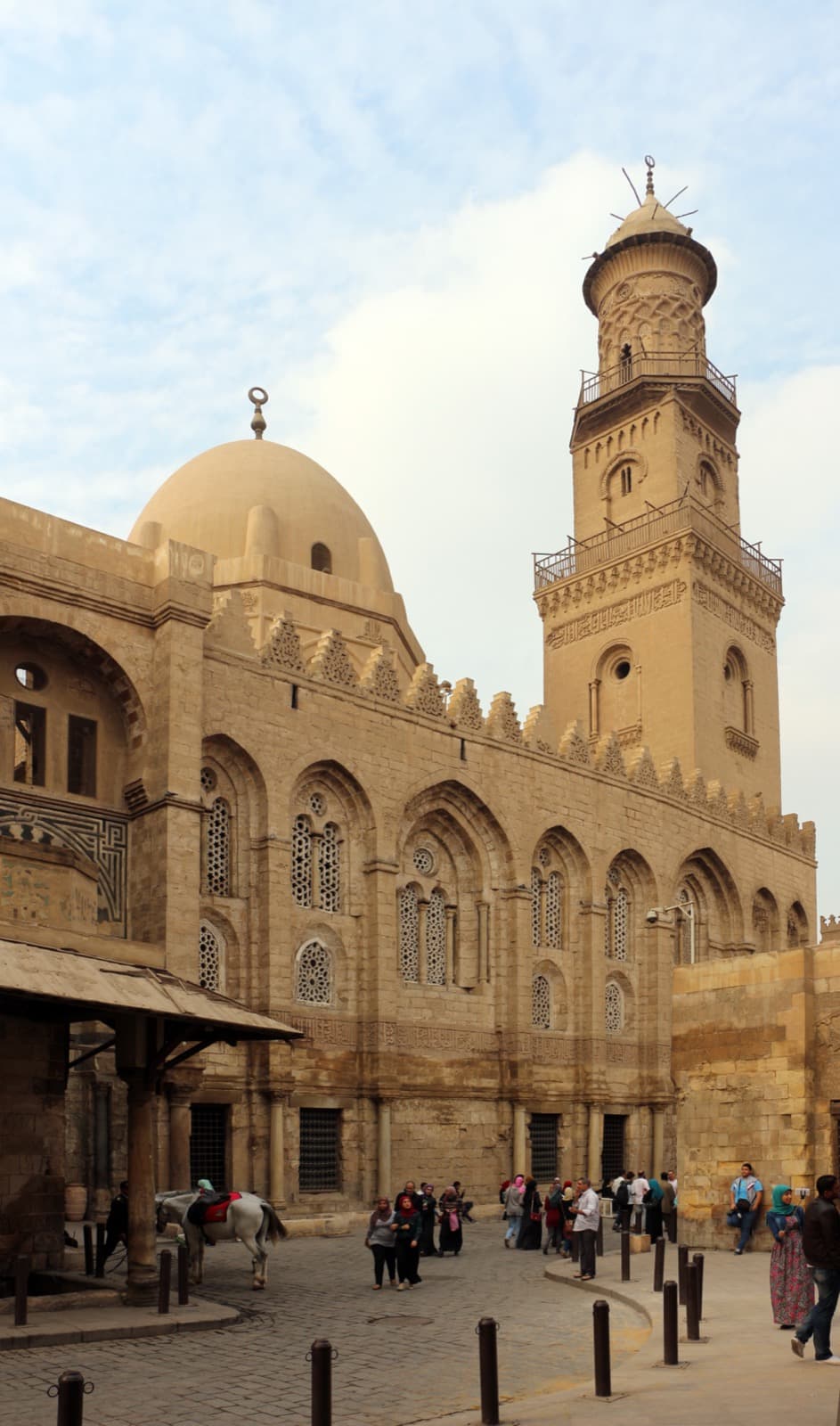
The Qalawun Complex: The Mamluk Age
A monumental thirteenth-century Mamluk foundation combining a mausoleum, a religious school, and a hospital that served the city for over six hundred years.
- 5
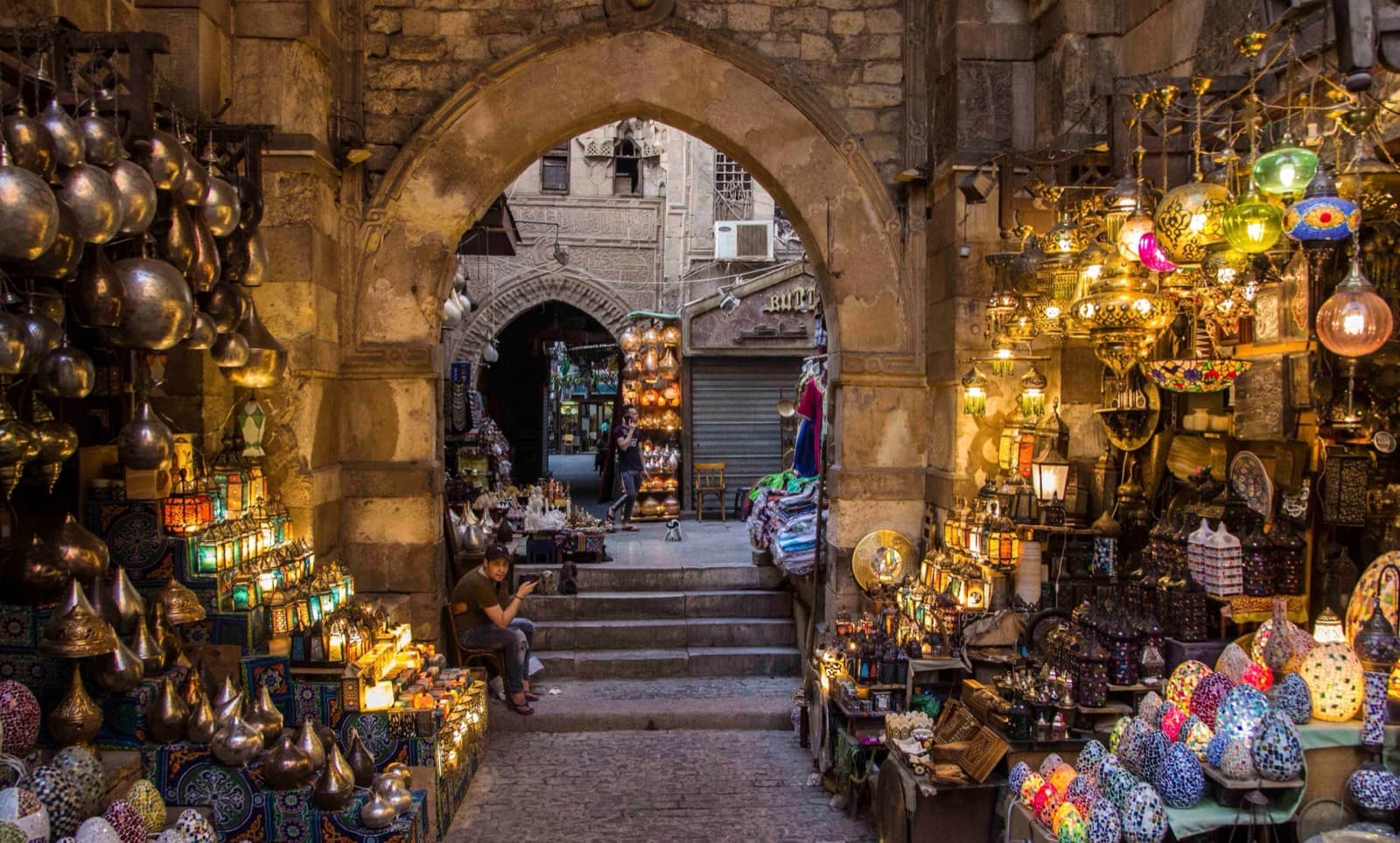
Khan el-Khalili: The Great Bazaar
The sprawling medieval bazaar of Islamic Cairo, a warren of covered lanes selling gold, copper, spices, and crafts, woven into the monuments since the fourteenth century.
- 6
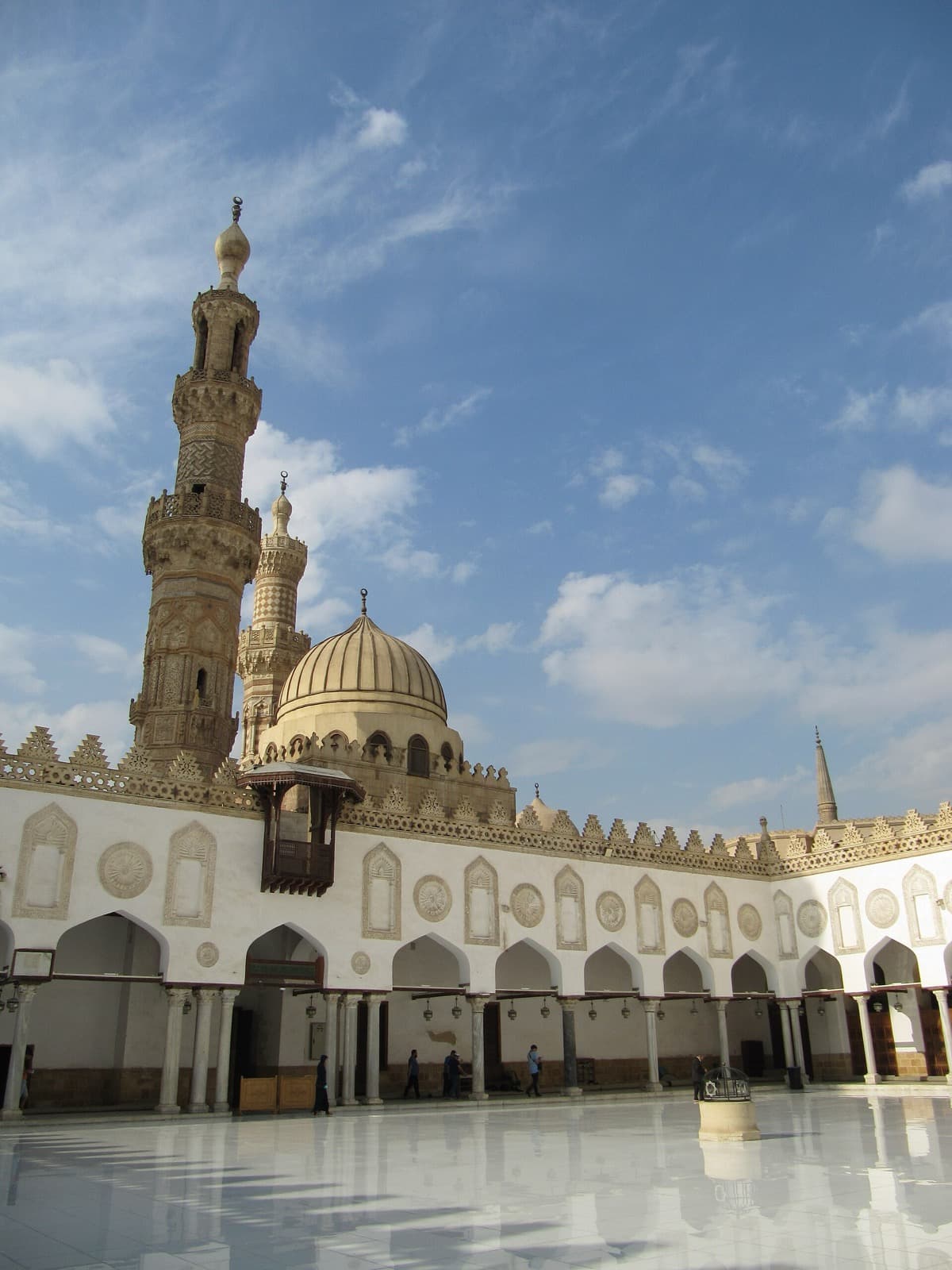
The Mosque of al-Azhar: The Thousand-Year University
A Fatimid mosque founded around the year nine hundred and seventy that is also one of the oldest continuously operating universities in the world and the foremost centre of Sunni Islamic learning.
- 7
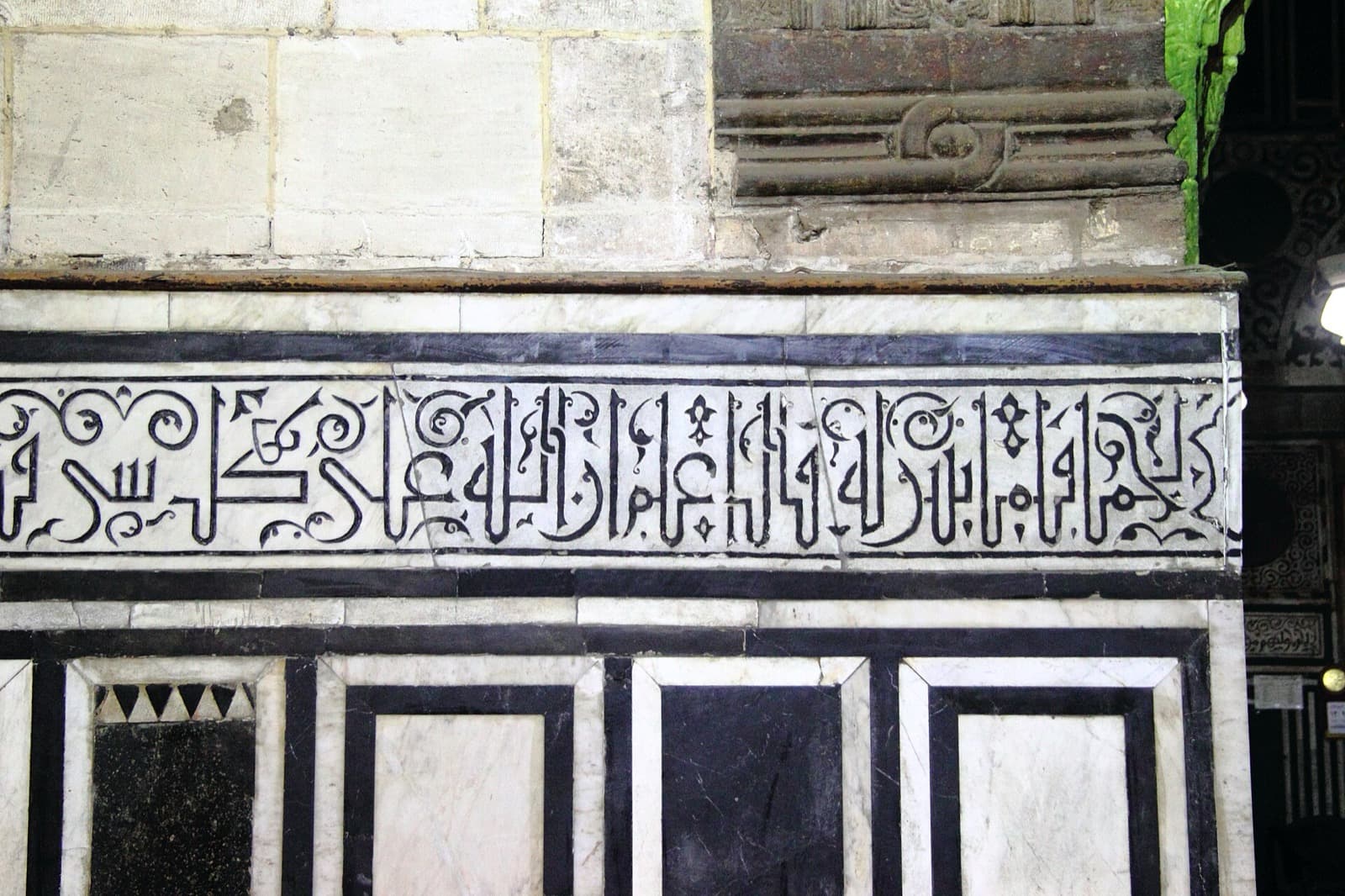
The al-Ghuri Complex: Twilight of the Mamluks
One of the last great Mamluk foundations, built just before the Ottoman conquest, its two boldly striped buildings facing each other across al-Muizz Street.
- 8
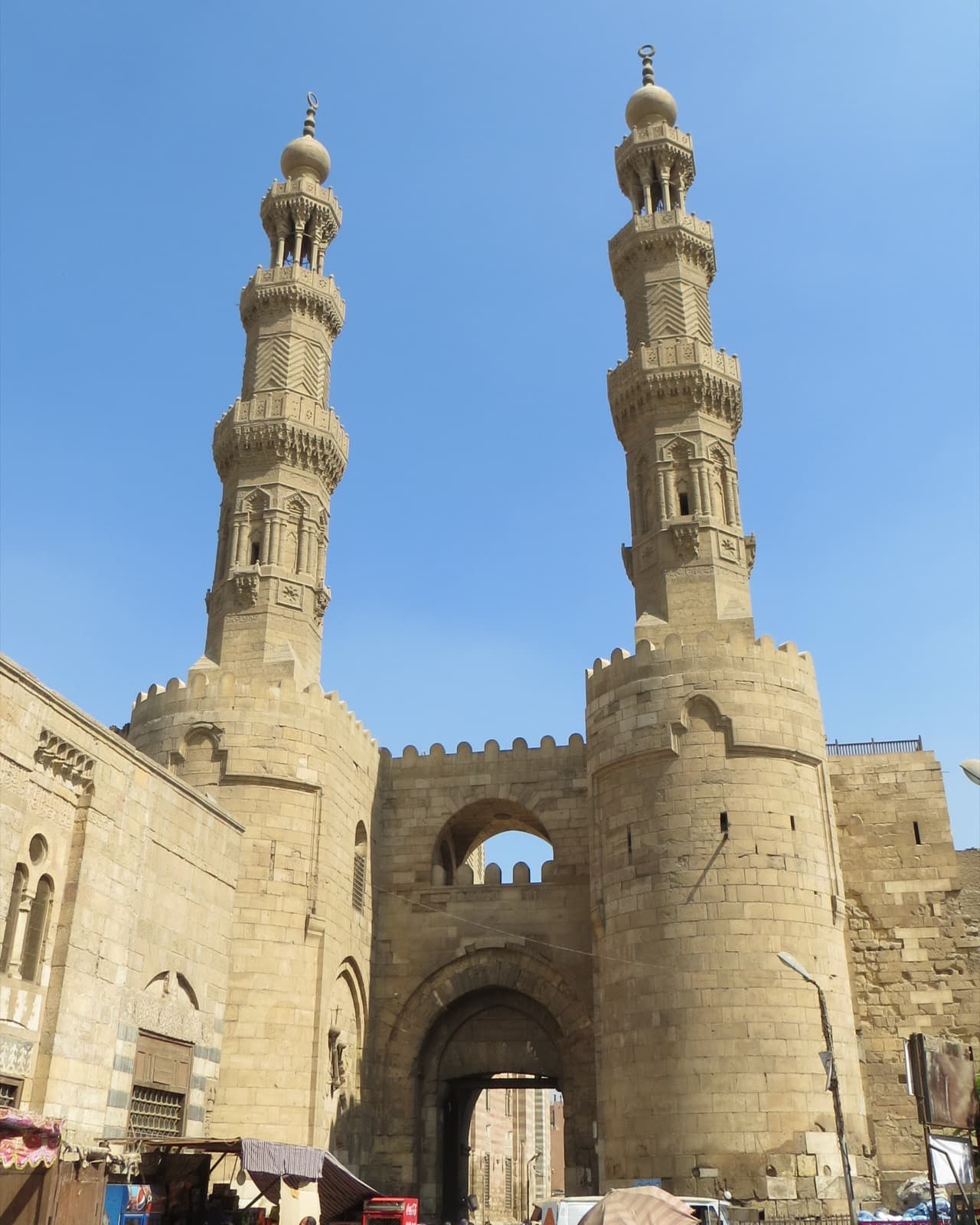
Bab Zuweila: The Southern Gate
The great southern gate of the Fatimid city, crowned by twin climbable minarets that belong to the adjoining Mamluk mosque, marking the edge of the medieval city.
Details
Best Time to Visit
Morning, from about nine to eleven, when the light is soft on the stone gates and the coppersmiths' lanes are just opening but not yet crowded. Late afternoon into the golden hour is the other fine window, when al-Muizz Street glows and the call to prayer drifts over the roofs, though Khan el-Khalili grows busy then. Avoid the midday heat, especially in summer, and if you can, come on a weekday rather than a Friday, when the active mosques fill for the main congregational prayer and non-worshippers may be asked to wait.
Pro Tips
- •Come early or late to dodge both the heat and the thickest bazaar crowds; morning light on the two great gates is superb, and the golden hour on al-Muizz Street is magic.
- •Because there is no group and no schedule, plan to linger where you want and skip what you do not: sit in the Qalawun courtyard, watch a coppersmith in Khan el-Khalili, then move on when you please.
- •Carry small cash in Egyptian pounds for the modest tickets to climb the walls between Bab al-Futuh and Bab al-Nasr, to enter the Qalawun interior, and to climb the minarets at Bab Zuweila.
- •The best panorama of the whole medieval quarter is from the top of the Bab Zuweila minarets, so save some energy for the climb at the end.
- •Dress modestly from the start, with covered shoulders and knees, and wear shoes you can slip off easily, since you will remove them at the active mosques of al-Hakim and al-Azhar.
- •In Khan el-Khalili, browsing is free and expected; a polite, unhurried no is all you need, and you never owe anyone a purchase for looking.
Safety & Precautions
- •The Mosque of al-Hakim and the Mosque of al-Azhar are active places of worship: dress modestly, remove your shoes, keep quiet, and be aware of the five daily prayer times, when non-worshippers may be asked to wait, and women may be asked to cover their hair. The same respect applies at the working al-Ghuri mosque and any church or the Ben Ezra Synagogue you may visit nearby.
- •Khan el-Khalili and the crowded lanes call for ordinary big-city awareness: keep bags zipped and in front of you, and watch your valuables in the press of people.
- •Vendors and touts can be persistent in the bazaar and around the monuments; a firm, polite no works, and you are never obligated to hire a guide, buy a good, or tip for simply looking.
- •Sun and heat are serious here, especially in summer, and much of the walk is in the open along the street and up exposed minaret stairs, so carry water, use sun protection, and pace yourself; the currency is the Egyptian pound and small cash is useful for tickets and tips.
- •Al-Muizz Street itself is closed to cars in the daytime, but the route is cut in two by busy al-Azhar Street between Khan el-Khalili and the al-Ghuri complex. Traffic there is fast and does not stop for pedestrians, so use the marked pedestrian underpass to reach the southern half rather than crossing the road on foot.
Travel advisory: Exercise Increased Caution (Level 2).
Gallery
Related Reading
Go deeper on what you'll see, hear, and walk through.

Overview
Best Self-Guided Walking Tours in Cairo (2026)
4 min
Overview
Cairo Travel Guide: Days, Transport, Safety, and Budget
7 min
Overview
One Day in Cairo: A Walkable Morning-to-Evening Itinerary
7 min
Thematic
Best History Walking Tours in Cairo (2026)
2 min
Thematic
Grand Egyptian Museum: What to See, From the Grand Hall to Tutankhamun
10 min
Thematic
Three Cairos on the Nile: Pyramids, the Medieval Street, and the Old Christian Quarter
8 min
Companion
Al-Muizz Street: Reading a Thousand Years of Cairo on One Pavement
7 min
Deep dive
Khan el-Khalili: The Cairo Bazaar Built on a Dynasty's Tombs
7 min
Read
What to Eat in Cairo: Koshari, Ful, and How to Order Like a Local
7 min
Read the walk
The full story of Islamic Cairo: The Medieval City Along al-Muizz Street, in words. Prefer to listen? Play it narrated, from home or on location.
Introduction
This is a walk down a single street in Cairo, Egypt, and that one street holds a thousand years. Al-Muizz Street runs about one kilometre through the heart of the walled city that the Fatimids founded in the year nine hundred and sixty-nine, and along it, shoulder to shoulder, stand mosques, mausoleums, religious schools, and merchants' inns from ruler after ruler. UNESCO inscribed all of it as Historic Cairo in nineteen seventy-nine, calling it one of the world's oldest Islamic cities. This is not a museum quarter behind glass. Coppersmiths still hammer, spice stalls still trade, the call to prayer still empties into these lanes, and the great bazaar still fills the side streets. Over about eight stops and roughly two and a half hours, covering about two and a half kilometres in all, from the northern gate to the southern one, you will read the city as layered time: Fatimid, then Ayyubid, then Mamluk, then Ottoman. And here is the quiet luxury of doing it this way. Egypt's tourism is famously crowded with guides and touts pressing a schedule on you. On this walk there is no group, no meter running, no one to tip for lingering. You can sit in a courtyard for twenty minutes or skip a stop entirely, and the only pace that matters is yours. Modest dress and a quiet voice serve you well at the active mosques and the working university you will pass, where people are praying and studying, not performing for visitors. When you arrive at Bab al-Futuh, the great northern gate, begin with stop one.
1. Bab al-Futuh: Entering the Walled City
You are standing at the northern threshold of the medieval city, where two great round towers of pale stone rise on either side of an arch. This is Bab al-Futuh, the Gate of Conquest. Bab means gate, and this one was the northern door into the walled Fatimid capital. What you see was rebuilt in stone and finished in the year ten eighty-seven by the vizier Badr al-Jamali, under the caliph al-Mustansir. It replaced an earlier mud-brick gate from the city's founding a century before. A short way to the east stands its sister, Bab al-Nasr, the Gate of Victory, and you can tell them apart at a glance: this gate has round towers, while Bab al-Nasr has square, rectangular ones. Look at how tight and fine the stonework is here. This is among the finest surviving medieval military architecture in Cairo, and its craftsmanship is considered even better than its sister gate's. The walls between the two gates can still be climbed if you buy the small ticket, and the walk along the ramparts gives you the defensive logic of the whole thing, the arrow slits and the machicolations poised over anyone approaching. But you do not need to climb to feel it. Pass under the arch and notice how the light changes, how the noise of the modern city outside gives way to the narrower medieval world within. Merchants have flowed through this gate for nine hundred years. Take your time. Nothing here is rushing you, and the whole street is waiting just ahead.
2. The Mosque of al-Hakim: The Fatimid Foundation
Just inside the gate, a huge courtyard opens on your right, ringed by arcades in warm stone and marble, and this is the Mosque of al-Hakim. It is one of the oldest and largest Fatimid mosques in the city, and it takes you straight back to the dynasty that built Cairo itself. Construction began here in the year nine hundred and ninety under the caliph al-Aziz, and the mosque was finally inaugurated in the month of Ramadan in the year ten thirteen, under the caliph al-Hakim bi-Amr Allah, whose name it carries. Look toward the two minarets. Their original towers were built early in the eleventh century, but around the year ten ten they were wrapped in enormous square stone bastions, and that distinctive, fortress-like base is unlike almost anything else you will see on this walk. This mosque has lived many lives. Over the centuries it was neglected and repurposed as a prison, a stable, a fortress, and a school, and Napoleon's expedition used it during the French occupation. Its present gleaming state, white marble and gold trim, comes from a full reconstruction in nineteen eighty by the leader of the Dawoodi Bohra community, with a further restoration reopening in early twenty twenty-three. This is an active mosque, so step softly, keep your voice low, dress modestly, and remove your shoes where indicated. If it is near a prayer time, simply wait or admire it from the edge. Then, when you are ready and not a moment before, move back out onto al-Muizz Street.
3. Al-Muizz Street: A Thousand Years Down One Street
Pause here in the middle of the street and simply take stock of where you are, because this pavement is the whole point of the walk. This is al-Muizz Street, named for the Fatimid caliph al-Muizz li-Din Allah, under whom Cairo was founded in the year nine hundred and sixty-nine. It is the main north-south axis of the medieval walled city, running about one kilometre from Bab al-Futuh behind you to Bab Zuweila far ahead, and for a thousand years it was the commercial and religious heart of the city. What makes it extraordinary is the density. Within a few strides you can pass a Fatimid gate, an Ayyubid wall, a Mamluk mausoleum, and an Ottoman fountain, four dynasties standing within metres of one another. You will often hear it called the greatest concentration of medieval Islamic architecture anywhere in the world. That claim is widely repeated and usually credited to a United Nations study, though the exact source is hard to pin down, so treat it as a proud local saying rather than a hard fact. What is documented is this: UNESCO records Historic Cairo as one of the world's oldest Islamic cities, founded in the tenth century, which became a new centre of the Islamic world and reached its golden age in the fourteenth century. From nineteen ninety-seven the street was restored into an open-air museum, with more than thirty monuments conserved and traffic removed from the historic core. And this is where autonomy pays off. There is no guide hurrying you past the doorway you want to study, no bus idling at the end. Linger, or move on. The next thousand years is yours to read at your own pace.
4. The Qalawun Complex: The Mamluk Age
The facade on your left grows suddenly grander, a tall front of carved stone with a soaring minaret near the entrance, and this is the Qalawun complex. It ushers you out of the Fatimid dawn and into the Mamluk age, the era when Cairo's rulers built with breathtaking ambition.…
Full narration for this stop unlocks with the tour.
5. Khan el-Khalili: The Great Bazaar
Off to your right the street breaks into a maze of covered lanes, and the sound changes: hammering on metal, the murmur of bargaining, the smell of spice and coffee. This is Khan el-Khalili, the great bazaar in the heart of Islamic Cairo, and it is the living tissue that holds…
Full narration for this stop unlocks with the tour.
6. The Mosque of al-Azhar: The Thousand-Year University
Ahead of you spreads a serene open courtyard framed by pale arcades and several minarets of different ages, and a quiet, purposeful stream of students crossing it. This is the Mosque of al-Azhar, and it is the climax of the whole walk, because it is two things at once: a place…
Full narration for this stop unlocks with the tour.
7. The al-Ghuri Complex: Twilight of the Mamluks
Now the street narrows and two tall buildings rise to face each other across it, both banded in bold stripes of beige and tawny stone. This is the al-Ghuri complex, and it marks a poignant moment: the twilight of the Mamluks. It was built in the years fifteen hundred and three…
Full narration for this stop unlocks with the tour.
8. Bab Zuweila: The Southern Gate
The street ends the way it began, at a great stone gate, and this one has twin minarets soaring above its towers. This is Bab Zuweila, the southern gate of the walled Fatimid city, and it closes the medieval world you have just walked through. Like the northern gates, it was…
Full narration for this stop unlocks with the tour.