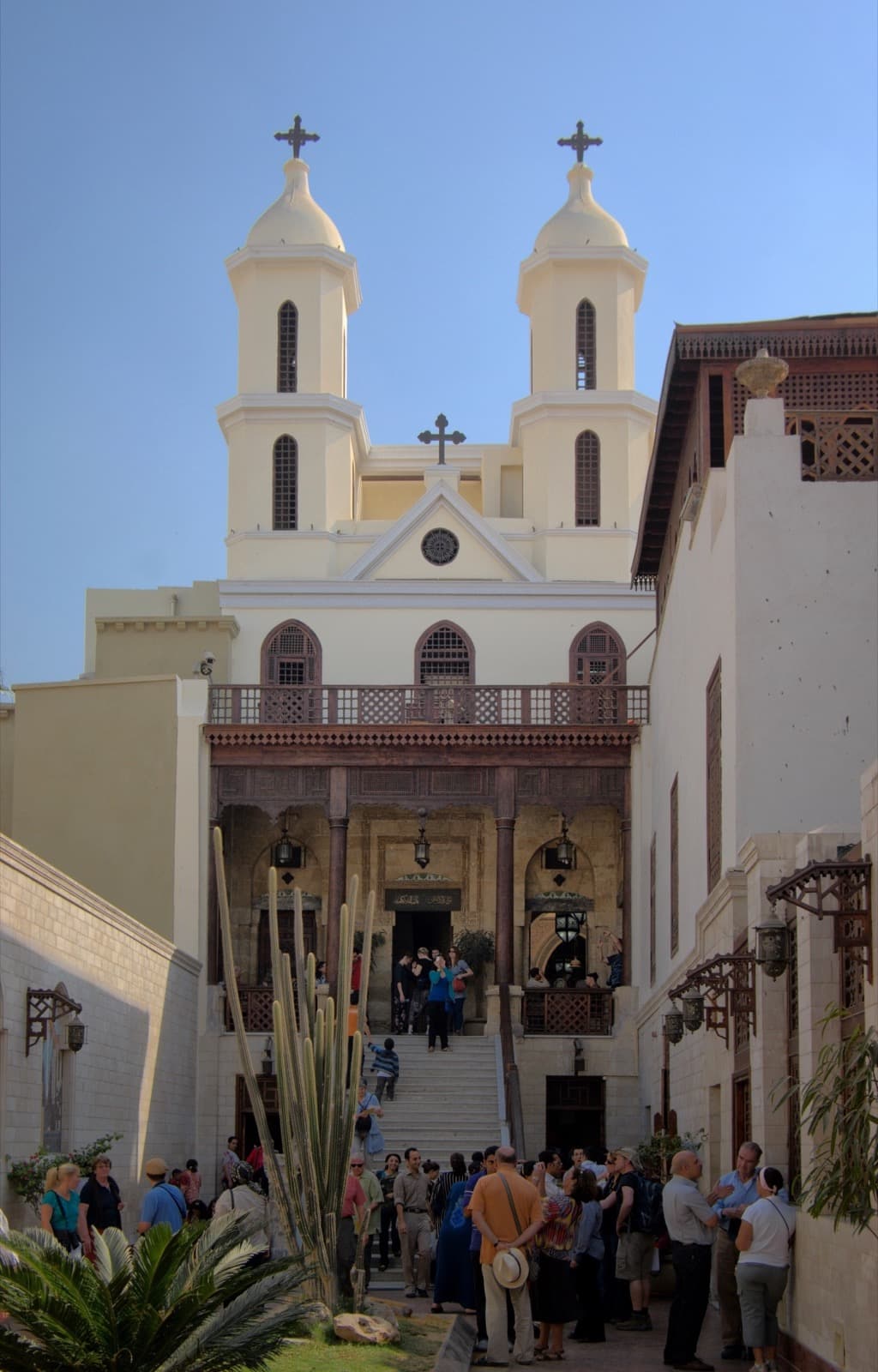
The quiet, oldest layer of Cairo, where a Roman fortress on the Nile shelters one of the oldest Christian communities on earth, an ancient synagogue, and the first mosque in Egypt, three faiths within a few hundred metres.
Start · The Roman Fortress of Babylon: Entering Through a Roman Fort
DirectionsStops
- 1
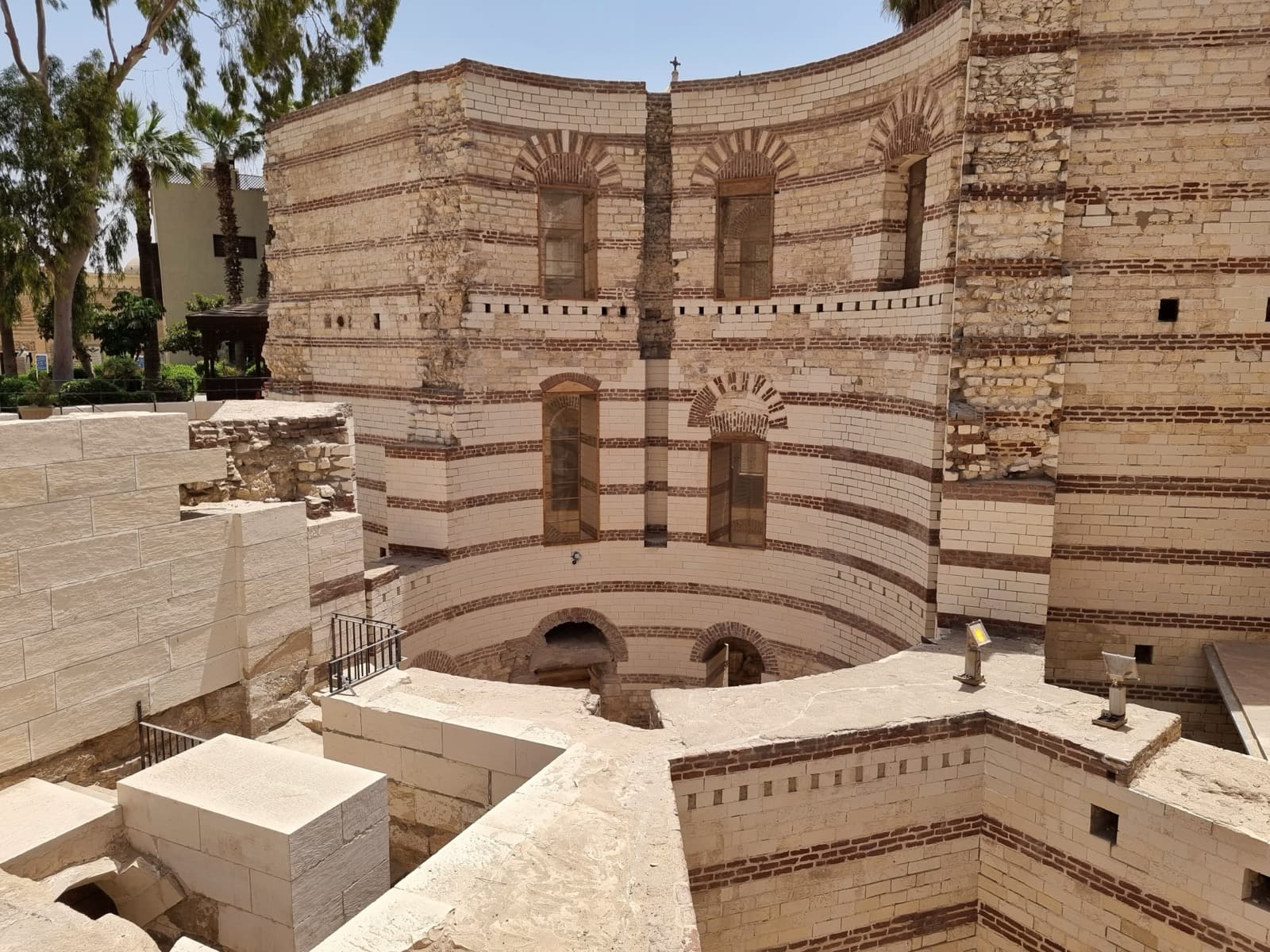
The Roman Fortress of Babylon: Entering Through a Roman Fort
The ruined Roman fort on the Nile whose two great round towers guard the entrance to the Christian quarter.
- 2
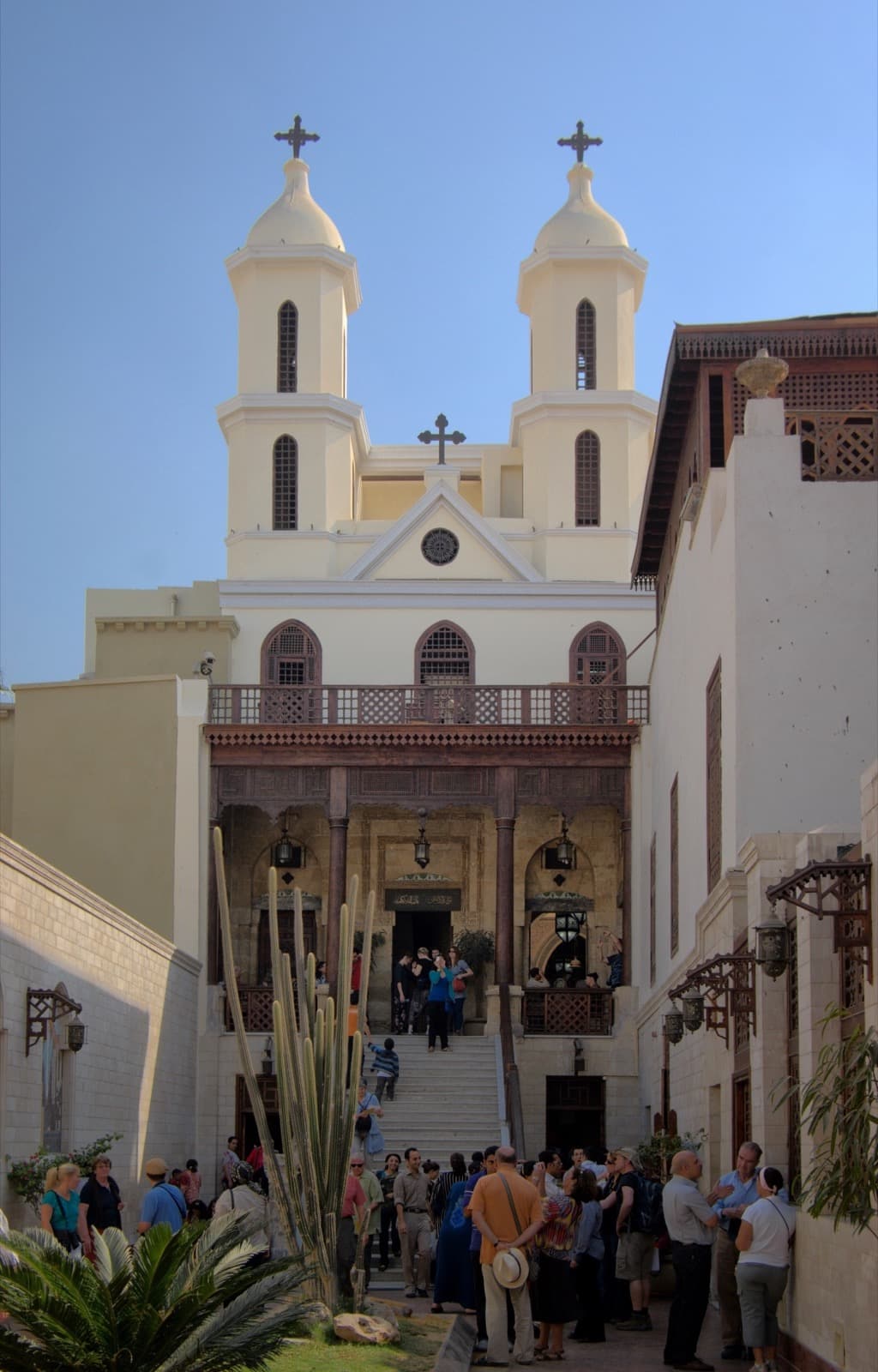
The Hanging Church (al-Muallaqa): The Church That Floats Over a Roman Gate
One of Cairo's oldest churches, built over the southern gate of the Roman fortress so its nave hangs above the passage below.
- 3
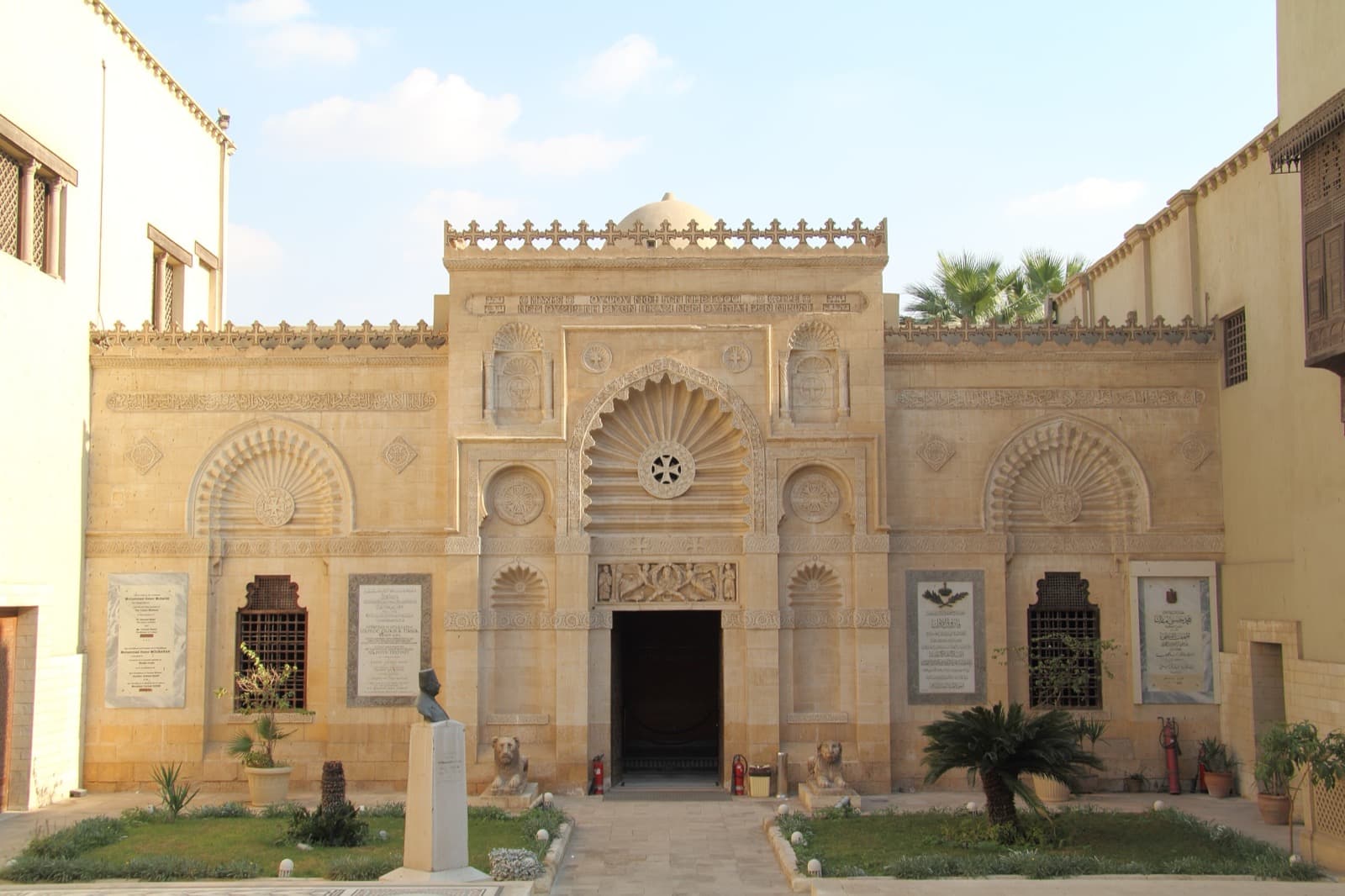
The Coptic Museum: From Pharaohs to Christian Egypt
The museum holding the largest collection of Coptic Christian art in the world, tracing the continuity from pharaonic and Greco-Roman Egypt into Christian Egypt.
- 4
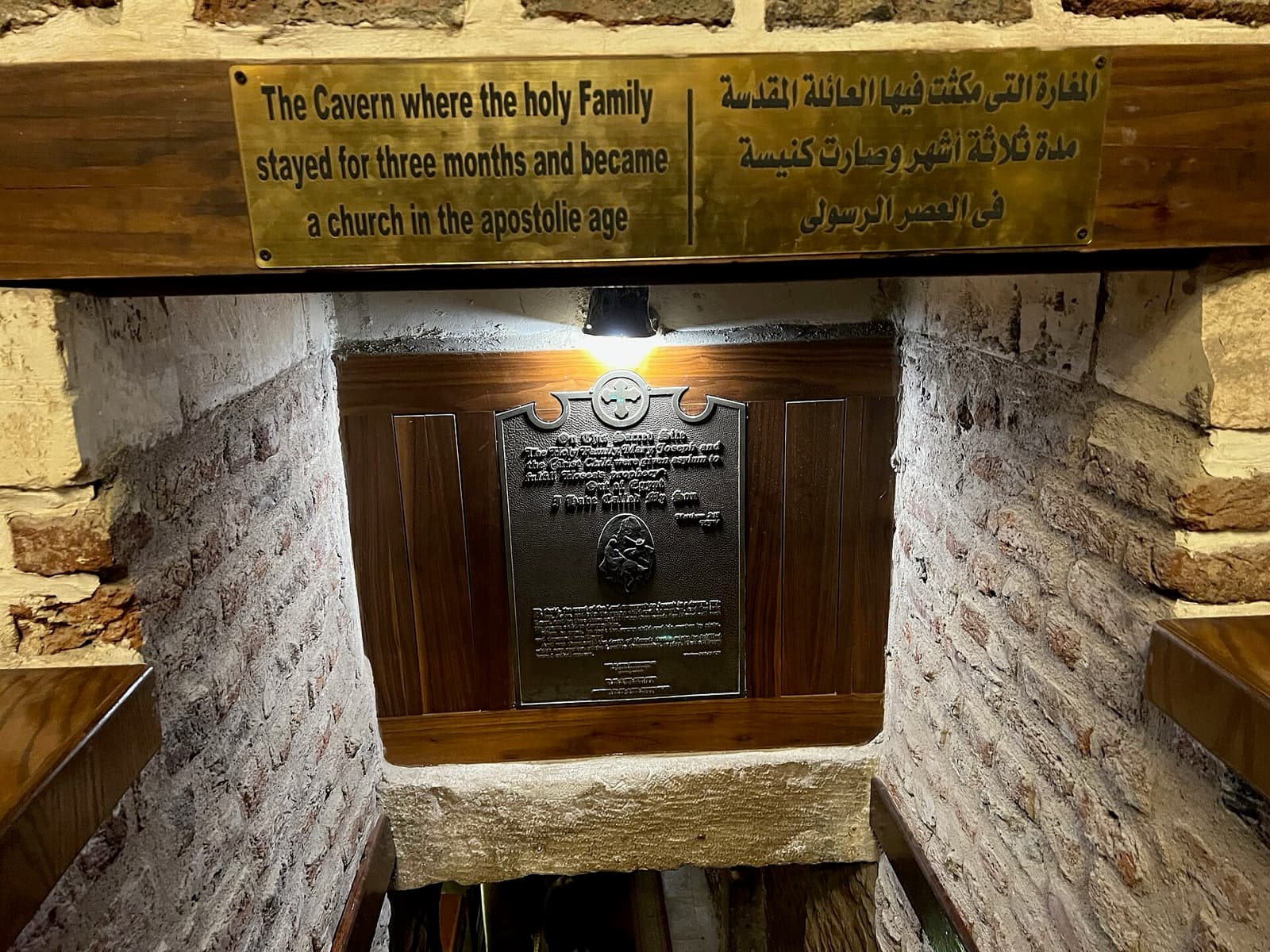
The Church of Saint Sergius (Abu Serga): The Cave Beneath the Church
One of Cairo's oldest Coptic churches, with a crypt honoured by tradition as a place the Holy Family sheltered during the flight into Egypt.
- 5
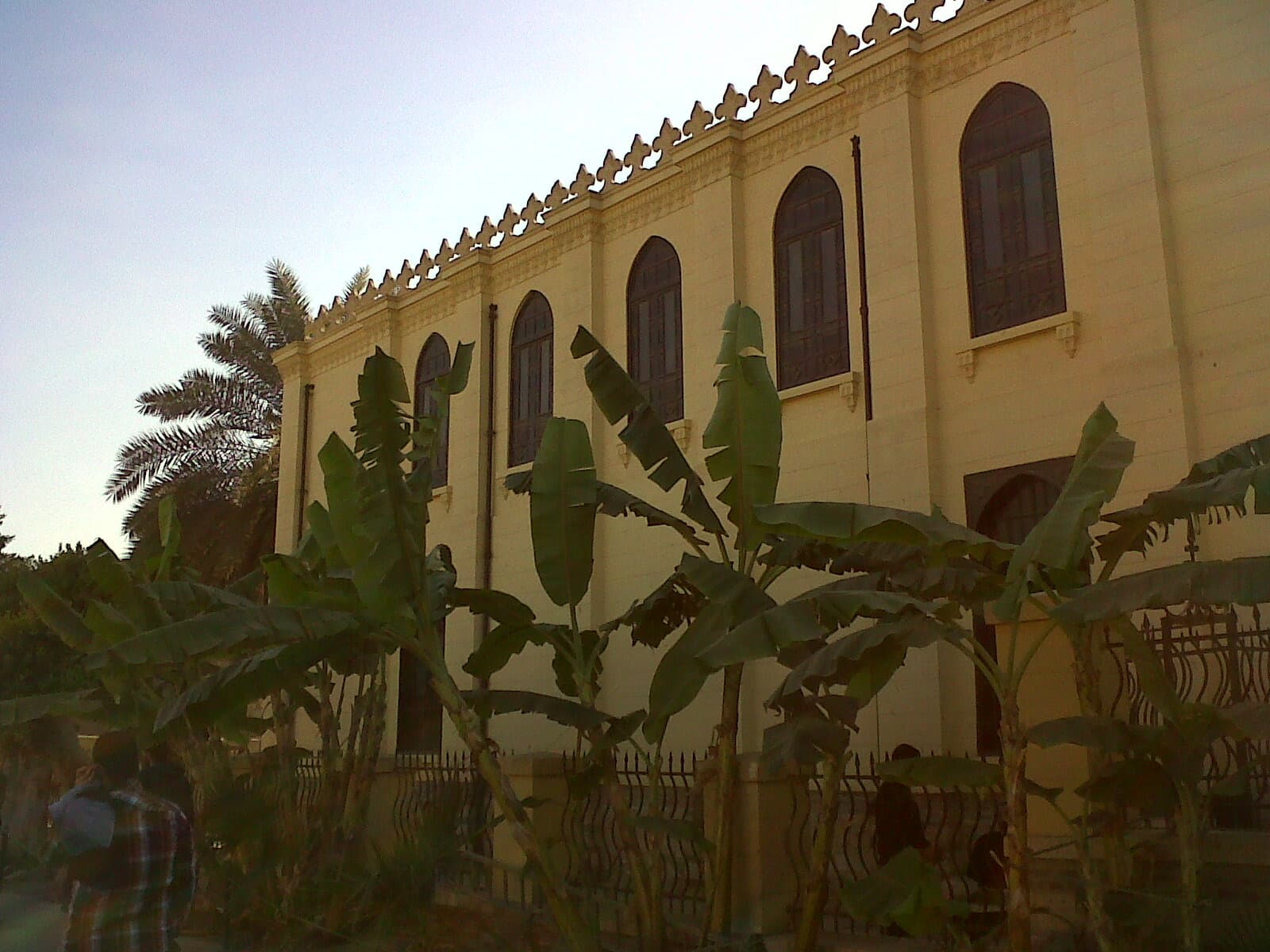
The Ben Ezra Synagogue: The Third Faith and the Greatest Document Find
The oldest synagogue in Cairo, whose geniza held roughly four hundred thousand manuscript fragments that transformed the study of medieval Mediterranean life.
- 6
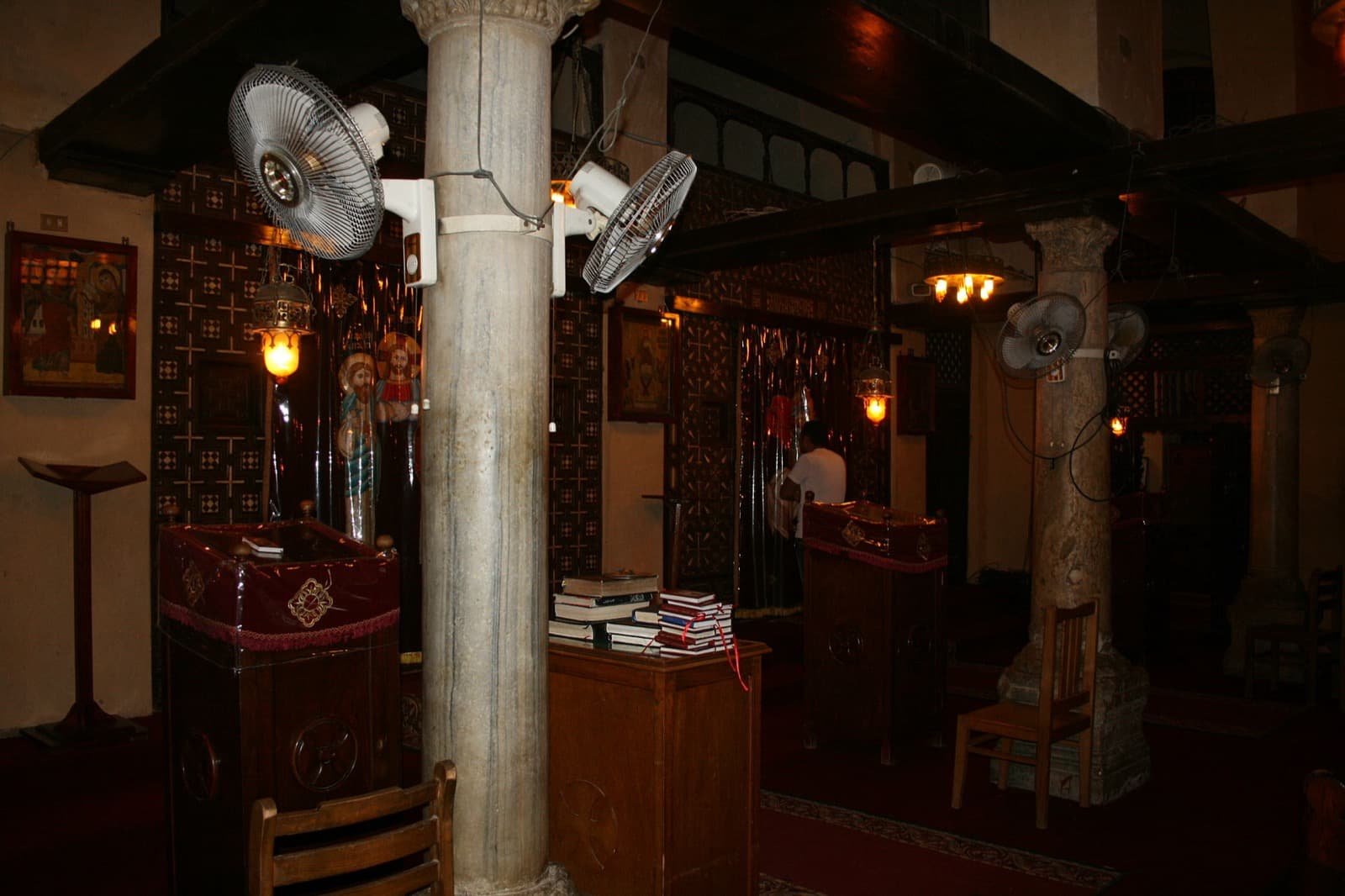
The Church of Saint Barbara: The Depth of the Christian Quarter
One of the oldest buildings in Cairo, a large basilica near Abu Serga dedicated to the martyr Saint Barbara.
- 7
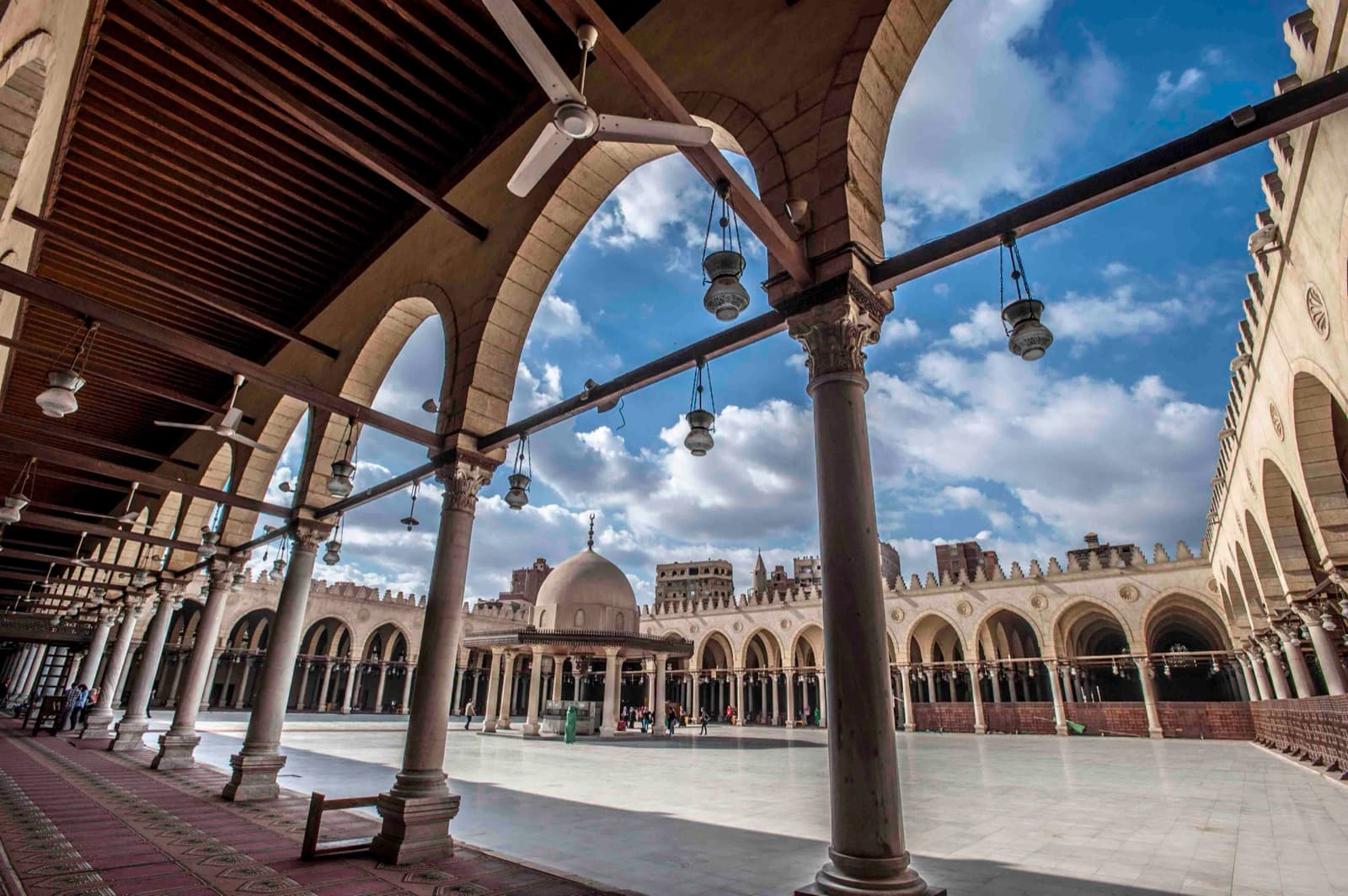
The Mosque of Amr ibn al-As: Where Islamic Cairo Began
Called by the Egyptian Ministry of Tourism and Antiquities the oldest surviving mosque in Egypt and Africa, on the site where Fustat, the seed of Cairo, was founded.
Details
Best Time to Visit
Early morning, soon after the sites open, is ideal. The quarter is coolest and quietest then, the churches and the synagogue are calmer before tour groups arrive, and the low light suits the old stone. Late afternoon is a pleasant second choice. Autumn through spring, roughly October to April, is far more comfortable than the summer heat. Fridays and Coptic feast days bring larger worshipping crowds, so if you prefer quiet, choose an ordinary weekday morning.
Pro Tips
- •The whole route is compact and easily walked, but the streets are old and uneven, so wear comfortable closed shoes.
- •Dress modestly for the entire walk, covering shoulders and knees, since almost every stop is an active place of worship; a light scarf is useful for women at the mosque and helpful in the churches too.
- •Carry small cash in Egyptian pounds for entry tickets, donations, and the Coptic Museum, as card payment is not always available at these sites.
- •You control the depth of every stop: step inside the crypt at Abu Serga and the museum galleries if they draw you, or admire from the courtyards and keep moving, entirely at your own pace.
- •Photography is welcome in most exterior areas but is sometimes restricted inside the churches and the Ben Ezra Synagogue, so look for signage and ask quietly before taking photos indoors.
- •The Mosque of Amr ibn al-As sits a little north of the church cluster; save it for last as the walk's closing stop, and check prayer times so your visit does not fall during a congregational prayer.
Safety & Precautions
- •The Mosque of Amr ibn al-As is an active mosque: dress modestly, remove your shoes, keep quiet, be aware of prayer times when non-worshippers may be asked to wait, and note that women may be asked to cover their hair. The same care applies at other working Cairo mosques such as al-Azhar, Sultan Hassan, and the Alabaster Mosque of Muhammad Ali.
- •The Hanging Church, Abu Serga, Saint Barbara, and the Ben Ezra Synagogue are all living places of worship and heritage; dress modestly, speak quietly, and treat all three faiths present here with equal dignity, never as spectacle.
- •Keep ordinary big-city awareness of your bag and valuables in crowds, especially if you continue on to busy areas such as the bazaar at Khan el-Khalili; carry small cash in Egyptian pounds and keep it discreet.
- •The currency is the Egyptian pound and small cash is useful for tickets and modest tips; carry water and sun protection, since shade is limited between sites, and a firm, polite no handles persistent vendors or unofficial guides at the busier entrances.
Travel advisory: Exercise Increased Caution (Level 2).
Gallery
Related Reading
Go deeper on what you'll see, hear, and walk through.

Overview
Best Self-Guided Walking Tours in Cairo (2026)
4 min
Overview
Cairo Travel Guide: Days, Transport, Safety, and Budget
7 min
Overview
One Day in Cairo: A Walkable Morning-to-Evening Itinerary
7 min
Thematic
Grand Egyptian Museum: What to See, From the Grand Hall to Tutankhamun
10 min
Thematic
Three Cairos on the Nile: Pyramids, the Medieval Street, and the Old Christian Quarter
8 min
Companion
The Hanging Church of Cairo: A Nave Suspended Over a Roman Gate
6 min
Deep dive
Ben Ezra Synagogue: The Cairo Geniza and the Documents That Rewrote Medieval History
7 min
Read
What to Eat in Cairo: Koshari, Ful, and How to Order Like a Local
7 min
Read the walk
The full story of Coptic Cairo: The Old Christian Quarter Inside a Roman Fort, in words. Prefer to listen? Play it narrated, from home or on location.
Introduction
This is the oldest layer of Cairo, Egypt, the corner where the city itself began. Long before the great mosques and the medieval walls, there was a Roman fortress on the Nile, and sheltering inside and around its towers, one of the oldest Christian communities on earth. In a compact quarter called Old Cairo, the Coptic Orthodox Church has worshipped for roughly seventeen centuries. Here a church hangs suspended over a Roman gate, a crypt is honoured by tradition as a shelter of the Holy Family, an ancient synagogue holds the memory of a Jewish community and the greatest medieval document find, and just to the north stands the first mosque in Egypt and Africa. This tour has seven stops. It covers about two and a half kilometres and takes about two hours at an easy pace, longer if you go inside every sanctuary and linger. That pace is the whole point: this is your route, your schedule, no group herding you along, no waiting, no tip pressure at the end. Each stop is short, so you can dwell where something moves you and skip what does not. Everything here is sacred and alive, three active churches, a synagogue, and a working mosque, so quiet voices and modest dress carry you gently through all of it. Read the layers of stone like pages, and you will cross the meeting of three faiths and the foundations of Cairo in one unhurried morning. When you arrive at the two great round towers of the Roman fortress of Babylon, beside the Coptic Museum, begin with stop one.
1. The Roman Fortress of Babylon: Entering Through a Roman Fort
You are standing at the gateway of the whole city's memory. These two massive round towers of brick and stone are what survive of the Roman fortress of Babylon, and the story of the city of Cairo begins right here, at the edge of the Nile. The names on this ground reach back a long way. Emperor Trajan, who reigned from ninety-eight to one hundred seventeen A D, reconstructed a canal linking the Nile to the Red Sea and established a fortified harbour on this spot, a project remembered as the Amnis Traianus. But the fortress you are looking at, these great round towers, came later. It was Emperor Diocletian, around three hundred A D, who rebuilt the stronghold in the form whose ruins still frame this quarter. So keep the two apart in your mind: Trajan gave the site its canal and harbour, Diocletian gave it these towers. For centuries this fort guarded the land and river routes and controlled the tolls on Nile traffic, at the boundary between Lower and Middle Egypt. Then, after the Arab conquest of six hundred forty A D, its military role faded, and the Christian quarter grew up inside and around the old walls, sheltering in the strength of Rome. Today the towers flank the Coptic Museum and frame your descent into the streets below. All of this belongs to the UNESCO Historic Cairo World Heritage Site, inscribed in nineteen seventy-nine. Take a moment with the sheer age of it. Everything else on this walk, every church, the synagogue, the mosque to the north, gathered around this Roman anchor. Move at your own pace from here. When you are ready, the streets of the quarter open just ahead.
2. The Hanging Church (al-Muallaqa): The Church That Floats Over a Roman Gate
This is one of the oldest churches in all of Egypt, and its nickname tells you exactly why it is remarkable. In Arabic it is called al-Muallaqa, which means the hanging, or the suspended, and the church earns the name because it is built directly over the southern gate of the Roman fortress of Babylon. Its nave hangs above the passage below, resting on the old Roman stone. Early visitors climbed a flight of twenty-nine steps to reach it and took to calling it the Staircase Church. It is dedicated to the Virgin Mary, with additional sanctuaries honouring Saint John the Baptist and Saint George, and it dates to about the third century, making it a rival even to Abu Serga, which you will visit shortly, for the title of oldest. Its importance grew far beyond its age. In the year ten forty-seven, when the Coptic patriarchate moved from Alexandria to Cairo, this became the official residence of the Coptic Orthodox Pope, the seat of the church. Inside, if you step in quietly, you may see the wooden roof built in the shape of an ark, a barrel vault turned upside down like the hull of a ship, and a marble pulpit carried on fifteen slender columns. This is an active church, part of a living faith seventeen centuries old, not a monument. So keep your voice low, dress modestly, and let the worshippers have their peace. Linger over the icons as long as you like, or step back out and carry on. The quarter is yours to move through at your own pace.
3. The Coptic Museum: From Pharaohs to Christian Egypt
Set right among the old Roman towers is a museum that holds the largest collection of Coptic Christian art and artifacts in the world, about fifteen thousand objects on display. It was founded in nineteen oh eight by an Egyptian named Marcus Simaika and opened its doors on the fourteenth of March, nineteen ten. What makes it worth your time, even a short visit, is the story it tells: the continuity of Egypt itself. Walk the galleries and you watch the art of the pharaohs and of Greek and Roman Egypt flow, without a hard break, into Christian Egypt. Carved stone, woodwork, textiles, painted icons, and early manuscripts trace a single thread through ancient Egyptian, Greek, Roman, Byzantine, Axumite, and Ottoman traditions. The collection also holds roughly one thousand two hundred Nag Hammadi manuscripts, fourth-century Coptic codices of great importance to the study of early Christianity, kept for specialist researchers. The building itself is part of the pleasure. Its facade was modeled on the twelfth-century al-Aqmar Mosque, with carved wooden mashrabiya screens filtering the light, so a Christian museum wears the dress of Islamic Cairo. It became a state museum in nineteen thirty-one and was reinforced so well that it came through the Cairo earthquake of nineteen ninety-two intact. UNESCO records this as part of Historic Cairo. Because the ticket takes you inside for a while, this is a natural place to slow down or, if you would rather stay in the open air among the churches, to skip. Either way, you are moving at your own pace, and the quarter waits just outside the doors.
4. The Church of Saint Sergius (Abu Serga): The Cave Beneath the Church
This is Abu Serga, the Church of Saints Sergius and Bacchus, and it is among the very oldest Coptic churches in Cairo, dating to about the late seventh century. According to tradition it was founded by a scribe named Athanasius, who served under the Umayyad governor Abd al-Aziz…
Full narration for this stop unlocks with the tour.
5. The Ben Ezra Synagogue: The Third Faith and the Greatest Document Find
Here the walk opens onto its third faith. This is the Ben Ezra Synagogue, the oldest synagogue in Cairo, set inside a former church building in the very heart of the Christian quarter, tied to the ancient Jewish community of Egypt. Its founding date is unknown, but documents…
Full narration for this stop unlocks with the tour.
6. The Church of Saint Barbara: The Depth of the Christian Quarter
Just a short walk from Abu Serga, on the eastern side of the old fortress, stands the Church of Saint Barbara, and it belongs to the deepest layer of Christian Cairo. It dates to about the fifth or sixth century A D, which places it among the very oldest buildings in the entire…
Full narration for this stop unlocks with the tour.
7. The Mosque of Amr ibn al-As: Where Islamic Cairo Began
You have crossed the whole walk to reach its resolution. A short way north of the Christian quarter stands the Mosque of Amr ibn al-As, and this is where Islamic Cairo began. It was founded about six hundred forty-one to six hundred forty-two A D, in the year twenty-one after…
Full narration for this stop unlocks with the tour.