Old Town: The Roman Fort Beneath the Imperial City
100 min · 1.9 km · easy
Vienna is a city stacked on a city, and you can read it in three directions. Read the old town downward, and beneath the Gothic cathedral and the baroque promenades lie the walls of Vindobona, the Roman legionary camp that still bends where the streets run. Cross the imperial courtyards of the Hofburg, and you walk through six centuries of Habsburg ambition, each generation adding a wing until the empire ended in nineteen eighteen. Then walk the Ringstrasse, the boulevard the Emperor Franz Joseph drove through the demolished city walls after eighteen fifty-seven, where a parade of public buildings each wears the costume of an older era. Down, across, and around: three axes, one autobiography of a capital.
The through-line is layering. Vienna almost never erased. It built over, built onto, and built around, so the whole city functions as an archive you can walk. Three Roamer tours trace the three axes, and together they read the city the way you would read a long sentence, one clause at a time.
Reading downward: the Roman fort beneath the imperial city
Start with the Old Town: The Roman Fort Beneath the Imperial City tour, which peels the imperial surface back to the older city underneath. The Innere Stadt, inscribed as a UNESCO World Heritage site in two thousand one, is the tightest cluster of layers in the city.
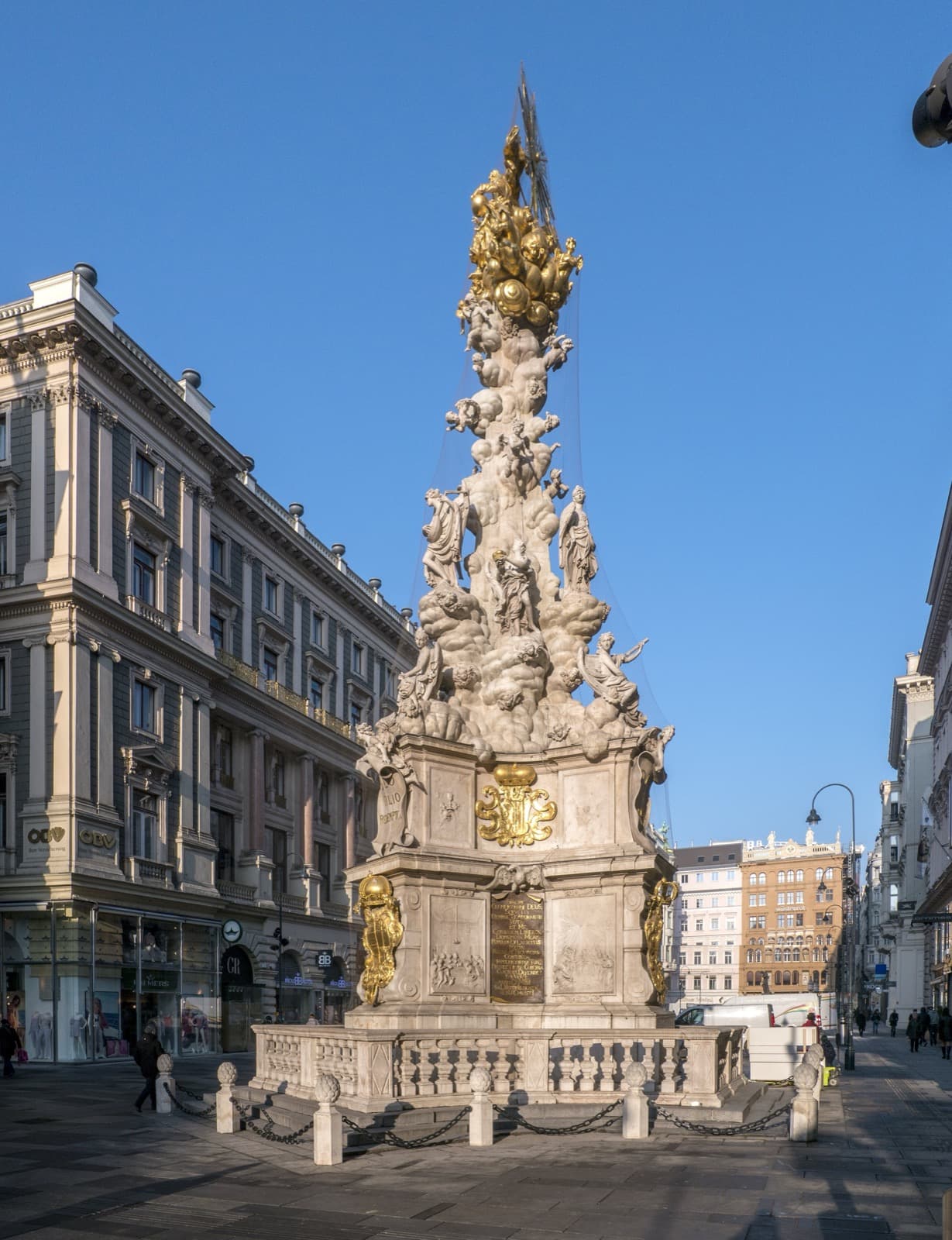
The clearest proof is in the street names and the pavement itself. The Graben, one of Vienna's grand promenades, is honest about its origin: Graben means the ditch. The street follows the line of the outer defensive ditch of the Roman fort, filled in by the Babenberg dukes in the twelfth century and quietly turned into the most fashionable walk in the city. The baroque Plague Column that crowns it, completed in sixteen ninety-three, sits directly over the buried Roman edge.
A few steps away, at Michaelerplatz, the lower city is not two floors down but right at your feet. An open excavation in the pavement displays Roman remains from Vindobona's civilian suburb, framed by railings and facing Adolf Loos's ornament-free Looshaus of around nineteen ten, the house Vienna nicknamed the one without eyebrows. The climax comes at Hoher Markt, the oldest square in Vienna, which sits directly over the heart of the legionary camp. Beneath it, the Roman Museum shows officers' houses fitted with floor heating, while overhead the Anker Clock, built between nineteen eleven and nineteen fourteen, parades twelve historical figures at noon, from Marcus Aurelius to the Empress Maria Theresa. The walk ends at Ruprechtskirche, the oldest surviving church in the city, on a rise at the very edge of the old camp. Between them, at Judenplatz, the excavated foundations of the medieval Or-Sarua synagogue lie beneath Rachel Whiteread's Holocaust Memorial, two catastrophes meeting on one quiet square. The old town does not hide its strata. It leaves windows open in the floor.
Reading across: the palace the empire never finished
Hear a stop from this walk
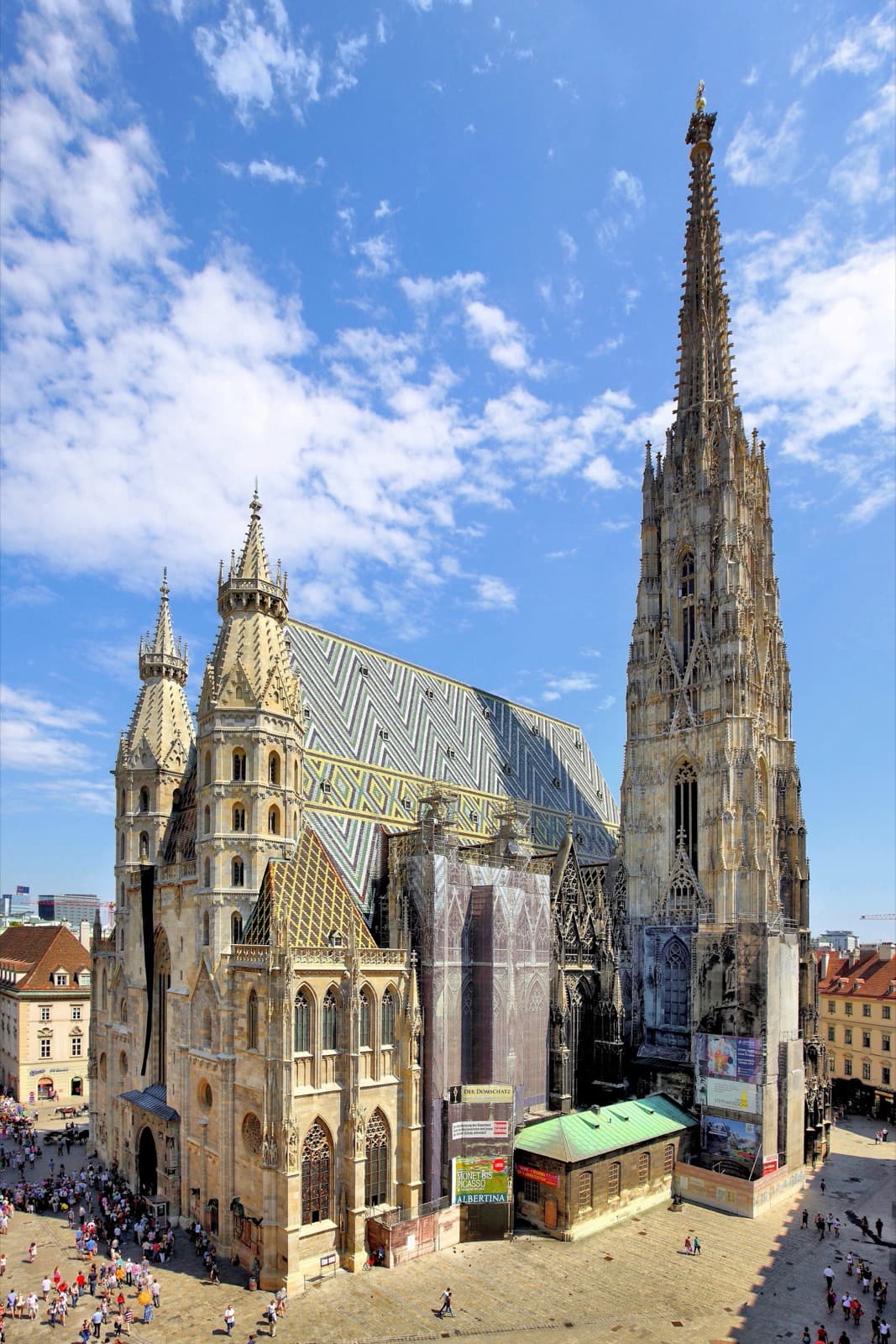
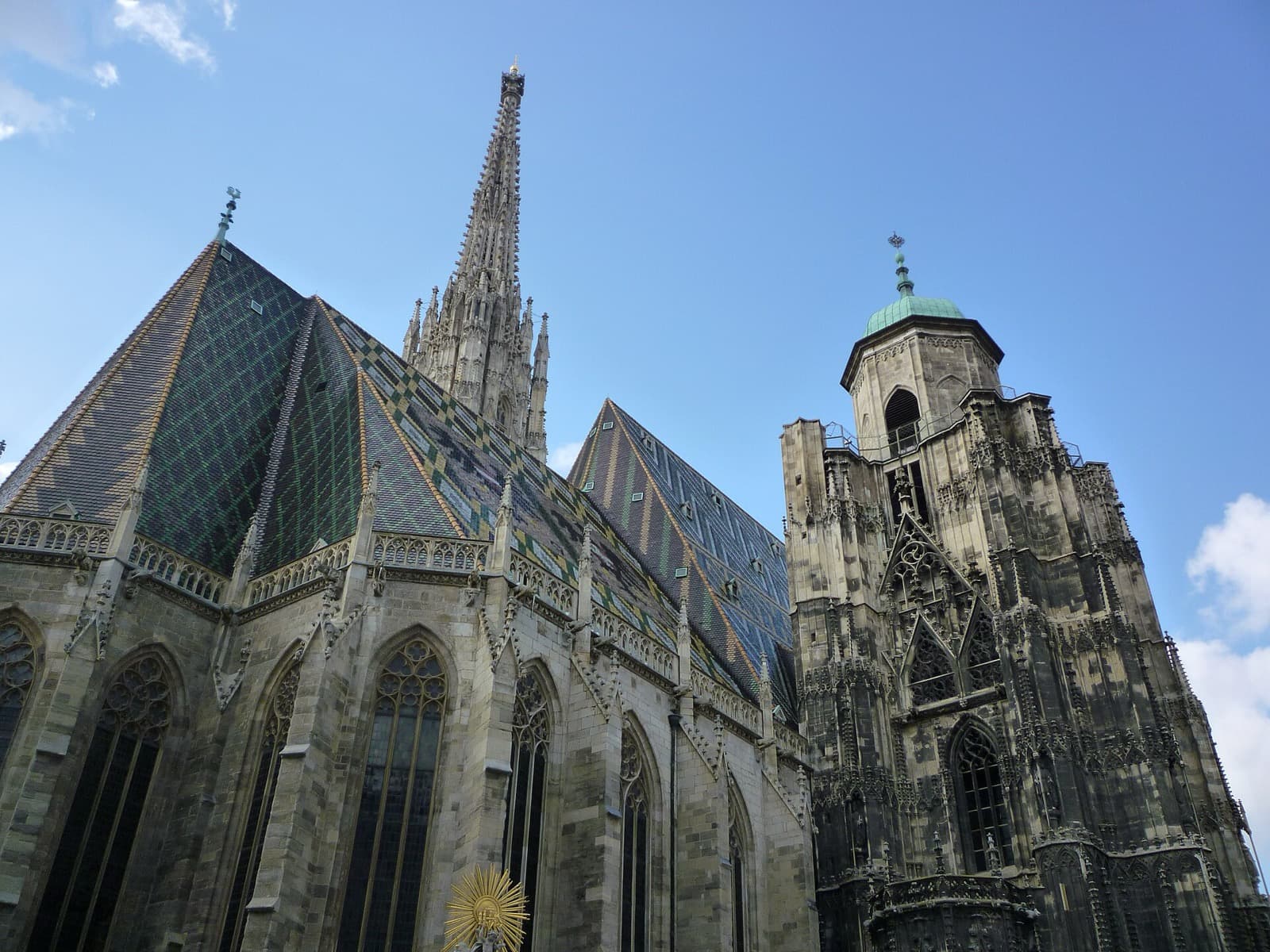
Saint Stephen's Cathedral: The Steffl Over the City
If the old town is a vertical archive, the Hofburg: The Palace the Empire Never Finished tour reads horizontally, courtyard by courtyard, as the Habsburg dynasty adding one wing per century. The palace is an autobiography, each ambition frozen at the moment its century ended.
The trick of the Hofburg is that its most ancient-looking face is one of its youngest. The grand curved Michaelertrakt with its green copper dome, the ceremonial front, was built only between eighteen eighty-nine and eighteen ninety-three, during the Ringstrasse era, to a design first drawn by Fischer von Erlach long before. Pass under it and the theatrics fall away: In der Burg and the red-and-gold Swiss Gate of the fifteen fifties open onto the Schweizerhof, the thirteenth-century core first begun under Ottokar the Second of Bohemia. The oldest ground hides behind the newest gate.
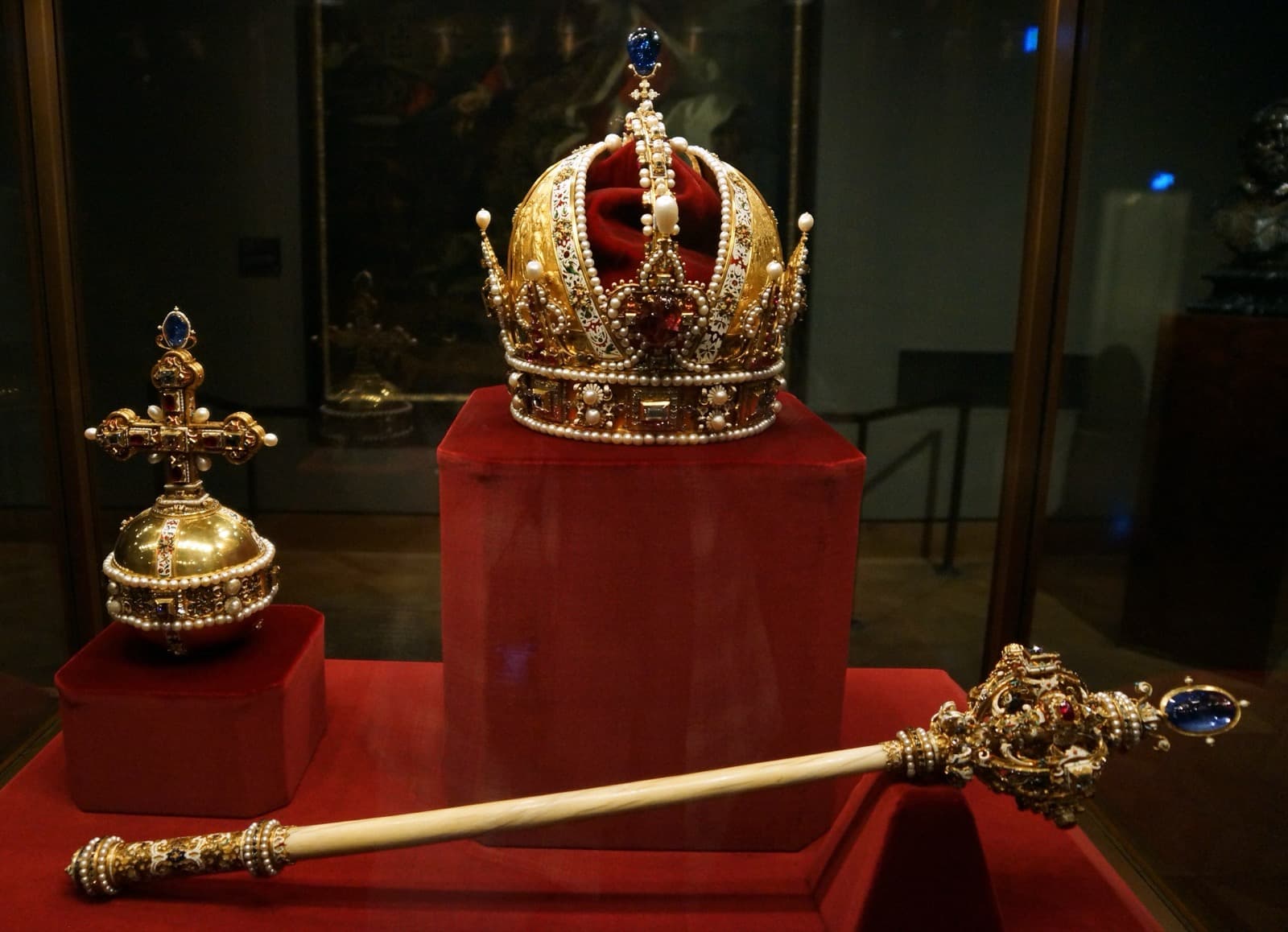
Each stop marks a different century's argument. The Imperial Treasury holds the crown of the Holy Roman Empire, traditionally dated to the coronation of Otto the First in nine hundred sixty-two, legitimacy made solid. The baroque Winter Riding School, built for Charles the Sixth between seventeen twenty-nine and seventeen thirty-five, turns even the movement of a horse into statecraft. The State Hall of the Austrian National Library, running about eighty metres beneath a frescoed dome by Daniel Gran, points imperial grandeur at the mind. And the Imperial Apartments bring the whole enormous palace down to a single plain desk where Franz Joseph, who reigned nearly sixty-eight years, worked long hours. The sentence stops mid-word at Heldenplatz, before the curved Neue Burg, built between eighteen eighty-one and nineteen thirteen as one half of an imperial forum that was never completed. When the monarchy fell in nineteen eighteen, the matching wing was abandoned. The empire's final ambition still stands as a single curved half against the sky, and from that same balcony, in nineteen thirty-eight, Hitler proclaimed the Anschluss, a history modern Austria confronts openly.
Reading around: the boulevard built on the walls
The third axis is the ring itself. The Ringstrasse: The Grand Boulevard Built on the Walls tour follows the avenue Franz Joseph decreed on the twentieth of December eighteen fifty-seven with four words meaning It is my will. Demolition of the medieval walls began in March of eighteen fifty-eight, and the first section opened on the first of May eighteen sixty-five. Along the new curve, a confident age raised monumental buildings, and here is the strange part: every one was brand new, yet each was dressed in the costume of an older era.
This was a deliberate grammar. The Austrian Parliament, completed in eighteen eighty-three, wears a strict Greek temple to evoke Athens as the cradle of democracy, its Pallas Athena Fountain making the case for reason. Across the Ring, the City Hall wears soaring neo-Gothic to recall the proud self-governing free cities of the Middle Ages, its iron Rathausmann perched atop a tower kept just below the ninety-nine-metre spires of the Votivkirche by imperial order. The University of Vienna, founded in thirteen sixty-five and the oldest in the German-speaking world, wears Italian Renaissance for the rebirth of learning. The Burgtheater wears rich neo-Baroque for spectacle. And the Vienna State Opera, the first great building finished on the Ring, opened in eighteen sixty-nine to public mockery, was gutted by American bombardment in nineteen forty-five, and reopened in nineteen fifty-five with Beethoven's Fidelio, an opera about liberation, as a symbol of Austria's recovery. Walk the Ring and you read a nineteenth-century city arguing, in stone, about what it wanted to be.
One city, three readings
The three axes meet. Michaelerplatz opens the Hofburg walk and also holds the Roman excavation from the old town. Heldenplatz closes the Hofburg and touches the Ringstrasse museums. The Ringstrasse era built the Hofburg's ceremonial front. That overlap is the point: Vienna is not a museum of separate periods but a single continuous document, written downward through Roman and medieval stone, across the imperial courtyards, and around the boulevard of the walls. To walk all three is to read the capital's autobiography from its oldest surviving layer to its final unfinished ambition. For the full set of routes, see Vienna walking tours.
Sources
- UNESCO World Heritage Centre, Historic Centre of Vienna (inscribed 2001).
- Wien Museum, Roman Museum at Hoher Markt (Vindobona legionary camp excavations).
- Kunsthistorisches Museum Wien, Imperial Treasury (Schatzkammer) and Habsburg regalia.
- Austrian National Library (Österreichische Nationalbibliothek), State Hall (Prunksaal) history.
- City of Vienna (Stadt Wien), Ringstrasse and Rathaus history including the Rathausmann.
Frequently asked questions
- Why is Vienna called a city stacked on a city?
- Vienna's old town sits on layers that were built over rather than erased. Beneath the Gothic cathedral and baroque promenades lie the walls of Vindobona, the Roman legionary camp planted near the Danube around the turn of the first century. At squares like Michaelerplatz and Hoher Markt, the Roman layer is kept permanently open to view beneath the modern pavement.
- What is Vindobona and where can you see it in Vienna?
- Vindobona was the Roman legionary camp on the site of modern Vienna, established around the turn of the first century as part of the province of Pannonia. You can see excavated Roman remains at the Roman Museum beneath Hoher Markt, which displays officers' houses fitted with floor heating, and at an open excavation in the pavement of Michaelerplatz showing the civilian suburb.
- Why was the Ringstrasse built and when?
- The Emperor Franz Joseph ordered the medieval city walls demolished and a grand boulevard raised in their place, signing the decree on the twentieth of December eighteen fifty-seven. Demolition began in March eighteen fifty-eight, and the first section of the Ringstrasse opened on the first of May eighteen sixty-five. Each major building along it was dressed in a historical style thought to fit its purpose.
- Why does the Hofburg palace look unfinished?
- The Hofburg grew one wing per generation across six centuries of Habsburg rule. Its final expansion, the curved Neue Burg on Heldenplatz built between eighteen eighty-one and nineteen thirteen, was designed as one half of a planned imperial forum. Work stopped in nineteen thirteen and the second half was never built after the monarchy fell in nineteen eighteen, leaving the palace ending mid-gesture.
- What are the three main walking axes of central Vienna?
- Central Vienna can be read in three directions: downward through the Innere Stadt old town to the Roman fort of Vindobona, across the imperial courtyards of the Hofburg palace, and around the Ringstrasse boulevard that replaced the medieval walls. The axes overlap at Michaelerplatz and Heldenplatz, so the three routes together read as one continuous history.
Ready to experience it?
Old Town: The Roman Fort Beneath the Imperial City
100 min · 1.9 km · easy
More from Vienna
Explore more at your own pace.
One Day in Vienna: A Walkable Morning-to-Evening Itinerary
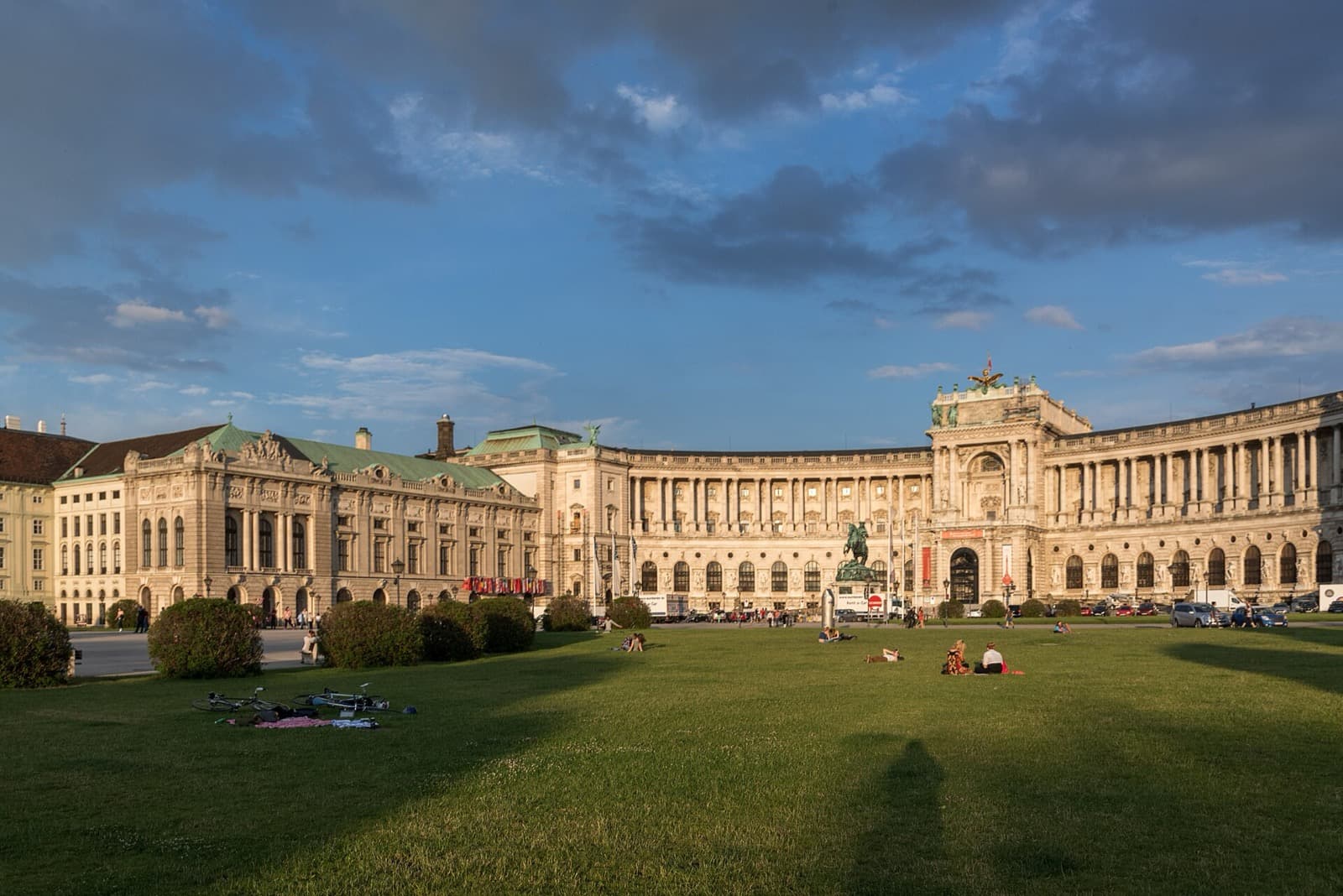
Heldenplatz and the Neue Burg: Why Vienna's Grandest Palace Wing Was Never Finished
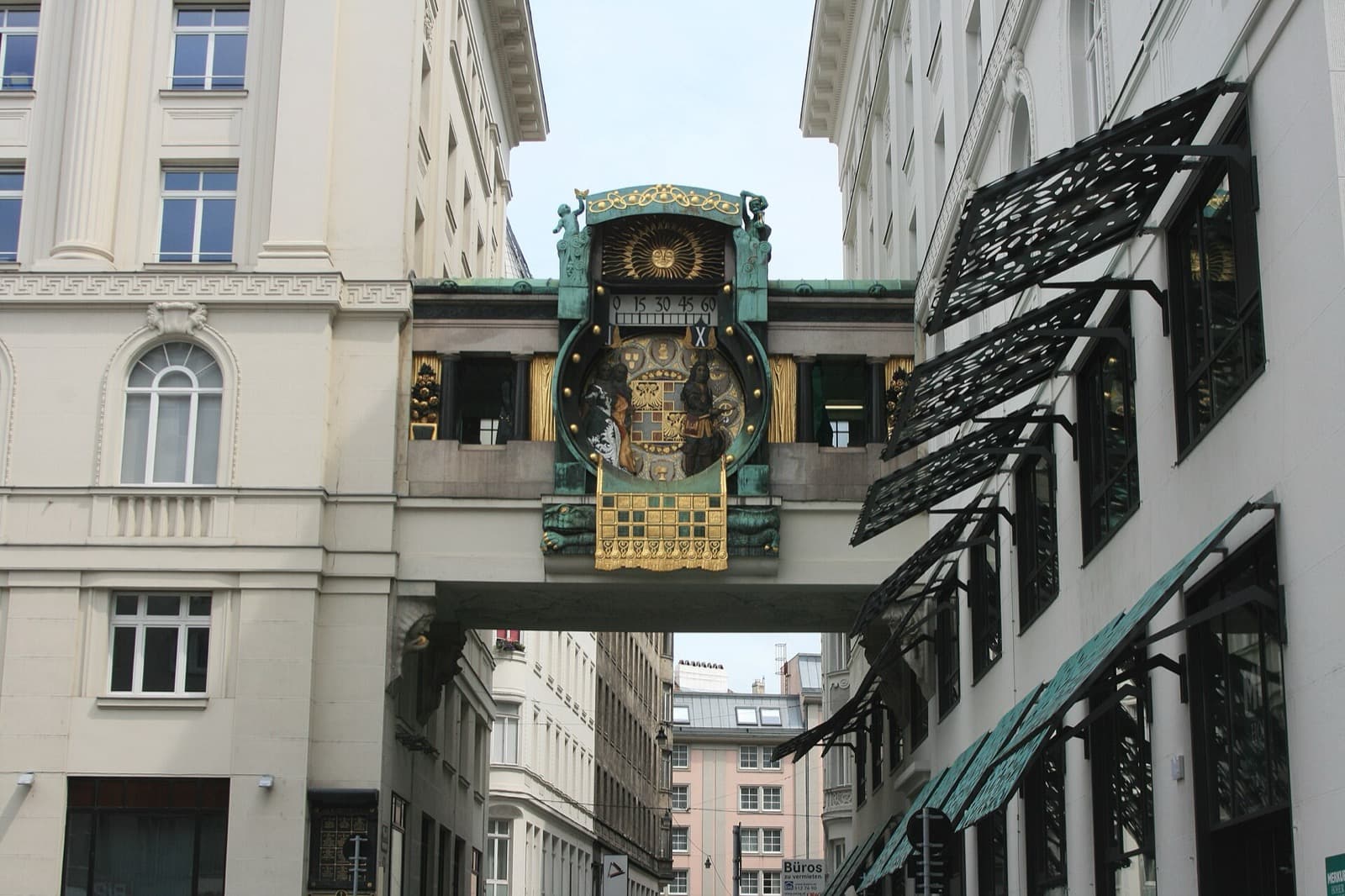
Hoher Markt and the Anker Clock: Where Roman Vienna Surfaces
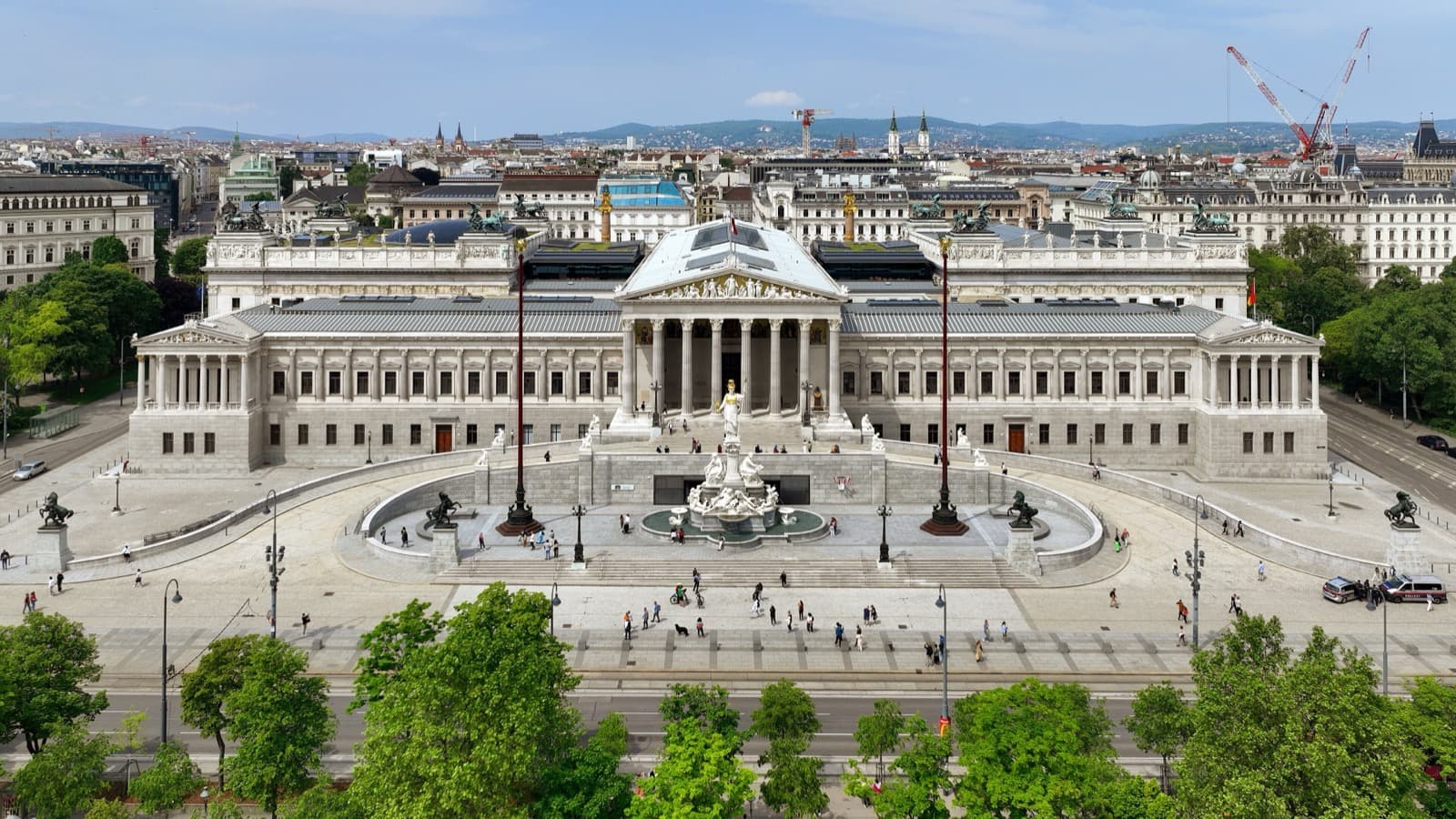
The Austrian Parliament: Why Vienna Built Its Legislature as a Greek Temple
St. Stephen's Cathedral: Reading Vienna's Steffl From Roof to Catacombs