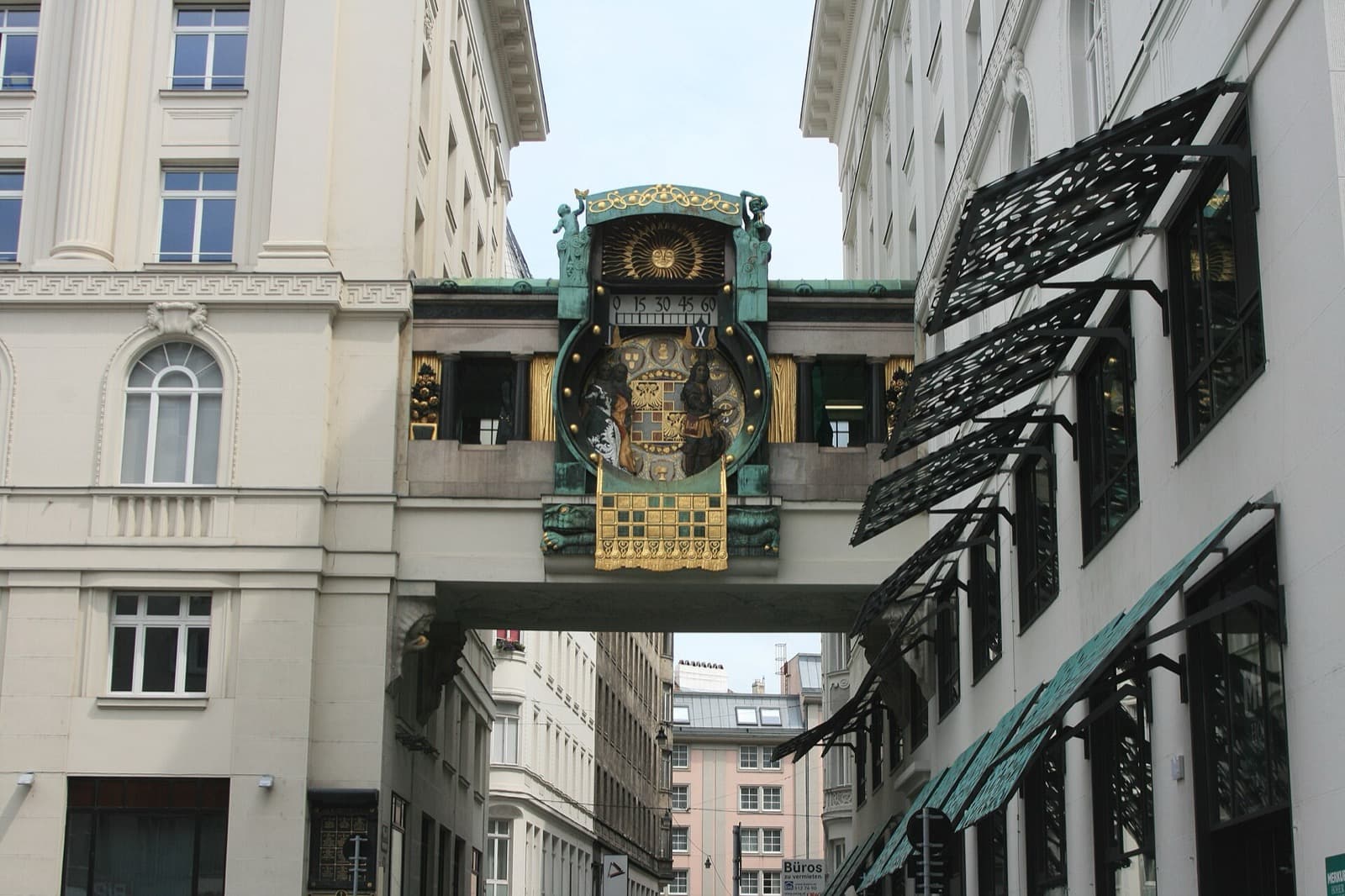
Hoher Markt, the oldest square in Vienna, sits directly over the heart of the Roman legionary camp of Vindobona, and the Anker Clock spanning the square turns that buried history into a procession you can watch cross overhead at noon. This one square is where a walk through Vienna's old town stops hinting at its Roman foundation and lets it surface. Below the pavement, excavated officers' quarters survive with their floor heating intact. Above the pavement, twelve historical figures ride an Art Nouveau clock across a bridge between two buildings. Between them stands you, on a market square that has gathered people since the first century. If you want a single place to understand what the whole tour is arguing, this is it.
A camp that never left
The Roman camp of Vindobona was established near the turn of the first century, part of the province of Pannonia. Legions do not build lightly. They laid out a fortified rectangle with a disciplined grid of streets, and that grid did not vanish when Rome withdrew. It hardened into the shape of the medieval town and then the imperial one. The lanes of the Innere Stadt still bend where Roman walls once ran. Hoher Markt sits at the core of that plan, which is why it can claim to be the oldest square in the city: public gathering has continued on this spot, in one form or another, since the soldiers were here.
Most of that story stays underground in Vienna. You feel it rather than see it. Hoher Markt is the exception, because you can go down and look. Beneath the square, in the Roman Museum run by the Wien Museum, excavated remains include the houses of officers, tribunes' quarters fitted with the hypocaust floor heating that marked comfortable Roman living. Two thousand years of continuous occupation stand under a working market square. The city above did not replace the camp. It grew out of it, kept its lines, and paved over its stones without ever quite erasing them.
The clock that marches the centuries
Hear a stop from this walk
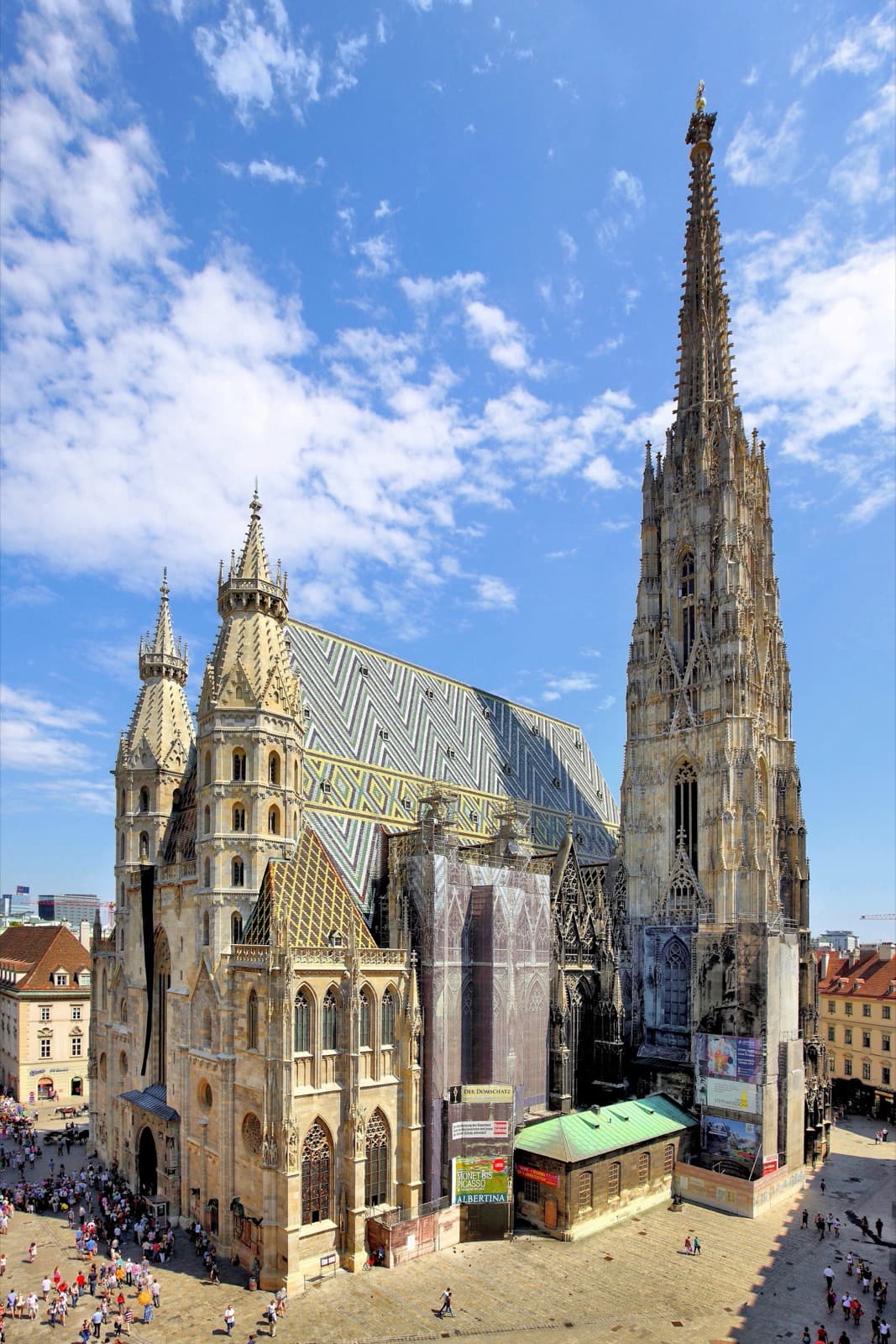
Saint Stephen's Cathedral: The Steffl Over the City
The Anker Clock, or Ankeruhr, spans a bridge between two buildings of an old insurance company, the Anker firm that gave it its name. The painter and sculptor Franz von Matsch designed it, and it was built from 1911 to 1914. It is a figural clock in the Jugendstil, the Viennese strand of Art Nouveau, which means it does not merely tell the hour with hands. Over the course of twelve hours, twelve historical figures or pairs move across its face, one for each hour, drawn from the people who shaped this city and this empire.
The cast reads like a summary of everything you have been walking through. The Roman emperor Marcus Aurelius crosses the clock. So does Charlemagne. So does the Empress Maria Theresa. The clock, in other words, tells the same downward story the pavement does, from Roman authority through medieval kingship to Habsburg rule, only it tells it in bright enamel above your head instead of in excavated stone below your feet.
At noon the clock does its full performance. All twelve figures parade in turn, each accompanied by music of its own period, a small orchestrated march of remembered rulers walking one after another across the bridge. On the hours before noon you see a single figure at a time, which is quietly satisfying but not the main event. If you can arrange your walk to reach Hoher Markt shortly before midday, do it. The parade is the moment the tour's argument becomes something you can hear.
Why this stop carries the whole tour
The Vienna old town walk reads the city from the top down, from the Gothic cathedral and the baroque promenades to the Roman layer underneath, and Hoher Markt is where that reading pays off. Every earlier stop hints at depth. The Graben is named for a ditch, the outer defensive channel of the Roman fort, filled in by the Babenberg dukes in the twelfth century and turned into the most fashionable walk in the city. Michaelerplatz keeps a Roman excavation open in the middle of the square, framed by railings, so the civilian suburb of Vindobona lies exposed a few steps from the Imperial Palace gate. Am Hof stands on the medieval ducal court, within the wider zone of the Roman settlement. Judenplatz holds the excavated foundations of a medieval synagogue beneath Rachel Whiteread's inward-turned library of the murdered.
Hoher Markt gathers all of that into one clear stack. The Roman camp underfoot. The medieval and Habsburg market square around you. The twentieth-century clock overhead marching the centuries past in order. The imperial city is standing, and has always been standing, on the Roman fort. Everywhere else on the route you take that on a mix of evidence and inference. Here you can walk down a stairway and put your hand near a wall that a Roman officer once heated.
Walking it yourself
The full route runs about two kilometres over eight stops, roughly two to three hours at an unhurried pace, and it is designed to be paused, shortened, or reordered as you like. The square and the clock cost nothing to see. The Roman Museum below needs a ticket, and it is the one paid stop worth planning around here, because it is where the tour's thesis becomes literally visible. Several stops on the walk are working churches and one, Judenplatz, is a place of memory, so quiet and modest dress belong to the visit. The old town is a tight cluster of lanes, easy to cross on foot and forgiving if you wander off the line.
If you are planning the day, the audio tour narrates each layer as you reach it and marks where documented history ends and tradition begins, so you always know which is which. Start comparing routes with the full set of Vienna walking tours, or read more about the city and its neighborhoods at Vienna. Then aim your own morning to reach Hoher Markt just before noon, stand between the buried camp and the marching clock, and watch two thousand years cross the sky in about ten minutes.
Sources
- Anker Clock, vienna.info (official Vienna tourist board): confirms the Ankeruhr's Art Nouveau design by the painter and sculptor Franz von Matsch, its 1911 to 1914 construction, its bridge between the two parts of the Anker Insurance building, and the daily noon parade of twelve figures or pairs, each to music of its era.
- Hoher Markt, vienna.info: documents the square as one of the oldest and most historic in Vienna and its position at the site of the Roman settlement, with the Roman Museum beneath.
- Roman Museum at Hoher Markt, a branch of the Wien Museum: presents the excavated Roman officers' compound (tribunes' houses) and hypocaust heating from Vindobona.
- Vindobona, Wikipedia and the City of Vienna history pages: place the legionary fortress in the province of Pannonia, built around the turn of the first century, with Marcus Aurelius later headquartered there.
- Historic Centre of Vienna, UNESCO World Heritage listing: traces the Innere Stadt's origins to the Roman camp of Vindobona and the medieval city.
Ready to experience it?
Old Town: The Roman Fort Beneath the Imperial City
100 min · 1.9 km · easy
More from Vienna
Explore more at your own pace.
One Day in Vienna: A Walkable Morning-to-Evening Itinerary
Vienna, a City Stacked on a City: Reading the Capital in Three Directions
Heldenplatz and the Neue Burg: Why Vienna's Grandest Palace Wing Was Never Finished
The Austrian Parliament: Why Vienna Built Its Legislature as a Greek Temple
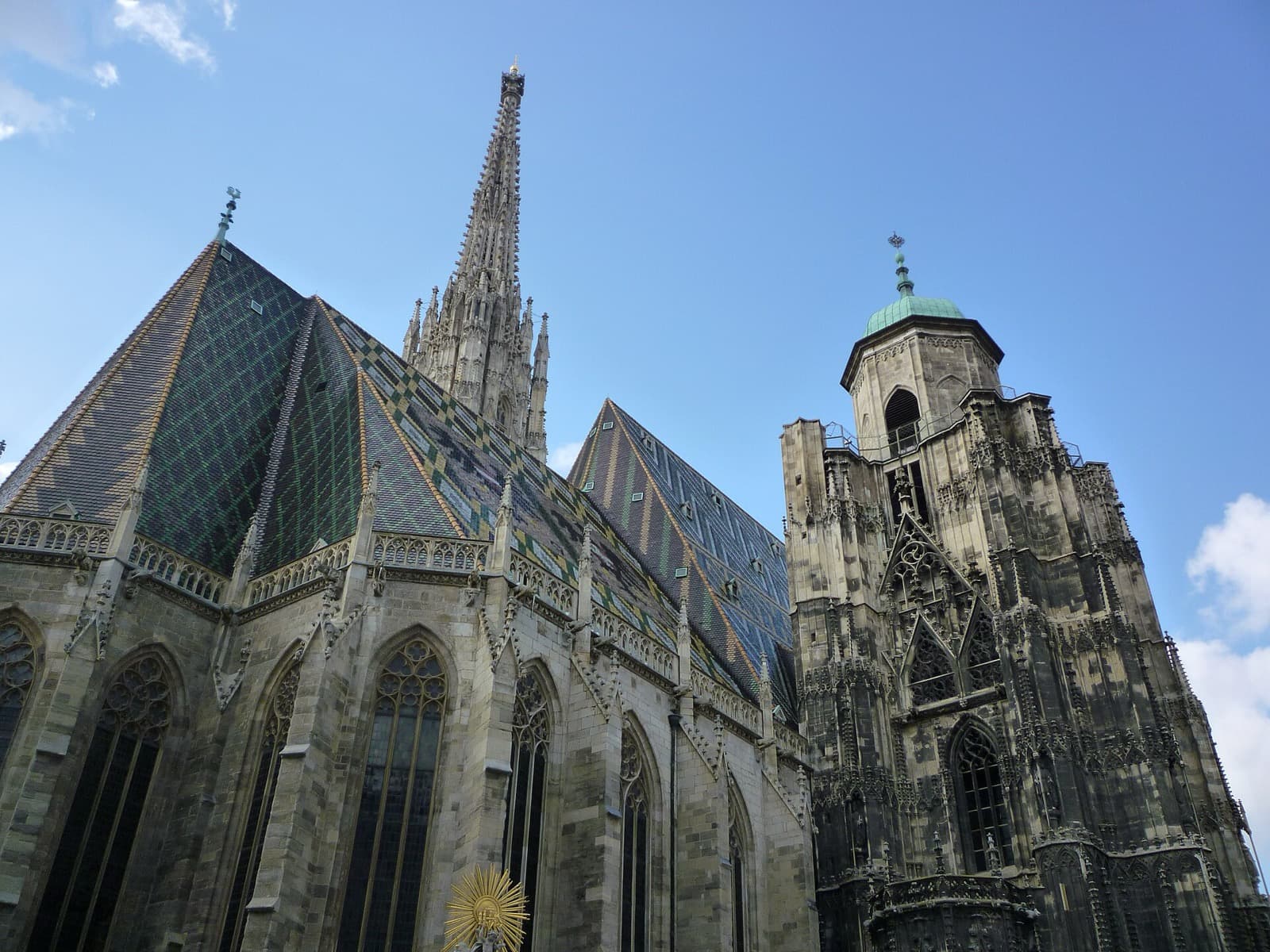
St. Stephen's Cathedral: Reading Vienna's Steffl From Roof to Catacombs