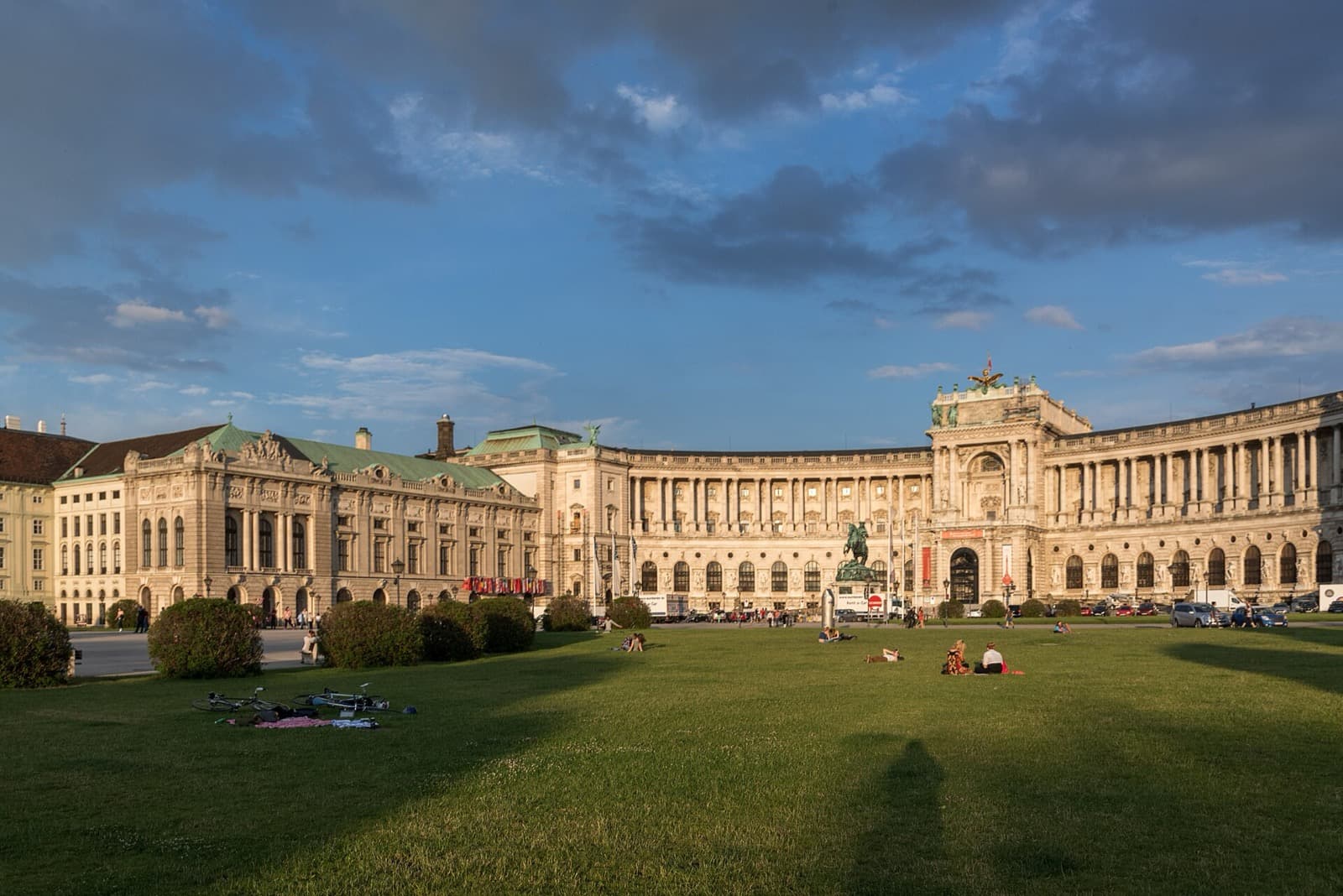
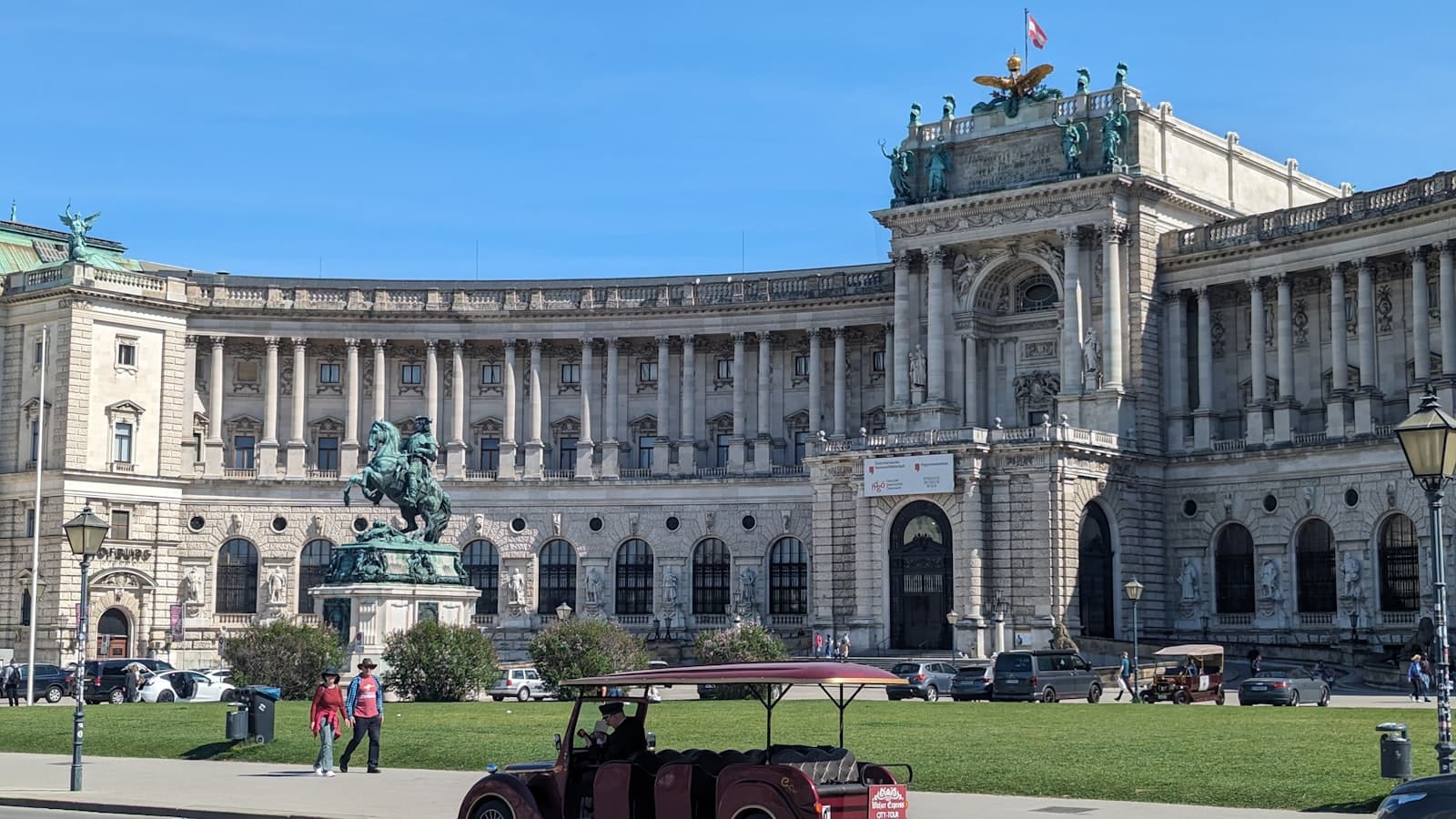
The Neue Burg curves across Heldenplatz in Vienna as a single unfinished arc, the last and grandest wing the Habsburgs ever added to their palace and one they never completed. Built between 1881 and 1913, it was designed to be only one half of a vast imperial forum, a Kaiserforum meant to mirror itself across the Ringstrasse to the two great court museums and frame a ceremonial space worthy of a thousand-year dynasty. Work stopped in 1913. When the monarchy fell in 1918, the second half was never built. If you want to understand the entire Hofburg, the six centuries of ambition packed into its courtyards, start here at the wing that stops mid-word. The whole palace reads as an autobiography the empire never got to finish, and Heldenplatz is where the sentence breaks off.
A forum that was approved but abandoned
The scale of the intention is worth measuring against the modesty of the result. Emperor Franz Joseph the First approved a master plan in 1870 by the architect Gottfried Semper, developed with Karl von Hasenauer, and construction of the Kaiserforum began in 1871. Hasenauer started the palace wing now called the Neue Burg in 1881 but died in 1894, long before it was done. The exterior of the completed wing was finished around 1908, and in 1913 the emperor ordered the remaining planned wings abandoned. So the great curved facade you see today is genuinely only a fragment. Semper and Hasenauer imagined a symmetrical embrace of buildings reaching from the palace across the boulevard. What stands is one arm of that embrace, reaching toward a partner that was never raised.
This is the reason the stop matters more than its beauty alone. The Neue Burg is not a ruin and not a failure of engineering. It is a deliberate ambition halted by history, and its incompleteness is legible in the stone. The empire's crowning gesture survives as half of a symmetry that never arrived.
Reading the whole palace backward from here
Hear a stop from this walk
Heldenplatz and the Neue Burg: The Unfinished Palace and the Empire's End
The Hofburg does not tell its story in order. Its most ancient looking face, the curved neo-baroque Michaelertrakt with its green copper dome, is actually one of the youngest parts of the palace, built between 1889 and 1893 during the Ringstrasse remaking of Vienna. Pass through that ceremonial gate and the theatrics fall away into In der Burg, the plainer inner court, and then the red and gold Swiss Gate of the 1550s, which opens onto the Schweizerhof, the oldest ground of all, sitting on the site of a thirteenth-century castle first begun under Ottokar the Second of Bohemia.
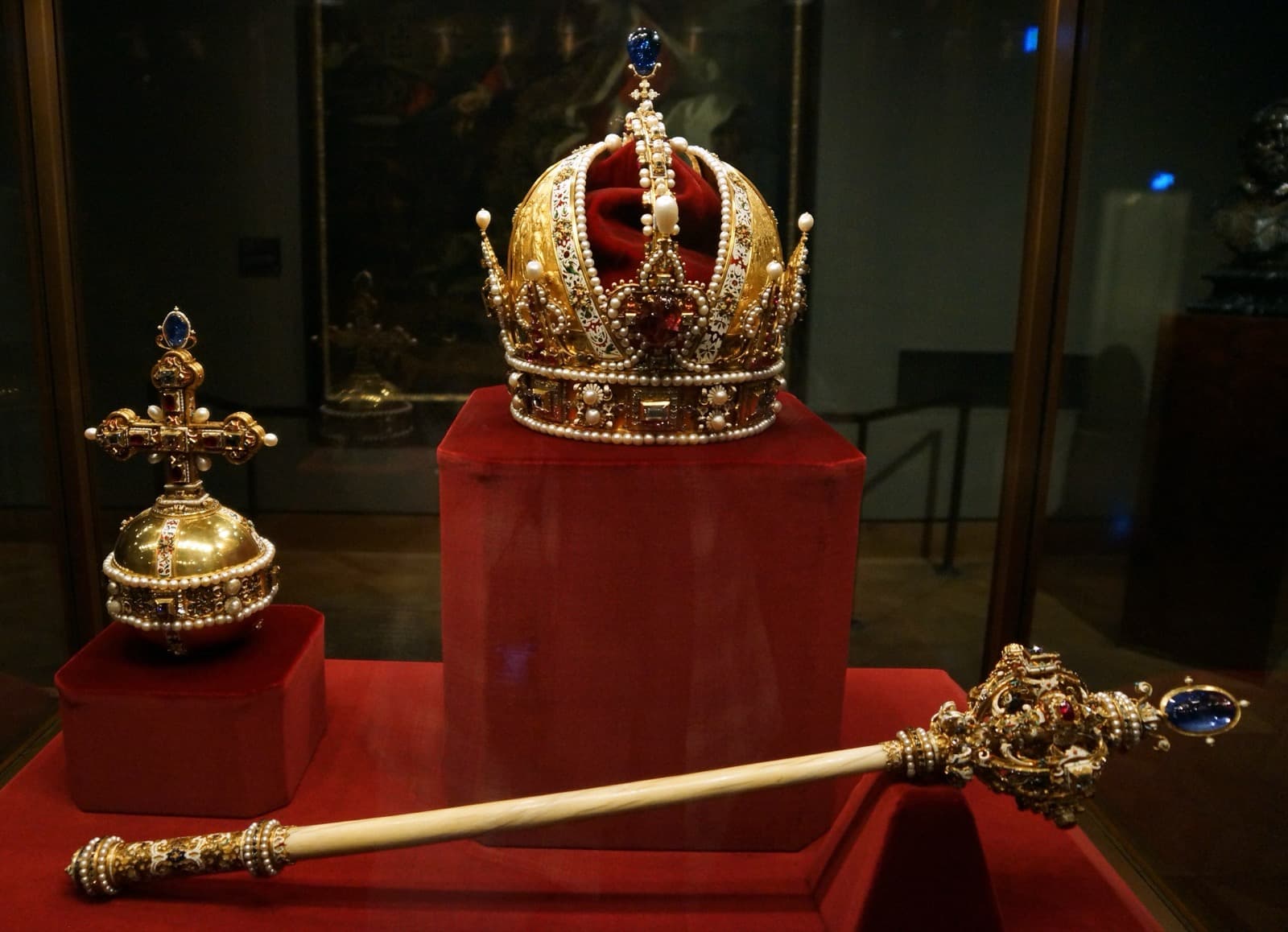
Between that medieval core and the unfinished wing at Heldenplatz, every Habsburg century left its argument in a different form. The Imperial Treasury holds the symbols of legitimacy, including the Imperial Crown of the Holy Roman Empire, traditionally dated to the coronation of Otto the First in 962. The Imperial Chapel, the Burgkapelle, shelters a living tradition: the court music chapel founded under Emperor Maximilian the First in 1498, from which the Vienna Boys' Choir descends, still sings Sunday High Mass there today. The Spanish Riding School, whose baroque Winter Riding School hall was built between 1729 and 1735 for Emperor Charles the Sixth, turned even the movement of a horse into statecraft. The Imperial Apartments shrink the whole palace down to the plain desk where Emperor Franz Joseph worked across a reign of nearly sixty-eight years, and to the restless life of his wife, Empress Elisabeth, known as Sisi, assassinated in Geneva in 1898. The State Hall of the Austrian National Library, the Prunksaal, points that same imperial ambition at the mind, a frescoed baroque hall roughly eighty metres long under a painted dome.
Each of those stops is a completed thought. Heldenplatz is the one that was left open. Walking the route in sequence, you feel the palace build toward a climax, and then you arrive at the wing where the building simply stopped. That is why the anchor is the ending. It reframes everything behind it.
The square that carries its own weight
Heldenplatz means Heroes' Square, and it earns the name honestly through two equestrian monuments by the sculptor Anton Dominik Fernkorn: Archduke Charles, inaugurated in 1860, and Prince Eugene of Savoy, inaugurated in 1865. But the square also holds one of the darkest moments in Austrian history, and it deserves to be stated plainly rather than rushed past. On the fifteenth of March, 1938, Adolf Hitler proclaimed the Anschluss, the annexation of Austria into Nazi Germany, from the balcony of the Neue Burg to a vast crowd gathered on this square. Modern Austria confronts the Anschluss and the Nazi era openly, as part of its own history rather than something imposed from outside. Standing on Heldenplatz, you are standing in a place of serious memory, not only architectural spectacle. Reading the plaques and letting that history settle is part of walking the stop well.
There is a strange completeness to an incomplete building carrying this weight. The Neue Burg was meant to be the empire's final flourish, a forum announcing permanence. Instead it became the backdrop to the empire's collapse in 1918 and, two decades later, to the moment Austria lost its independence. The unbuilt half is no longer only an architectural regret. It is an emblem of an abrupt close.
Why walk it yourself
You can read all of this here, but the point of the Hofburg is that it is one connected complex you move through on foot, courtyard opening into courtyard, each century adjacent to the next. The route runs about one and a quarter kilometres across roughly eight stops, and most of it, the gates, the courtyards, and Heldenplatz itself, is free public space. The self-guided audio walk lets you set your own pace, pausing at the Swiss Gate or the riding school and skipping the ticketed interiors you do not want, then arriving at Heldenplatz with the whole sentence of the palace already in your head. If you are planning a visit, browse the full set of Vienna walking tours and the wider Vienna city guide to see how the Hofburg fits the imperial city around it. Come to the square knowing what you are looking at, and the single curved half against the sky stops being just a grand facade. It becomes the last line of a story the empire never got to finish.
Sources
- Hofburg, Wikipedia. Overview of the palace complex, its medieval Schweizerhof core, and its successive imperial additions.
- Heldenplatz, Wikipedia. The square's equestrian monuments by Anton Dominik Fernkorn, the Neue Burg construction timeline, and the 1938 Anschluss proclamation.
- Kaiserforum (Wien), German Wikipedia. The Semper and Hasenauer master plan approved in 1870, begun 1871, Hasenauer's death in 1894, the exterior completed in 1908, and the remaining wings abandoned in 1913.
- Imperial Treasury, Vienna, Wikipedia. The regalia of the Holy Roman Empire and the Habsburgs, including the Imperial Crown dated to Otto the First.
- Sisi Museum and Hofburg official site. History of the palace, the Imperial Apartments, and Empress Elisabeth.
Ready to experience it?
The Hofburg: The Palace the Empire Never Finished
100 min · 1.3 km · easy
More from Vienna
Explore more at your own pace.
One Day in Vienna: A Walkable Morning-to-Evening Itinerary
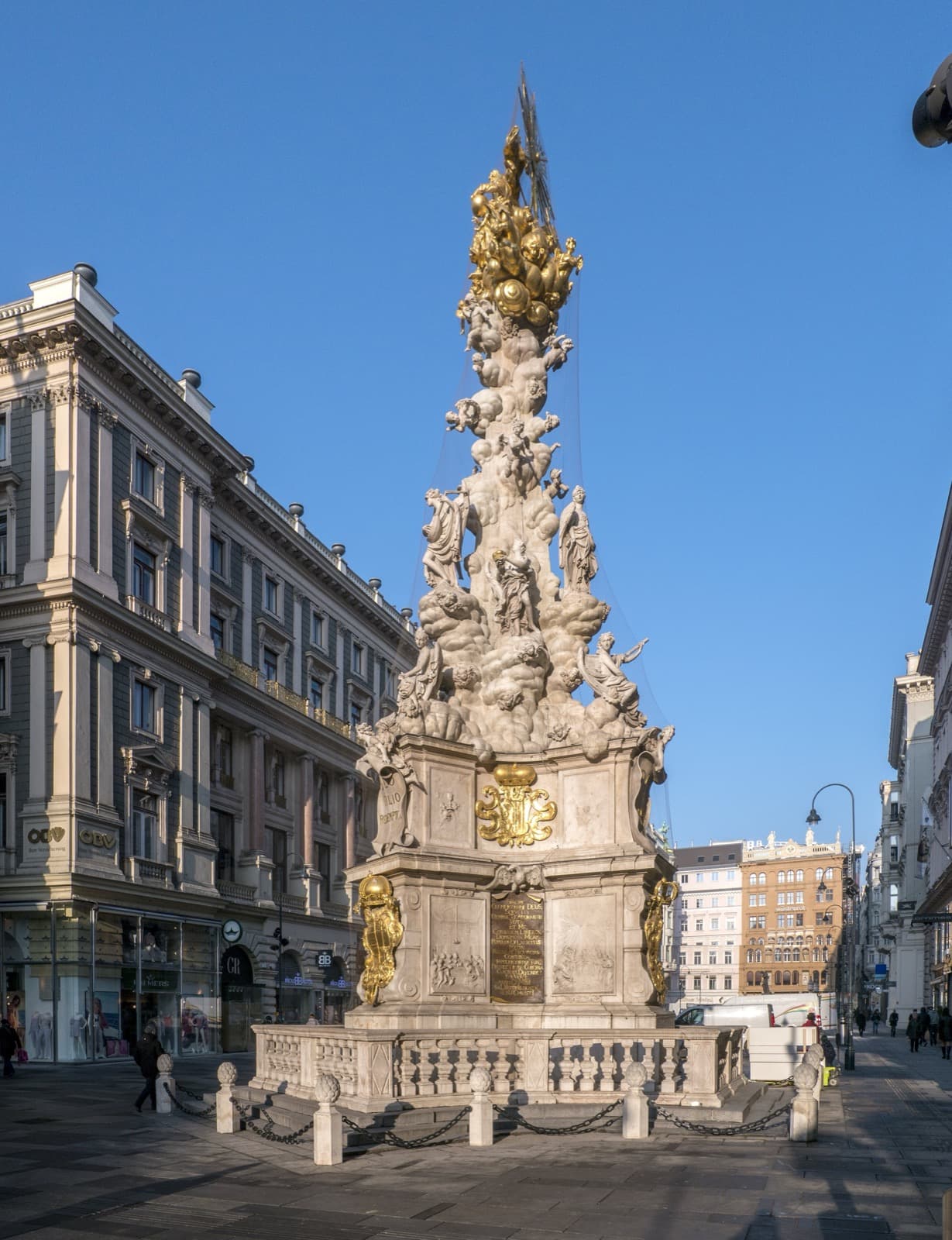
Vienna, a City Stacked on a City: Reading the Capital in Three Directions
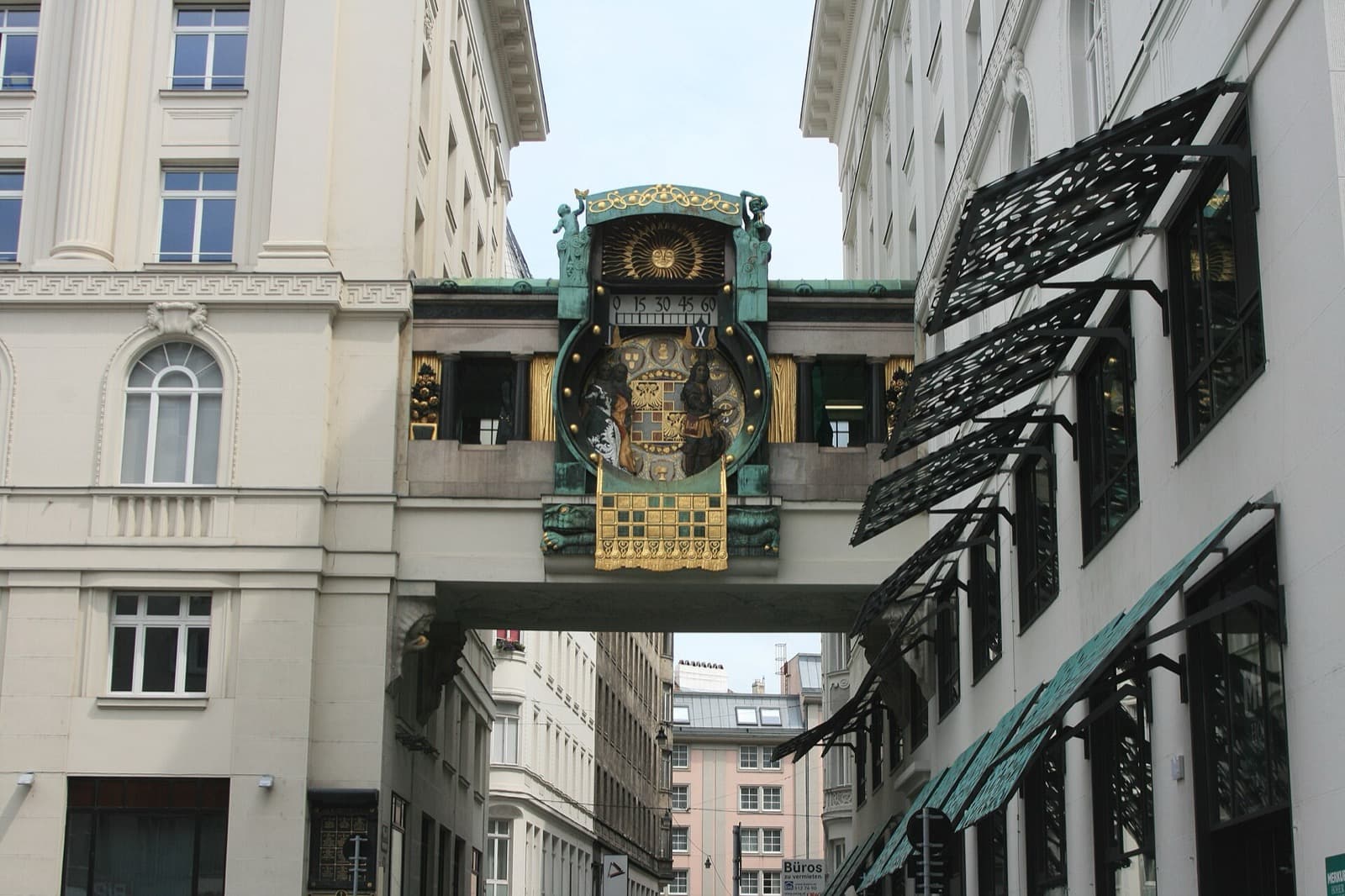
Hoher Markt and the Anker Clock: Where Roman Vienna Surfaces
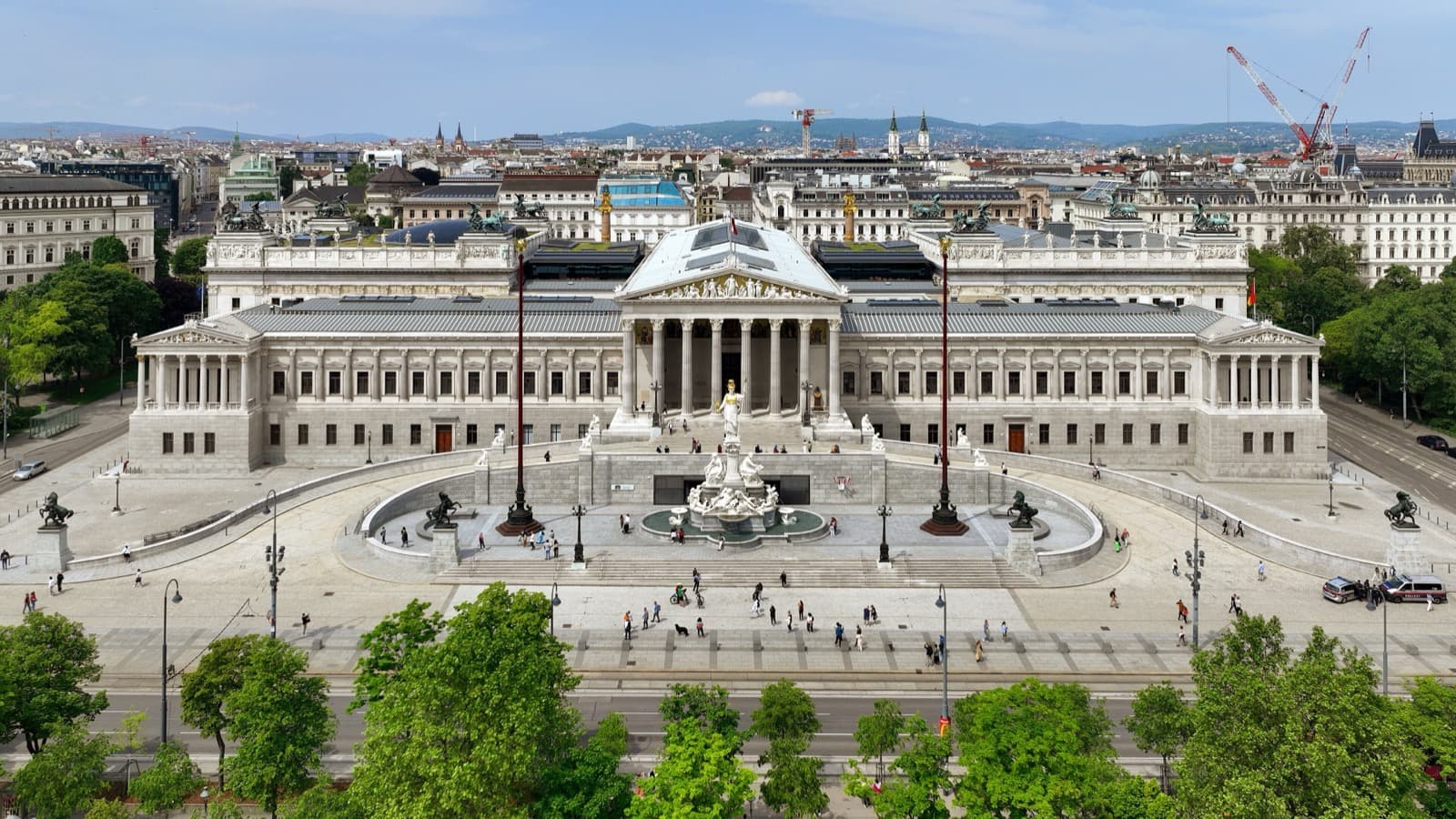
The Austrian Parliament: Why Vienna Built Its Legislature as a Greek Temple
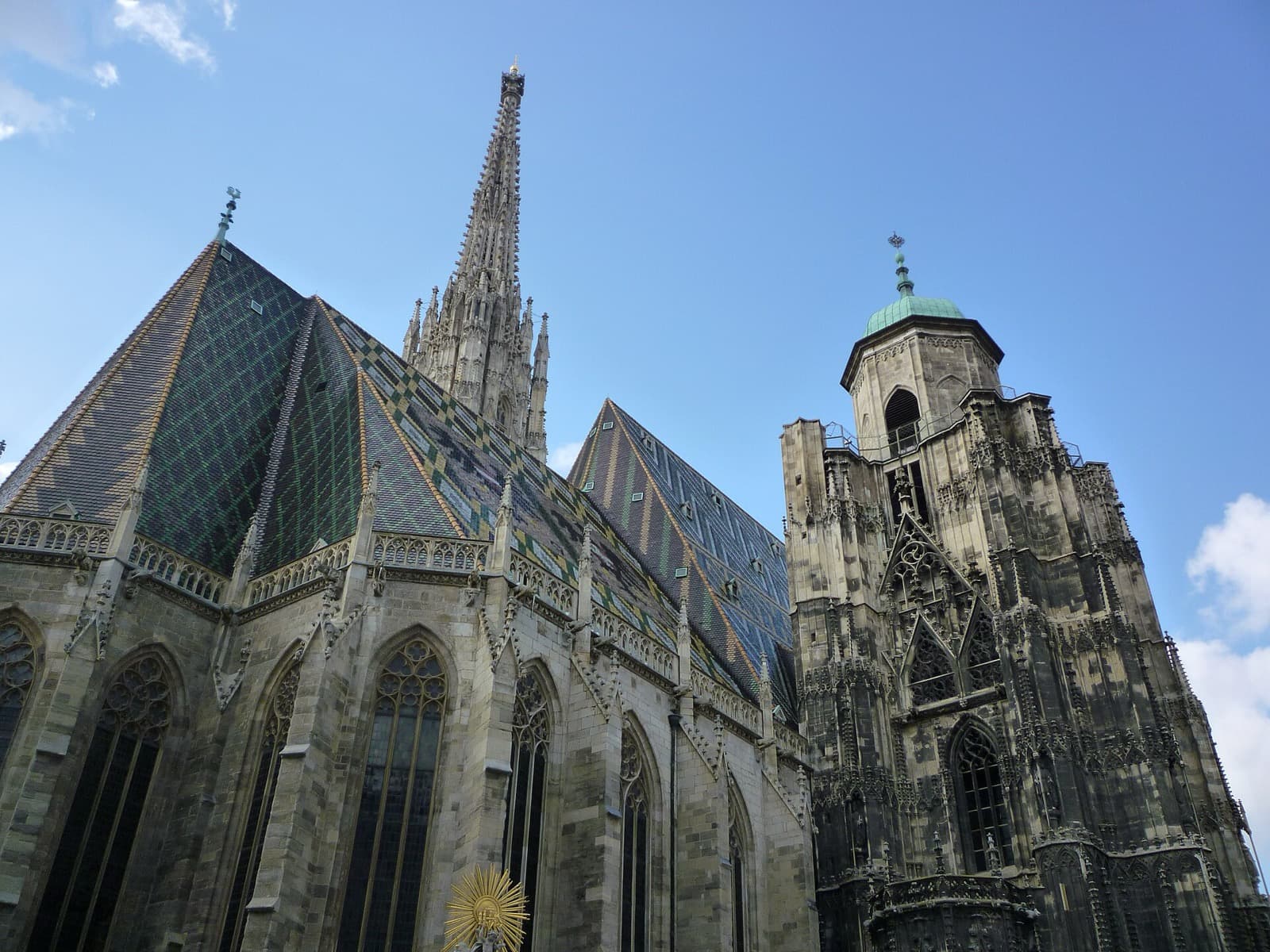
St. Stephen's Cathedral: Reading Vienna's Steffl From Roof to Catacombs