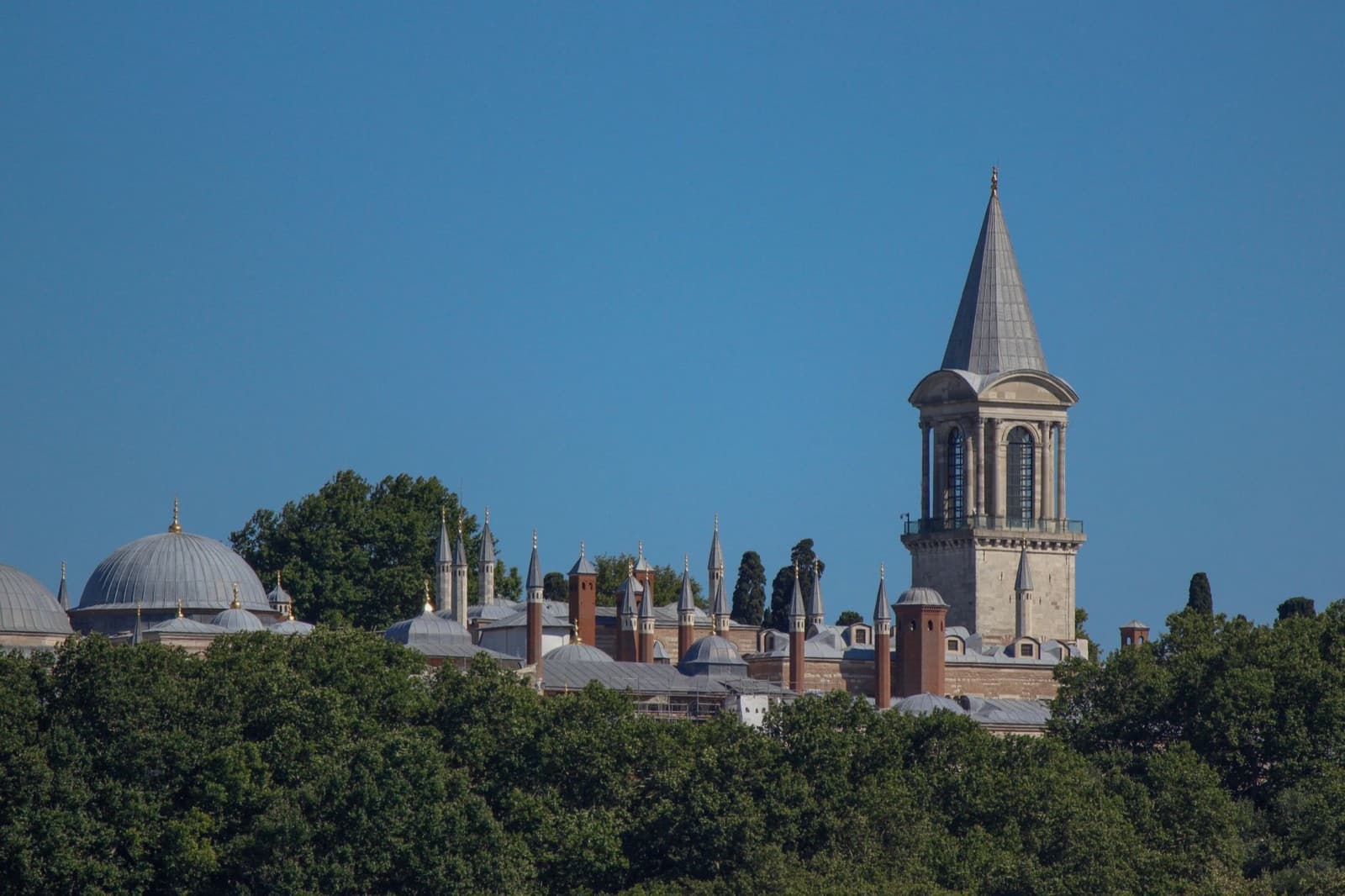
Plan about two and a half hours for Topkapi Palace with the Harem, or an hour for the highlights. Walk it in order: the free First Court, the Second Court with the Council Hall and Sinan's kitchens, the Harem from its gate beside the Tower of Justice, the Third Court with the Treasury and the Sacred Relics, and the Fourth Court's kiosks above the water. The combined ticket covers the palace, the Harem and Hagia Irene.
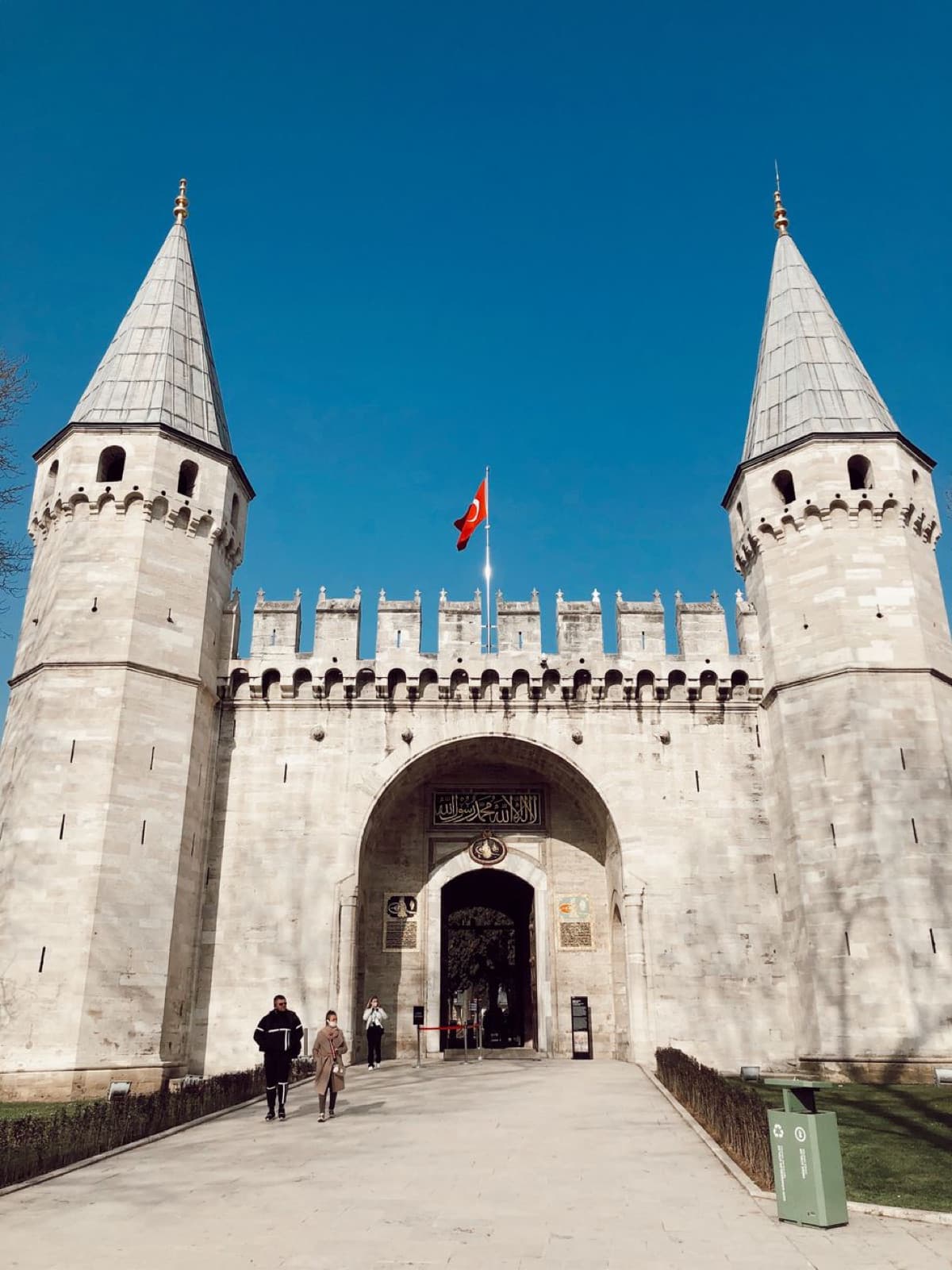
Topkapi Palace is less a building than a sequence of courts, each behind its own gate, and each court further in was open to fewer people. If you are asking what to see, the short answer is the Council Hall in the Second Court, the Harem beside it, the Treasury and the Sacred Relics in the Third Court, and the Baghdad Kiosk on the marble terrace of the Fourth. If you are asking how long it takes, the Roamer guide plans about two and a half hours with the Harem, and its five routes run from 50 minutes to three hours.
A palace on the old acropolis
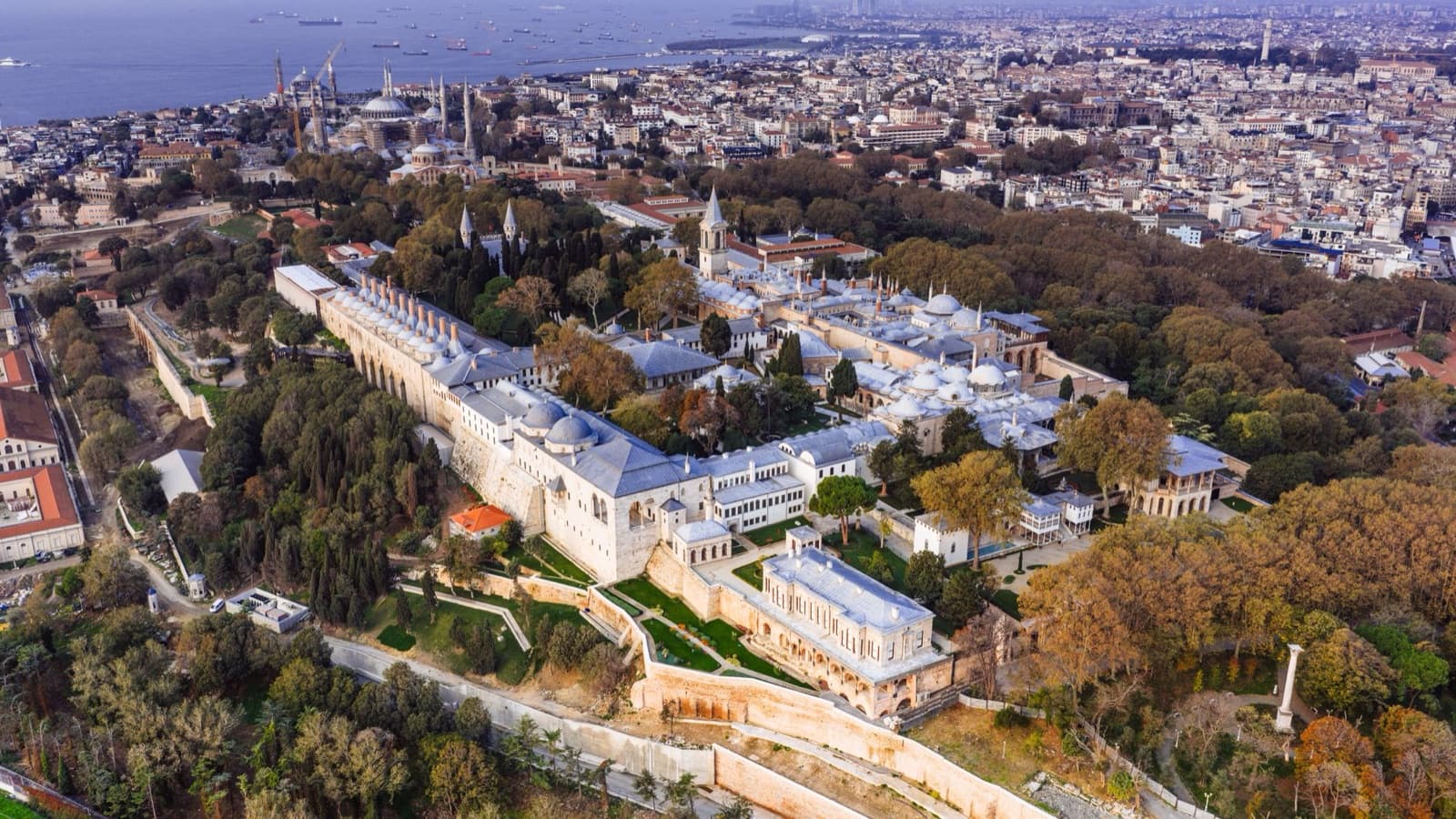
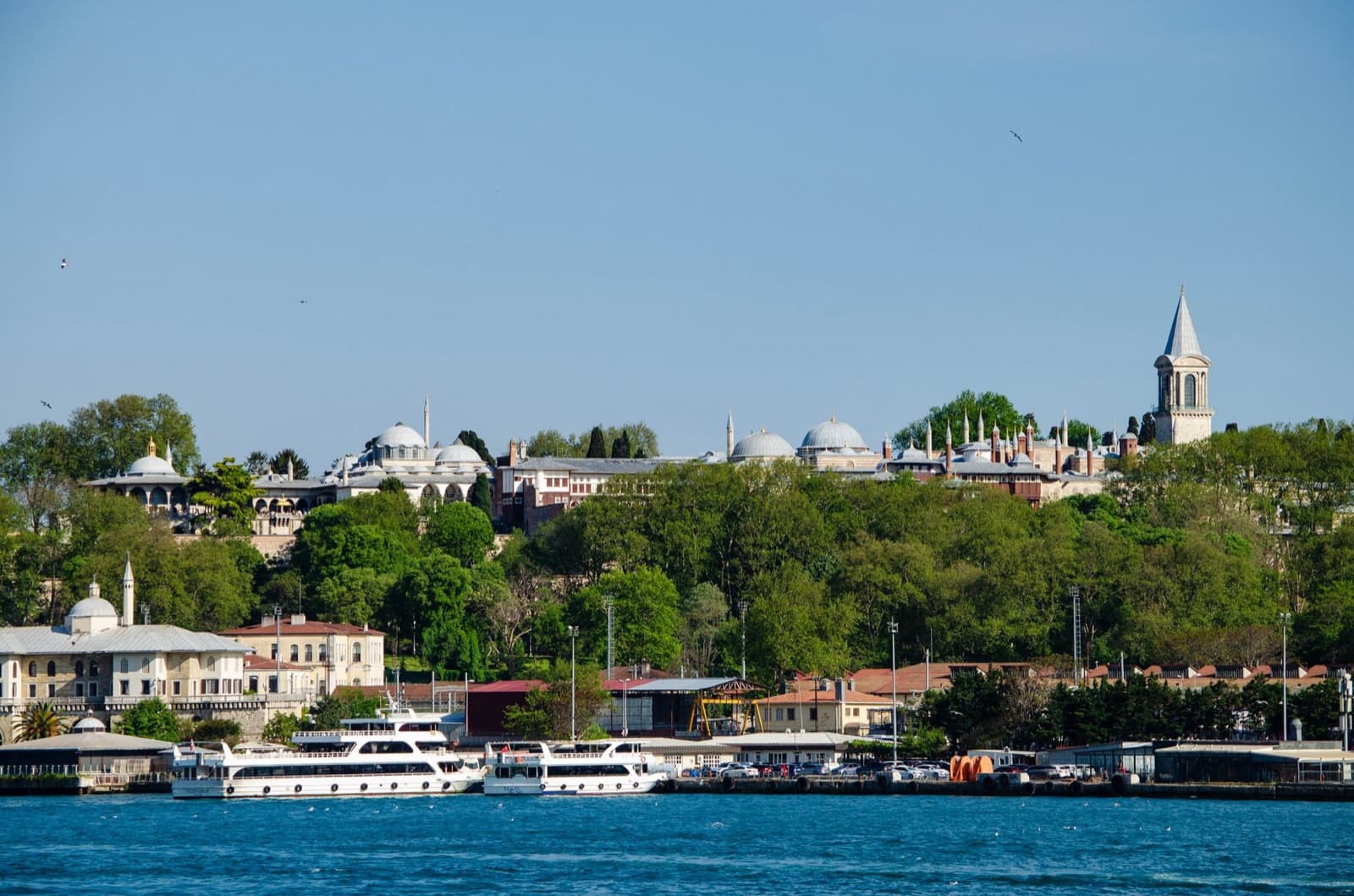
Mehmed the Second began the palace after he took Constantinople in 1453, on the hill of the acropolis of ancient Byzantium, with the Sea of Marmara, the Bosphorus and the Golden Horn on three sides. Sources date the start of work from 1459 into the 1460s; the inscription over the outer gate puts the walls and that gate in 1478. For centuries people simply called it the New Palace. In 1856 the court moved to Dolmabahçe Palace on the Bosphorus, though new sultans were still enthroned here. On 3 April 1924 the cabinet of the new Republic decided to make it a museum, and it opened to the public in 1934.
The First Court: the Imperial Gate and the Procession Square
Hear a stop from this walk
Little Hagia Sophia: The Empress on the Cornice
You come in through the Imperial Gate behind Hagia Sophia, under a building inscription of 1478. The long court beyond, the Procession Square, was the one part of the palace anyone could enter: soldiers, servants and people with petitions for the council. It is outside the ticket gate. On the left stands Hagia Irene, the Byzantine church the Ottomans kept as an armoury, which is in the combined ticket but not part of the guide. Nearby are the buildings of the old Imperial Mint. Walk up the avenue to the twin towers of the Gate of Salutation, where the palace proper began. Only the sultan rode through it; even the grand vizier got down and walked.
The Second Court: where the empire was governed
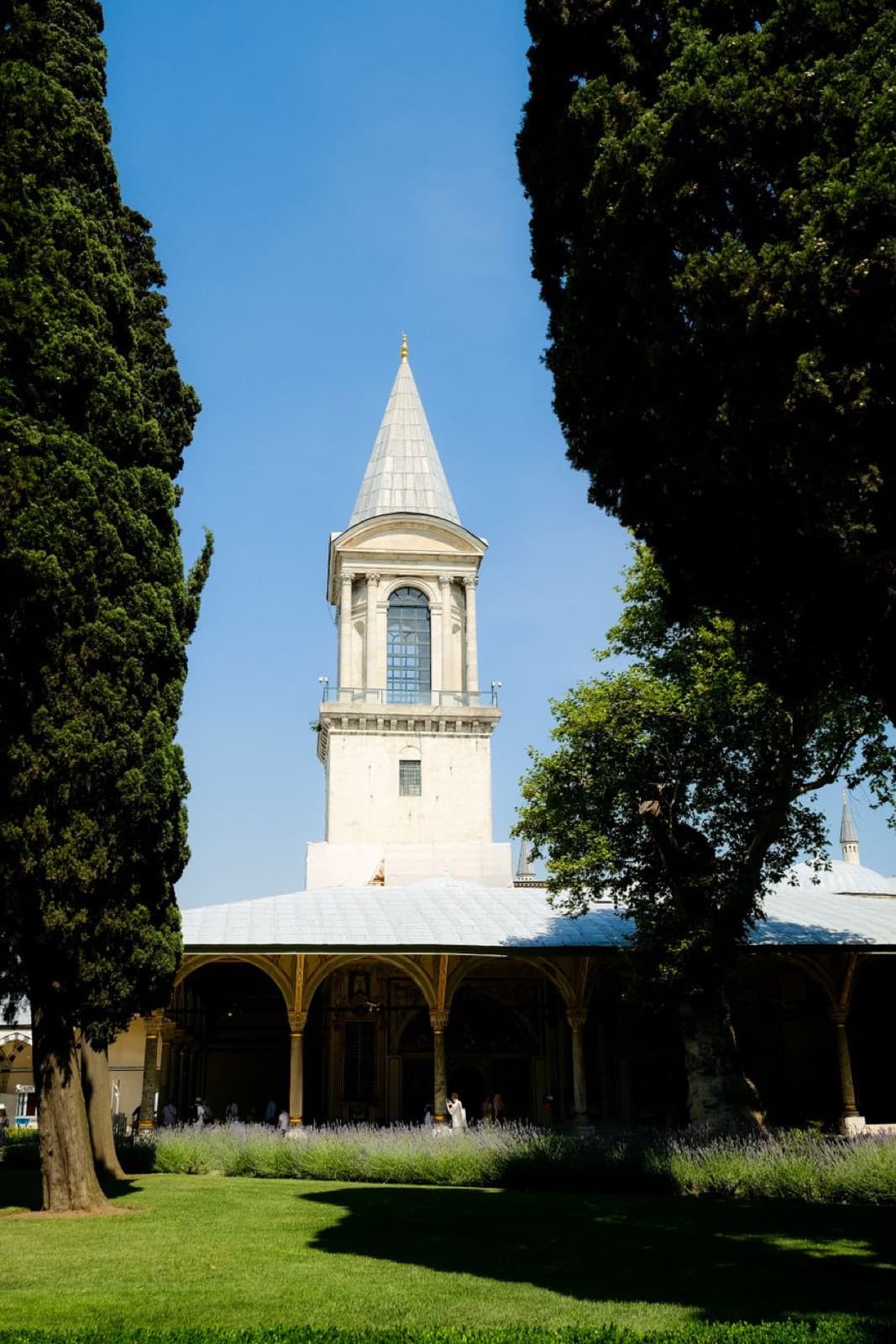
The Council Square was laid out in the 1460s as a garden for state ceremony, crossed by paved paths laid out for rank. In the far left corner is the Council Hall, three domed rooms behind a portico, where the Imperial Council met about four days a week. Look for the latticed window high on its wall: from behind it a sultan could follow the debate unseen. Above it rises the Tower of Justice, and beside it the eight-domed Outer Treasury.
Down the whole right side run the palace kitchens, which the architect Sinan rebuilt after the fire of 1574, a line of domes and chimneys; the Süleymaniye Mosque is his best known work in the city. On the left, the Royal Stables have held the palace clock collection, more than 300 pieces, since late 2025.
The Harem: the family's private world
The Harem's gate is in the Second Court, beside the Tower of Justice, and its rooms run along the left of the Second and Third Courts. Inside are the Black Eunuchs' courtyard and dormitory, the women's courtyards, the Queen Mother's courtyard at the centre, and the sultan's side: the domed Imperial Hall, the Privy Chamber of Murad the Third credited to Sinan, and Ahmed the Third's painted Fruit Room. You leave by the Golden Road toward the Third Court. Several of these rooms reopened after long restorations between 2020 and 2026. The Topkapi Harem guide walks it room by room.
The Third Court: the palace school, the Treasury and the Sacred Relics
The Gate of Felicity opened onto the sultan's own house, the inner palace. Almost no one crossed it uninvited. Straight ahead is the Audience Chamber, where the sultan received viziers and ambassadors; its canopied throne of 1597 and 1598 was saved when fire gutted the room in 1857. Behind it stands Ahmed the Third's marble library of 1719.
Around the court were the dormitories of the palace school. Two now hold galleries: the Treasury dormitory shows about 300 works of calligraphy, some written by sultans, and the Expeditionary Force dormitory holds the Imperial Costume Gallery, with sultans' kaftans from Mehmed the Second to Abdülmecid.
In the far right corner is the Conqueror's Pavilion, the palace treasury since Mehmed the Second. It reopened on 20 April 2023 after nine years of repairs, with more than 1,100 objects in four halls, among them the Spoonmaker's Diamond and the Topkapi Dagger. In the far left corner is the Sacred Relics, the sultan's old Privy Chamber, home of the relics brought from Egypt after 1517, the Holy Mantle first among them. It is a quiet place of recitation. The guide's story for it is meant to be heard before you go in.
The Fourth Court: kiosks above the water
Beyond the Third Court lie the sultan's private terraces and gardens. The marble terrace, laid out in the 1630s and 1640s around an older pool, holds the tiled Revan Kiosk of 1635, the Circumcision Room with its huge blue and white tile panels of about 1527, and the gilded Iftariye canopy over the Golden Horn. At its end is the Baghdad Kiosk, Murad the Fourth's pavilion for the retaking of Baghdad. Below lie the Tulip Garden and the Head Physician's tower, and at the far end the Mecidiye Kiosk of 1858, the last building added to the palace, which opened to visitors only in April 2023.
How long it takes, and what to do with less
With the Harem, plan about two and a half hours at a comfortable pace, and three if you want every story. With one hour, keep to the Council Hall, the Audience Chamber, the Treasury, the Sacred Relics and the marble terrace, and leave the Harem for another day. Short, skippable stops are the point: nobody is waiting for you to move on, and you can end a route at any stop.
Tickets, hours and photos
When this guide was written, the palace's own page listed one combined ticket for the palace courts, the Harem and Hagia Irene, good for one day, and a Harem-only ticket as well. The Museum Card was not accepted in the Harem or Hagia Irene. The palace was open every day except Tuesday, 09:00 to 17:30, with the ticket offices closing at 17:00. Prices are set in lira and change, so check them on the day.
Under rules the National Palaces administration set out in 2026, you can take photos indoors with a phone, without flash and without blocking other visitors. Cameras, vlogging rigs and drones are not allowed. In the Sacred Relics photography is restricted, and in the Treasury and parts of the Harem you should follow the signs.
What may be closed
Rooms close for restoration and collections move. In October 2026 the old Imperial Mint in the First Court was announced to open as a group of new museums, which this guide does not cover. If a door is shut, the guide's story still tells you what lies behind it.
Five ready-made routes
The Roamer guide groups the palace into five routes. Each is a plan on its own, and you can leave any of them at any stop.
- Topkapi Palace in an Hour (60 minutes, 10 stops): the Gate of Salutation, the Council Hall, the Gate of Felicity, the Audience Chamber, the Spoonmaker's Diamond, the Topkapi Dagger, the Holy Mantle, the Revan Kiosk, the Baghdad Kiosk and the Iftariye canopy.
- The Courts and the Harem in Three Hours (180 minutes, 23 stops): the whole palace in walking order, from the Imperial Gate through Sinan's kitchens and the Harem to the Treasury and the Mecidiye Kiosk.
- Gates, Councils and Thrones (50 minutes, 10 stops): how the empire was run, from the gate only the sultan rode through to the room where he received his ministers.
- Tiles, Fountains and Small Wonders (55 minutes, 12 stops): Ahmed the Third's fountain, the Sherbet House, Ottoman clocks, the Fruit Room, talismanic shirts and the Baghdad Kiosk's inlay.
- Four Centuries of Building (55 minutes, 9 stops): the palace's own story, from the New Palace on the acropolis and the Harem fire of 1665 to the decision of 1924 that made it a museum.
How this fits the Roamer guide
Roamer's Topkapi guide works court by court, at your own pace and with no group to keep up with: open any court or pavilion, hear its story, skip what you do not want. It is an independent guide and is not affiliated with the palace or the National Palaces administration, and palace admission is separate. You can find it here: the Topkapi Palace guide. For the streets outside, the Sultanahmet walk ends at the Imperial Gate, where the guide begins, and our companion on Hagia Sophia's four lives covers the square on the way. Planning the rest of your stay? Start with the Istanbul travel guide.
Cover: the palace roofs, domes and the Tower of Justice. Photograph by Muhammed Zahid Bulut, Pexels.
Ready to experience it?
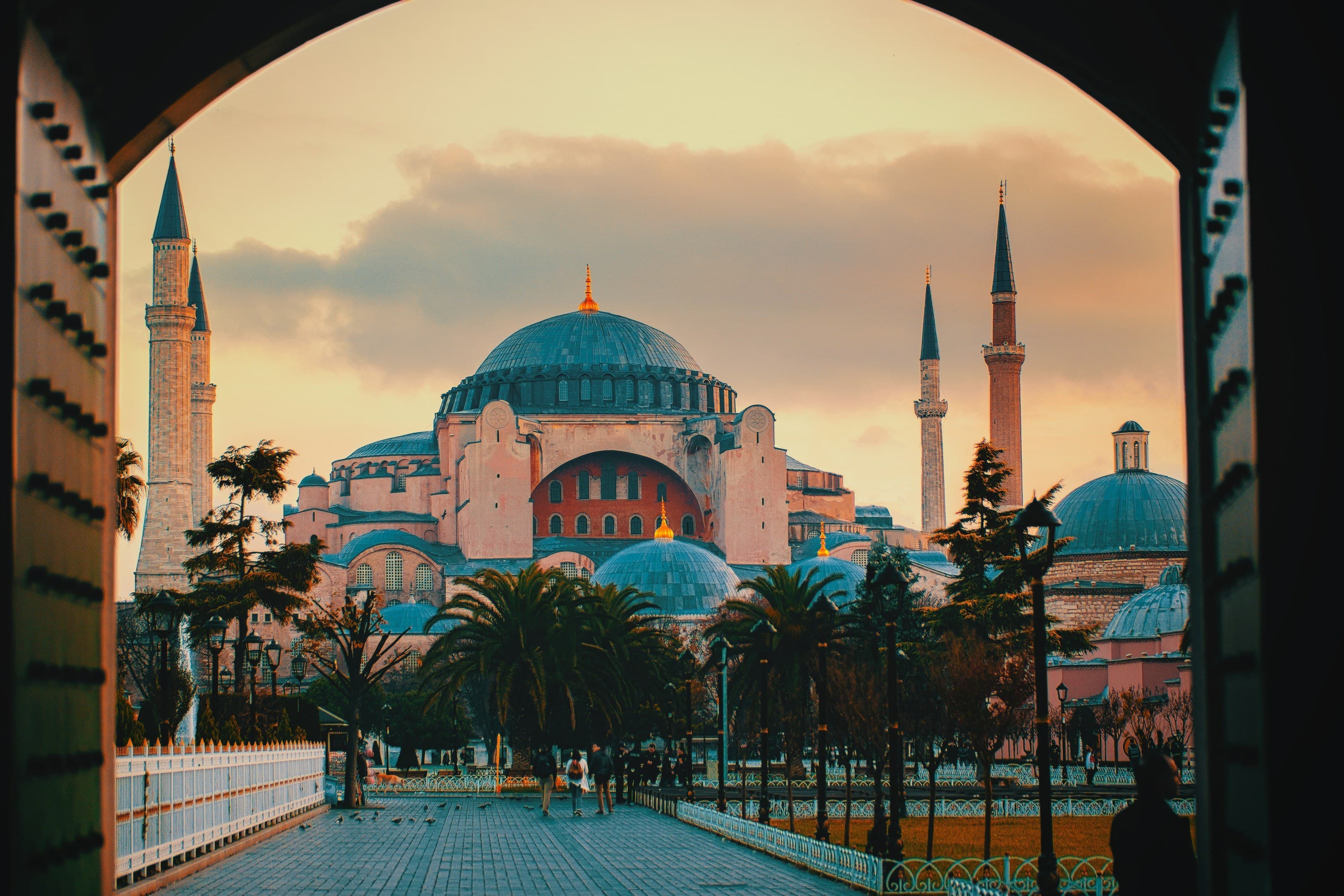
Hagia Sophia and the Blue Mosque: The Peninsula of Empires
90 min · 2.3 km · moderate
More from Istanbul
Explore more at your own pace.
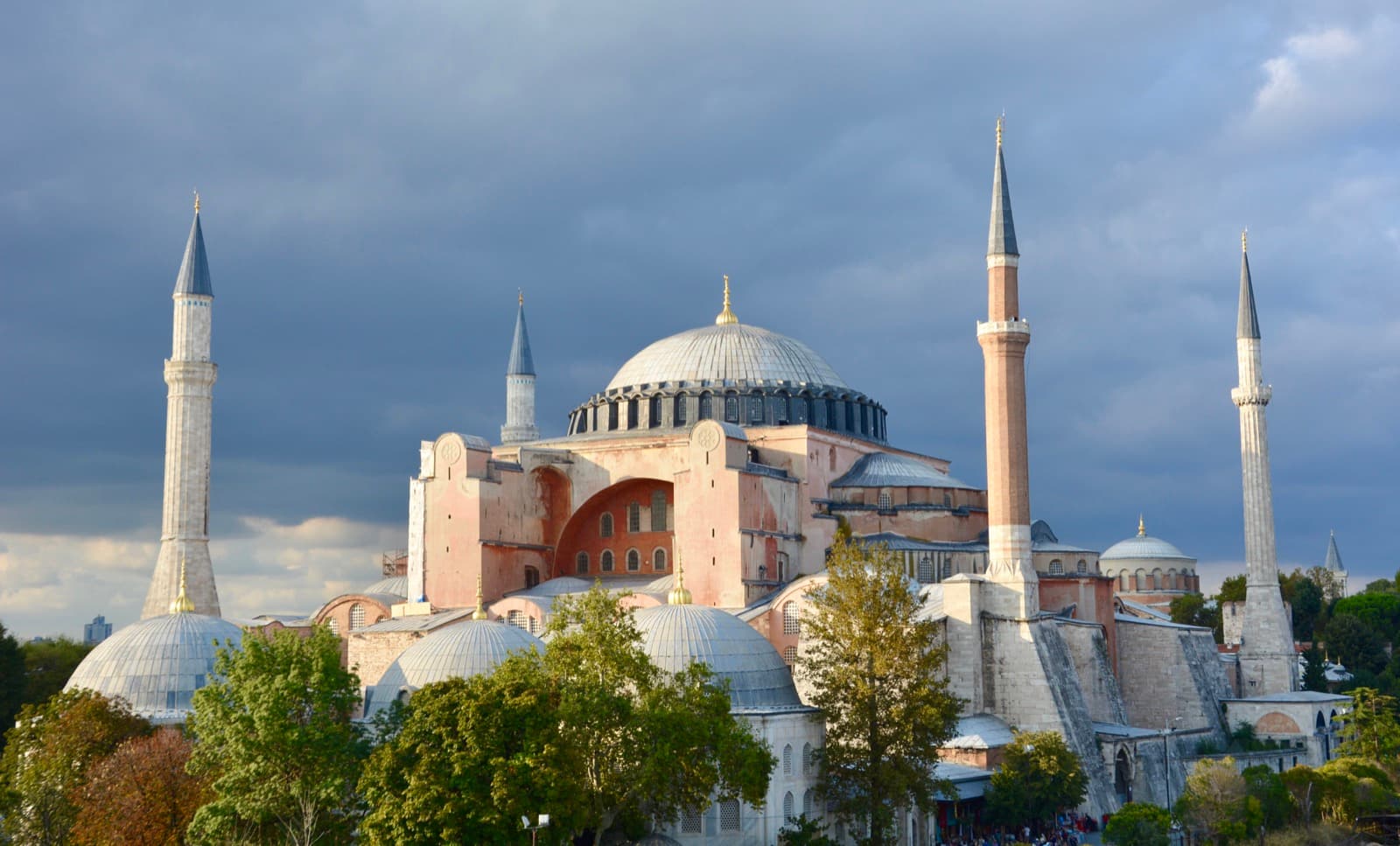
Istanbul: A City Written and Rewritten by Empires
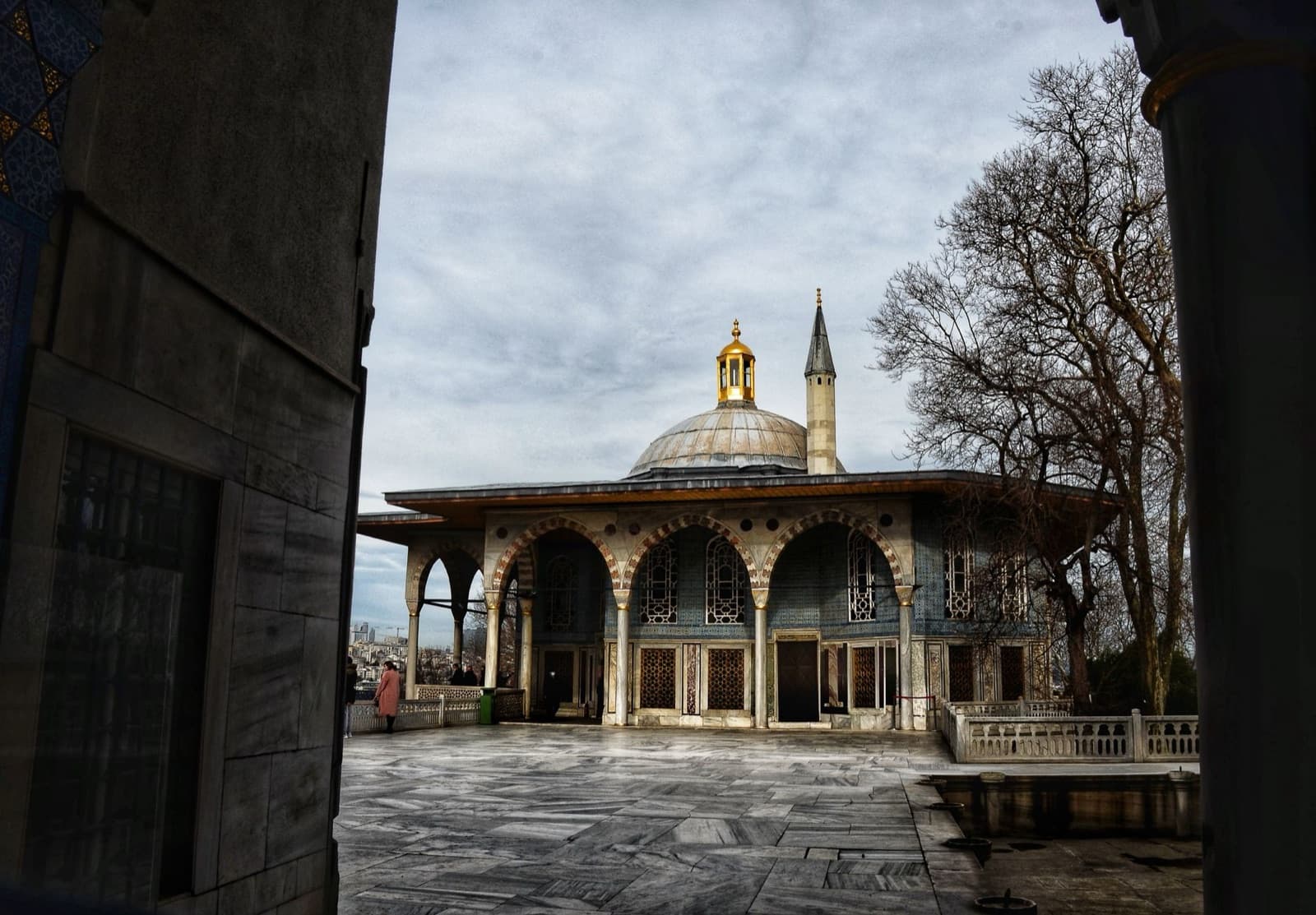
The Baghdad Kiosk: A Victory Pavilion Its Sultan Never Finished
The Spoonmaker's Diamond: Three Spoons and a Plainer Record
The Topkapi Dagger: A Gift That Never Arrived
The Topkapi Harem: A Household Ranked Room by Room