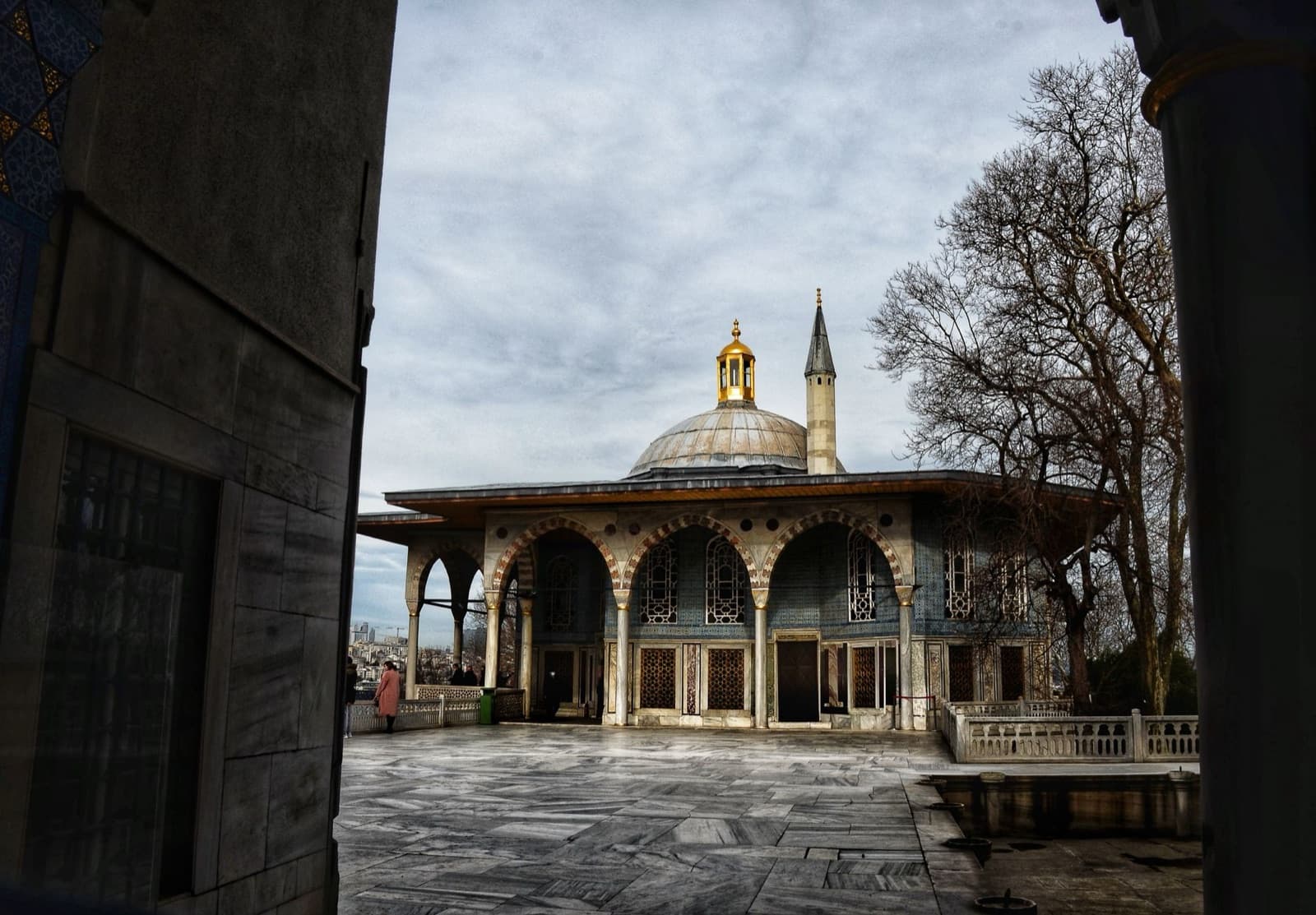
The Baghdad Kiosk is an octagonal pavilion on the marble terrace of the Fourth Court of Topkapi Palace in Istanbul, built for Sultan Murad the Fourth to mark the retaking of Baghdad in 1638. It sits on a vaulted base about seven metres high, ringed by a marble colonnade, with tiled walls, a gilded fireplace hood and shutters inlaid with ivory, mother of pearl and tortoiseshell. It is counted among the masterpieces of Ottoman pavilion building.
If you are asking where the Baghdad Kiosk is: it stands at the far end of the marble terrace in the Fourth Court of Topkapi Palace, the sultan's private garden at the tip of the old city. If you are asking why it is worth the walk: it is counted among the masterpieces of Ottoman pavilion building and one of the best preserved corners of the palace, with the Golden Horn, the Bosphorus and the Sea of Marmara all around it.
A pavilion for a campaign
Baghdad had been taken by the Safavids of Iran in 1624. In the spring of 1638 Sultan Murad the Fourth set out to win it back, and he ordered this pavilion as he left. The city fell to him in the last days of 1638. When he came home in 1639 the building stood, but its decoration was unfinished, and he died in February 1640 before it was done. The kiosk has no inscription recording when it was built, so its dates come from the chronicles and the museum's own history.
It sits on a vaulted base about seven metres high, where two palace gardens met. From its porch the sultan could see the Golden Horn, the Bosphorus and the Sea of Marmara, and all of Galata across the water. Inside is one eight-sided room opening into four deep alcoves. Long after Murad, in the last years of the sultans, the cabinet of ministers met here.
The porch and the outer walls
Hear a stop from this walk
Little Hagia Sophia: The Empress on the Cornice
Walk slowly round the porch. Marble columns with diamond-patterned capitals carry pointed arches in two colours of stone, under a wide eave covered in lead, with marble lattice rails between the columns. Canvas curtains once hung here to shade the gallery and keep the weather off the tiles. In the late 1800s the gaps were glazed with iron-framed windows, and in 1917 the glass was taken out again.
Then look at the walls: coloured stone below, and tiles on a white ground with pomegranate blossoms and long leaves like an artichoke's. They count among the last fine works of classical Ottoman tile art. On the sides open to the north wind many were damaged and patched. Over the main door is a couplet of Persian verse.
Inside: the fireplace, the inlay and the dome
Recent sources do not say whether visitors may go inside, so you may see the room only through the door. The fireplace has a tall gilded hood, with a slender chimney outside, and the hearth is lined with lead against fire. On either side are two large tiles painted with birds, which specialists call very rare for both their size and their subject. A band of tile inscription, white letters on blue, runs round the room between the two rows of windows.
The wooden window shutters and cupboard doors are inlaid with ivory, mother of pearl and tortoiseshell. The lower windows are closed outside by brass grilles; the upper ones hold coloured glass set in plaster. The kiosk once held a library of about 360 books, many of them rare manuscripts, most likely kept in these cupboards; they were later moved to the palace library in the Mosque of the Aghas. Overhead, a lead-covered dome with a lantern caps the room, painted inside in a gilded relief technique of which very few examples survive.
Its neighbours on the terrace
The marble terrace took its shape in the first half of the 1600s, when Murad the Fourth and Sultan Ibrahim pushed it out toward the Golden Horn around a pool that goes back to Mehmed the Second. By the pool is the Revan Kiosk, which Murad built in 1635 after his army took Yerevan, so the terrace holds his two victory pavilions a few steps apart. Along the terrace is the Circumcision Room, with huge blue and white tile panels dated to about 1527, and at its edge the gilded Iftariye canopy, built under Ibrahim in the 1640s, where sultans are thought to have broken the Ramadan fast at sunset.
How to see it
The kiosk is a stop on the Topkapi Palace in an Hour route, and in the Roamer guide its porch, fireplace and inlay each have their own story; the Tiles, Fountains and Small Wonders route ends here too. You can listen at your own pace, with no group, and skip anything you do not want. The guide is independent and not affiliated with the palace, and admission is separate. Start here: the Topkapi Palace guide, or read the whole visit in Topkapi Palace: what to see, court by court.
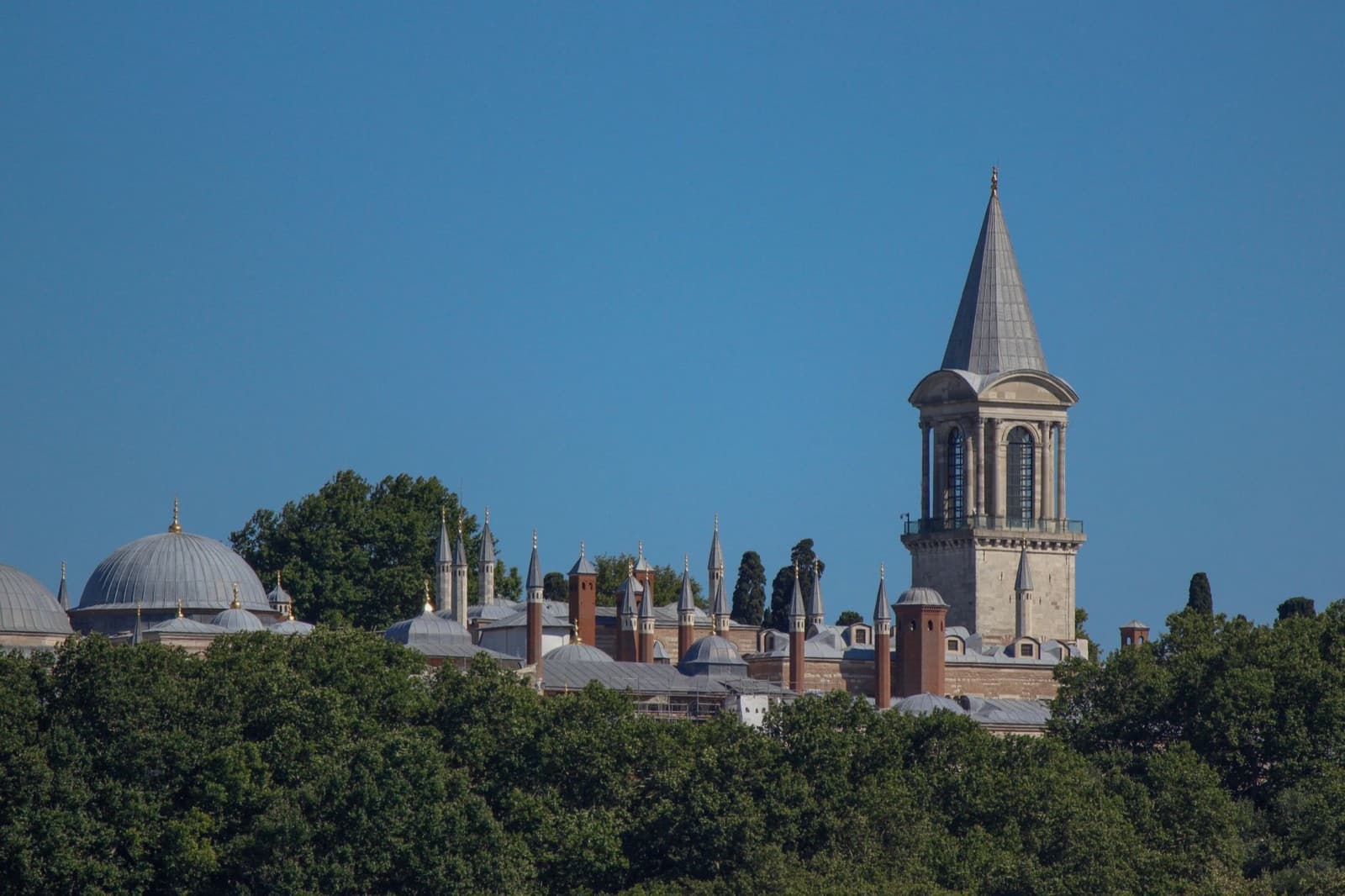
Cover: the Baghdad Kiosk and its colonnade. Photograph by Mert Aslan, Pexels.
Ready to experience it?
Hagia Sophia and the Blue Mosque: The Peninsula of Empires
90 min · 2.3 km · moderate
More from Istanbul
Explore more at your own pace.
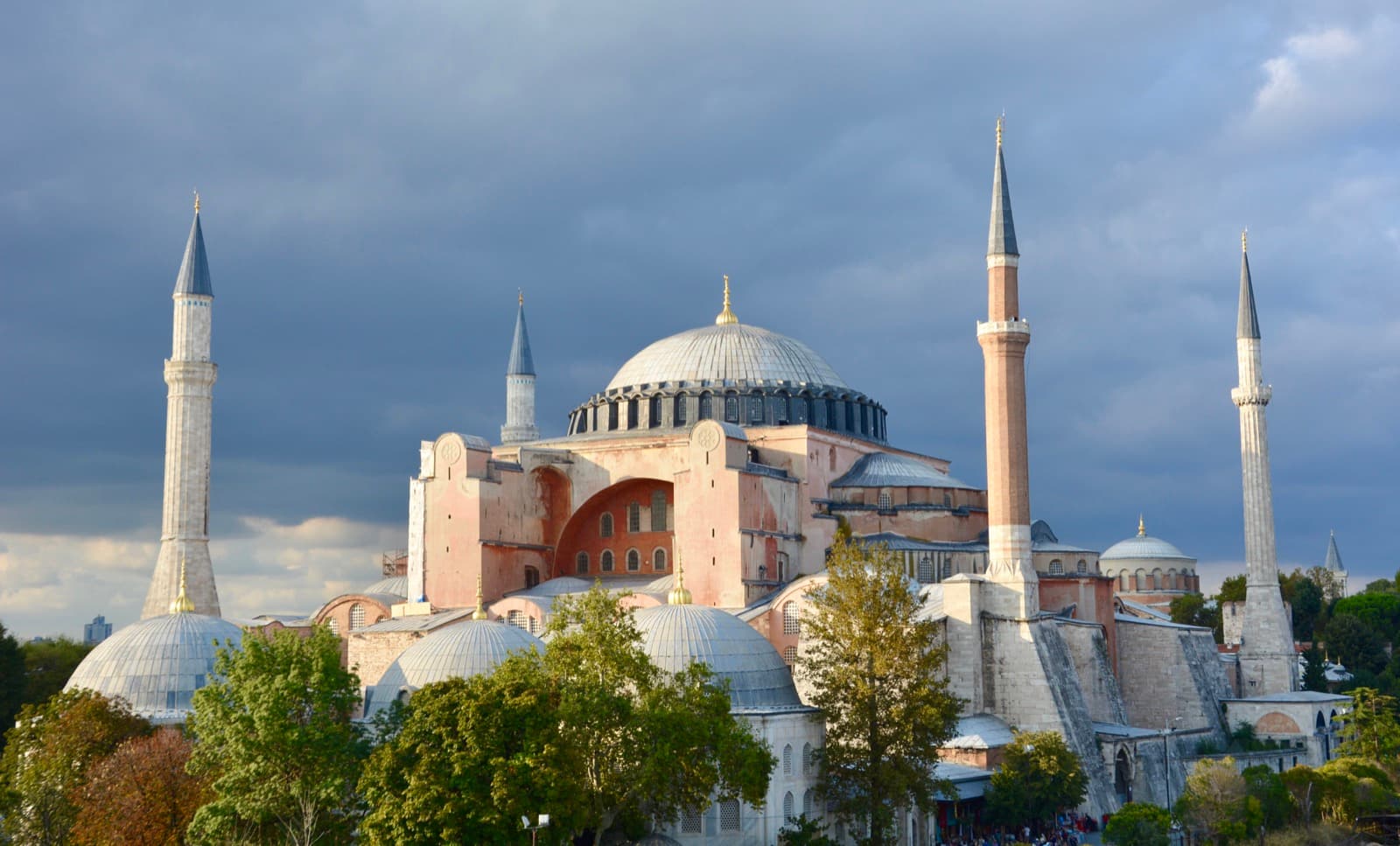
Istanbul: A City Written and Rewritten by Empires
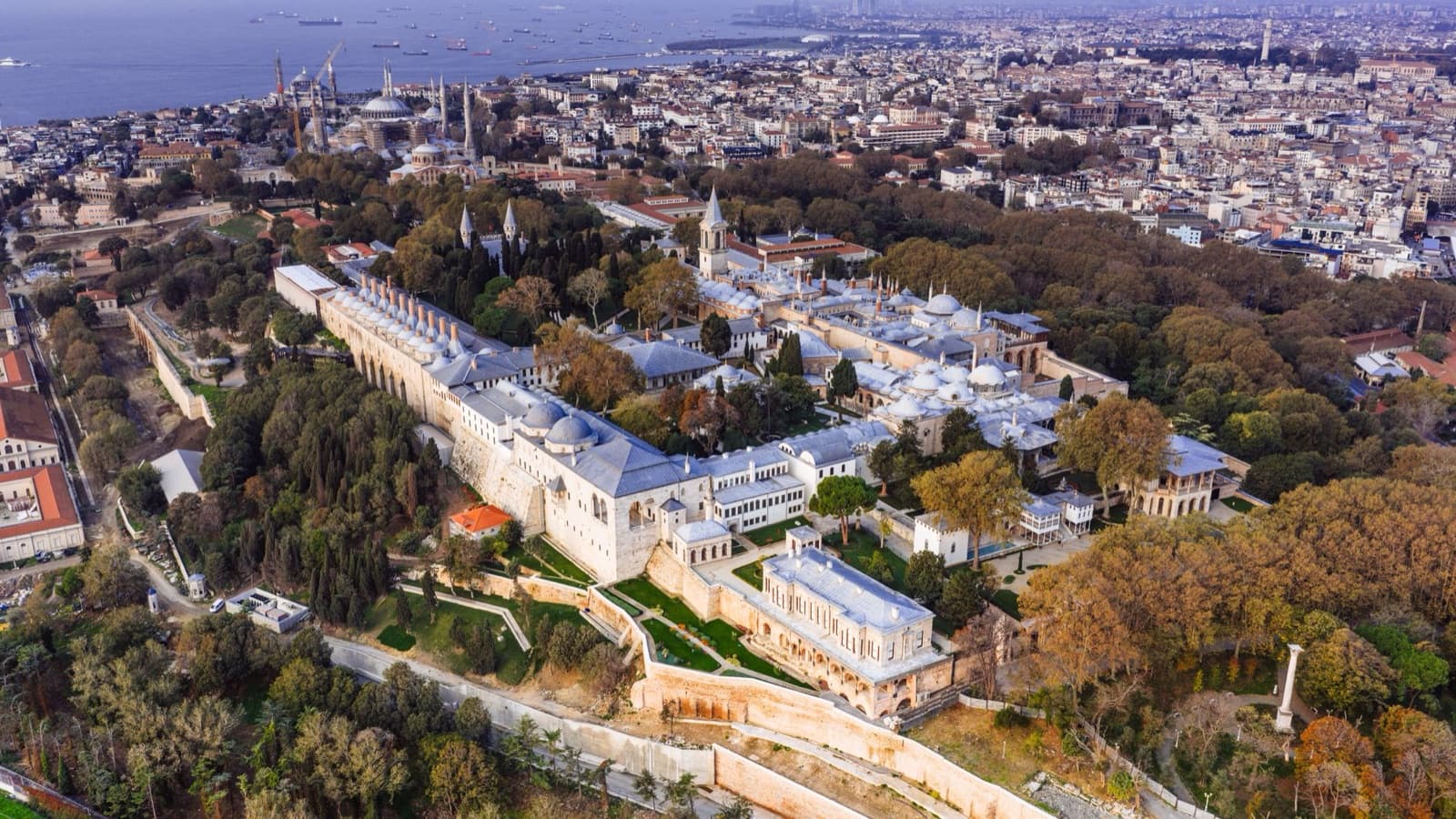
The Spoonmaker's Diamond: Three Spoons and a Plainer Record
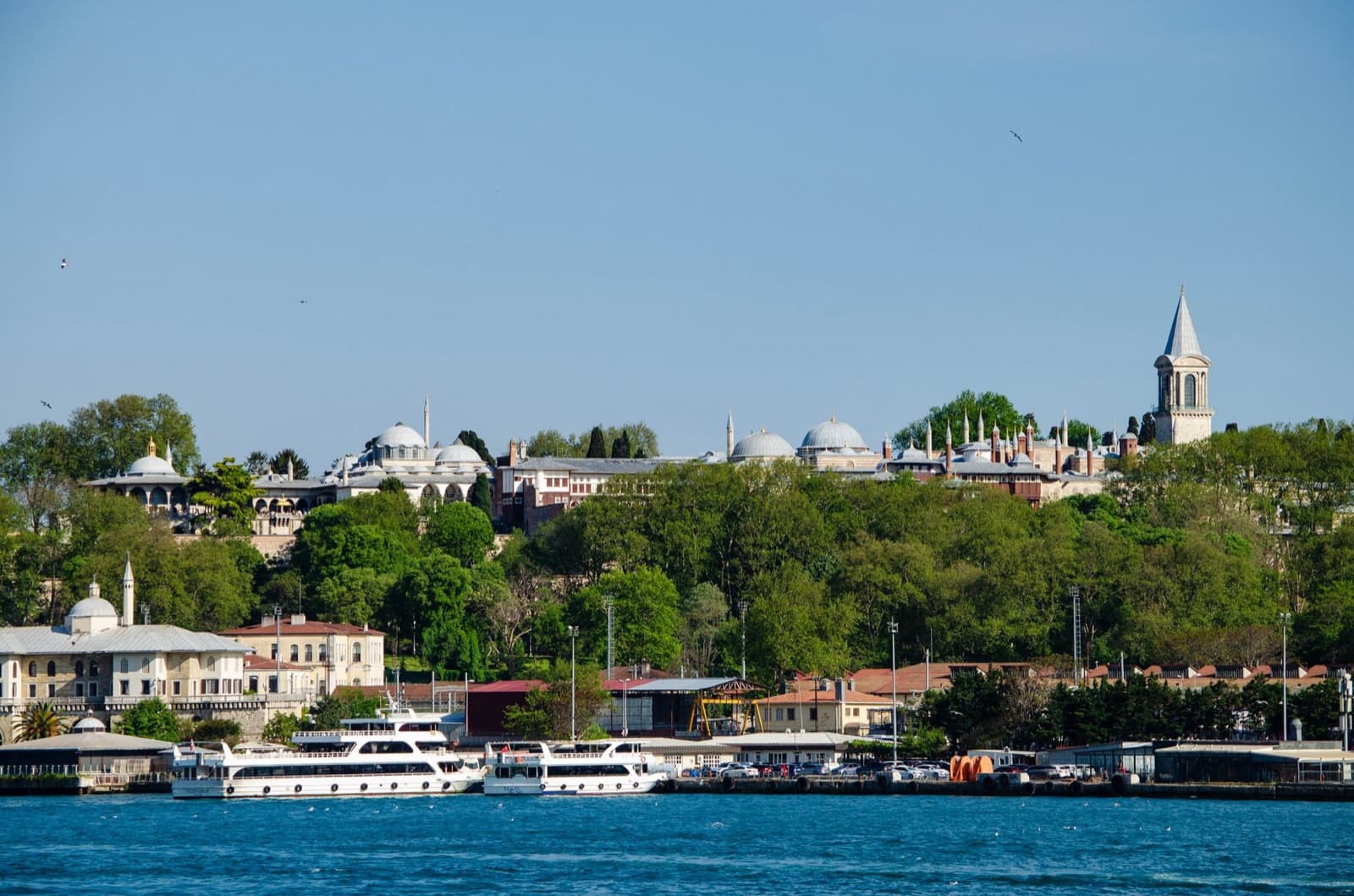
The Topkapi Dagger: A Gift That Never Arrived
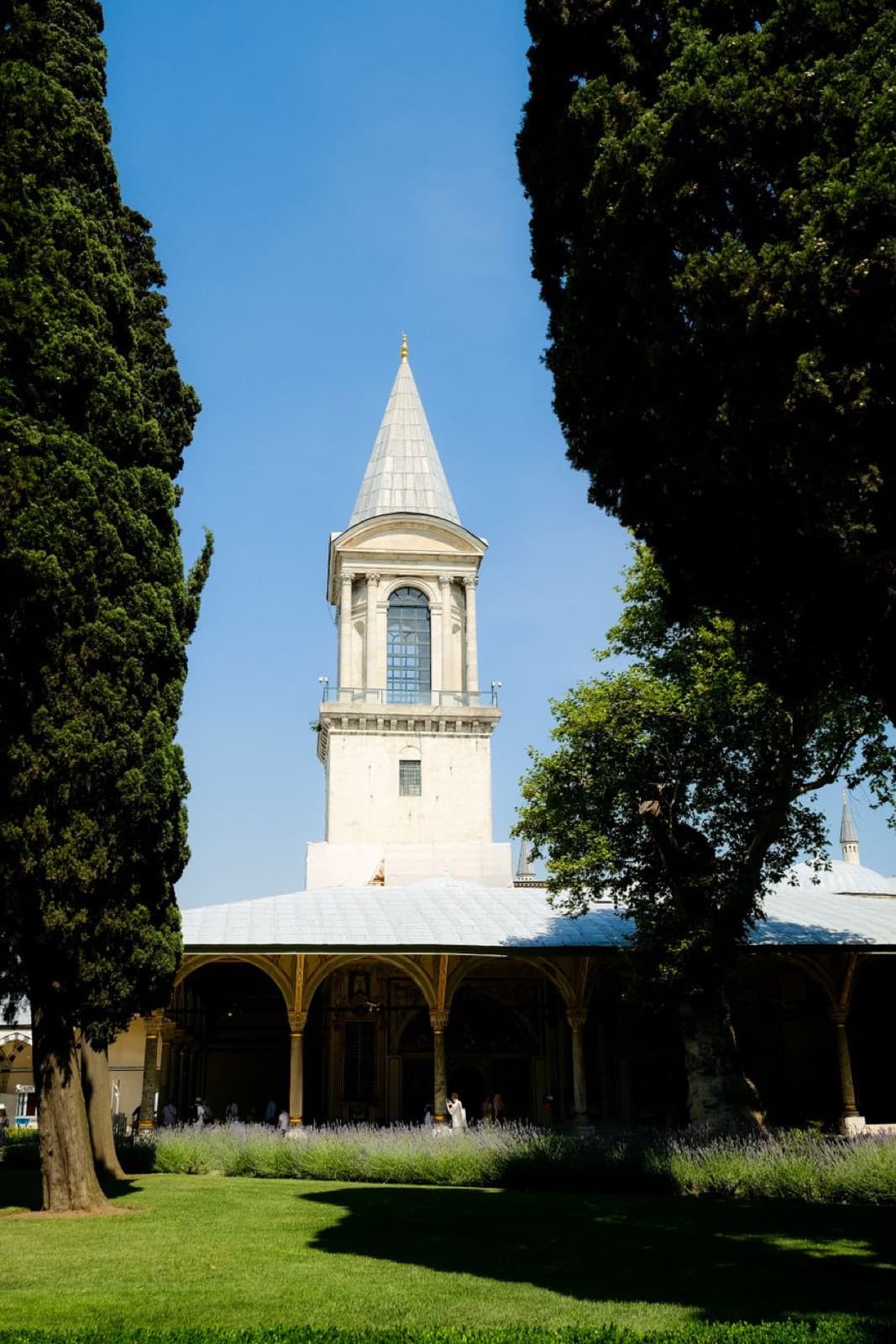
The Topkapi Harem: A Household Ranked Room by Room
Topkapi Palace: What to See, Court by Court