The Spoonmaker's Diamond (Kaşıkçı Elması) is a pear-shaped diamond of about 86 carats, framed by 49 large brilliants, shown in the first hall of the Imperial Treasury at Topkapi Palace in Istanbul. Its name comes from a legend that a poor man sold it to a spoonmaker for three wooden spoons; accounts published when it went back on display in 2019 say it entered the palace treasury by purchase in the early 1680s.
If you are asking where the Spoonmaker's Diamond is: it is in the first hall of the Imperial Treasury, in the Third Court of Topkapi Palace in Istanbul. If you are asking why it is called that: because of a legend, and the legend is worth knowing precisely because it is one.
What you see
Look for a single stone the shape of a pear, set inside a ring of other stones. The ring is made of 49 large brilliants. The centre stone weighs 86 carats. Some records give 84, and the difference is not a mistake: two carat systems were in use, an older one and the metric carat, and the same stone comes out at a different number in each. In Turkish it is the Kaşıkçı Elması, the spoonmaker's diamond.
The legend of the three spoons
Hear a stop from this walk
Little Hagia Sophia: The Empress on the Cornice
There are several versions of how it reached the palace. One popular version goes like this. A poor man scavenging by the shore found a shining stone in the rubbish and sold it to a spoonmaker for three wooden spoons. The spoonmaker sold it on, and the stone passed from hand to hand up through the goldsmiths of the city until it reached the grand vizier. The legend gave the stone its name.
It is a good story, and it has the shape of a fable: worthless to the man who found it, priceless at the top. Read it as that. The sources that tell it call it a legend, and the record tells a different story.
The plainer record
When the diamond went back on display in 2019, the accounts published with it gave a much plainer history: the stone is known to have entered the palace treasury by purchase in the early 1680s. No finder, no spoons, no chain of goldsmiths. A great diamond was bought for the treasury of an empire, and the city gave it a better story than the paperwork did.
The treasury it sits in
The building matters too. The Treasury is in the Conqueror's Pavilion, one of the oldest buildings in the palace, which Mehmed the Second built as the palace went up and which has held the treasury from the start. It was also where the idea of a museum began. In the mid 1800s, under Sultan Abdülmecid, a British ambassador was taken round the treasury, and showing it to distinguished guests became a custom. Sultan Abdülaziz then ordered glazed display cases for the objects.
The pavilion nearly failed in the twentieth century. In the 1940s its domes were remade in reinforced concrete. In the 2010s cracks opened and the building began to slide toward Sarayburnu, and inspections traced the trouble to that concrete. Restorers removed about 1,500 tonnes of it, gave the domes back a roof like the original, built retaining walls against the slope and fitted instruments that watch for earthquakes. Closed since 2014, the pavilion reopened on 20 April 2023 with more than 1,100 objects in four halls.
What else is in the room
The first hall holds things used by the early great sultans, and the diamond. The second is given to ceremony and sovereignty, with the gold throne the National Palaces list as the accession throne and the sultans' gem-set aigrettes, worn on the turban as symbols of rule. The third holds diplomatic gifts, among them the Nadir Shah Throne, and the fourth is about the sultan as caliph. Somewhere in the Treasury is also the Topkapi Dagger, made as a gift for that same Nadir Shah of Iran.
How to see it
In the Treasury, follow the signs about photography; flash is not allowed anywhere in the palace. Displays move from time to time, so a case may have changed. In the Roamer guide the Spoonmaker's Diamond has its own story in the Treasury, and it is a stop on the Topkapi Palace in an Hour and The Courts and the Harem in Three Hours routes. You can listen at your own pace, with no group, and skip anything you do not want. The guide is independent and not affiliated with the palace, and admission is separate. Start here: the Topkapi Palace guide, or read the whole visit in Topkapi Palace: what to see, court by court.
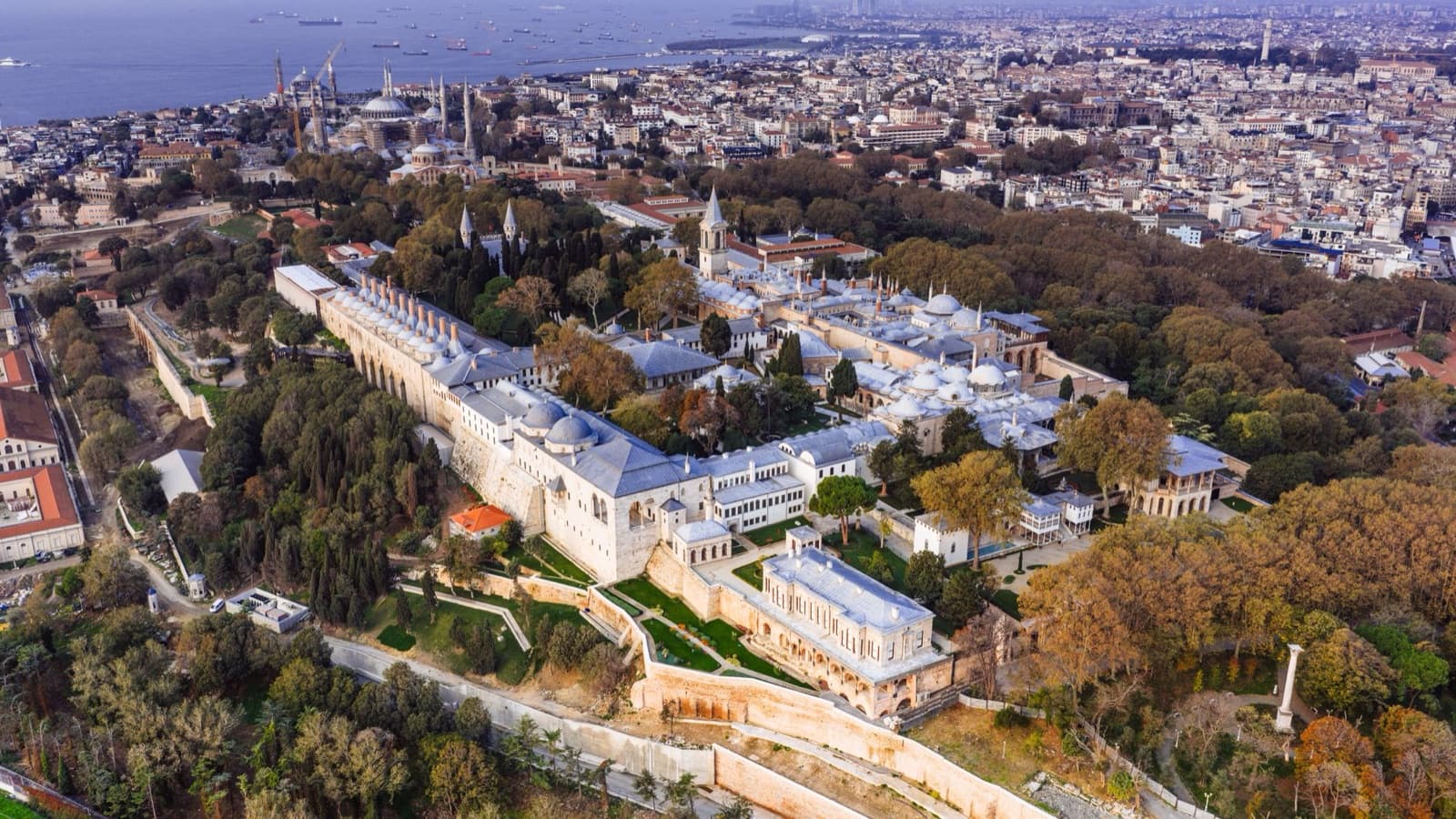
Cover: Topkapi Palace on its point from the air. Photograph by K, Pexels. The Treasury's objects are not photographed here.
Ready to experience it?
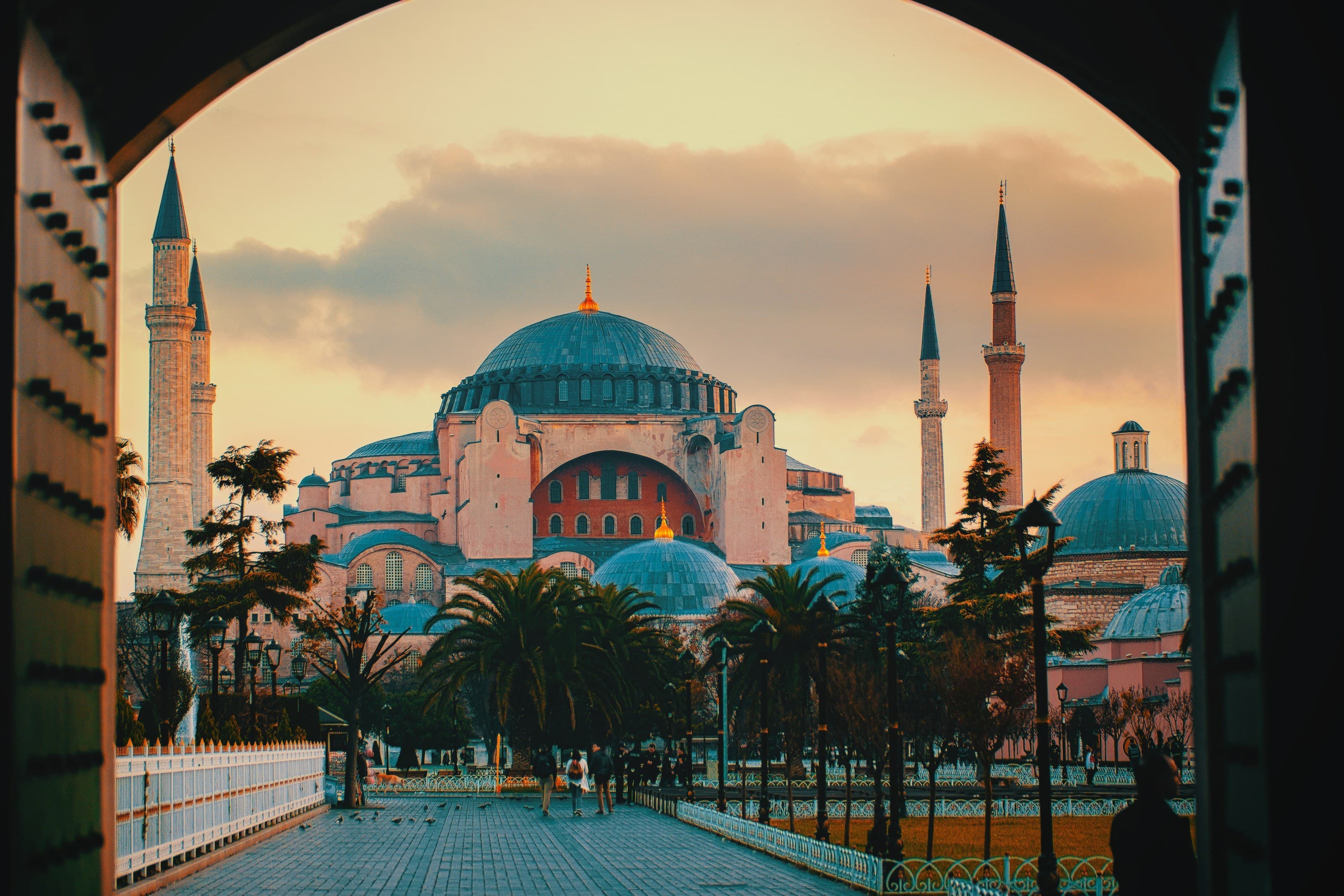
Hagia Sophia and the Blue Mosque: The Peninsula of Empires
90 min · 2.3 km · moderate
More from Istanbul
Explore more at your own pace.
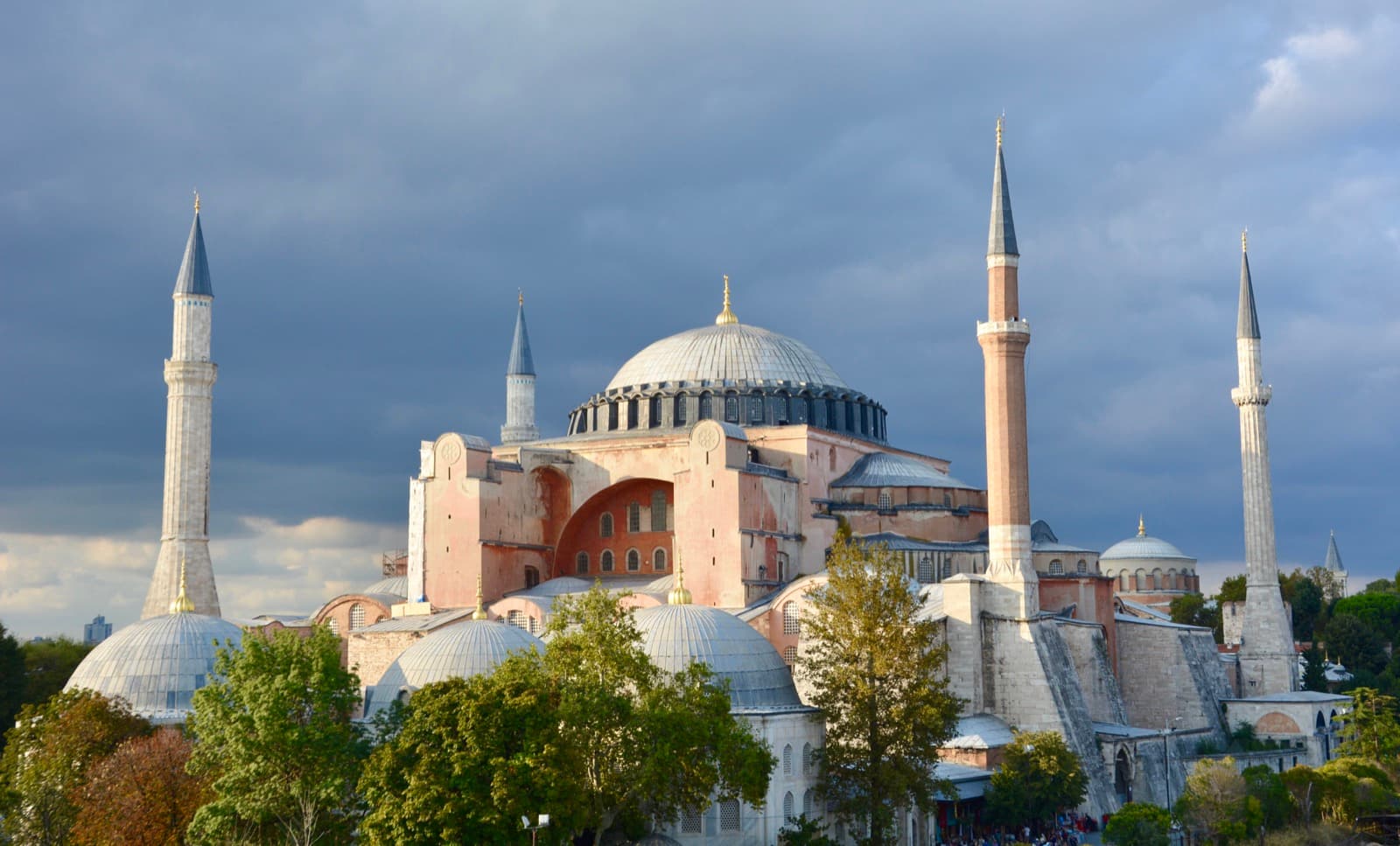
Istanbul: A City Written and Rewritten by Empires
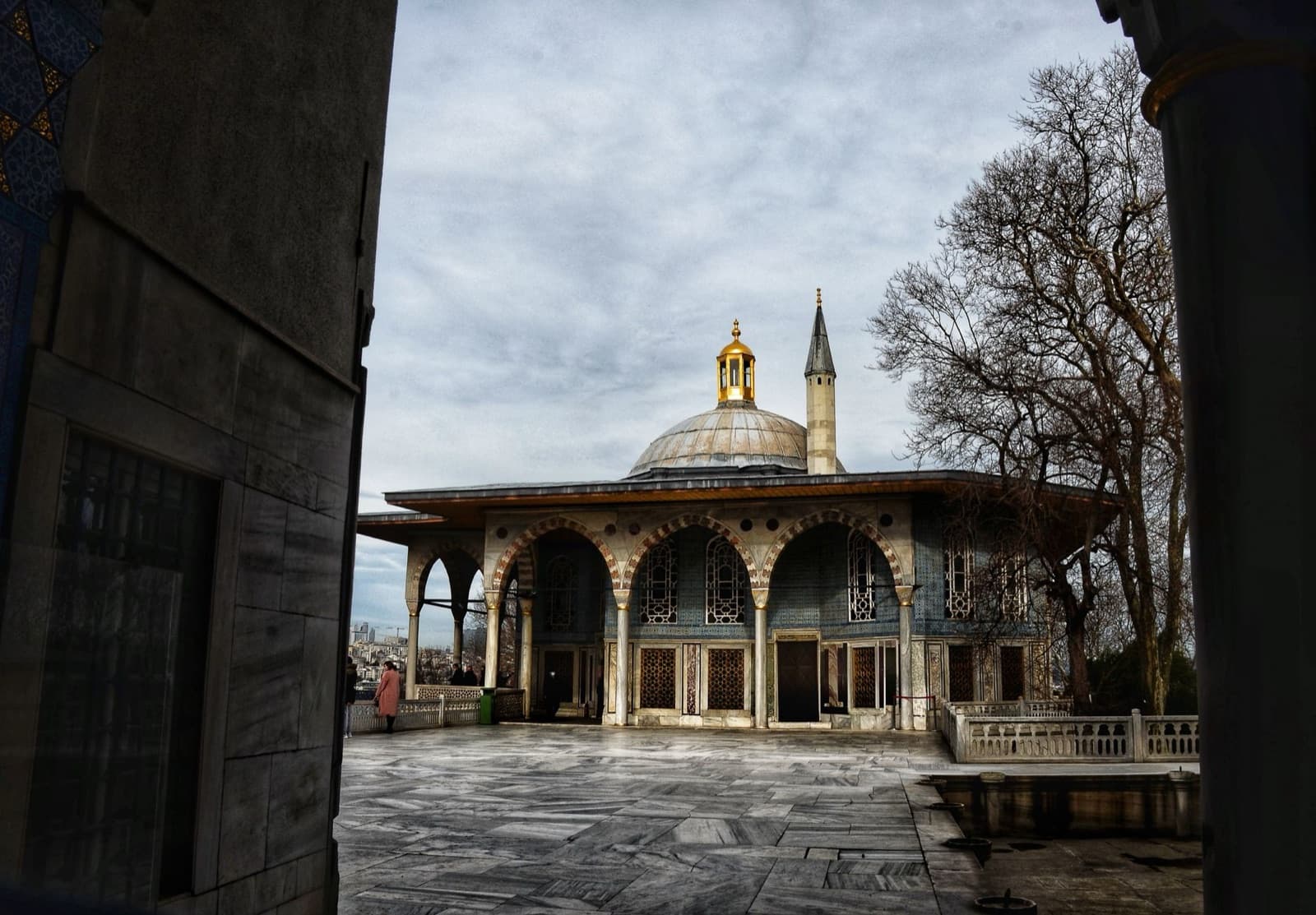
The Baghdad Kiosk: A Victory Pavilion Its Sultan Never Finished

The Topkapi Dagger: A Gift That Never Arrived
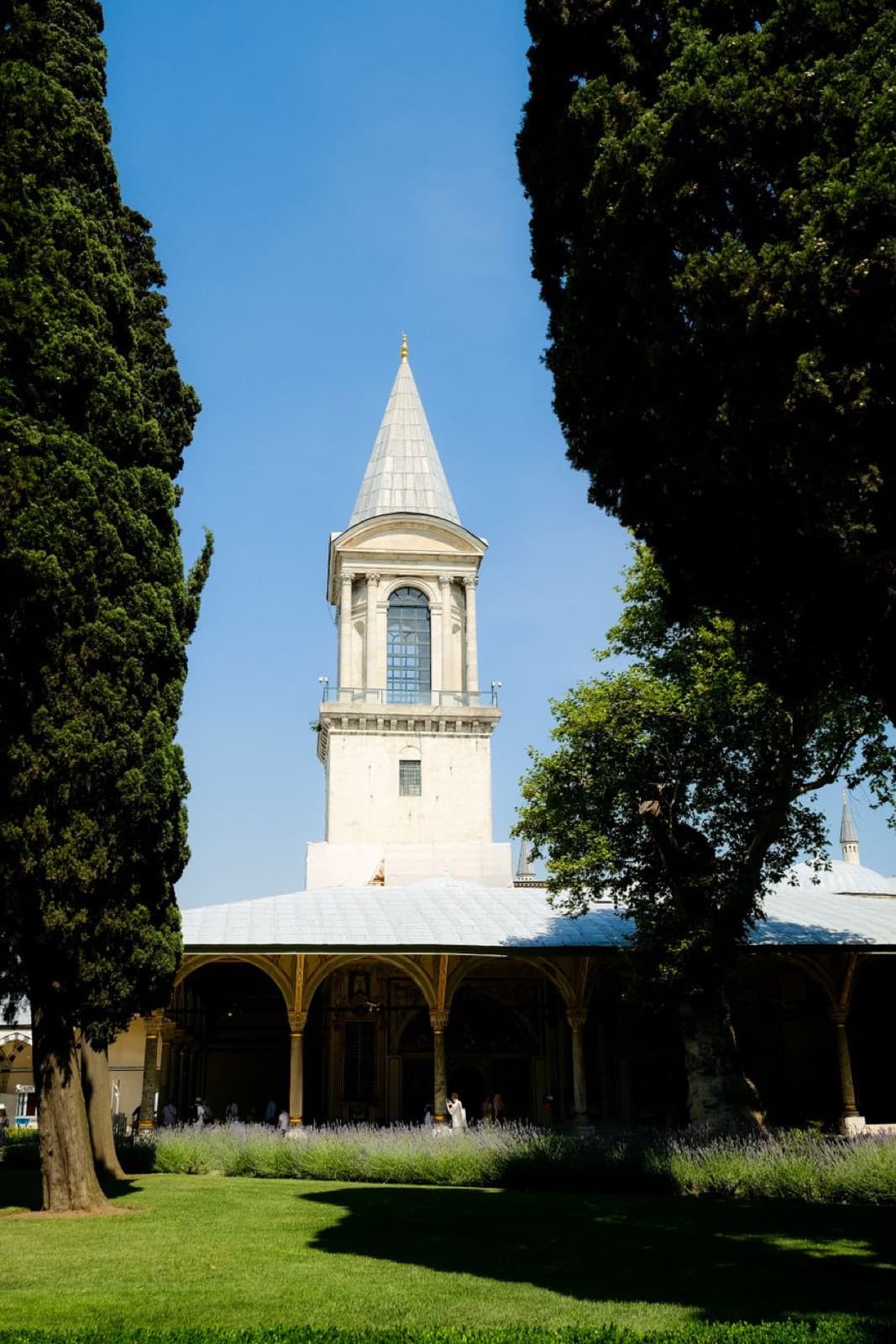
The Topkapi Harem: A Household Ranked Room by Room
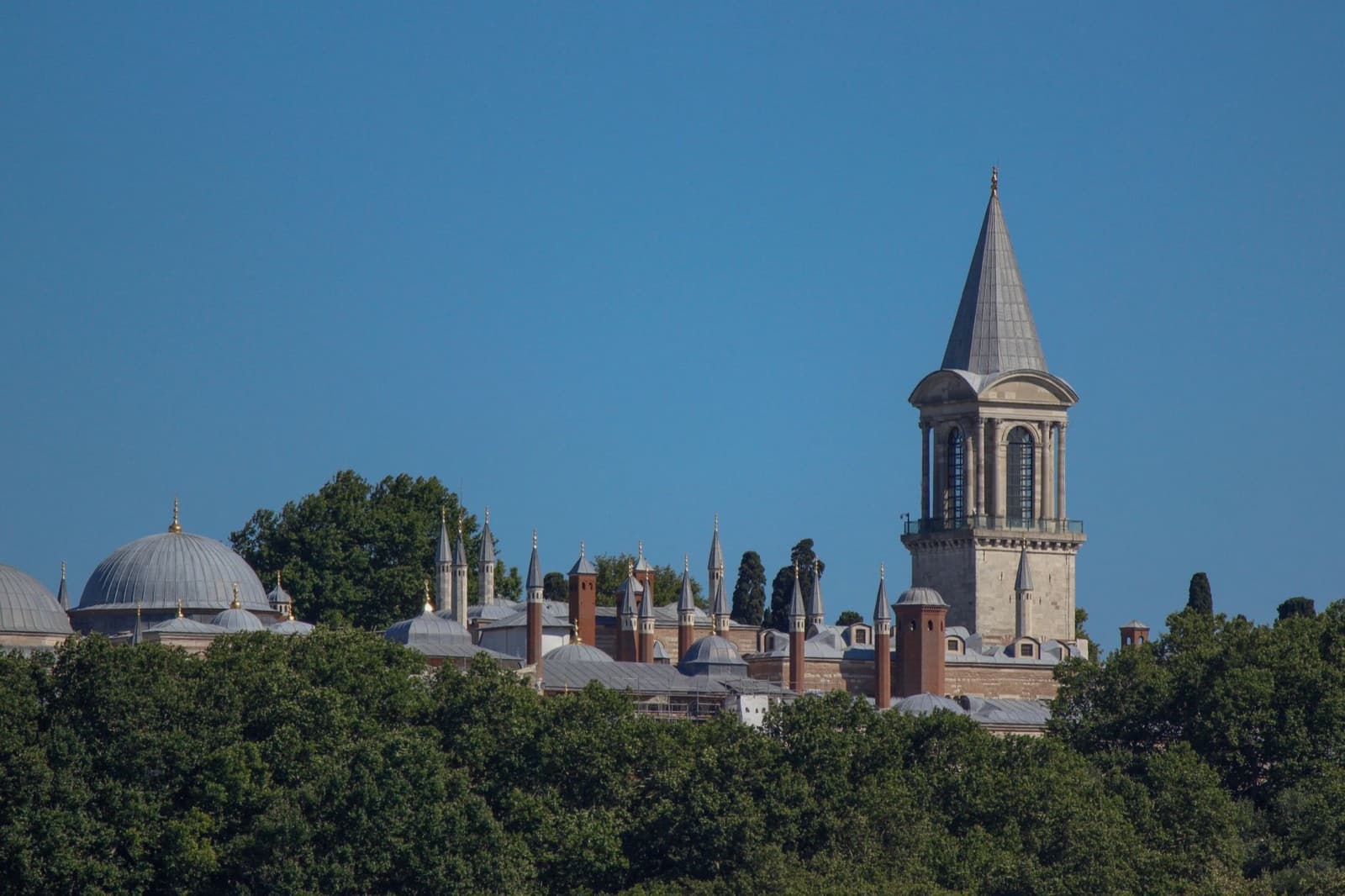
Topkapi Palace: What to See, Court by Court