The Quarter the Fire Spared
140 min · 4.2 km · challenging
Thessaloniki reads like a core sample of empires. Sink a shaft through its centre and you pass through Roman imperial power, early-Christian triumph, Ottoman conversion, and Greek modernity, often stacked inside one building. A round Roman hall became a church, then a mosque with a minaret, then a monument. A fifth-century basilica still carries an Ottoman inscription along its columns. And beneath the sunlit modern grid lies the memory of a Sephardic Jewish majority, the community called the Mother of Israel, whose city the Nazis all but erased between the spring and summer of nineteen forty-three. The through-line that unites the city's tours is this: each conqueror rewrote Thessaloniki to declare a new order, yet the older layers refused to vanish, and the newest layer is an absence.
One building holds all four layers
The clearest way to grasp the argument is to stand inside the Rotunda. It was raised around three hundred and six A D on the orders of the tetrarch Galerius, likely intended as his mausoleum, a colossal brick cylinder about twenty-four and a half metres across with walls more than six metres thick. Late in the fourth century it became a Christian church dedicated to the Archangels, a dedication it held for more than twelve hundred years. In fifteen ninety it became a mosque and gained a minaret, one of very few left in the city, and it served as a mosque until nineteen twelve. Today it is a monument-church again. Roman hall, early-Christian church, Ottoman mosque, monument: the whole grammar of the city compressed into a single dome and the minaret beside it. The City in Layers walk traces that grammar along one short axis through the centre.
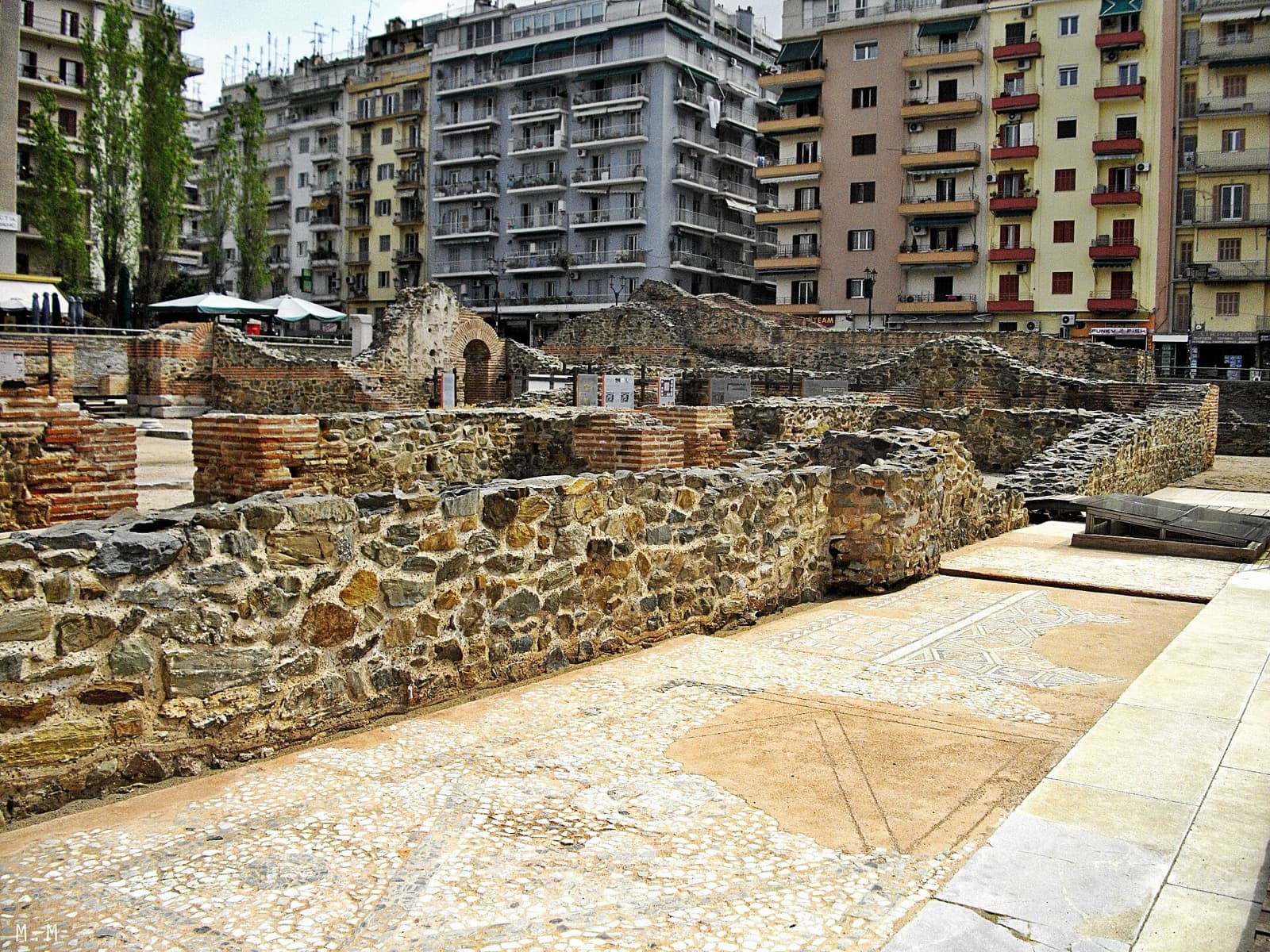
The overwriting habit was already visible in the fourth century. Around the corner from the Rotunda, the Arch of Galerius, which the city calls the Kamara, was dedicated in three hundred three A D to celebrate a victory over the Sasanian Persians, and it sits directly on the Via Egnatia, the Roman east-west highway. Nearby, the excavated Palace of Galerius includes the Octagon, read as the emperor's throne room, which was later reused as a Christian church. A building outlived its purpose and was claimed for a new one rather than torn down.
Where you can read the overwriting, letter by letter
Hear a stop from this walk
The Timber Houses and Lanes: The Fabric the Fire Spared
Some layers can be pointed to. Panagia Acheiropoietos is a fifth-century basilica raised around four hundred fifty to four hundred seventy, among the oldest churches anywhere still in continuous use. After the Ottoman conquest of fourteen thirty it was the first church in the whole city converted to a mosque, claimed by Sultan Murad the Second in person, and an inscription commemorating that conversion still survives on the northern colonnade. Walk that row of columns and you see both layers at once, the Christian basilica and the Ottoman text carved across it centuries later. The older layer was not destroyed. It was inscribed upon.
Agia Sophia, whose name deliberately echoes the great church in Constantinople, took its present form in the seventh to eighth century and carries a ninth-century mosaic of the Ascension in its dome. It served as the Ayasofya Camii mosque for nearly five centuries, from fourteen thirty until the city's liberation in nineteen twelve, and the Christian mosaics waited overhead through all of it. The Ottoman layer gets a building entirely its own at Bey Hamam, built in fourteen forty-four by Murad the Second, the oldest Ottoman bath in the city, a double bathhouse that stayed in use until nineteen sixty-eight.
The quarter the fire spared
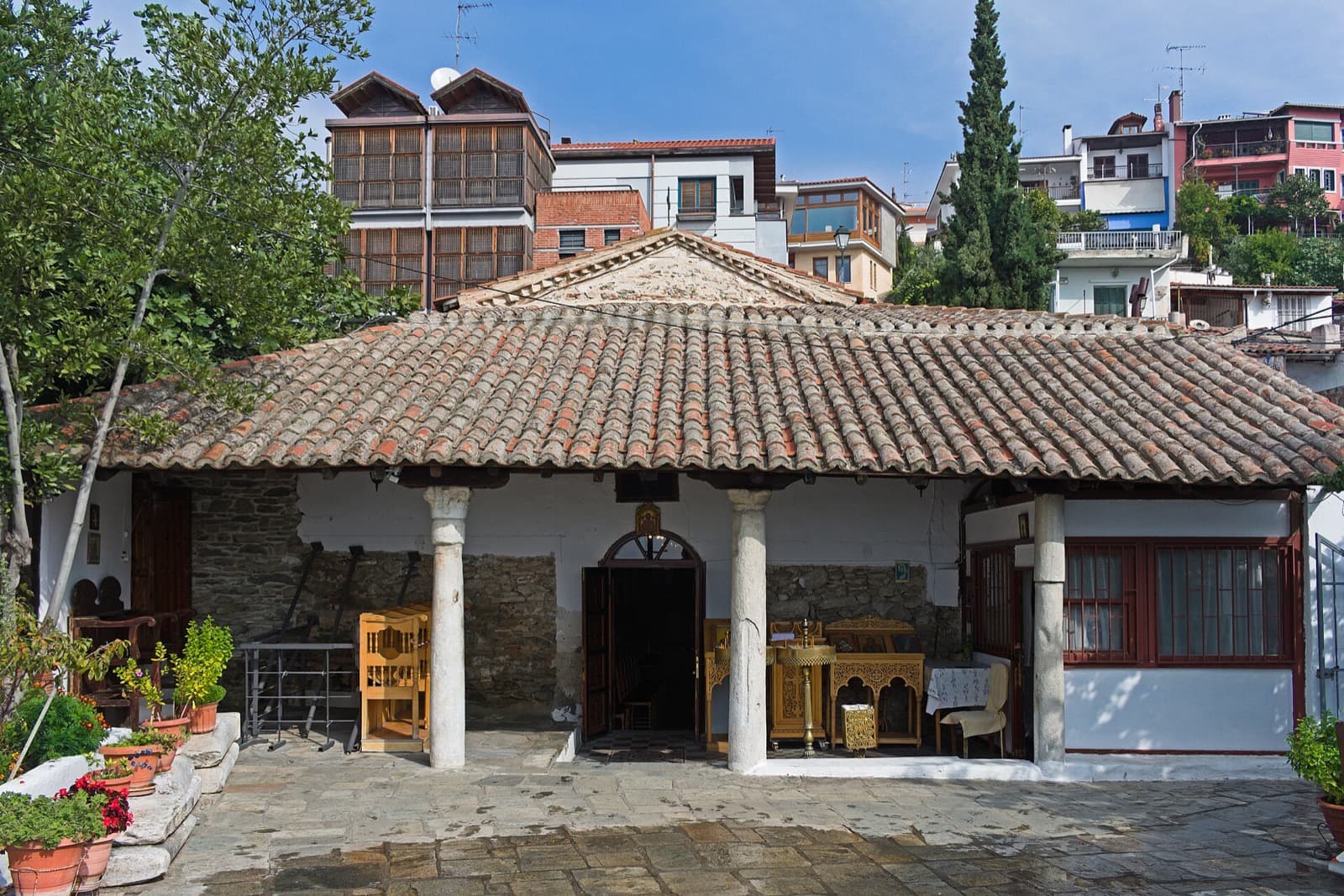
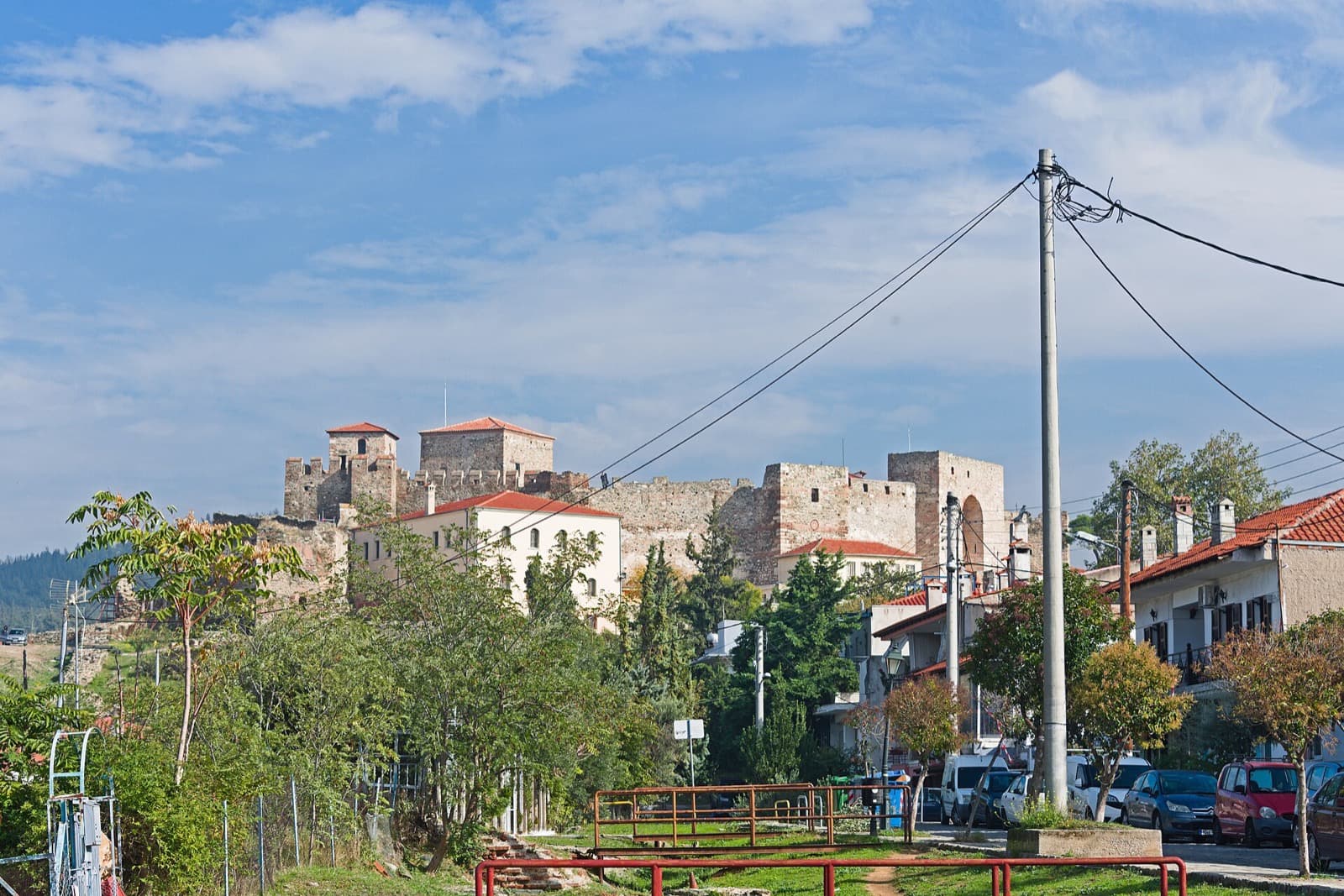
In August of nineteen seventeen a great fire consumed roughly two-thirds of central Thessaloniki. It burned for about thirty-two hours and left more than seventy thousand people homeless, and the French architect Ernest Hebrard replanned the burned centre into the modern grid you see below the walls. But the fire never reached Ano Poli, the Upper Town, and here the city offers its sharpest paradox. Ano Poli was long the poorer, higher quarter, the ground nobody wealthy wanted, and that is precisely why it survived intact: a maze of timber-framed Ottoman houses with jutting upper storeys, small Byzantine churches, and the ramparts crowning the hill. The Quarter the Fire Spared walk climbs through it. Wealth rebuilt below as a modern planned city. Poverty above preserved the old one.
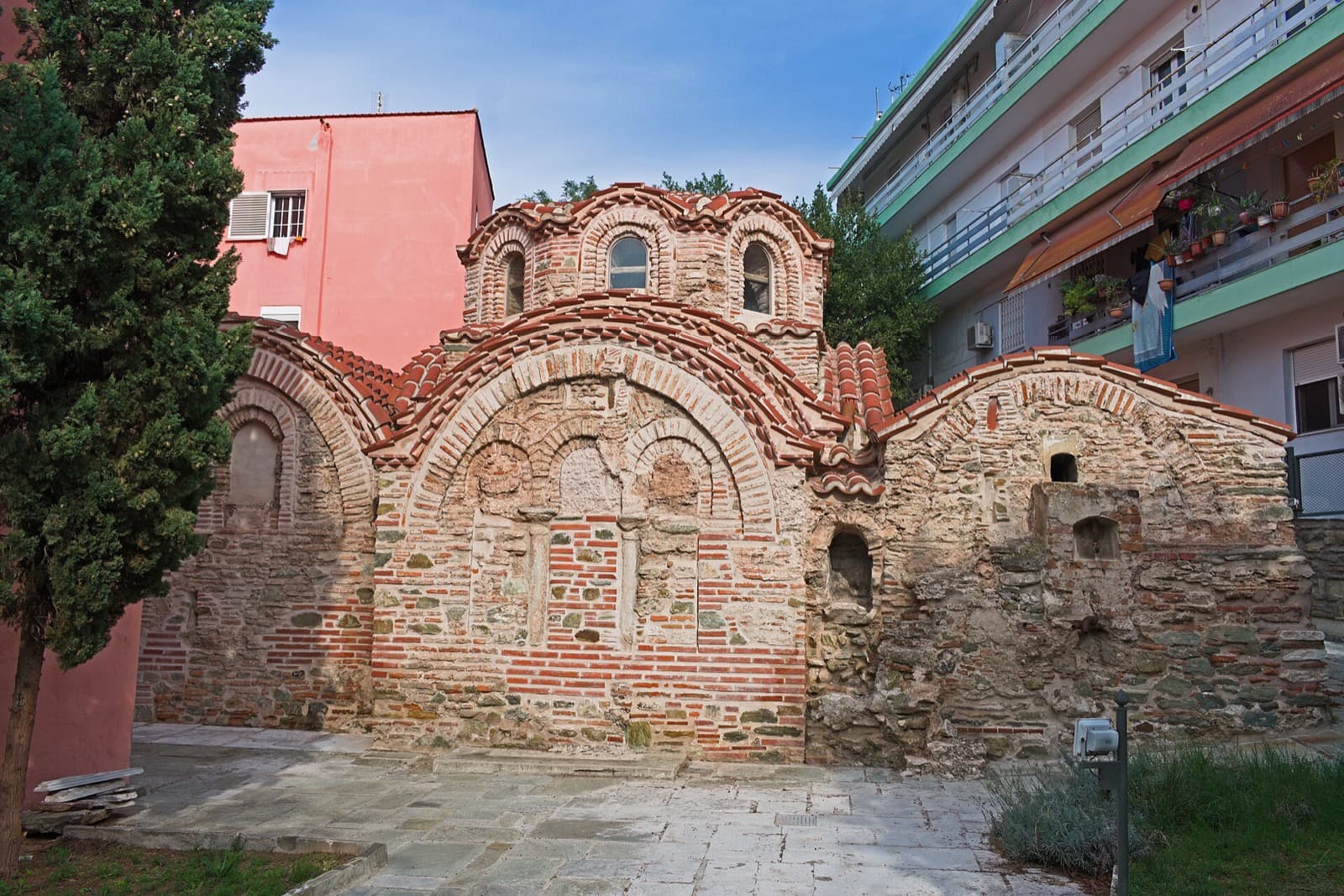
Obscurity turned out to be a kind of protection. Osios David, a late-fifth-century church almost nobody would notice from the lane, holds an apse mosaic of a youthful, beardless Christ from the last quarter of the fifth century, rare early Christian imagery that survived plaster, an Ottoman conversion to a mosque, and roughly fifteen hundred years before the church was reconsecrated in nineteen twenty-one. Agios Nikolaos Orfanos, a plain brick shell just inside the eastern wall, hides a near-complete fresco cycle from between thirteen ten and thirteen twenty, uncovered intact by restorers between nineteen fifty-seven and nineteen sixty. Vlatades Monastery, founded around thirteen fifty-one, is the only Byzantine-era monastery in the city still functioning, having never once closed across the centuries. The fabric that grandeur would have overwritten was left alone precisely because it sat on ground nobody bothered to claim.
The layer that is an absence
The newest layer cannot be photographed, because it is a loss. For more than four centuries Thessaloniki was a majority-Jewish city, a Sephardic metropolis so central to the Jewish world that it was called the Mother of Israel and the Jerusalem of the Balkans. Its Sephardic families descended from Jews expelled from Spain, and so much of the port's trade and labour rested in their hands that the docks fell quiet on the Jewish sabbath. The Mother of Israel walk moves through what remains of that world and through the absence at its heart.
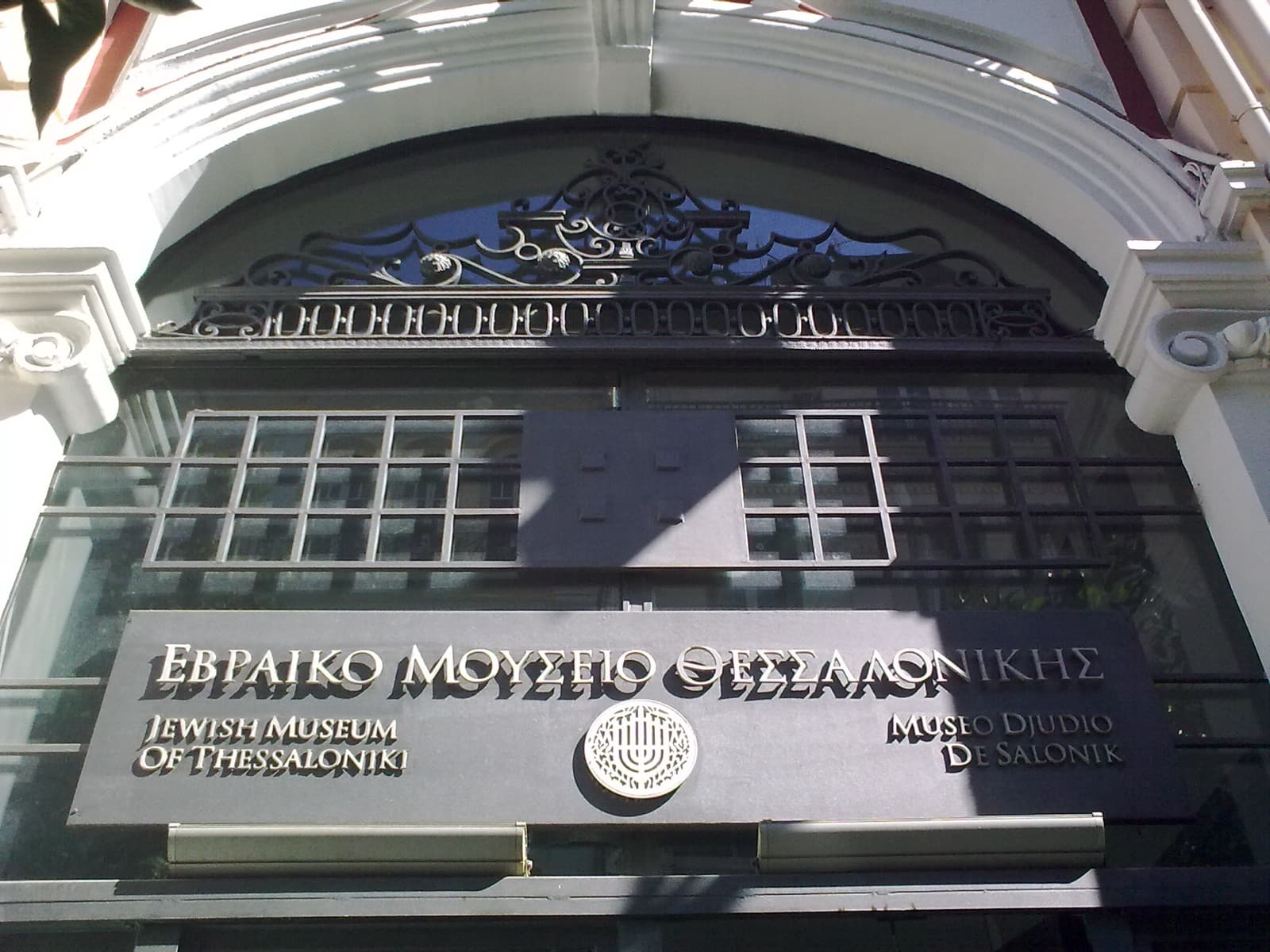
Reading it takes work, because so little is visible. The Modiano Market, completed on the twenty-third of March, nineteen twenty-five, carries the name of the Jewish engineer Eli Modiano and stands on the very site of the Talmud Torah Synagogue, which the fire destroyed: a Jewish name over ground where a Jewish house of study once stood. The Jewish Museum of Thessaloniki occupies a building from nineteen hundred and four, one of the few Jewish commercial buildings to survive the fire. And the Monastirioton Synagogue, built between nineteen twenty-five and nineteen twenty-seven, is the only synagogue in the city to survive from before the Second World War, spared for a bitter reason: during the occupation, while the community was being deported, the Red Cross used it as a warehouse. The building stood because it had been emptied of its purpose.
The end of that world has a date and a place. On the eleventh of July, nineteen forty-two, a Saturday remembered as Black Sabbath, the occupation authorities forced about nine thousand Jewish men to assemble in Eleftherias Square and beat them in the summer heat. Between March and August of nineteen forty-three, the Germans deported the Jews of the city to Auschwitz-Birkenau. According to the United States Holocaust Memorial Museum, the pre-war community of about fifty thousand was almost entirely destroyed, roughly ninety-six percent murdered, with fewer than two thousand survivors. Today the Menorah in Flames memorial by the sculptor Nandor Glid, created in nineteen ninety-seven and moved to Eleftherias Square in two thousand six, stands facing the sea. It was Greece's first Holocaust memorial in a public space.
That is why the city rewards slow, layered walking rather than a single marquee stop. To read Thessaloniki you learn to see the church inside the mosque inside the Roman hall, the medieval quarter the fire missed, and above all the vast community whose most important trace is what is no longer there. Start with the Thessaloniki walking tours and let each layer teach you to read the next.
Sources
- United States Holocaust Memorial Museum, Holocaust Encyclopedia, entry on Salonika (Thessaloniki)
- Jewish Museum of Thessaloniki, history of the Jewish community and the museum building
- UNESCO World Heritage List, Paleochristian and Byzantine Monuments of Thessalonika (inscribed nineteen eighty-eight)
- Ephorate of Antiquities of Thessaloniki City, monument records for the Rotunda, Arch and Palace of Galerius, Bey Hamam, and the Roman Forum
- Yad Vashem, records of the deportation of the Jews of Thessaloniki, nineteen forty-three
Frequently asked questions
- Why is Thessaloniki called a layered city?
- Successive rulers, Roman, Byzantine, and Ottoman, rewrote the city without fully erasing what came before, so buildings often hold several eras at once. The Rotunda, built around 306 A D as a Roman hall, became a Christian church, then a mosque with a minaret, then a monument. A fifth-century basilica, Panagia Acheiropoietos, still carries an Ottoman inscription along its northern colonnade.
- What was the Great Fire of 1917 and what did it spare?
- In August 1917 a fire burned about 32 hours, destroyed roughly two-thirds of central Thessaloniki, and left more than 70,000 people homeless. The burned lower city was replanned into a modern grid by the French architect Ernest Hebrard. The fire never reached Ano Poli, the Upper Town, so its Ottoman timber houses and small Byzantine churches survived intact.
- Why was Thessaloniki called the Mother of Israel?
- For more than four centuries Thessaloniki was a majority-Jewish, Sephardic city so central to the Jewish world that it was known as the Mother of Israel and the Jerusalem of the Balkans. Its families descended from Jews expelled from Spain, and so much of the port's trade rested in their hands that the docks fell quiet on the Jewish sabbath.
- What happened to the Jewish community of Thessaloniki?
- Between March and August 1943 the German occupiers deported the city's Jews to Auschwitz-Birkenau. According to the United States Holocaust Memorial Museum, the pre-war community of about 50,000 was almost entirely destroyed, roughly 96 percent murdered, with fewer than 2,000 survivors. The Menorah in Flames memorial at Eleftherias Square, moved there in 2006, was Greece's first public Holocaust memorial.
- Which Thessaloniki monuments are UNESCO World Heritage sites?
- The Paleochristian and Byzantine Monuments of Thessaloniki were inscribed on the UNESCO World Heritage List in 1988 as a group of fifteen monuments. They include the Rotunda, Agia Sophia, Panagia Acheiropoietos, Agios Dimitrios, the city walls, Osios David, Agios Nikolaos Orfanos, and Vlatades Monastery.
Ready to experience it?
The Quarter the Fire Spared
140 min · 4.2 km · challenging
More from Thessaloniki
Explore more at your own pace.
One Day in Thessaloniki: A Walkable Morning-to-Evening Itinerary
The Ano Poli Timber Houses: How the Poorest Quarter Kept the Oldest City
The Jewish Museum of Thessaloniki: Reading a Vanished City
The Rotunda of Thessaloniki: How One Building Holds Four Empires
Agios Dimitrios: The Basilica That Holds Thessaloniki's Whole Memory