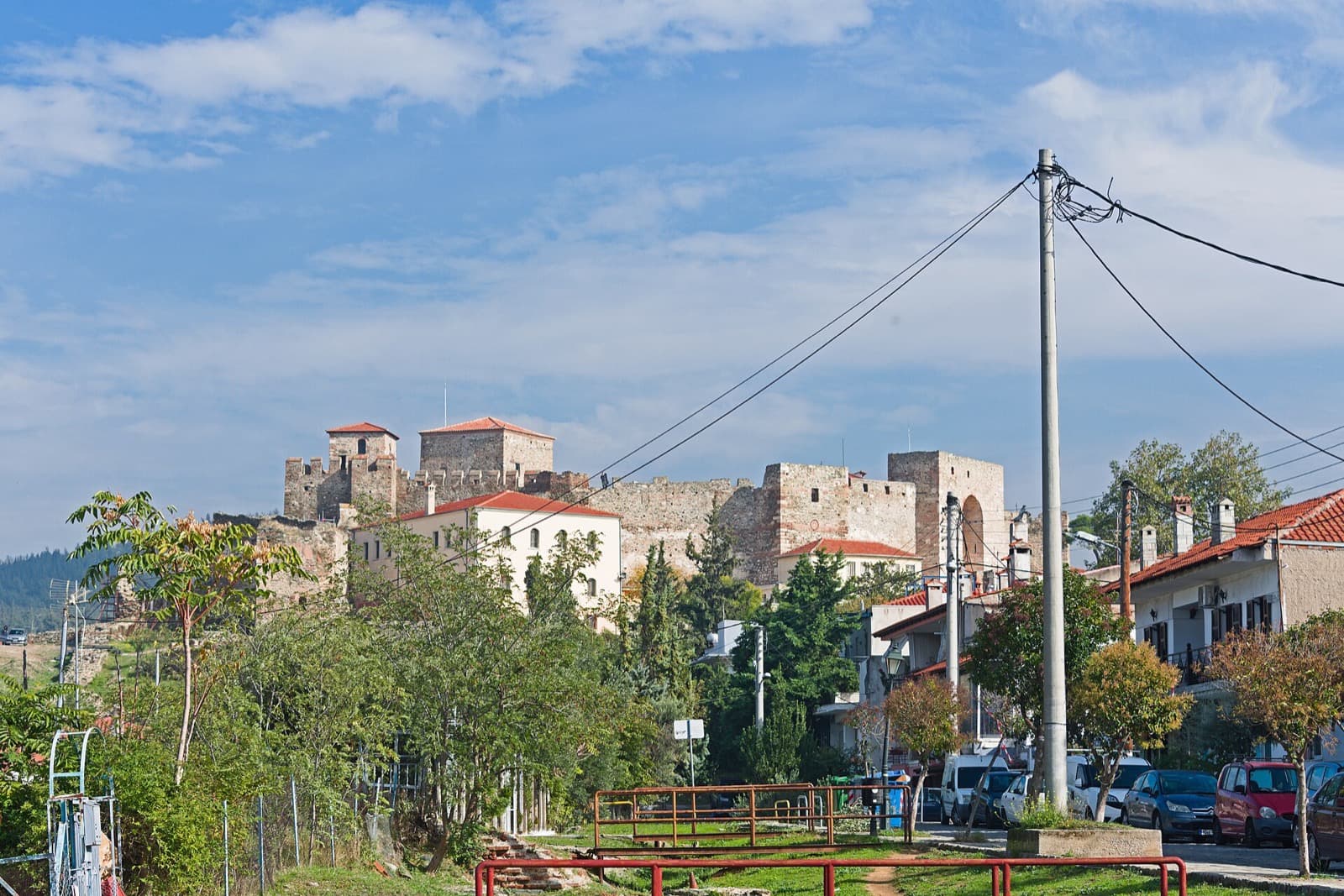
Climb above the rebuilt modern grid into Ano Poli, the one large district a catastrophic fire never reached, where Ottoman timber houses and small Byzantine churches hold a whole vanished city. The quarter that had the least is the one that kept the most.
Start · The Byzantine City Walls and the Acropolis: The Ring That Saved the Upper Town
DirectionsStops
- 1
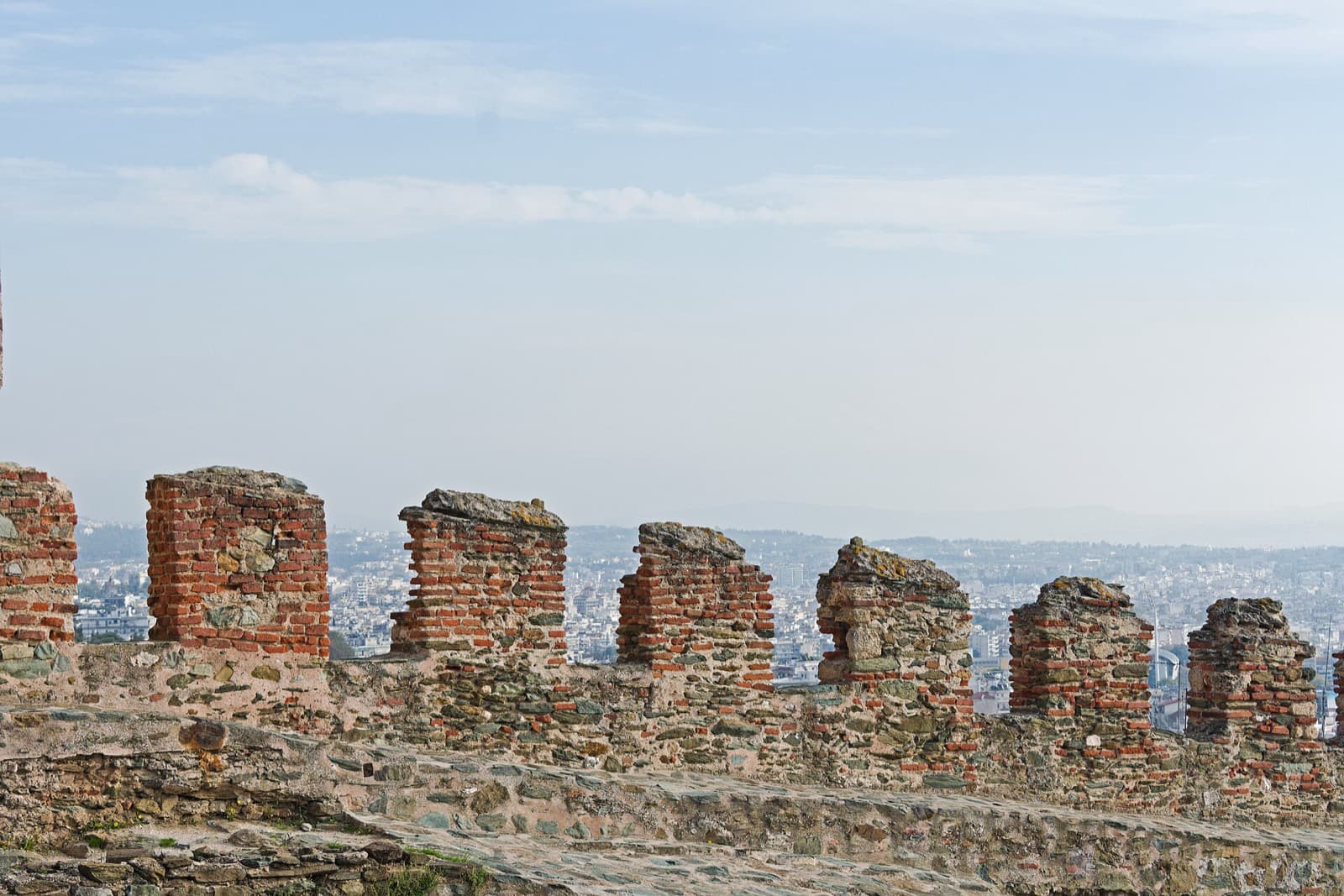
The Byzantine City Walls and the Acropolis: The Ring That Saved the Upper Town
The great fortified ring that enclosed the Upper Town and, in doing so, made its survival possible.
- 2
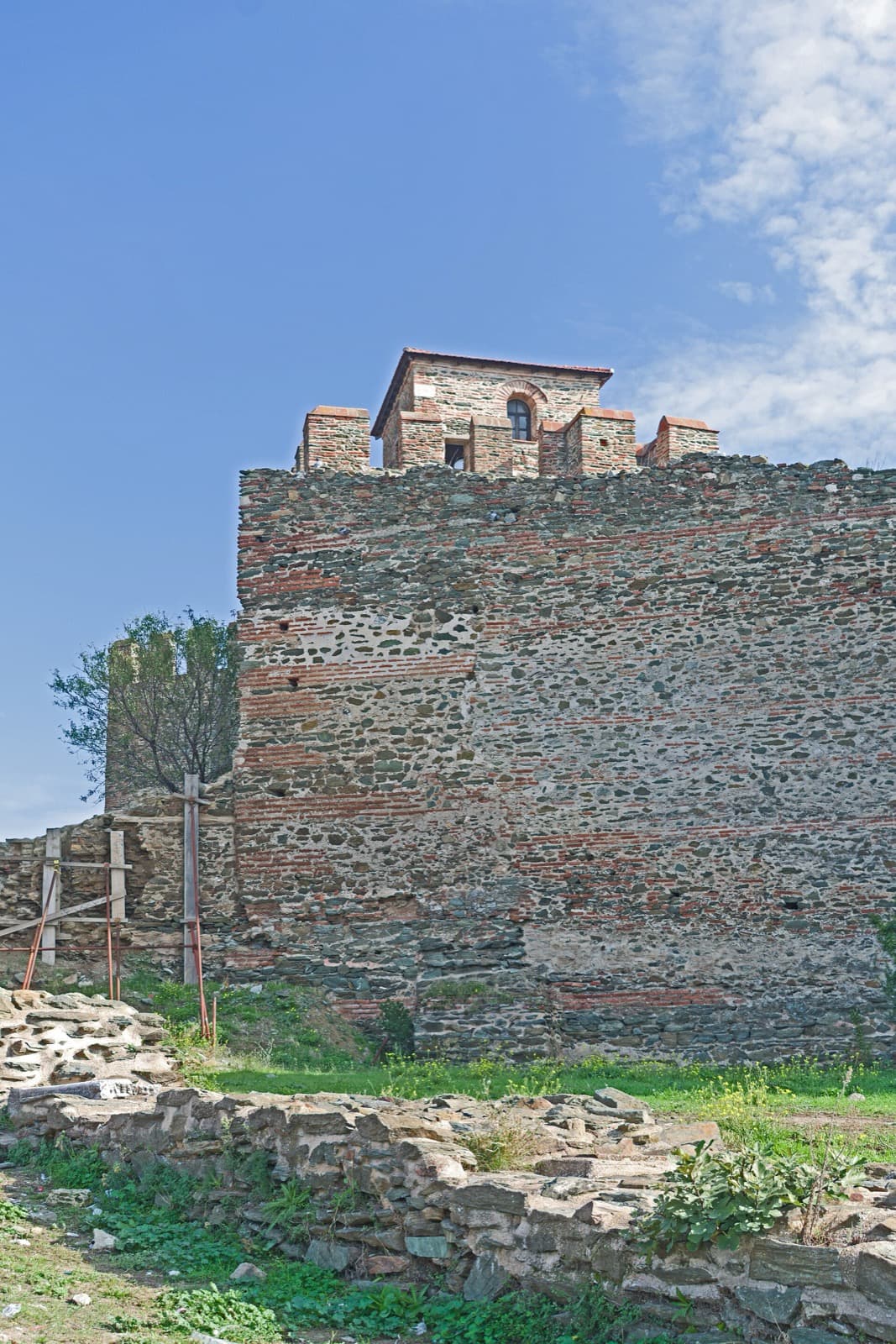
Eptapyrgio, the Seven Towers: Citadel, Fortress, Prison
The fortress crowning the acropolis, whose name means Seven Towers though it has ten, and which held prisoners into living memory.
- 3
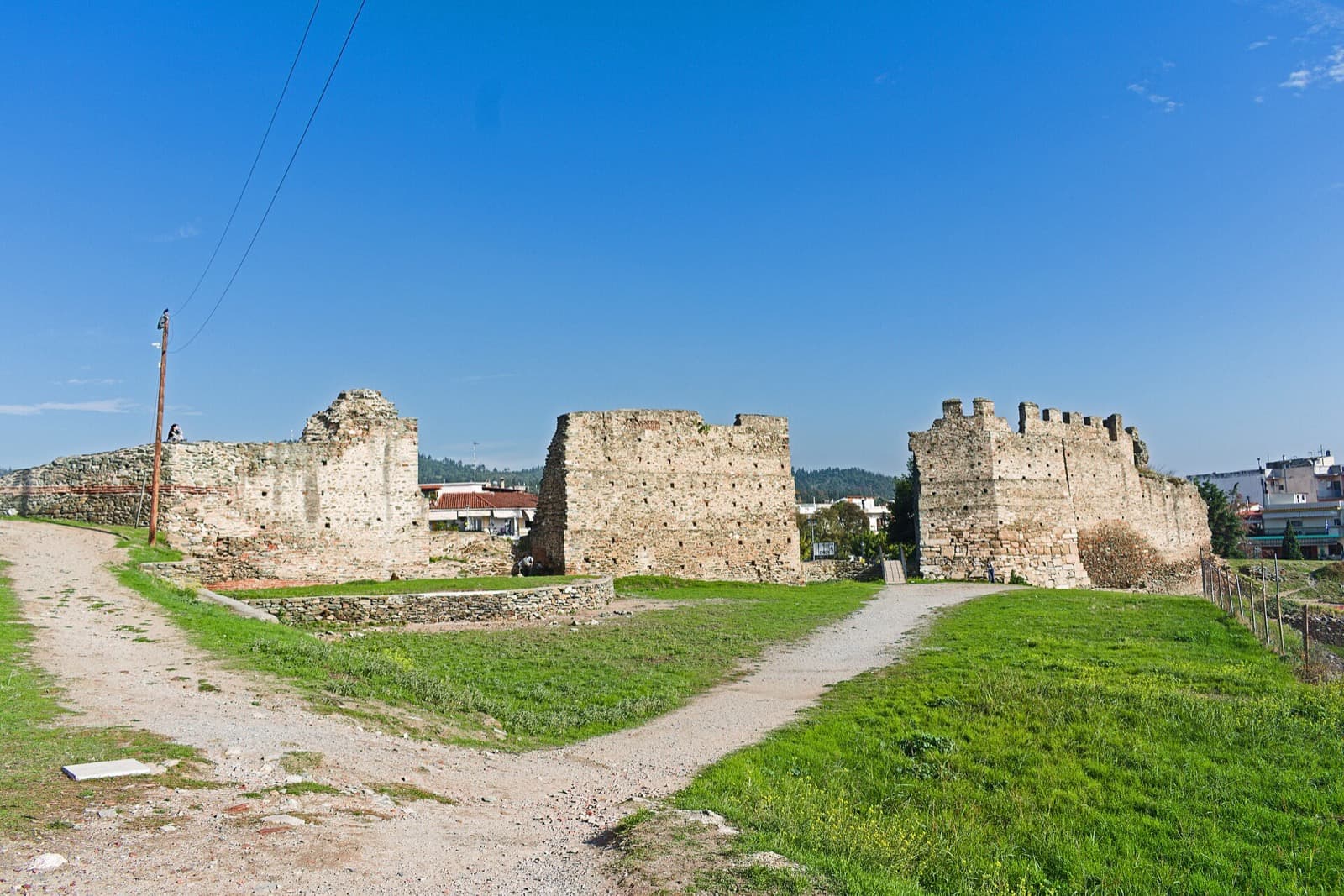
Trigonion Tower, the Balcony of Thessaloniki
The great round Ottoman bastion at the corner of the walls, whose terrace lays the whole paradox out below you: old town above, rebuilt city and sea beneath.
- 4
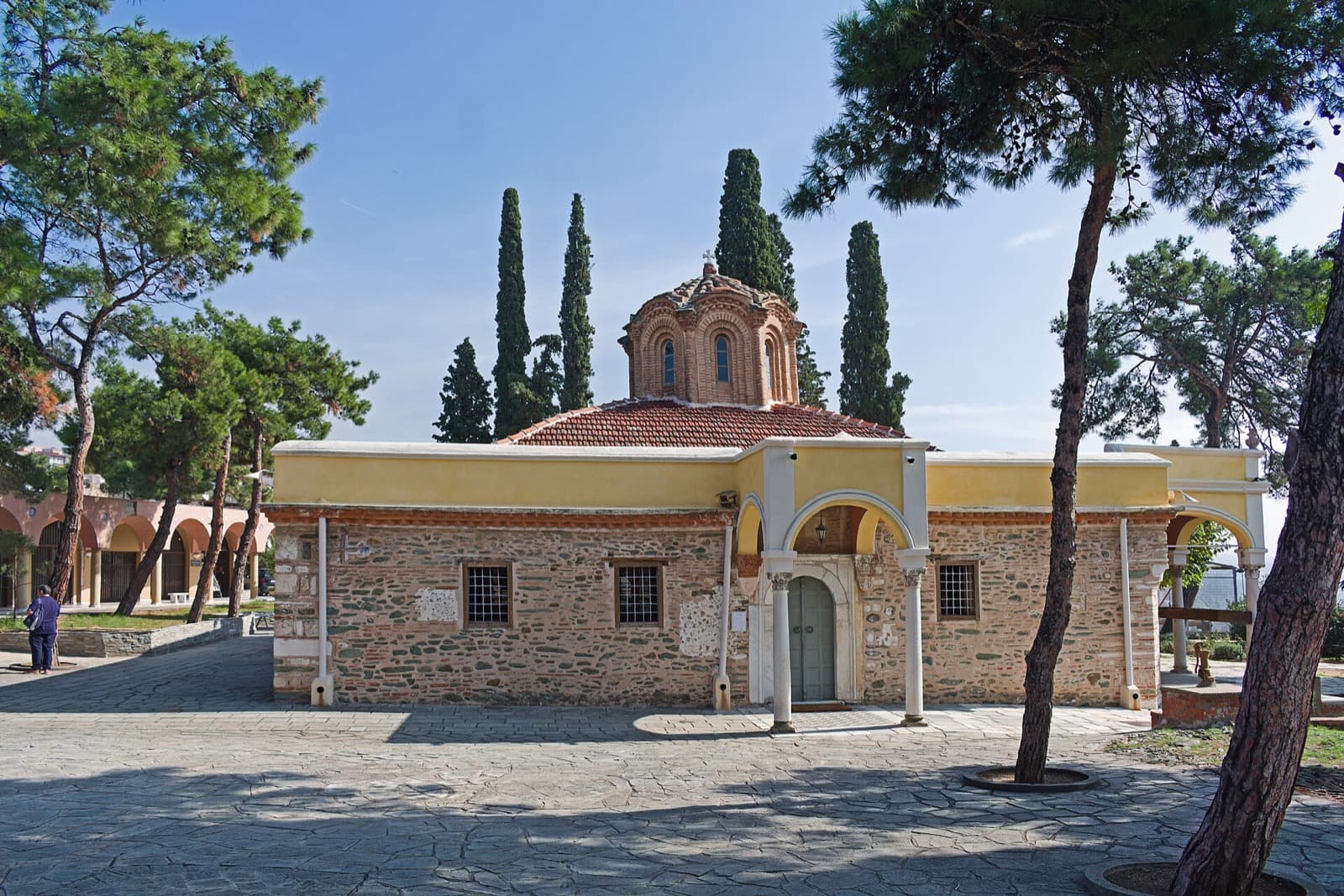
Vlatades Monastery: The One That Never Closed
The only Byzantine-era monastery in the city still functioning, founded in the mid-fourteenth century and never once shut across the centuries.
- 5
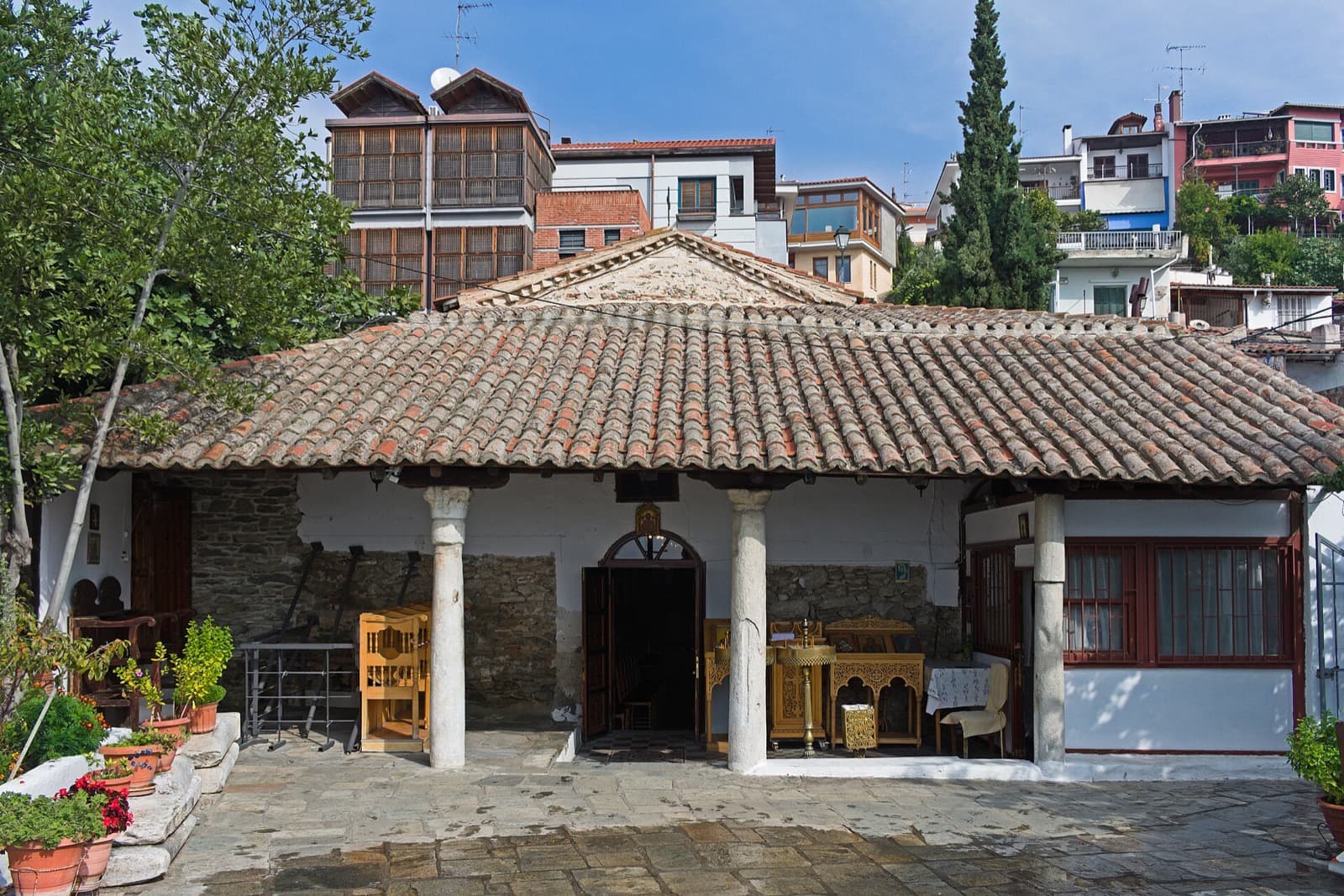
Osios David and the Beardless Christ
A tiny fifth-century church guarding one of early Christianity's rare surviving mosaics: a young, beardless Christ in glory that outlasted plaster, centuries, and fire.
- 6
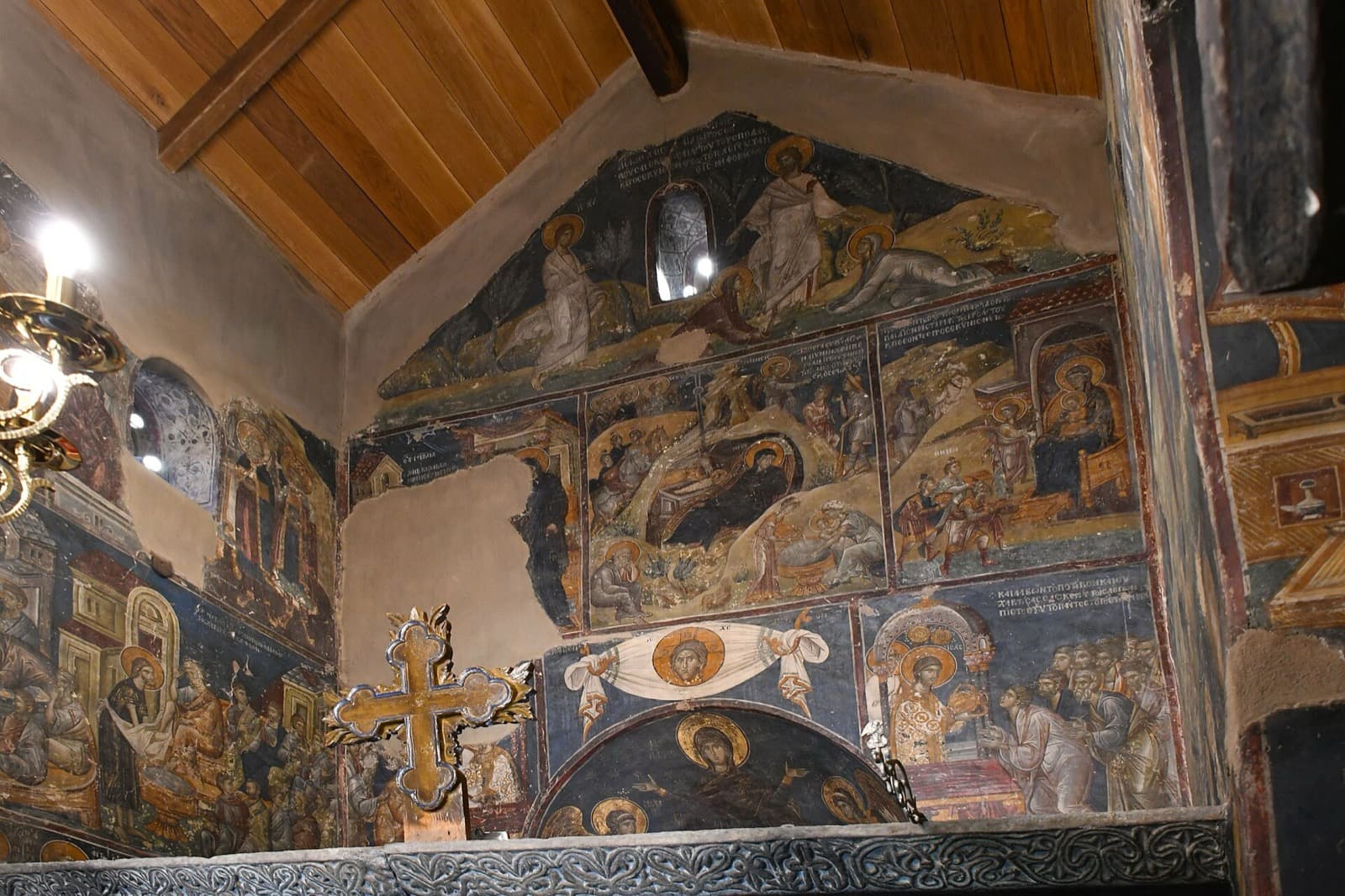
Agios Nikolaos Orfanos: A Humble Shell of Living Colour
An unassuming little church just inside the eastern wall that holds a near-complete early-fourteenth-century fresco cycle, uncovered intact in the twentieth century.
- 7
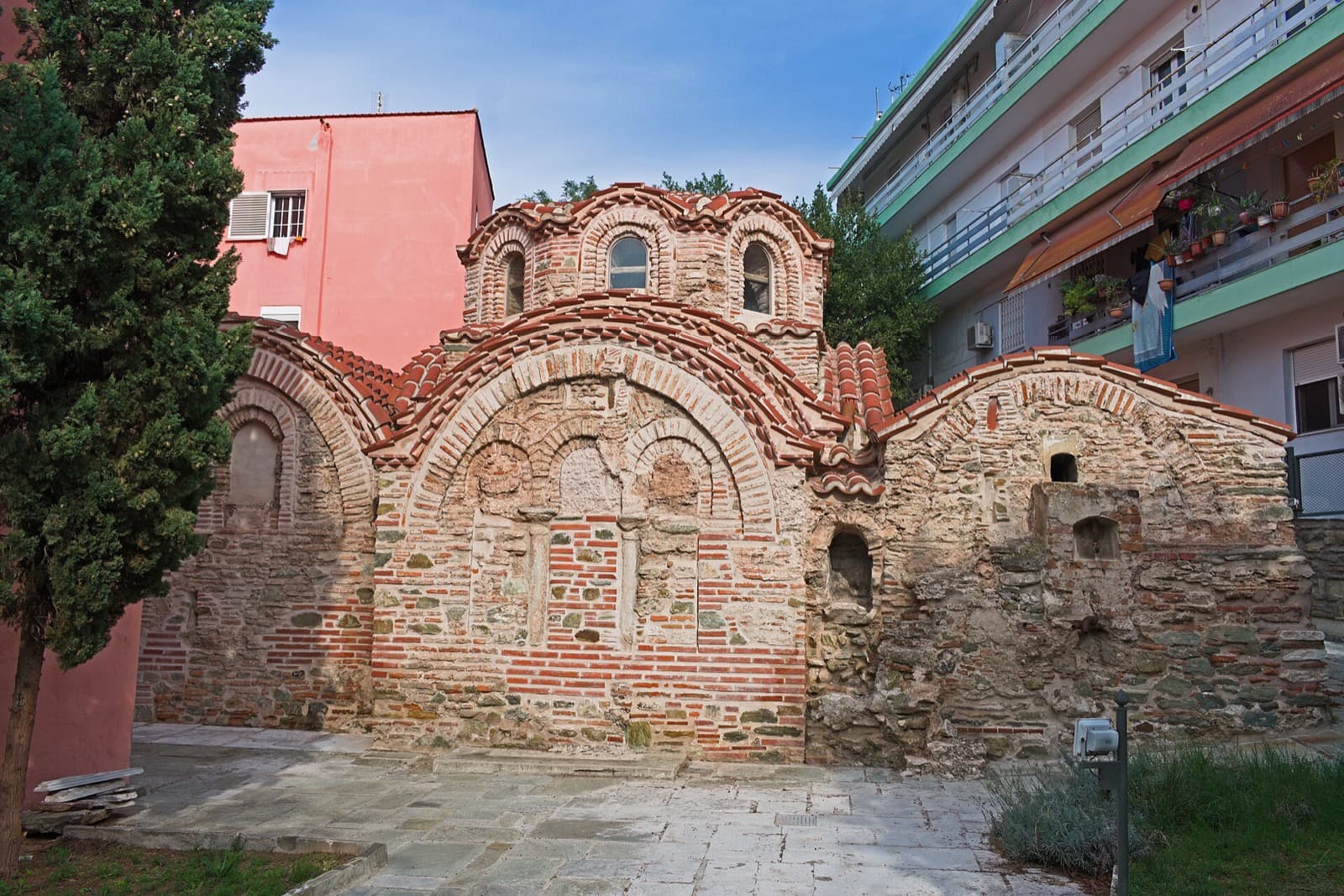
The Timber Houses and Lanes: The Fabric the Fire Spared
The everyday streetscape of Ano Poli, its overhanging timber houses and stepped lanes, where the walk's paradox is finally named in plain sight.
Details
Best Time to Visit
Late morning to mid-afternoon, when the small churches and the Ministry of Culture sites are most likely to be open. Come earlier in the day in summer to climb the hill before the full heat, and stay for late afternoon if you want the softest light over the gulf from the Trigonion Tower terrace. Spring and autumn are the most comfortable seasons for the stepped lanes.
Pro Tips
- •Start high and walk down. Begin at the walls and acropolis at the top, then let gravity carry you through the lanes to the lower stops, saving your legs on the climb.
- •Opening hours for the small churches and archaeological sites are limited and change seasonally, so check current times on arrival rather than counting on a fixed schedule.
- •Carry a bottle of water and small change for donations at the churches and the working monastery.
- •Dress modestly for Vlatades Monastery and the churches: covered shoulders and knees, and quiet inside.
- •Give the Trigonion Tower terrace real time. It is the one spot where the whole old-town-above, rebuilt-city-below paradox lays itself out in a single view, best on a clear day.
- •Wear proper walking shoes with grip. The cobbled and stepped lanes are steep and uneven, and smooth-soled shoes slip.
Safety & Precautions
- •Ano Poli is a real residential neighbourhood, not a museum. Keep your voice down in the lanes, do not photograph into people's homes or courtyards, and respect residents' privacy.
- •The stepped, cobbled lanes are steep and uneven and can be slippery when wet. Take the descent slowly, watch your footing, and use handrails where they exist.
- •Summers here are hot and dry with little shade on the exposed walls and terraces. Carry water, wear a hat and sun protection, and pace the climb.
- •Inside the churches and the working monastery, keep quiet and move gently. These are active places of worship, and some interiors restrict photography, so follow posted signs.
Travel advisory: Exercise Normal Precautions (Level 1).
Gallery
Related Reading
Go deeper on what you'll see, hear, and walk through.
Overview
Best Self-Guided Walking Tours in Thessaloniki (2026)
3 min
Overview
One Day in Thessaloniki: A Walkable Morning-to-Evening Itinerary
8 min
Overview
Thessaloniki Travel Guide: Days, Transport, Season, Safety
7 min
Thematic
Best History Walking Tours in Thessaloniki (2026)
2 min
Thematic
Thessaloniki: The City Read in Layers
7 min
Companion
The Ano Poli Timber Houses: How the Poorest Quarter Kept the Oldest City
7 min
Deep dive
Osios David and the Beardless Christ: Thessaloniki's Overlooked Mosaic
6 min
Read
What to Eat in Thessaloniki
6 min
Read the walk
The full story of The Quarter the Fire Spared, in words. Prefer to listen? Play it narrated, from home or on location.
Introduction
In August of nineteen seventeen a great fire consumed roughly two-thirds of central Thessaloniki, here in northern Greece. The elegant grid you can see below, its boulevards and squares laid out by the French architect Ernest Hebrard, is its planned replacement. But climb above the old walls into Ano Poli, the Upper Town, and you enter the one large district the fire never reached. This walk has seven stops. Give it about two and a half hours and roughly four kilometres on foot, though these are stepped, cobbled lanes, so let the hill set your pace. Here is the paradox you will trace the whole way up. Ano Poli was long the poorer, higher quarter, the ground nobody wealthy wanted. And that is precisely why it survived intact: a maze of narrow lanes, timber-framed Ottoman houses with jutting upper storeys, small Byzantine churches keeping medieval frescoes and mosaics, and the ramparts and citadel crowning the hill. Wealth rebuilt below as a modern planned city. Poverty above preserved the old one. The neighbourhood that had the least is the one that kept the most. Underneath runs a sober counter-current: this is a layered, many-times-conquered city, Roman, Byzantine, and Ottoman, marked by the fire and, above all, by the near-total erasure of its Sephardic Jewish majority in the Second World War. We will hold that with care. One more thing. Ano Poli is lived-in, real homes on real streets, so keep your voice low in the lanes as you go. When you arrive at the northern city walls beside the acropolis, begin with stop one.
1. The Byzantine City Walls and the Acropolis: The Ring That Saved the Upper Town
Start with the ring itself, because everything above it exists because of it. The walls of Thessaloniki run some four kilometres around the old city and the Upper Town. The stretch you are standing beside dates, in the fabric you can see, from the end of the fourth century to the middle of the fifth, raised on top of an earlier late-third-century Roman wall. Look closely at the construction. It is the classic late-Roman method: courses of cut ashlar stone alternating with bands of brick, a striped, layered masonry that is itself a kind of history you can read with your eyes. The emperors Galerius and Constantine the Great had strengthened these defences in the early fourth century. Now notice where you are. The northern part of the walls adjoins the acropolis, a separate fortified enclosure crowning the very top of the Upper Town, its own citadel within the citadel. This whole system belongs to the Paleochristian and Byzantine Monuments of Thessaloniki, fifteen monuments including these city walls, inscribed on the UNESCO World Heritage List in nineteen eighty-eight. Here is the quiet point that opens the walk. A wall is built to keep an enemy out. But a wall also seals a world in. Everything up here, the churches, the timber houses, the stepped lanes, sat protected inside this ring, high and apart, while the city below changed hands and, one August, burned. The least-favoured ground, ringed and forgotten, kept the most. Run your hand along the stone if you like, then look up the slope toward the crown of the hill.
2. Eptapyrgio, the Seven Towers: Citadel, Fortress, Prison
At the highest point of the acropolis, in its northeastern corner, stands the fortress Eptapyrgio, known in Ottoman Turkish as Yedi Kule. Both names mean the same thing, Fortress of Seven Towers, and both are, strictly speaking, wrong. Count them and you find ten. The name probably echoes the famous Yedikule fortress in Constantinople rather than the towers in front of you. The oldest part is the five northern towers and the wall joining them, likely built in the late fourth century under the emperor Theodosius the First, who reigned from three hundred seventy-nine to three hundred ninety-five. The southern towers came later, probably in the twelfth century. Then the layers keep stacking. A surviving inscription records that one tower was rebuilt in fourteen thirty-one by Cavus Bey, the first Ottoman governor of the city. And here the fortress turns from defence to confinement. In the eighteen nineties it was converted into a prison, and a prison it remained, remarkably, until nineteen eighty-nine, when it finally moved outside the city. Across those decades it held political prisoners through some of the hardest chapters of the twentieth century. I will not dramatize that. But stand here and hold both truths at once: a Byzantine citadel raised to guard a Christian city, and a place where, within living memory, people were locked away. That doubling, the same stone serving power in changing hands, is the whole story of this hill compressed into one fortress. Take your time with the towers, then carry on toward the corner of the walls.
3. Trigonion Tower, the Balcony of Thessaloniki
Here at the northeastern corner, where the north and east ramparts converge, rises the round mass of the Trigonion Tower, the Triangle Tower. Under Ottoman rule it went by other names too, the Chain Tower and the Belted Tower, for a relief band that circles it like a belt. This is an Ottoman artillery bastion of the late fifteenth century, raised after the Ottoman conquest of fourteen thirty to hold heavy guns against siege, and it took the place of an earlier Byzantine tower on the spot. It is a serious piece of engineering, roughly twenty-four metres across at its base and about twenty-two metres high, and for a time it served as a gunpowder magazine and arsenal. But you have not come for the masonry. You have come for the terrace just below, the reason people call this the balcony of Thessaloniki. Turn and look. Behind and above you, the rooftops of the Upper Town spill down the slope, timber houses and small churches in a dense old tangle. Below and beyond, the rebuilt lower city stretches out in Ernest Hebrard's orderly grid, laid over the ashes of nineteen seventeen. And past it all lies the water, the Thermaic Gulf, opening south. On very clear days you can pick out Mount Olympus far across the gulf on the horizon. This single view holds the entire walk. The old world sits above you. The new one lies below. The fire drew the line between them, and you are standing right on it. Stay a while. This is the turn where the paradox stops being an idea and becomes a thing you can see.
4. Vlatades Monastery: The One That Never Closed
Step now into the quiet of Vlatades, or Vlatadon, Monastery. Moni simply means monastery, and this one holds a distinction the whole city can claim through it: of all the Byzantine-era monasteries of Thessaloniki, this is the only one still functioning today. It was founded…
Full narration for this stop unlocks with the tour.
5. Osios David and the Beardless Christ
This small church is Osios David, the surviving katholikon of what was once the Latomou Monastery, and it dates to the late fifth century. It looks modest from outside, and that is the point of it. Step in and lift your eyes to the apse, because what is up there is…
Full narration for this stop unlocks with the tour.
6. Agios Nikolaos Orfanos: A Humble Shell of Living Colour
Here is the climax of everything this walk has been circling. Agios Nikolaos Orfanos, agios meaning saint, is a small early-fourteenth-century Byzantine church tucked just inside the eastern wall of the Upper Town. From the lane it is almost nothing, a low, plain shell of brick…
Full narration for this stop unlocks with the tour.
7. The Timber Houses and Lanes: The Fabric the Fire Spared
Finish here, not at a monument but in the ordinary streets, because the ordinary is the whole point. Look up at the houses leaning over these narrow lanes. Many are timber-framed, built on a skeleton of braced vertical and diagonal timbers filled in with mud, lath, and plaster,…
Full narration for this stop unlocks with the tour.