The Quarter the Fire Spared
140 min · 4.2 km · challenging
Thessaloniki fits comfortably into one full day on foot: a walkable historic core where Roman monuments, Byzantine churches, an Ottoman upper town, and the memory of a lost Jewish metropolis sit within a few streets of each other. You can trace the whole arc from morning to evening without a car, walking a compact center that runs roughly from the Roman monuments in the east down to the seafront and the White Tower. This guide lays out a morning-to-evening route, ties each stretch to a self-guided audio tour you can follow at your own pace, and flags the opening hours, tickets, and terrain to check before you go.
The short version: start high in the morning with the Roman and Byzantine core, spend the middle of the day among churches and the market, and finish along the seafront at the White Tower for the evening light. The three neighborhood walks below cover the whole itinerary if you want narration in your ear as you go. You can browse them all on the Thessaloniki walking tours hub or on the city page at /greece/thessaloniki.
Is one day enough for Thessaloniki?
One day is enough to see the essential Thessaloniki because the historic monuments cluster tightly in the center. The city center is small and dense, and most of the major sites, the Rotunda, the Arch of Galerius, Agia Sophia, Agios Dimitrios, the Roman Forum, Aristotelous Square, and the White Tower, sit within a walkable grid of perhaps a kilometer or two across. The main effort is elevation, not distance: the Upper Town (Ano Poli) climbs a steep hill above the modern grid, so plan that stretch for when your legs are fresh.
If you have more than a day, spread the three neighborhood walks across a morning and an afternoon each. For a single full day, the sequence below stitches the best of all three into one continuous route.
Morning: the Upper Town and the Roman core
Hear a stop from this walk
The Timber Houses and Lanes: The Fabric the Fire Spared
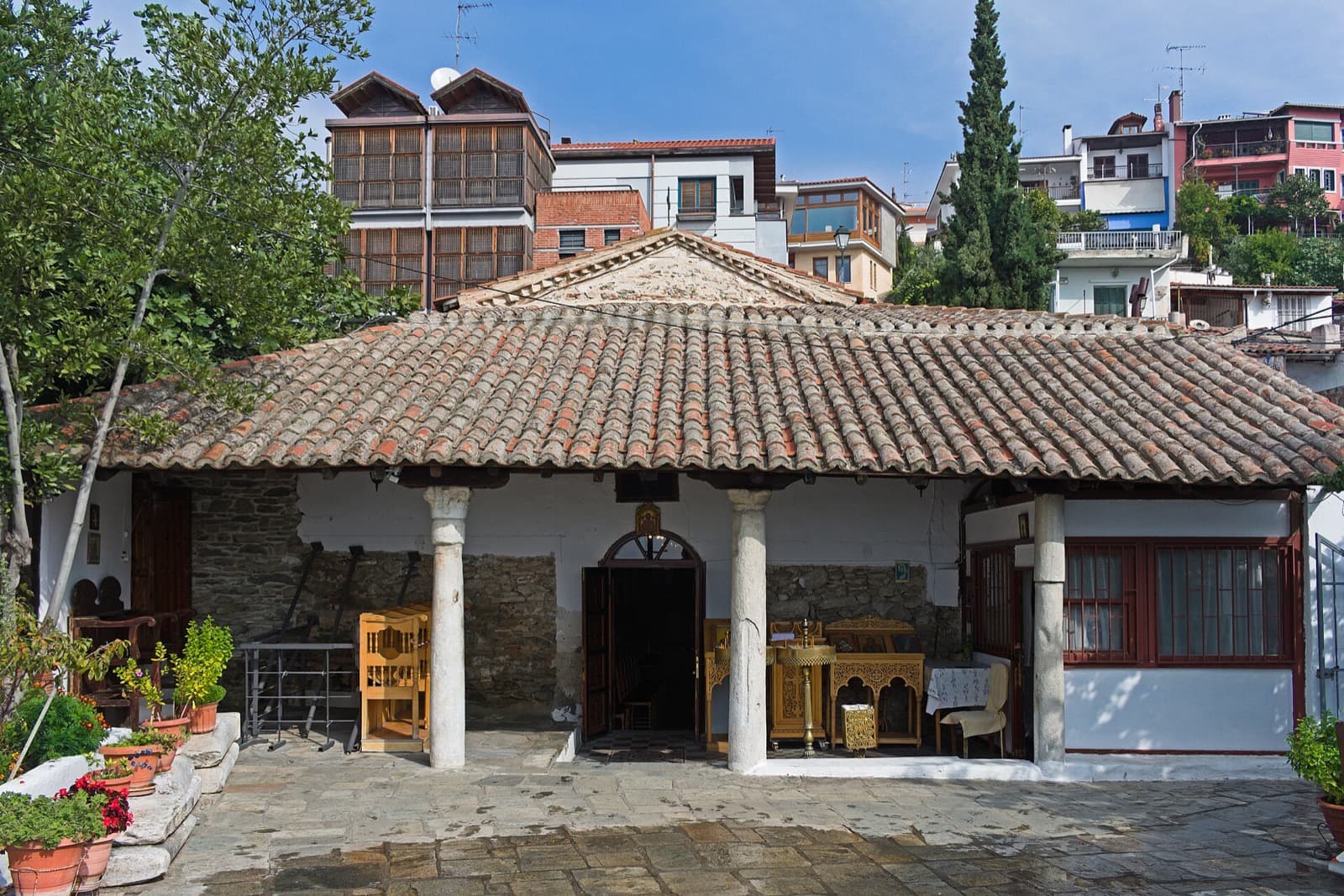
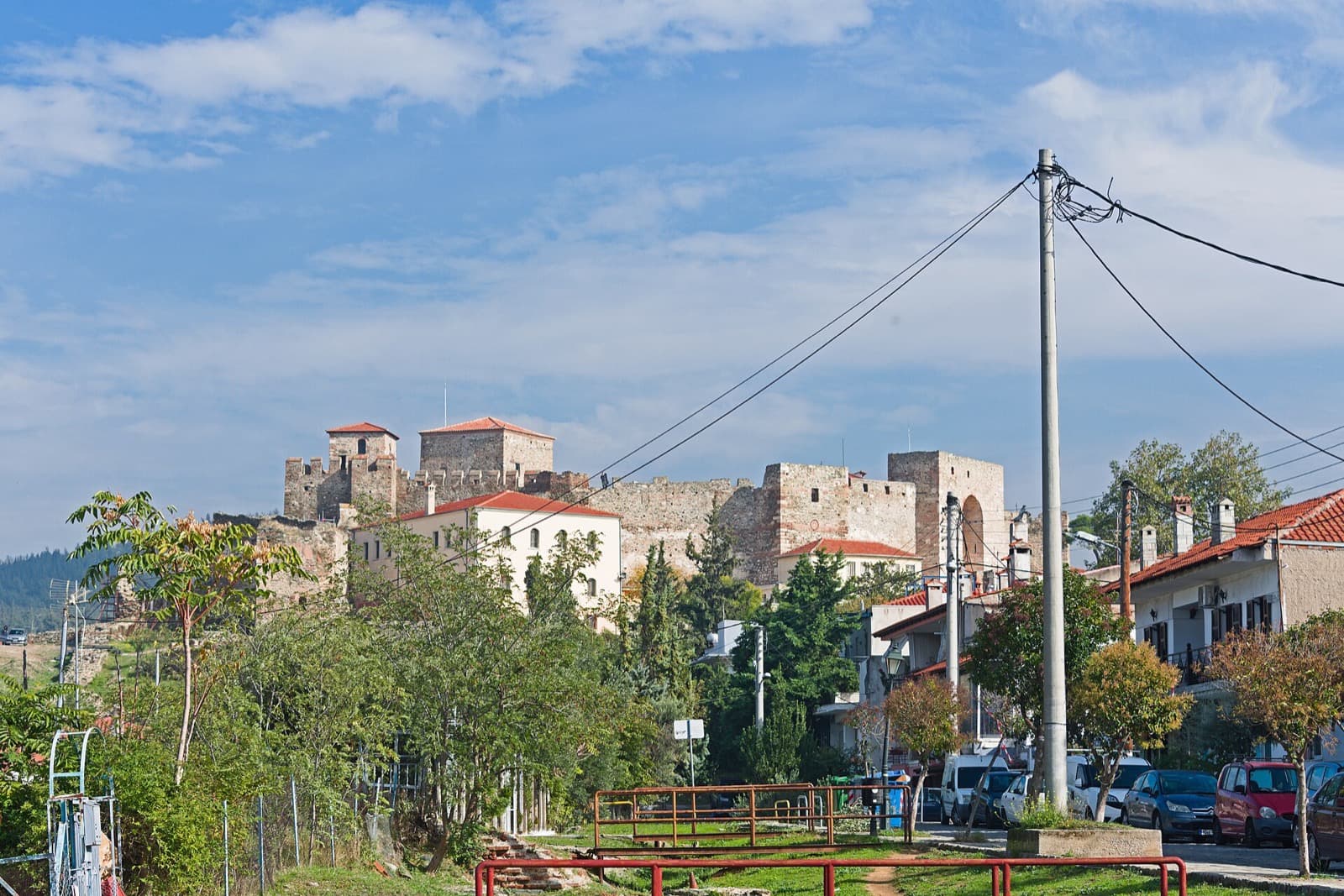
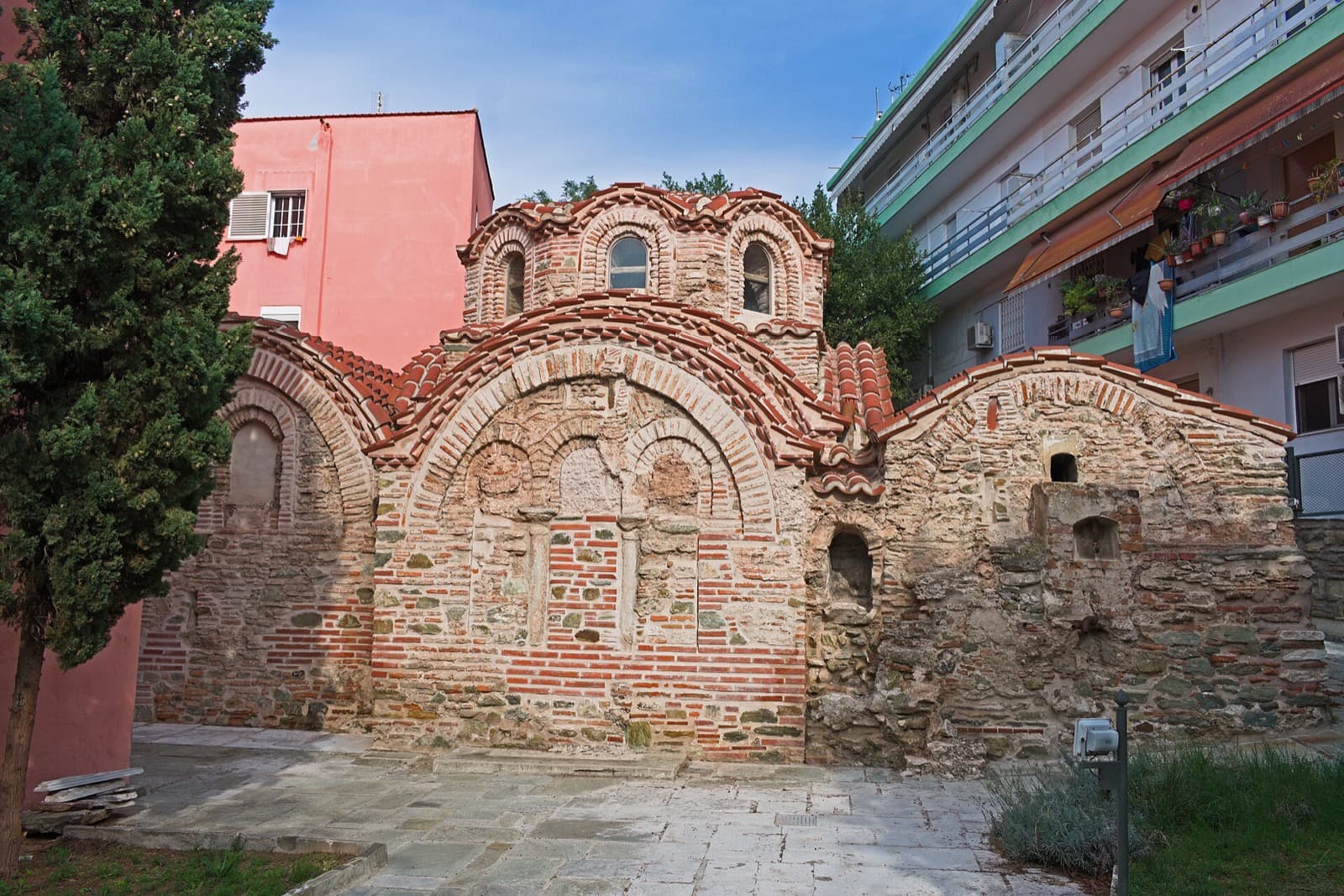
Start high while it is cool. The Upper Town survived the great fire of 1917 that consumed roughly two-thirds of central Thessaloniki, so its Ottoman timber houses, small Byzantine churches, and long stretches of the city walls preserve an older city the grid below lost. The practical rule here is to begin at the top, at the Byzantine walls and the acropolis, and let gravity carry you down through the stepped, cobbled lanes past the Trigonion Tower terrace, Vlatades Monastery, and the small churches of Osios David and Agios Nikolaos Orfanos. Wear shoes with grip, since the lanes are steep and uneven, and carry water because shade is thin. This stretch is the Ano Poli self-guided walk, about 4.2 kilometers and roughly two and a half hours at an easy pace.
The Byzantine walls, the Eptapyrgio fortress (known in Ottoman Turkish as Yedi Kule), the Trigonion Tower terrace, and Vlatades Monastery are free to visit, with donations welcomed at the working monastery. Some of the small churches keep limited, seasonally variable hours, so treat them as bonuses rather than fixed appointments and check times when you arrive.
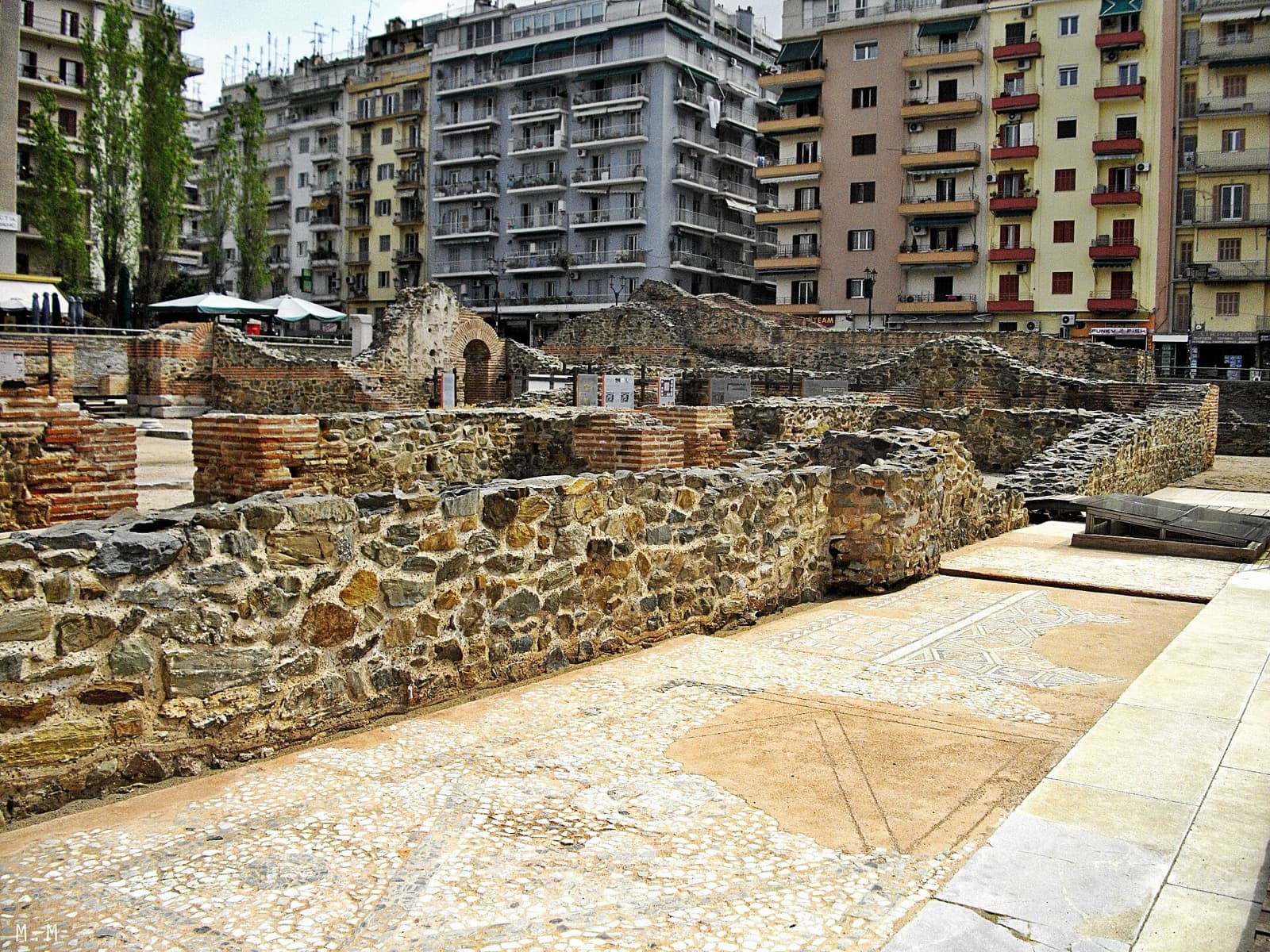
From the foot of the hill, walk into the Roman and early-Christian core. This is a short axis you can read like a core sample of the city: the Rotunda (a colossal brick cylinder raised around 306 under the tetrarch Galerius), the Arch of Galerius that locals call the Kamara, the open ruins of the Palace of Galerius, and the domed churches of Agia Sophia and Panagia Acheiropoietos. The Rotunda and Galerius walk covers this ground, about 3.1 kilometers and roughly ninety minutes, ending at the great basilica of Agios Dimitrios.
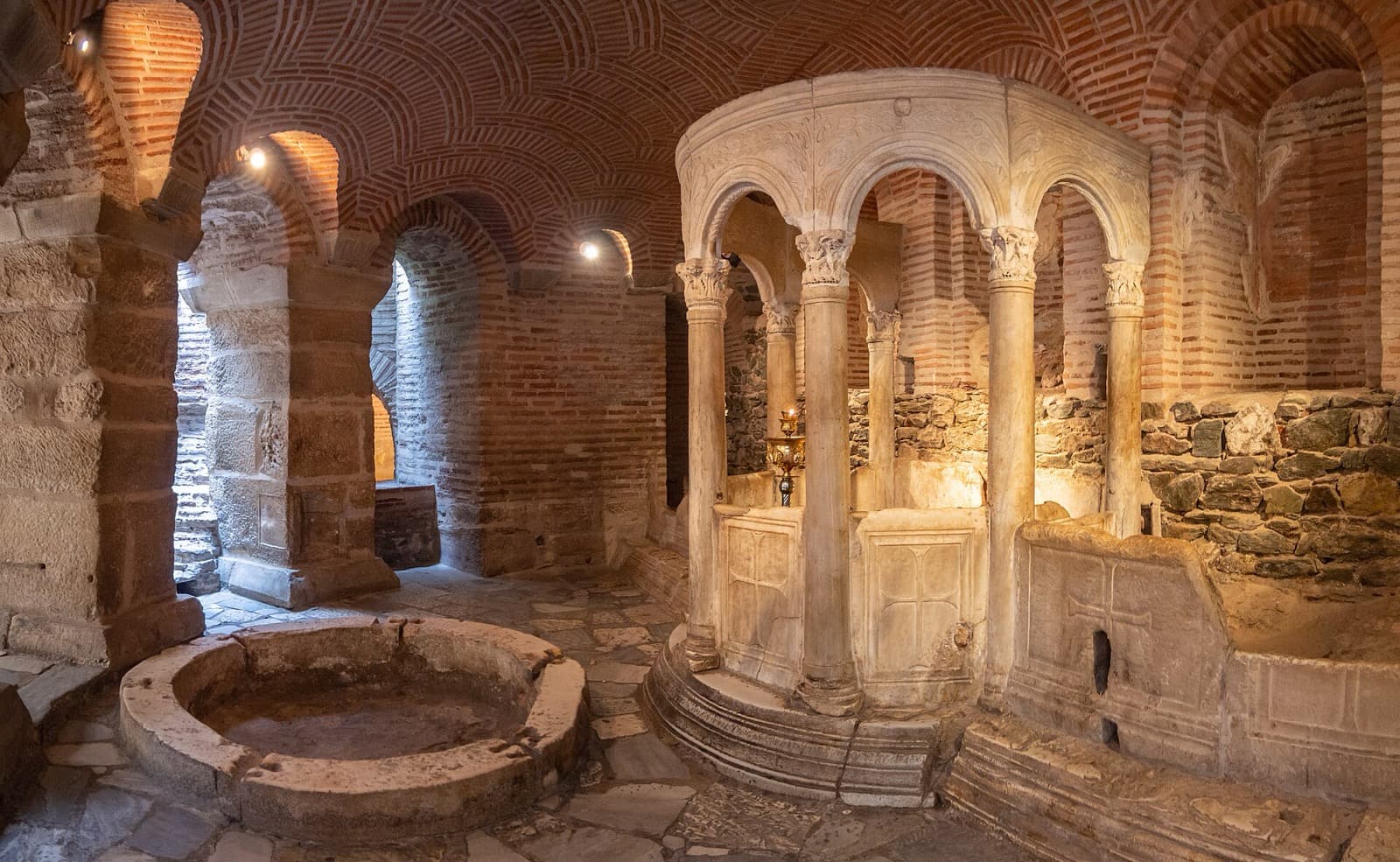
The Rotunda charges a small admission, commonly around 6 euros, with reduced and free days for eligible visitors, so confirm the current fee and hours at the door. The open archaeological sites at the Palace of Galerius and the Roman Forum have uneven ancient footing and almost no cover. The churches, Agia Sophia, Panagia Acheiropoietos, and Agios Dimitrios, are active places of worship and free to enter: dress modestly, keep your voice low, and step around any service in progress. At Agios Dimitrios, take a few extra minutes to go down into the crypt, which is free and holds the church's oldest layer.
Midday: the market and lunch
By the middle of the day you have earned a slower pace. Drop toward the Modiano Market, a covered hall built between 1922 and 1925 and named for the engineer Eli Modiano, who came from one of the city's prominent Jewish families. Around it, the market streets are a good place to eat: mezze, grilled fish, and the small plates the city is known for. Keep bags zipped in the press of stalls.
This is also where the third walk begins. The Ladadika and Jewish Thessaloniki walk moves through the old oil-trade quarter of Ladadika, the Modiano Market, the Jewish Museum, the Monastirioton Synagogue, and the seafront memorials, about 3.9 kilometers and roughly ninety-five minutes, mostly flat and near the water.
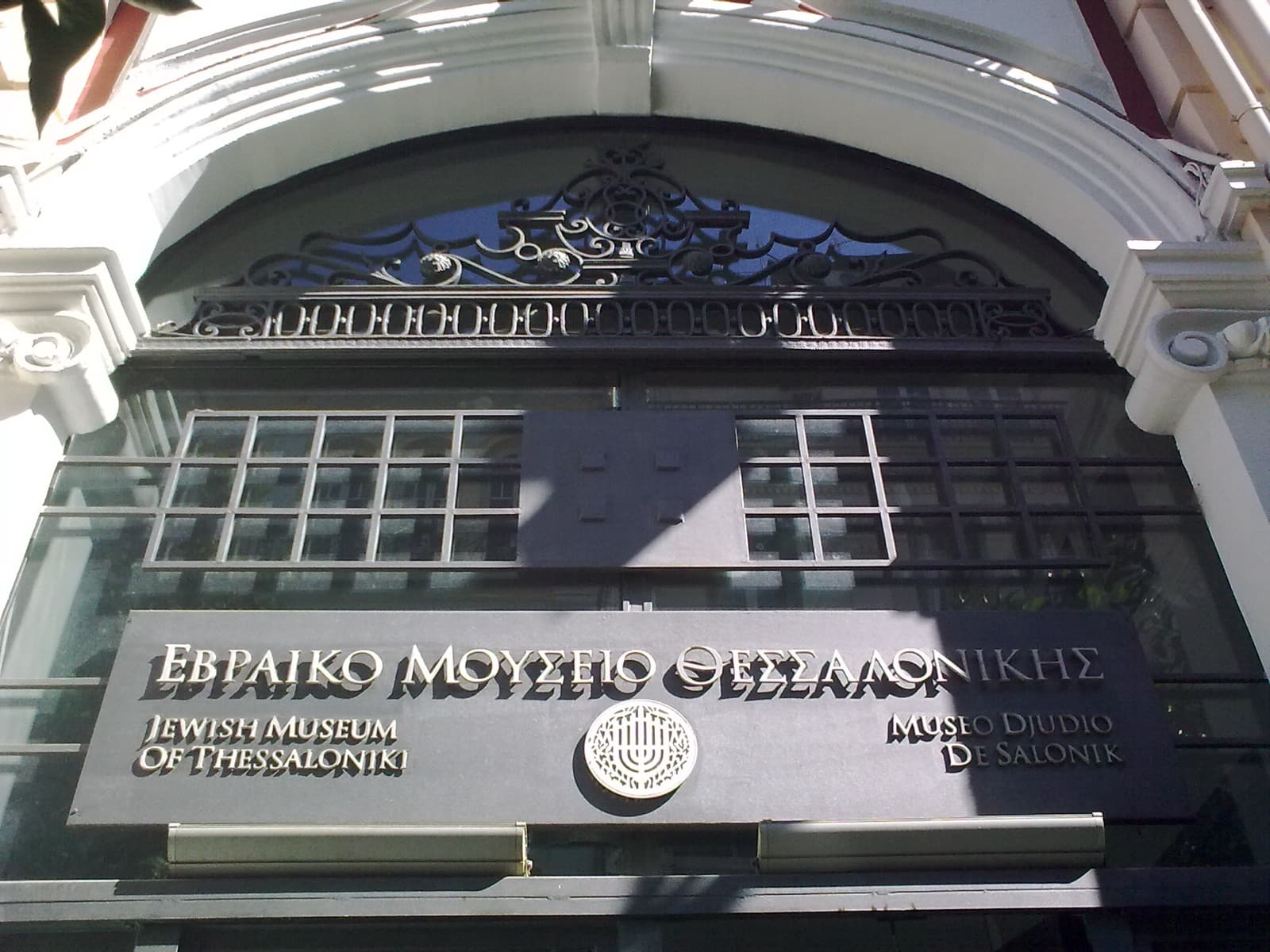
For more than four centuries Thessaloniki was a majority-Jewish city, a Sephardic center so important it was called the Mother of Israel. Between the spring and summer of 1943, the Nazi occupiers deported roughly 96 percent of that community to Auschwitz-Birkenau. The Jewish Museum of Thessaloniki, at 13 Agiou Mina Street, is the interpretive anchor for that history. Note its hours carefully if you want to go inside: it is generally open in the mornings on most weekdays and on Sunday, with an added evening window midweek, and it is closed on Saturdays and public and religious holidays. Because the exact days and hours vary between sources, confirm current hours and the modest admission before you set out. Treat the Eleftherias Square roundup site and the Menorah in Flames memorial with quiet and dignity; these are places of mourning, not backdrops.
Afternoon into evening: the seafront and the White Tower
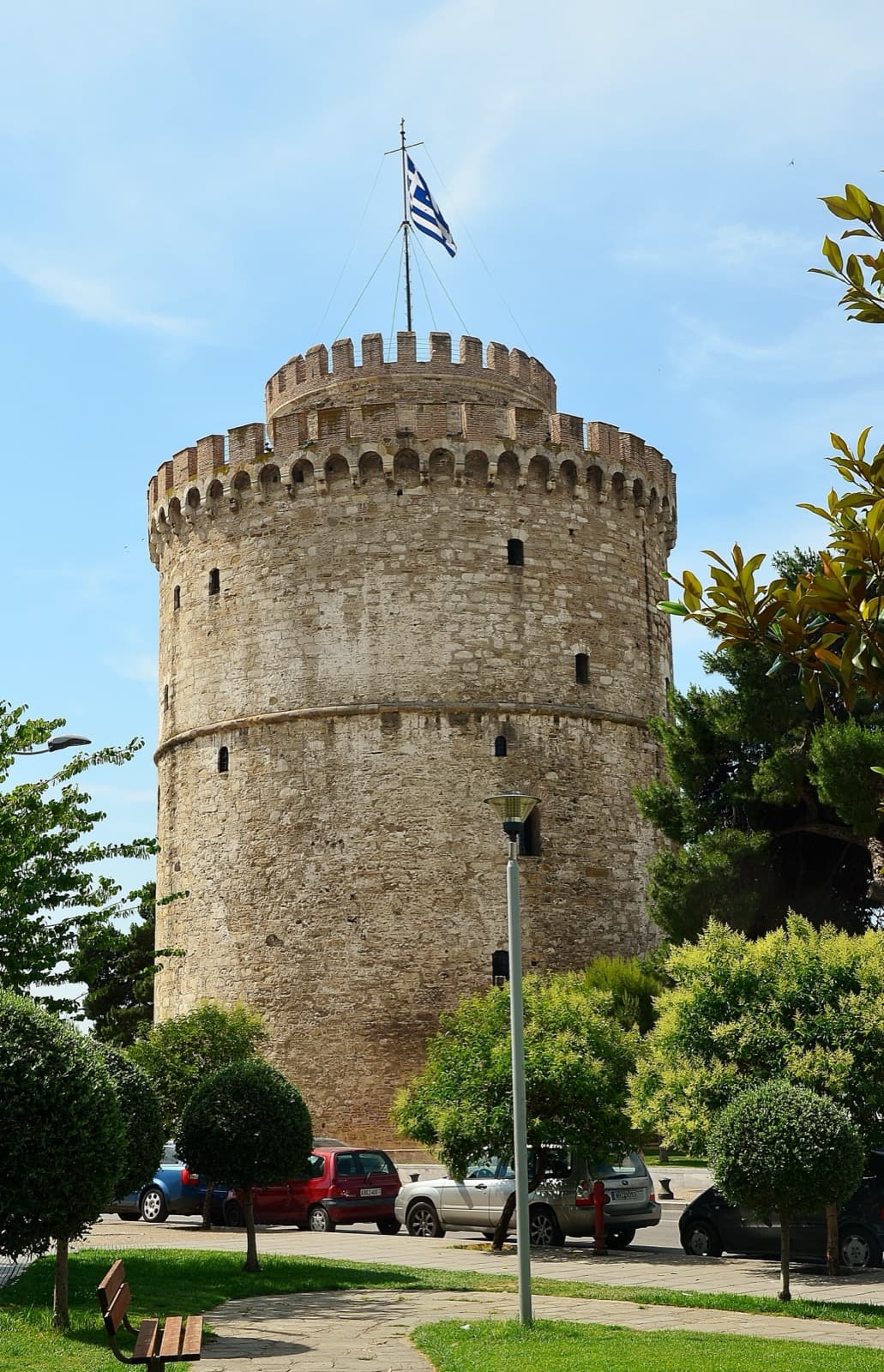
Finish on the water. Walk the seafront from Aristotelous Square, the wide arcaded space at the center of the plan the French architect Ernest Hebrard drew to rebuild the city after the 1917 fire, along the promenade to the White Tower. The tower is the emblem of the city, a cylindrical stone tower about 34 meters tall, standing where the seafront meets the open water. Late afternoon light along this stretch is the reward for an early start.
The White Tower is a paid museum with well-defined seasonal hours. General admission is 6 euros, reduced 3 euros, with free entry for children under 18 and EU citizens up to 25 and on certain national free-admission days. In summer (roughly April through October) it is open daily 08:00 to 20:00, and in winter (roughly November through March) 08:30 to 15:30, with last entry about 20 minutes before closing. Climb the ramp inside for the view over the gulf, then settle in along the waterfront for the evening.
Getting there and getting around
Thessaloniki Airport (SKG) sits east of the center. The airport bus, signed X1 or 01X, runs to the city center, the new railway station, and the main bus terminal in about 40 to 50 minutes, with single tickets around 2 euros bought from the booth or machines at the terminal. Taxis and transfers are also available.
The city center itself is best on foot: everything in this itinerary is within an easy walk except the Upper Town climb. Thessaloniki opened its first metro line in November 2024, a driverless system of 13 stations running east to west with a central station at Venizelou, where you can see Roman roadway uncovered during construction. It is useful for longer hops across the city, though for the historic core described here walking is simpler.
A note on safety and comfort
Thessaloniki is a relaxed, walkable city, and the main day-to-day cautions are ordinary ones. In summer the sun is strong and shade is thin at the open archaeological sites and along the exposed seafront, so carry water and a hat. The Upper Town's stepped lanes are steep and can be slippery when wet, so take the descent slowly and wear proper shoes. In the crowded market streets, keep bags closed and valuables secure against pickpocketing, the same common-sense habit you would use in any busy market anywhere. The churches, the historic bath, and the Holocaust memorial sites are quiet or sacred spaces; keep your voice down and follow posted photography rules.
The one-day route at a glance
Morning: climb the Upper Town from the walls down through its lanes, then the Roman core (Rotunda, Arch of Galerius, Agia Sophia) to Agios Dimitrios. Midday: the Modiano Market and lunch. Afternoon: Ladadika, the Jewish Museum, and the seafront memorials. Evening: Aristotelous Square along the promenade to the White Tower for the light. Put narration in your ear for any stretch with the three self-guided walks on the Thessaloniki walking tours hub, or start from the city page at /greece/thessaloniki.
Sources
- White Tower of Thessaloniki, official tickets and hours (white-tower.gr)
- Hellenic Ministry of Culture, Rotonda (Rotunda) of Thessaloniki
- Jewish Museum of Thessaloniki, official site (jmth.gr)
- Thessaloniki Airport (SKG), airport bus lines to the city
- Thessaloniki Metro, Wikipedia (Line 1, opened November 2024)
Frequently asked questions
- Is one day enough to see Thessaloniki?
- Yes for the essential city. The major monuments cluster in a compact walkable center, roughly a kilometer or two across, so you can see the Rotunda, Arch of Galerius, the main churches, Aristotelous Square, and the White Tower in a single full day on foot. The one real effort is the steep climb up to the Upper Town, which is best done early while your legs are fresh.
- How do I get from Thessaloniki Airport to the city center?
- Take the airport bus signed X1 or 01X, which runs to the city center, the new railway station, and the main bus terminal in about 40 to 50 minutes. A single ticket costs around 2 euros, bought from the ticket booth or machines at the terminal. Taxis and private transfers are also available at arrivals.
- What are the White Tower opening hours and ticket price?
- General admission is 6 euros and reduced admission is 3 euros, with free entry for children under 18 and EU citizens up to 25, plus certain national free-admission days. Summer hours (roughly April through October) are 08:00 to 20:00 daily, and winter hours (roughly November through March) are 08:30 to 15:30, with last entry about 20 minutes before closing. Confirm current details on the official site before you go.
- Is the Jewish Museum of Thessaloniki open every day?
- No. It is generally open in the mornings on most weekdays and on Sunday, with an added evening window midweek, and it is closed on Saturdays and on public and religious holidays. Admission is modest. Because the exact days and hours vary between sources and on special days, confirm them with the museum before your visit.
- Do I need to pay to enter the churches and monuments?
- Many are free. The Byzantine city walls, the Trigonion Tower terrace, Vlatades Monastery, and the active churches (Agia Sophia, Panagia Acheiropoietos, Agios Dimitrios) are free to enter, with donations welcomed at the monastery. The Rotunda and the White Tower charge a small admission, commonly around 6 euros, so carry some change and check current fees at the door.
- Is Thessaloniki walkable, and is the Upper Town hard to reach?
- The center is very walkable and most of a one-day itinerary is on foot. The Upper Town (Ano Poli) sits on a steep hill above the modern grid, with stepped, cobbled lanes that can be slippery when wet, so wear shoes with grip and start at the top to walk downhill. The new metro line, open since November 2024, helps with longer crosstown hops.
Ready to experience it?
The Quarter the Fire Spared
140 min · 4.2 km · challenging
More from Thessaloniki
Explore more at your own pace.
Thessaloniki: The City Read in Layers
The Ano Poli Timber Houses: How the Poorest Quarter Kept the Oldest City
The Jewish Museum of Thessaloniki: Reading a Vanished City
The Rotunda of Thessaloniki: How One Building Holds Four Empires
Agios Dimitrios: The Basilica That Holds Thessaloniki's Whole Memory