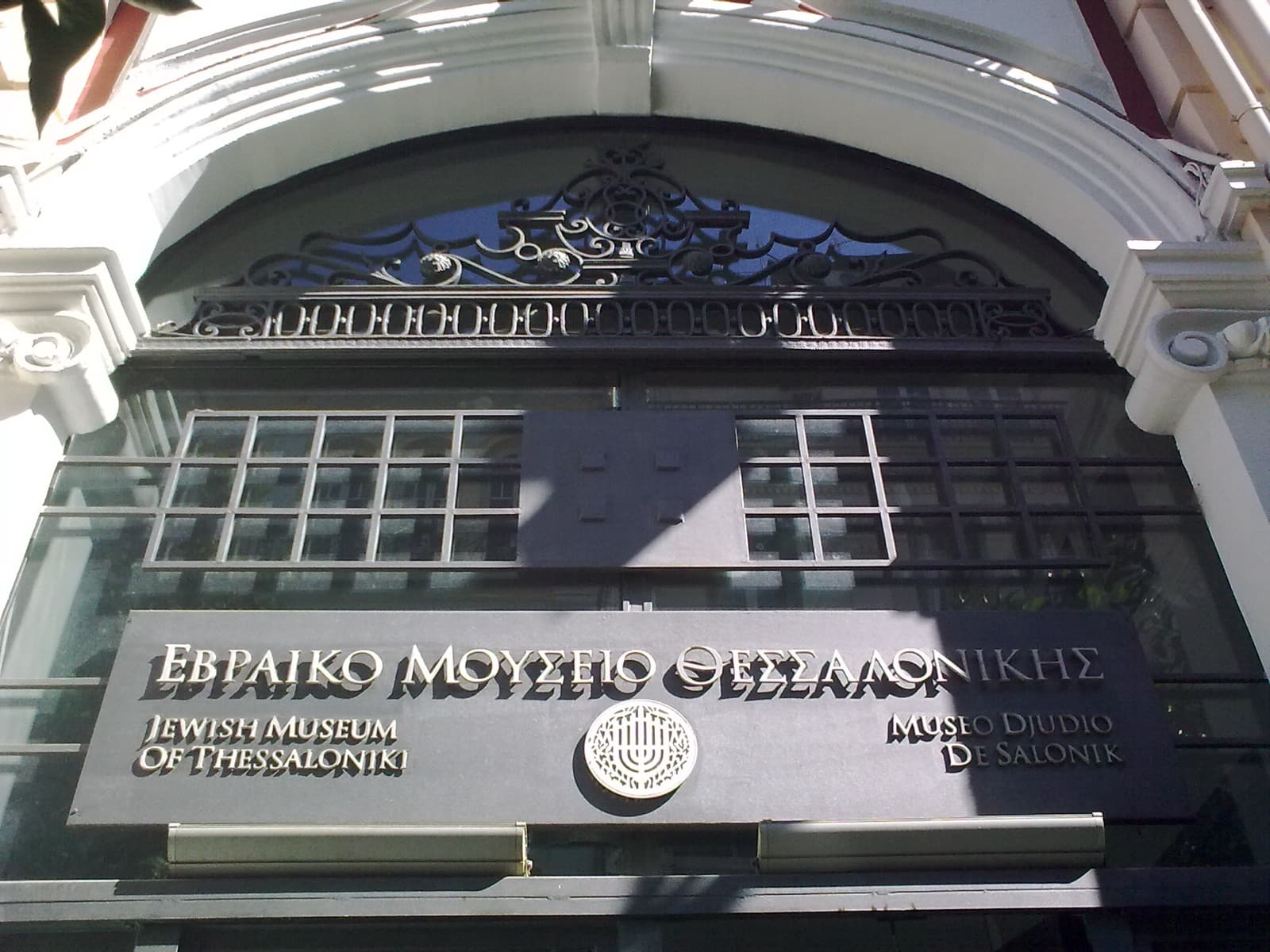
The Jewish Museum of Thessaloniki asks you to read a city that is no longer there. It sits at thirteen Agiou Mina Street in a modest building from 1904, one of the very few Jewish commercial buildings to survive the great fire of 1917, and inside it holds the record of a Sephardic world that once made this port the majority-Jewish city its own people called the Mother of Israel. The counter-intuitive thing about Thessaloniki, and the reason a walk here rewards patience, is that the most important history is often the thing you cannot see. This one building is where the absence becomes legible.
The city called the Mother of Israel
For more than four centuries, Thessaloniki in northern Greece was a majority-Jewish city, a Sephardic metropolis so central to Jewish life that it earned two names: the Mother of Israel and the Jerusalem of the Balkans. Its founders were families descended from Jews expelled from Spain, who arrived and made this harbour their own. The docks fell quiet on the Jewish sabbath because so much of the trade, the shipping, and the labour rested in Sephardic hands. That is a hard fact to hold while standing on today's lively waterfront, because almost nothing on the surface announces it. Between the spring and summer of 1943, the Nazi occupiers deported roughly ninety-six percent of that community to Auschwitz-Birkenau. Almost none returned. The living Mediterranean city you walk today sits directly on top of that loss.
This is why the museum is the interpretive anchor of the whole route. The streets can no longer show you the vanished city. The museum keeps it. According to the Jewish Museum of Thessaloniki, roughly forty-nine thousand people were deported from this city, and most were murdered. The building itself carries the point: designed by the Italian architect Vitaliano Poselli, it later housed a bank and, for decades, a Jewish newspaper, before opening as a museum on the thirteenth of May, 2001. It survived the 1917 fire that erased so much of the old lower town, which makes it one of the last physical threads back to the world it now documents.
Learning the alphabet in Ladadika
Hear a stop from this walk
Eleftherias Square: The Menorah in Flames
The walk does not begin at the museum. It begins a few streets away in Ladadika, and that order is deliberate. Ladi is the Greek word for olive oil, and this tight grid of low nineteenth-century warehouses near the port was once packed with the shops and stores of the oil trade. Greece's Ministry of Culture designated it a protected heritage area in 1985, which is why its old fabric was preserved rather than cleared, and regeneration from the early 1990s turned the oil stores into bars and tavernas. Some critics feel the quarter has been polished into something a little too neat, and that tension is worth carrying as you wander the lanes.
Ladadika is where you start learning to read. These streets were the commercial engine of the port, the working skin of a city whose economic life was, for centuries, profoundly shaped by its Sephardic majority. Everything else on this route asks you to read an absence. Ladadika at least gives you something old and standing to hold in your hand first. If you want the full picture of how the neighborhoods here fit together, the Thessaloniki walking tours hub lays out the routes across the city.
A name over the stalls, a synagogue that survived
From Ladadika the route moves to the Modiano Market, a great covered hall named for Eli Modiano, the engineer from a prominent Jewish family who designed it. Built between 1922 and 1925 and completed on the twenty-third of March, 1925, it is not an ancient survival but a rebuilding, raised on the very site of the Talmud Torah Synagogue that the 1917 fire destroyed. A Jewish engineer's name now sits over ground where a Jewish house of study once stood. The city rebuilt, in the same hands, over its own loss, and that pattern repeats all the way along the walk.
The turn of the route comes at the Monastirioton Synagogue, built between 1925 and 1927 and funded chiefly by Jews from Monastir, today Bitola in North Macedonia, who had rebuilt their lives here after the Balkan Wars and the First World War. Hold one fact: this is the only synagogue in Thessaloniki to survive from before the Second World War, in a city that once held houses of worship in nearly every quarter. It remains for a bitter reason. During the occupation, while the community was being deported, the building was used by the Red Cross as a warehouse, and so it was spared. The people were taken. The building stood because it had been emptied of its purpose. It is an active house of worship again today, the principal synagogue of the small surviving community, so it is viewed respectfully from outside, with the interior reached only by arrangement.
Where the destruction began, and the sea that keeps the memory
The walk then reaches Eleftherias Square on the seafront, where on the eleventh of July, 1942, a Saturday remembered as Black Sabbath, the occupation authorities forced about nine thousand Jewish men, aged eighteen to forty-five, to assemble and endure hours of humiliation and beatings in the summer heat. It is remembered as the beginning of the end. In front of you stands the Menorah in Flames memorial by the sculptor Nandor Glid, created in 1997 and moved here facing the water in 2006, Greece's first Holocaust memorial in a public space. Its plaque commemorates the fifty thousand Jewish Greeks of Thessaloniki deported in the spring of 1943.
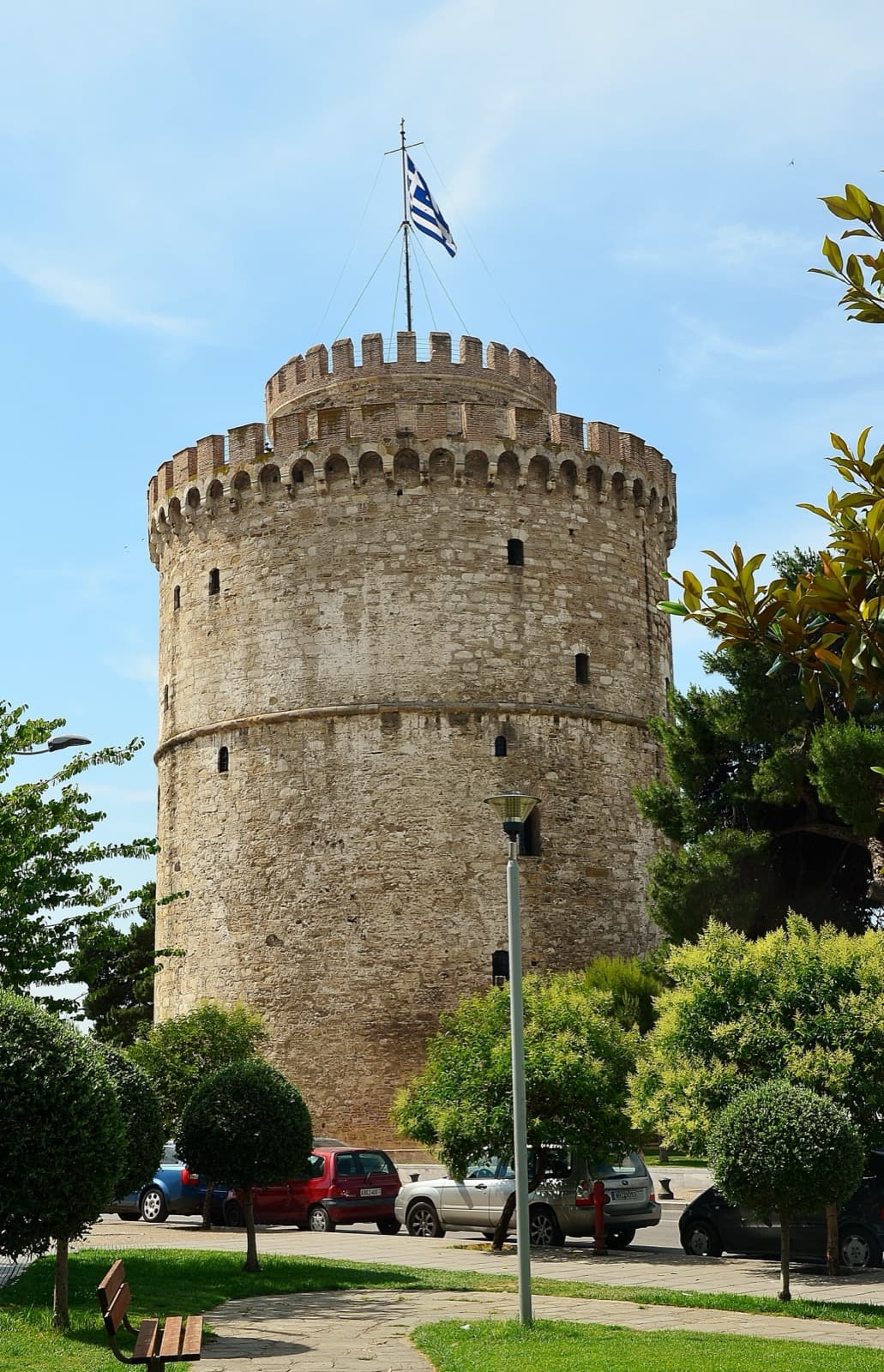
The route closes on the grand replanning of Aristotelous Square, conceived by the French architect Ernest Hebrard in 1918, and finally at the White Tower, the emblem of the city where the seafront meets open water. The tower belongs to the Ottoman centuries that followed the city's capture under Sultan Murad the Second in 1430, and Thessaloniki was incorporated into Greece in 1912. From there the whole route is behind you and the sea is in front, the same water that carried this city's trade for centuries.
The Jewish Museum is the stop that makes the rest of the walk mean something. Read its record first, in your mind if not in person, then walk the surviving skin of the vanished city. To see how this route sits alongside the rest of what the city offers, start from Thessaloniki.
Sources
- Jewish Museum of Thessaloniki (Wikipedia): building history, 1904 construction, Poselli, the Bank of Athens and L'Independent newspaper, the 2001 opening, and the roughly forty-nine thousand deported figure.
- Modiano Market (Wikipedia): construction between 1922 and 1925, the twenty-third of March 1925 completion, engineer Eli Modiano, and the Talmud Torah Synagogue site.
- Monastir Synagogue, Thessaloniki (Wikipedia): construction 1925 to 1927, funding by Jews from Monastir, and its wartime survival through Red Cross requisition.
- 1942 Eleftherias Square roundup and Menorah in Flames (Wikipedia): Black Sabbath, the nine thousand men aged eighteen to forty-five, Nandor Glid, and the 2006 installation as Greece's first public Holocaust memorial.
- Ladadika (Wikipedia): the olive-oil origin of the name, the 1985 heritage designation, and 1990s regeneration.
Ready to experience it?
The Mother of Israel: Jewish Thessaloniki and Its Absence
95 min · 3.9 km · easy
More from Thessaloniki
Explore more at your own pace.
One Day in Thessaloniki: A Walkable Morning-to-Evening Itinerary
Thessaloniki: The City Read in Layers
The Ano Poli Timber Houses: How the Poorest Quarter Kept the Oldest City
The Rotunda of Thessaloniki: How One Building Holds Four Empires
Agios Dimitrios: The Basilica That Holds Thessaloniki's Whole Memory