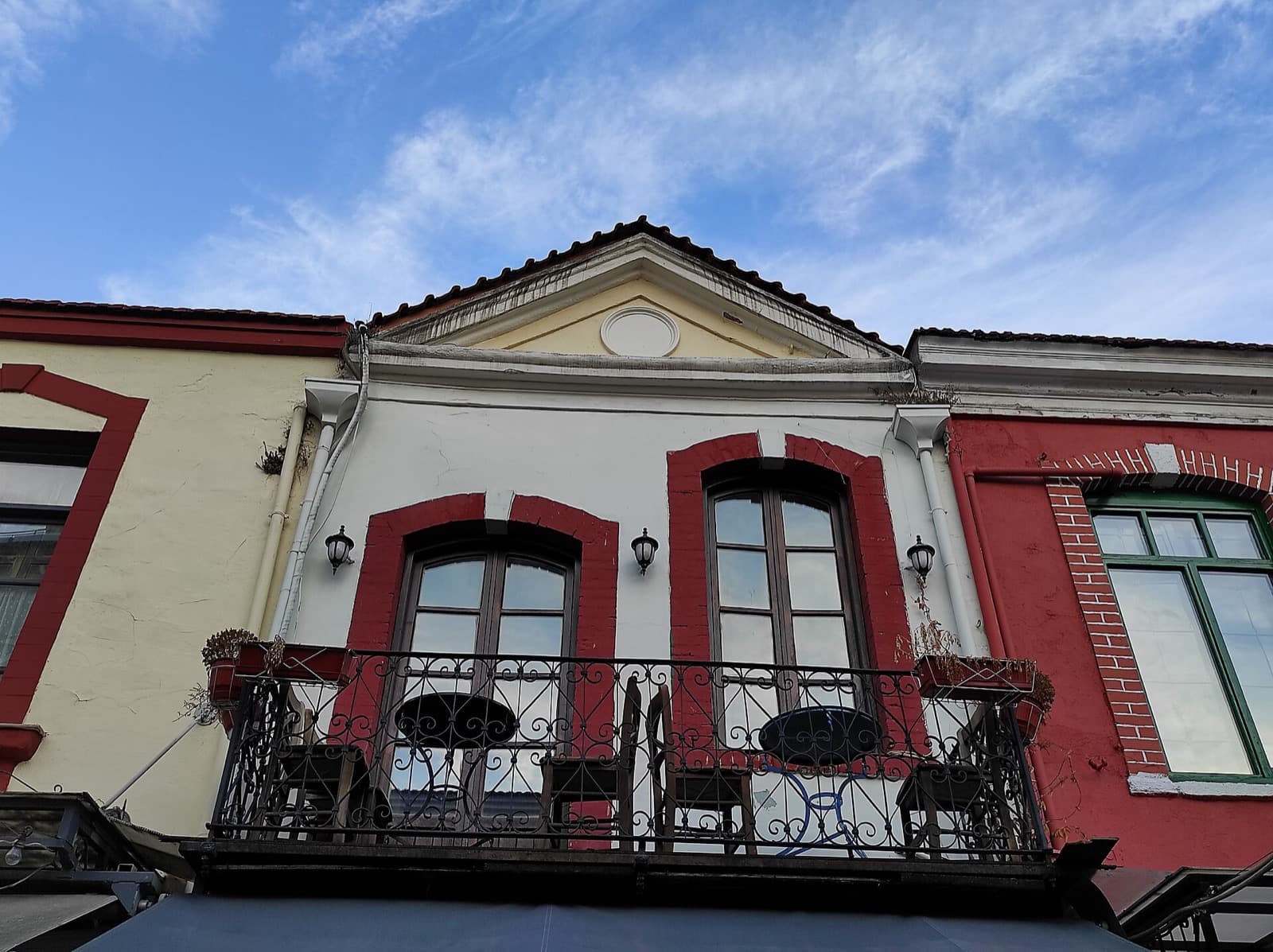
A quiet, unhurried walk through a sunlit Greek port city built over the near-total erasure of one of the great Jewish worlds. The most important thing here is what is no longer visible, and the work of remembering it.
Start · Ladadika: The Olive-Oil Quarter
DirectionsStops
- 1
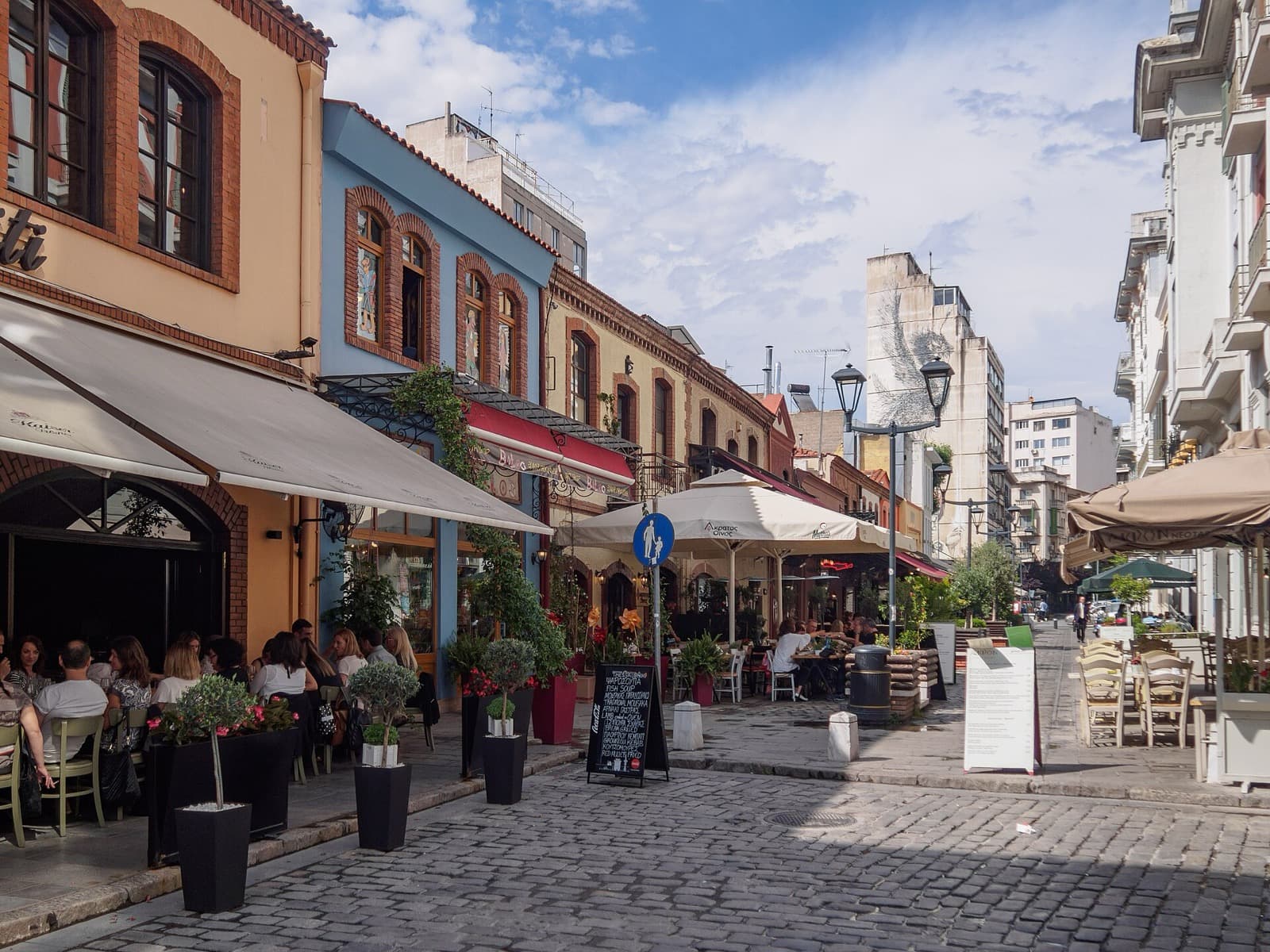
Ladadika: The Olive-Oil Quarter
A dense grid of nineteenth-century warehouses near the port, once packed with olive-oil stores, now the surviving commercial skin of the old city and the doorway to reading the vanished Jewish port beneath it.
- 2
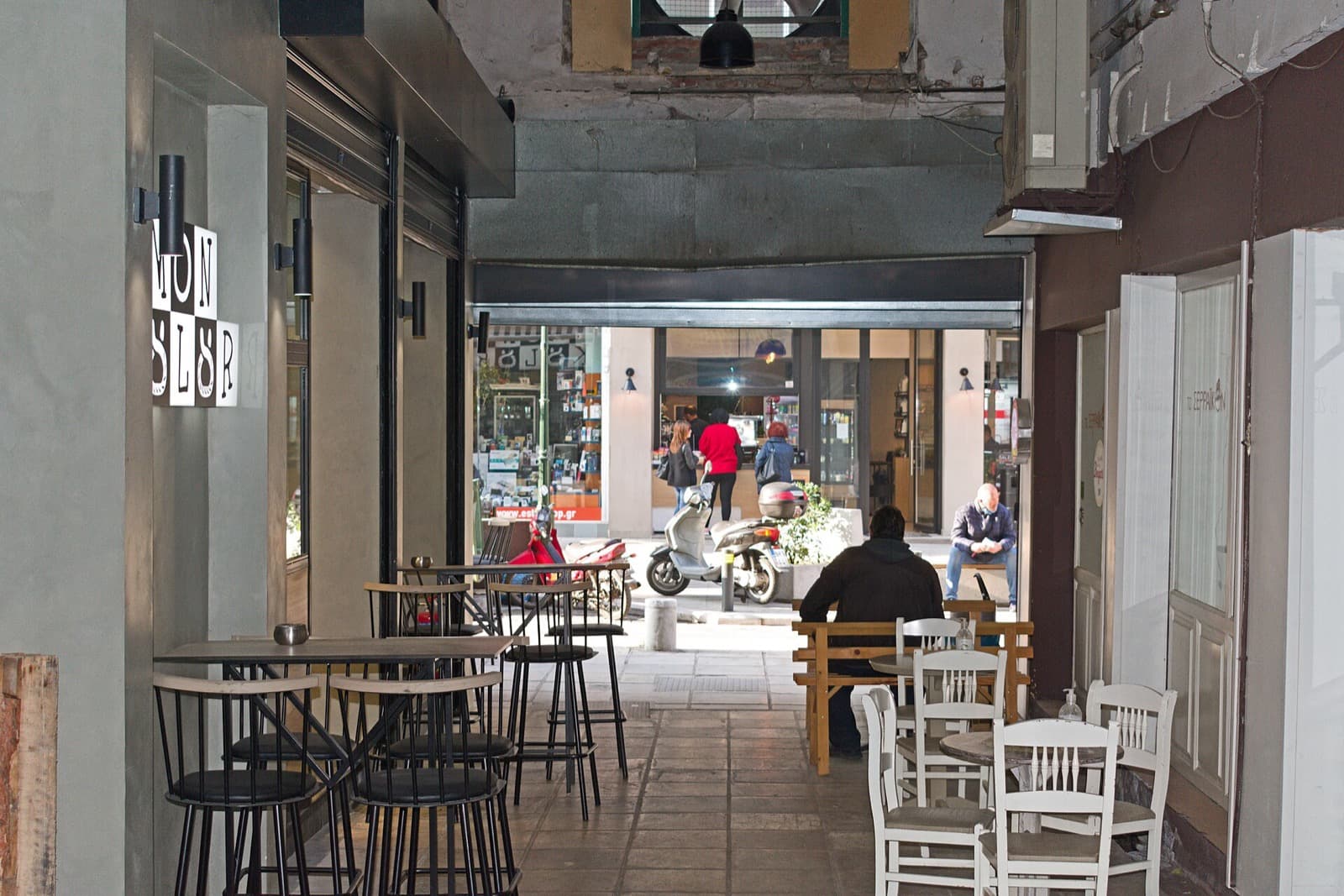
Modiano Market: A Sephardic Name Over the Stalls
A grand covered market carrying the name of a prominent Jewish family, built after the great fire on the very ground where a synagogue once stood.
- 3
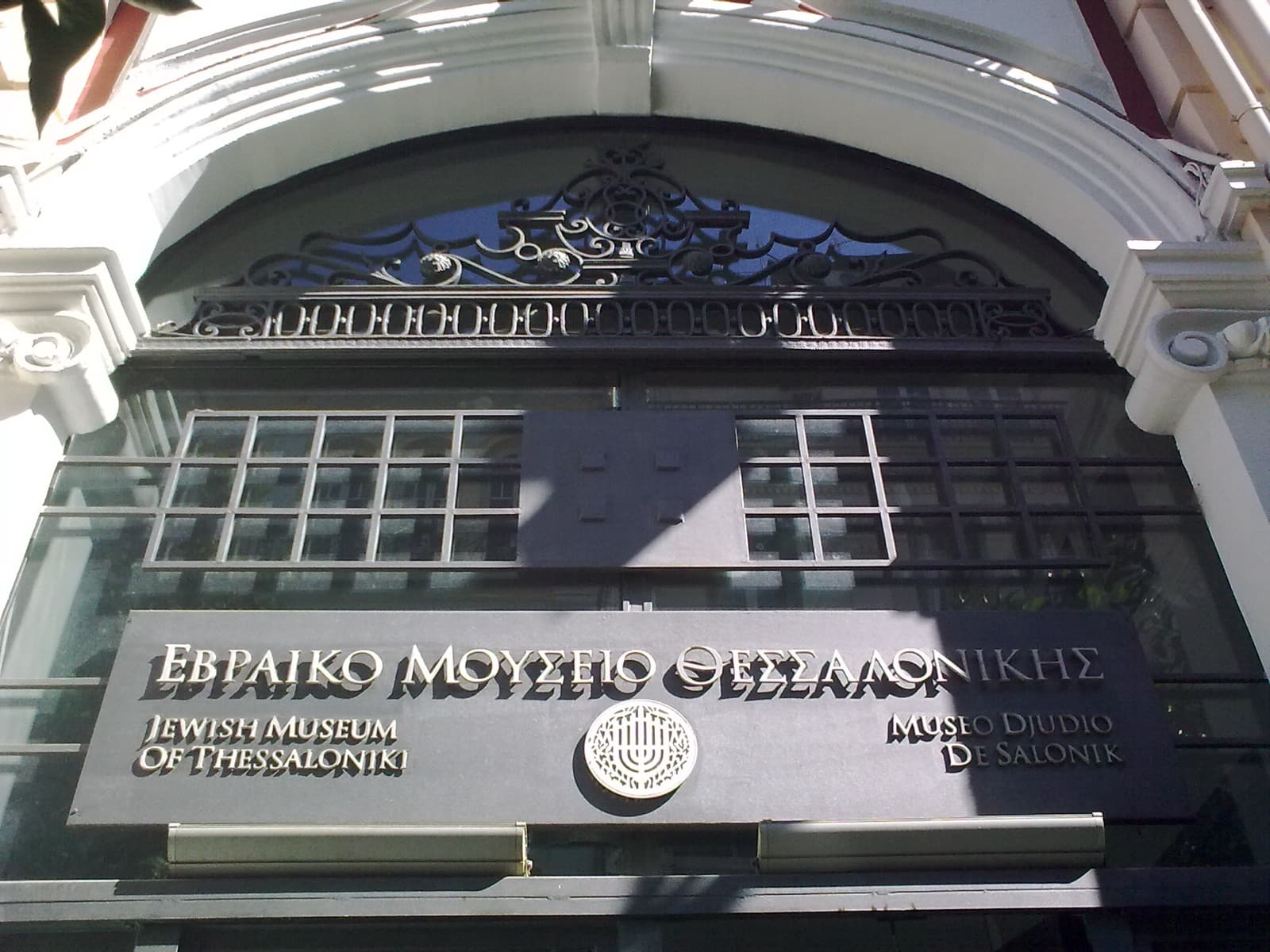
The Jewish Museum: Reading the Vanished City
Housed in one of the few Jewish commercial buildings to survive the great fire of nineteen seventeen, this is the interpretive anchor of the whole walk.
- 4
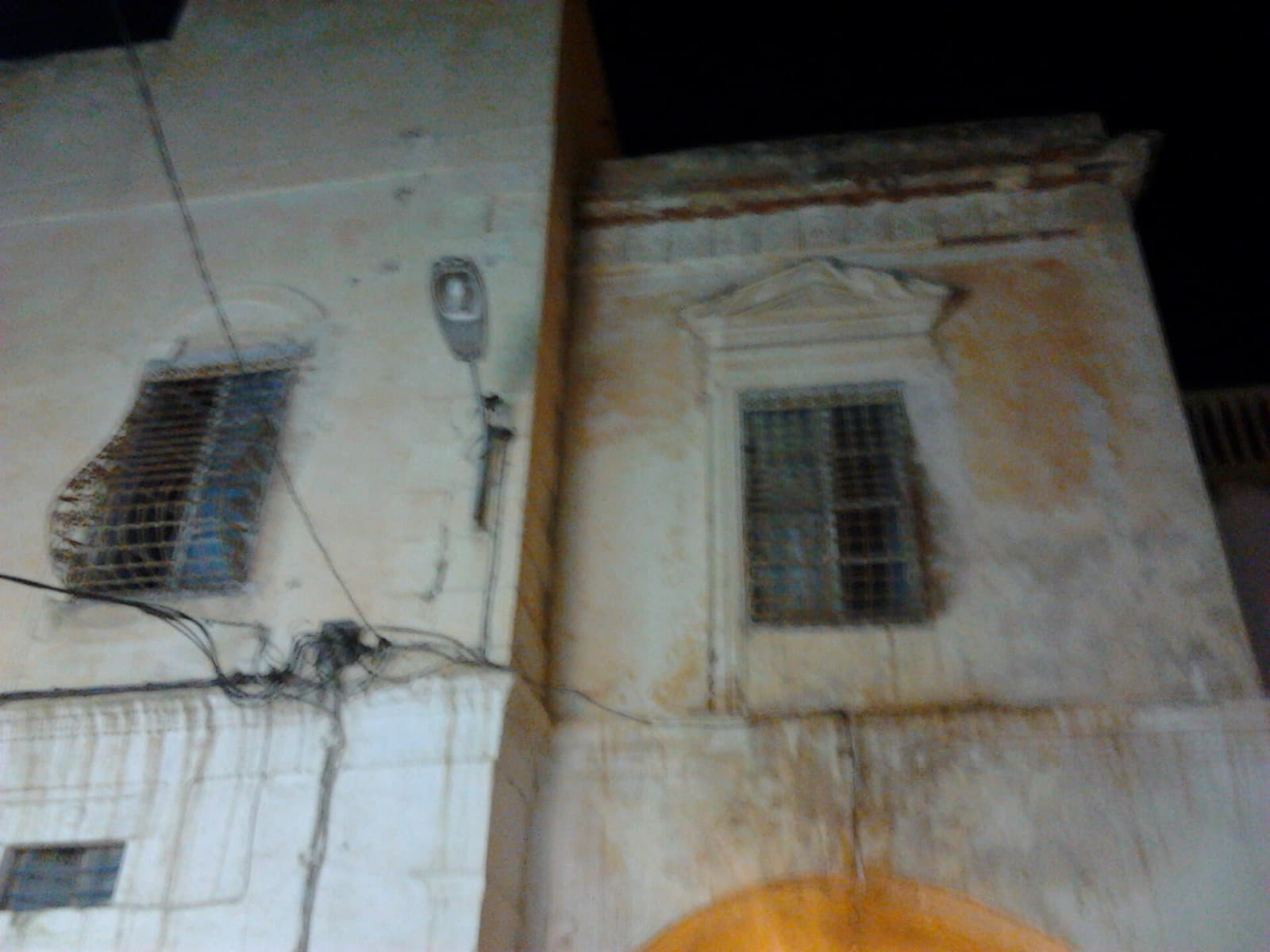
Monastirioton Synagogue: The One That Survived
The only Thessaloniki synagogue to survive from before the Second World War, spared because it was used as a Red Cross warehouse while the community was being deported.
- 5
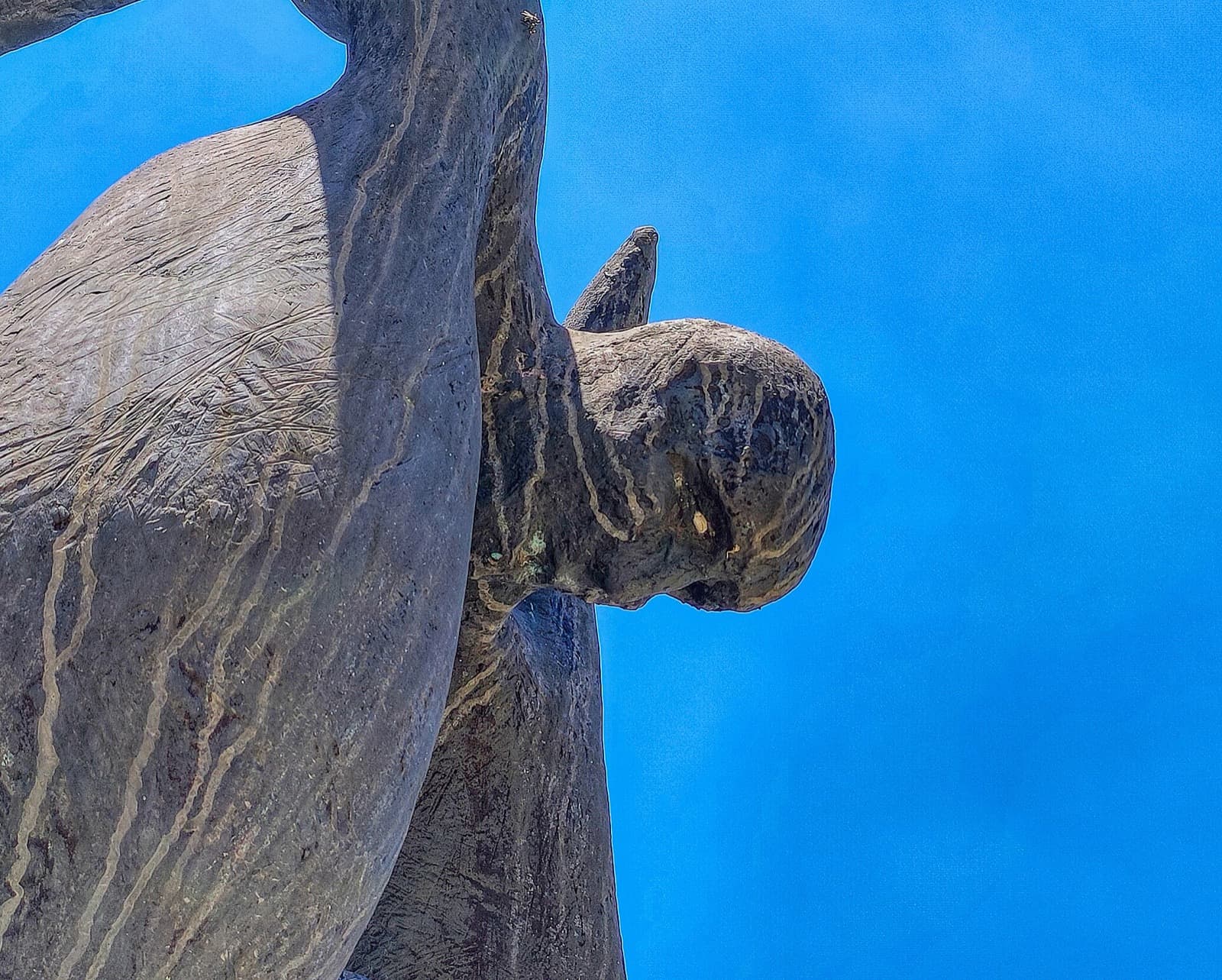
Eleftherias Square: The Menorah in Flames
The seafront square where the destruction of the community began on Black Sabbath, now marked by Greece's first public Holocaust memorial.
- 6
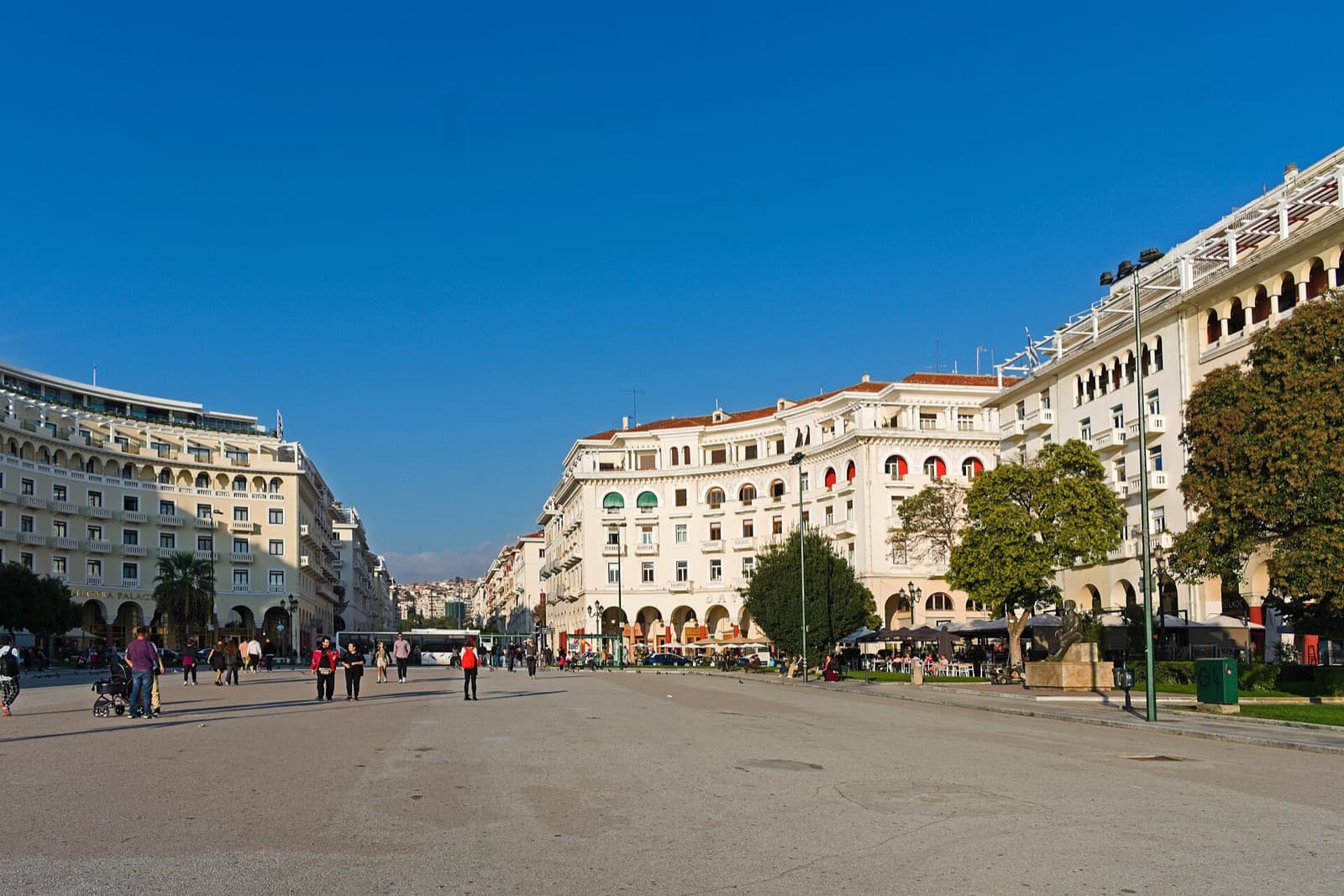
Aristotelous Square: The City That Rebuilt Over the Ash
The monumental seafront square at the centre of the post-fire replanning, the modern city's front room, standing over the erased older quarters.
- 7
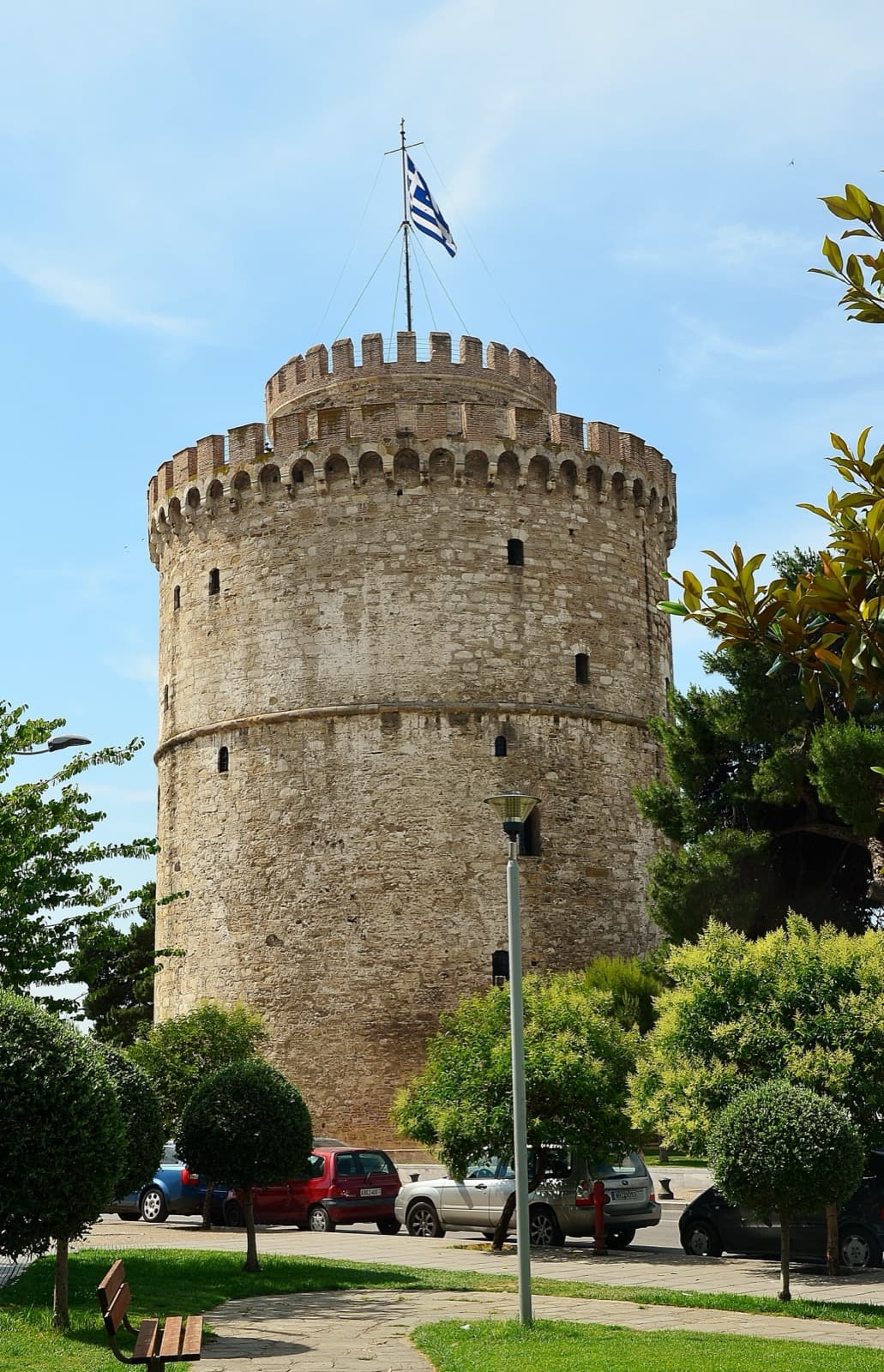
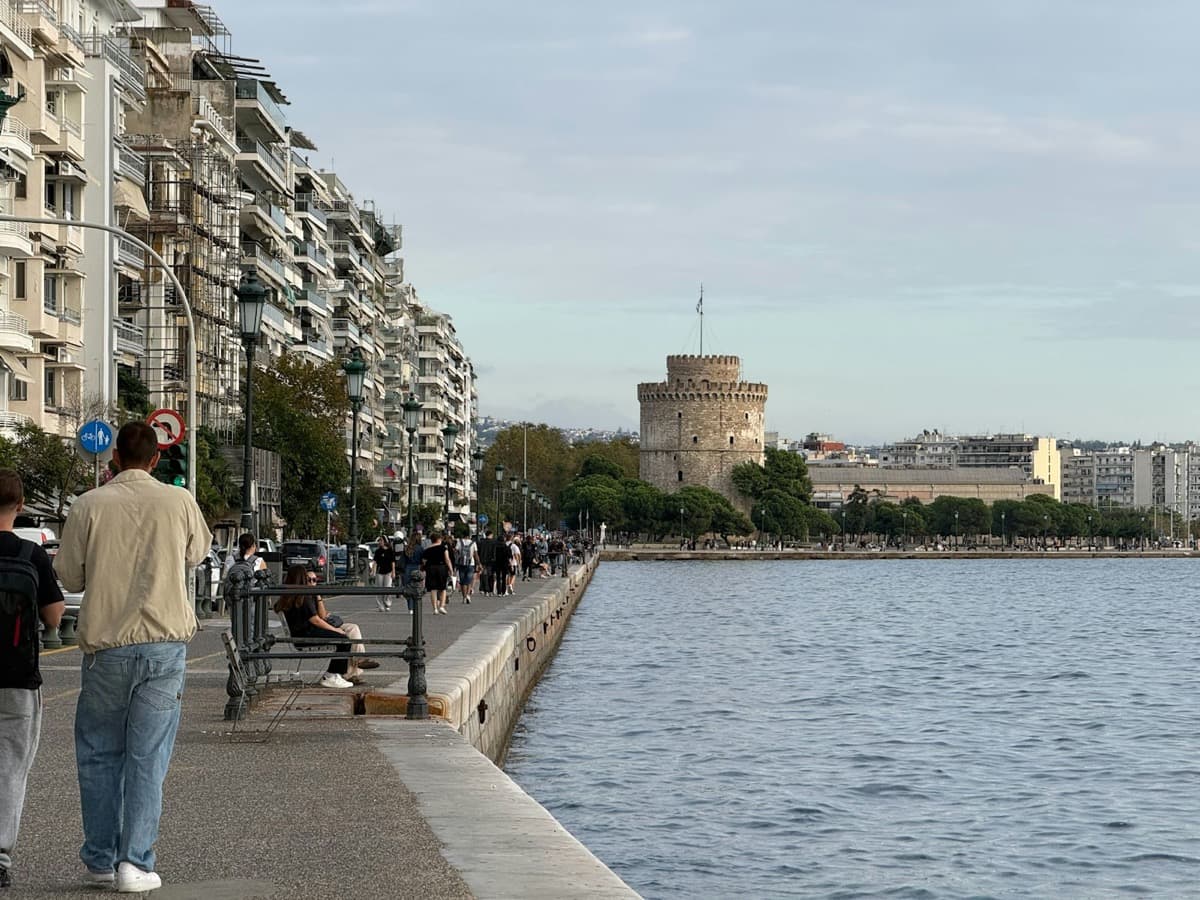
The White Tower: The Sea Keeps the Memory
The waterfront tower that is the emblem of the city, a layered survivor of the Ottoman centuries, now a museum, closing the walk on the sea as the horizon of memory.
Details
Best Time to Visit
Late morning through late afternoon on a weekday, when Ladadika and the Modiano Market are open and working, the Jewish Museum keeps regular hours, and the seafront around Eleftherias Square, Aristotelous Square, and the White Tower is easy and calm. Golden hour along the waterfront is beautiful for the closing stops. Avoid the Jewish sabbath and Jewish holidays if you hope to see the Monastirioton Synagogue active, and check museum hours before you set out.
Pro Tips
- •Confirm current opening hours and admission before you go for the two ticketed indoor sites, the Jewish Museum of Thessaloniki and the White Tower; both keep set hours and can close on public holidays.
- •This is a short, mostly flat route near the port and seafront, about a little under three kilometres, so comfortable shoes are enough; you do not need special gear as you would for the Upper Town.
- •Give the heavier stops room. The Jewish Museum, the Monastirioton Synagogue, and especially the Menorah in Flames memorial at Eleftherias Square reward slowing down rather than rushing between photos.
- •Treat the Monastirioton Synagogue as the active house of worship it is: view respectfully from outside, keep your voice low, and understand that the interior is reached only by arrangement with the community.
- •Ladadika is a small maze of lanes rather than a straight line, so let yourself wander it and read the old warehouse fronts instead of following a fixed path.
- •Carry water and a hat in summer; the seafront stretch from Eleftherias Square to the White Tower is open and sunny with little shade.
Safety & Precautions
- •The Modiano Market and the surrounding port and market streets get crowded and busy; keep bags zipped and close to your body and stay aware of your belongings in the press of stalls.
- •Ladadika's old lanes have uneven paving, cobbles, and thresholds, and the seafront promenade can be busy with cyclists and scooters, so watch your footing and your surroundings.
- •Handle the Holocaust sites, above all the Eleftherias Square roundup site and the Menorah in Flames memorial, with dignity and quiet; this is a place of mourning, not a backdrop, so keep photography and conversation respectful.
- •In summer the days are hot and dry with strong midday sun along the exposed waterfront; carry water, protect yourself from the heat, and pace the open seafront stops accordingly.
Travel advisory: Exercise Normal Precautions (Level 1).
Gallery
Related Reading
Go deeper on what you'll see, hear, and walk through.
Overview
Best Self-Guided Walking Tours in Thessaloniki (2026)
3 min
Overview
One Day in Thessaloniki: A Walkable Morning-to-Evening Itinerary
8 min
Overview
Thessaloniki Travel Guide: Days, Transport, Season, Safety
7 min
Thematic
Thessaloniki: The City Read in Layers
7 min
Companion
The Jewish Museum of Thessaloniki: Reading a Vanished City
7 min
Deep dive
The White Tower of Thessaloniki: A Waterfront Survivor and What It Remembers
6 min
Read
What to Eat in Thessaloniki
6 min
Read the walk
The full story of The Mother of Israel: Jewish Thessaloniki and Its Absence, in words. Prefer to listen? Play it narrated, from home or on location.
Introduction
For more than four centuries, Thessaloniki, in northern Greece, was a majority-Jewish city. It was a Sephardic metropolis so central to the Jewish world that it was called the Mother of Israel, and the Jerusalem of the Balkans. This walk moves through what remains of that city, and through the absence at its heart. Between the spring and summer of nineteen forty-three, the Nazi occupiers deported roughly ninety-six percent of that community, tens of thousands of people, to Auschwitz-Birkenau. Almost none returned. Today you walk a lively Mediterranean waterfront that sits directly on top of that loss, and you have to look hard to read the vanished city underneath. This route has seven stops. Plan on about two hours at your own pace, and a little under four kilometres on mostly flat ground near the port and the seafront. You will move through Ladadika, the old warehouse quarter now full of tavernas, past a great covered market and a handful of surviving Jewish sites, to a memorial, a grand square, and the sea. Some stops carry real weight. Take them slowly. Let the silence do its work, and let the living city and the loss it replaced both stay true at once, without either cancelling the other. When you arrive in Ladadika, near the port, begin with stop one.
1. Ladadika: The Olive-Oil Quarter
Start here, in Ladadika, and let the name do some of the work. Ladi is the Greek word for olive oil, and this tight grid of low buildings near the port was once packed with the shops, warehouses, and workshops of the oil trade. This was the working commercial quarter of a bustling Mediterranean harbour city, and much of what you see around you, the arched doorways, the stone and brick fronts, the human scale of the lanes, is genuinely old. Greece's Ministry of Culture designated Ladadika a protected heritage area in nineteen eighty-five, which is why its nineteenth-century fabric was preserved rather than cleared. For a long time the district decayed. Regeneration began in the early nineteen nineties, and the old oil stores were turned into bars and restaurants. That change is not without its critics, who feel the quarter has been polished into something a little too neat, and that is worth holding in mind as you walk. But the reason to begin here is what these streets stood for. This was the commercial engine of a port city where, for centuries, the docks fell quiet on the Jewish sabbath, because so much of the trade, the shipping, and the labour was in Sephardic hands. Thessaloniki was a majority-Jewish city then, a place called the Mother of Israel. As you wander this small maze, you are walking the surviving outer skin of that world. Almost everything else on this route asks you to read an absence. Ladadika is where you start learning the alphabet.
2. Modiano Market: A Sephardic Name Over the Stalls
Step into the Modiano Market, a great covered hall of stalls under a long roof, and notice first the name it carries. It is named for Eli Modiano, the engineer who designed it, a member of one of the city's prominent Jewish families. The market was built between nineteen twenty-two and nineteen twenty-five, and completed on the twenty-third of March, nineteen twenty-five. So this is not an ancient survival. It is a rebuilding. And that is the quiet heart of this stop. Thessaloniki suffered a catastrophic fire in nineteen seventeen that gutted much of the lower city. The market rose in the aftermath, part of the great replanning of the burned quarters. It was built on the very site of the Talmud Torah Synagogue, which the fire destroyed. So a Jewish engineer's name now sits over ground where a Jewish house of study and prayer once stood. The city rebuilt, in the same hands, over its own loss. That pattern will repeat all along this walk. Inside, this was for generations a working food market, fishmongers and butchers and stalls heavy with produce, the ordinary daily commerce of a port. In the early twenty-twenties it passed to a state asset fund and was restored and redeveloped. Walk it slowly. Let it be an ordinary market, because it is one, and let the name overhead remind you that ordinary Mediterranean life here was, for four centuries, largely a Sephardic Jewish life. The counter-intuitive thing about Thessaloniki is that its most important history is often the thing you cannot see. Here you can at least read it in a name.
3. The Jewish Museum: Reading the Vanished City
This is the interpretive anchor of the walk. The Jewish Museum of Thessaloniki stands at thirteen Agiou Mina Street, in a handsome building from nineteen hundred and four, designed by the Italian architect Vitaliano Poselli. That date matters, because this is one of the very few Jewish commercial buildings to survive the great fire of nineteen seventeen that erased so much of the old lower city. Over the years the building housed a bank and, for decades, a Jewish newspaper. It opened as a museum on the thirteenth of May, two thousand one. Inside, the museum documents what the streets can no longer show you: the long history of Sephardic Jews in this city, families descended from those expelled from Spain, who made Thessaloniki a Jewish metropolis, their synagogues, their trades, their printing, their daily life. And it documents the destruction. According to the Jewish Museum of Thessaloniki, roughly forty-nine thousand people were deported from this city, and most were murdered. Whether or not you go inside, and there is a modest admission if you do, let this stop be the place where the shape of the loss becomes clear. Everything on this route, the warehouses, the market, the square ahead, was the setting for a world this museum keeps. It gathers what a single spring took away, and it puts the record somewhere a stranger walking through can find it. Reading the vanished city is exactly the work this museum was built to do. Stand with that for a moment before you move on.
4. Monastirioton Synagogue: The One That Survived
This is the turn of the whole walk. The Monastirioton Synagogue was built between nineteen twenty-five and nineteen twenty-seven, funded chiefly by Jews from Monastir, a city that is today Bitola, in North Macedonia. They had left Monastir during the Balkan Wars and the First…
Full narration for this stop unlocks with the tour.
5. Eleftherias Square: The Menorah in Flames
Come to Eleftherias Square, on the seafront, and stand quietly. On the eleventh of July, nineteen forty-two, a Saturday, the Jewish sabbath, remembered as Black Sabbath, the Nazi occupation authorities forced about nine thousand Jewish men, aged eighteen to forty-five, to…
Full narration for this stop unlocks with the tour.
6. Aristotelous Square: The City That Rebuilt Over the Ash
Follow the seafront to Aristotelous Square, the grand front room of the modern city. This wide, arcaded space opening onto the water is the centrepiece of the plan drawn up by the French architect Ernest Hebrard to rebuild Thessaloniki after the great fire of nineteen seventeen.…
Full narration for this stop unlocks with the tour.
7. The White Tower: The Sea Keeps the Memory
End at the White Tower, the emblem of Thessaloniki, standing where the seafront meets the open water. It is a cylindrical stone tower about thirty-four metres tall and twenty-three metres across, with six floors inside. It has watched over this shore for centuries. The city was…
Full narration for this stop unlocks with the tour.