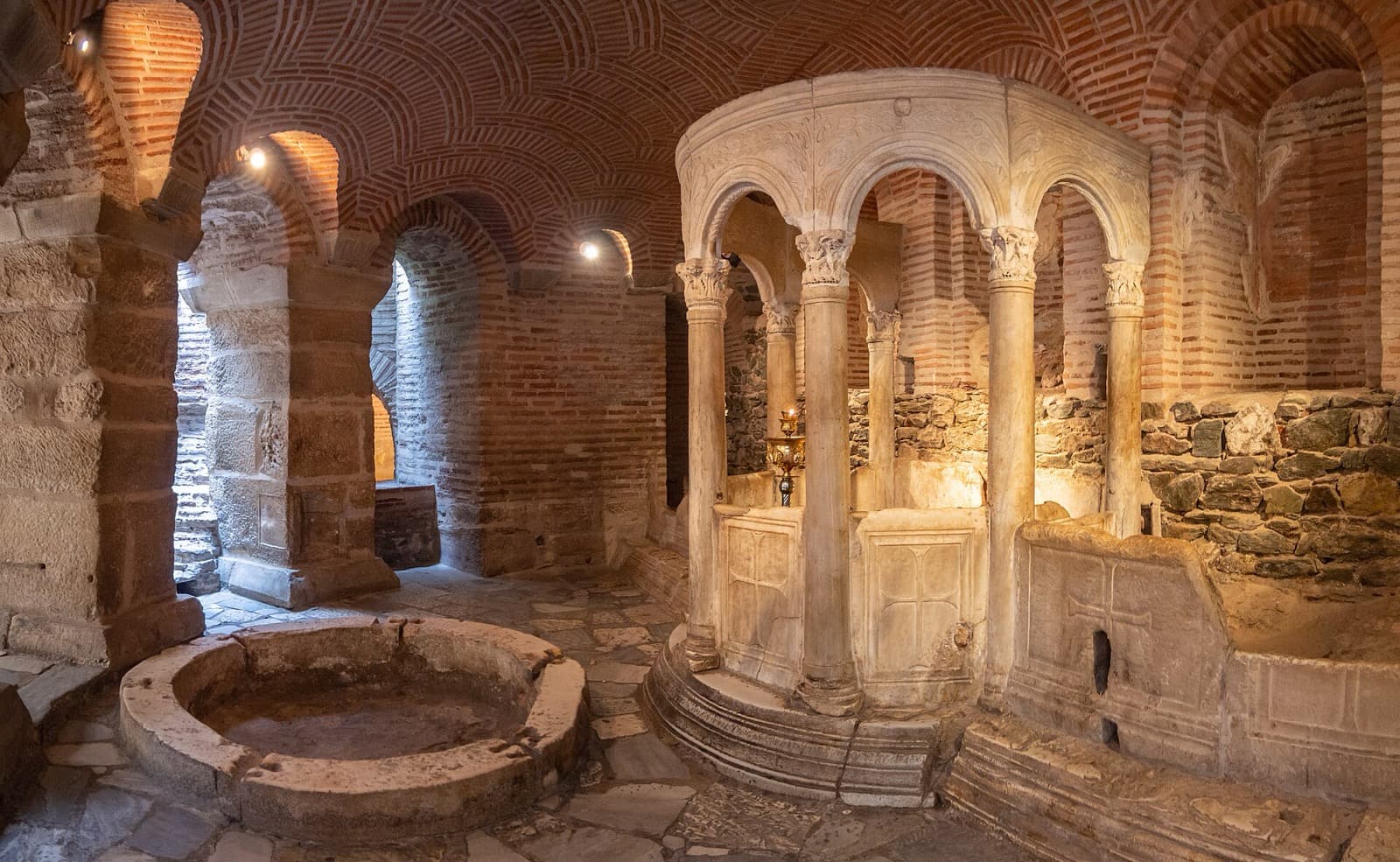
Osios David, the small fifth-century church that survives from the former Latomou Monastery in Thessaloniki, guards a mosaic that should not still exist. High in the apse of a plain, easily missed building in the Upper Town, a youthful, beardless Christ sits enthroned in gold. That image outlasted iconoclasm, a conversion to a mosque, layers of concealing plaster, and roughly fifteen centuries of history. The church survived because it was overlooked, and being overlooked is exactly why it kept the most fragile thing in the whole quarter.
A church that looks like nothing
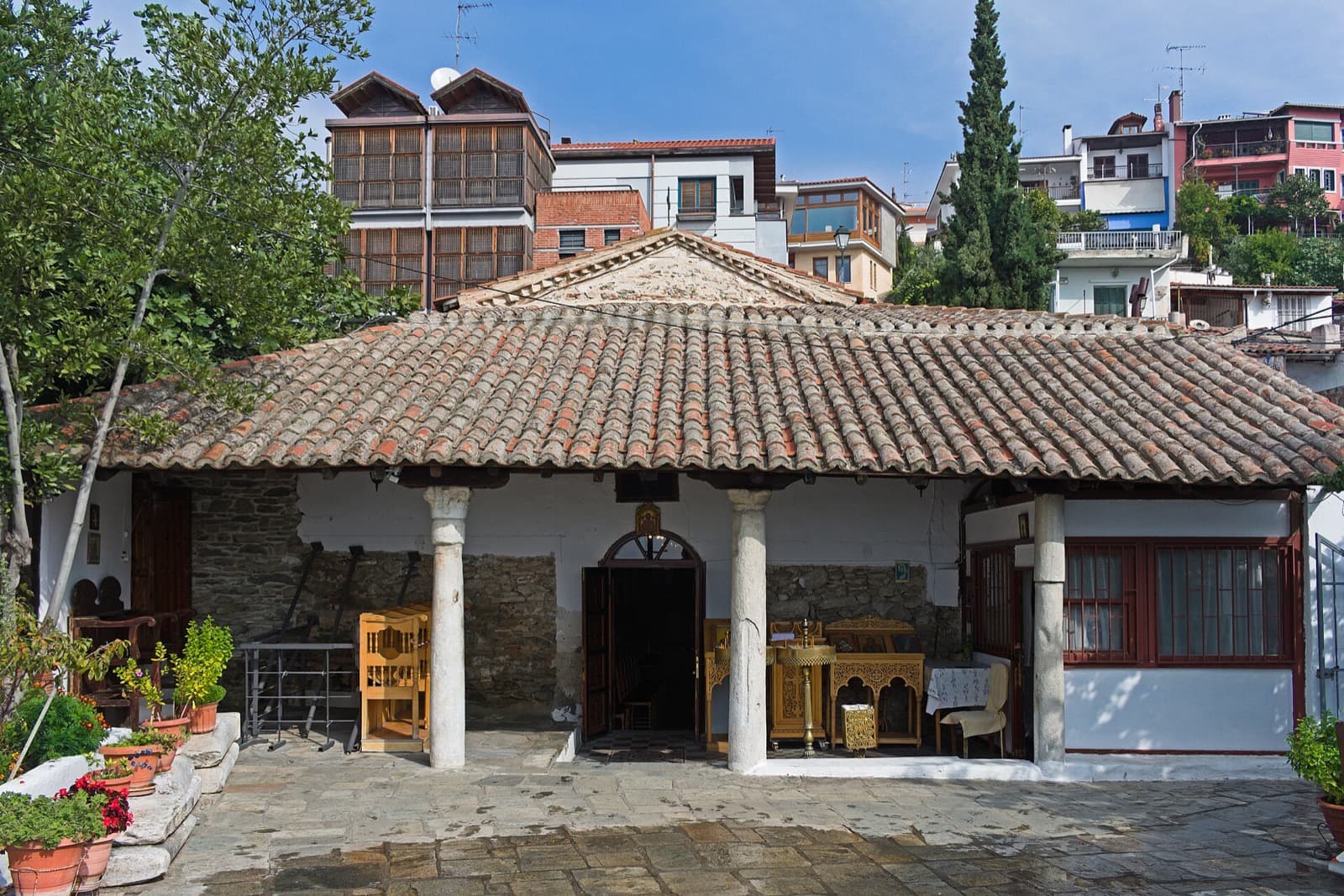
From the lane, Osios David asks for no attention. It is a low, compact structure of brick and stone, the kind of building you could walk past without a second glance. That modesty is the point. It is the surviving katholikon, the main church, of what was once the Latomou Monastery, and it dates to the late fifth century. The name it carries today, Osios David, was assigned only in 1921, when the building was reconsecrated for Christian worship. Scholars think the original church was most likely dedicated to a different figure, possibly the prophet Zacharias, rather than to David.
The grandeur is all inside, and all overhead. Step in and lift your eyes to the semidome of the apse. Everything the building withholds on the street it delivers in that single curved surface.
The beardless Christ
Hear a stop from this walk
The Timber Houses and Lanes: The Fabric the Fire Spared
The apse mosaic dates to the last quarter of the fifth century, and it is one of the reasons this small church matters far beyond its size. It is known as the Vision of Ezekiel, or the Christ of Latomos. At its center, Christ is enthroned inside a mandorla, an almond-shaped field of radiant glory. What stops most visitors is his face: he is young and beardless, seated in majesty without the long-bearded features that later became the standard way of depicting him.
That detail is not a stylistic accident. This is early Christian imagery, made before the bearded Christ hardened into the familiar type across Byzantine and later Western art. Standing in front of it, you are looking at how the figure was imagined at an earlier moment, in a version that most churches eventually painted or mosaicked over in favor of the newer convention.
Around the central figure are the four symbols of the evangelists: the angel, the eagle, the lion, and the calf. Two prophet figures flank the scene, traditionally read as Ezekiel, shown in fear on one side, and Habakkuk, shown in reflection on the other. The color is deep and brilliant, set against a naturalistic landscape at the base, and it has held its intensity across the centuries.
How it survived
The story of how this mosaic reached us is a chain of near-misses, and the church itself preserves the legends alongside the record. By the late ninth century, the building was already known as Christ the Savior of Latomos, named for a mosaic that, according to tradition, had been miraculously discovered. One version of the tale holds that the mosaic had been hidden behind an oxhide, and that during an earthquake the hide fell away and revealed the image to a monk. There is also a founding legend, worth naming plainly as legend, that Theodora, daughter of the emperor Maximianus, established the church while disguising her Christian faith from her mother. These stories belong to the place, but they are not settled history.
What is documented is the harder chapter. In the Ottoman period, the building was converted into a mosque, and the mosaic in the apse was plastered over and hidden from view. Concealment, in the end, protected it. A covered mosaic is a mosaic that no one strips out or destroys. When the building was reconsecrated as a church in 1921, the image in the apse came back into the light. There are also later wall paintings inside, including a set of frescoes usually dated to the twelfth century that depict scenes such as the Nativity, one of them showing Joseph seated apart, lost in thought, so the interior holds more than the single famous mosaic.
The one thing to understand standing in front of it
Here is what to hold onto in this small, quiet space. The most fragile and most important thing in Thessaloniki's Upper Town survived not despite being in a forgotten corner, but because of it. A plainer, poorer, higher quarter is precisely the ground that grandeur ignores, and ignored ground is where the delicate things last. In August 1917 a fire consumed roughly two-thirds of central Thessaloniki, below the walls. The lower city was rebuilt into a modern planned grid by the French architect Ernest Hebrard. Up here, a beardless Christ kept shining in gold in a church almost nobody would notice from the lane.
This is the paradox of the whole hill compressed into one apse. The wealth of the city built itself anew below. The obscurity above kept the old world whole. Osios David is a small building holding a very large idea about what endures and why.
Walk it in context
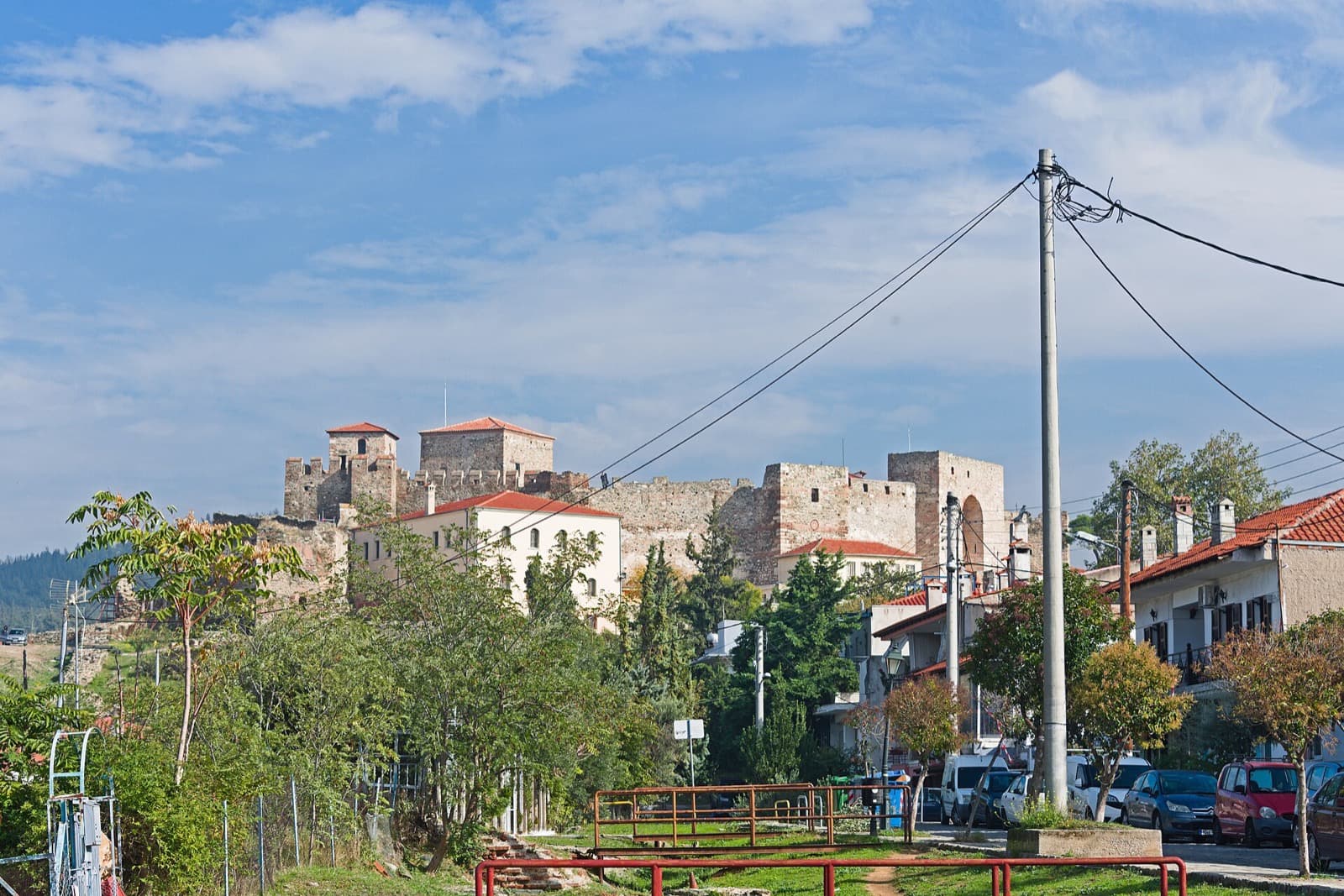
The mosaic reads differently once you have climbed past the fortified ring that made all of this survival possible, and once you have seen the working monastery and the fresco-covered churches nearby that tell the same story in different rooms. Osios David is one stop on a walk that threads the Upper Town's walls, its citadel, its overhanging timber houses, and its Byzantine churches into a single argument about the quarter the fire spared.
The self-guided Roamer audio tour "The Quarter the Fire Spared" includes Osios David as its fifth stop, sequenced so the paradox builds as you climb. If you are planning your route, start with our overview of Thessaloniki walking tours, then see everything on offer in Thessaloniki. Come in the late morning or early afternoon, when the small Ministry of Culture churches are most likely to be open, wear shoes with grip for the stepped lanes, and keep your voice low inside. The apse does the talking.
Sources
- The Byzantine Legacy, "Church of Hosios David." Detailed account of the late-fifth-century church, the Vision of Ezekiel mosaic, the Theodora and oxhide legends, the mosque conversion, and the 1921 reconsecration.
- UNESCO World Heritage List, "Paleochristian and Byzantine Monuments of Thessaloniki." Official listing (inscribed 1988) that includes Osios David among the city's protected Byzantine monuments.
- Wikipedia, "Icon of Christ of Latomos." Overview of the apse mosaic, its iconography of a youthful beardless Christ with the evangelist symbols, and its dating.
- Roamer tour, "The Quarter the Fire Spared" (Thessaloniki Ano Poli). Fact-audited on-site narration for Osios David and the surrounding Upper Town stops.
Ready to experience it?
The Quarter the Fire Spared
140 min · 4.2 km · challenging
More from Thessaloniki
Explore more at your own pace.
One Day in Thessaloniki: A Walkable Morning-to-Evening Itinerary
Thessaloniki: The City Read in Layers
The Ano Poli Timber Houses: How the Poorest Quarter Kept the Oldest City
The Jewish Museum of Thessaloniki: Reading a Vanished City
The Rotunda of Thessaloniki: How One Building Holds Four Empires