Walk one short axis through the centre of Thessaloniki and read the city like a core sample: Roman power, early-Christian triumph, Ottoman conversion, and Greek modernity, sometimes stacked inside a single building.
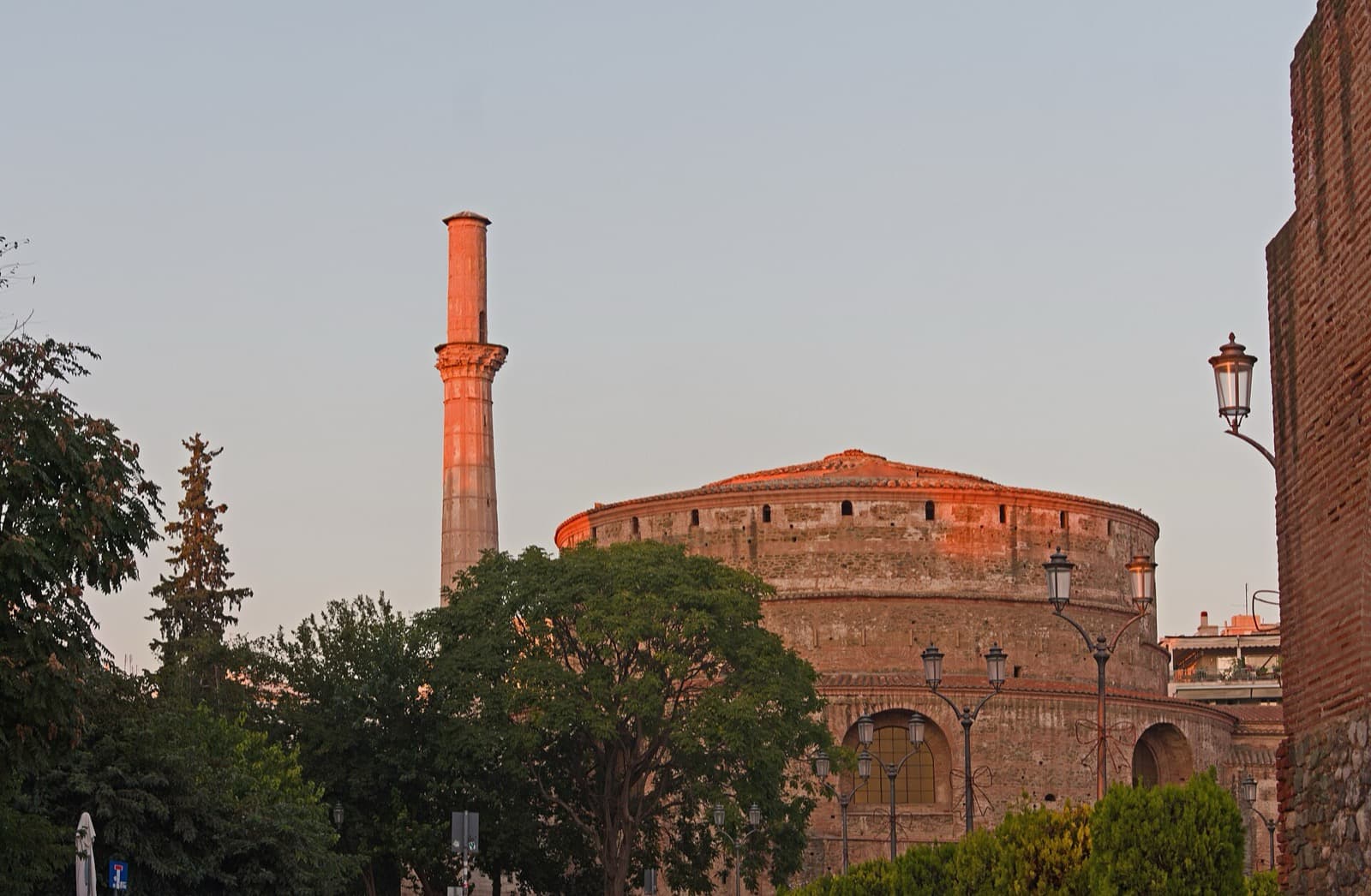
Start · The Rotunda: the city in one building
DirectionsStops
- 1
The Rotunda: the city in one building
A vast Roman round hall that became a church, then a mosque with a minaret, then a monument, holding all four of the city's layers in one structure.
- 2
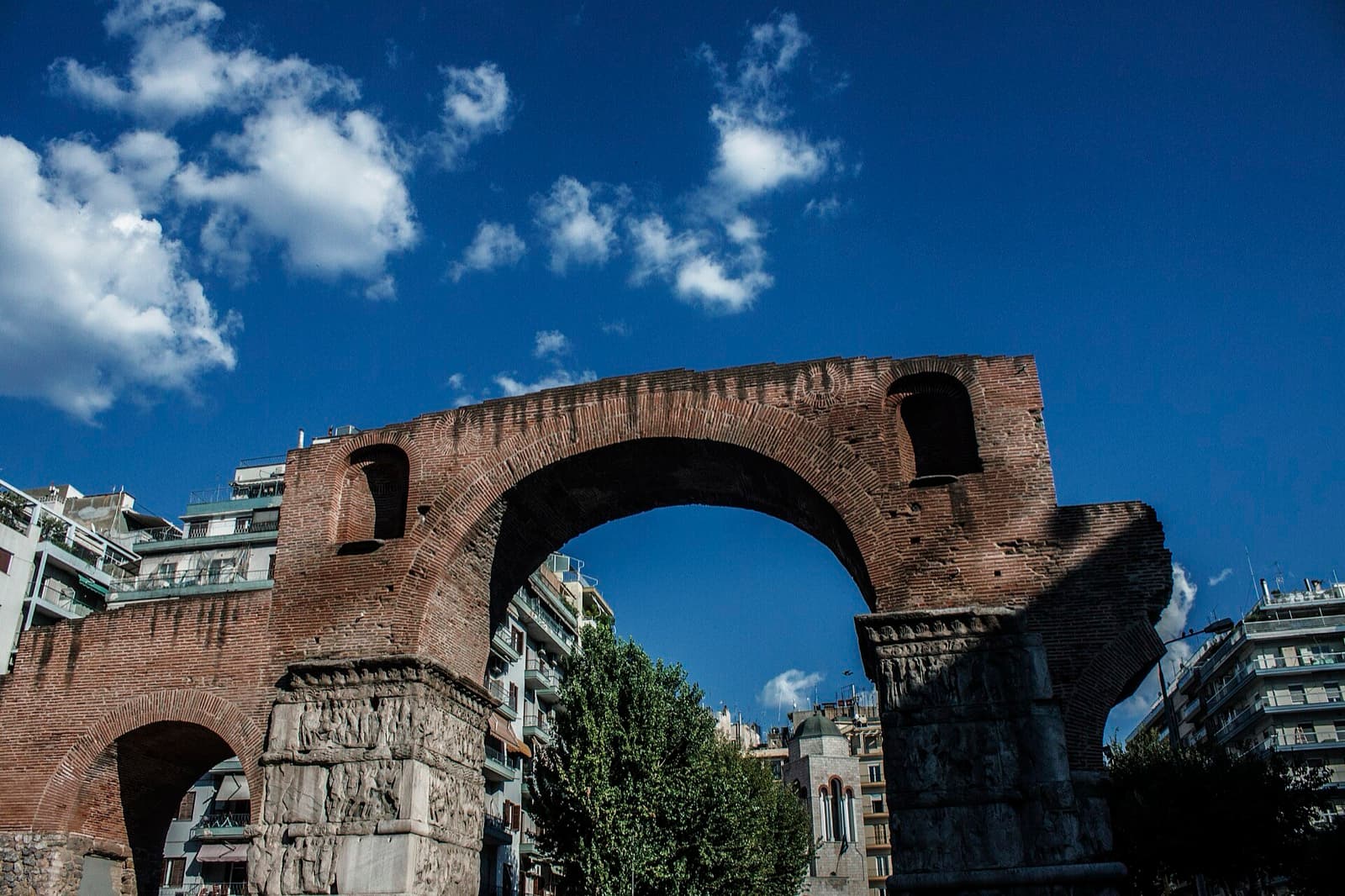
The Arch of Galerius (Kamara): a Roman victory carved in stone
A monumental triple arch on the old Roman highway, carved to celebrate the emperor Galerius's victory over the Persians.
- 3
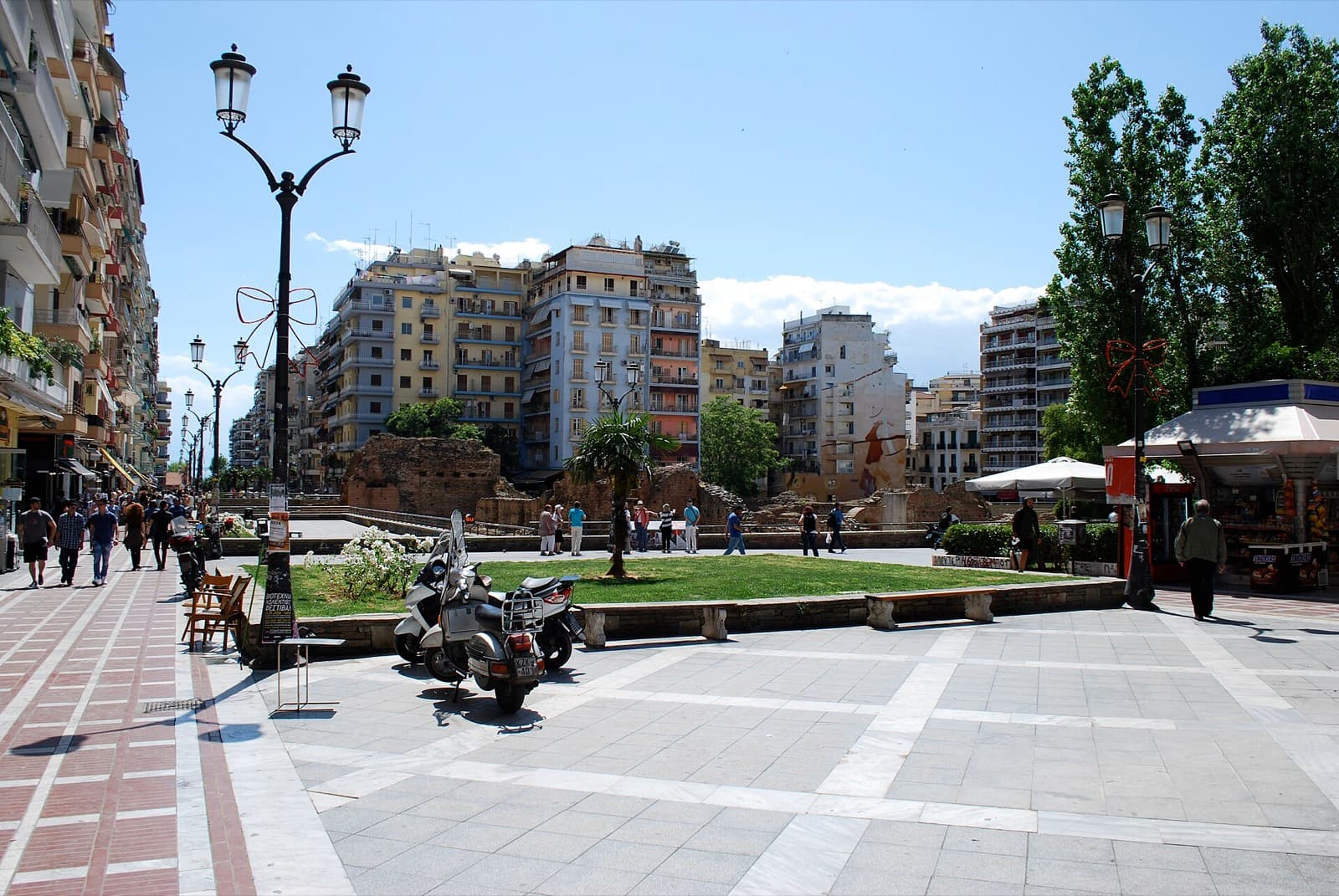
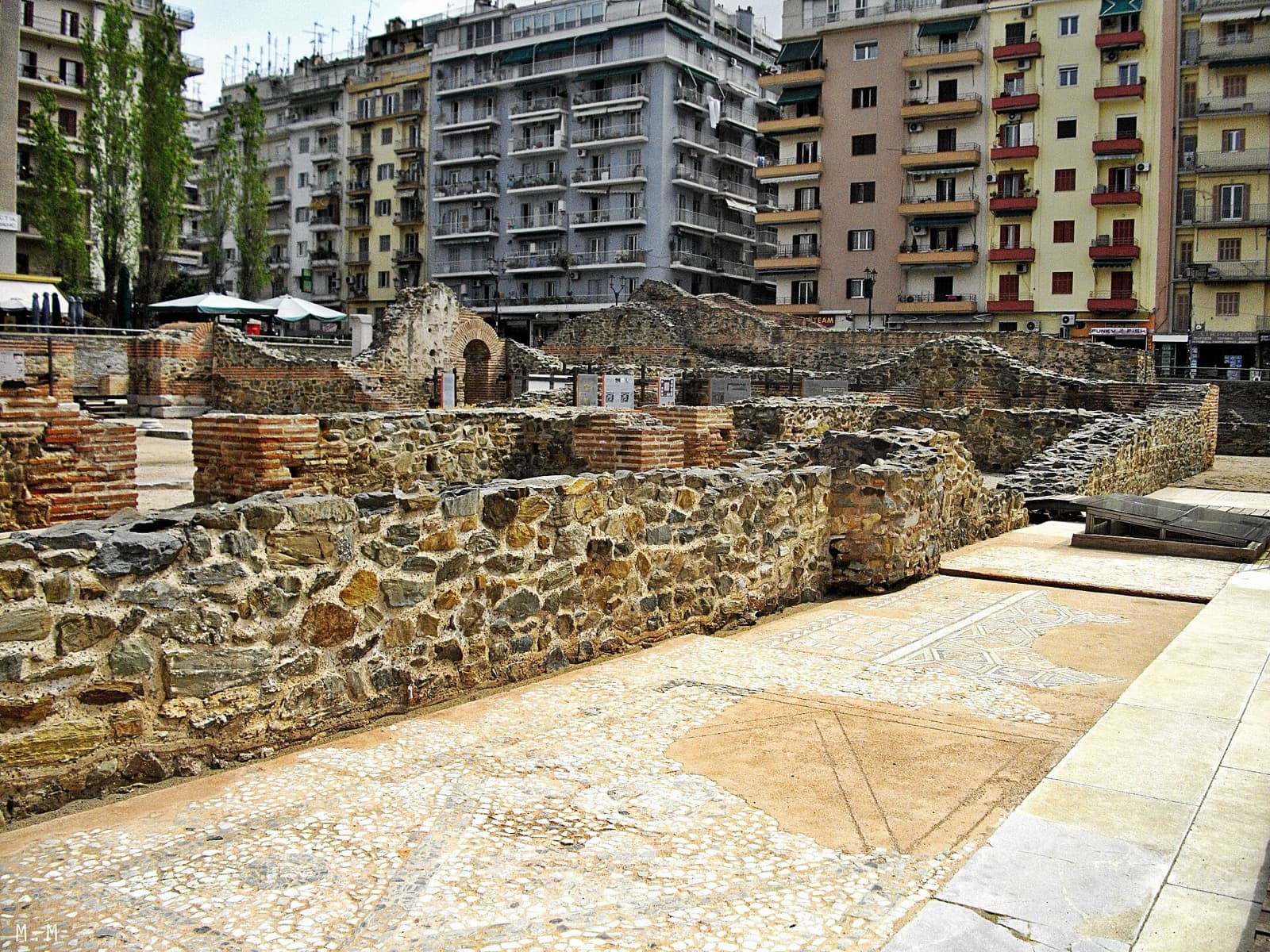
The Palace of Galerius: the emperor's throne room underfoot
The excavated administrative heart of Galerius's city, whose best-preserved hall, the Octagon, is read as his throne room.
- 4
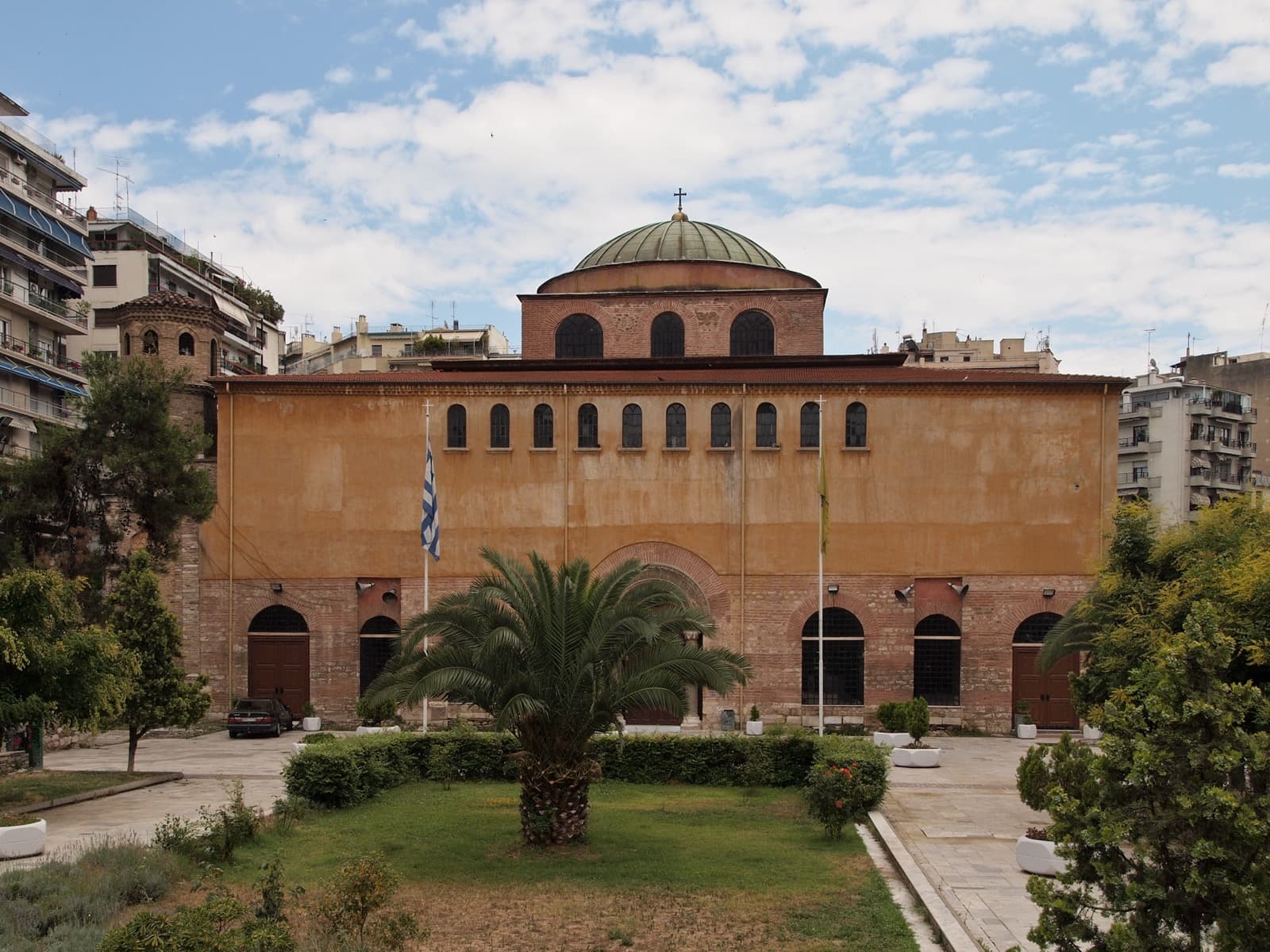
Agia Sophia: a Byzantine dome that was once a mosque
A domed Byzantine church whose ninth-century mosaic of the Ascension crowns a building that spent nearly five centuries as a mosque.
- 5
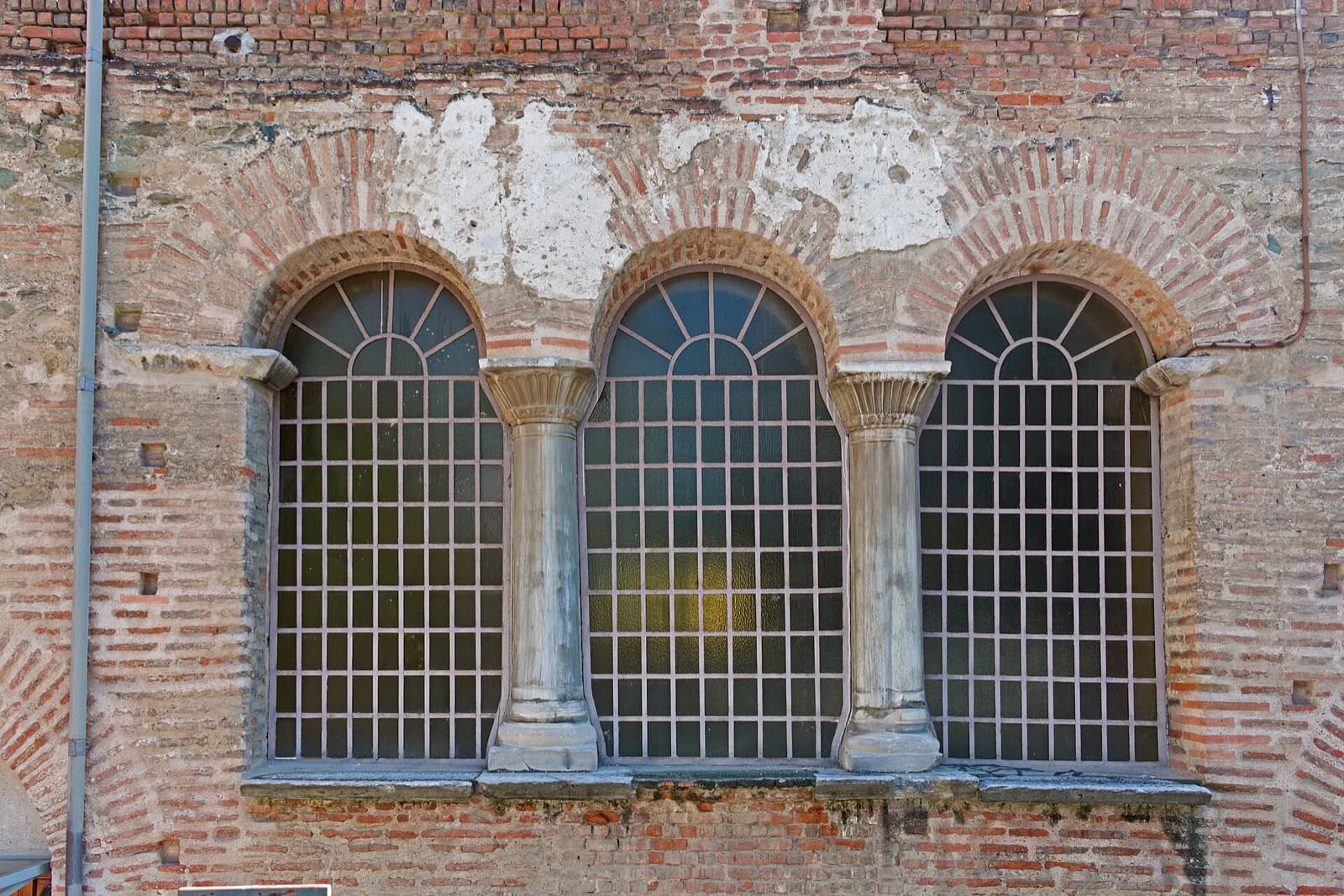
Panagia Acheiropoietos: the inscription written over the church
One of the city's oldest churches in continuous use, and the first converted to a mosque, with the Ottoman inscription still legible along its colonnade.
- 6
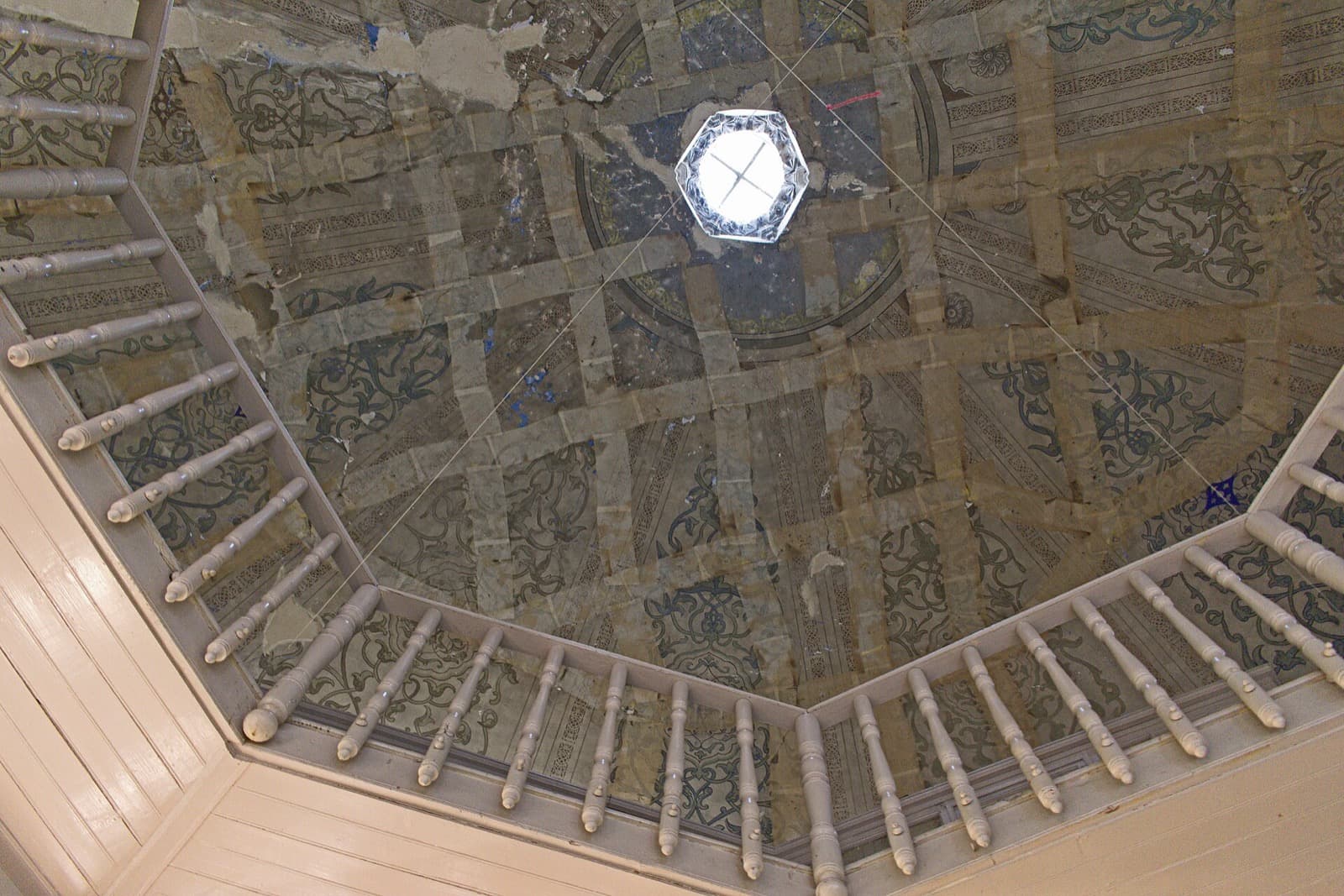
Bey Hamam: the Ottoman city's daily life
The oldest Ottoman bath built in the city after the conquest, a double bathhouse that gives the everyday Ottoman layer a building of its own.
- 7
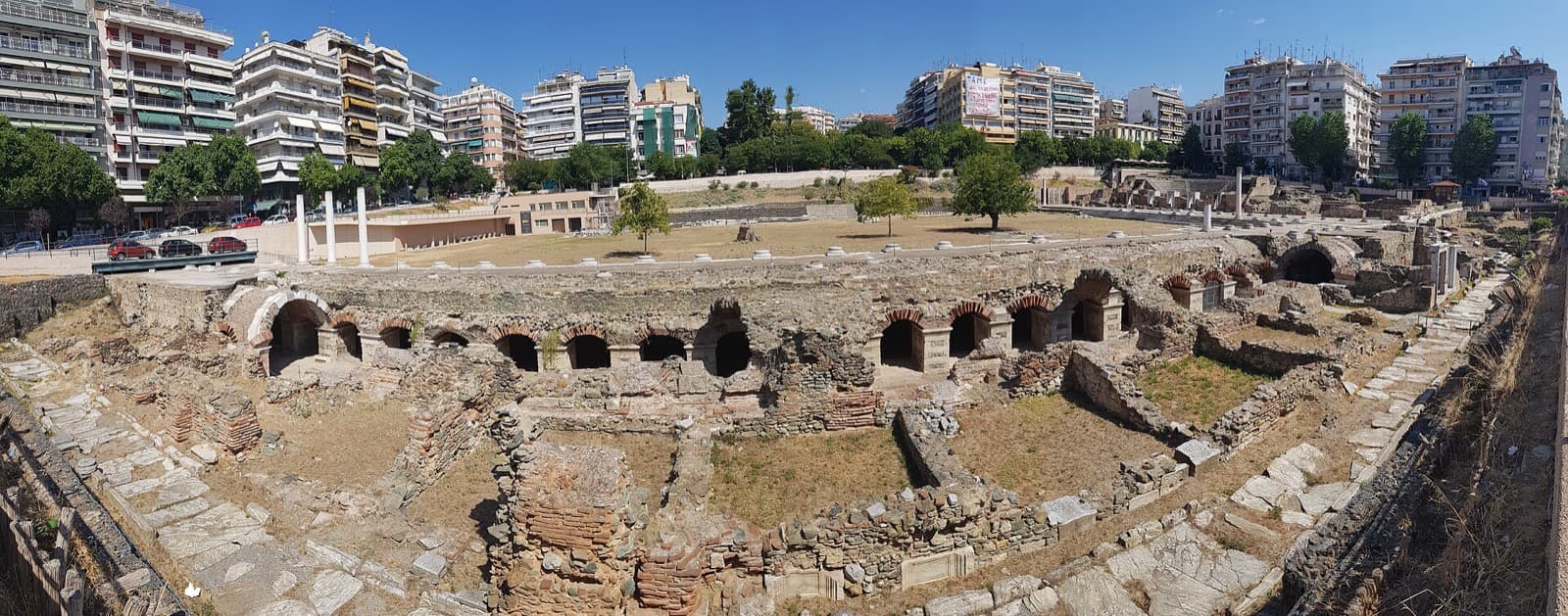
The Roman Forum: the civic heart of the ancient city
The two-terraced Roman forum and its buried odeon, the marketplace and civic centre of the ancient city, found by accident in the twentieth century.
- 8
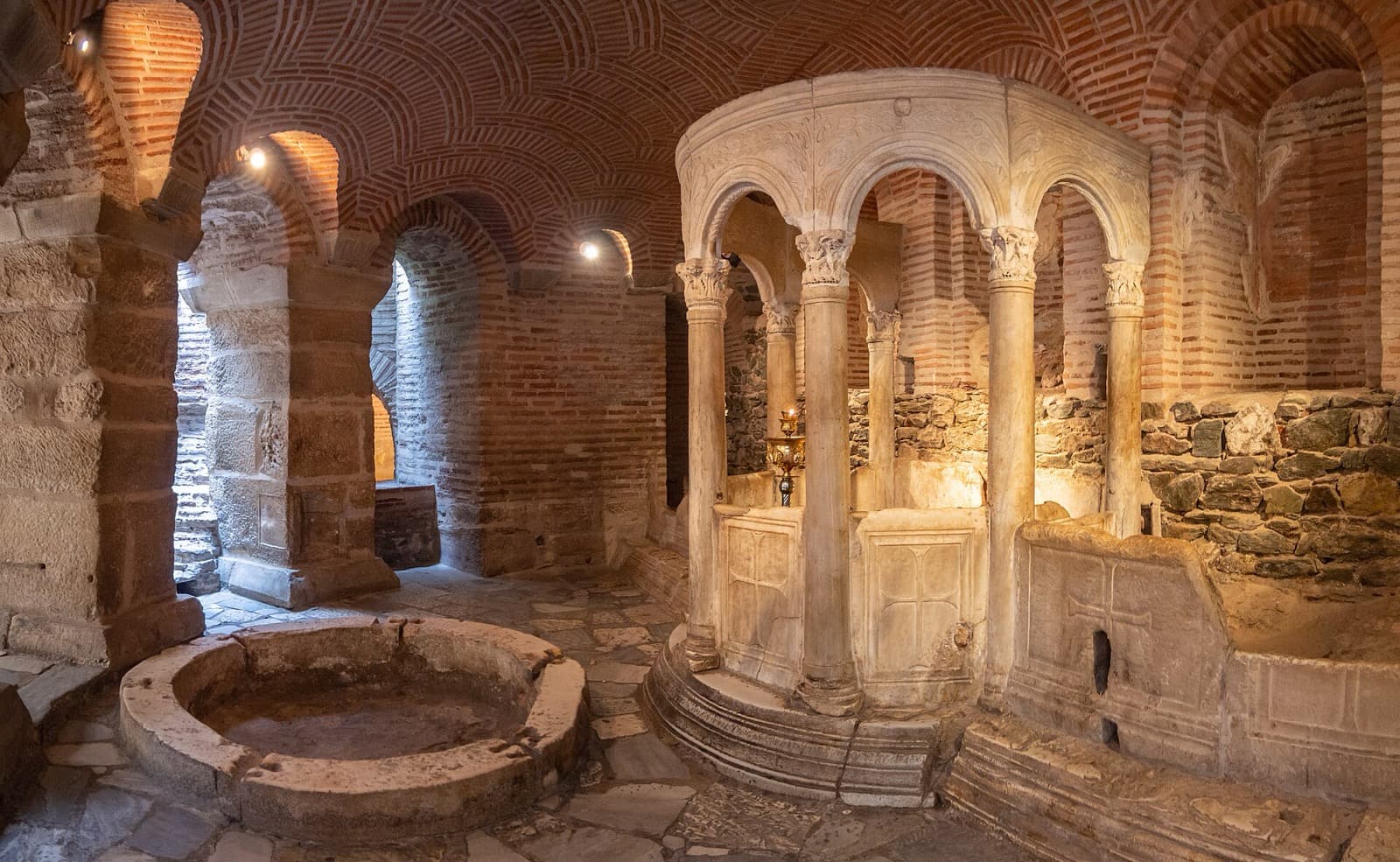
Agios Dimitrios: the patron saint, the crypt, and the fire
The great basilica of the city's patron saint, carrying its earliest mosaics, a crypt over Roman baths, and the memory of the fire and the vanished Jewish city.
Details
Best Time to Visit
Early to mid-morning is ideal. You reach the open ruins of the Palace of Galerius and the Roman Forum before the midday sun, which is fierce and unshaded in summer, and you arrive at the churches while they are calm and quiet for worshippers. Spring and autumn are the most comfortable seasons overall. Check monument opening hours in advance, since the Rotunda, the Bey Hamam, and the Forum museum keep set hours and some close one day a week.
Pro Tips
- •Ask at a monument desk about combined or reduced-price tickets for the UNESCO group of monuments; a single ticket sometimes covers several sites and saves both money and time.
- •The churches on this walk, Agia Sophia, Panagia Acheiropoietos, and Agios Dimitrios, are active places of worship, so dress modestly, keep your voice low, and step around any service in progress.
- •Go slowly at Panagia Acheiropoietos and walk the length of the northern colonnade; the surviving Ottoman inscription there is the single most telling image of the whole walk.
- •At Agios Dimitrios, take the extra few minutes to go down into the crypt, which is free and holds the church's oldest layer, over the Roman baths.
- •Carry water and something for shade; the Palace of Galerius and the Roman Forum are open, sun-baked archaeological sites with almost no cover.
- •Look up in every domed building. The mosaics that matter here, from the Rotunda's saints to Agia Sophia's Ascension, are overhead, not at eye level.
Safety & Precautions
- •The open archaeological sites at the Palace of Galerius and the Roman Forum have uneven ancient footing, loose surfaces, and little to no shade, so wear sturdy shoes, watch your step, and protect yourself from full summer sun.
- •Monument opening hours vary and some sites close one day a week, so confirm hours for the Rotunda, the Bey Hamam, and the Forum museum before you set out, and ask about combined-ticket options at the first desk you reach.
- •The churches and the historic bath are quiet, sacred, or protected spaces, so dress modestly, keep your voice down, silence your phone, and avoid flash near mosaics.
- •Summers are hot and dry with strong sun; carry water, and if your day extends into the crowded central market or flea-market streets nearby, keep bags closed and valuables secure.
Travel advisory: Exercise Normal Precautions (Level 1).
Gallery
Related Reading
Go deeper on what you'll see, hear, and walk through.
Overview
Best Self-Guided Walking Tours in Thessaloniki (2026)
3 min
Overview
One Day in Thessaloniki: A Walkable Morning-to-Evening Itinerary
8 min
Overview
Thessaloniki Travel Guide: Days, Transport, Season, Safety
7 min
Thematic
Best History Walking Tours in Thessaloniki (2026)
2 min
Thematic
Thessaloniki: The City Read in Layers
7 min
Companion
The Rotunda of Thessaloniki: How One Building Holds Four Empires
6 min
Deep dive
Agios Dimitrios: The Basilica That Holds Thessaloniki's Whole Memory
7 min
Read
What to Eat in Thessaloniki
6 min
Read the walk
The full story of The Rotunda and Arch of Galerius: The City in Layers, in words. Prefer to listen? Play it narrated, from home or on location.
Introduction
Thessaloniki, in northern Greece, is a city you can read like a core sample. Sink a shaft through the centre and you pass through Roman imperial power, early-Christian triumph, Ottoman conversion, and Greek modernity, sometimes all inside one building. This walk teaches that grammar. Each conqueror rewrote the city to declare a new order, yet the older layers refused to vanish. A Roman round hall keeps its Ottoman minaret and stays a church. A fifth-century basilica carries an Ottoman inscription along its columns. A mausoleum became a church became a mosque became a monument, and much of it still stands.
There are eight stops. Expect roughly two hours at your own pace, though you can linger or skip freely, and about three kilometres of mostly gentle, level walking along the old Roman east-west road and the streets just off it. Six of these monuments carry a single shared distinction: they were inscribed together on the UNESCO World Heritage List in nineteen eighty-eight.
The route runs broadly in one line, so a little directional language will help, but every stop stands on its own if you arrive out of order. We hold one tension throughout: conquest as overwriting, against the stubborn persistence of what came before. That includes the Sephardic Jewish city, which two twentieth-century catastrophes nearly erased. We will reach that gravely, at the end.
When you arrive at the Rotunda, begin with stop one.
1. The Rotunda: the city in one building
Stand under this enormous brick cylinder and you are standing inside the whole argument of the walk. The Rotunda was raised around three hundred and six A D on the orders of the tetrarch Galerius, and it is thought to have been intended as his mausoleum. It is a colossal thing: a diameter of about twenty-four and a half metres, walls more than six metres thick, a height near thirty metres, a scale that has invited comparison with the Pantheon in Rome.
Galerius, it seems, was never laid to rest here. Late in the fourth century the round hall was converted into a Christian church and dedicated to the Archangels, the Incorporeal Ones, a dedication it held for more than twelve hundred years. Its cupola and vaults were once entirely sheathed in mosaic. Much is lost, but the surviving late-fourth-century work is extraordinary: a band of saints with hands raised in prayer before elaborate architectural fantasies, golden crosses among stylized flowers and acanthus, garlands of fruit.
Then the layer that makes this building unmistakable. In fifteen ninety it became a mosque, and a minaret was added. That minaret still stands, one of very few left in the city, rising beside a Christian dome. The building served as a mosque until nineteen twelve.
Today it is the Church of the Rotunda, also called Agios Georgios, Saint George, a monument under the ephorate of antiquities, opened to Orthodox worship for certain festivities. Roman hall, early-Christian church, Ottoman mosque, monument-church again. Look up at the dome, then out at the minaret, and you have read the city's grammar in a single glance.
2. The Arch of Galerius (Kamara): a Roman victory carved in stone
A short way from the Rotunda, straddling the old road, rises the arch the city simply calls the Kamara. It was built to shout a victory. Construction spanned two hundred ninety-eight to two hundred ninety-nine A D, and it was dedicated in three hundred three A D to celebrate Galerius's triumph over the Sasanian Persians: the Battle of Satala and the capture of the Persian capital, Ctesiphon.
What you see is a fragment of something far grander. Originally this was an octopylon, an eight-pillared gateway forming a triple arch, a rubble-and-brick core faced with marble, its central opening about nine and a half metres wide and over twelve metres high. Only the northwestern three of the eight pillars survive. The eastern side is gone.
What remains is dense with imperial storytelling, carved in four stacked bands. Look for Galerius on horseback driving his lance at the Persian Shah Narses. Above and around it, the imperial family in a sacrifice of thanksgiving, and the four rulers of the tetrarchy standing in togas while Victory holds out a wreath. Roman power made legible to anyone walking past.
And walking past was the point. The arch sits astride the Via Egnatia, the great Roman east-west road that ran clear across the Balkans. It stands about one hundred twenty-five metres from the Rotunda and roughly two hundred thirty-five metres from the palace, so that arch, round hall, and palace were bound together along one processional axis. The emperor could pass beneath this arch, between his mausoleum and his throne. You are following the same line he did.
3. The Palace of Galerius: the emperor's throne room underfoot
Around this open square lie the exposed foundations of the palace that gave the arch and the Rotunda their reason to exist. This was the administrative centre of Galerius's Thessaloniki: massive walls, a large internal courtyard, colonnaded corridors, rooms with mosaic floors, fountains fed by springs. You are looking at the place from which the tetrarch ruled his share of the empire.
The finest surviving element is the Octagon, an eight-sided hall of about eight hundred seventy-five square metres. Seven semicircular niches open at the base of its walls, which were once richly clad in white and coloured marble, and a dome roughly twenty-three metres across is thought to have crowned it. Prevailing research reads the Octagon as the palace's audience hall, its throne room, the very heart of imperial power in the city.
And here the grammar of overwriting appears early. That imperial throne room was later put to use as a Christian church. The same instinct that turned a Roman mausoleum into a church, and a church into a mosque, is already at work in the fourth century: a building outlives its purpose and is claimed for a new one rather than torn down.
Remember the numbers from the arch. The palace stands about two hundred thirty-five metres from it, and the two, with the Rotunda beyond, form a single complex threaded by the Via Egnatia. Stand at the low railing above the ruins and picture the courtyards roofed and gleaming, officials crossing the peristyle, the emperor seated under a dome inside his octagonal hall. This is the residential and governing layer of the Roman city, the foundation everything later was written over.
4. Agia Sophia: a Byzantine dome that was once a mosque
Agia Sophia means Holy Wisdom, and the name deliberately echoes the far larger church of the same name in Constantinople. A church has stood on this site since the early Christian centuries, but the building you see took its present form in the seventh to eighth century, rebuilt…
Full narration for this stop unlocks with the tour.
5. Panagia Acheiropoietos: the inscription written over the church
This is the climax of the walk's argument, and it is written in stone you can point to. Panagia Acheiropoietos is a fifth-century early-Christian basilica, raised around four hundred fifty to four hundred seventy and dedicated to the Virgin Mary. It may be the city's earliest…
Full narration for this stop unlocks with the tour.
6. Bey Hamam: the Ottoman city's daily life
So far the Ottoman layer has appeared as an overwriting: a minaret on a Roman hall, an inscription on a Christian basilica. Bey Hamam gives that layer a building entirely its own, and it is about ordinary life rather than conquest. It was built in fourteen forty-four by Sultan…
Full narration for this stop unlocks with the tour.
7. The Roman Forum: the civic heart of the ancient city
Away from the imperial pomp of the Galerius complex lies the ordinary machinery of Roman civic life: the forum, the ancient agora, the marketplace and civic centre where the everyday business of the city was done. Agora is the old Greek word for exactly that, a marketplace and…
Full narration for this stop unlocks with the tour.
8. Agios Dimitrios: the patron saint, the crypt, and the fire
We end at the church of the city's patron, Agios Dimitrios, Saint Demetrius. It is a great five-aisled basilica. The first church here rose in the early fourth to fifth century, and the building you see is largely seventh century, from six hundred twenty-nine to six hundred…
Full narration for this stop unlocks with the tour.