Bukchon Hanok Village: The Living Grid
90 min · 1.8 km · easy
Seoul folds six centuries of the Joseon court into a modern city of nearly ten million by keeping three registers of the same idea alive at once: a palace at Gyeongbokgung laid out as a Confucian diagram of kingship under a guardian mountain, the lived-in hanok lanes of Bukchon that turn out to be a nineteen-twenties developer product rather than a medieval survival, and the craft-and-tea quarter of Insadong beside the reborn hanok cafe alleys of Ikseon-dong. Walk them in sequence and the city reads not as a collection of old sites but as one continuous argument about order, memory, and who gets to shape a Korean place. Three self-guided walks trace that argument, and each one insists you look past the postcard to the design underneath.
The palace was drawn as an argument, not a shelter
Start where Seoul started. When the founders of the Joseon dynasty laid out Gyeongbokgung in the year thirteen ninety-five, they were not only building a home for a king. They sited the whole complex by Korean geomancy, pungsu-jiri, between a guardian mountain to the north and water to the south, then threaded its gates and halls along a single ceremonial axis. The Palace and the Mountain reads that axis in order: the front gate of Gwanghwamun on its public square, the inner gate of Heungnyemun, and the throne hall of Geunjeongjeon at the center.
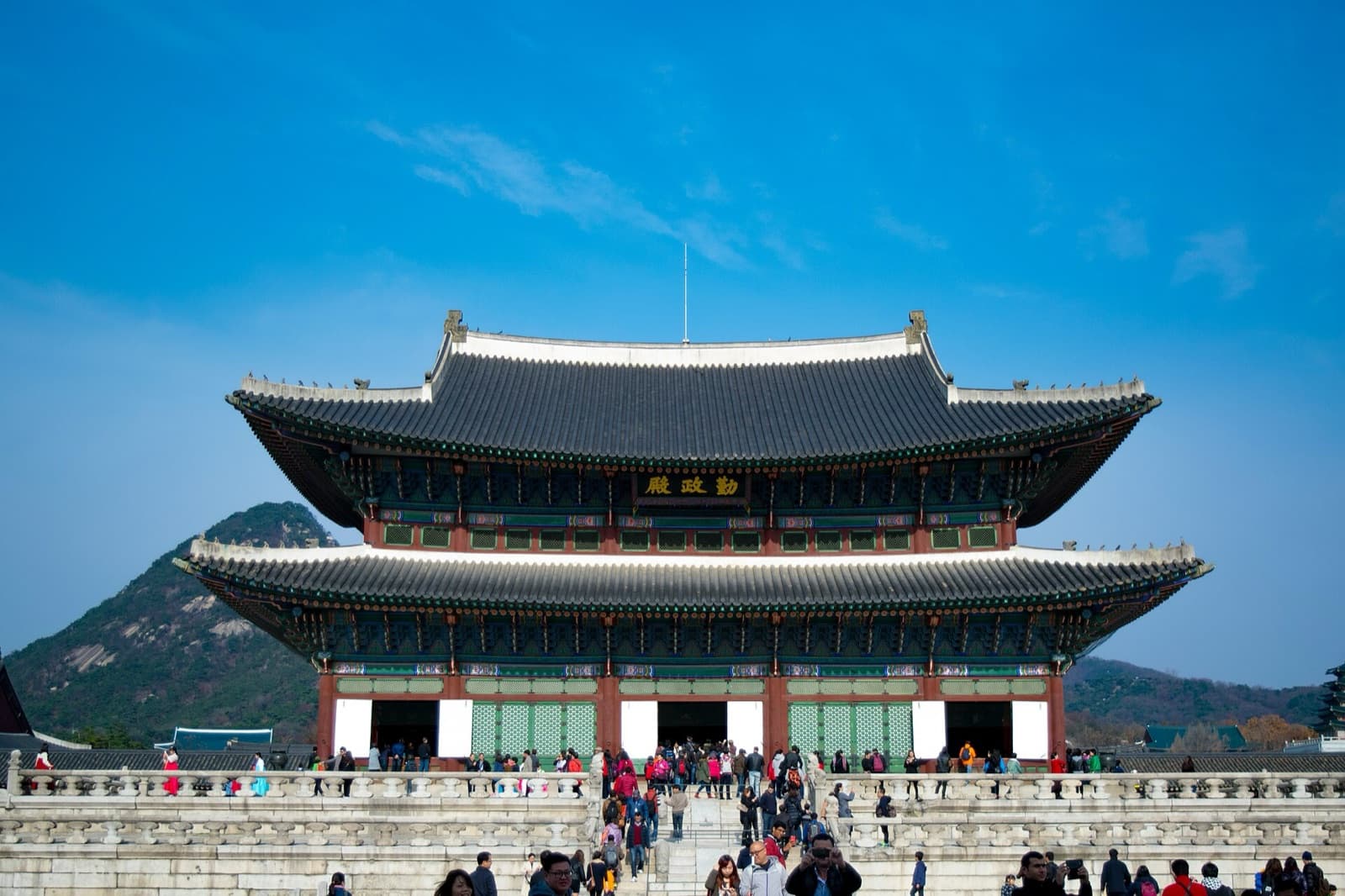
The throne hall makes the diagram obvious. Geunjeongjeon rises on a double stone terrace, with rank stones called pumgyeseok running down the courtyard to mark where each grade of official stood. The Korea Heritage Service records it as National Treasure number two hundred and twenty-three, listed on the eighth of January, nineteen eighty-five, and as the largest main hall of all the Joseon palaces. Look north past the hall and you see Mount Bugak, called Bugaksan, rising about three hundred and forty-two metres. That sightline is the whole point: rank stones, terrace, throne, and mountain, all on one line. The capital, then called Hanyang, was chosen in thirteen ninety-four by King Taejo, Yi Seong-gye, founder of the dynasty established in thirteen ninety-two, and the palace followed the next year.
The axis carries the harder story too. After Japan annexed Korea in nineteen ten, colonial authorities dismantled much of Gyeongbokgung and, between nineteen sixteen and nineteen twenty-six, raised an enormous government building squarely across the throne-hall axis, blocking the palace from view. Independent Korea demolished it, running the work from the fifteenth of August, nineteen ninety-five, a date chosen to mark the fiftieth anniversary of liberation, into nineteen ninety-six. Taking the building down reopened the founders' line from gate to hall to mountain. The same recovery runs through Gwanghwamun Gate, restored in proper wood and shifted about fourteen and a half metres back onto its true line on the fifteenth of August, two thousand and ten. What you walk is a single idea written into the landscape, erased, and deliberately undone.
Bukchon is a postcard with a construction date
Hear a stop from this walk
The Developer Builders: Where the Urban Hanok Came From
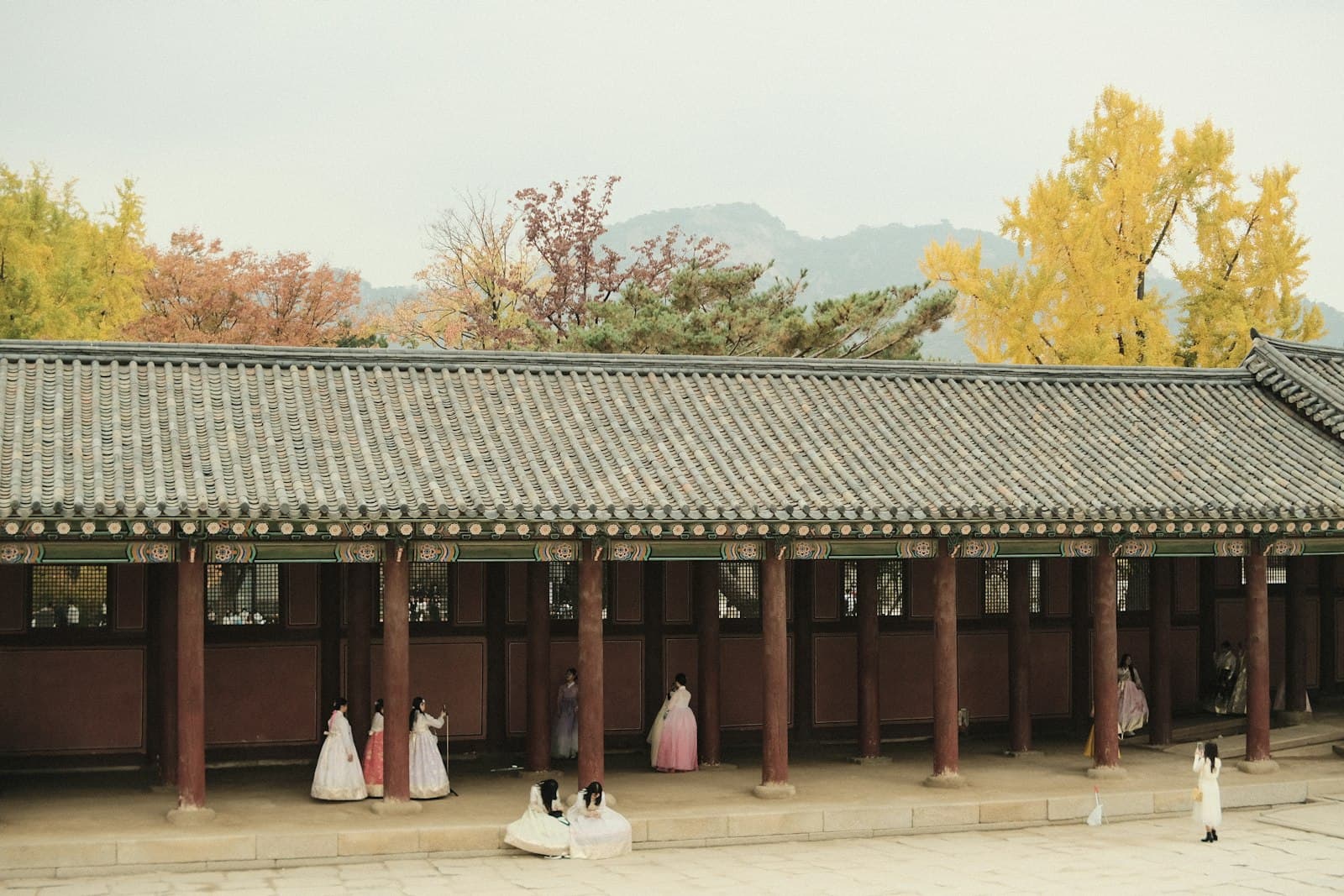
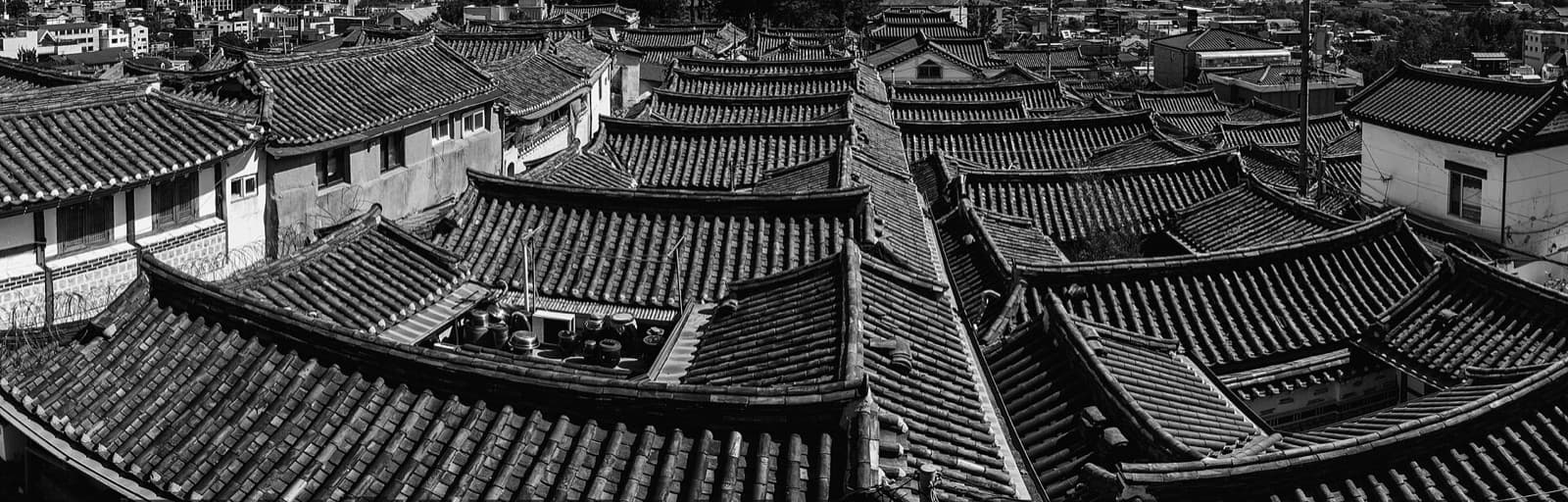
Just east of the palace, Bukchon Hanok Village reads from a distance as a timeless village of curved grey tile roofs. The Living Grid takes that image apart. Most of these hanok are not medieval at all. They are urban hanok, mass-built in the nineteen twenties and thirties by Korean developers who bought subdivided noble estates and packed them with standardized courtyard houses. The uniformity of roof pitch and footprint down a block is the tell.
There is a name attached. Research on Bukchon and nearby Ikseon-dong credits the developer Jeong Se-gwon, remembered as Korea's first modern land developer, with founding the first modern Korean-owned real estate company around nineteen twenty. As Japanese settlers pushed northward through the city during that decade, he deliberately built hanok communities for Koreans to hold the ground, modernizing the houses with glass and electricity while keeping their Korean form. He is remembered for supporting nationalist causes, including the Joseon Language Society. Research records that of sixty-four recorded hanok in Ikseon-dong, thirty-four came from his firm.
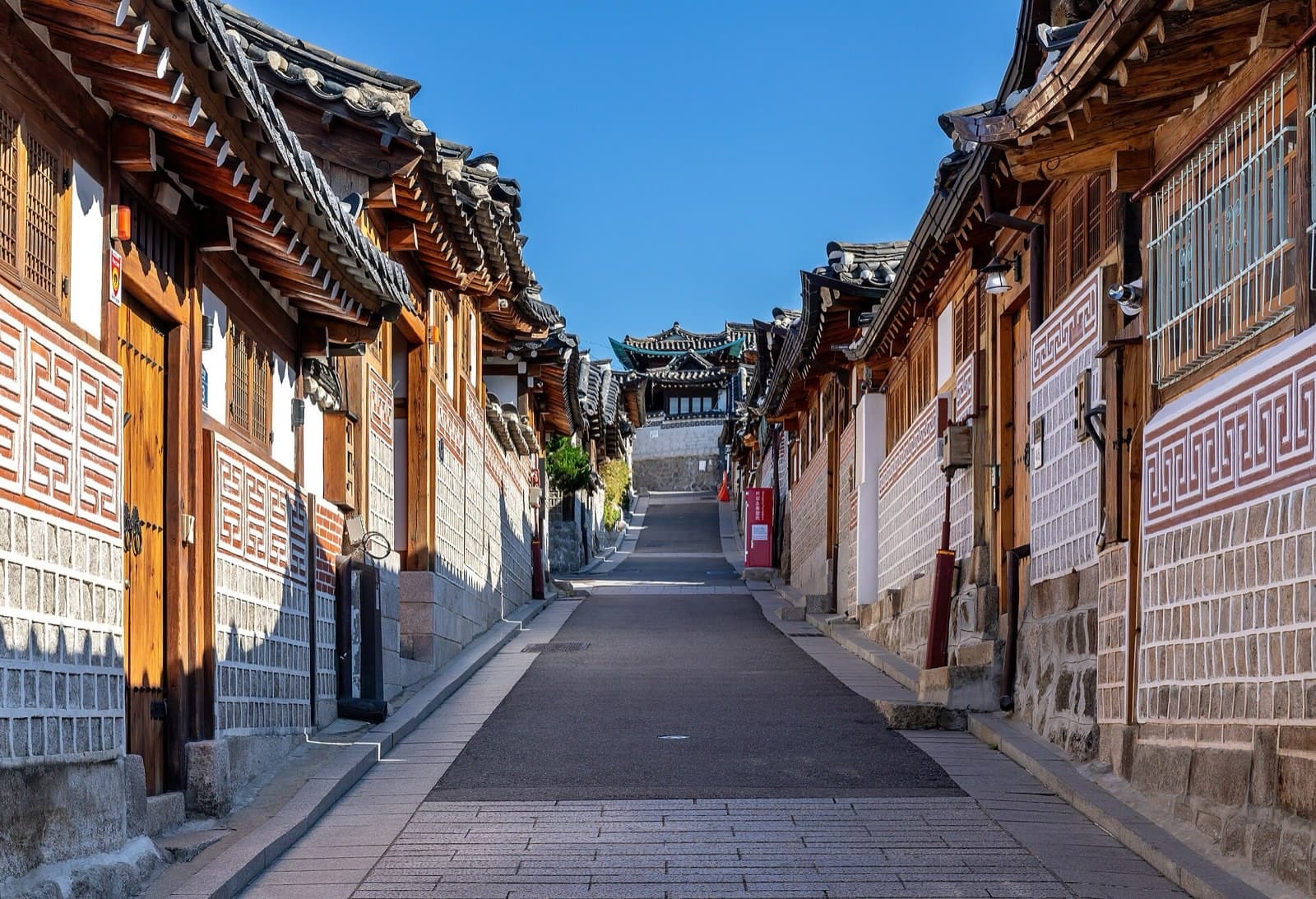
The colonial layer is physical here, not footnoted. The Baek In-je House, built in nineteen thirteen by Han Sang-ryong, an executive of Hanseong Bank, mixes tatami rooms, red brick, and large panes of glass, and joins its men's and women's quarters with an interior hallway that a traditional hanok would never allow. Bukchon is also a working neighbourhood under strain. Village records show visitors rose from about thirty thousand in two thousand seven to roughly six point four million in two thousand twenty-four, while residents fell from about eight thousand seven hundred in two thousand twelve to around six thousand one hundred. In response, Seoul restricted non-resident tourists on the most photographed lanes to roughly ten in the morning to five in the evening, effective the first of March, two thousand twenty-five. The beauty was never the illusion. The illusion was that the beauty had no history.
Insadong and Ikseon-dong keep the handmade alive
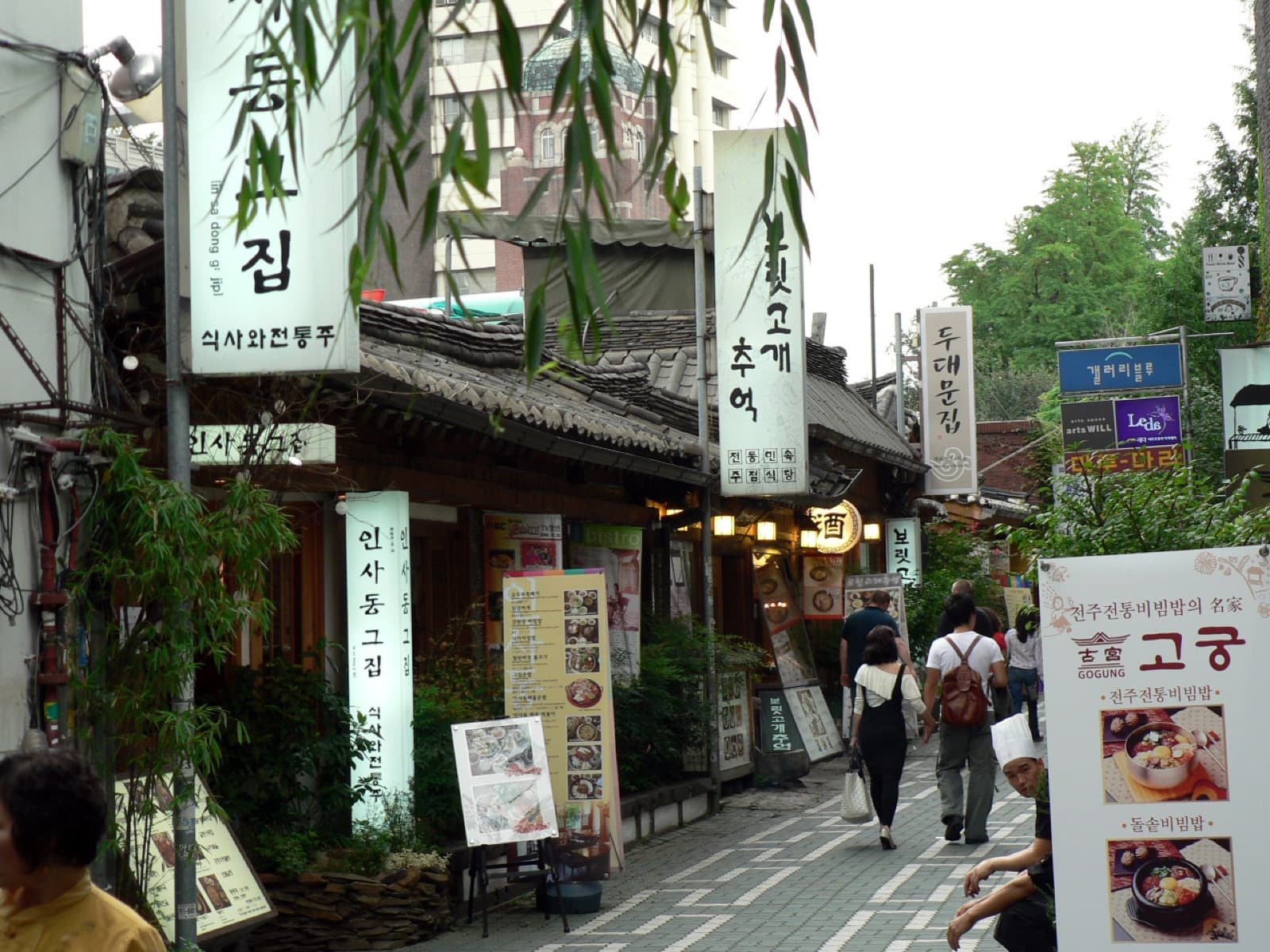
The third register is material culture. Paper, Ink, and the Narrow Lane walks the quarter where Korean identity is made by hand: hanji paper from mulberry bark, horsehair brushes, ink ground from pine soot, celadon and buncheong ceramics. Insadong began roughly five hundred years ago as a residential zone for Joseon officials, then filled with antiques during the colonial occupation as Korean families were pressured to sell heirlooms. By one account the district holds about ninety percent of South Korea's traditional stationery shops.
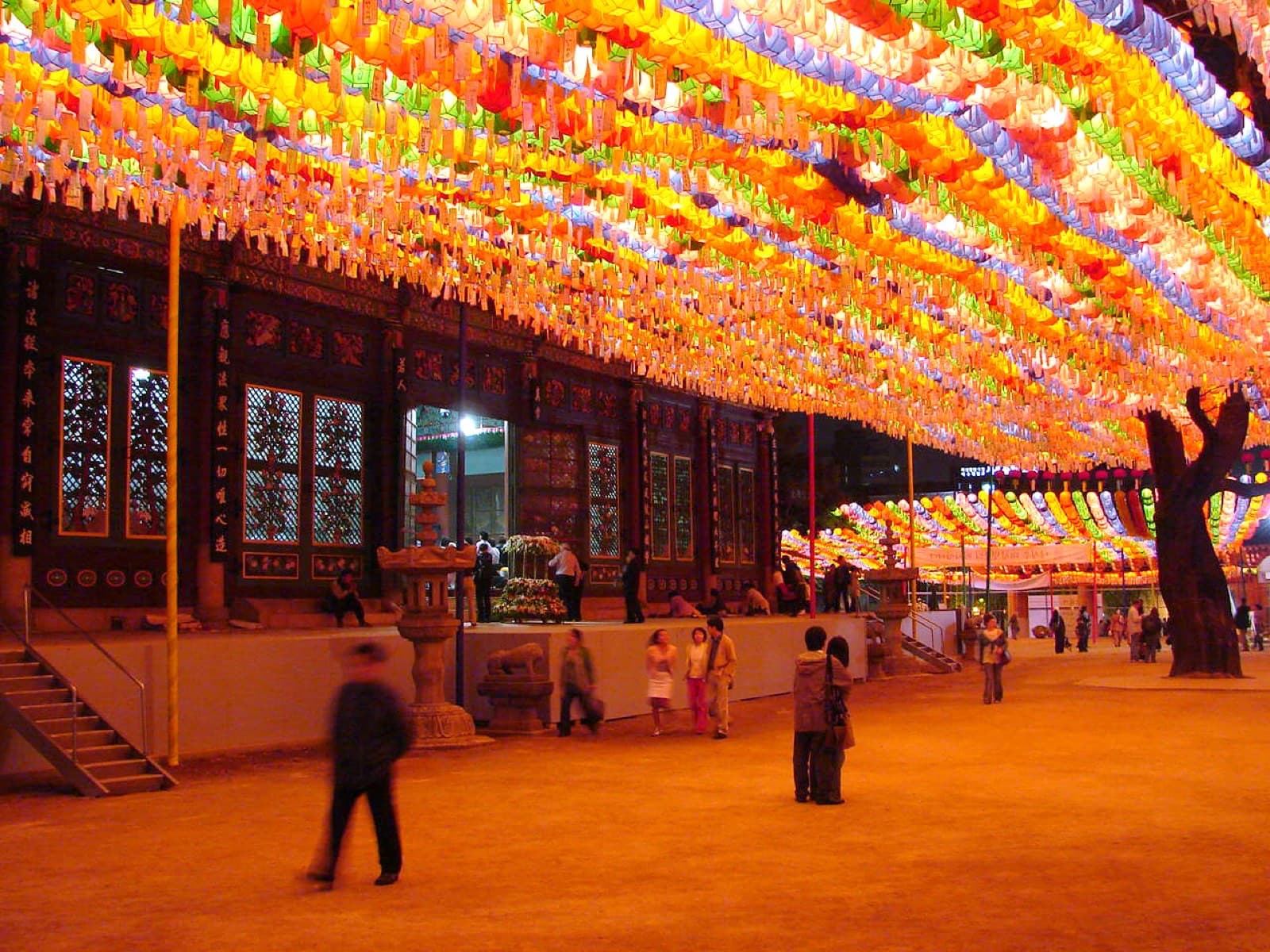
The walk anchors on deep time and turning points. Jogyesa is the head temple of the Jogye Order, the largest order of Korean Buddhism, its courtyard holding a white pine protected as Natural Monument Number Nine and estimated at around five hundred years old. Tapgol Park, laid out in eighteen ninety-seven following a proposal by John McLeavy Brown, an Irish advisor to King Gojong, is regarded as Korea's first modern public park. Its Wongaksa Pagoda, a marble pagoda built in fourteen sixty-seven, is National Treasure of South Korea Number Two, designated in nineteen sixty-two. On the first of March, nineteen nineteen, the Proclamation of Independence was first read aloud here, launching the March First Movement.
The walk ends in Ikseon-dong, and this is where the three registers close their loop. The same developer, Jeong Se-gwon, built these dense little hanok from the late nineteen twenties as urban housing for Korean families, fitted with then-modern running water, electricity, and indoor plumbing. The district faded from the nineteen eighties, then revived from late twenty fourteen as cafes moved into empty hanok, drawing on the order of thirty thousand visitors a day within a couple of years, with rising rents and displaced residents as the cost. Read together, the three walks show one city holding its layers in the open: the palace as a diagram of kingship, the developer village dressed as tradition, and the craft lanes where the handmade still gets made. For the full set, see Seoul walking tours.
Sources
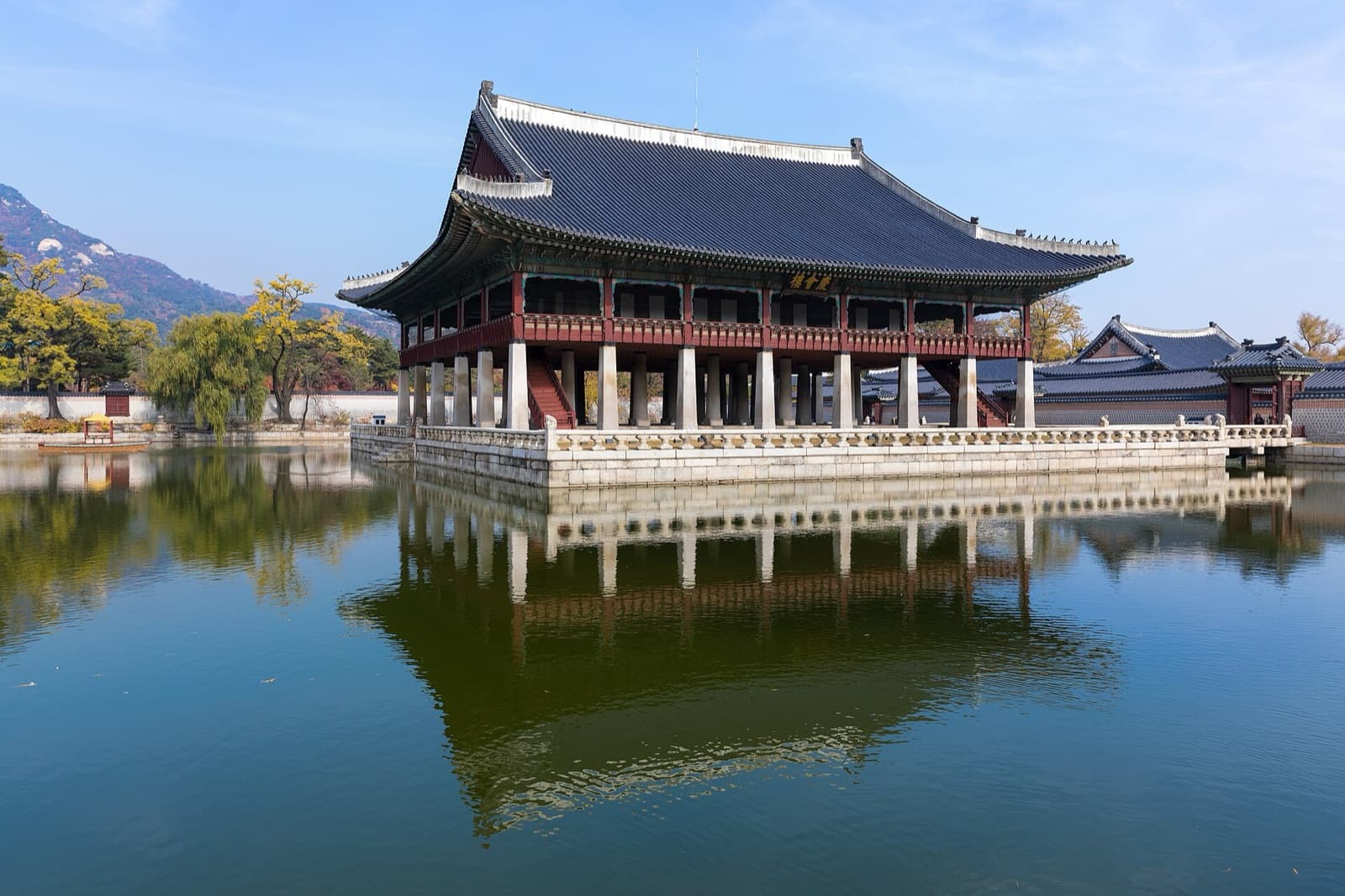
- Korea Heritage Service, records for Gyeongbokgung Palace, Geunjeongjeon (National Treasure 223) and Gyeonghoeru (National Treasure 224)
- Seoul Museum of History, Baek In-je House museum records
- Seoul Metropolitan Government, Bukchon Hanok Village visitor management and curfew (effective 1 March 2025)
- National Palace Museum of Korea, Gyeongbokgung history and colonial-era Government-General building demolition (1995 to 1996)
- Cultural Heritage Administration / National Treasure listings, Wongaksa Pagoda (National Treasure 2) and Tapgol Park, site of the March First Movement
Frequently asked questions
- Are the hanok houses in Bukchon really old?
- Most are not medieval. They are urban hanok, mass-built in the nineteen twenties and thirties by Korean developers who subdivided former aristocratic estates and packed them with standardized courtyard houses. The developer Jeong Se-gwon, remembered as Korea's first modern land developer, built hanok communities for Koreans as Japanese settlement pushed northward through the city.
- Why is Gyeongbokgung Palace laid out on a straight axis?
- The founders of the Joseon dynasty sited the palace in thirteen ninety-five using Korean geomancy, pungsu-jiri, which favored a mountain behind and water in front. They threaded the gates and halls along one ceremonial line running from the south up to Mount Bugak, so the throne hall, its rank stones, and the guardian mountain all fall on a single sightline.
- Can you visit Bukchon Hanok Village any time of day?
- No. Because visitor numbers rose to roughly six point four million in two thousand twenty-four while residents fell to around six thousand one hundred, Seoul restricted non-resident tourists on the most photographed lanes to roughly ten in the morning to five in the evening, effective the first of March, two thousand twenty-five. Residents have asked for quiet, or silent tourism.
- What is special about Insadong and Ikseon-dong?
- Insadong began about five hundred years ago as a quarter for Joseon officials and is now a center for hanji paper, brushes, ink, and ceramics, holding by one account about ninety percent of South Korea's traditional stationery shops. Ikseon-dong nearby is a dense district of nineteen-twenties urban hanok that revived from late twenty fourteen as a cafe-and-alley neighbourhood.
- What happened to the colonial building at Gyeongbokgung?
- Between nineteen sixteen and nineteen twenty-six the colonial government raised a large building directly across the palace's throne-hall axis, blocking the view. Independent Korea demolished it, running the work from the fifteenth of August, nineteen ninety-five, chosen for the fiftieth anniversary of liberation, into nineteen ninety-six, which reopened the founders' original sightline from gate to hall to mountain.
Ready to experience it?
Bukchon Hanok Village: The Living Grid
90 min · 1.8 km · easy
More from Seoul
Explore more at your own pace.
One Day in Seoul: A Walkable Jongno Itinerary
Geunjeongjeon Throne Hall: Reading the Royal Axis of Gyeongbokgung
Insadong-gil: Reading Seoul's Craft Quarter One Shop Window at a Time
Who Built Bukchon: The Developer Behind Seoul's Most Photographed Roofs
Bukchon-ro 11-gil: The Most Photographed Lane in Seoul, and the Curfew That Guards It