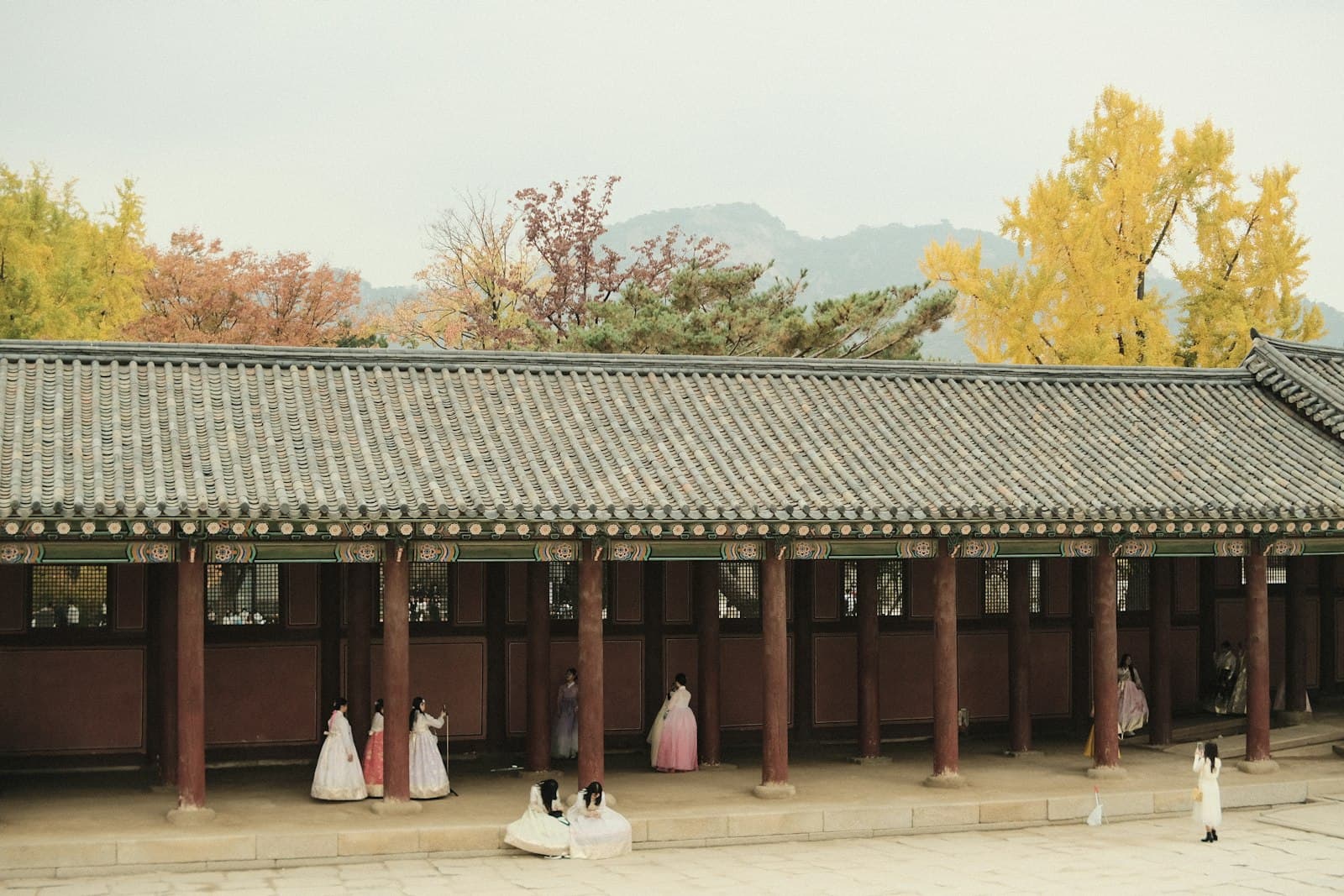
Bukchon Hanok Village looks like a flawless slice of old Seoul, but its grey tile roofs hide a colonial-era developer story and a working neighbourhood straining under its own fame. This walk reads the postcard for what it really is.
Start · Bukchon Traditional Culture Center: Reading the Neighbourhood
DirectionsStops
- 1
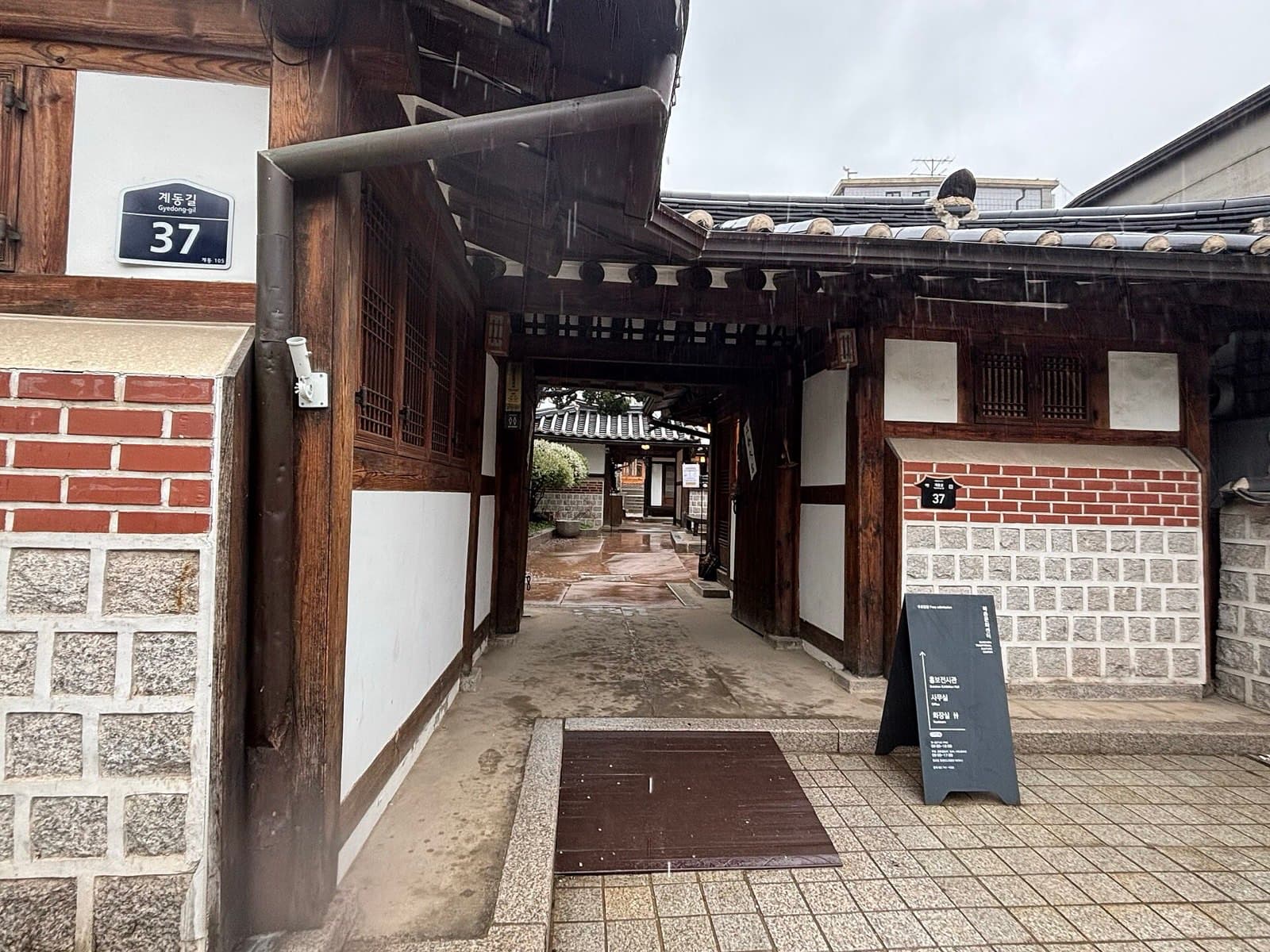
Bukchon Traditional Culture Center: Reading the Neighbourhood
A restored hanok that literally exhibits Bukchon's own layered history, making it the perfect place to orient before you walk.
- 2
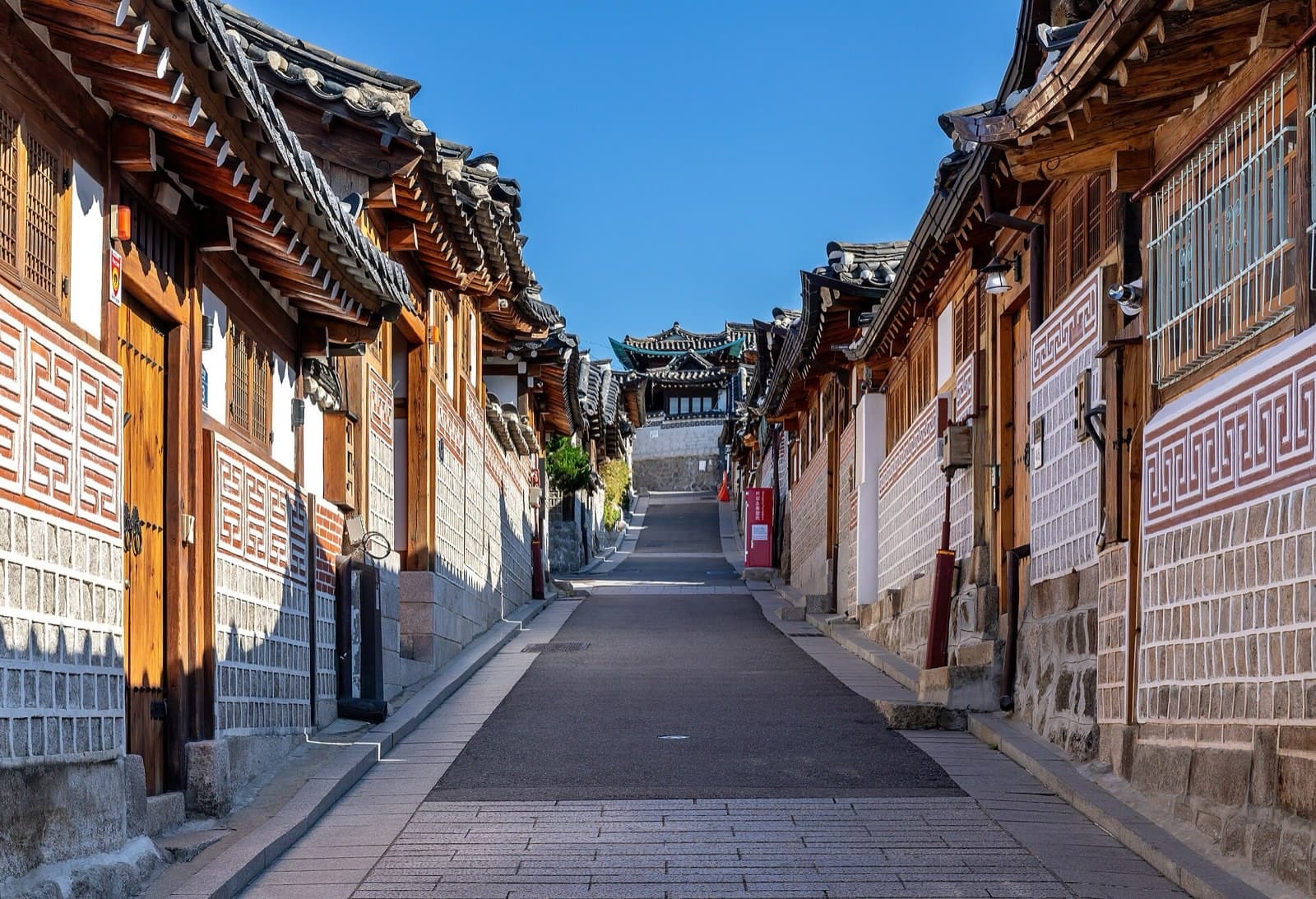
Bukchon-ro Eleven-gil: The Most Photographed Lane
The single most photographed hanok street in Bukchon, and a working residential lane now protected by a visitor curfew.
- 3
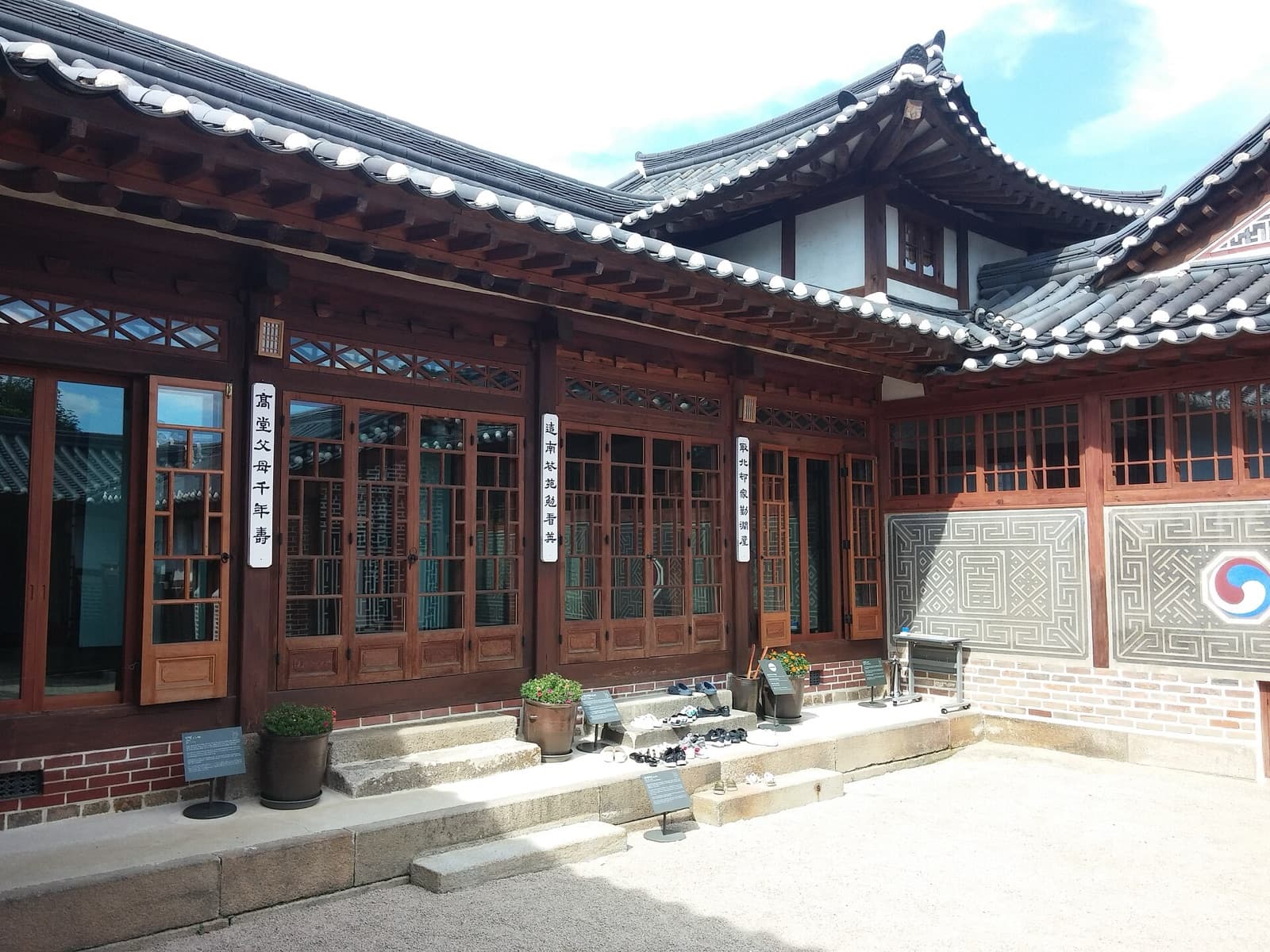
Baek In-je House: The Colonial Layer, Made Physical
A grand hanok whose tatami rooms, red brick, and glass windows make the Japanese colonial period physically visible.
- 4
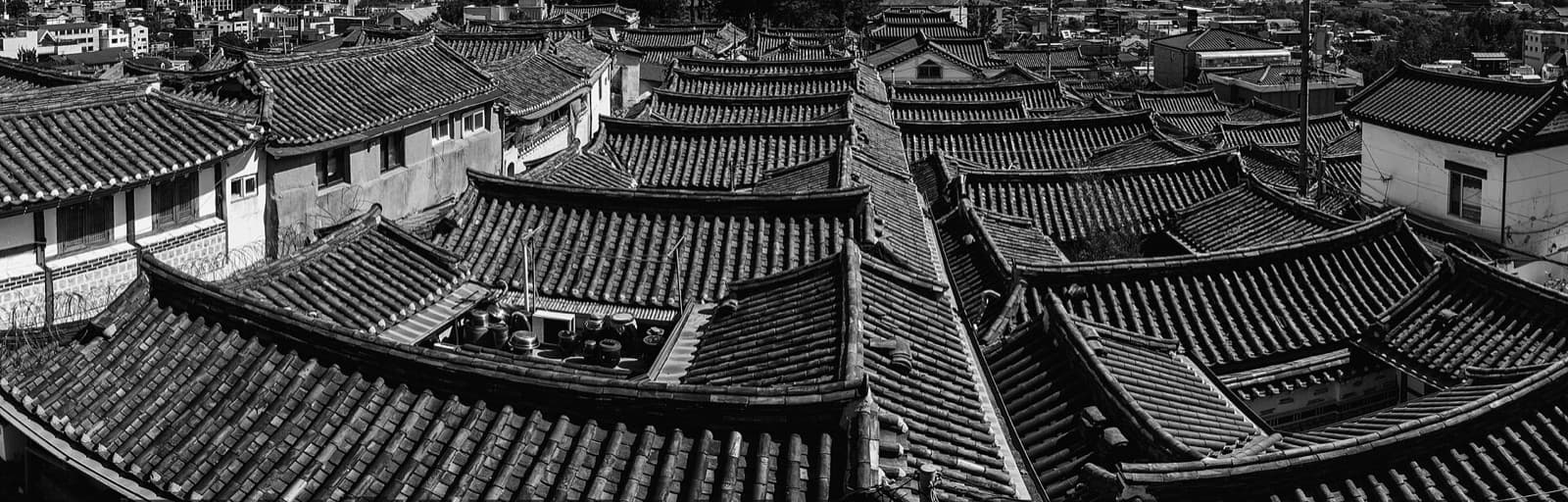
The Developer Builders: Where the Urban Hanok Came From
A representative cluster of uniform tile-roofed hanok that reveals Bukchon as a nineteen-twenties and thirties developer product, not a medieval survivor.
- 5
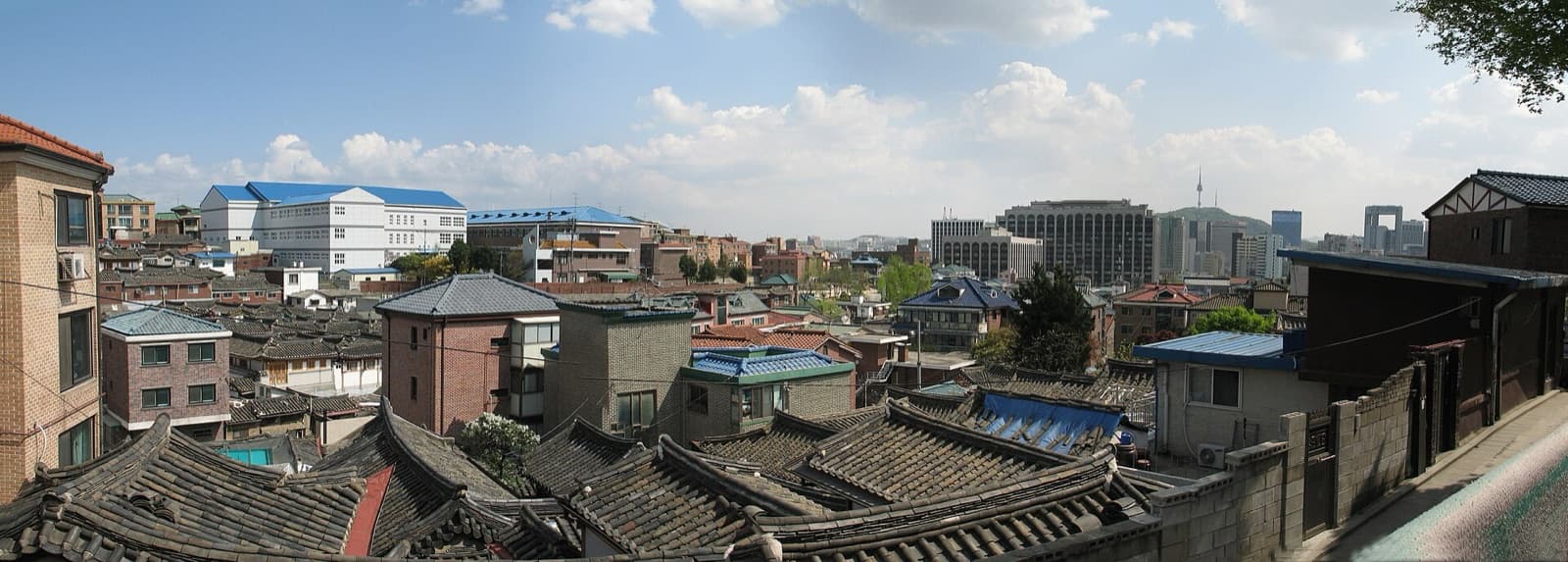
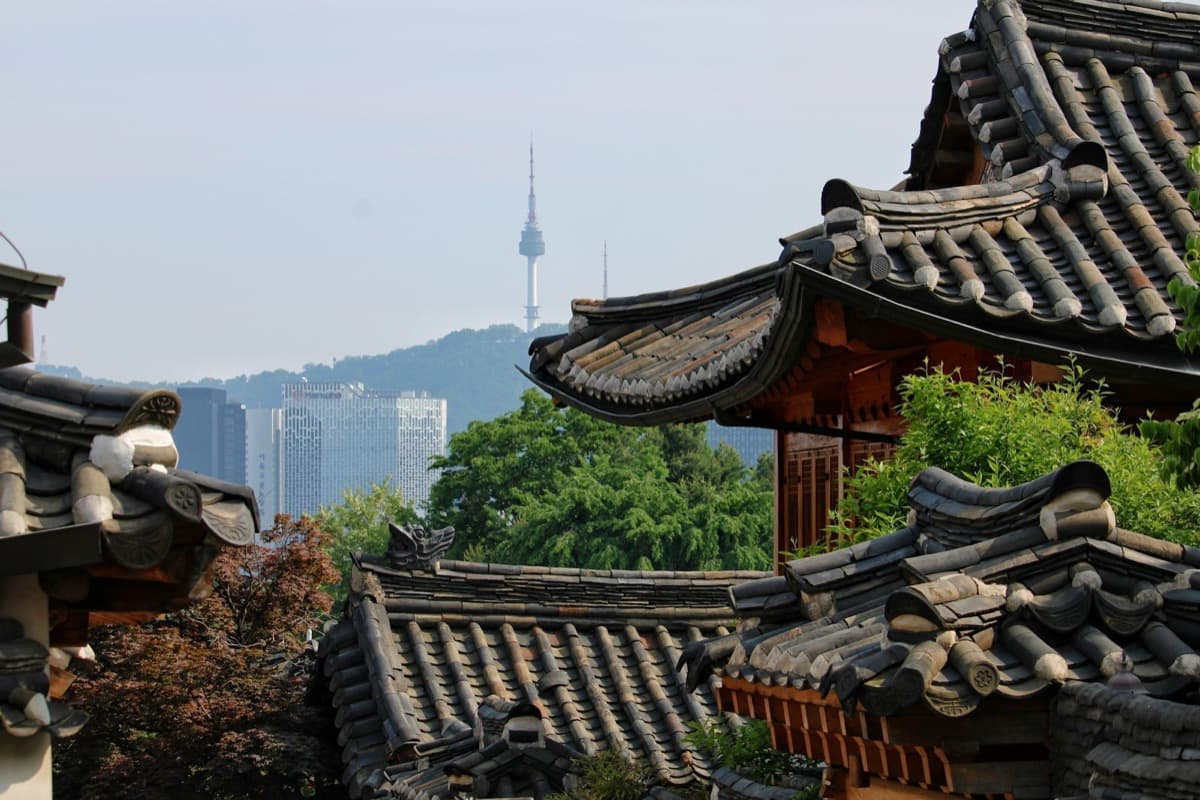
The Roofscape Toward Namsan: The Postcard, Understood
The classic upper-slope view down over cascading grey tile roofs toward Namsan Mountain, now seen with its full story understood.
- 6
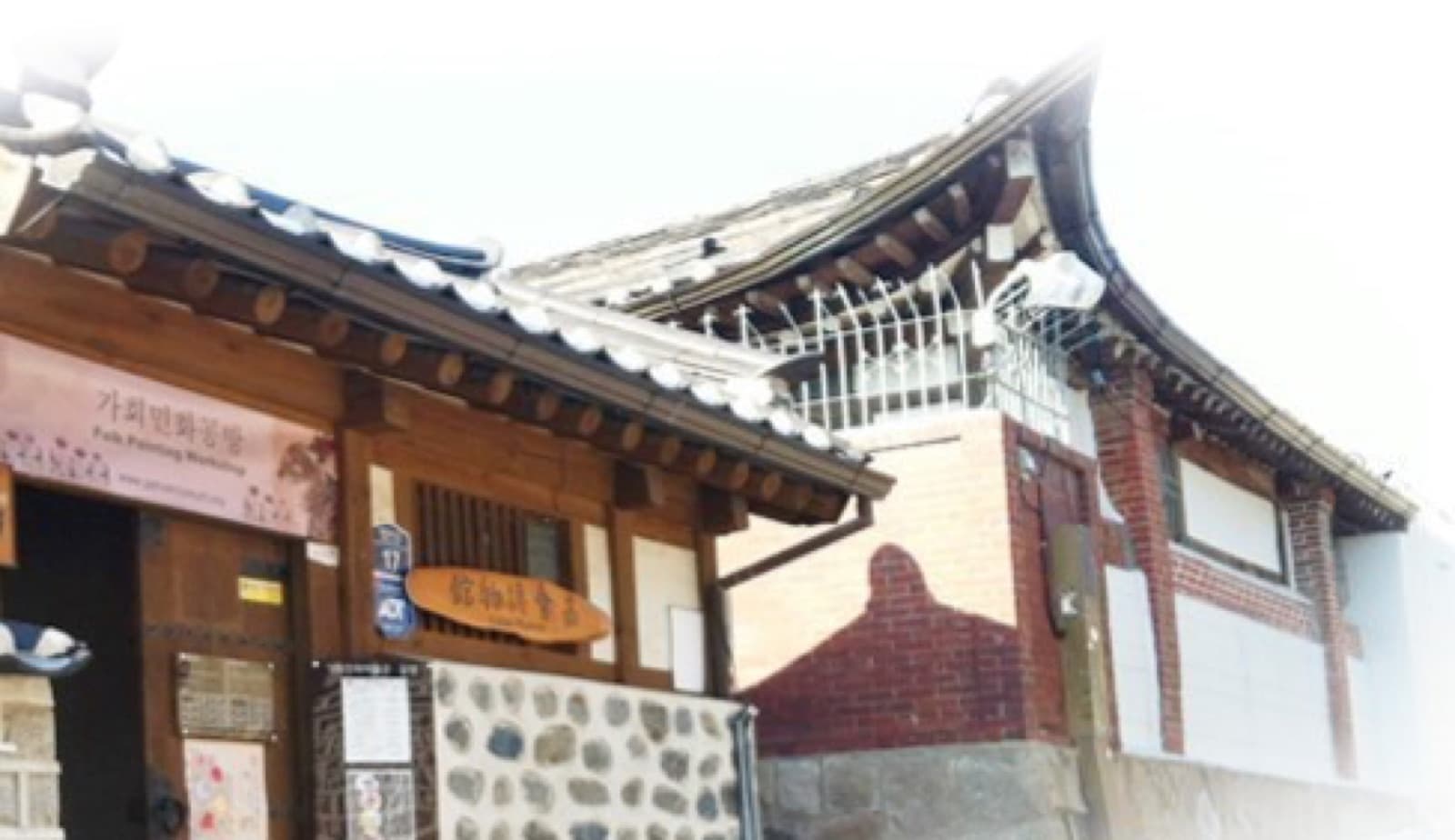
A Living-Crafts Hanok: Gahoe Museum
A hanok-housed museum of Korean folk paintings and amulets that keeps a living craft tradition alive inside Bukchon.
- 7
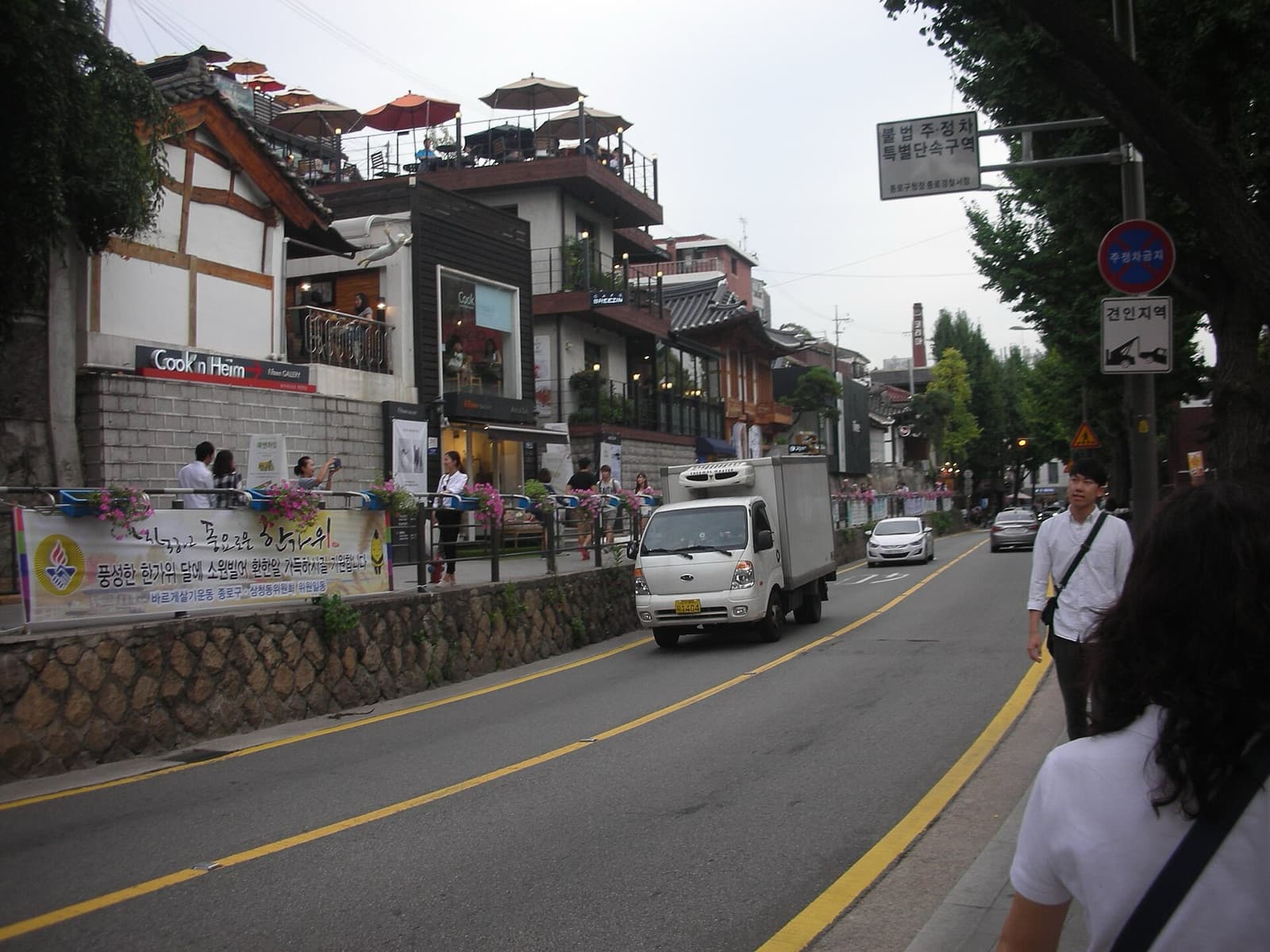
Samcheong-dong-gil: The Western Seam
The gallery-lined street along Bukchon's western edge that marks the seam between the old hanok quarter and the palace-and-museum district.
Details
Best Time to Visit
Come on a weekday morning, ideally soon after the streets open, when the light rakes across the tile roofs and the lanes are quietest. Because non-resident tourists are restricted on the most photographed lanes to roughly ten in the morning until five in the evening, plan your Bukchon walking for those daytime hours and avoid evenings. Spring and autumn are the most comfortable seasons; summers in Seoul are hot and humid and winters are genuinely cold, so dress for the season and expect steep, sometimes slippery, footing.
Pro Tips
- •Walk quietly. Bukchon is a real neighbourhood of roughly six thousand residents, and they have asked for silent tourism: keep your voice low, and do not film into windows, gates, or courtyards.
- •Wear proper shoes. The lanes are steep and uneven, with steps and slopes throughout, so trainers or sturdy walking shoes will serve you far better than smooth soles.
- •Time it to the curfew. Non-resident tourists are limited on Bukchon-ro eleven-gil and nearby lanes to roughly ten in the morning until five in the evening, so do your Bukchon walking in daylight hours.
- •Start at the Bukchon Traditional Culture Center. Its free exhibition on how hanok are built and who lived here makes every later stop richer, so treat it as your orientation.
- •Carry a transit card. A rechargeable Korean transit card gets you to Anguk Station, on the subway line serving this area, quickly and cheaply, and the nearest exit is a short walk to the village.
- •Some house museums are free, others are not. Baek In-je House and the culture center cost nothing, while the Gahoe Museum charges a small admission of three thousand won, so keep a little cash handy.
Safety & Precautions
- •Respect residents above all. This is a lived-in quarter under real strain from overtourism, so keep quiet, do not photograph people's doorways or interiors, and treat the lanes as private streets rather than a set.
- •Mind the terrain. Bukchon's lanes are steep and stepped and can be slick in rain, ice, or snow, so watch your footing and take the slopes slowly, especially near the upper viewpoints.
- •Dress for the extremes. Seoul summers are hot and humid and winters are cold and can be icy, so bring sun protection and water in summer and warm, non-slip footwear in winter.
- •Observe the visitor curfew and any posted restrictions. Non-resident tourist access on the busiest lanes is legally limited to roughly ten in the morning until five in the evening, so follow signage and stay out of restricted areas outside those hours.
Travel advisory: Exercise Normal Precautions (Level 1).
Gallery
Related Reading
Go deeper on what you'll see, hear, and walk through.
Overview
Best Self-Guided Walking Tours in Seoul (2026)
3 min
Overview
One Day in Seoul: A Walkable Jongno Itinerary
6 min
Overview
Seoul Travel Guide: Days, Transport, Seasons, Safety, Budget
7 min
Thematic
Best Culture Walking Tours in Seoul (2026)
2 min
Thematic
Seoul: How the Joseon Court Folds Into a Megacity
7 min
Companion
Who Built Bukchon: The Developer Behind Seoul's Most Photographed Roofs
6 min
Deep dive
Bukchon-ro 11-gil: The Most Photographed Lane in Seoul, and the Curfew That Guards It
6 min
Read
What to Eat in Seoul
8 min
Read the walk
The full story of Bukchon Hanok Village: The Living Grid, in words. Prefer to listen? Play it narrated, from home or on location.
Introduction
Bukchon Hanok Village sits on a slope in Seoul, in South Korea, tucked between two royal palaces, Gyeongbokgung and Changdeokgung. From a distance it reads as a perfect, timeless village of curved tile roofs. Up close it is something more interesting: a real neighbourhood with a hidden history, where roughly six thousand people still live behind the gates that millions of visitors photograph every year. Over the next seven stops and about two hours, walking a little under two kilometres of sloped lanes and steps, you will learn to read Bukchon for what it actually is rather than what the postcard suggests. You will find that most of these hanok, the traditional Korean timber-and-tile houses, are not medieval at all. They were mass-built in the nineteen twenties and thirties on subdivided noble estates. You will stand inside a grand house where the Japanese colonial period is written into the walls, and you will reach the classic roofscape view knowing exactly what those grey roofs are. Go at your own pace. Skip any stop that does not pull you. Two things to hold onto as you walk. First, these are steep, uneven lanes, so mind your footing. Second, and this matters, people are home here. Keep your voice down, and treat the lanes as someone's front doorstep, because they are. When you arrive at the Bukchon Traditional Culture Center on Gyedong-gil, begin with stop one.
1. Bukchon Traditional Culture Center: Reading the Neighbourhood
Start here, because this building does your homework for you. The Bukchon Traditional Culture Center sits on Gyedong-gil, in a restored hanok that was once the private home of a man named Min Hyeong-gi. Gil, by the way, simply means lane or street, and dong means neighbourhood, so you will hear those endings all afternoon. The house is officially recognised as a modern Korean-style residence, and the city of Seoul reopened it in October of two thousand two as a free place to understand the quarter you are about to enter. Take a slow look at the complex itself. A hanok is not a single building but a cluster: a main hall, an outer men's quarters, an annex, and here even a small shrine, all arranged around courtyards. The former servants' quarters now hold an exhibition on how the village grew, how a hanok is actually built beam by beam, and who lived in these lanes: court officials, ordinary citizens, and artists alike. That last point is the thread of this whole walk. Bukchon was the aristocratic quarter of the Joseon court, the dynasty that ruled Korea for roughly five centuries. But it was never a museum. It was where people arranged their finances, raised families, and, later, where developers reshaped everything. The Min family who once lived here were connected to court finance in the late Joseon period, which tells you something about who could afford this slope. So take a few minutes inside, get your bearings, and remember: everything past this gate is still lived in.
2. Bukchon-ro Eleven-gil: The Most Photographed Lane
This is the shot you have seen a hundred times: a tight row of tile-roofed hanok climbing a steep slope, the eaves stacking up the hill like waves. Bukchon-ro eleven-gil, in the Gahoe-dong area, is the single most photographed lane in the village and sits at the heart of the officially celebrated Gahoe-dong views. Stand for a moment and let it land, because it genuinely is beautiful. And then look again, because this is where the postcard and the reality pull apart. This is not a film set. It is an active residential street where people are trying to live ordinary lives. The pressure has been enormous. Village records show visitors grew from around thirty thousand in the year two thousand seven to roughly six point four million in two thousand twenty-four, while the number of residents fell from about eight thousand seven hundred in two thousand twelve to around six thousand one hundred. Those two lines crossing is the whole story of this lane. In response, Seoul did something unusual. As of the first of March, two thousand twenty-five, non-resident tourists are formally restricted here to daytime hours, roughly ten in the morning to five in the evening, so that residents can have their evenings and nights back. Residents have asked, simply and directly, for silent tourism. So here is the one favour this walk asks of you. Lower your voice. Do not film into windows or gateways. Move through gently, the way you would through any stranger's street at home. The lane costs nothing to walk. The least we can offer in return is quiet.
3. Baek In-je House: The Colonial Layer, Made Physical
Step into the Baek In-je House and the hidden layer of Bukchon becomes something you can touch. This is one of the largest historic hanok in the district, sitting on a lot of about two thousand four hundred and sixty square metres, overlooking the neighbourhood. The Seoul Museum of History, which runs it, records that it was built in the year nineteen thirteen by a man named Han Sang-ryong, then an executive of Hanseong Bank. The house takes its name from a later owner, the physician Baek In-je, whose family acquired it in nineteen forty-four. The city of Seoul bought it in two thousand nine and opened it to the public, free of charge, in two thousand fifteen. Now look closely, because this house was built during the Japanese colonial occupation of Korea, which ran from nineteen ten to nineteen forty-five, and that period is written into its architecture. You will see tatami-mat rooms, red brick, and unusually large expanses of glass. Most striking of all, the men's quarters and the inner women's quarters, which in a traditional hanok would be separate buildings you cross a courtyard to reach, are here joined by an interior hallway, so the family could move between them without ever stepping outside. Part of the men's wing even rises to two storeys. None of this is a curiosity. It is a physical record of a hybrid moment, when Korean and Japanese building ideas met under occupation. Handle it the way the museum does: soberly, as history. This is the postcard's colonial layer, no longer hidden in a footnote but standing around you in brick and glass.
4. The Developer Builders: Where the Urban Hanok Came From
Look around this cluster of hanok and notice how alike they are: the same roof pitch, the same courtyard footprint, repeated again and again down the block. That uniformity is the tell. These are what are called urban hanok, and they are not medieval survivors. They were…
Full narration for this stop unlocks with the tour.
5. The Roofscape Toward Namsan: The Postcard, Understood
This is the view. From the upper slope of Gahoe-dong you look out over a wide sweep of grey tile roofs cascading down the hill, and beyond them, rising to the south, Namsan Mountain, with its tower on top. San simply means mountain. This is the image on most Bukchon postcards,…
Full narration for this stop unlocks with the tour.
6. A Living-Crafts Hanok: Gahoe Museum
After all the history of who built these houses, this stop is about what still happens inside them. The Gahoe Museum sits on Bukchon-ro in a hanok in Gahoe-dong, and it opened in the year two thousand two. Its focus is the art of ordinary Koreans rather than kings: minhwa, which…
Full narration for this stop unlocks with the tour.
7. Samcheong-dong-gil: The Western Seam
End your walk along Samcheong-dong-gil, the street that runs down the western edge of Bukchon toward Gyeongbokgung Palace. Gung means palace, and gil, as you know by now, means street. This road follows the stone wall on the eastern side of the palace, climbing gently up toward…
Full narration for this stop unlocks with the tour.