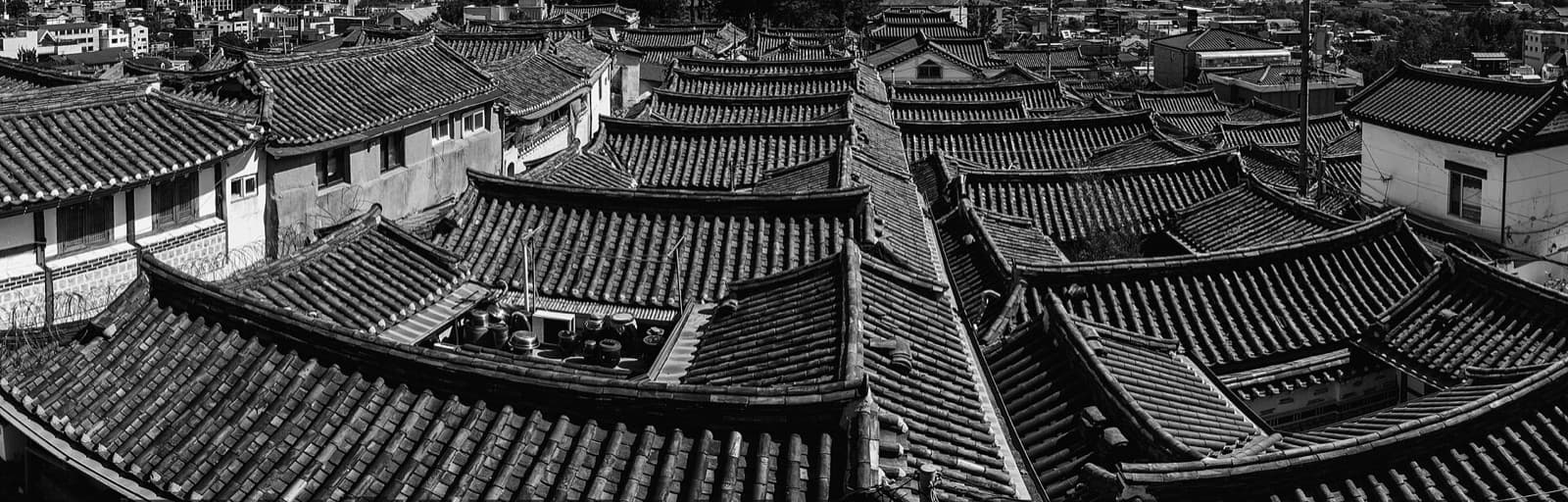
Bukchon's most photographed hanok, the ones stacked in tight rows up the Gahoe-dong slopes, were not built by dynastic Korea. They were mass-produced in the 1920s and 1930s by Korean real estate developers who bought aristocratic estates, subdivided the lots, and packed them with standardized courtyard houses. The postcard village is a deliberate piece of development wearing a traditional face, and one name, Jeong Se-gwon, explains most of it. The developer cluster in Gahoe-dong is the stop on this walk where that hidden layer stops being a footnote and becomes something you can read straight off the roofline.
The tell is the uniformity
Stand in the Gahoe-dong cluster and look at how alike the houses are. The same roof pitch. The same courtyard footprint. The same eave line, repeated block after block. A genuinely medieval village grows crookedly over centuries, each house answering its own plot and its own family. What you see here is the opposite: a rhythm, a repeated unit, the signature of houses designed to a pattern and sold as product. That regularity is the single most useful thing to notice in all of Bukchon, because once you have seen it, you cannot unsee it, and every later view on this walk changes.
These houses have a name. They are urban hanok, a distinct type from the sprawling aristocratic compounds that once covered this slope. Where a noble estate might occupy a broad lot with a main hall, a men's quarters, an annex, and courtyards you crossed to move between them, the urban hanok compressed all of that onto a small, affordable footprint. Same curved tile, same timber frame, same Korean form, but shrunk and standardized for a city filling up fast.
The developer with a nationalist motive
Hear a stop from this walk
The Developer Builders: Where the Urban Hanok Came From
The person most responsible for this type is worth knowing by name. Jeong Se-gwon is remembered as one of Korea's first modern real estate developers, and he founded a modern Korean-owned development company, Geonyangsa, around 1920. His timing was pointed. Through the 1920s, Japanese settlers living south of the old city's central stream were pushing northward into Korean neighborhoods. Jeong deliberately built hanok communities for Koreans, here in Bukchon and in nearby Ikseon-dong, to hold the ground. He is quoted with the plain logic behind it: Koreans would live more comfortably in Korean-style homes.
He was not a nostalgist. He modernized his hanok with glass windows and electricity while keeping their Korean shape, which is why these houses feel both old and oddly livable. And he attached his money to more than architecture. He backed nationalist and independence causes, including the Joseon Language Society and the Sin'ganhoe, and he was arrested and tortured in the 1942 crackdown on the language society, the body that worked to protect the Korean language under occupation. His firm was prolific, and in Ikseon-dong the research on the district credits a large share of the recorded hanok to his company.
So the story embedded in these grey roofs is not "ancient Korea, preserved." It is "1920s Korea, fighting for room." That is a stranger and more layered thing to stand inside than the guidebook version, and it reframes the whole slope around you.
Why the anchor stop unlocks the rest of the walk
The full tour runs seven stops, and the Gahoe-dong developer cluster sits at its hinge. Everything before it sets up the reveal; everything after it depends on you having seen it. The walk opens at the Bukchon Traditional Culture Center, a restored hanok on Gyedong-gil, where the former servants' quarters now exhibit how a hanok is built beam by beam and who lived in these lanes. It moves to Bukchon-ro 11-gil, the most photographed lane in Bukchon, where the numbers tell the modern crisis: visitors rose from about thirty thousand in 2007 to roughly 6.4 million in 2024, while the resident population has fallen to around six thousand. Those two lines crossing pushed Seoul to impose a formal visitor curfew on non-residents, effective the first of March, 2025, restricting them to roughly ten in the morning until five in the evening.
Then comes the Baek In-je House, built in 1913 by Han Sang-ryong, an executive of Hanseong Bank, where tatami rooms, red brick, glass windows, and an indoor hallway joining the men's and women's quarters make the Japanese colonial period physically visible. By the time you reach the developer cluster, you have the colonial pressure (Baek In-je) and the tourist pressure (Bukchon-ro 11-gil) in your hands. The cluster ties them together: it shows you the Korean response to that colonial moment, built to last, dressed in tradition.
After it, the walk climbs to the Gahoe-dong roofscape toward Namsan, and this is where seeing the developer cluster pays off. From the upper slope you look down over a wide sweep of uniform grey roofs, and you can almost read the subdivision from above, the repetition no medieval village would ever produce. The illusion was never that Bukchon is beautiful. It is. The illusion was that its beauty had no history. Then the route ends among living crafts at the Gahoe Museum, with its folk paintings and protective amulets, and along Samcheong-dong-gil, the seam where the old hanok quarter meets the palace district. Every one of those stops lands harder once you have decoded the roofline at the anchor.
Read it yourself, quietly
This is a self-guided audio walk, so you set the pace and skip whatever does not pull you. The route is a little under two kilometers of sloped, stepped lanes, so wear real shoes, and start at the culture center so the later stops make sense. One thing matters more than any of the history: roughly six thousand people still live here, and they have asked for quiet, or silent tourism. Keep your voice down. Do not film into windows or gateways. Treat the lanes as someone's front doorstep, because they are.
If you want more context before you walk, browse other Seoul walking tours, or see what else is on offer across Seoul. Bukchon is not a preserved thing behind glass. It is a living edge between old and new Seoul, and the developer cluster in Gahoe-dong is the stop where you learn to read it.
Sources
- Tour transcript and fact audit, Roamer "The Living Grid" (Bukchon Hanok Village), en.json. Primary source for the urban hanok type, the visitor and resident figures, and the curfew.
- Ikseon-dong, Wikipedia. Documents Jeong Se-gwon's systematic hanok development of the district in the late 1920s and early 1930s.
- Ikseon-dong in Seoul, Seoul Metropolitan Government. Describes Jeong Se-gwon as one of the first modern real estate developers in Korea, building a hanok community for the general public.
- Baek In-je's House Museum, Seoul Museum of History. Confirms the house was built in 1913 by Han Sang-ryong, an executive director of Hanseong Bank.
- Tourist curfew violators to face fines in Seoul's Bukchon, Korea Times. Reporting on the 2025 non-resident visitor curfew.
Ready to experience it?
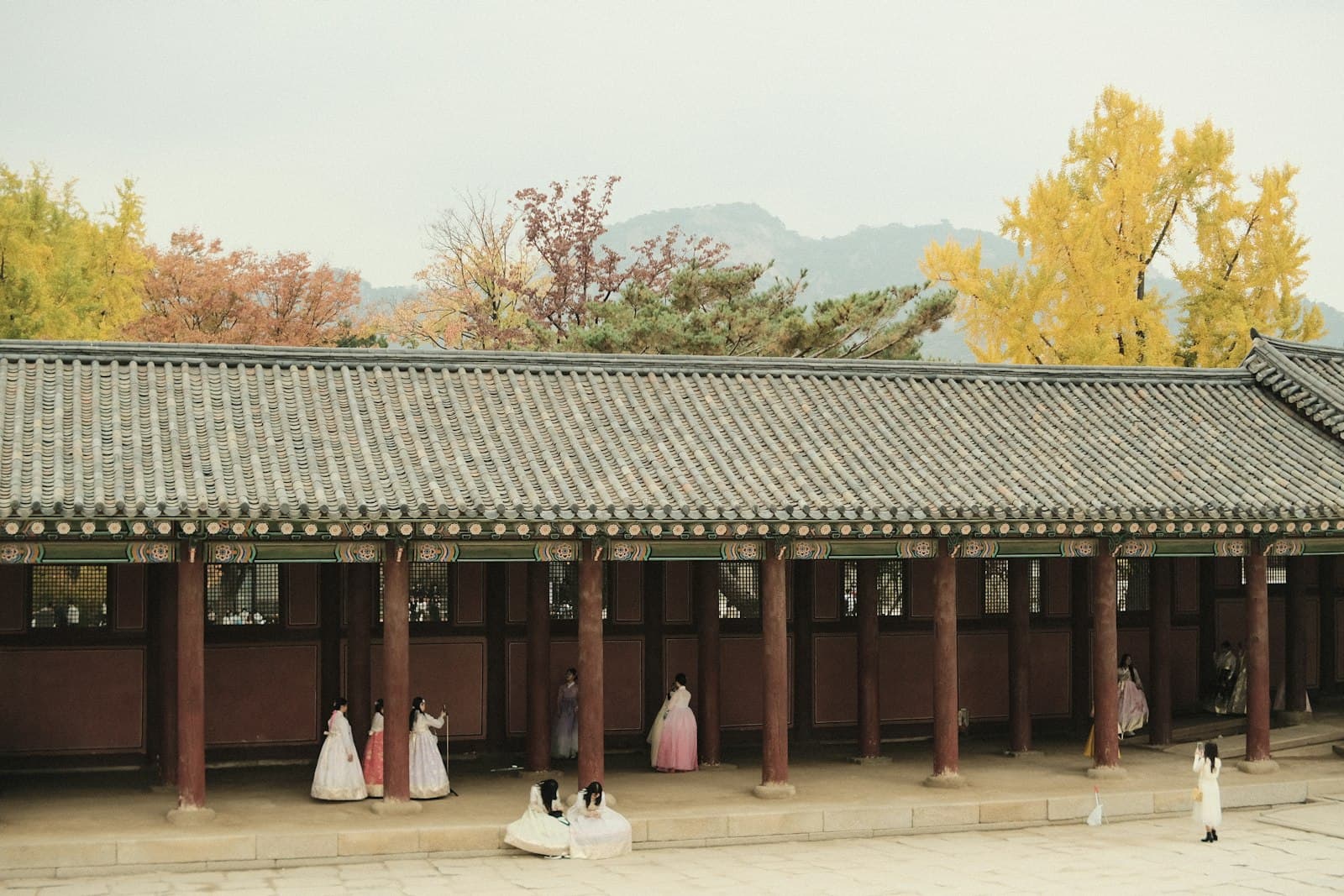
Bukchon Hanok Village: The Living Grid
90 min · 1.8 km · easy
More from Seoul
Explore more at your own pace.
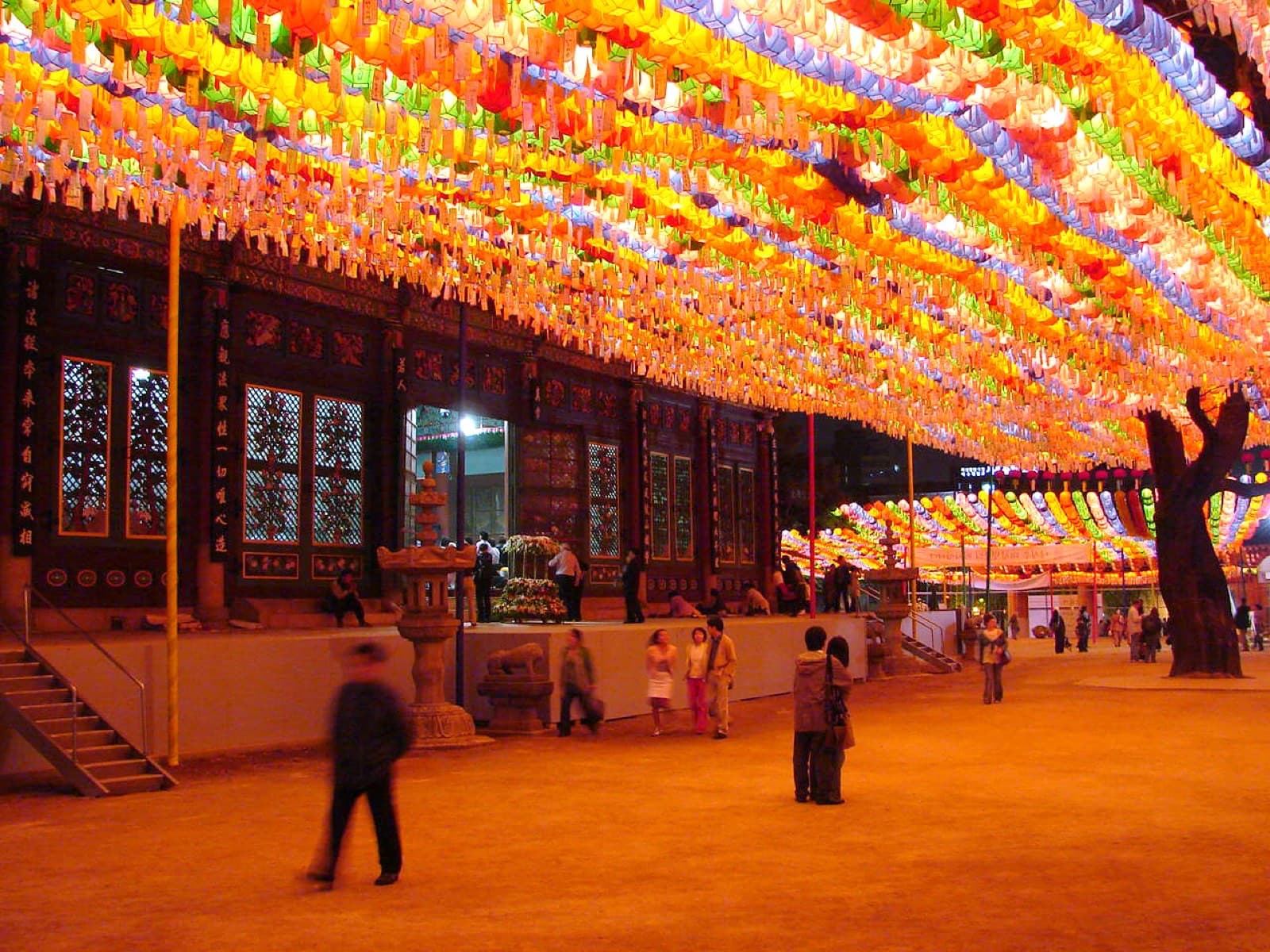
One Day in Seoul: A Walkable Jongno Itinerary
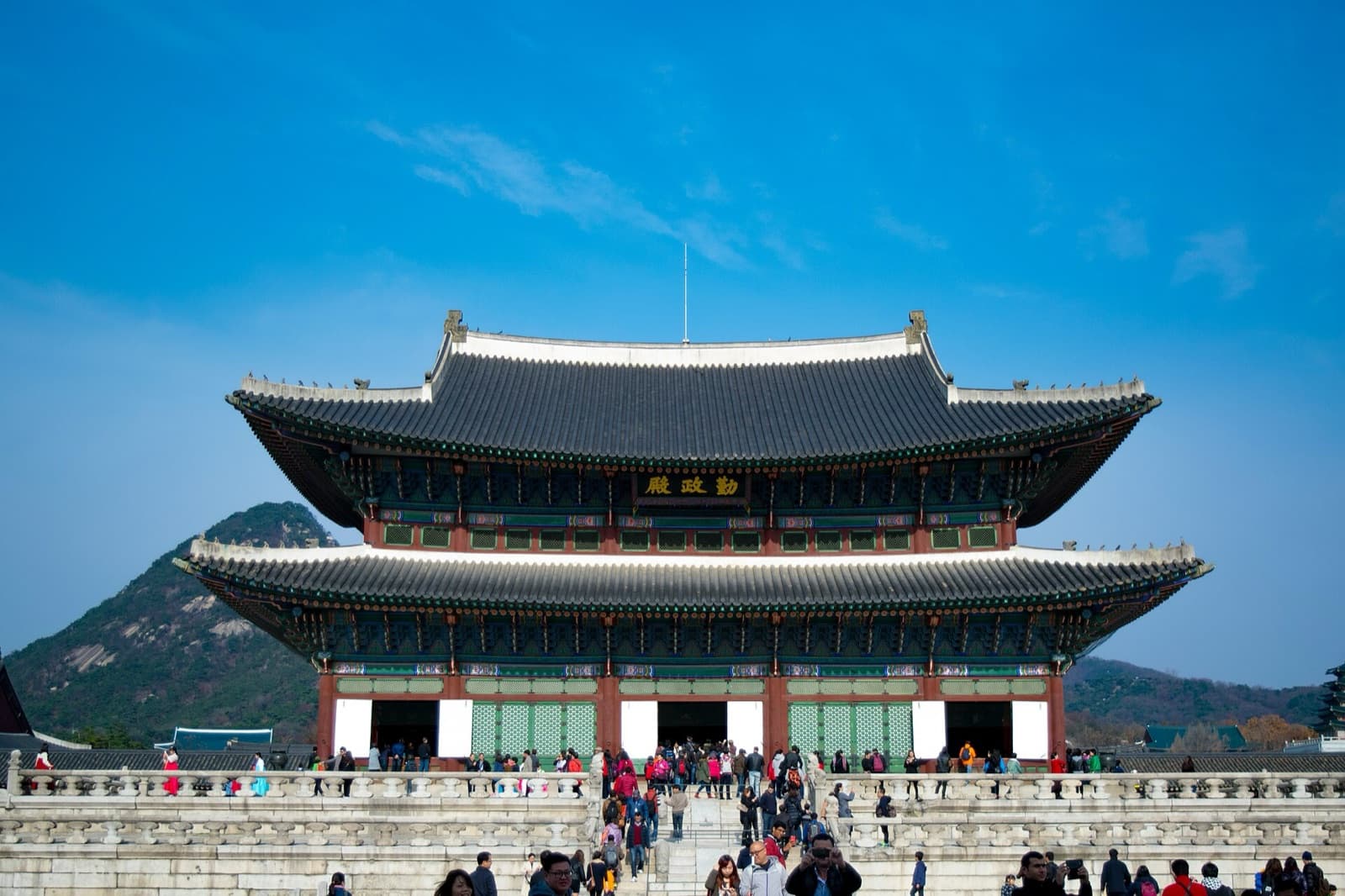
Geunjeongjeon Throne Hall: Reading the Royal Axis of Gyeongbokgung
Insadong-gil: Reading Seoul's Craft Quarter One Shop Window at a Time
Bukchon-ro 11-gil: The Most Photographed Lane in Seoul, and the Curfew That Guards It
Gyeonghoeru Pavilion: The Joseon Banquet Hall on the Water