Bukchon Hanok Village: The Living Grid
90 min · 1.8 km · easy
One day in Seoul, on foot
Give one day in Seoul to the old royal quarter of Jongno, and you can walk a palace, a hanok neighbourhood, and a craft district without ever needing a taxi. The three sit within about a kilometre of each other around Gwanghwamun, Anguk, and Gyeongbokgung subway stations, so the whole day is a slow loop on foot: start at Gyeongbokgung Palace when the gates open, climb into Bukchon Hanok Village before its afternoon crowds, and finish among the tea houses and narrow lanes of Insadong and Ikseon-dong as the light goes soft. This guide walks you through that route hour by hour, flags the opening times and small fees that shape it, and hands each stretch to a self-guided Seoul walking tour you can play on your phone as you go.
One planning rule decides everything: Gyeongbokgung Palace is closed on Tuesdays. If your free day is a Tuesday, flip the itinerary and lead with Insadong and Bukchon, or move the whole plan to another day. The palace anchors the morning, and without it the axis of the day shifts.
Morning: Gyeongbokgung Palace (roughly 9:00 to 11:30)
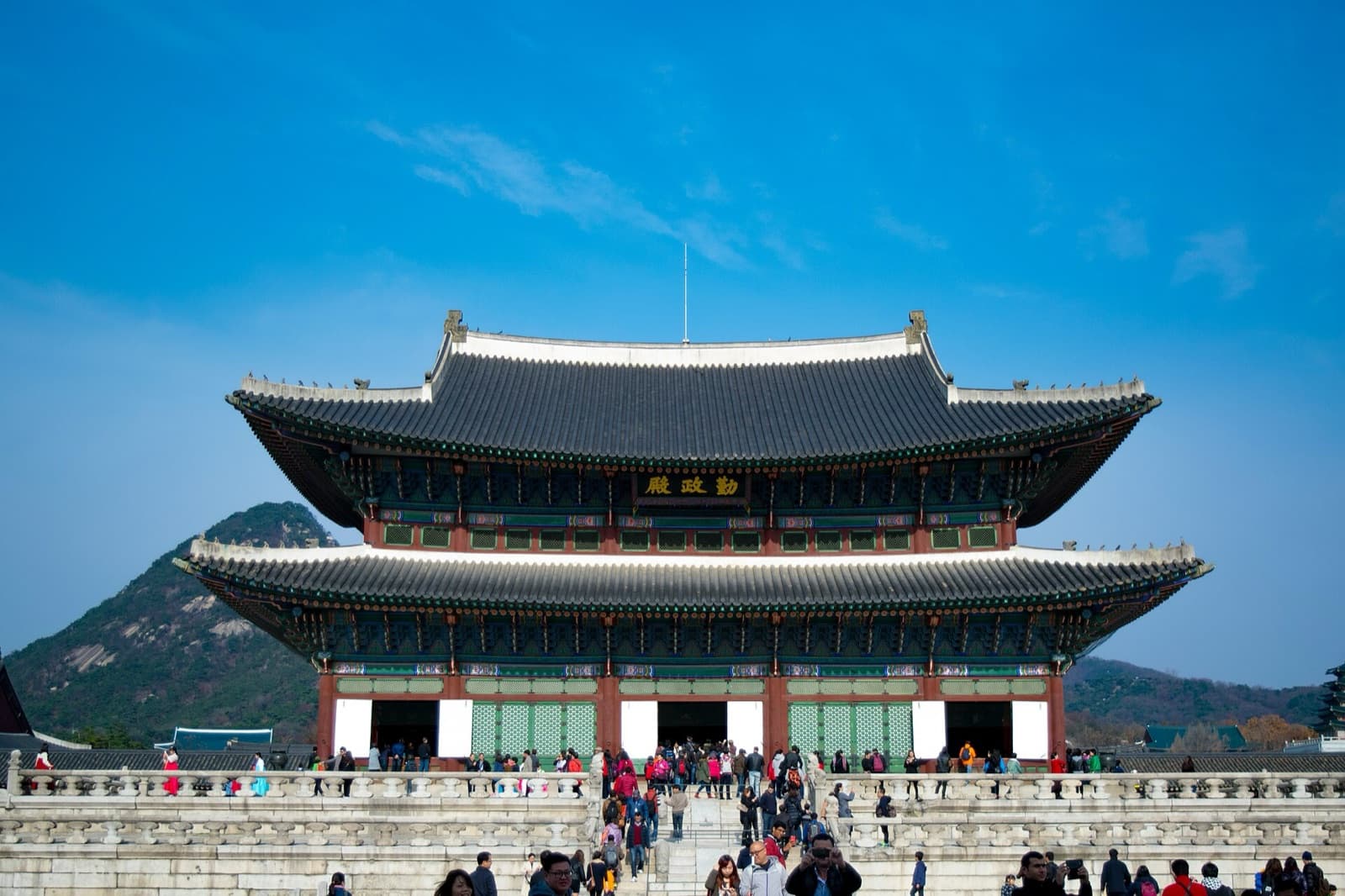
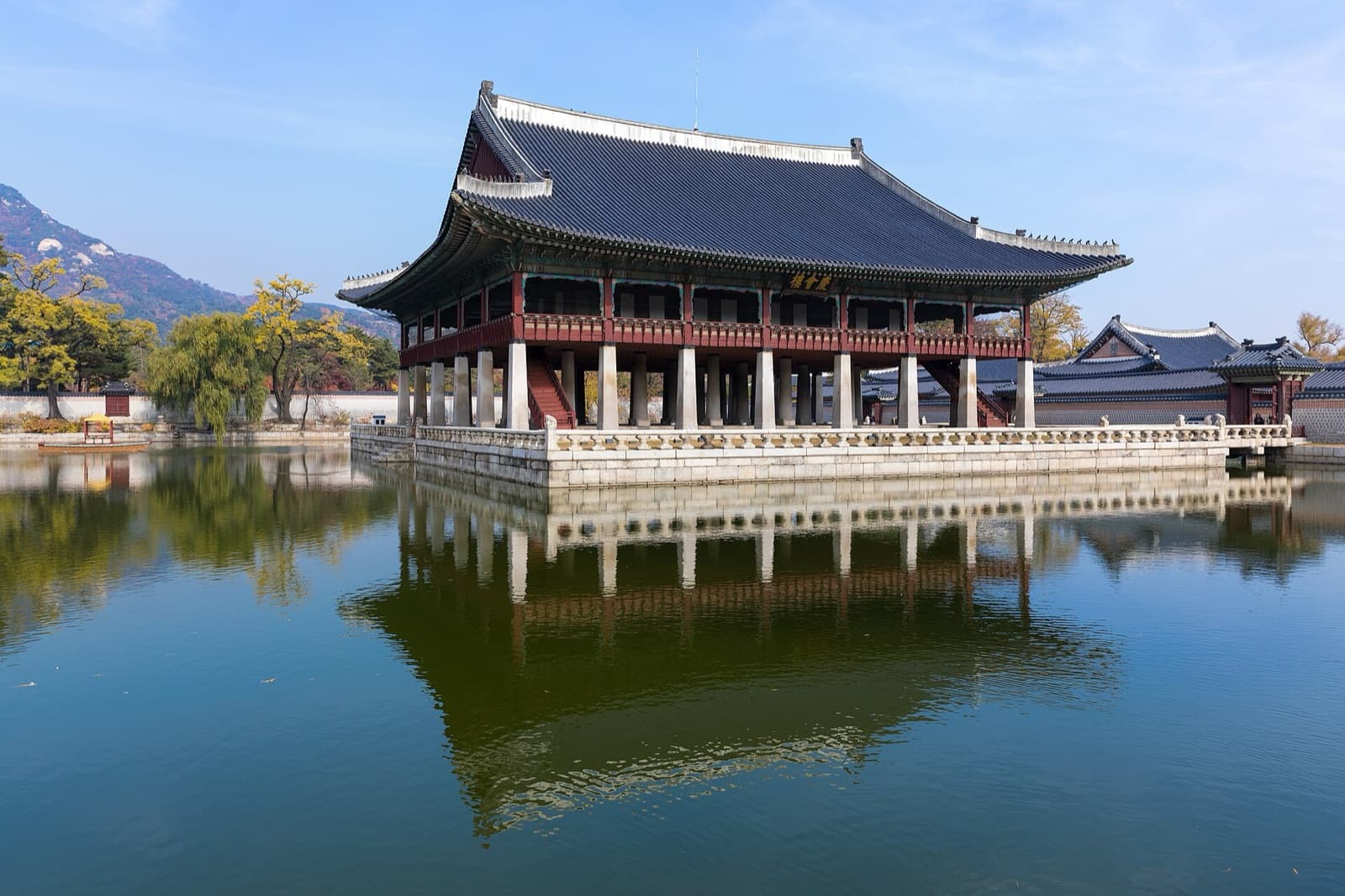
Start at the palace gate. Gyeongbokgung opens at 9:00 a.m. and admission is a small fee of 3,000 won for adults, with children paying less and anyone wearing rented hanbok getting in free. Arriving at opening buys you the throne hall and the pond pavilions before the tour groups thicken. The palace was the founding seat of the Joseon dynasty, laid out on a central axis that runs from the front gate straight back toward the guardian mountain, and that axis is exactly what the Gyeongbokgung Royal Axis tour reads for you: Gwanghwamun Gate, the Heungnyemun courtyard, the Geunjeongjeon throne hall, Gyeonghoeru pavilion on its stone pillars, and the Hyangwonjeong pond in the rear garden.
Time your arrival at the front for the changing of the guard. The ceremony runs at 10:00 a.m. and 2:00 p.m. in the plaza before the ticket checkpoint, lasts about twenty minutes, and is free to watch even without a palace ticket. It can be cancelled in rain, snow, or heavy fine dust, so treat it as a bonus rather than a fixed appointment. Budget two hours or so inside the grounds. The full tour route covers about 2.5 kilometres of easy, flat walking within the walls.
Late morning to lunch: walk east to Bukchon (roughly 11:30 to 13:00)
From the palace, walk east toward Anguk station and up into Bukchon Hanok Village. It is a short walk, on the order of ten minutes from the palace's eastern side, and Anguk station Exit 2 sits about seven minutes on foot from the heart of the village if you prefer to reset at the subway first.
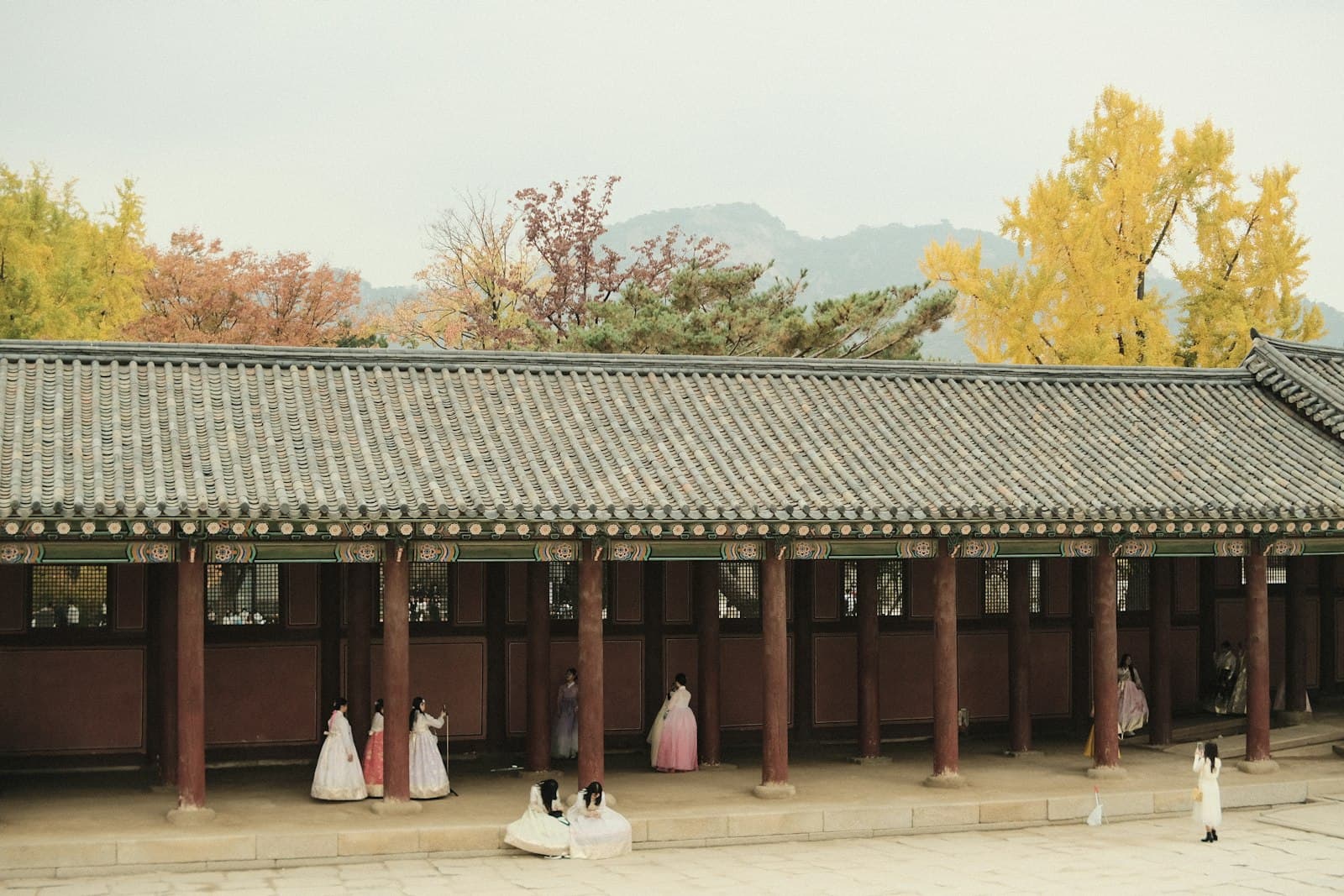
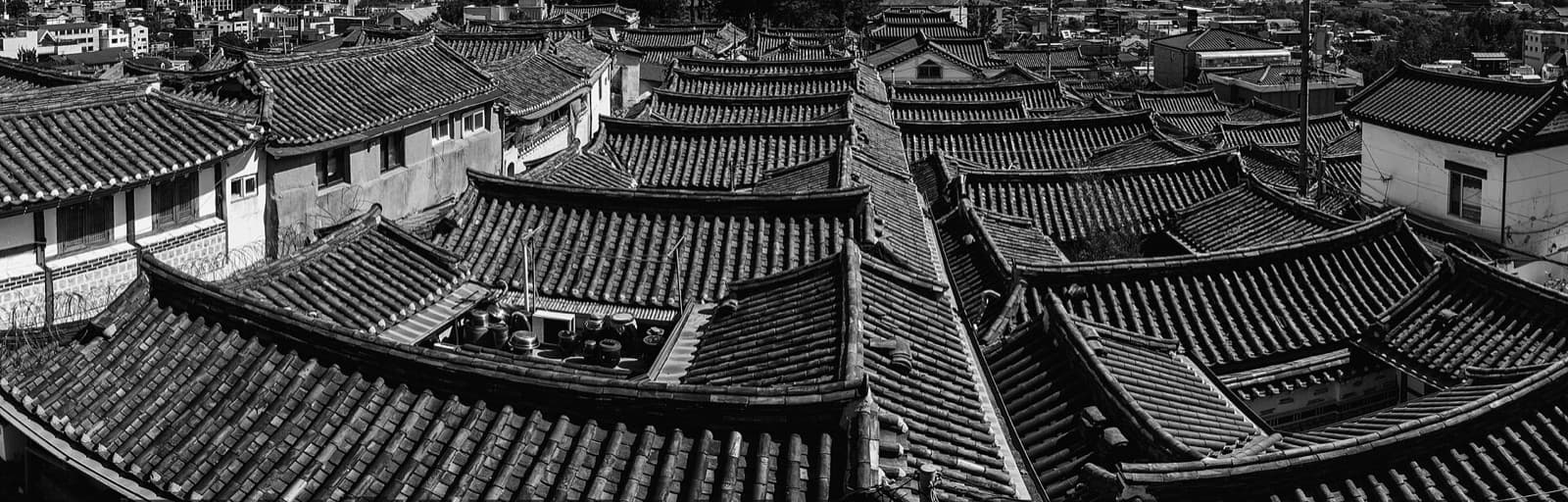
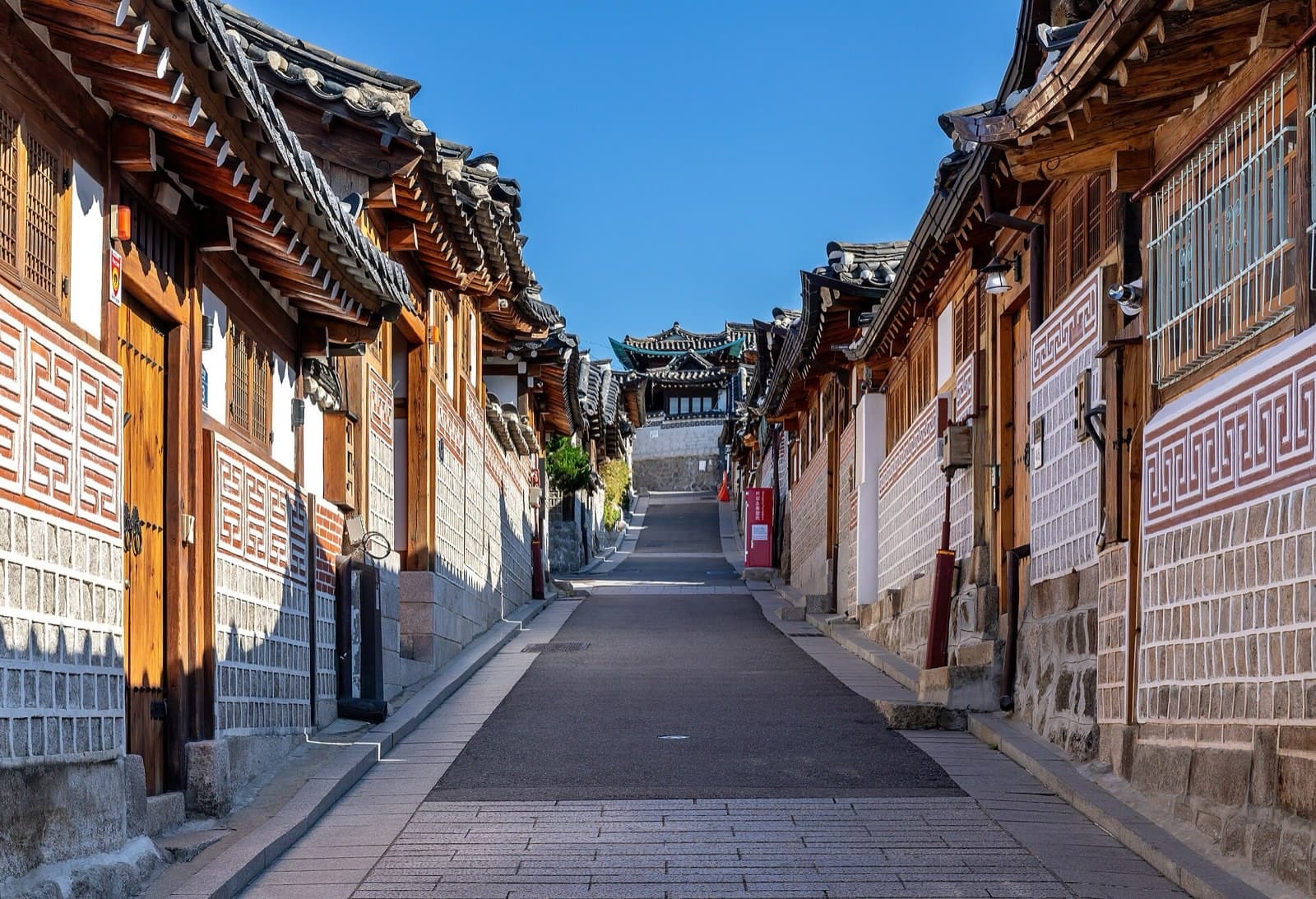
Here is the honest framing: Bukchon is a real residential neighbourhood, not an open-air museum, and the city now enforces that. Tourists are asked to keep to the daytime window of roughly 10:00 a.m. to 5:00 p.m. in the main residential red zone, to stay quiet, and to keep groups small. There are fines for entering the restricted lanes outside those hours, reported at 100,000 won, so the practical point is simple: come in the late morning or early afternoon, speak softly, and do not lean on gates or photograph residents' doorways. The Bukchon Hanok Village tour leans into this exact tension. It reads the grey-tiled roofs as a designed early-twentieth-century development rather than an ancient village, taking you along the most-photographed lane, past the Baek In-je House Museum, and up to the Gahoe-dong roofscape view toward Namsan. It is a compact loop, about 1.8 kilometres, so it fits neatly before lunch.
Eat around the western seam of the village on Samcheong-dong-gil, where cafes and small restaurants line the street, or drop down toward Insadong for your midday meal.
Afternoon: Insadong, tea, and Ikseon-dong (roughly 13:30 to 18:00)
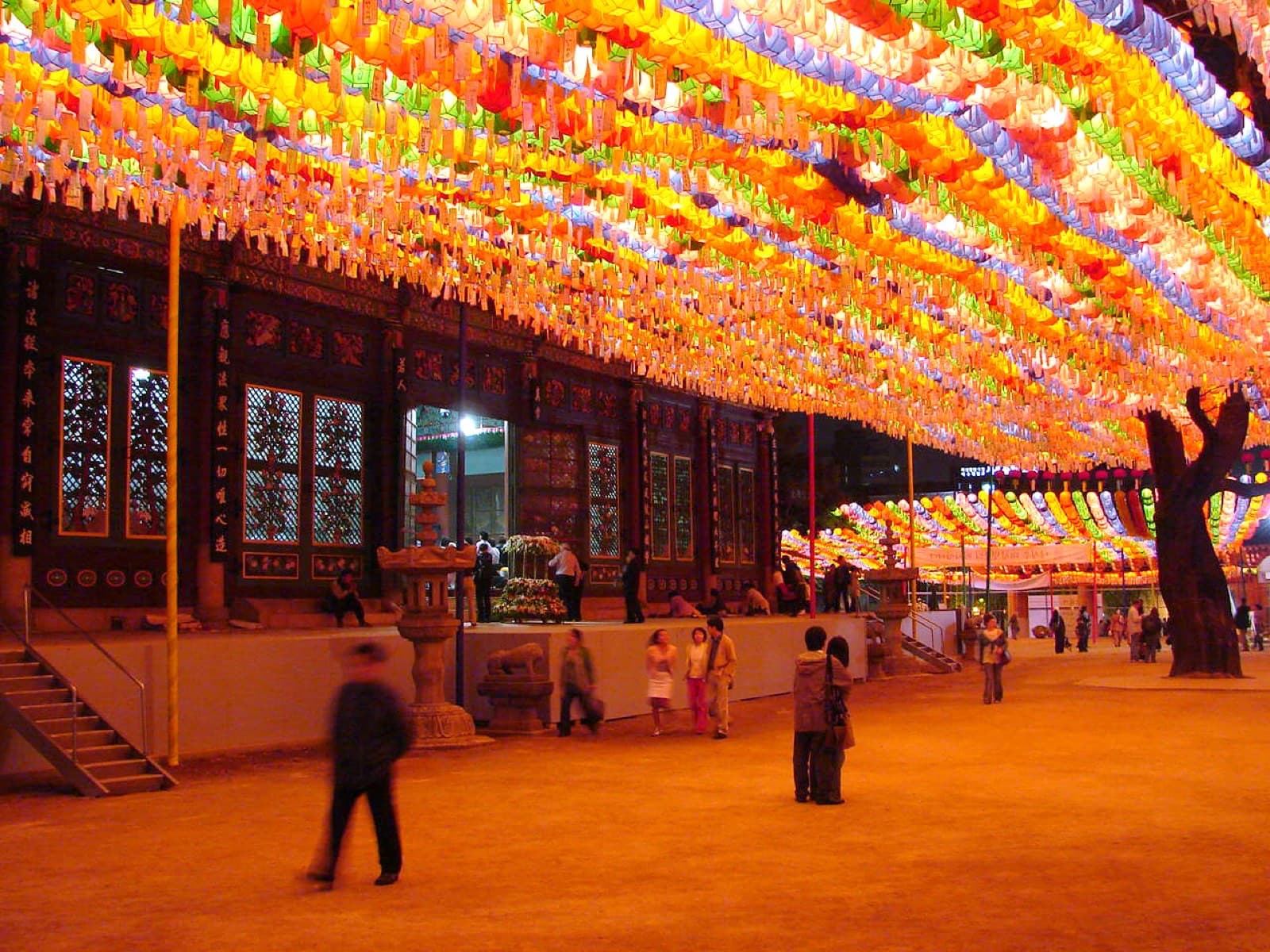
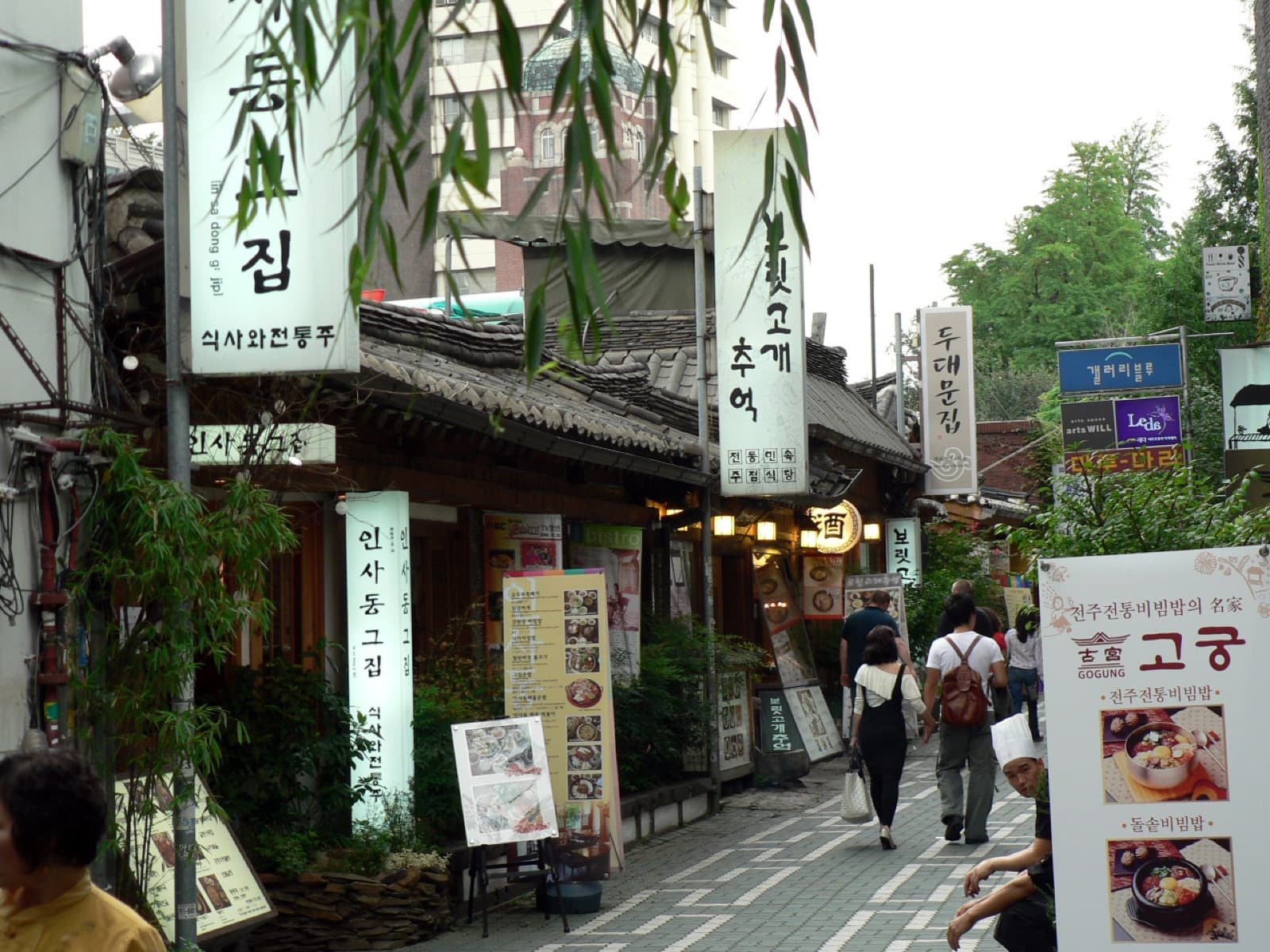
Walk south into Insadong for the sensory half of the day. This is Seoul's quarter of paper, ink, tea, and craft, and the Insadong and Ikseon-dong tour threads it as a walk through the senses. It begins at Jogyesa Temple, the head temple of the Jogye Order and the largest denomination of Korean Buddhism. The grounds are free and stay open around the clock, though the main hall keeps daytime hours and the foreign-visitor information desk keeps shorter afternoon hours. From there the route runs down Insadong-gil, through the spiralling Ssamziegil shopping court, past the tea houses, and on to Tapgol Park.
Tapgol Park is worth the slow look the tour gives it. At its centre stands the Wongaksa Pagoda, a ten-storey marble pagoda built in 1467 during the early Joseon period, now sheltered under glass. The park later became a gathering point in modern Korean history, which the narration sets in context as you stand there. The walk closes in Ikseon-dong, a dense grid of narrow hanok lanes that have filled with small cafes and shops, a fitting last stop as the afternoon light drops. This route also runs about 2.5 kilometres.
If you have energy left at dusk, the palace runs occasional evening viewing sessions in warmer months on a separate ticket, and the Cheonggyecheon stream, a short walk south, makes a calm night stroll. Neither is required to feel the day was complete.
How the pieces fit
The reason this works as one day is geography. All three tours sit inside the same square kilometre of Jongno, so you are never transferring across the city. If you would rather not switch on and off between them, the best Seoul walking tours guide lays out each route, its length, and its mood so you can pick the order that suits your pace. A rough day looks like this: palace from 9:00, guard ceremony at 10:00, Bukchon before 1:00, lunch, then Insadong and Ikseon-dong through the afternoon, off your feet by early evening. Total walking is modest, spread across a full day, and every stretch is flat or gently sloped.
A few practical notes. Carry a T-money transit card for the short subway hops between clusters if you tire, though you can walk the entire loop. Bring water and comfortable shoes, since the day is measured in hours on your feet rather than distance. And treat Bukchon's quiet-hours rules as part of the experience, not a hurdle: the neighbourhood stays walkable precisely because visitors respect that it is someone's home.
Sources
Hear a stop from this walk
The Developer Builders: Where the Urban Hanok Came From
Frequently asked questions
- Can you see Gyeongbokgung, Bukchon, and Insadong in one day?
- Yes. All three sit within about a kilometre of each other in Seoul's Jongno district, around the Gwanghwamun, Anguk, and Gyeongbokgung subway stations. A comfortable order is Gyeongbokgung Palace at its 9:00 a.m. opening, Bukchon Hanok Village late morning, then Insadong and Ikseon-dong through the afternoon. The walking is flat and modest, spread across a full day.
- What day is Gyeongbokgung Palace closed?
- Gyeongbokgung Palace is closed on Tuesdays. If a Tuesday is a public holiday, it opens that day and closes the next non-holiday instead. Plan the palace for any day except Tuesday, or lead your day with Bukchon and Insadong and skip the palace.
- How much does Gyeongbokgung Palace cost and when does it open?
- Adult admission is a small fee of 3,000 won, with children paying less. The palace opens at 9:00 a.m., with closing and last-admission times that shift by season (later in summer, earlier in winter). Anyone wearing rented hanbok enters free, and admission is free for everyone on Culture Day, the last Wednesday of each month.
- What time is the changing of the guard at Gyeongbokgung?
- The changing of the guard ceremony runs at 10:00 a.m. and 2:00 p.m. in the plaza before the palace ticket checkpoint, lasting about twenty minutes. It is free to watch even without a palace ticket. It can be cancelled in rain, snow, or heavy fine dust, so treat it as a bonus rather than a fixed appointment.
- Are there rules for visiting Bukchon Hanok Village?
- Yes. Bukchon is a real residential neighbourhood, and the city restricts the main red-zone lanes to daytime hours, roughly 10:00 a.m. to 5:00 p.m. Visitors are asked to stay quiet, keep groups small, and avoid photographing residents' homes and cars. Entering the restricted lanes outside the allowed hours can bring a fine reported at 100,000 won.
- Is Jogyesa Temple free to visit?
- Yes. Jogyesa Temple, the head temple of the Jogye Order of Korean Buddhism, has free admission, and the grounds stay open around the clock, while the main hall keeps daytime hours. The information desk for foreign visitors keeps shorter hours during the day. It sits at the start of the Insadong walking route.
Ready to experience it?
Bukchon Hanok Village: The Living Grid
90 min · 1.8 km · easy
More from Seoul
Explore more at your own pace.
Geunjeongjeon Throne Hall: Reading the Royal Axis of Gyeongbokgung
Insadong-gil: Reading Seoul's Craft Quarter One Shop Window at a Time
Who Built Bukchon: The Developer Behind Seoul's Most Photographed Roofs
Bukchon-ro 11-gil: The Most Photographed Lane in Seoul, and the Curfew That Guards It
Gyeonghoeru Pavilion: The Joseon Banquet Hall on the Water