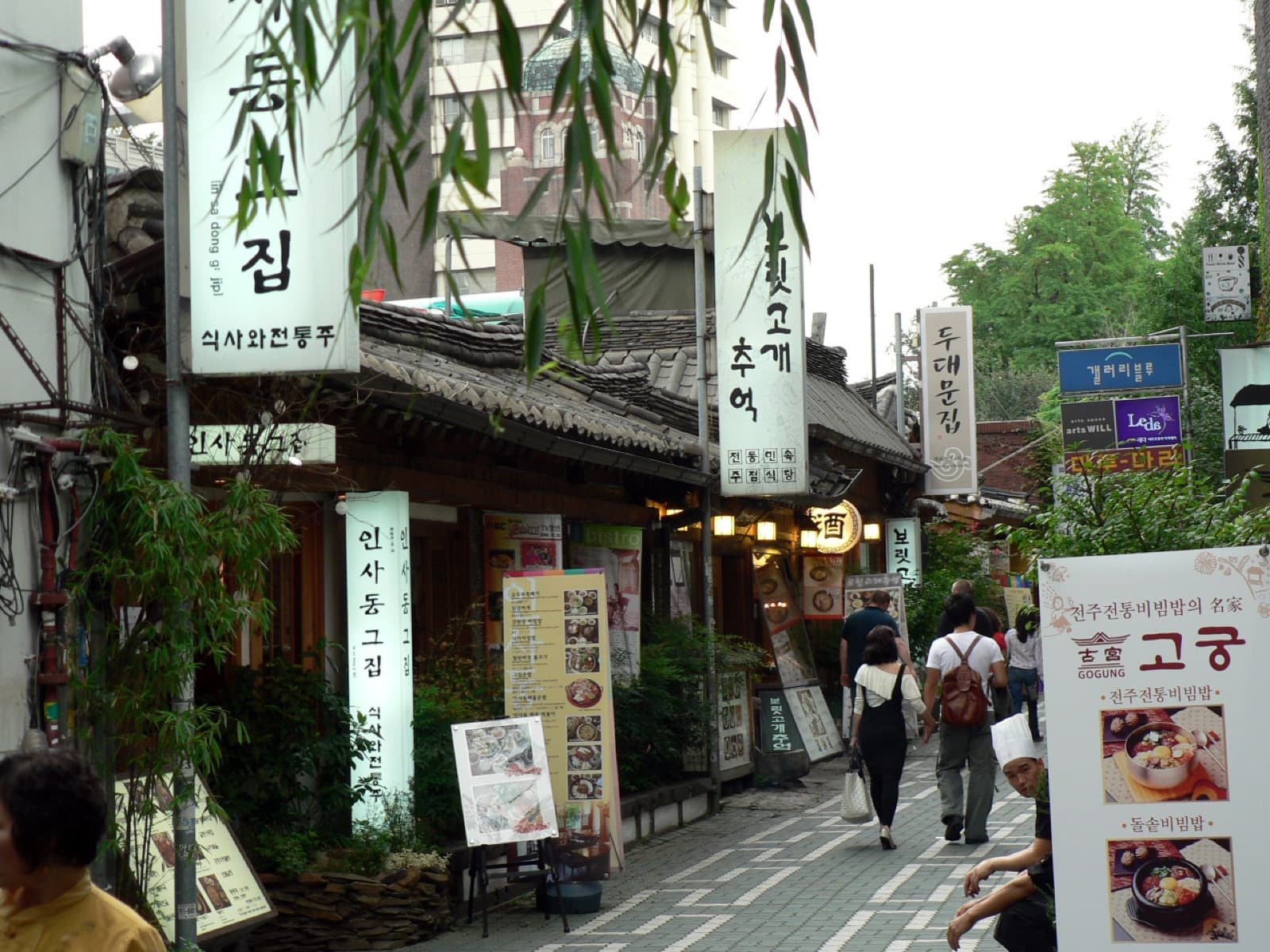
Insadong-gil is the spine of Seoul's old craft quarter, and it rewards a habit most streets do not: slow looking. Walk it too fast and it reads like any pedestrian shopping lane. Walk it slowly, reading one window at a time, and the mulberry paper, the bundled brushes, the sticks of ground ink, and the celadon glazes start to add up to something larger. This one street holds five hundred years of layered history, and it opens the door to a wider walk through the Jongno district of Seoul, South Korea.
Where the quarter began
The name tells you to slow down. Gil means lane or street. Dong means neighbourhood. This dong began roughly five hundred years ago, in the early Joseon period, as a residential zone for government officials. That was a quiet origin, but what came next was not quiet at all. During the Japanese occupation, wealthy Korean families here were pressured to relocate and to sell what they owned, and the district filled with the antiques and heirlooms they had to give up. There is a sober root beneath a lively street: much of the area's early antiques trade grew directly from belongings sold under duress. After the Korean War, Insadong re-emerged as a center of the country's artistic life, of galleries, studios, and tea houses.
So the street asks to be read as layers. A calligrapher working outside, drawing a wet black line across white paper, is doing something that connects back through all of those chapters at once.
What the windows hold
Hear a stop from this walk
Jogyesa Temple: Incense at the Head of the Order
The pleasure of Insadong-gil is that its materials are almost tactile from the pavement. There is hanji, the paper made from mulberry bark, thick and soft and faintly warm in colour. There are brushes of horsehair and goat hair, bundled by size. There are sticks of ink ground from pine soot, and celadon and buncheong ceramics glazed in greens and greys. By one account, the district holds about forty percent of the nation's antique shops and roughly ninety percent of its traditional stationery shops, the paper, brush, and ink that calligraphy needs.
That concentration is the point. This is not a place to grab a souvenir and move on. It is a place to notice the grain of a sheet of paper and the weight of a brush in the hand. On a good day you might hear the sliding wail of pansori, Korea's old narrative singing, drifting from a doorway. Nothing here is loud the way a shopping street is loud. The attention the street asks for is the whole experience.
The way into the whole walk
Insadong-gil is the second stop on a seven-stop, roughly two-and-a-half-kilometre walk through Jongno, and it is the best way to understand what the rest of the route is arguing. If you want the full picture before you go, the Seoul walking tours hub lays out how this quarter fits alongside the city's other neighbourhoods.
The walk opens just north of here at Jogyesa Temple, the chief temple of the Jogye Order, the largest order of Korean Buddhism. Its main Buddha hall was built in 1938 of pine carried from Baekdu Mountain, and its courtyard holds a white pine roughly five hundred years old, protected as a Natural Monument. That temple sets the sensory key: incense, chanting, and deep time. Insadong-gil then takes that key and turns it toward things made by hand.
From the street, the quarter reinvents itself. Ssamziegil, which opened in 2004, is a single clever building: instead of stacking floors with staircases, the whole structure is one continuous ramp, sloping at roughly one in twenty, coiling four storeys of craft studios around an open courtyard. You reach the top without climbing a stair. Its designers held the palette to natural materials so the modern building would sit comfortably beside the old timber and tile.
Turn off the main lane into the side alleys and the noise drops to almost nothing. The traditional tea houses are the quiet heart of the quarter. Step inside and you often step down onto a heated ondol floor and sit on a cushion in a small hanok room. In summer you might drink omija-cha, the five-flavour berry tea, chilled and deep magenta, named because a single sip can carry sweet, sour, salty, bitter, and pungent notes at once. Kyung-in Art Gallery is often cited as the oldest tea house in Insadong.
History that widens as you walk
The walk keeps deepening. Tapgol Park, laid out in 1897 after a proposal by John McLeavy Brown, an Irish advisor to King Gojong, is regarded as Korea's first modern public park. At its center stands the Wongaksa Pagoda, a ten-storey marble pagoda about twelve metres tall, built in 1467 and designated National Treasure of South Korea Number Two in 1962. It has held its carved dragons, lotus flowers, and Buddhas for more than five centuries. This same park is where, on the first of March 1919, the Proclamation of Independence was first read aloud, sparking the March First Movement against a colonial occupation that lasted from 1910 to 1945.
Nearby, Unhyeongung looks almost modest but ran a kingdom. Its name ends in gung, meaning palace, yet it was a noble residence, the childhood home of King Gojong and the base from which his father, the regent Heungseon Daewongun, effectively governed during the 1860s. It hosted the wedding of King Gojong and Empress Myeongseong on the twenty-first of March 1866. After the Seoul government purchased it in 1993, it was restored and opened as a free public museum.
The route closes in Ikseon-dong, just east of Insadong, in some of the narrowest lanes in old Seoul. These hanok were an early experiment in modern housing. From the late 1920s into the early 1930s, a developer named Jeong Se-gwon bought large estates, demolished them, and built dense little hanok with then-modern comforts like running water and electricity, tailored for Korean families. The district faded for decades, then revived fast from late 2014, drawing on the order of thirty thousand visitors a day within a couple of years. That revival raised rents sharply and pushed out some long-time residents, so these are lanes to walk gently. People still live here.
Walking it yourself
Insadong-gil is a public street, free to walk, and best in the late morning through mid-afternoon on a weekday, before the crowds thicken and while the craft shops and tea houses are open and unhurried. Wear shoes you can slip off for a tea house, carry a little cash for tea and rice cakes, and let yourself drift into the side alleys where the character concentrates. When you are ready to plan the full route through the quarter, Seoul gathers this walk and the city's others. Insadong-gil is where you learn to read the neighbourhood. Everything after it rewards that same slow attention.
Sources
- Insa-dong, Wikipedia: origins as a Joseon officials' quarter, the colonial-era antiques trade, and the district's stationery and craft concentration.
- Jogyesa, Wikipedia: the head temple of the Jogye Order, its 1938 main hall built of Baekdu Mountain pine, and the courtyard's five-hundred-year-old white pine.
- Tapgol Park and Wongaksa Pagoda, Wikipedia: the 1897 park founding, the 1467 marble pagoda as National Treasure Number Two, and the 1919 Proclamation of Independence reading.
- Unhyeongung, VisitKorea official guide: the residence's role as King Gojong's childhood home and the 1866 royal wedding, now a free public museum.
- Ikseon-dong, Wikipedia: the 1920s to 1930s hanok development by Jeong Se-gwon and the neighbourhood's revival from 2014.
Ready to experience it?
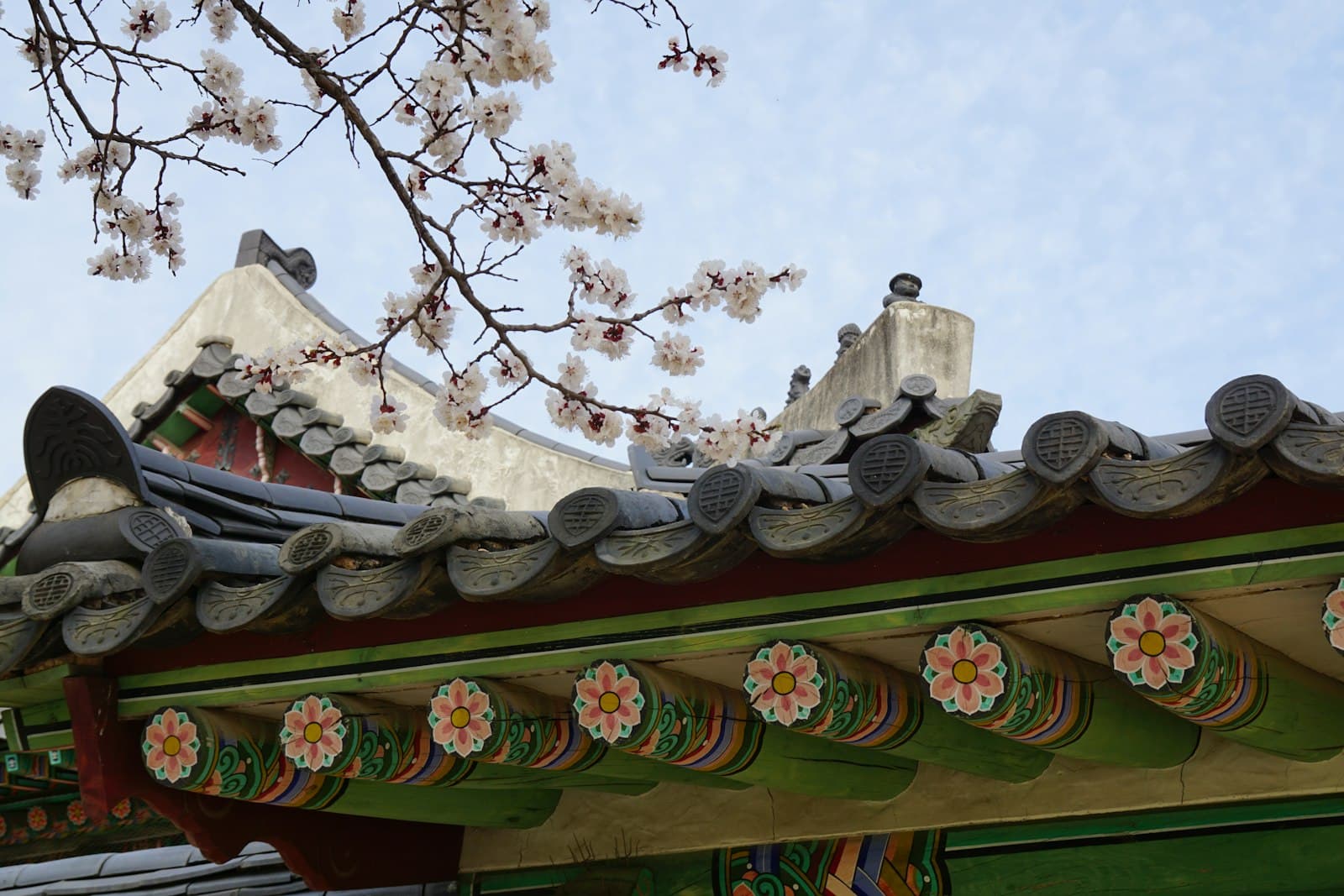
Insadong: Paper, Ink, and the Narrow Lane
100 min · 2.5 km · easy
More from Seoul
Explore more at your own pace.
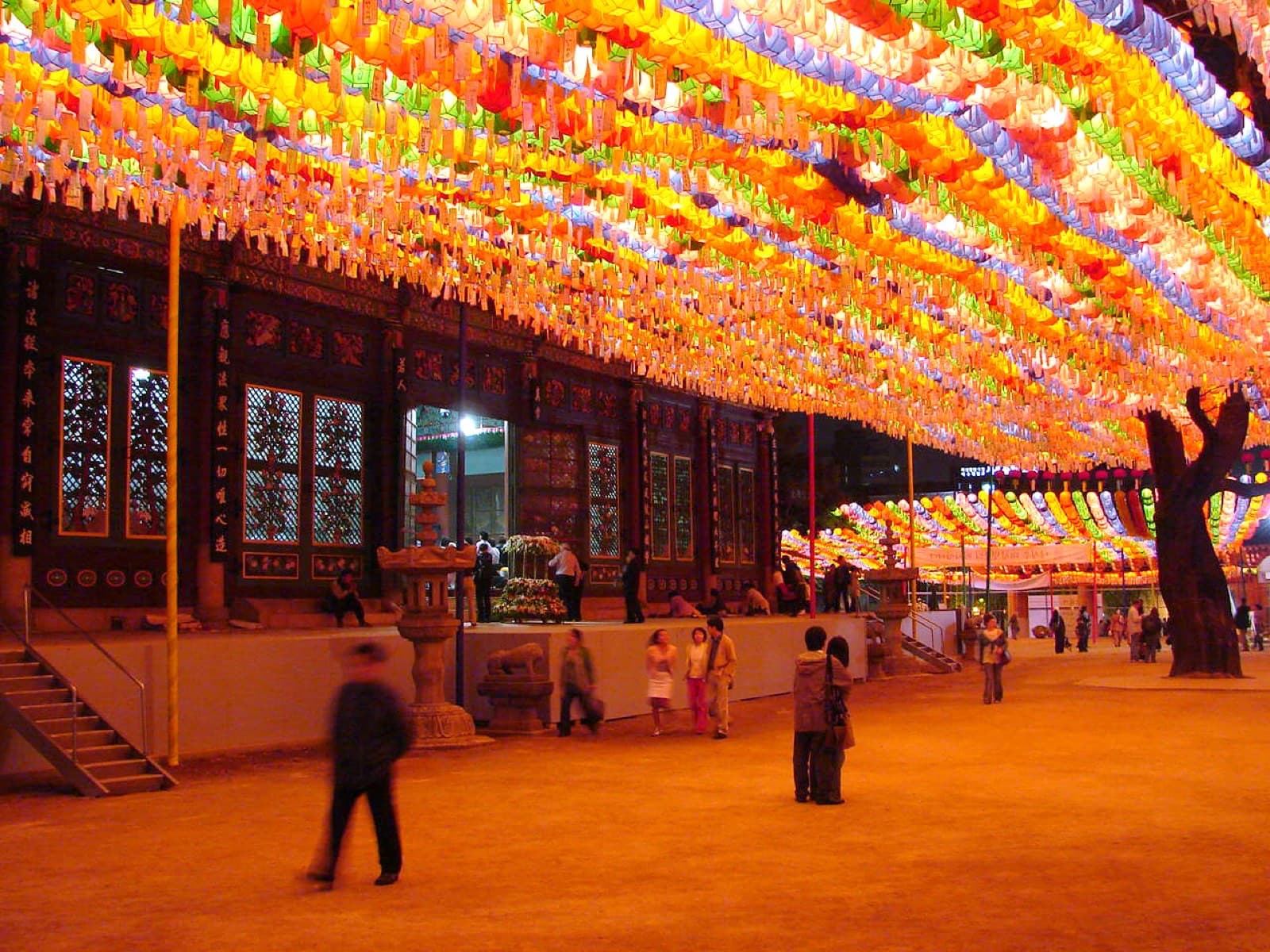
One Day in Seoul: A Walkable Jongno Itinerary
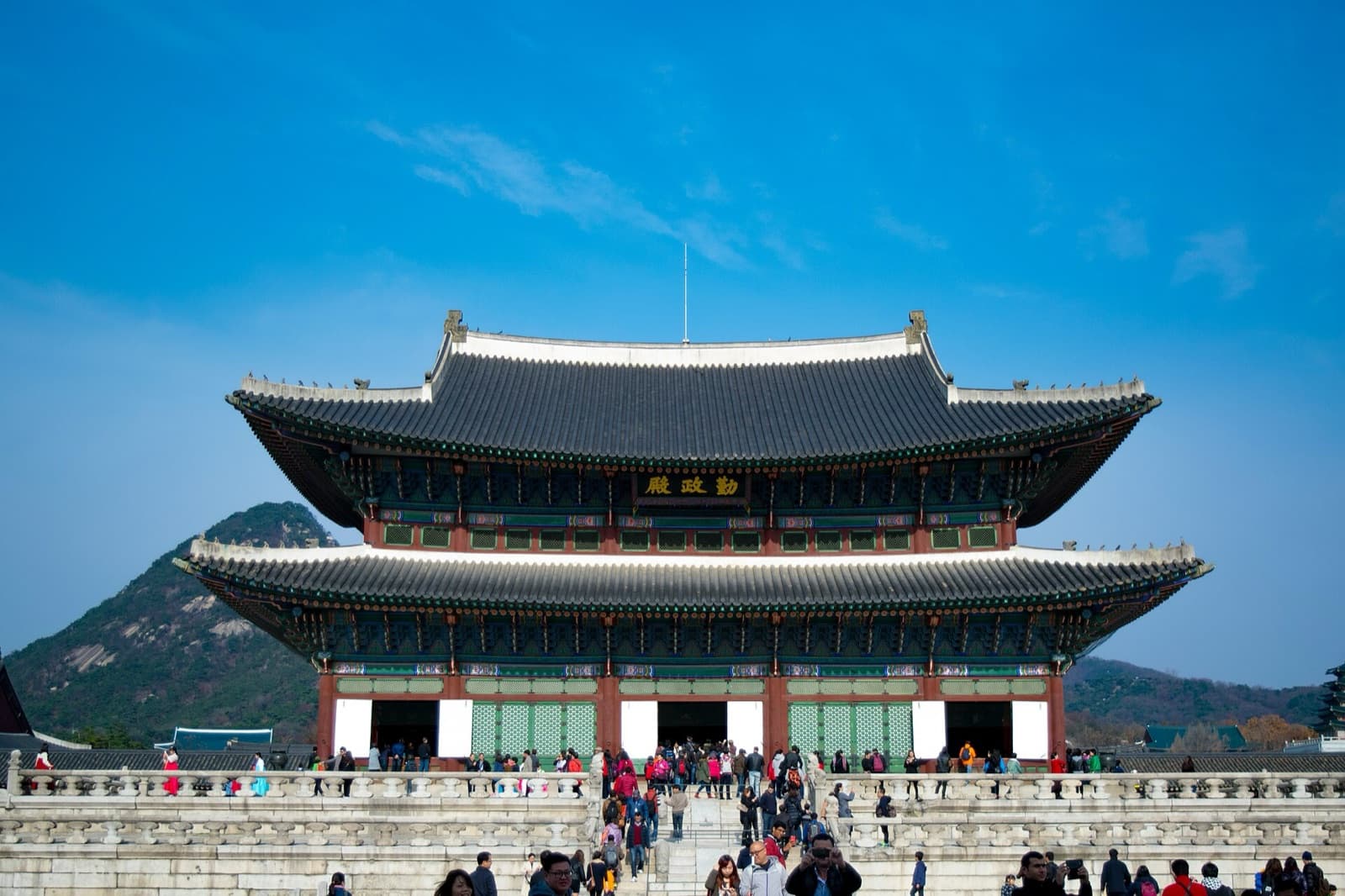
Geunjeongjeon Throne Hall: Reading the Royal Axis of Gyeongbokgung
Who Built Bukchon: The Developer Behind Seoul's Most Photographed Roofs
Bukchon-ro 11-gil: The Most Photographed Lane in Seoul, and the Curfew That Guards It
Gyeonghoeru Pavilion: The Joseon Banquet Hall on the Water