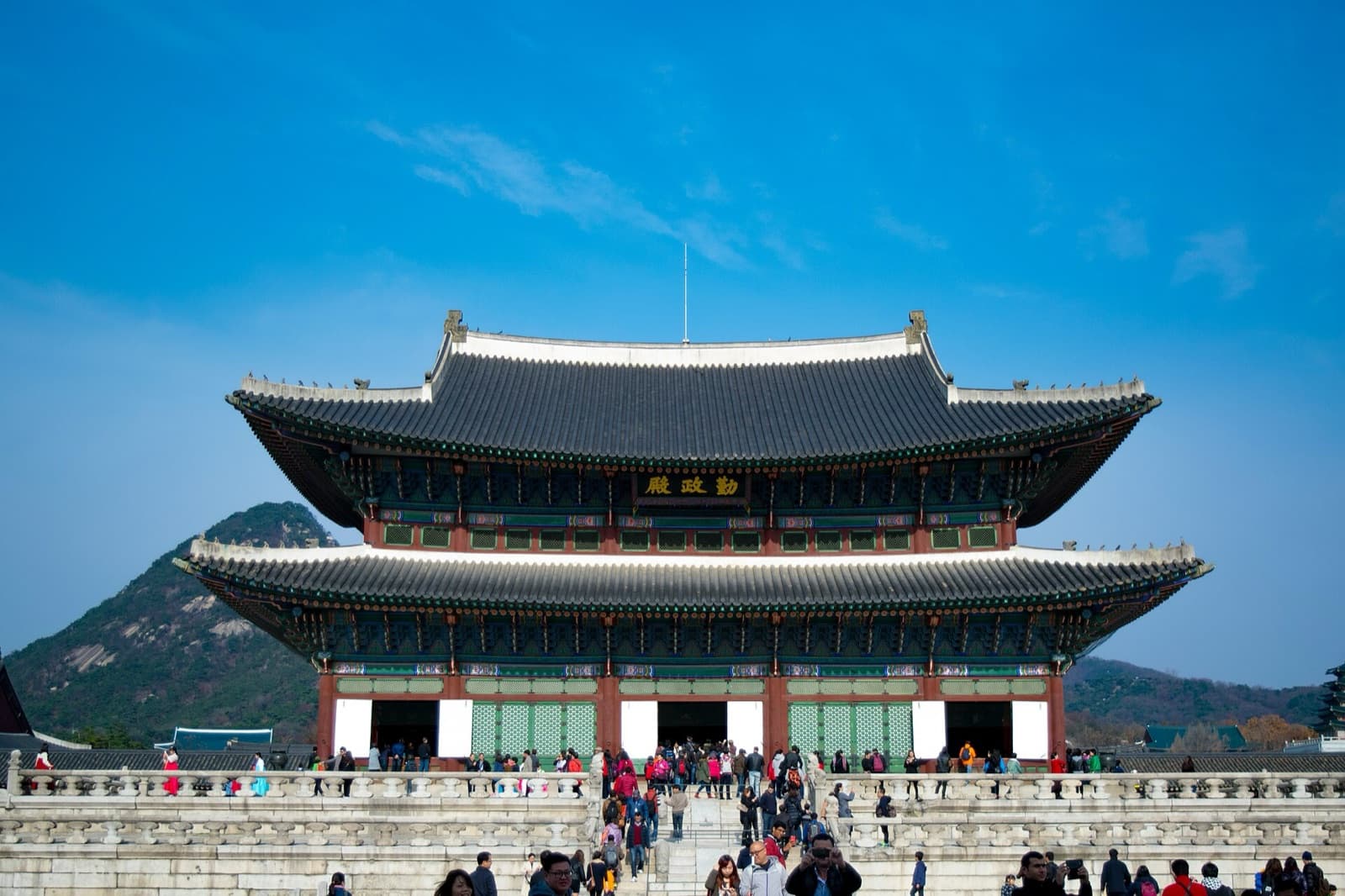
Geunjeongjeon Throne Hall sits at the center of a diagram drawn in stone and timber, where the founders of the Joseon dynasty aligned the seat of the king with the rank stones in the courtyard below and the guardian mountain rising behind, all on a single ceremonial axis. Most visitors read the throne hall as a beautiful building on a raised terrace. It is that, but it is also the argument the whole palace was built to make. Stand in the wide courtyard and the founders hand you the key to everything else on the route.
The hall at the center of the line
Geunjeongjeon is the main throne hall of Gyeongbokgung, and its name carries the idea of governing diligently. The Korean word jeon means hall. According to the Korea Heritage Service, it is designated National Treasure number two hundred and twenty-three, listed on the eighth of January, nineteen eighty-five, and it is the largest main hall of all the Joseon palaces. This was the room where the king granted audiences, made declarations, and received envoys from abroad. The building rises on a raised double stone terrace, lifted deliberately above everyone who approaches it.
Its story is the palace's story compressed. Geunjeongjeon was first completed in the year thirteen ninety-five, destroyed in the Japanese invasions of the fifteen nineties, and reconstructed in the year eighteen sixty-seven. What makes the current hall precious is that it is one of only three of the palace's nineteenth-century buildings to survive both the colonial period and the Korean War. When you look at the timber above the terrace, you are looking at wood that outlasted an occupation and a war that flattened so much around it.
The clue in the courtyard
Hear a stop from this walk
Geomancy and Mount Bugak: reading the whole diagram
Before you look up, look down. Running in two rows down the stone courtyard are low marker stones called pumgyeseok, the rank stones. They fixed exactly where each grade of official had to stand during a state ceremony. A minister of one rank stood at one stone, a minister of another rank at the next, the whole civil and military hierarchy of Joseon laid out on the ground in a precise gradient toward the throne. The rank stones turn an empty courtyard into a seating chart for the state. They tell you that this space was never neutral. Every position in it meant something, and everyone who entered knew their place on the line.
That line is the point. The rank stones, the terrace, and the throne all fall on the same axis. Now do the thing the design was made for. Look past the hall to the north and you will see the guardian mountain, Mount Bugak, rising behind it. That sightline is not an accident. The whole axis was drawn to link the seat of the king with the mountain at his back: order below, protection above. Stand here long enough and the diagram becomes obvious. Rank stones, terrace, throne, mountain, all on one line.
Why the mountain fixed the plan
The founders were not decorating. When they chose this ground, they were following pungsu-jiri, Korean geomancy, which held that an auspicious site sits with a mountain at its back and water in front. Gyeongbokgung was placed exactly so, with Mount Bugak sheltering it to the north and streams and the Han River running to the south. Bugak rises about three hundred and forty-two metres, one of a ring of guardian peaks around the Seoul basin.
It is worth being honest about what this means. Geomancy is a traditional belief system, not a physical fact. The founders believed the mountain guarded the palace and the king within it, and it was that belief, not the granite of the peak, that fixed the whole design. King Taejo, Yi Seong-gye, founder of the Joseon dynasty established in the year thirteen ninety-two, chose the capital of Hanyang, present-day Seoul, in the year thirteen ninety-four, and the palace was founded here the next year. From that one belief flows the alignment you are standing inside of.
The axis before and after the throne
The throne hall is the climax of a sequence, and walking the full route is what makes it legible. You reach Geunjeongjeon by passing through Gwanghwamun, the main southern gate first completed in thirteen ninety-five and given its name by King Sejong the Great in the year fourteen twenty-six, then through the inner gate Heungnyemun, where a changing-of-the-guard re-enactment (first staged in the year nineteen ninety-six, not an unbroken tradition) is performed twice daily. Each gate frames the court beyond and pulls your eye forward. By the time you reach the throne hall, the palace has already been steering you along one line.
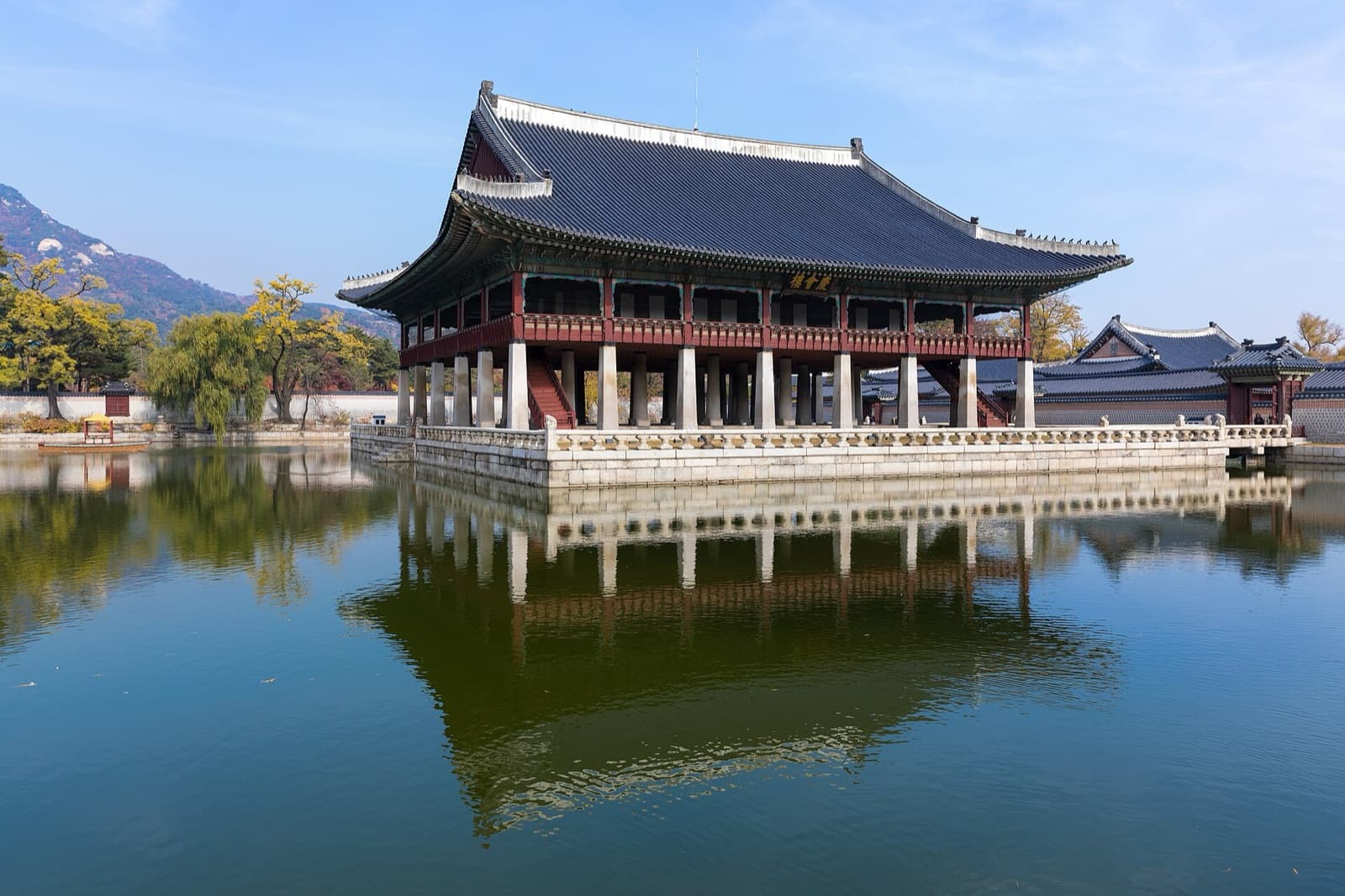
Past the throne hall the mood softens. Gyeonghoeru, the royal banquet pavilion, stands on an island in a rectangular pond, its upper floor carried on forty-eight stone pillars; its image appeared on the ten thousand won banknote from the year nineteen eighty-three until two thousand and seven. Deeper still, the hexagonal Hyangwonjeong pavilion sits in the quiet rear garden, reached by a wooden bridge that when completed in the year eighteen seventy-three was the longest built over a pond in the whole Joseon period. Then comes the sober stop: the front-court ground where a colonial Government-General building once stood squarely on this axis, blocking the throne hall from view, demolished between the years nineteen ninety-five and nineteen ninety-six to reopen the founders' sightline from gate to hall to mountain.
That is why the throne hall rewards a slow walk rather than a quick photo. The rank stones only make sense once you have passed through the gates that rank the approach. The mountain behind the hall only lands once you know the belief that put it there. This is a linear route of seven stops covering about two and a half kilometres, short and skippable, at your own pace. If you are planning the day, browse other Seoul walking tours or start from the Seoul city page to see how this axis fits the wider historic center. Stand in the courtyard, line up the throne with Mount Bugak, and the palace stops being a collection of buildings. It becomes a single idea, written into the landscape more than six centuries ago and still readable today.
Sources
- Geunjeongjeon, Wikipedia: throne hall history, National Treasure designation, and reconstruction dates used throughout the piece.
- Gyeongbokgung Palace, Korea Heritage Service: official record of the palace layout, the throne hall's status, and its ceremonial function.
- Bugaksan, Wikipedia: the guardian mountain's height and its role in the geomantic siting of the palace.
- Taejo of Joseon, Wikipedia: the founding of the dynasty and the choice of Hanyang as capital.
Ready to experience it?
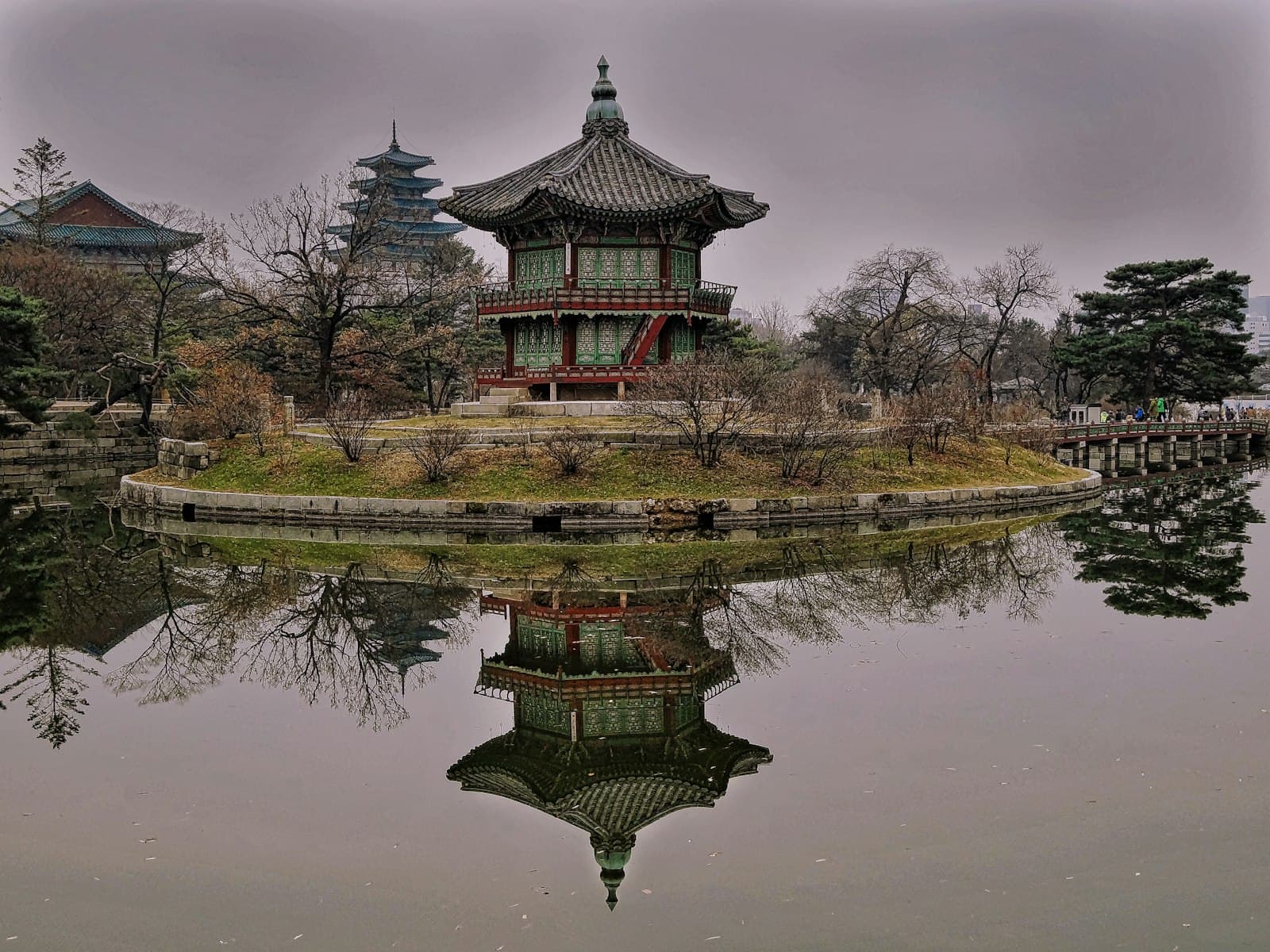
The Palace and the Mountain
100 min · 2.5 km · easy
More from Seoul
Explore more at your own pace.
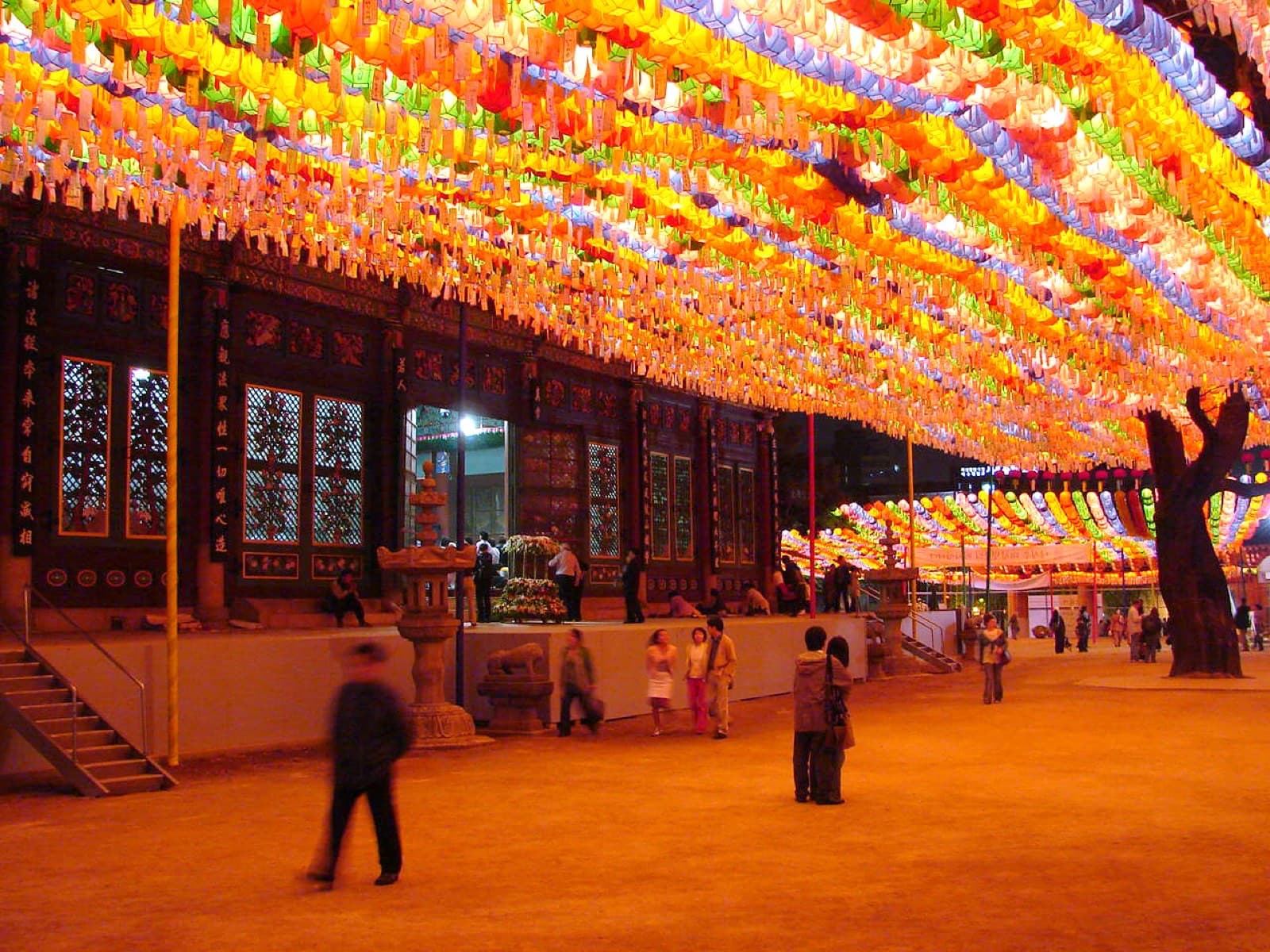
One Day in Seoul: A Walkable Jongno Itinerary
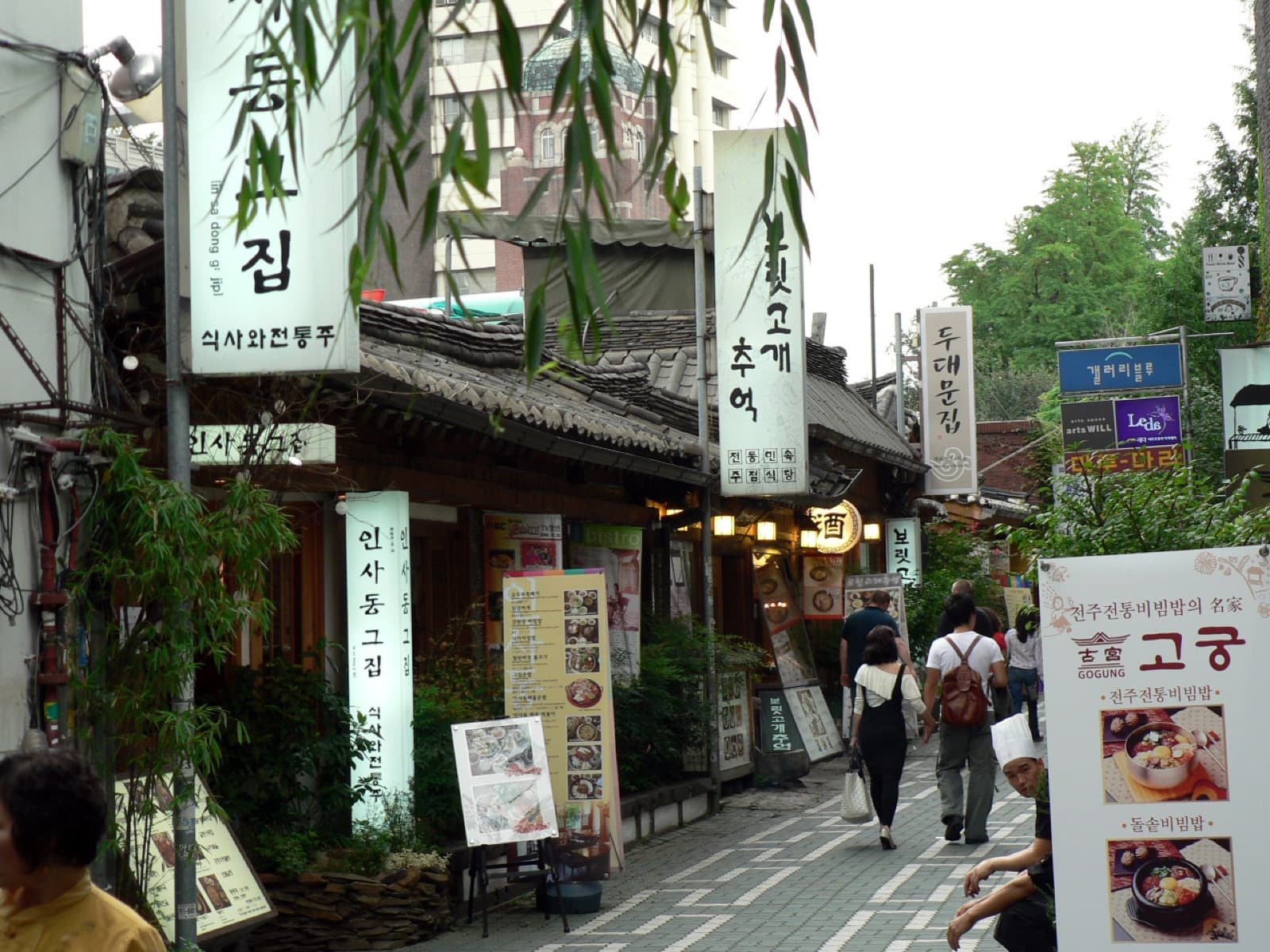
Insadong-gil: Reading Seoul's Craft Quarter One Shop Window at a Time
Who Built Bukchon: The Developer Behind Seoul's Most Photographed Roofs
Bukchon-ro 11-gil: The Most Photographed Lane in Seoul, and the Curfew That Guards It
Gyeonghoeru Pavilion: The Joseon Banquet Hall on the Water