Bukchon Hanok Village: The Living Grid
90 min · 1.8 km · easy
Eat Seoul the way the city actually eats: a bowl of milky ox-bone soup for breakfast near Insadong, a griddled mung-bean pancake and raw beef at a century-old market for lunch, and knife-cut noodles or spicy rice cakes when you want something fast. The dishes below are the ones with the deepest roots in central Seoul, the neighborhoods you will already be walking on a self-guided tour, plus how to order each one without hesitating at the counter. Every origin claim and every "oldest" here is verified against current sources, and the food sits within a short walk of the three historic-core routes on Seoul walking tours.
The one dish to eat first: seolleongtang (ox-bone soup)
If you eat one thing in central Seoul, make it seolleongtang, a milky white soup simmered from cow shank, head, and bones until the broth turns cloudy. It is a Seoul dish by origin. The most widely accepted account traces it to the Seonnongdan, a Joseon-dynasty altar in the city where kings performed agricultural rites, after which the sacrificial ox was boiled into a communal pot of bone soup and shared out. The broth arrives almost deliberately bland. That is the point: you season it yourself at the table.
How to order like a local: the bowl comes plain, with salt, chopped scallions, and often a small dish of kkakdugi (cubed radish kimchi) and baechu kimchi on the side. Add salt a little at a time, drop in the scallions, spoon in rice, and use the kimchi brine to sharpen the broth if you want more edge. The oldest place to try it is Imun Seolleongtang in Jongno, founded around 1904 as the first restaurant licensed by Seoul City. It boils its broth for 16 to 17 hours, was named a Seoul Future Heritage in 2013, and appears in the Michelin Guide. It sits a short walk from Insadong, which puts it on the doorstep of the Insadong and Ikseon-dong route.
Its close cousin is gomtang, a clearer beef soup made from brisket and other cuts and seasoned with soy sauce rather than salt. If seolleongtang reads as too mild, gomtang gives you the same comfort with more savory depth.
The market feast: Gwangjang Market
Hear a stop from this walk
The Developer Builders: Where the Urban Hanok Came From
Gwangjang Market is where you eat with your hands off a stool, and it is the oldest continuously operating traditional market in Korea. A group of Korean merchants pooled funds to found the Gwangjang Corporation on the fifth of July, 1905, creating the first market meant to stay open every day rather than a few days at a time. Three dishes made it famous, and they are the three to order.
Bindaetteok, a mung-bean pancake ground fresh and fried crisp at the edges, is the market's signature. Watch for the stalls grinding soaked beans in stone mills right at the counter. Mayak gimbap, literally "narcotic rice rolls," are thumb-sized seaweed rice rolls served with a mustard-soy dip, named for how quickly you finish a plate. Yukhoe, seasoned raw beef often topped with a raw egg yolk and slivered pear, has its own dedicated stalls in the eastern hall.
How to order: point, sit, and pay per dish. Pair bindaetteok with makgeolli, the cloudy unfiltered rice wine that vendors pour from steel kettles into bowls. The savory pancake and the tangy, slightly fizzy rice wine are a classic Seoul match. Practical timing: the market's retail stores generally run about 8:30 in the morning to 6 in the evening, but the food stalls and restaurants stay open far later into the night, so it works for both a late lunch and dinner. Restaurants open year-round, though many retail shops close on Sundays. Take Subway Line 1 to Jongno 5-ga Station and use Exit 8. Gwangjang is roughly a 15-minute walk east of Insadong, so it slots naturally onto the end of a central walking day.
Knife-cut noodles: kalguksu
Kalguksu is hand-rolled dough sliced into flat noodles and dropped into hot broth, a soup that traces back to a Joseon-era cookbook. The Seoul style leans on anchovy or chicken broth, and the noodles are cut in front of you. The most atmospheric place to eat it is Kalguksu Alley inside Namdaemun Market, a run of stalls where the noodles land in an anchovy broth topped with fried tofu, powdered laver, sesame, and a dab of spicy paste. It is one of the cheapest satisfying meals in the city.
How to order: sit at the counter, say kalguksu, and stir in the chili paste to taste. Vendors often add a free scoop of boribap (barley rice) or bibim guksu (spicy mixed noodles) alongside, so come hungry. Namdaemun's neighboring Galchi Jorim Alley does braised hairtail fish in a spiced radish broth if you want something with more punch.
Cold noodles: naengmyeon
Naengmyeon, chilled buckwheat noodles in an icy broth, is the summer answer to all those hot soups, and it is North Korean in origin. Pyongyang-style naengmyeon reached a global audience after it was served at the April 2018 inter-Korean summit. Seoul has kept the northern tradition alive through refugee-founded restaurants that specialize in it.
How to order: two main styles. Mul naengmyeon comes in cold broth (order this to understand the dish). Bibim naengmyeon comes dry, tossed in a fiery red sauce. Restaurants bring scissors so you can cut the very long noodles, and vinegar and mustard are on the table to adjust the broth. Slurp fast before the ice melts.
Spicy rice cakes and sweet pancakes: the street layer
Tteokbokki, chewy cylinders of rice cake in a sweet-spicy gochujang sauce, is on nearly every corner and is the dish most travelers already know. For a sit-down version, Sindang-dong in central Seoul has an entire street, often called Tteokbokki Town, lined with restaurants dedicated to it, where you simmer the rice cakes with fish cake, egg, and ramen noodles in a shared pan at your table.
Two more to try as you walk. Hotteok is a griddled sweet pancake filled with molten brown sugar, cinnamon, and crushed nuts, best eaten hot in cold weather straight from the paper cup. Odeng (fish cake on a skewer) comes with a cup of the warm broth it sits in, ladled out for free. These are the snacks that keep a walking day going between sit-down meals.
The unhurried finish: tea houses and the coin lunchbox
Insadong and neighboring Ikseon-dong are where Seoul slows down over traditional tea rather than coffee. Inside restored hanok courtyards, tea houses serve omija-cha (five-flavor berry tea), yuja-cha (citron), and jujube tea, usually with a plate of tteok (rice cakes) or hangwa (traditional confections). In Ikseon-dong, a tea house named Tteuran pours homemade omija and medicinal teas inside an old hanok around an inner garden. These sit directly on the Insadong and Ikseon-dong walking route, so a tea stop is an easy built-in pause.
For a hands-on lunch near Gyeongbokgung, Tongin Market in the Seochon neighborhood west of the palace runs a brass-coin lunchbox program. The market was established in June 1941, and in 2011 it introduced the yeopjeon dosirak: buy old-style brass coins at the Dosirak Cafe, then walk the covered alley trading them for portions from participating stalls to assemble your own tray. It is a low-stakes, playful way to sample many dishes at once, and it lands right beside the Gyeongbokgung royal-axis route.
How to eat across a walking day in the historic core
Build the food around the three central routes rather than making a separate trip. Start with seolleongtang or gomtang near Insadong in the morning, walk the Insadong and Ikseon-dong route with a tea-house pause and street snacks, cross to Gyeongbokgung for the royal-axis walk with a Tongin Market coin lunch, and finish at Gwangjang Market for bindaetteok, mayak gimbap, and makgeolli once the stalls hit their evening stride. Everything above is within the compact Jongno district, so the meals and the tours share the same ground. Full route detail and audio are on Seoul walking tours and the Seoul city page.
A note on eating safely and comfortably: Seoul's markets and street stalls are generally clean and busy, and high turnover means fresh food, so the main practical concern is spice level rather than anything else. If you avoid raw beef, skip yukhoe and choose bindaetteok or kalguksu instead. Cash still moves faster than cards at older market stalls, so carry some won. Many stalls and tea houses have picture menus or English labels in tourist-heavy Insadong and Gwangjang, and pointing is a fully accepted way to order.
Sources
Frequently asked questions
- What is the most famous food to eat in Seoul?
- Seolleongtang, a milky ox-bone soup, is the dish most tied to Seoul itself, with an origin traced to the Seonnongdan agricultural altar. Gwangjang Market's bindaetteok (mung-bean pancake), mayak gimbap, and yukhoe are the most famous market foods. All are found in the central Jongno district near Insadong.
- What should I eat at Gwangjang Market?
- Order bindaetteok (a crisp mung-bean pancake), mayak gimbap (small seaweed rice rolls with mustard-soy dip), and yukhoe (seasoned raw beef), the three dishes the market is famous for. Pair the bindaetteok with makgeolli, an unfiltered rice wine. Gwangjang Market opened in 1905 and is the oldest continuously operating traditional market in Korea.
- Where is the oldest restaurant in Seoul?
- Imun Seolleongtang in Jongno, founded around 1904 as the first restaurant licensed by Seoul City, is the oldest operating restaurant in South Korea. It serves ox-bone soup boiled for 16 to 17 hours, was named a Seoul Future Heritage in 2013, and appears in the Michelin Guide. It is a short walk from Insadong.
- What are Gwangjang Market's hours?
- Retail stores generally run about 8:30 in the morning to 6 in the evening, while the food stalls and restaurants stay open much later into the night. Restaurants open year-round, but many retail shops close on Sundays. Take Subway Line 1 to Jongno 5-ga Station and use Exit 8.
- What is the Tongin Market coin lunchbox?
- At Tongin Market in the Seochon neighborhood west of Gyeongbokgung, you buy old-style brass coins (yeopjeon) at the Dosirak Cafe, then trade them at participating stalls to build your own lunch tray. The market was established in June 1941, and the coin-lunchbox program started in 2011. It is a playful way to sample many dishes at once.
- Where can I try traditional Korean tea in Seoul?
- Insadong and neighboring Ikseon-dong hold Seoul's traditional tea houses, set inside restored hanok courtyards. They serve teas like omija-cha (five-flavor berry), yuja-cha (citron), and jujube tea, usually with rice cakes. In Ikseon-dong, a tea house called Tteuran pours homemade omija and medicinal teas around an inner garden.
Ready to experience it?
Bukchon Hanok Village: The Living Grid
90 min · 1.8 km · easy
More from Seoul
Explore more at your own pace.
One Day in Seoul: A Walkable Jongno Itinerary
Geunjeongjeon Throne Hall: Reading the Royal Axis of Gyeongbokgung
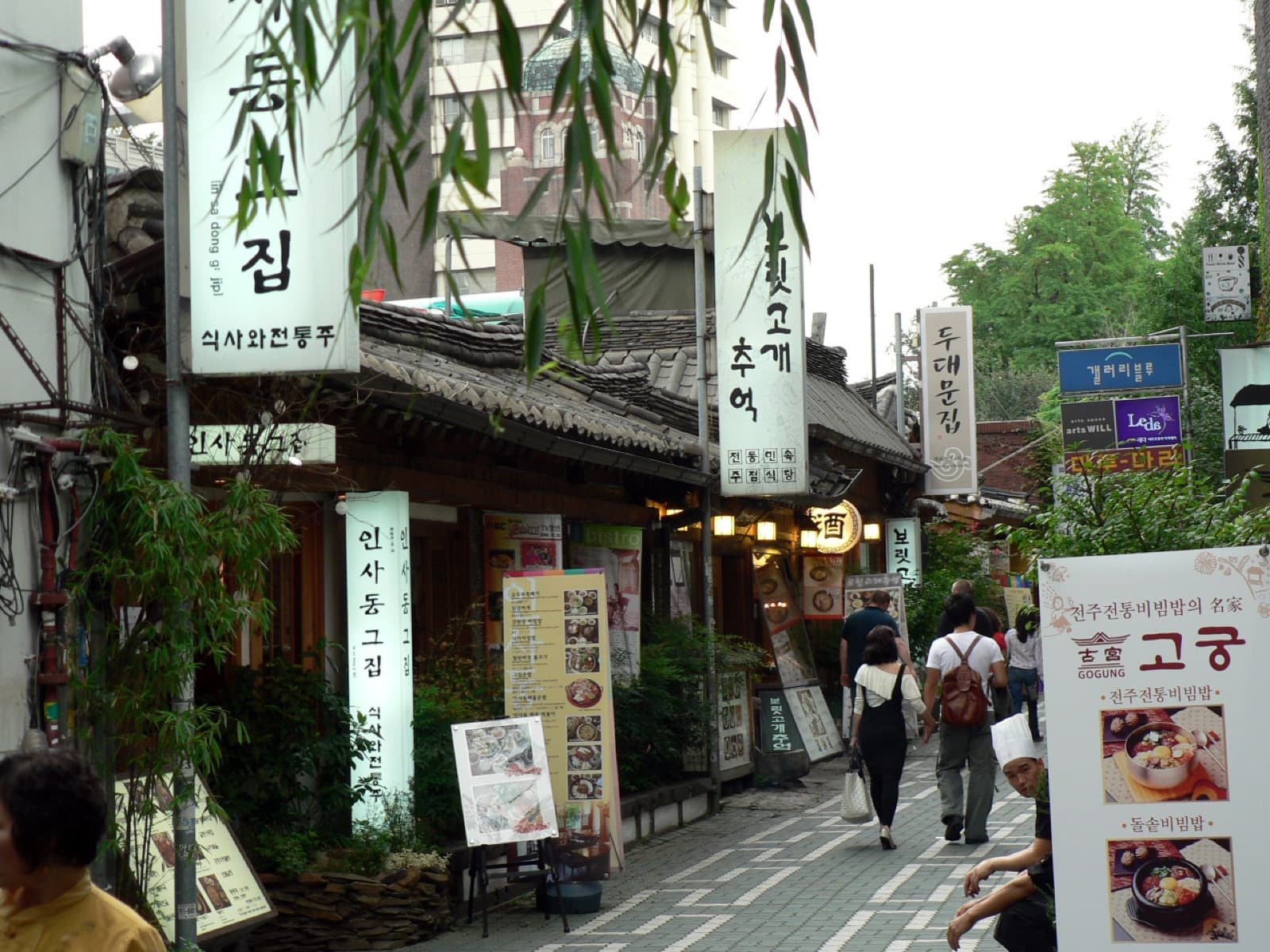
Insadong-gil: Reading Seoul's Craft Quarter One Shop Window at a Time
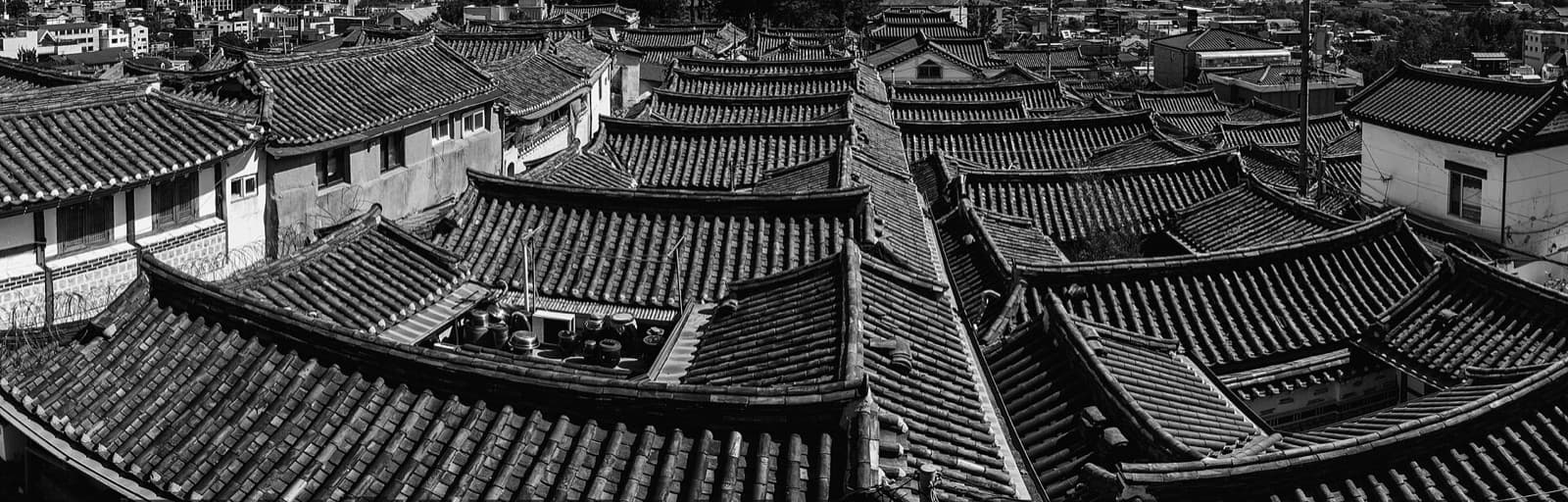
Who Built Bukchon: The Developer Behind Seoul's Most Photographed Roofs
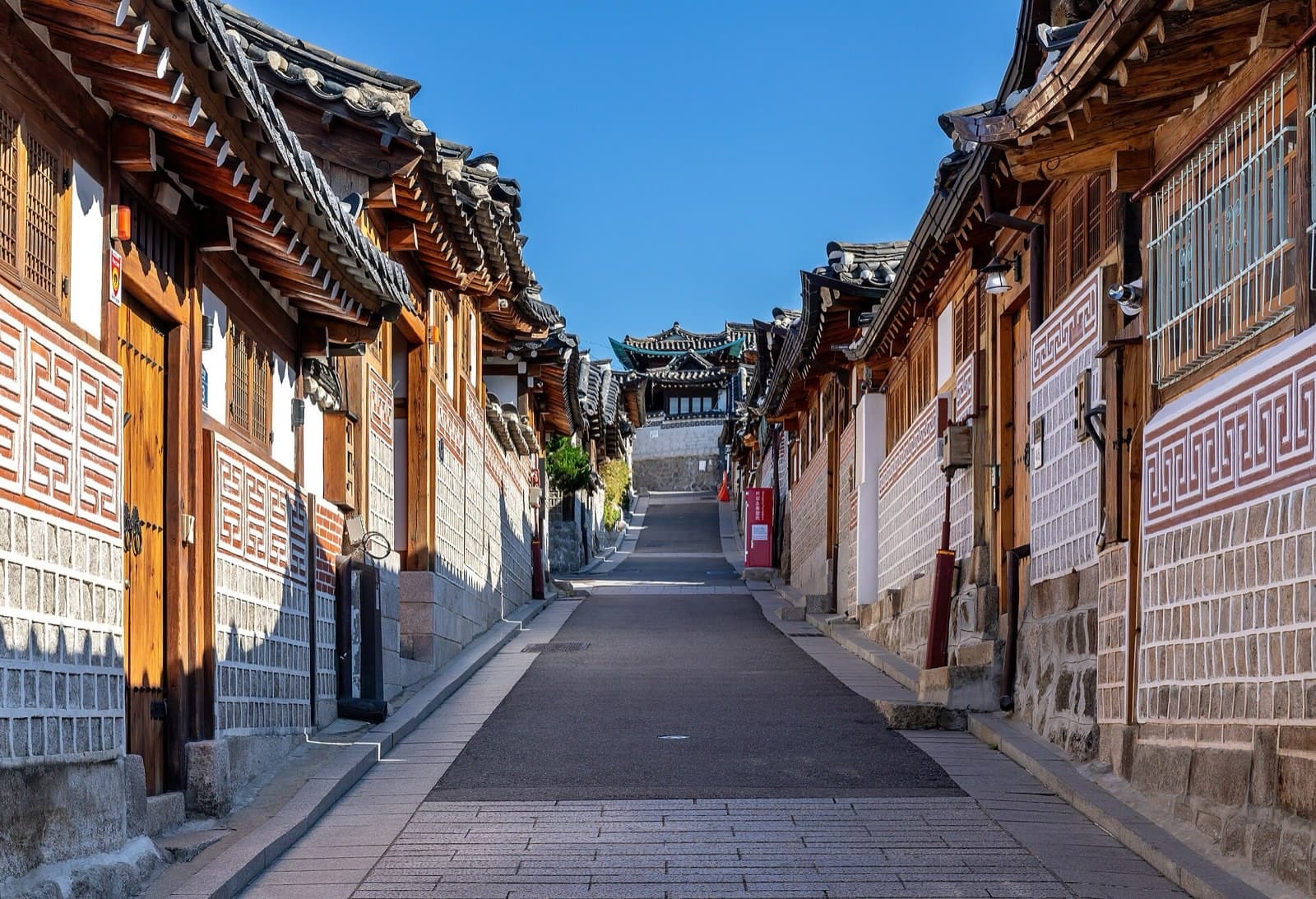
Bukchon-ro 11-gil: The Most Photographed Lane in Seoul, and the Curfew That Guards It