Pelourinho: Brazil's First Capital
85 min · 2.4 km · moderate
Yes, you can see the essential Salvador in a day. Here is the route.
You cannot fit five centuries of Brazil first capital, its churches, its plazas, and its Afro-Brazilian heart into a single day, and you should not try. What you can do is walk the dense, connected heart of the city where its most famous sights sit within reach of each other: the UNESCO-listed Pelourinho old town on the clifftop, the gold-drenched church of Sao Francisco, the ride down the Elevador Lacerda to the bay and the Mercado Modelo, and a sunset at the Farol da Barra lighthouse. This itinerary routes those around a comfortable walking day, and names the self-guided Salvador walking tour that anchors each block so the history walks with you.
A note on pace before you start. This is a day of walking, roughly 5 to 8 km on steep, uneven cobblestones, so wear proper shoes with grip, carry water against the Bahian heat, and treat the food stops below as part of the plan, not interruptions to it.
Morning: Pelourinho, Brazil's first capital
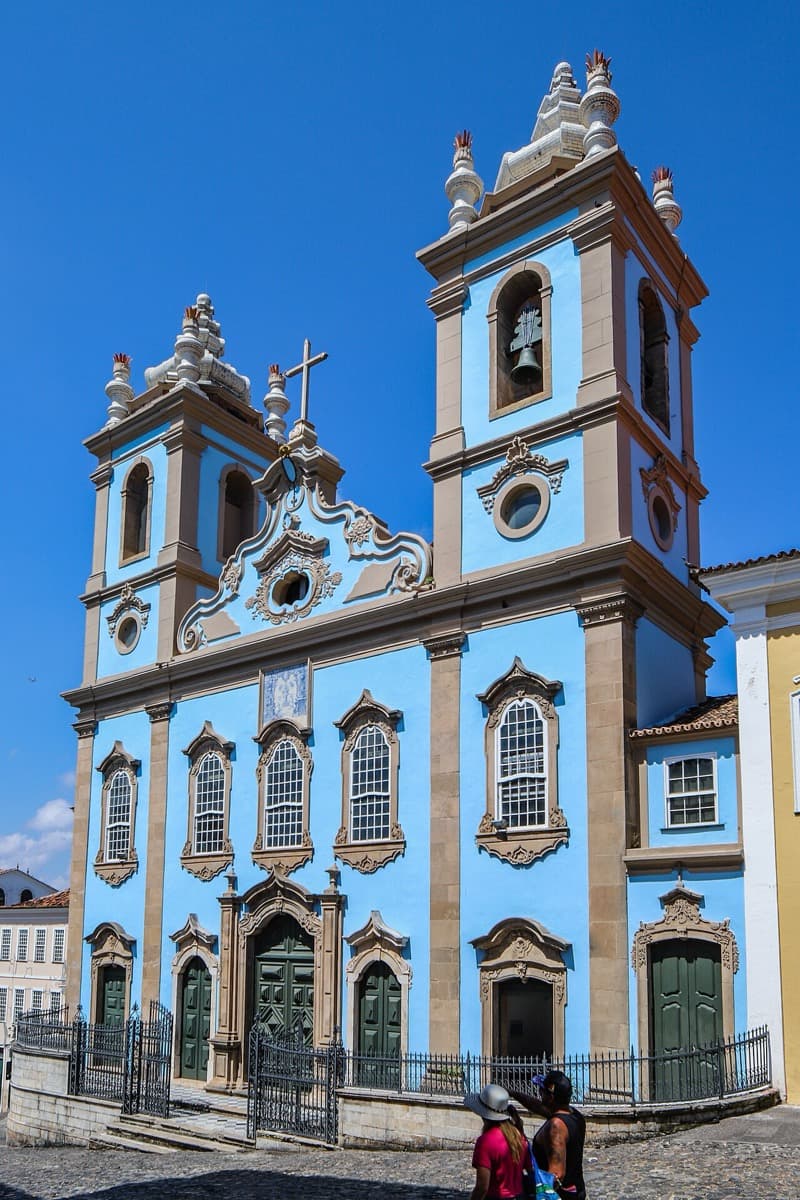
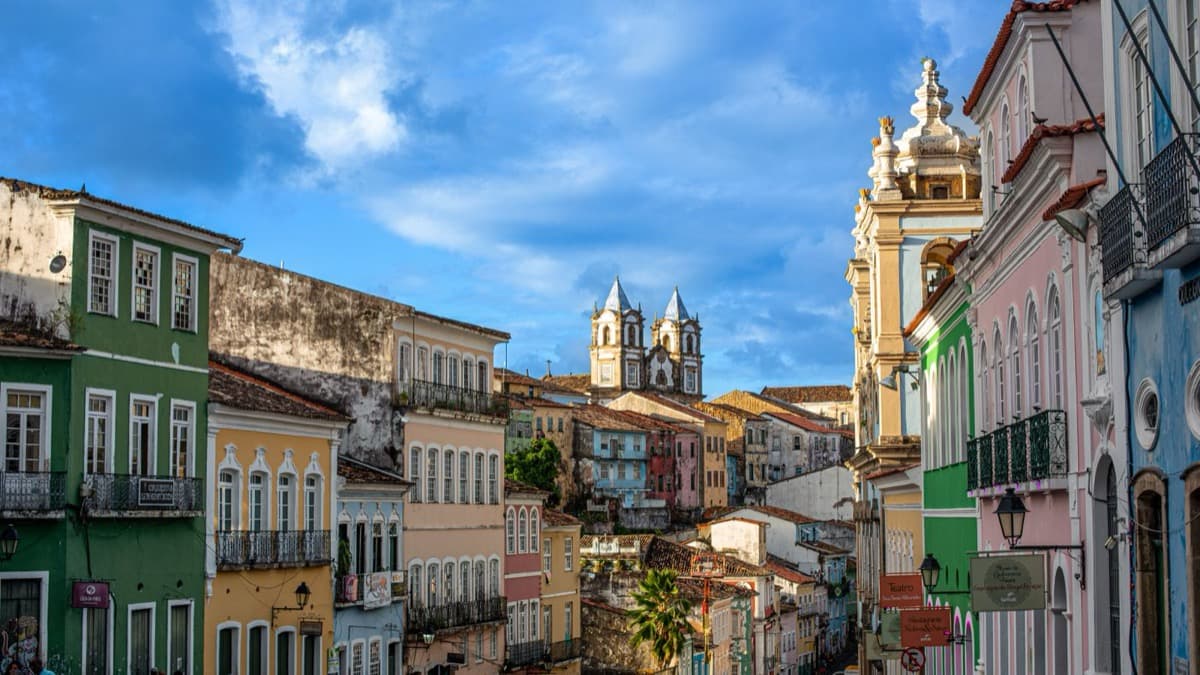
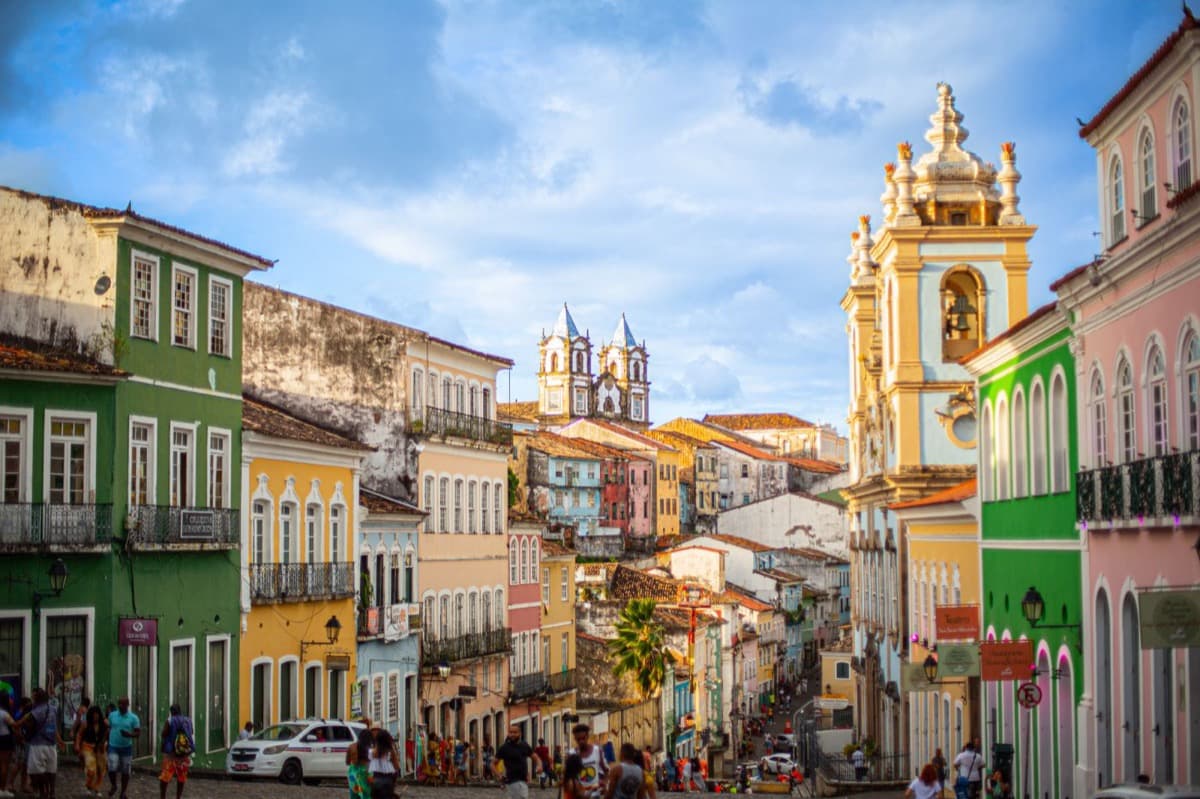
Start early, ideally before 9:00, because the Pelourinho lanes are cooler and quieter before the day heats up and the crowds gather. Begin at the Praca Municipal (Praca Tome de Sousa), the founding square where the colonial governors ruled, then walk into the Terreiro de Jesus and the Praca da Se, the linked plazas that were the administrative and religious mind of colonial Brazil. From there the cobblestones slope down into the Largo do Pelourinho, the postcard square of pastel mansions whose name, unflinchingly, means the public whipping post.
This is the block to walk with the Pelourinho: Brazil's First Capital self-guided audio tour. It reads the old town as one continuous artifact of the first Brazil, holding its grandeur and its human cost in the same view. If you want to go deeper on the anchor square before you walk, the companion piece on what the Pelourinho name really means is an honest primer, and the piece on the vanished cathedral of the Praca da Se fills in the plaza above it.
While you are up here, step into the Igreja e Convento de Sao Francisco, one of the richest baroque churches in Brazil, its interior lined with more than 800 kilograms of gold leaf. Walk it with the Gold, Sugar, and the Gilded Baroque tour, which traces the wealth of sugar and gold and the enslaved and freed hands that built its beauty. The companion piece on the gold and blue azulejo tiles of Sao Francisco is the right read for this stop.
Midday: the African city, and down to the bay
Hear a stop from this walk
Praca Municipal: The Founding Square
Before you leave the upper city, give the Pelourinho its due as the heart of Afro-Brazilian Salvador. This is the district of the baianas de acaraje in their white lace, frying black-eyed-pea fritters on the corners; of the Igreja de Nossa Senhora do Rosario dos Pretos, the church built by and for enslaved and freed Africans; and of Olodum, the bloco afro whose samba-reggae drums carried Salvador sound to the world. Walk this layer with The African City: Salvador of the Orixas, which earns the city name as the most African place outside Africa, stop by stop.
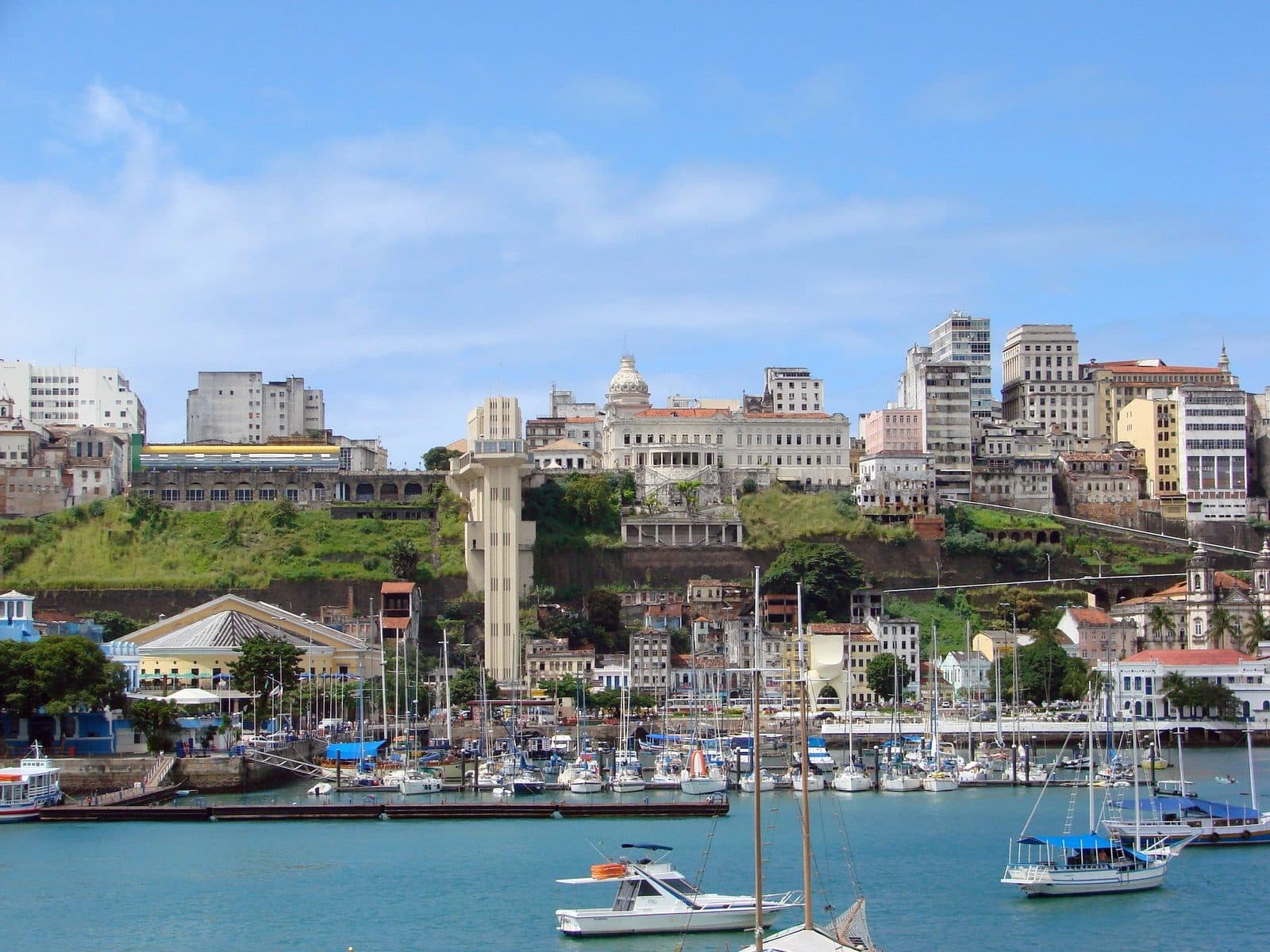
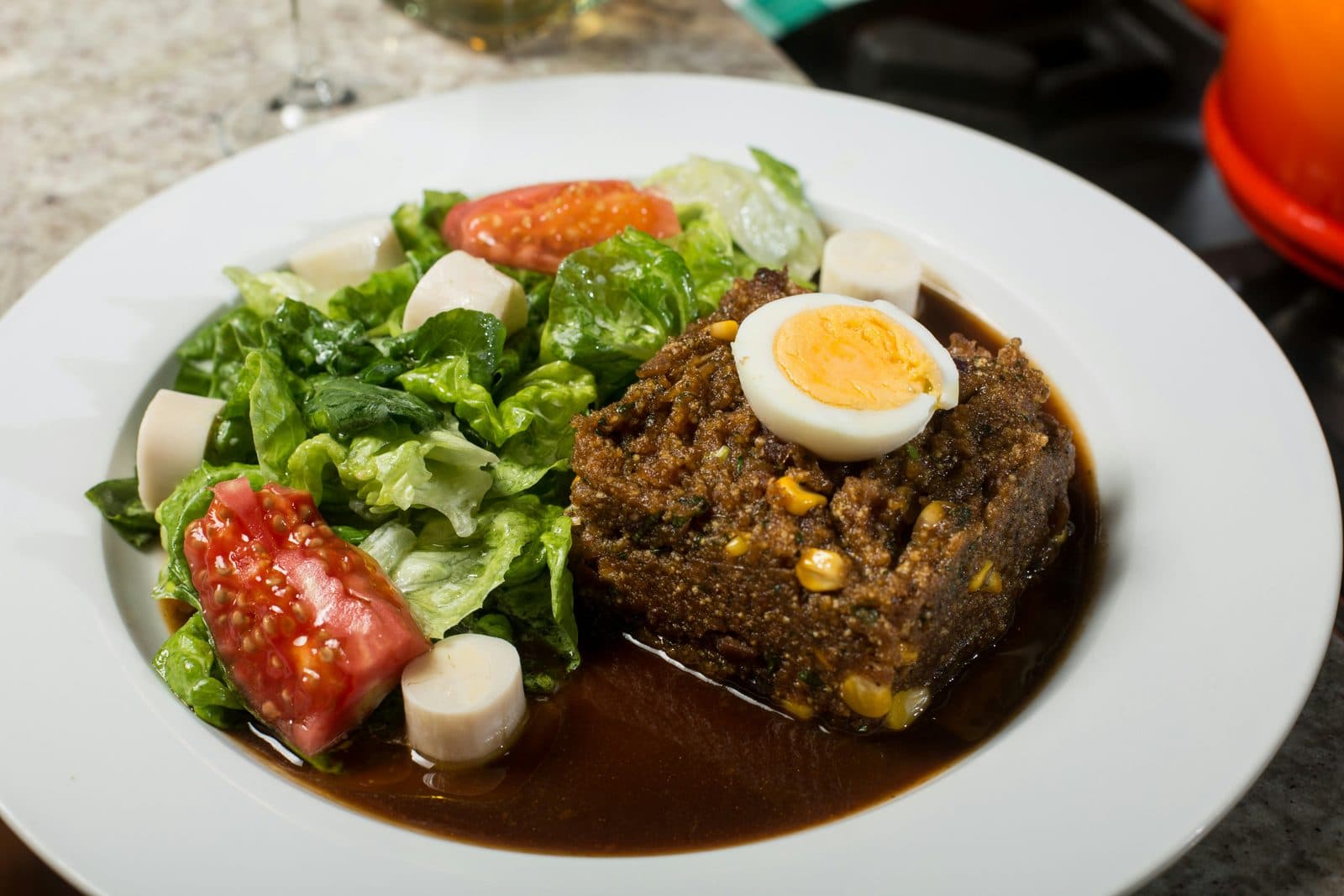
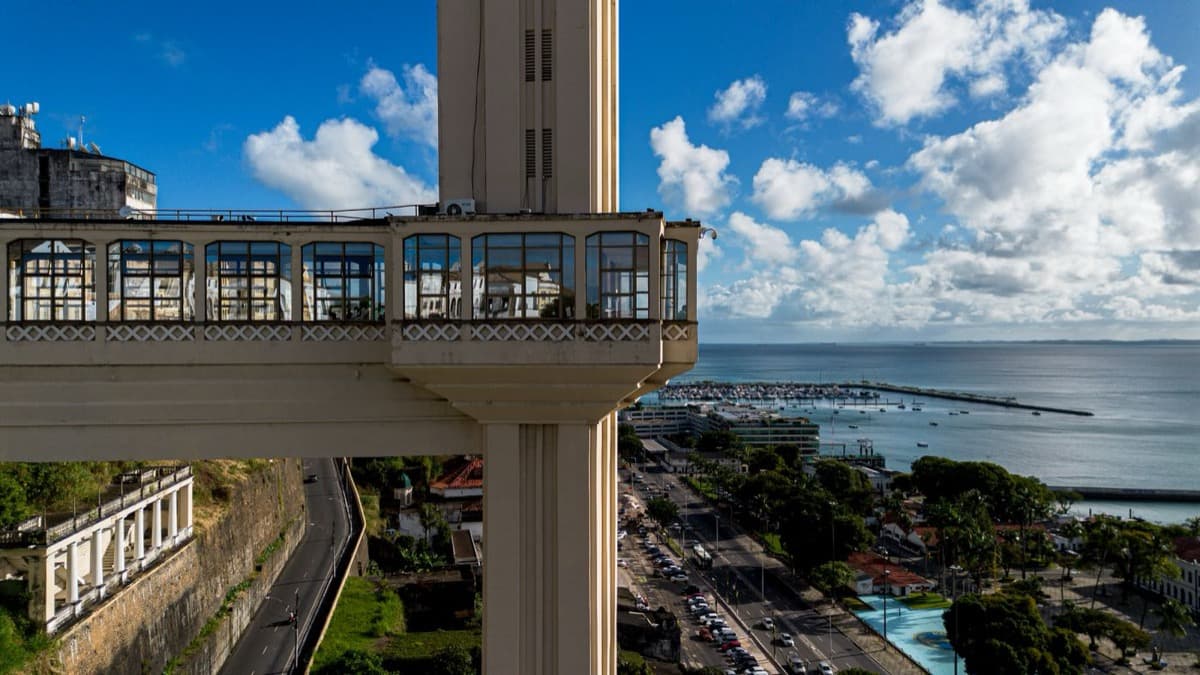
Then eat. This is the moment for a proper Bahian lunch, and the what to eat in Salvador guide covers what to order, from a coconut-and-dende moqueca to a street-corner acaraje. When you are ready, ride the Elevador Lacerda, the world first urban elevator, opened in 1873, which drops you 72 metres from the Upper City to the Lower City in about thirty seconds. At the bottom sits the Mercado Modelo, the handicraft market in the old customs house on the Bay of All Saints, good for browsing carvings, berimbaus, and a coffee with a view of the water.
Afternoon and evening: the bay and a Farol da Barra sunset
From the Lower City, take a short taxi or Uber out along the shore to Barra, where the peninsula narrows to a point. Here the Farol da Barra, the oldest lighthouse in the Americas, stands over the meeting of the bay and the open Atlantic. The esplanade behind it is Salvador beloved sunset spot: every clear evening, locals and travelers gather on the rocks and the boardwalk to watch the sun go down over the water, and applaud when it does.
Time your arrival for the golden hour, wander the small fort and lighthouse grounds, and settle in for the sunset. Barra and the neighbouring Rio Vermelho are also where the day should end at a table, over grilled fish, a moqueca, or a cold beer by the sea. If you would rather round the evening back in the old town, the Pelourinho stays lively after dark, but take an Uber between neighbourhoods rather than walking the quiet streets late.
The one-day route at a glance
| Block | Where | Anchor tour |
|---|---|---|
| Morning | Praca Municipal, Terreiro de Jesus, Largo do Pelourinho, Sao Francisco | Pelourinho: Brazil's First Capital + Gold, Sugar, and the Gilded Baroque |
| Midday | Afro-Brazilian Pelourinho, lunch, Elevador Lacerda, Mercado Modelo | The African City: Salvador of the Orixas |
| Evening | Barra, Farol da Barra lighthouse, sunset, dinner | (walkable seafront) |
Plan the rest of your trip
One day covers the heart. For how many days Salvador really deserves, how to get around the Upper and Lower Cities, when to go, and an honest word on safety, read the Salvador travel guide. For every route in the city, see the best self-guided walking tours in Salvador, or browse all Salvador tours. Every tour is free to start: the introduction and first stop play in full, and every later stop plays a short preview before an optional purchase.
Frequently asked questions
- Can you see Salvador in one day?
- You cannot see all of Salvador in a day, but you can see its essential core well. A focused day covers the Pelourinho old town, the gilded church of Sao Francisco, the Elevador Lacerda down to the bay and the Mercado Modelo, and a sunset at Farol da Barra, all reachable on foot or by a short ride. The Pelourinho itself is compact and walkable, so most of your day is spent on foot in one UNESCO-listed district, with a bay view and a beach sunset to bookend it.
- What is the best area to base a one-day visit to Salvador?
- Base yourself in or near the Pelourinho for the sightseeing, or in the seaside neighbourhoods of Barra or Rio Vermelho if you prefer to stay away from the historic center at night. The Pelourinho holds nearly all the old-town sights within a few blocks of each other, so from there the whole morning and midday are walkable. Barra puts you at the Farol da Barra lighthouse for the sunset that ends this route.
- How much walking is a one-day Salvador itinerary?
- Expect roughly 5 to 8 km on foot across the day, most of it in the Pelourinho old town on sloping cobblestone lanes and steps. Wear real walking shoes with grip, because the historic streets are steep and uneven. The Elevador Lacerda saves you the climb between the Upper City and the Lower City, and a short taxi or Uber covers the hop out to Barra for sunset.
- Do I need to book anything in advance for one day in Salvador?
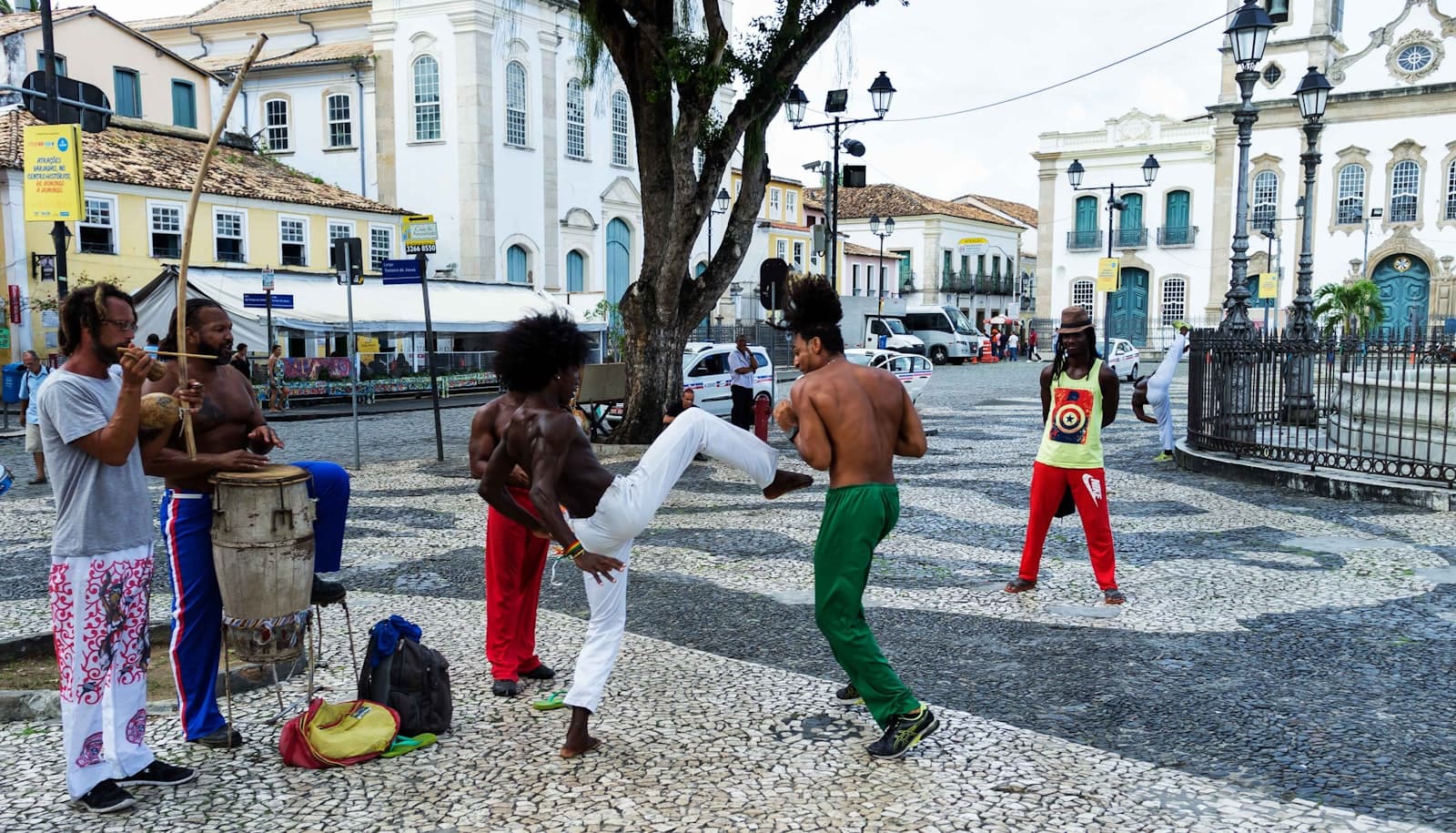
- Most of this route needs no booking: the Pelourinho lanes, plazas, the Elevador Lacerda, the Mercado Modelo, and the Farol da Barra esplanade are all open to walk-ups, though a few church interiors charge a small entrance fee. The self-guided audio tours that anchor each block are free to start and download in advance, so you can walk with narration even without a signal. If you want to see a live capoeira roda or a Candomble-rooted drumming rehearsal such as Olodum, check local schedules ahead, since these run on set nights.
Brazil eSIM· 10% off with ROAMER10
Ready to experience it?
Pelourinho: Brazil's First Capital
85 min · 2.4 km · moderate
More from Salvador
Explore more at your own pace.
Salvador Travel Guide: How Many Days, Getting Around, When to Go, Is It Safe (2026)
Salvador: Brazil's First Capital and Its African Soul
What to Eat in Salvador: A Bahian Food Guide (2026)
Elevador Lacerda: The Public Elevator That Joins Salvador's Two Cities
Pelourinho Means Whipping Post: The Truth Behind Salvador's Prettiest Square