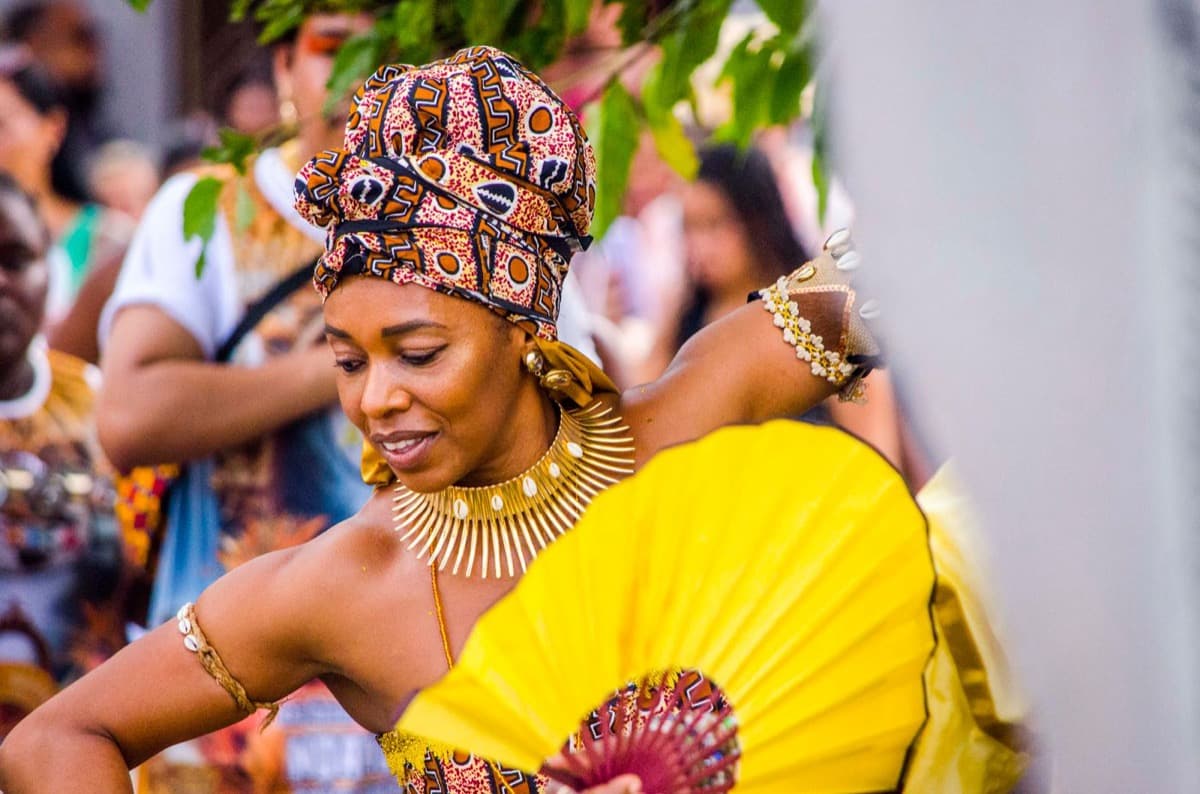
Salvador is often called the most African city outside Africa, and this walk through the Pelourinho earns that name stop by stop, following the religion, food, music, and martial art that crossed the Atlantic and became the identity of the city itself.
Start · Cruzeiro de Sao Francisco: The Baianas de Acaraje
DirectionsStops
- 1
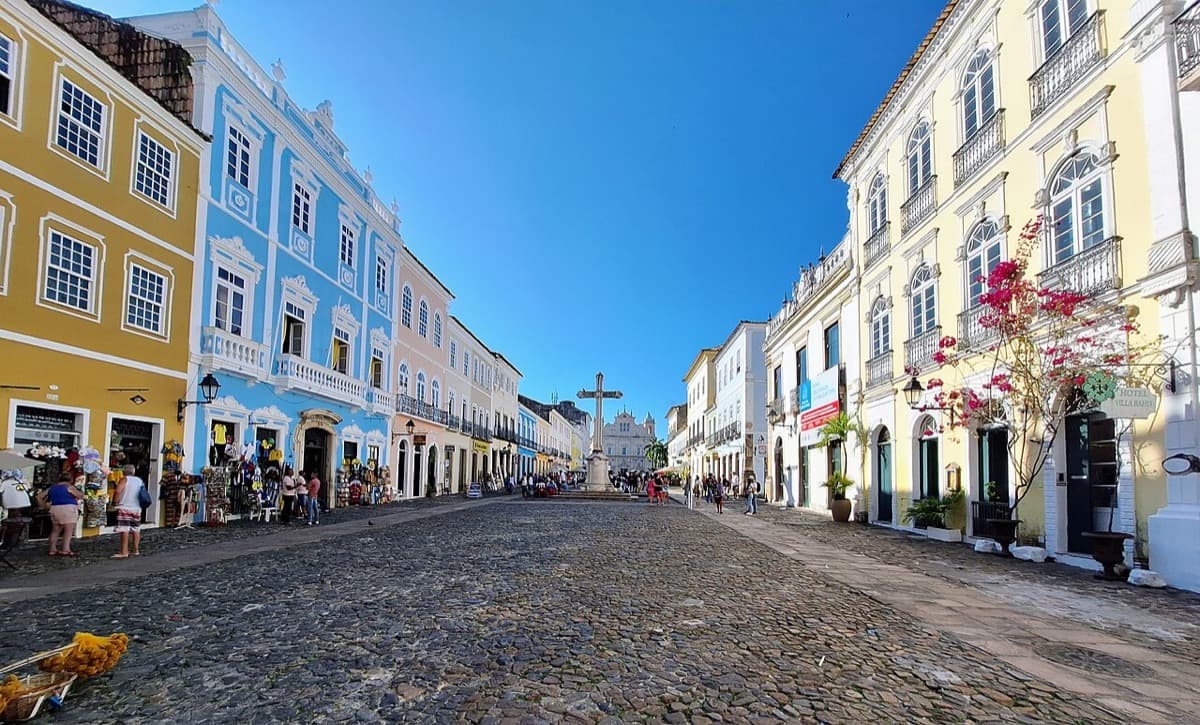
Cruzeiro de Sao Francisco: The Baianas de Acaraje
A stone wayside cross where women in white lace fry acaraje, a street food that is also a Candomble offering, opens the walk on the everyday sacred.
- 2
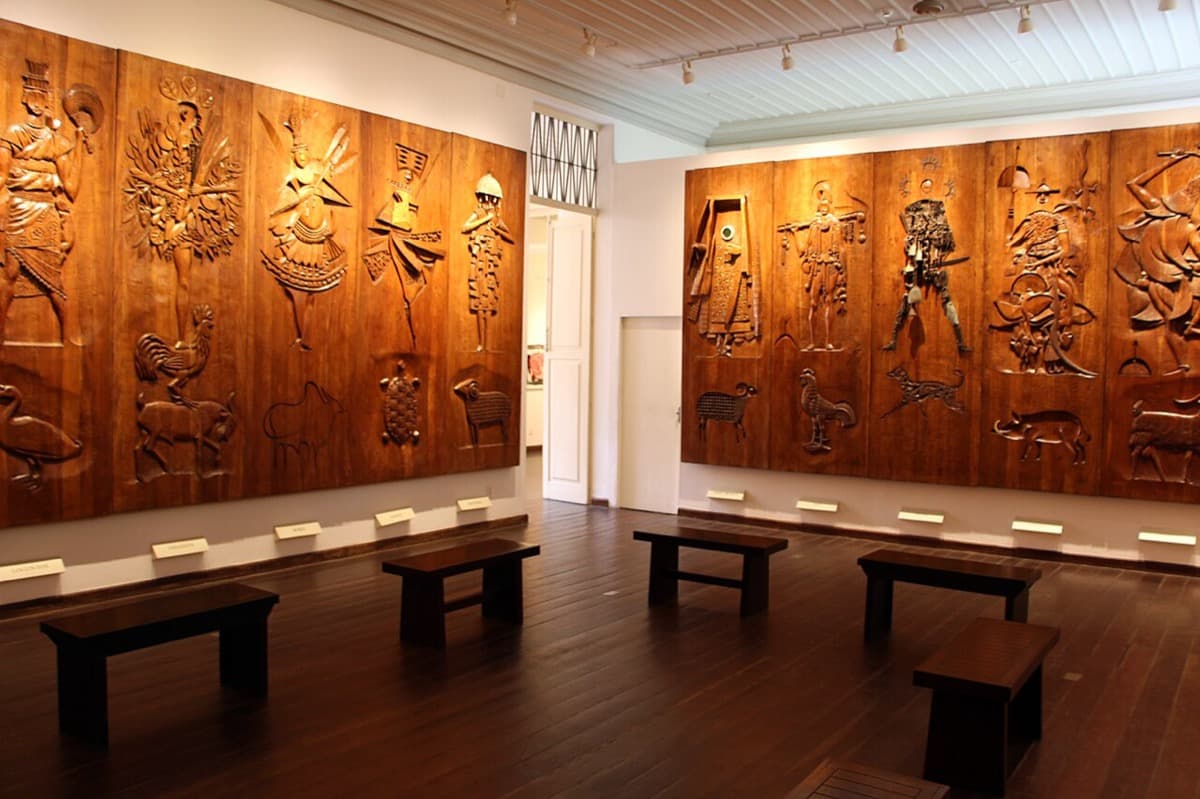
Museu Afro-Brasileiro: Carybe's Orixas
Inside a former medical faculty on the Terreiro de Jesus, twenty-seven carved cedar panels of the orixas turn a walk through the sacred into a walk through art.
- 3
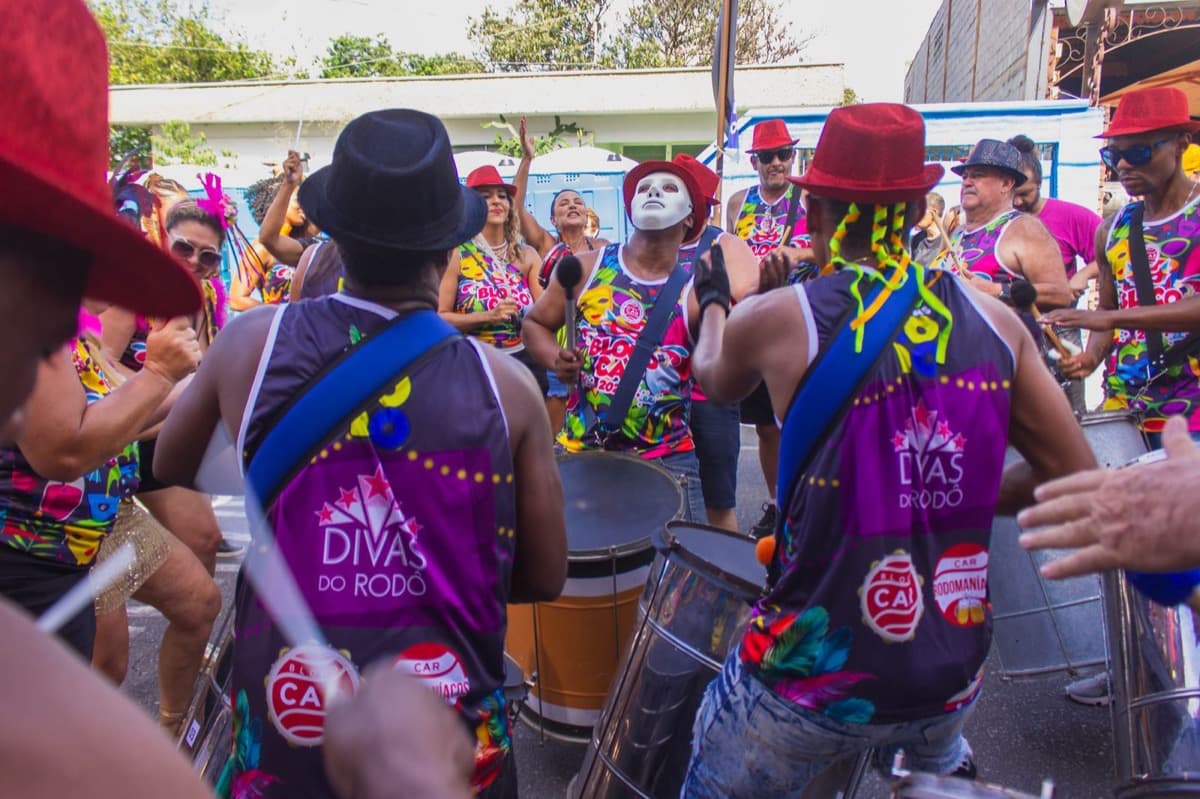
Casa do Olodum: The Drums That Traveled
Home of the bloco afro Olodum, birthplace of samba-reggae, where Pelourinho drums became a message heard in a hundred and forty countries.
- 4
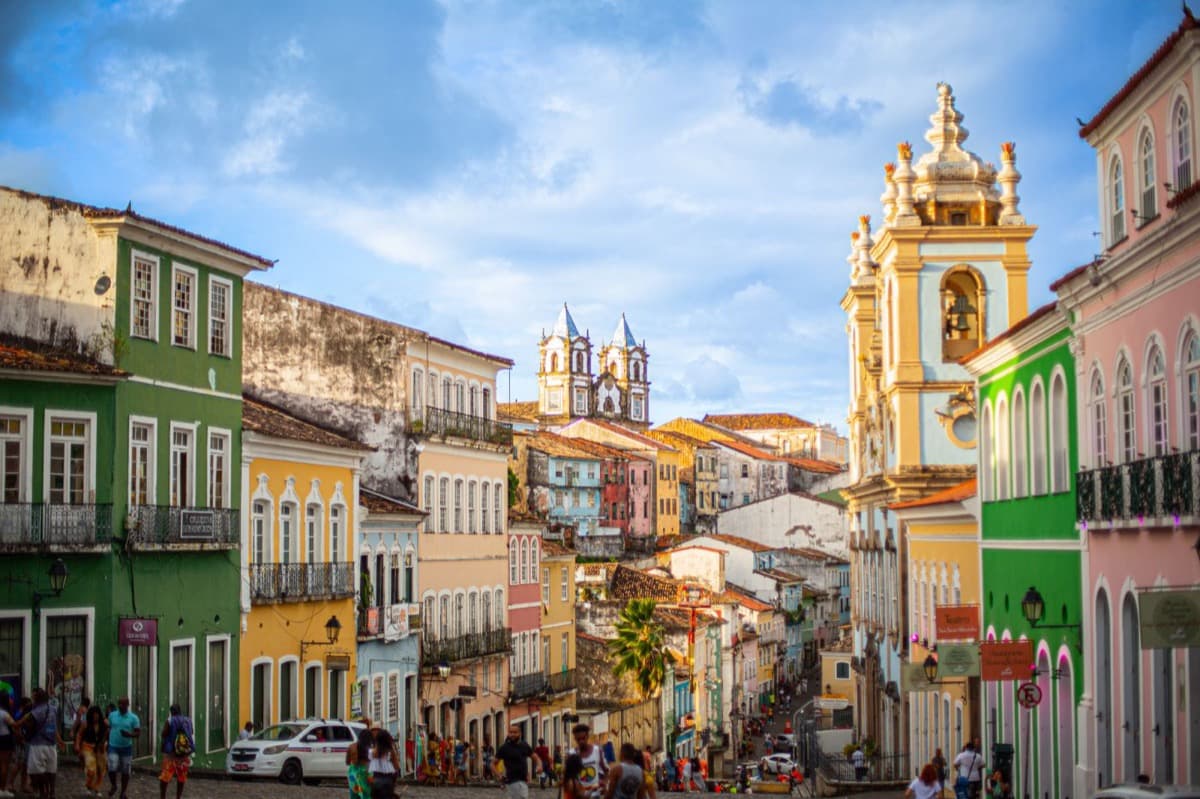
Largo do Pelourinho: The Whipping Post
The sloping square of pastel townhouses that gave the district its name holds both the wound of slavery and the reckoning of a restoration that displaced its Black residents.
- 5
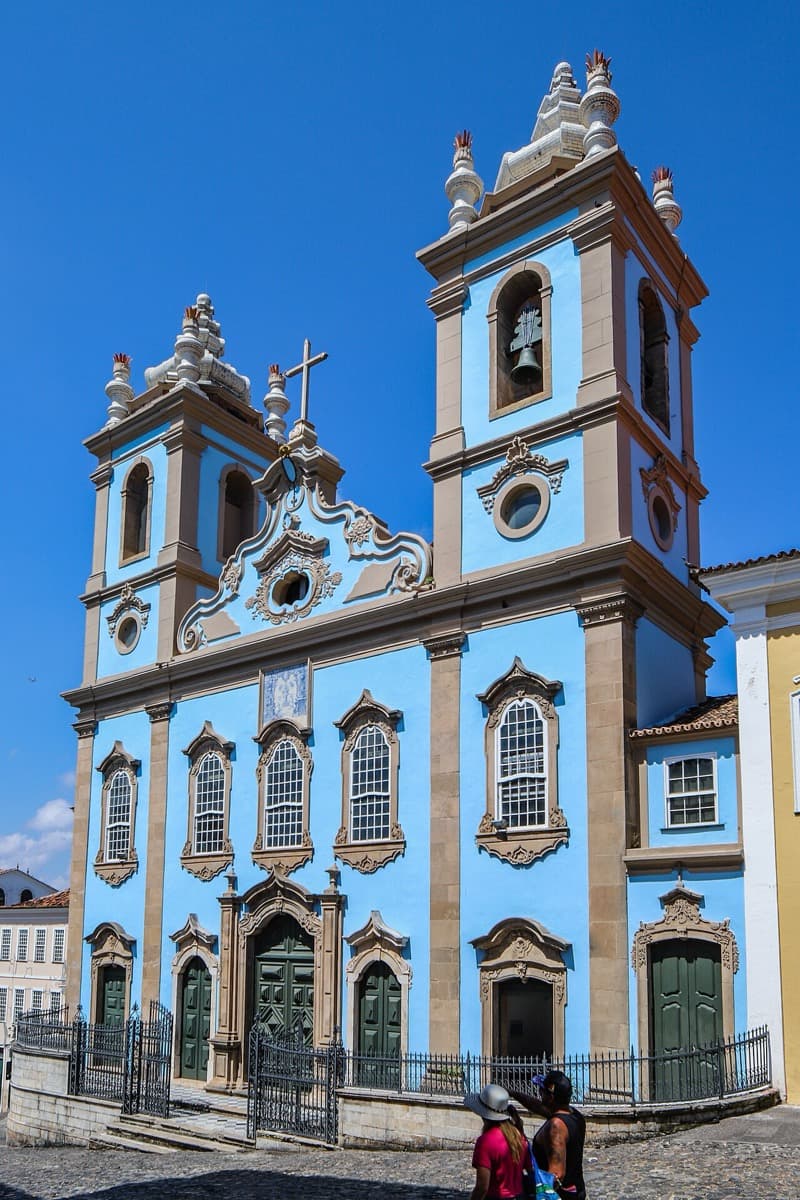
Igreja de Nossa Senhora do Rosario dos Pretos: Faith as Defiance
A blue-and-white baroque church built over roughly a century by a brotherhood of enslaved and free Black people barred from the white congregations.
- 6
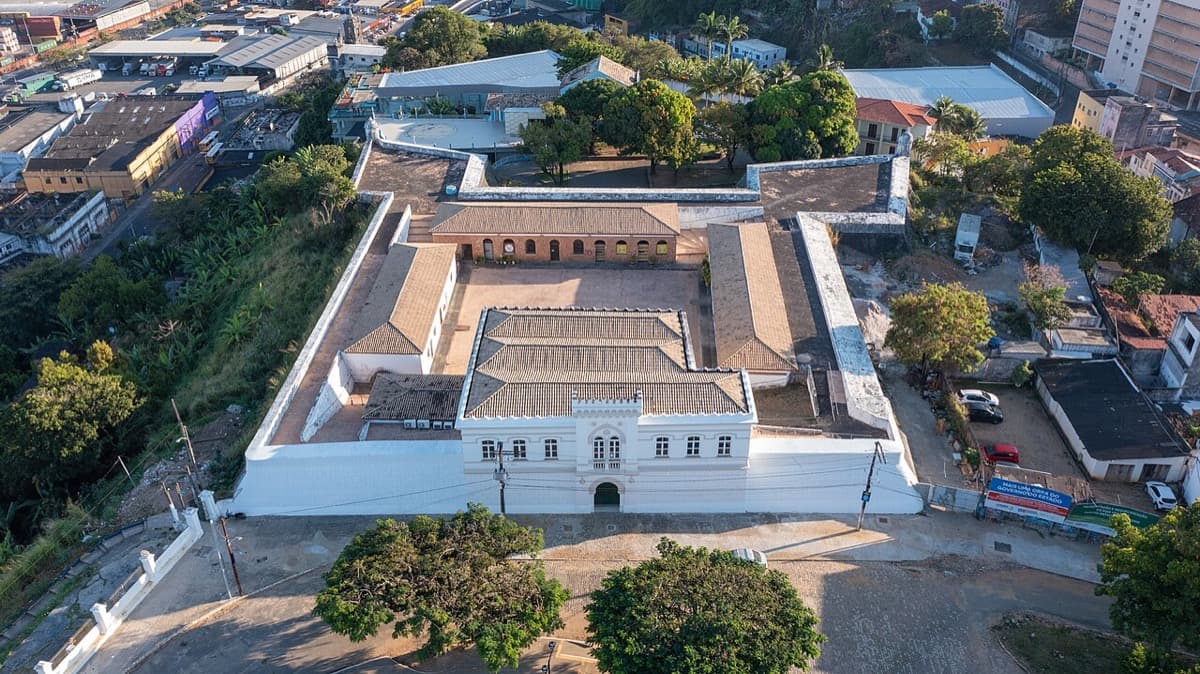
Forte da Capoeira: Resistance Made Heritage
An eighteenth-century hilltop fort that once jailed rebels now houses capoeira schools, closing the walk on a practice UNESCO calls a memory of resistance.
Details
Best Time to Visit
Late morning through mid-afternoon on a weekday, when the museums and churches are open and the baianas are frying acaraje. Tuesdays add the African-rooted mass at the Rosario dos Pretos, and afternoons are your best chance to catch Olodum drums in rehearsal. Start earlier in the day to beat the strongest heat on the climb to the fort.
Pro Tips
- •Carry small cash in coins and low notes so you can buy an acaraje from a baiana and leave donations at the churches without needing change.
- •Go slowly and pause between stops. The Pelourinho rewards lingering, and the walk is short enough to take at your own pace.
- •Save the climb to the Forte da Capoeira for when you have energy, since it is the one longer, uphill leg of the route.
- •Ask before photographing baianas, worshippers, or capoeira players. These are living traditions and people, not a backdrop.
- •If you want to see Olodum drums, check rehearsal and show times at the Casa do Olodum, as the courtyard sound depends on the day.
- •Bring water and pace your sun exposure, since much of the walk is on open, shadeless cobbled squares.
Safety & Precautions
- •Salvador sits in the tropics and the midday sun is intense. Wear sunscreen and a hat, drink water, and take shade breaks, especially before the hilltop climb.
- •Sudden heavy rain is common, particularly from autumn into winter, and the cobbles turn slippery fast. Pack a light rain layer and wear shoes with good grip.
- •The churches, the museum's orixas, and any Candomble practice you encounter are sacred to living faith. Enter quietly, dress modestly, and do not touch or photograph rituals without clear permission.
- •The historic center is busy and welcoming but has petty theft like any tourist district. Keep valuables out of sight, stay aware on quiet side streets, and favor the main squares after dark.
Travel advisory: Exercise Increased Caution (Level 2).
Gallery
Related Reading
Go deeper on what you'll see, hear, and walk through.
Overview
Best Self-Guided Walking Tours in Salvador (2026)
3 min
Overview
One Day in Salvador: A Walkable Old-City and Bay Itinerary (2026)
5 min
Overview
Salvador Travel Guide: How Many Days, Getting Around, When to Go, Is It Safe (2026)
6 min
Thematic
What to Eat in Salvador: A Bahian Food Guide (2026)
5 min
Deep dive
Pelourinho Means Whipping Post: The Truth Behind Salvador's Prettiest Square
6 min
Deep dive
The Church the Enslaved Built: Nossa Senhora do Rosario dos Pretos in Salvador
5 min
Read the walk
The full story of The African City: Salvador of the Orixas, in words. Prefer to listen? Play it narrated, from home or on location.
Introduction
Salvador, Brazil, is often called the most African city outside Africa, and in the old streets of the Pelourinho you can hear why. Bahia was a principal landfall of the transatlantic slave trade to Brazil, the country that received more enslaved Africans than any other in the Americas. Here the faith, food, music, and martial art carried across the ocean did more than survive captivity. They became the identity of the city itself. This walk has six stops and covers roughly two and a half kilometres over about ninety minutes to two hours, though it is yours to take at your own pace, and every stop is short enough to skip if you wish. You will start at a stone wayside cross where women in white lace fry a black-eyed-pea fritter that is also a sacred offering. You will meet twenty-seven carved orixas in a museum, stand where the drums of Olodum reached a hundred and forty countries, and reach the sloping square whose name means whipping post. That square holds beauty and pain in the same cobblestones, so the walk does not sand the history smooth. From there you climb to a blue-and-white church that Black Bahians built with their own night-time labor, and finish at a hilltop fort where a practice once banned by law is now on the UNESCO list. Bring water, wear shoes that grip on steep cobbles, and move slowly. When you arrive at the Cruzeiro de Sao Francisco, in the Largo do Cruzeiro de Sao Francisco, begin with stop one.
1. Cruzeiro de Sao Francisco: The Baianas de Acaraje
Stand at the stone cross in this open square, with the ornate Sao Francisco churches at your back, and let the walk begin with your nose. Somewhere near you a woman in white lace, wearing beaded necklaces and a wide skirt, is frying small fritters in a pan of orange oil. That is a baiana de acaraje, and what she is making is the thesis of this whole tour in miniature. Acaraje is a fritter of black-eyed peas, ground and shaped by hand, then fried in dende, the palm oil that gives it that deep orange color and its unmistakable smell. It came here from West Africa, from the region around the Gulf of Benin, carried in the memory of enslaved people who had no possessions but their knowledge. In Candomble, the Afro-Bahian religion, acaraje is not only food. It is prepared as an offering to the orixas, the deities of that faith. So when you buy one on the street, you are eating something that is at once a snack and a sacrament. This is how African sacred knowledge became the ordinary texture of Salvador, sold on a corner, wrapped in paper, dressed with dried shrimp and a fiery pepper sauce. The women who make it are guardians of a living tradition. IPHAN, Brazil's heritage institute, registered the office of the baiana de acaraje as national intangible cultural heritage on January fourteenth, two thousand five, writing it into the Book of Knowledge. There is no single stall you must find here. The tradition is the landmark. Notice the white of the lace, the sizzle of the dende, and carry that smell with you as you go.
2. Museu Afro-Brasileiro: Carybe's Orixas
On the edge of the Terreiro de Jesus, ringed by colonial churches, stands a stately building that once housed the Faculdade de Medicina da Bahia. On its ground floor now lives the Museu Afro-Brasileiro, run by the Federal University of Bahia, which opened its doors on January seventh, nineteen eighty-two. Step inside and the walk moves from the street into the sacred, because the museum's most famous treasure is a set of twenty-seven carved panels of the orixas, the deities of Bahian Candomble. They were made by the artist known as Carybe, born Hector Julio Paride Bernabo, an Argentine who became Brazilian and who was himself initiated into Candomble. He carved each orixa in cedar, in bold relief with inlaid details, giving every deity its own attributes and liturgical symbols. The panels were originally commissioned for the Banco da Bahia and are now shown here together, a whole pantheon standing in one hall. Move slowly among them. This is not folklore and these are not decorations. The orixas are living deities of a religion still practiced across this city, in houses of worship called terreiros, and Carybe carved them as an insider paying homage, not an outsider illustrating a myth. The museum around the panels documents the African civilizations that shaped Bahia, the Yoruba, the Fon, the Bantu peoples, and the faith they carried through the middle passage. Where stop one gave you the smell of the sacred in a pan of oil, this room gives you its face in wood. The square outside is free to wander. The museum asks a modest admission, and the twenty-seven orixas waiting within are worth the pause.
3. Casa do Olodum: The Drums That Traveled
Somewhere near this narrow street, on many an afternoon, you will feel a rhythm before you see it, a wall of drums that seems to move the cobbles under your feet. This is the home of Olodum, and few sounds tell the story of the modern Pelourinho better. Olodum is a bloco afro,…
Full narration for this stop unlocks with the tour.
4. Largo do Pelourinho: The Whipping Post
You have reached the heart of the walk, and it is the hardest part to stand in. This sloping, triangular square, lined with tall pastel townhouses, is the Largo do Pelourinho, and the word Pelourinho means pillory, or whipping post. The district takes its name from the public…
Full narration for this stop unlocks with the tour.
5. Igreja de Nossa Senhora do Rosario dos Pretos: Faith as Defiance
At the lower end of the square, near the old gate once called the Portas do Carmo, stands a church whose story is the thesis of this walk at its most moving. This is the Igreja de Nossa Senhora do Rosario dos Pretos, and it was built by Black hands for Black worshippers who were…
Full narration for this stop unlocks with the tour.
6. Forte da Capoeira: Resistance Made Heritage
The last stop asks for one longer climb, up from the Pelourinho to a hilltop fort at the north end of the old city. This is the Forte de Santo Antonio Alem do Carmo, an eighteenth-century fortress that has worn many faces. Once it guarded the city. Later it became a place of…
Full narration for this stop unlocks with the tour.