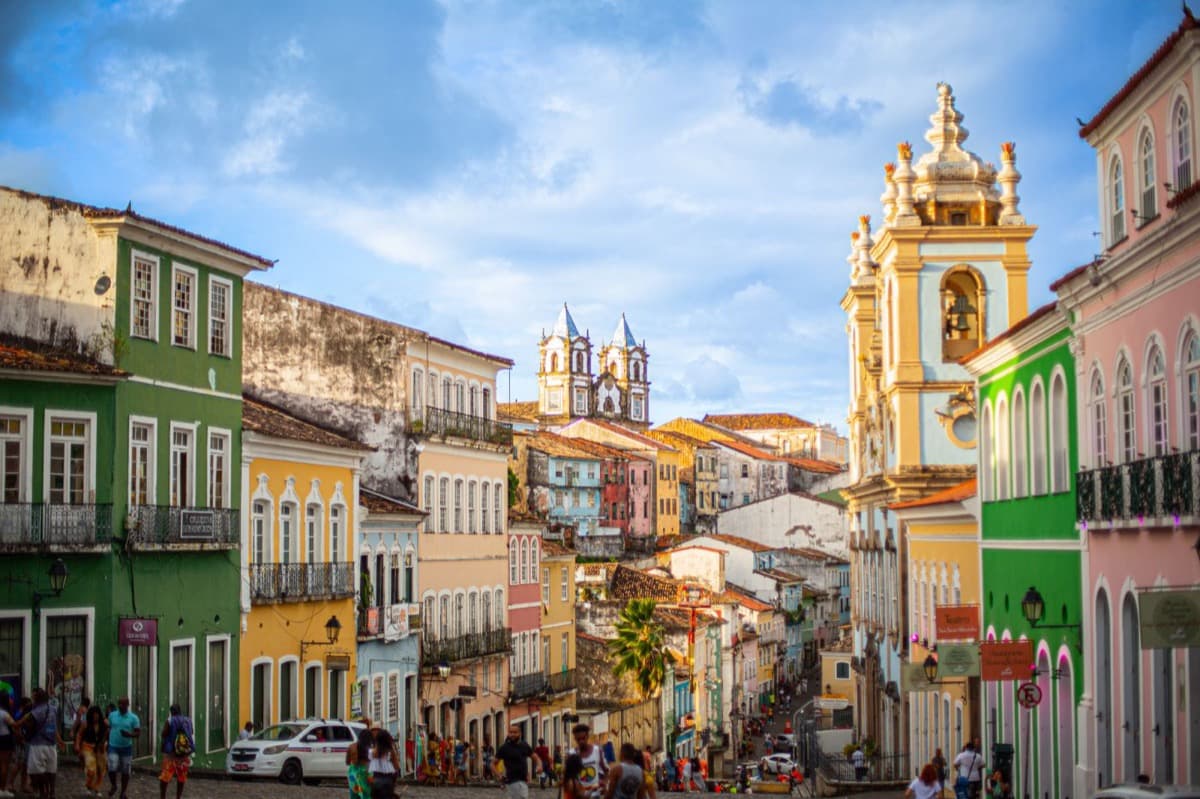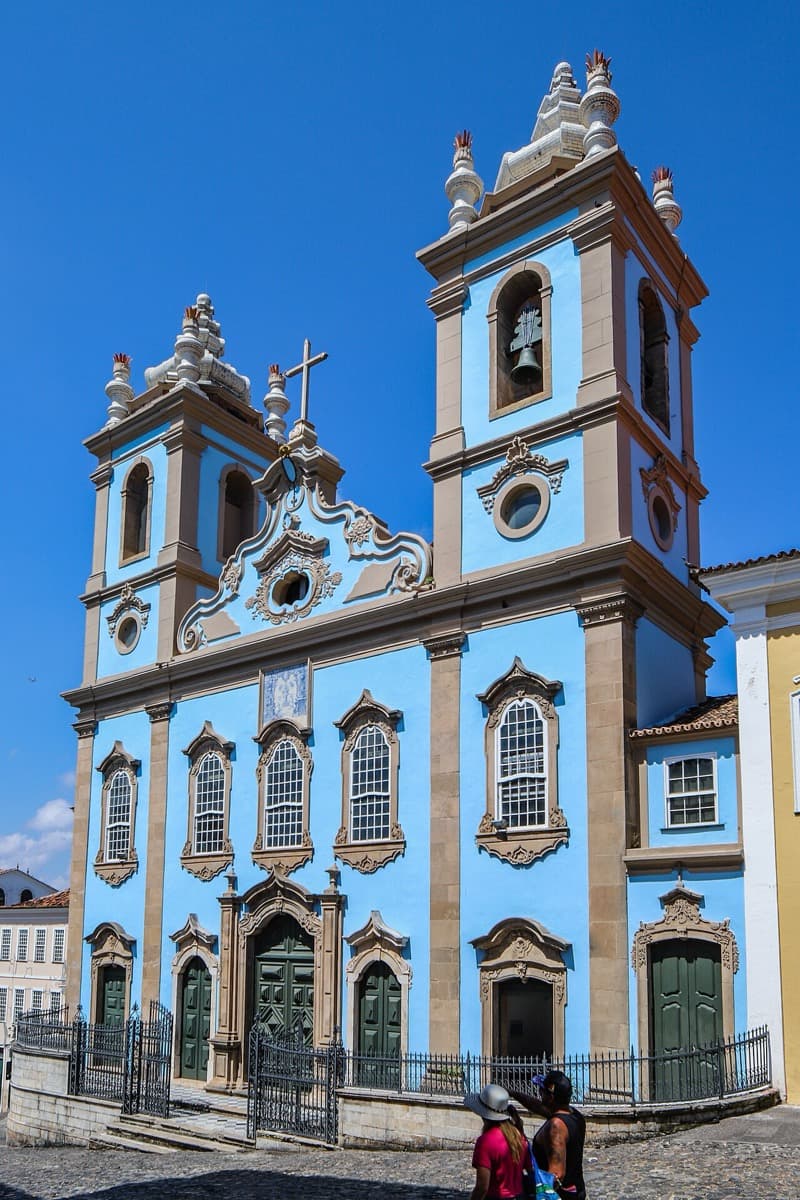
In the middle of the Pelourinho, on the very square whose name means whipping post, stands a church that the enslaved built for themselves. The Church of Our Lady of the Rosary of the Blacks was not given to the Black people of colonial Salvador by the church that ruled them. They were shut out of the colony's grand churches, so they organized, raised the money, and constructed their own, and it took them nearly a hundred years. Read this building as an act of self-assertion, of a people claiming a place to worship on their own terms, and it becomes the single most important site in Afro-Brazilian Salvador.
A brotherhood of the excluded
The colonial church operated by exclusion. Enslaved and free Black people were kept to the margins of the churches built for the white colonial elite, often confined to separate services or barred from full membership. Their response, across Portuguese Brazil, was to form their own lay brotherhoods, mutual-aid confraternities organized around a patron saint, and in Salvador the Brotherhood of Our Lady of the Rosary was among the first Black brotherhoods in the country. Since the early seventeenth century its members had venerated Our Lady of the Rosary at an altar inside the cathedral. But an altar in someone else's church was not the same as a church of one's own.
The brotherhood received official confirmation in 1685, and in 1704 it obtained permission from the archbishop, Sebastiao Monteiro de Vide, to build its own church at the Portas do Carmo, the site that became the Largo do Pelourinho. That permission was the beginning of an extraordinary act of collective will.
Nearly a century to build
Hear a stop from this walk
Largo do Pelourinho: The Whipping Post
The construction took almost a hundred years. The reason is the whole point of the building. The people raising it were enslaved, and they could only work on it in the hours their labor was not owned by someone else, in their scarce free time, which by long tradition included working on the church at night. A structure that a wealthy parish could have finished in a decade took this congregation close to a century, stone by stone, in stolen hours. The facade was not completed until 1780, under the direction of Caetano Jose da Costa. Every year of that long construction was a statement that a community with almost nothing could still build something enduring and beautiful for itself.
The building that resulted is a genuine baroque church, not a lesser substitute, standing in the triangular square of the Largo do Pelourinho at the heart of the historic center. It sits within a stone's throw of the whipping post that gave the square its name, so that the instrument of punishment and the church of resistance share the same ground. That proximity is not an accident of urban planning. It is the truth of the city made visible.
A living Afro-Brazilian center
The church did not become a museum piece. It remained the spiritual home of the Black community of the Pelourinho, and it is known today as a center of Afro-Brazilian faith, where Catholic worship has long coexisted with the African religious traditions that the same community carried and preserved. Salvador is the heart of Candomble, and this church is one of the places where the layered, syncretic religious life of the city, Catholic saints and African orixas held together, is most openly lived. To stand inside is to be in a space that was built as an act of defiance and is still used as an act of continuity.
Reading it in place
Come to the Rosario dos Pretos knowing what it cost. Look at the baroque facade and remember it took nearly a century because the builders were only free to work on it in the margins of enslaved lives. Notice how close it stands to the whipping post, and let that closeness do its work. If you can attend or observe a service, you will find a congregation that has kept this church at the center of its life for three hundred years. Dress modestly and keep your voice low; it remains an active place of worship, not a monument.
The church anchors Roamer's The African City: Salvador of the Orixas, which reads the Afro-Brazilian layer of the city from the drums of Olodum to this church of resistance. For the fuller story of how the first capital and its African soul are one history, see Salvador, first capital and African soul.
Sources
- Wikipedia, Church of Nossa Senhora do Rosario dos Pretos (Salvador): the brotherhood as one of the first Black brotherhoods in Brazil, confirmation of the brotherhood in 1685, permission to build in 1704 from Archbishop Sebastiao Monteiro de Vide at the Portas do Carmo, the construction taking almost 100 years by members of the brotherhood in their free hours, the facade completed in 1780 under Caetano Jose da Costa, and the location in the Largo do Pelourinho within the UNESCO World Heritage historic center.
- Salvador tourism and heritage sources (Salvador da Bahia official, UNESCO): the church built by enslaved people who worked on it in free hours including at night, and its standing as a center of Afro-Brazilian faith in the Pelourinho.
- Roamer tour transcript, The African City (salvador-african-city), fact-audited: the Rosario dos Pretos as faith made an act of defiance.
Brazil eSIM· 10% off with ROAMER10
Ready to experience it?
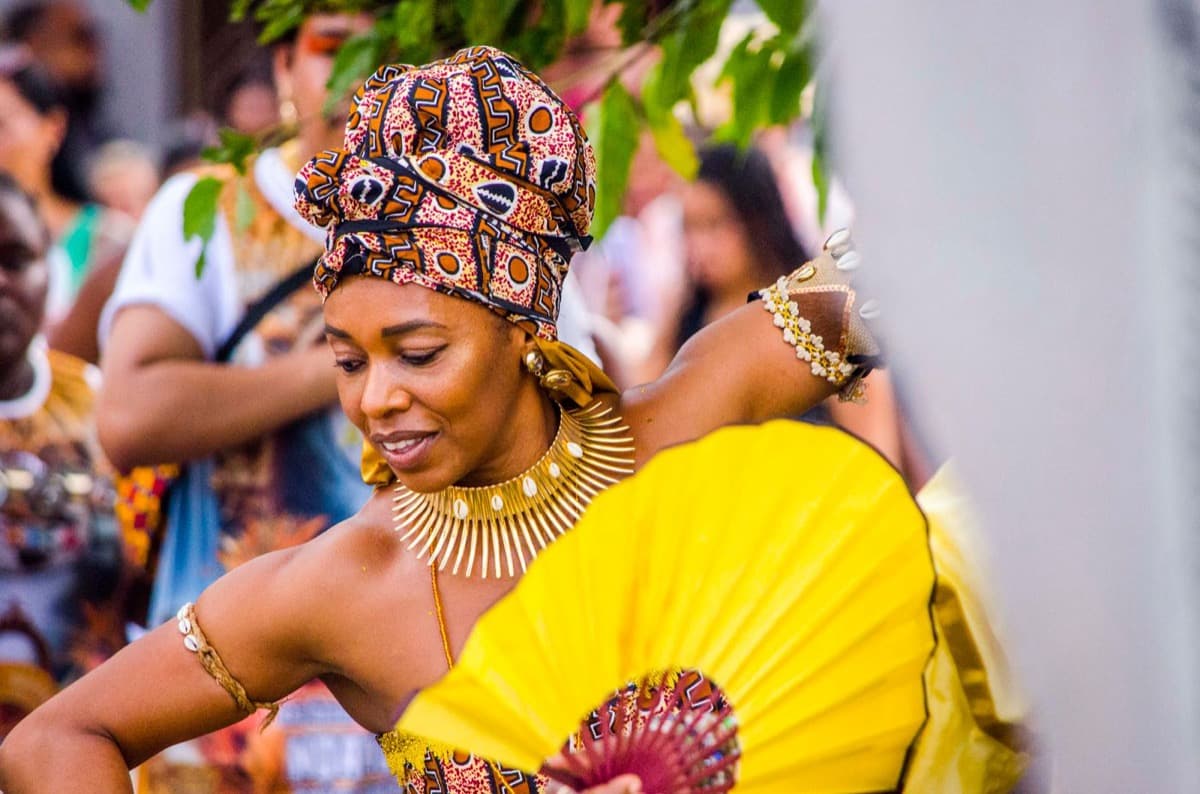
The African City: Salvador of the Orixas
95 min · 2.5 km · moderate
More from Salvador
Explore more at your own pace.
One Day in Salvador: A Walkable Old-City and Bay Itinerary (2026)
Salvador Travel Guide: How Many Days, Getting Around, When to Go, Is It Safe (2026)
Salvador: Brazil's First Capital and Its African Soul
What to Eat in Salvador: A Bahian Food Guide (2026)
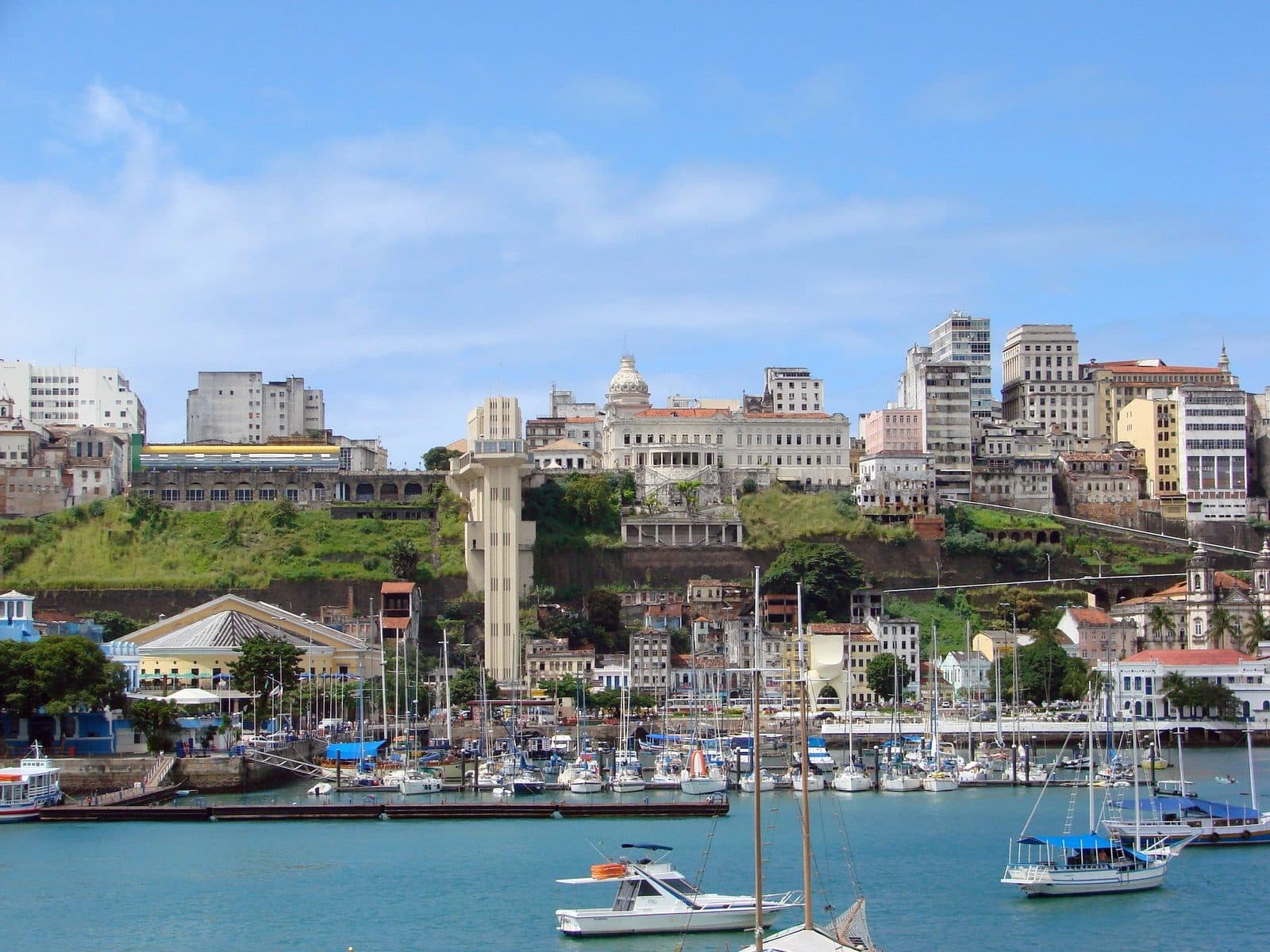
Elevador Lacerda: The Public Elevator That Joins Salvador's Two Cities