Pelourinho: Brazil's First Capital
85 min · 2.4 km · moderate
Salvador is two cities layered into one, and you cannot read it without holding both at once. It was the first capital of Brazil, the seat of Portuguese America for more than two centuries, dense with baroque churches and colonial palaces. It was also the main port of the Atlantic slave trade in the Americas, the place where more enslaved Africans arrived than almost anywhere in the hemisphere. Those two facts are not separate stories. They are the same story, and the city that grew from them is why Salvador feels unlike anywhere else in Brazil.
The capital that ran colonial Brazil
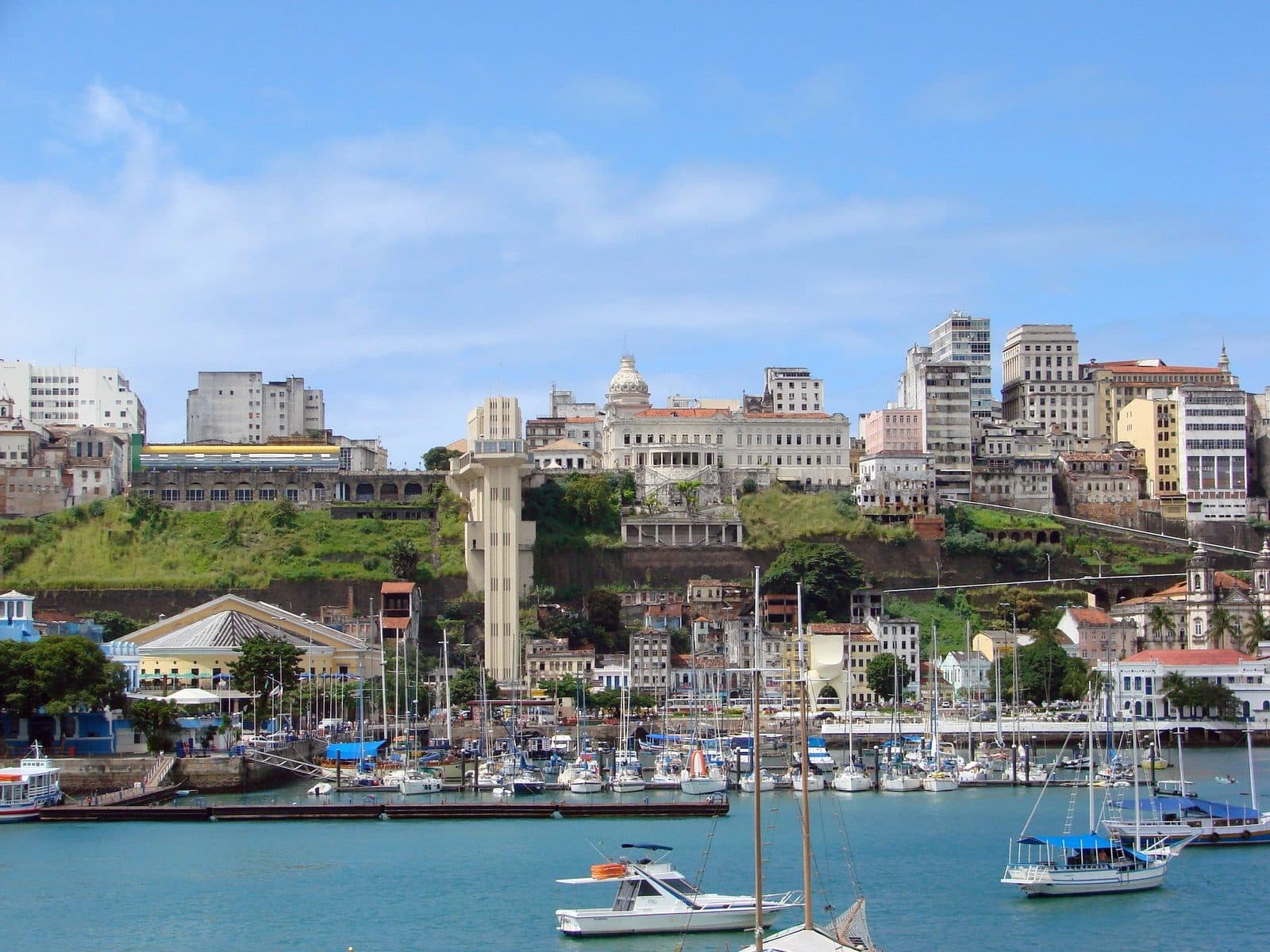
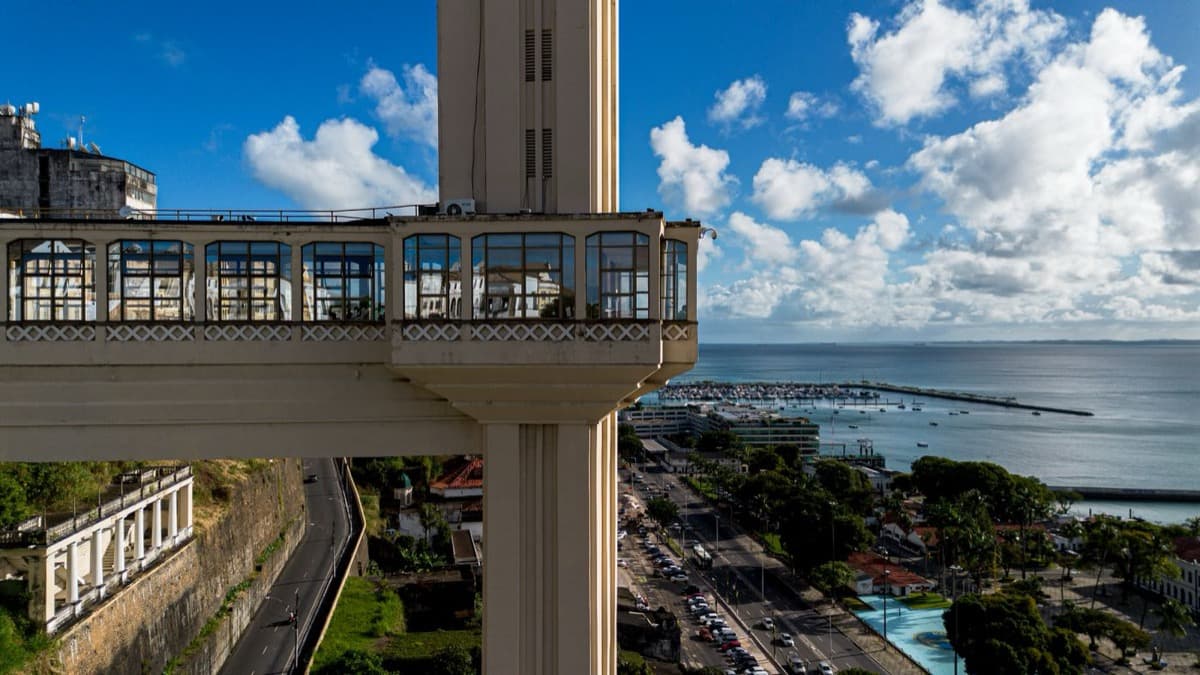
Salvador was founded in 1549 as the capital of the new Portuguese colony, and it held that role for over two hundred years, until the crown moved the capital to Rio de Janeiro in 1763. For those two centuries it was the administrative, religious, and commercial center of Portuguese America, and the wealth of sugar and later gold flowed through it. That is why the historic center holds such an extraordinary density of colonial building: cathedrals, monasteries, and the gilded baroque churches that Roamer's Gold, Sugar, and the Gilded Baroque tour reads one by one. The old city sits high on a bluff above the harbor, the Cidade Alta, connected to the working port of the Cidade Baixa below by the Elevador Lacerda, the great public elevator that has joined the two levels since the nineteenth century.
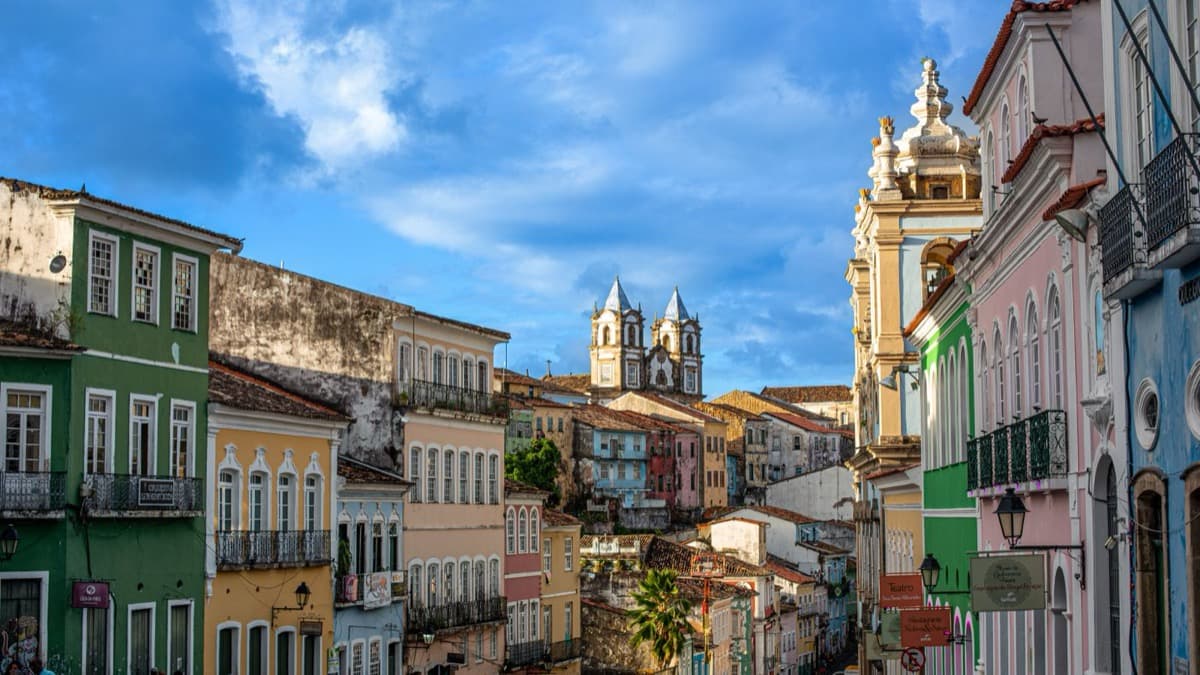
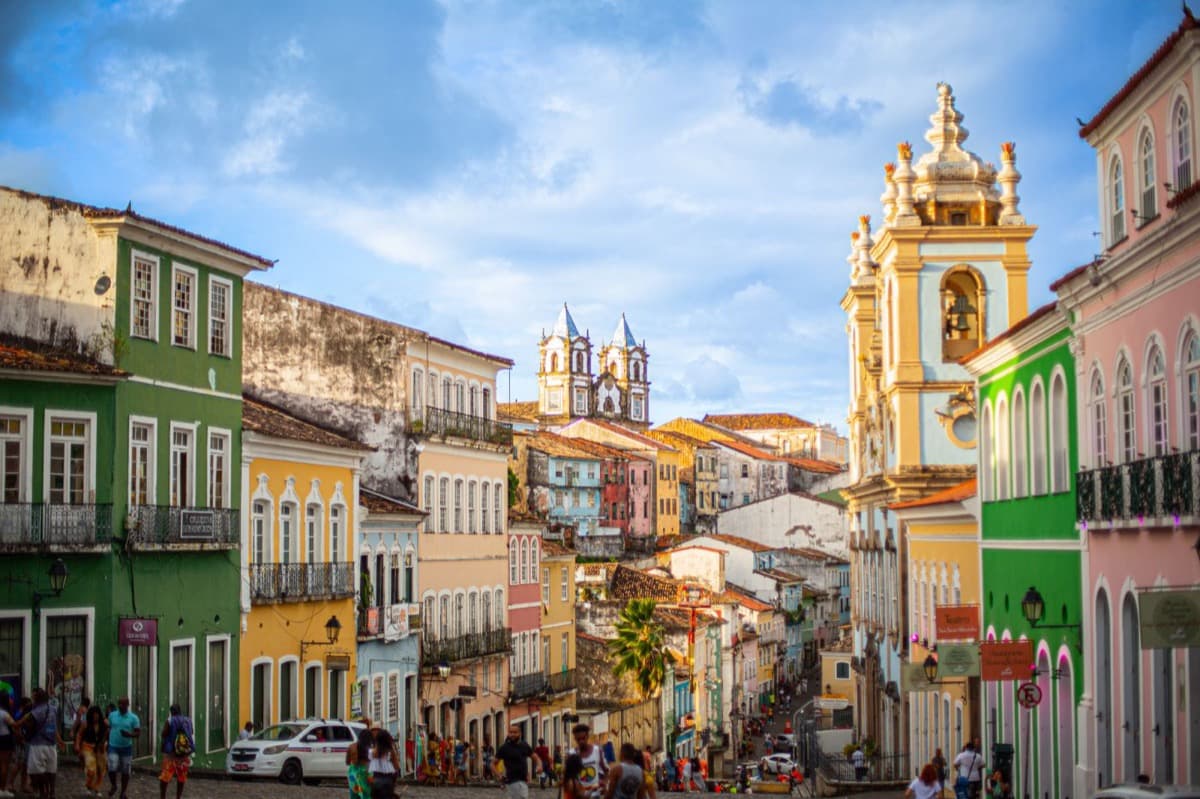
The founding district, Pelourinho, is where the machinery of the capital sat, and Roamer's Pelourinho: Brazil's First Capital reads its founding square, its cliff-edge elevator, and the vanished cathedral of the Praca da Se. But the name Pelourinho itself, meaning whipping post, points straight at the other half of the city's history.
The port of the Atlantic slave trade
Hear a stop from this walk
Praca Municipal: The Founding Square
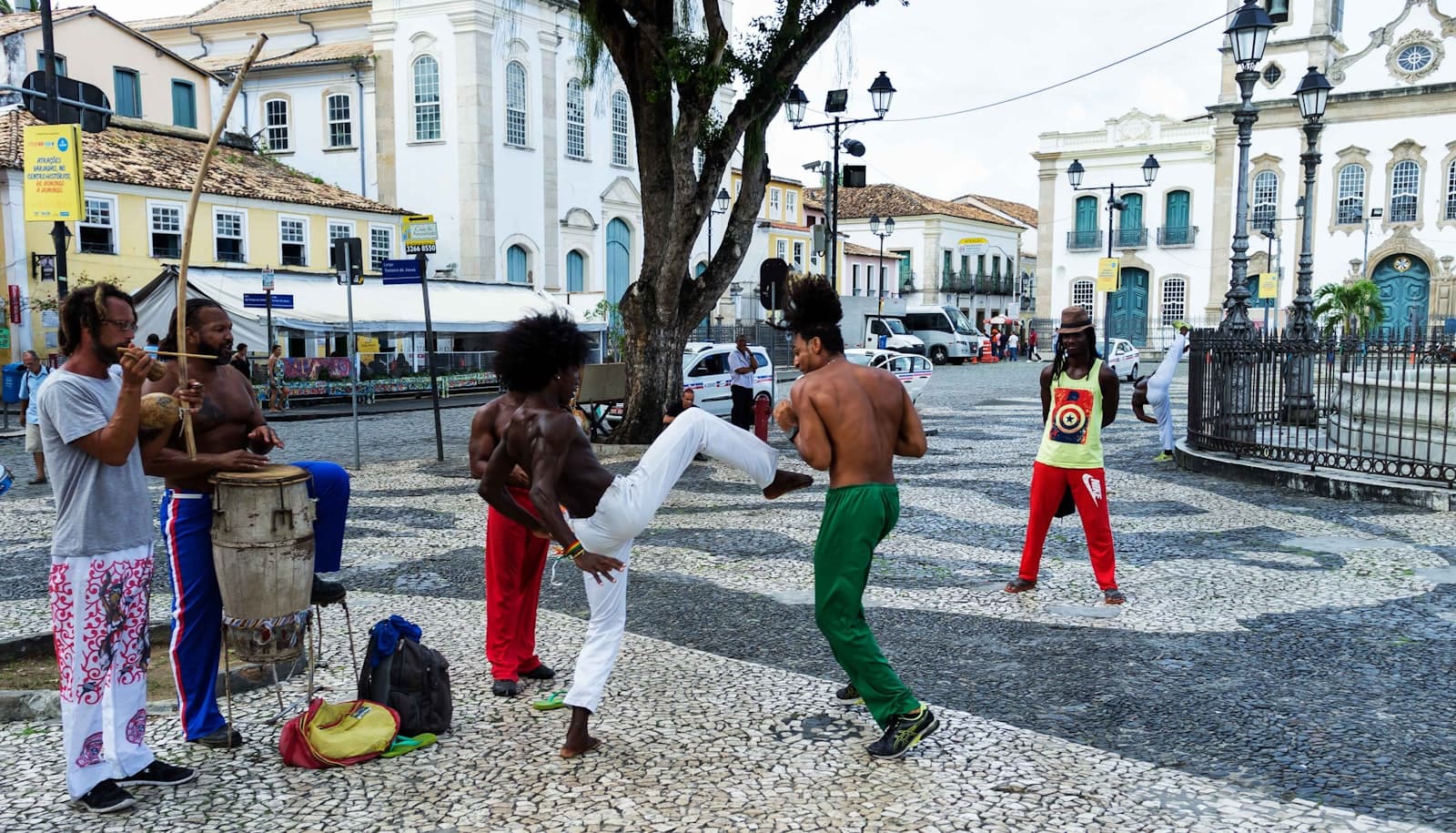
Salvador was the main entry point for enslaved Africans in colonial Brazil, and no city in the country was shaped more deeply by the people who arrived through it. Their descendants did not simply survive here. They built, worshipped, cooked, drummed, and fought their way into the center of the city's identity, so completely that Salvador is often called the most African city outside Africa. The religion of Candomble, the martial art and dance of capoeira, the acaraje sold by the baianas in their white lace, the rhythms that would feed all of Brazilian popular music: these are not folklore added to the city. They are the city.
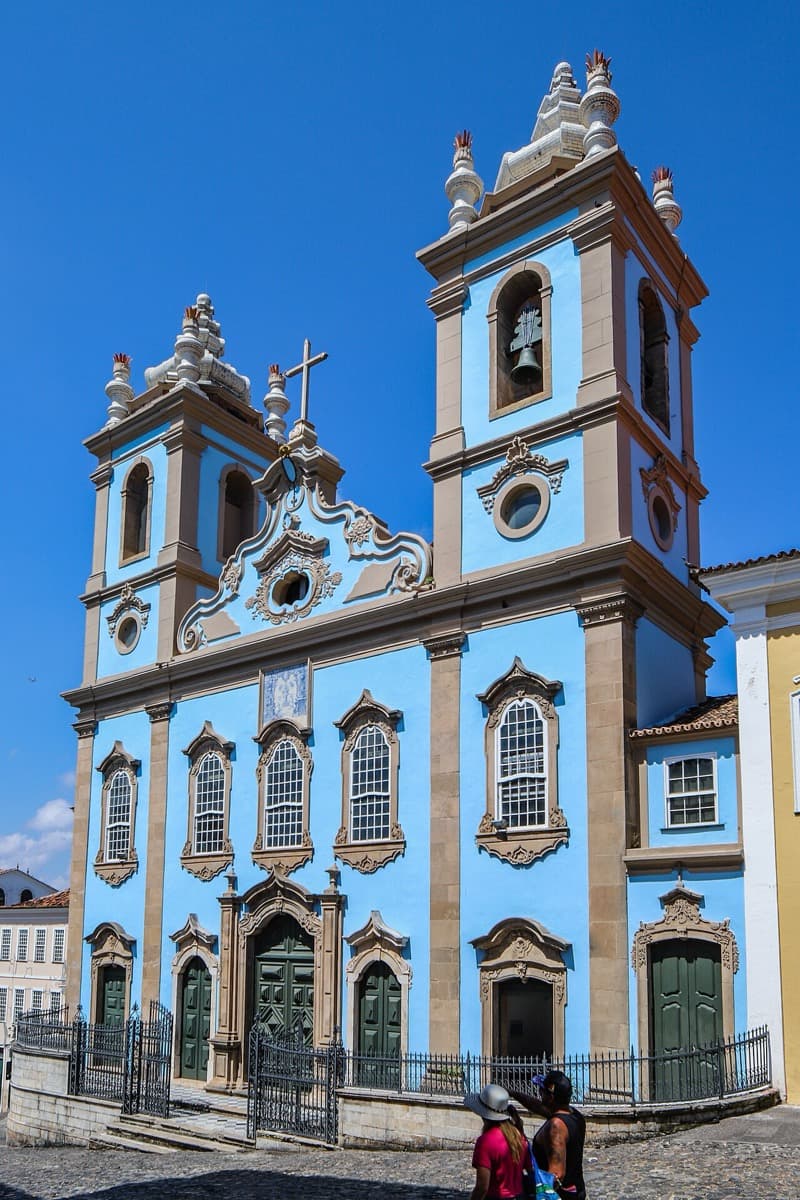
Roamer's The African City: Salvador of the Orixas reads this layer directly, from the drums of Olodum to the Church of Our Lady of the Rosary of the Blacks, the church that an enslaved and free Black brotherhood built for themselves over nearly a century because they were shut out of the churches the colony built for its masters. Faith here was an act of self-assertion, and the buildings prove it.
Why the two histories are one
The reason Salvador is so intense a place is that its beauty and its brutality were made by the same hands. The gold on the baroque altars and the labor that carried the stone up the cliff came from the same system. The Pelourinho's pastel elegance stands on a square named for a whipping post. The city does not hide this. Its most powerful sites, the whipping post at the Largo do Pelourinho and the church the enslaved built in defiance, ask you to see the wealth and the cost together. That honesty is what makes Salvador feel less like a museum and more like a reckoning.
How to see it
Give Salvador its full history. Walk the Pelourinho for the colonial capital, but read the African city on the same ground, because they occupy the same streets. Take the Elevador Lacerda between the high city and the port to feel the geography that shaped everything. And come with time and attention, because the city rewards visitors who are willing to hold beauty and pain in the same view. For the full set of routes, browse Salvador walking tours, and to plan a day, see one day in Salvador.
Sources
- Roamer tour transcripts, Pelourinho (salvador-pelourinho-first-capital), The African City (salvador-african-city), and Gold and the Gilded Baroque (salvador-pelourinho-baroque), fact-audited: Salvador as first capital of colonial Brazil, the Pelourinho founding district, the Cidade Alta and Cidade Baixa geography, and the Afro-Brazilian heritage of the city.
- Wikipedia, Salvador, Bahia: founding in 1549 as the colonial capital and the transfer of the capital to Rio de Janeiro in 1763.
- Wikipedia, Lacerda Elevator and Church of Nossa Senhora do Rosario dos Pretos (Salvador): the public elevator joining the upper and lower cities, and the brotherhood church built by enslaved and free Black people.
Frequently asked questions
- Was Salvador the first capital of Brazil?
- Yes. Salvador, founded in 1549, was the capital of colonial Brazil for over two centuries, until the capital was moved to Rio de Janeiro in 1763. That long run as the seat of Portuguese America is why the city holds Brazil's densest concentration of colonial churches, palaces, and civic buildings, most of them in the historic Pelourinho district.
- Why is Salvador called the most African city in Brazil?
- Salvador was the main port of entry for enslaved Africans in colonial Brazil, and their descendants shaped the city's religion, food, music, and daily life more visibly than anywhere else in the country. Candomble, capoeira, the cuisine of the baianas, and the rhythms that fed Brazilian music all have deep roots here, which is why Salvador is often described as the heart of Afro-Brazilian culture.
- Is the Pelourinho worth visiting?
- Yes. The Pelourinho is the colonial heart of Salvador, a UNESCO World Heritage historic center of pastel houses, baroque churches, and steep cobbled squares. Its name comes from the whipping post that once stood there, so it carries a painful history alongside its beauty, and it is best understood on foot with that full story in mind.
Brazil eSIM· 10% off with ROAMER10
Ready to experience it?
Pelourinho: Brazil's First Capital
85 min · 2.4 km · moderate
More from Salvador
Explore more at your own pace.
One Day in Salvador: A Walkable Old-City and Bay Itinerary (2026)
Salvador Travel Guide: How Many Days, Getting Around, When to Go, Is It Safe (2026)
What to Eat in Salvador: A Bahian Food Guide (2026)
Elevador Lacerda: The Public Elevator That Joins Salvador's Two Cities
Pelourinho Means Whipping Post: The Truth Behind Salvador's Prettiest Square