Imperial Rio: The Colonial Centro
90 min · 2.2 km · moderate
Yes, you can see the essential Rio in a day. Here is the route.
Rio is really two cities stitched together: a dense, walkable old town of imperial squares, belle epoque boulevards, and bohemian hills, and a pair of world-famous viewpoints, Christ the Redeemer and Sugarloaf, that hang over the bay. A single day cannot do all of it, but it can pair the best of both. Walk the old city in the cool of the morning and midday, take the train and the cable car to the two great lookouts in the afternoon, and end on a beach at sunset. This itinerary routes those blocks in order, and names the self-guided Rio walking tour that anchors each on-foot stretch so the history walks with you.
A note on pace and heat before you start. Rio summers (December to March) are hot and humid, often well above 30C, so front-load the walking into the cooler morning and use the afternoon for the breezy heights. Wear real shoes, carry water and sun protection, and hop the longer transfers by Uber or metro rather than on foot.
Morning: the imperial Centro
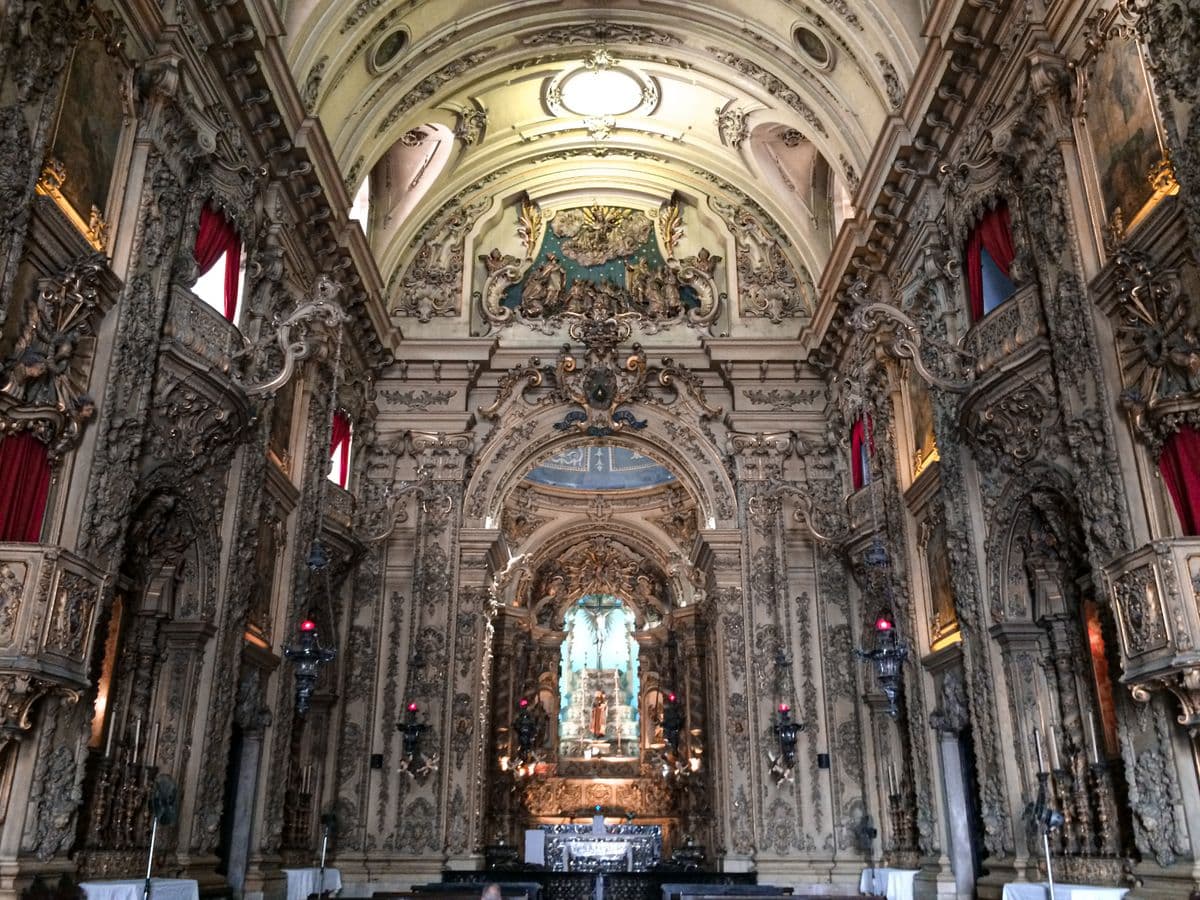
Start early in the Centro, the old colonial and imperial heart of the city, before the heat and the crowds build. This is the Rio that most day trips skip entirely, and it is the layer of history the beaches do not tell: the palace square where a Portuguese court once ruled an empire from the Americas, a colonial coronation chapel, and the plain hilltop wall of the Mosteiro de Sao Bento hiding one of Brazil's most heavily gilded baroque interiors behind it.
Walk this block with the Imperial Rio: The Colonial Centro self-guided audio tour, which reads the port as what it improbably once was: not a colony reporting to Europe, but for one stretch the seat of Europe itself in the Americas. For the standout stop, the companion piece on the Sao Bento gilded interior is a good primer to read before you go in.
Late morning: Lapa, Cinelandia, and the Selaron steps
Hear a stop from this walk
Mosteiro de Sao Bento: The Gilded Root
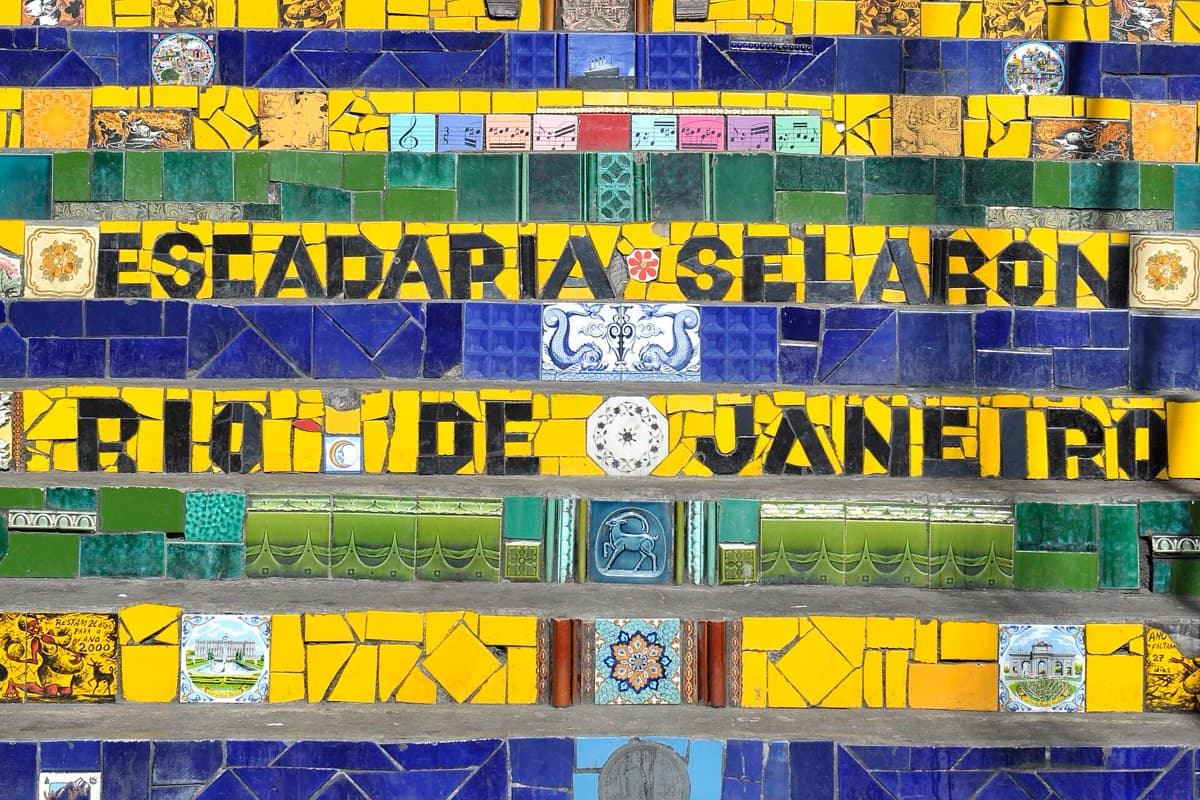
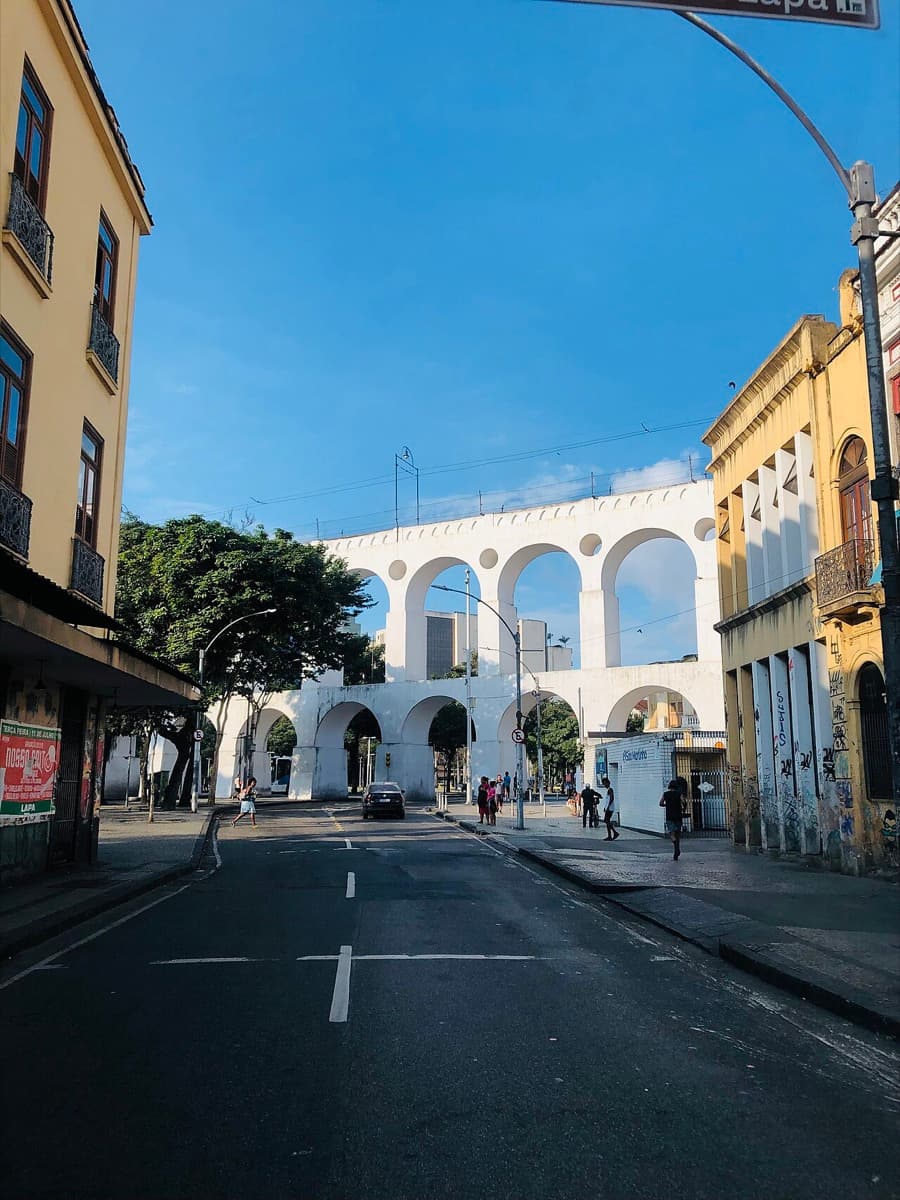
From the Centro, continue south into Cinelandia and Lapa, where Rio tore down its colonial downtown a century ago to build a Parisian dream. Here stand the opera house, the national library, and the fine-arts palace around a grand square, and beyond them the great white Arcos da Lapa, the eighteenth-century aqueduct arches that became the symbol of Rio's nightlife district. A block away, climb the Escadaria Selaron, the 215 mosaic-tiled steps that a Chilean immigrant, Jorge Selaron, spent 23 years covering by hand in ceramic from around the world.
Walk it with the Lapa and Cinelandia: Belle Epoque Rio tour, and read the Escadaria Selaron companion piece for the full story of the man and his staircase. This is also a natural spot to stop for a first proper meal. See what to eat in Rio for what to order at a Lapa botequim.
Midday: Santa Teresa, the bohemian hill
The Selaron steps deliver you toward Santa Teresa, the bohemian hilltop above Lapa, reached by the rattling yellow tram (the bondinho) that crosses the aqueduct on the arches you just saw from below. Up here, faded belle epoque mansions became artists' studios, viewpoints, and ruins. The roofless Parque das Ruinas, a mansion deliberately kept as a ruin, is now a free cultural centre with one of the best views over the bay.
The Santa Teresa: The Bohemian Hill tour reads a neighbourhood that quietly chose art over grandeur, and the Parque das Ruinas companion piece fills in the story of the ruin kept on purpose. Lunch is easy here: Santa Teresa's lanes are full of botequins and small kitchens.
Afternoon: Christ the Redeemer and Sugarloaf
Now go up. Take an Uber or the metro-plus-shuttle to Cosme Velho and ride the Corcovado cog train twenty minutes up through the Tijuca rainforest to Christ the Redeemer, the 38-metre statue that watches over the whole city. Book this train in advance; it sells out two to three days ahead in peak months, and the light and haze are kindest before 8:30 or after 3:30.
From Corcovado, cross the city to Urca for the Sugarloaf (Pao de Acucar) cable car, which climbs in two glass-walled stages over Guanabara Bay. Time the second stage for late afternoon so you reach the summit as the sun drops and the city lights come on. These two lookouts are the payoff for a morning spent at street level.
Evening: a beach at sunset
End where Rio ends its own days, on the sand. Walk the curve of Copacabana or the calmer Ipanema as the sky goes pink, buy an agua de coco from a beach kiosk, and let the day settle. This is the moment the postcards are made of, and it costs nothing.
The one-day route at a glance
| Block | Where | Anchor tour |
|---|---|---|
| Morning | Imperial Centro, Sao Bento monastery | Imperial Rio: The Colonial Centro |
| Late morning | Lapa, Cinelandia, Escadaria Selaron | Lapa and Cinelandia: Belle Epoque Rio |
| Midday | Santa Teresa, Parque das Ruinas, lunch | Santa Teresa: The Bohemian Hill |
| Afternoon | Christ the Redeemer, Sugarloaf cable car | (viewpoints, by train and cable car) |
| Evening | Copacabana or Ipanema at sunset | (beach walk) |
Plan the rest of your trip
One day covers the essentials. For how many days Rio really deserves, how to get around safely, and when to go, read the Rio travel guide. For every route in the city, see the best self-guided walking tours in Rio, or browse all Rio tours. Every tour is free to start: the introduction and first stop play in full, and every later stop plays a short preview before an optional purchase.
Frequently asked questions
- Can you see Rio de Janeiro in one day?
- You cannot see all of Rio in a day, but you can see the essentials well. A focused day pairs the walkable old city (the imperial Centro, belle epoque Lapa, the Selaron steps, and bohemian Santa Teresa) in the cooler morning and midday with the two great viewpoints, Christ the Redeemer and Sugarloaf, in the afternoon, closing on a beach at sunset. Save the beaches proper, the botanical garden, and neighbourhood wandering for a second day.
- What should you not miss on a first day in Rio?
- The unmissable first-day sights are Christ the Redeemer atop Corcovado, the Sugarloaf cable car over Guanabara Bay, the tiled Escadaria Selaron, the arches and samba streets of Lapa, the bohemian hill of Santa Teresa, and a walk on Copacabana or Ipanema at sunset. The imperial Centro adds the colonial and imperial history most day trips skip. Booking the Corcovado train in advance is the one reservation that matters.
- How much walking is a one-day Rio itinerary?
- The on-foot portions (Centro, Lapa, and Santa Teresa) run to roughly 5 to 7 km with some real hills in Santa Teresa. Corcovado and Sugarloaf are reached by train and cable car, not on foot, so the day is walkable without being punishing. Wear real shoes, carry water, and use Uber or the metro to hop between the walking zones and the viewpoints rather than walking the long transfers.
- Do I need to book anything in advance for one day in Rio?
- Book the Corcovado train to Christ the Redeemer ahead of time. It sells out two to three days out in peak months, and morning and late-afternoon slots go first. Sugarloaf cable car tickets are also best bought online. The street-level walks (Centro, Lapa, Selaron, Santa Teresa) need no booking, and the self-guided audio tours that anchor each block are free to start and can be downloaded in advance for offline listening.
Brazil eSIM· 10% off with ROAMER10
Ready to experience it?
Imperial Rio: The Colonial Centro
90 min · 2.2 km · moderate
More from Rio
Explore more at your own pace.

Rio de Janeiro Travel Guide: How Many Days, Getting Around, Safety, When to Go (2026)

The Rio Behind the Beach: Why the Old Centro Is the City's Real Origin

What to Eat in Rio de Janeiro: A Food Guide (2026)
Arcos da Lapa: The Rio Aqueduct That Became a Tram Bridge

Candelaria Church: The Rio Dome That Was Carved in Lisbon and Shipped Across the Ocean