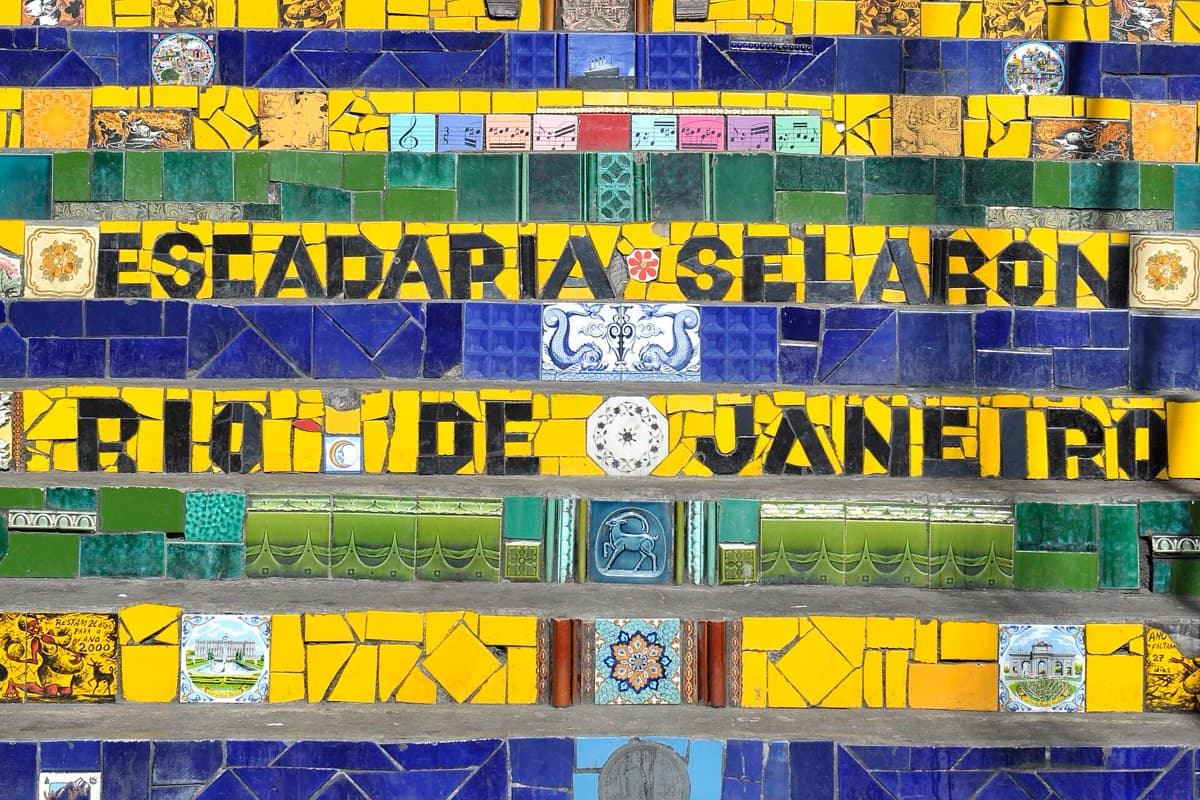
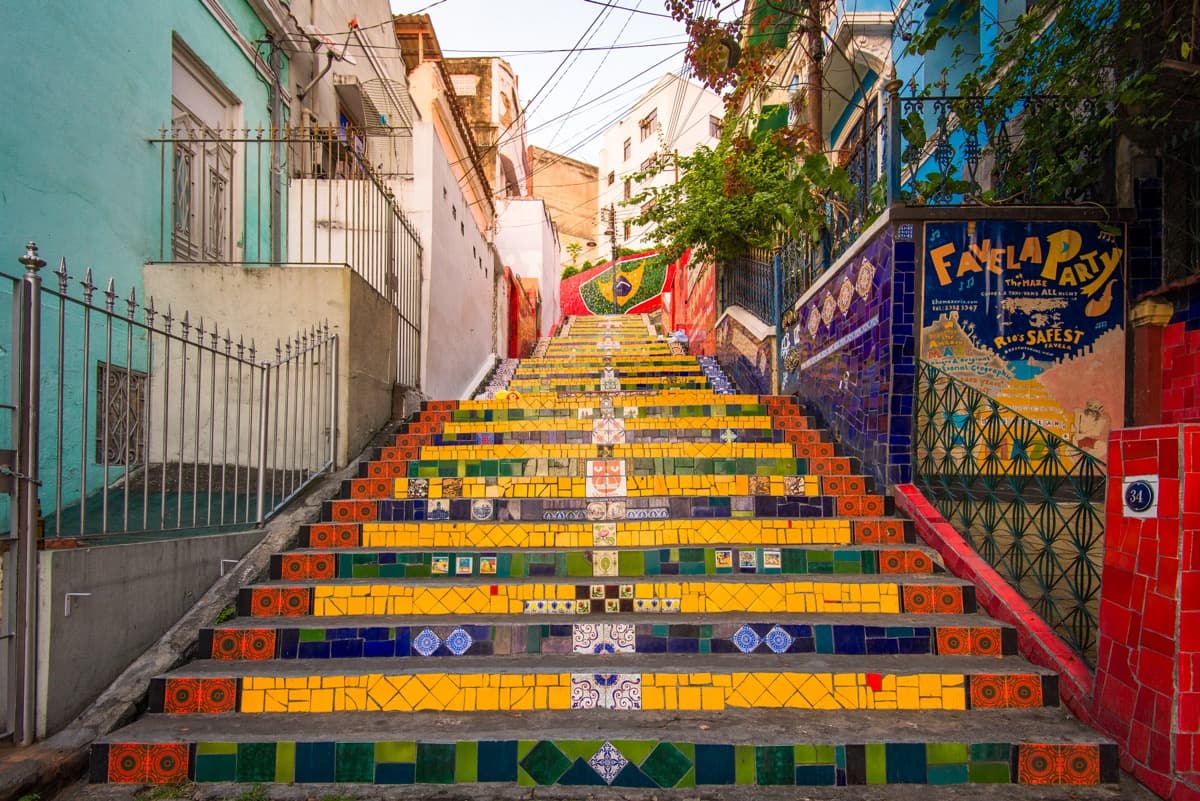
The Escadaria Selaron is a hillside staircase that one immigrant artist, Jorge Selaron, tiled by hand over more than two decades as a personal tribute to Brazil, and it grew up as a piece of folk art right beside the state-built belle epoque monuments of central Rio. That fact is the whole story of these steps. A few hundred metres downhill, the government of the early twentieth century tore through a colonial quarter to raise an opera house, a national library, and a palace of fine arts, all dressed in imported European style. On the same slope, working alone, a single man covered 215 steps in more than two thousand ceramic tiles. One is official grandeur, commissioned from the top. The other is devotion, laid one tile at a time. Both are now things people cross the city to see.
The man on the stairs
Jorge Selaron was born in Chile in 1947. He worked as a painter and sculptor and travelled widely before he settled in the Lapa neighbourhood of Rio de Janeiro in the 1980s, in a house next to a run-down flight of public steps that ran up the hillside toward Santa Teresa. In 1990 he began to tile them. He did not stop for the rest of his life.
For years the project was funded, in part, by selling his own paintings, the money going straight back into tile and mortar. He worked in fits and layers, prying out tiles and replacing them, painting over old work, so the staircase never looked the same from one visit to the next. Selaron described what he was making in plain terms. He called it, in his words, his tribute to the Brazilian people. He was found dead on the staircase itself on January 10, 2013, at the age of 65. The work had run for 23 years, all of them on one set of steps.
More than two thousand tiles from over sixty countries
Hear a stop from this walk
Biblioteca Nacional: The National Library
Look closely and the surface reads like a record of correspondence. The more than two thousand tiles were gathered from over sixty countries. Many were mailed to Selaron by travellers who had seen the steps and wanted a piece of their own home set into them, a fragment of Delft blue or a scrap of hand-painted Portuguese azulejo arriving from the other side of the world. Others he collected himself, hunting through the city for colour. The dominant note is red, the yellow and blue and green threading through it, but the palette shifts as the steps climb.
Because Selaron kept swapping tiles out, the staircase is best understood not as a finished mosaic but as a process that simply stopped when its maker died. Some panels are hand-painted by his own brush. Others are salvaged shards. The whole thing is a patchwork with no final version, which is exactly what makes it feel alive under your feet rather than framed on a wall.
Why it belongs on a belle epoque walk
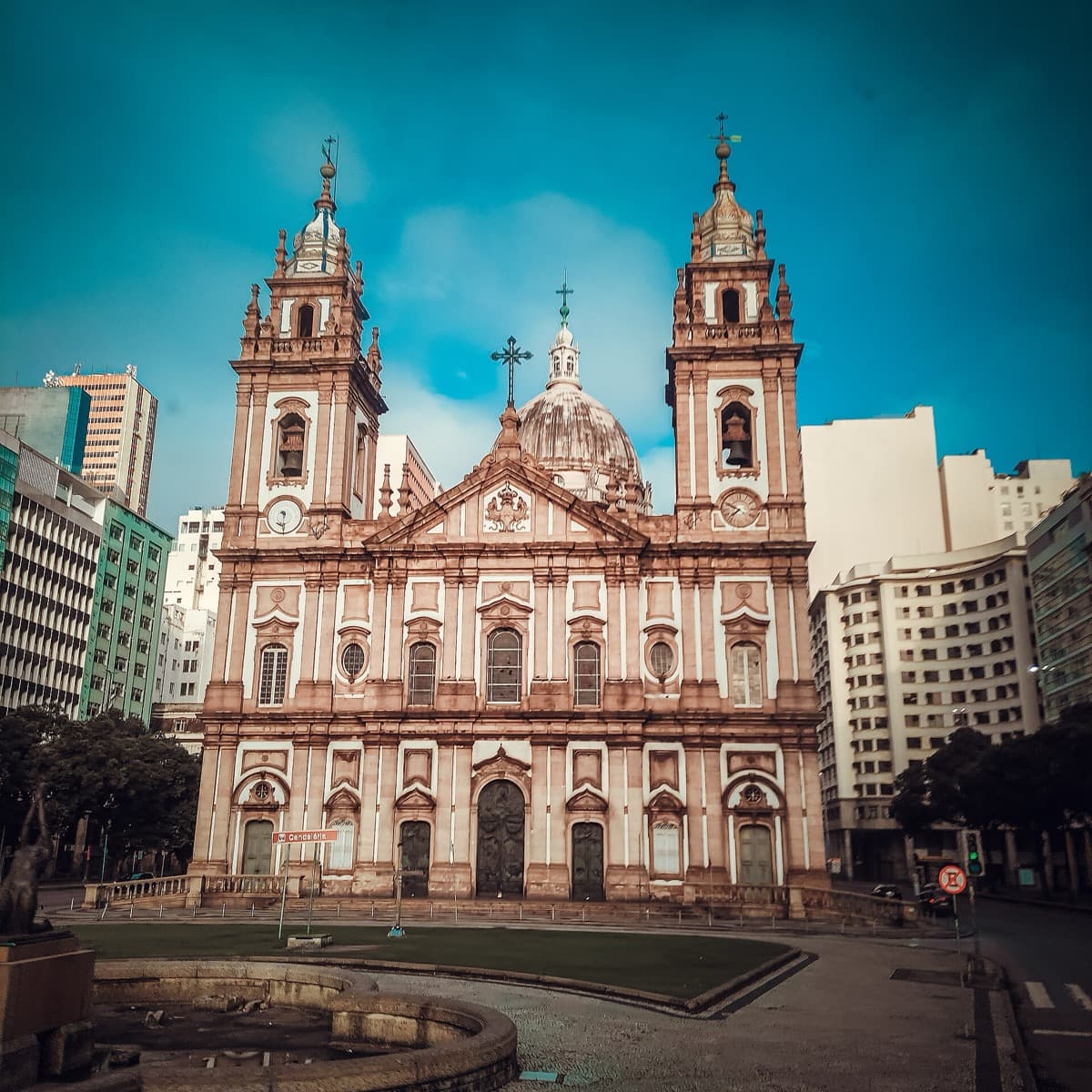
The steps sit at the base of a walk that then climbs into the grandest architecture Rio ever built. That sequence is deliberate, and it sharpens what the staircase is. The monuments waiting uphill were the product of a program of demolition and boulevard-cutting begun in 1904, when the mayor Francisco Pereira Passos drove a wide new avenue, first called Avenida Central and now Avenida Rio Branco, straight through the old colonial city in open imitation of the Paris of Haussmann. Along that avenue rose the Theatro Municipal, inaugurated in 1909 on the model of the Paris Opera, the National Library, opened in 1910, and the fine-arts palace, completed in 1908. Three imported dreams within sight of one another, each raised in the same handful of years by a state determined to make Rio look like a European capital.
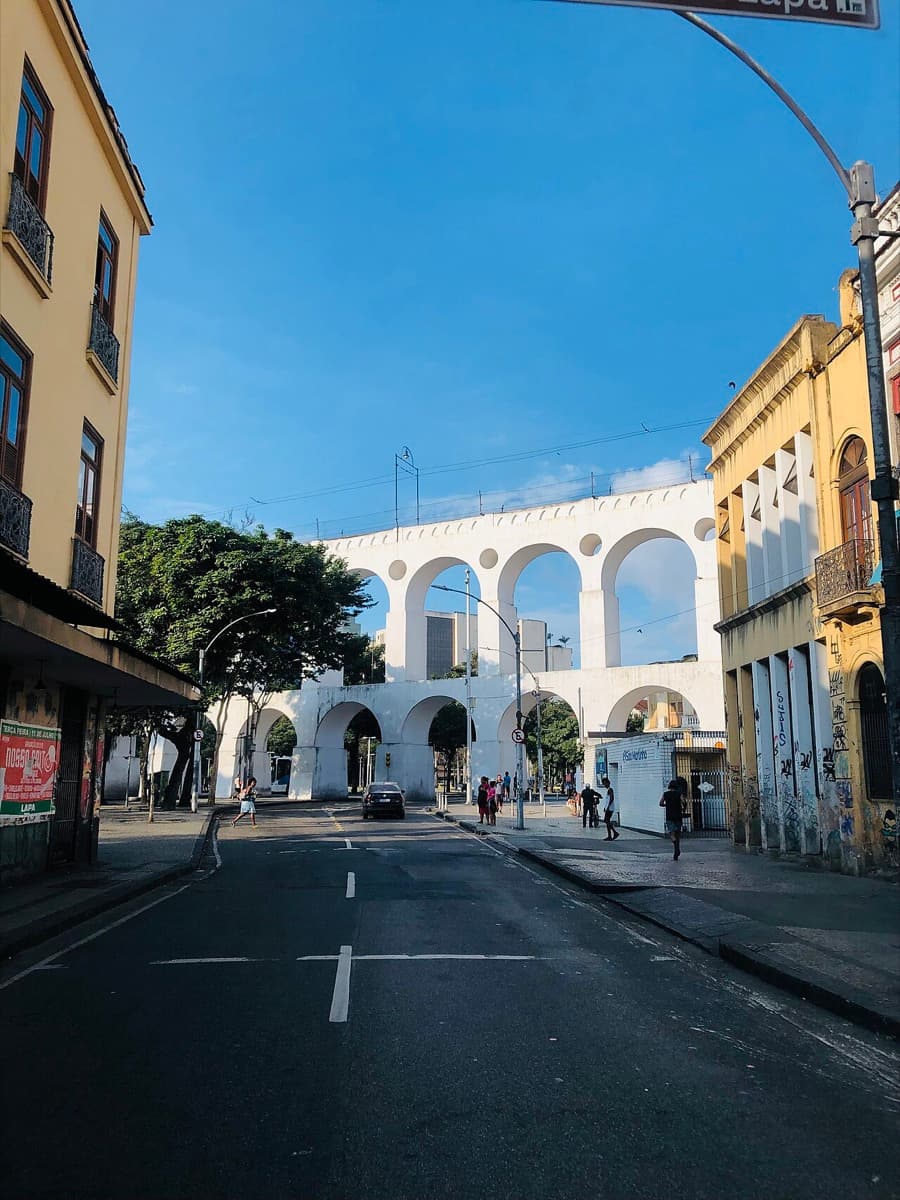
The staircase is the opposite kind of object. No committee ordered it. No architect drew it. It was made by one person who had chosen Brazil as his home and wanted to say so in ceramic. And yet the two things share the same hillside. Standing near the arches of the old Carioca Aqueduct, you can see how central Rio holds both at once: the grandeur the government built and the folk culture that grew on its own. Neither erased the other. That coexistence is the argument the whole neighbourhood makes, and the steps state it first, at ground level, in colour.
Walking the steps today
The Escadaria Selaron is ordinary public property. There is no ticket, no gate, no opening hour. It is a working neighbourhood staircase that people use to get up and down the hill, as well as an artwork that draws crowds, and both facts are true at the same time. That means the courtesies are real ones. Keep to the side, let residents pass, and do not treat the steps as a stage set built for photographs. They are steep and, when wet, genuinely slick, so closed shoes with grip matter more here than almost anywhere else in the district. Early morning is quieter and cooler for the climb, before the tour groups arrive and the light goes flat.
Read the steps slowly on the way up. You are looking at 23 years of one man's attention, a hand-made counterweight to the imported palaces above. When you reach the top of the tiled run, you have already understood the paradox that the rest of central Rio spends four more stops proving: a tropical city reached across the ocean for an idea of what a capital should look like, and then kept being itself the whole time.
For the full route from these steps up through the aqueduct arches to the opera house, library, and fine-arts palace, see Rio de Janeiro.
Sources
- Escadaria Selaron, Wikipedia. Steps count, tile count, number of contributing countries, and the staircase's status as a free public landmark.
- Jorge Selaron, Wikipedia. Biography: born in Chile in 1947, settled in Lapa in the 1980s, began the work in 1990, died on the staircase on January 10, 2013, at 65.
- Theatro Municipal (Rio de Janeiro), Wikipedia. 1909 inauguration and the Paris Opera model for the neighbouring monuments.
- Carioca Aqueduct, Wikipedia. The Arcos da Lapa arches that anchor the district around the staircase.
- Cinelandia, Wikipedia. The Avenida Central reforms from 1904 that reshaped the surrounding civic core.
Brazil eSIM· 10% off with ROAMER10
Ready to experience it?
Lapa and Cinelandia: Belle Epoque Rio
80 min · 1.9 km · moderate
More from Rio
Explore more at your own pace.

One Day in Rio de Janeiro: A Walkable City-and-Views Itinerary (2026)
Rio de Janeiro Travel Guide: How Many Days, Getting Around, Safety, When to Go (2026)

The Rio Behind the Beach: Why the Old Centro Is the City's Real Origin

What to Eat in Rio de Janeiro: A Food Guide (2026)
Arcos da Lapa: The Rio Aqueduct That Became a Tram Bridge