Imperial Rio: The Colonial Centro
90 min · 2.2 km · moderate
Rio de Janeiro sells itself with beaches, but the city was not born on them. Copacabana and Ipanema were empty stretches of sand until the twentieth century. The real Rio, the one that made the place matter, grew up inland, in the low ground of the modern Centro around the old port and the palace square. Read that downtown first and the rest of the city rearranges itself in front of you. The beaches become the newest chapter, not the story.
A capital before it was a resort
The single fact that reorganizes Rio is this: for thirteen years the city was the capital of an entire European empire. In late 1807, with Napoleon's armies about to take Lisbon, the Portuguese royal court fled across the Atlantic. Nearly fifteen thousand people, the Braganza family and their whole administration, sailed for Brazil, and on the seventh of March 1808 they arrived in Rio. For the next thirteen years the Portuguese empire was governed not from Europe but from this colonial port, an arrangement historians sometimes call a metropolitan reversal, a colony running the empire that owned it.
The court did not just shelter here. It built. Prince Regent John, later King John the Sixth, founded the Bank of Brazil, the Naval Academy, a school of medicine and surgery, the law courts, and the Royal Printing Works. When he finally returned to Portugal in 1821, he left behind a city that had been fitted with the machinery of a capital. His son stayed, declared independence in 1822, and was crowned emperor. Rio then served as the capital of imperial and republican Brazil until Brasilia took the title in 1960. Almost everything dense and grand in the downtown is a residue of those years when a small tropical port outranked its own mother country.
Why the history is downtown, not on the coast
Hear a stop from this walk
Mosteiro de Sao Bento: The Gilded Root
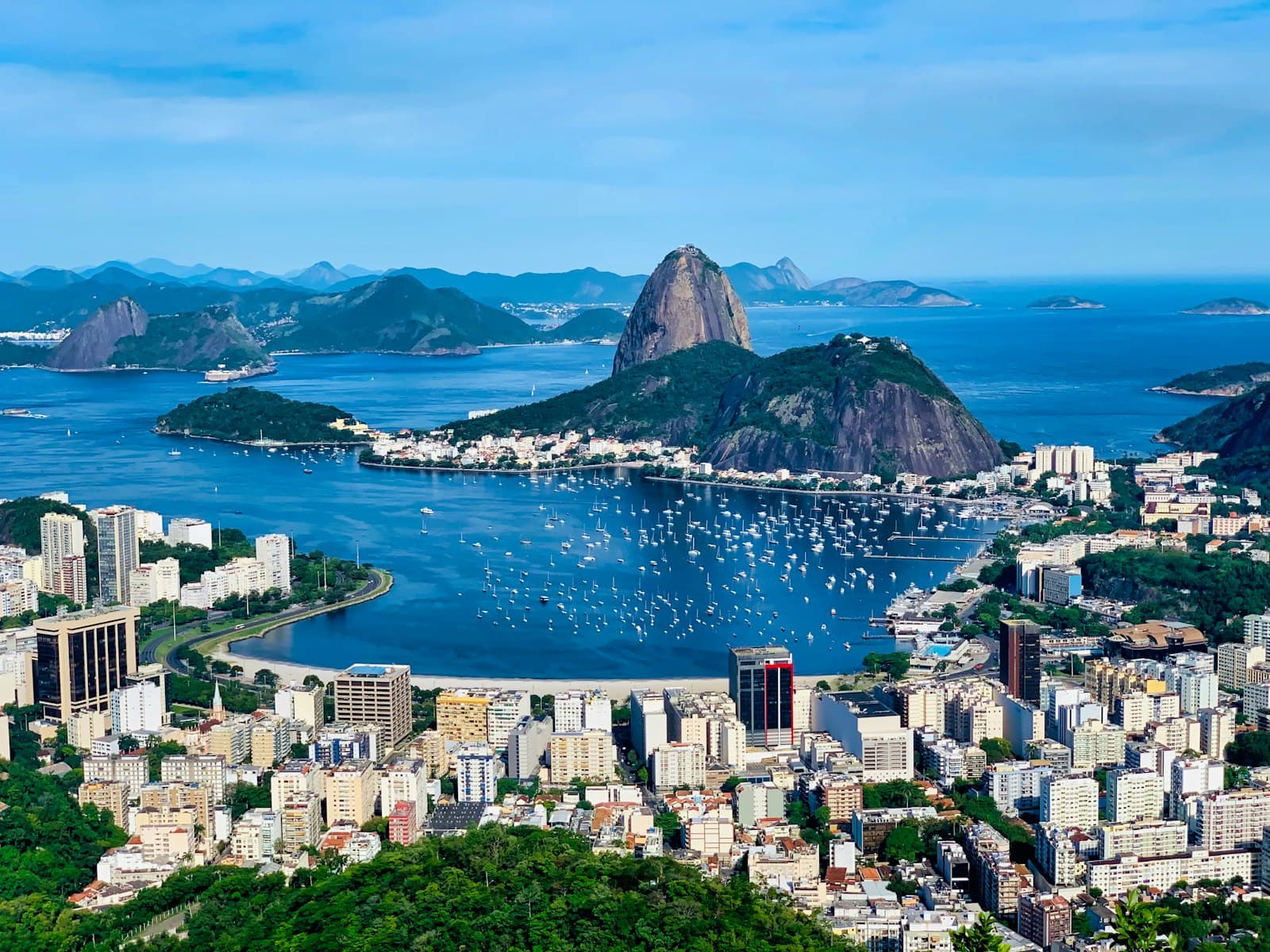
If you only know Rio from postcards, the geography feels backward. The famous neighborhoods are on the ocean, and the old city is a few kilometers inland, hemmed in by hills and the working harbor. That is exactly why the beaches are historically thin and the Centro is historically thick. The colonial and imperial city clustered where the boats landed and the water could be reached, around Praca Quinze and the old dock, and it climbed the low hills behind it. The beach districts only filled in once trams, tunnels, and money reached them in the late nineteenth and twentieth centuries.
So the walkable history is downtown. The imperial palace on the square, the chapel where two emperors were crowned, the gilded monastery on its hill, the belle epoque opera house and national library: all of it sits in a compact core you can cross on foot. Roamer's Imperial Rio: The Colonial Centro reads this ground in the order it was built, from the palace square upward. One of its endpoints, the Mosteiro de Sao Bento, is older than the empire itself, a monastery that watched the whole story arrive.
The three layers, stacked
The downtown reads as three overlapping eras, and each has its own Roamer walk.
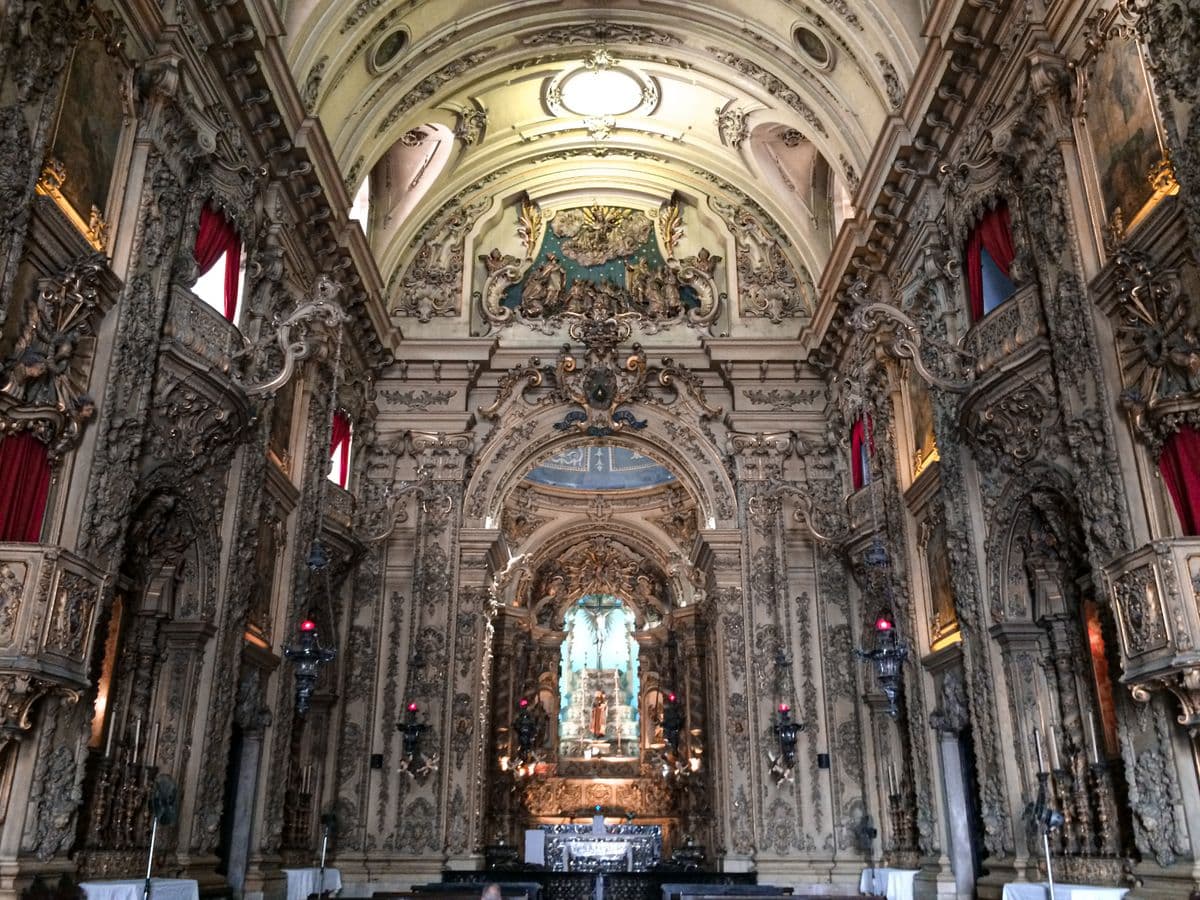
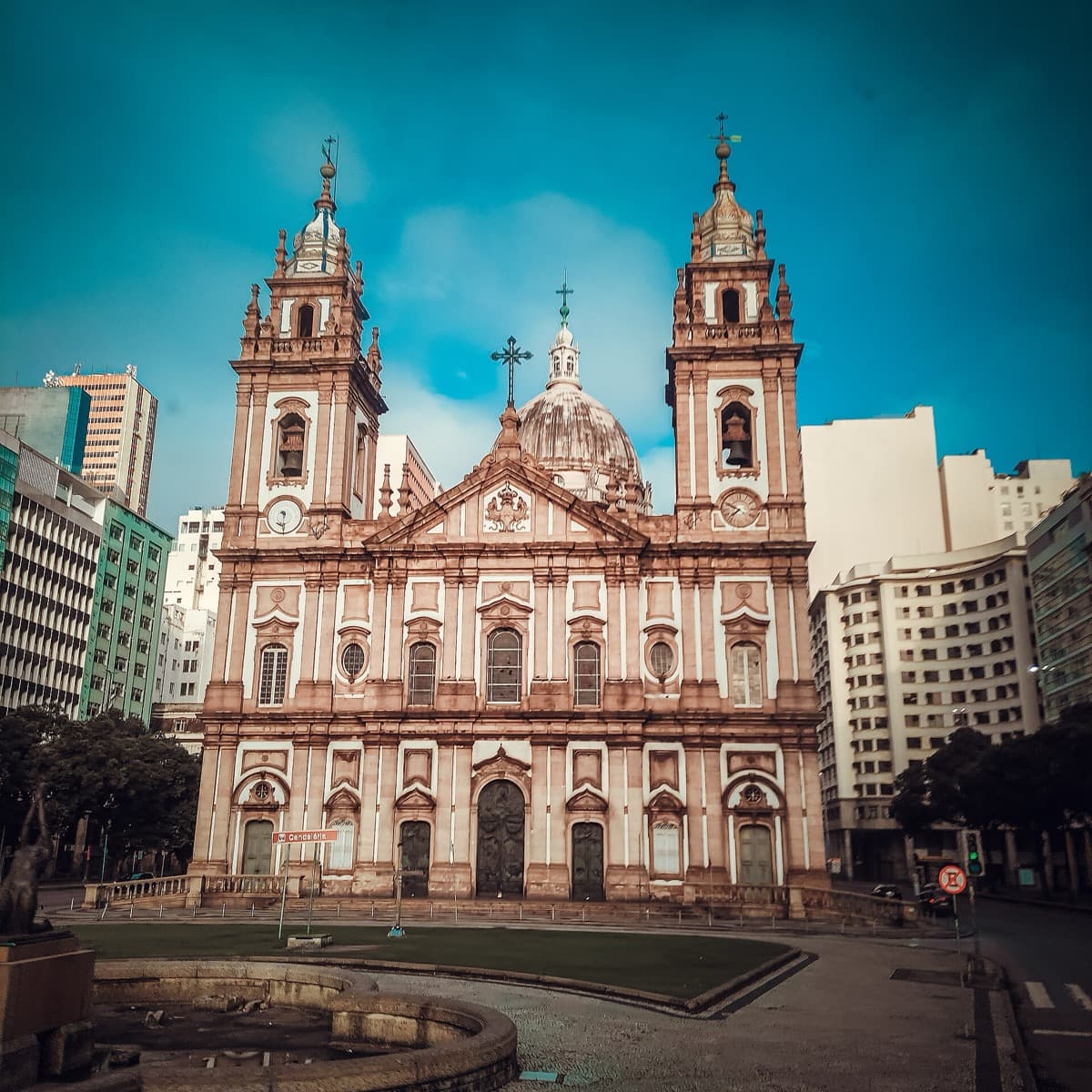
The colonial and imperial core is the deepest layer: the palace square, the surviving colonial lane behind the Arco do Teles, the coronation chapel, and the imported dome of the Candelaria church, whose white stone was carved in Lisbon and shipped across the ocean. This is the Rio of viceroys and a transplanted crown.
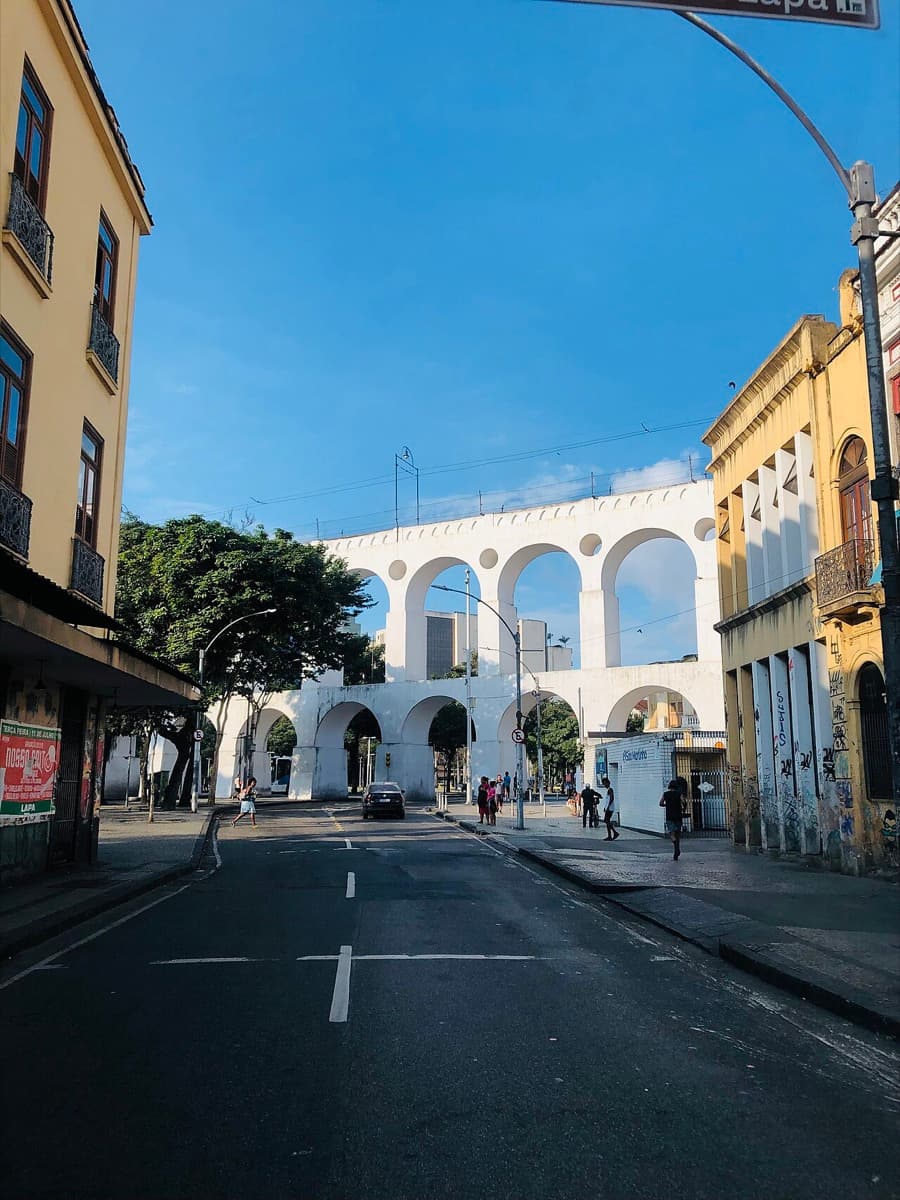
The belle epoque city came next, when a turn-of-the-century modernization drive cut a grand avenue through the old town and lined it with a French-style opera house, a national library, and a fine-arts palace. This is the Rio of Lapa and Cinelandia, where the Arcos da Lapa, an eighteenth-century aqueduct, still stride across the district as a tram viaduct.
Above both sits Santa Teresa, the bohemian hill reached by a rattling tram over those very arches, a neighborhood of artists' houses and steep lanes that looks down on the whole layered city. Roamer's Santa Teresa: The Bohemian Hill closes the picture.
How to see it
Walk the Centro on a weekday, when the business district is awake and the churches and cultural centers are open. Start at the water and the palace square and move inland and uphill, because that is the direction the city actually grew. Give the beaches their evening, but give the downtown a morning, and Rio stops being a set of famous images and becomes a place with a spine. For the full map of routes, browse Rio walking tours and plan a downtown day with one day in Rio.
Sources
- Wikipedia, Transfer of the Portuguese court to Brazil: the 1807 departure from Lisbon, the arrival in Rio on 7 March 1808, the roughly fifteen thousand people who came, the thirteen-year period through 1821, and the institutions founded (Bank of Brazil, Naval Academy, school of medicine, Royal Printing Works).
- Wikipedia, Rio de Janeiro: the city as capital of the Portuguese empire, then of the Brazilian empire and republic, until the transfer of the national capital to Brasilia in 1960.
- Roamer tour transcripts, Imperial Rio (rio-centro-imperial) and Lapa and Cinelandia (rio-lapa-cinelandia-belle-epoque), fact-audited: the downtown palace square, coronation chapel, belle epoque avenue, and the layered geography of the Centro.
Frequently asked questions
- Where did the city of Rio de Janeiro begin?
- Rio began inland from the famous beaches, in the low ground of the modern Centro around Praca Quinze near the old port, not in the beach neighborhoods of Copacabana and Ipanema. Copacabana and Ipanema were empty sand until the twentieth century. The colonial and imperial city grew up around the harbor, the palace square, and the churches of the downtown, which is why the oldest and most historically dense walking is downtown, away from the coast.
- Why was Rio de Janeiro so important historically?
- For thirteen years, from 1808 to 1821, Rio was the working capital of the entire Portuguese empire, the only time in history a European monarchy governed from a colony. The Portuguese court fled Napoleon and ruled the empire from Rio, founding the Bank of Brazil, a medical school, a naval academy, and the Royal Printing Works. Rio then became the capital of independent Brazil and stayed the national capital until Brasilia was inaugurated in 1960.
- Is the historic center of Rio de Janeiro worth visiting?
- Yes, if you want to understand the city rather than only photograph it. The Centro holds Rio's densest layer of history: the imperial palace square, the coronation chapel, gilded baroque monasteries, and the belle epoque theaters and library of Cinelandia. It is best seen on a weekday when the business district is busy and lively, and it pairs naturally with the bohemian hill of Santa Teresa just above it.
Brazil eSIM· 10% off with ROAMER10
Ready to experience it?
Imperial Rio: The Colonial Centro
90 min · 2.2 km · moderate
More from Rio
Explore more at your own pace.
One Day in Rio de Janeiro: A Walkable City-and-Views Itinerary (2026)
Rio de Janeiro Travel Guide: How Many Days, Getting Around, Safety, When to Go (2026)
What to Eat in Rio de Janeiro: A Food Guide (2026)
Arcos da Lapa: The Rio Aqueduct That Became a Tram Bridge
Candelaria Church: The Rio Dome That Was Carved in Lisbon and Shipped Across the Ocean