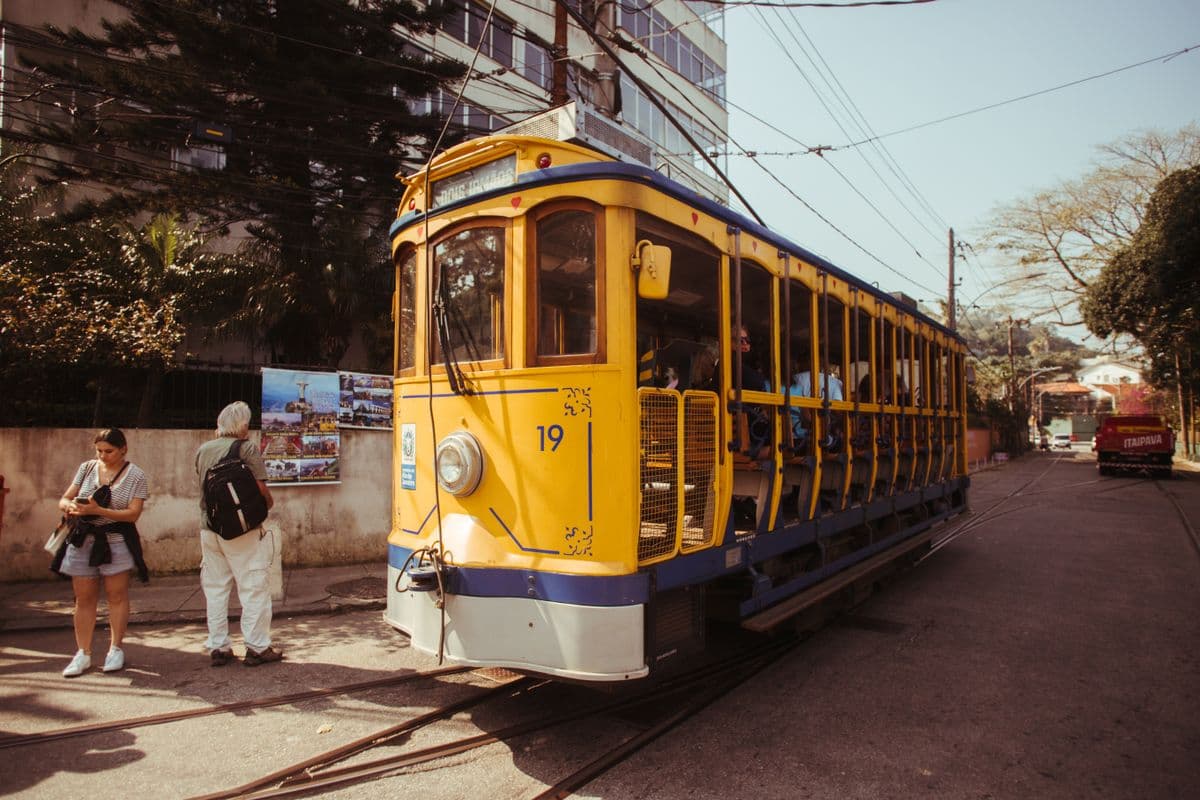
Climb Rio's bohemian hilltop, where a rattling yellow tram crosses an eighteenth-century aqueduct and faded mansions became artists' studios, ruins, and viewpoints. A six-stop walk that reads a neighbourhood which quietly chose art over grandeur.
Start · Bonde de Santa Teresa and the Arcos da Lapa: The Mechanism of the Hill
DirectionsStops
- 1
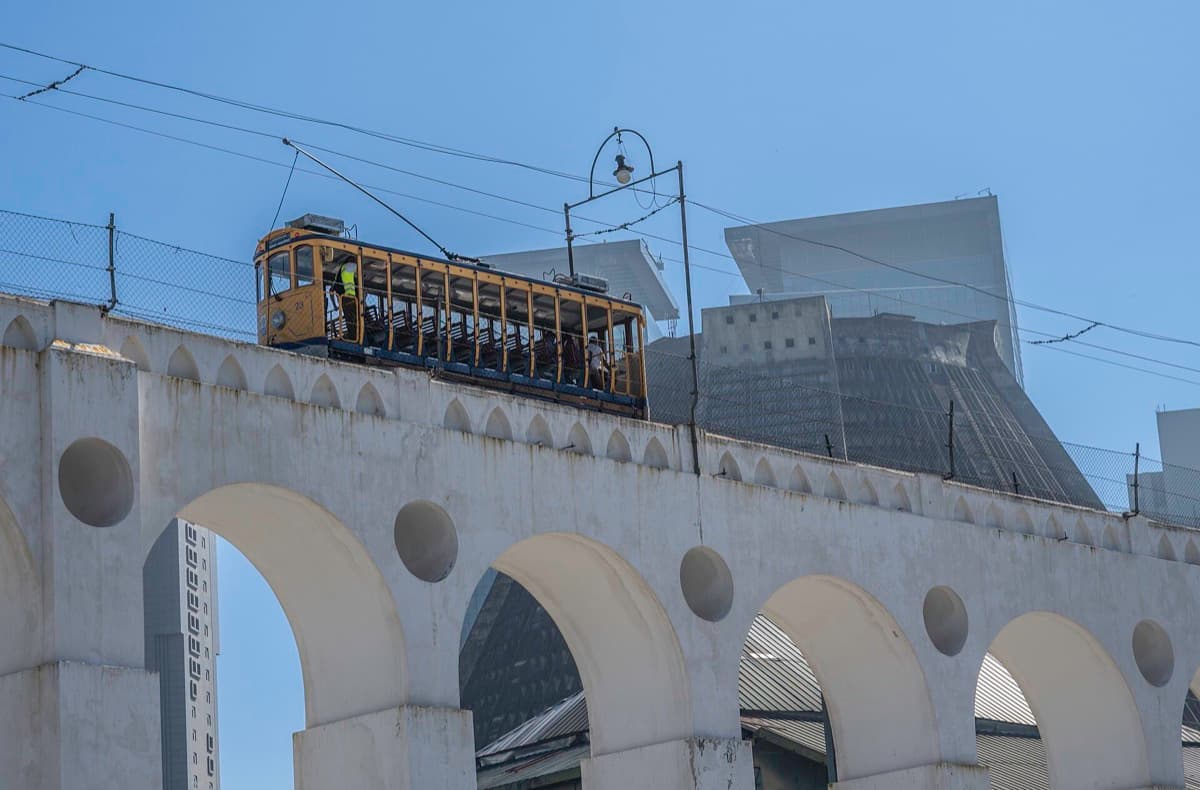
Bonde de Santa Teresa and the Arcos da Lapa: The Mechanism of the Hill
The eighteenth-century Carioca Aqueduct at the foot of the hill, where the yellow tram crosses to begin its climb into Santa Teresa.
- 2
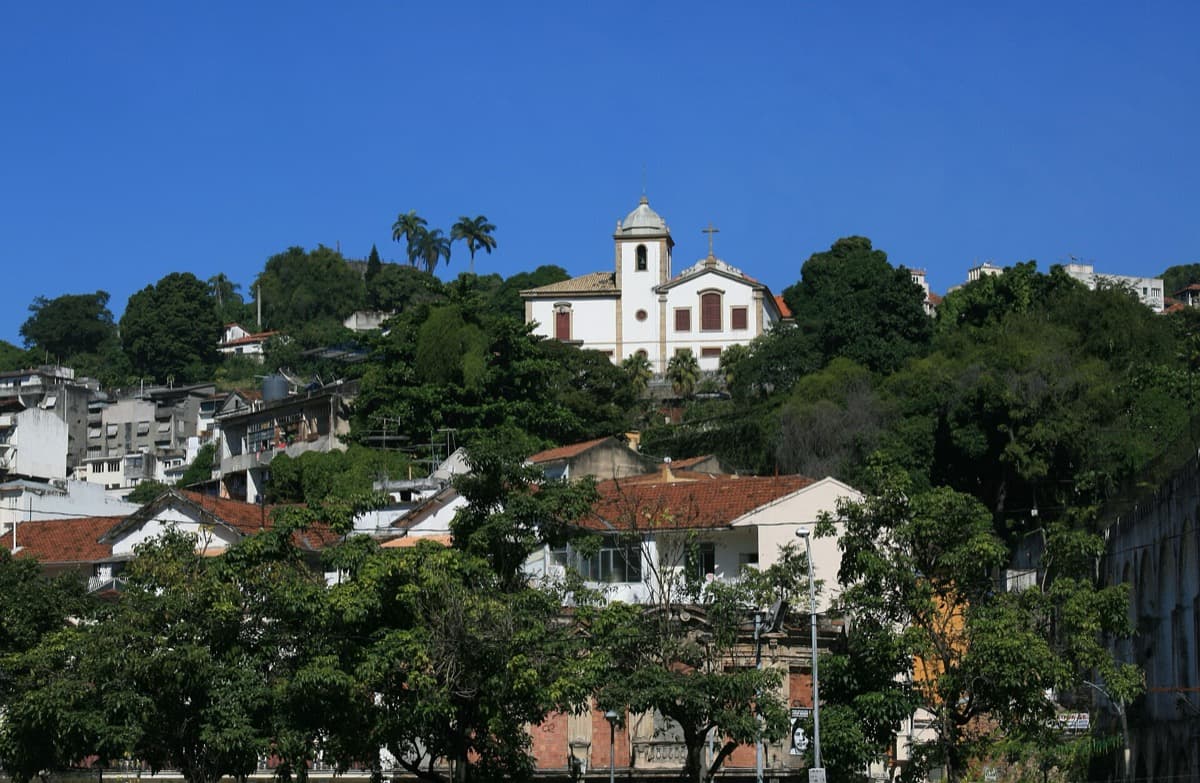
Convento de Santa Teresa: The Sealed Origin
The cloistered Carmelite convent, behind high plain walls, that gave the hill and the whole neighbourhood its name.
- 3
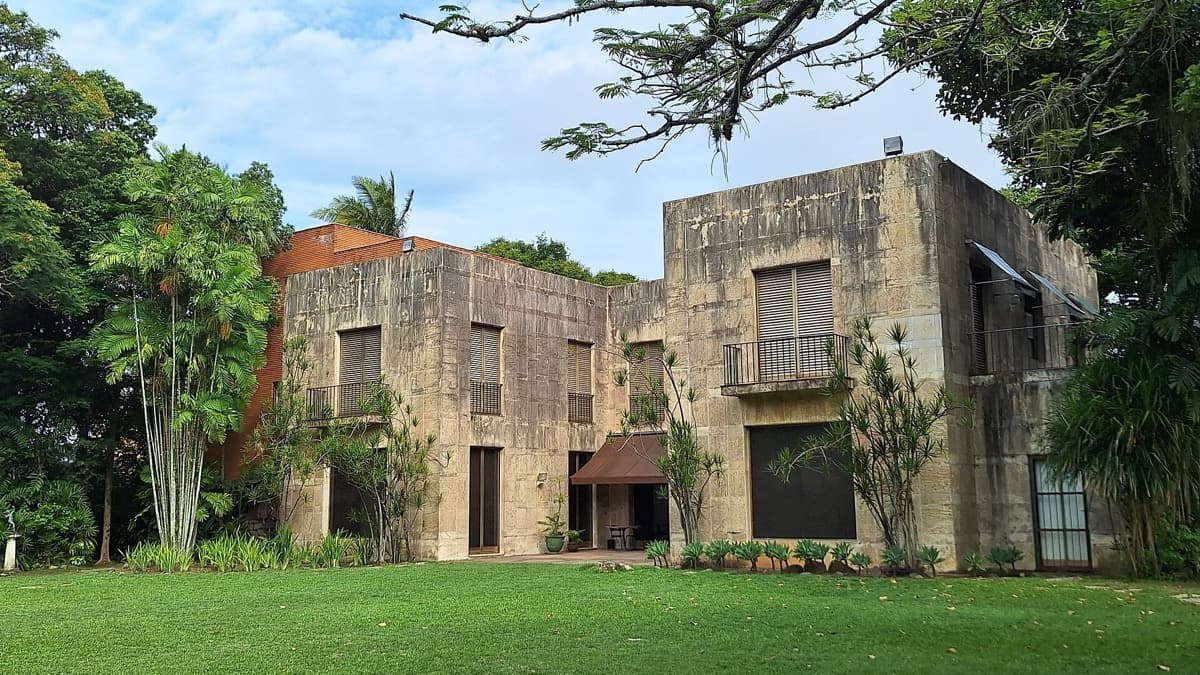
Museu Chacara do Ceu: The Collector's House
A collector's modernist home turned museum, holding European masters and Brazilian modernists above a sweeping view of the bay.
- 4
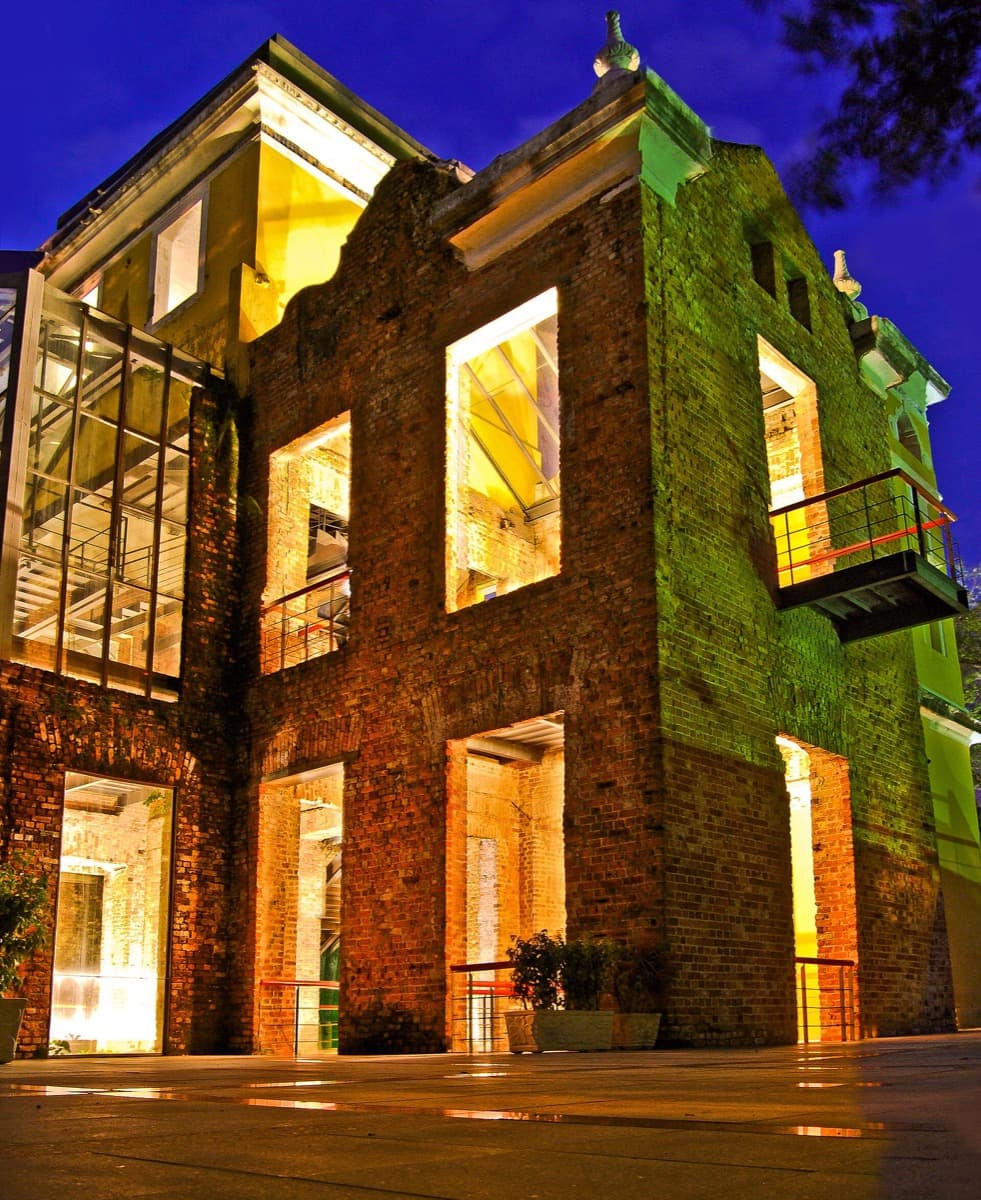
Parque das Ruinas: Art Over Grandeur
A ruined Belle Epoque mansion, kept as a ruin on purpose, now a free cultural centre and viewpoint over Guanabara Bay.
- 5
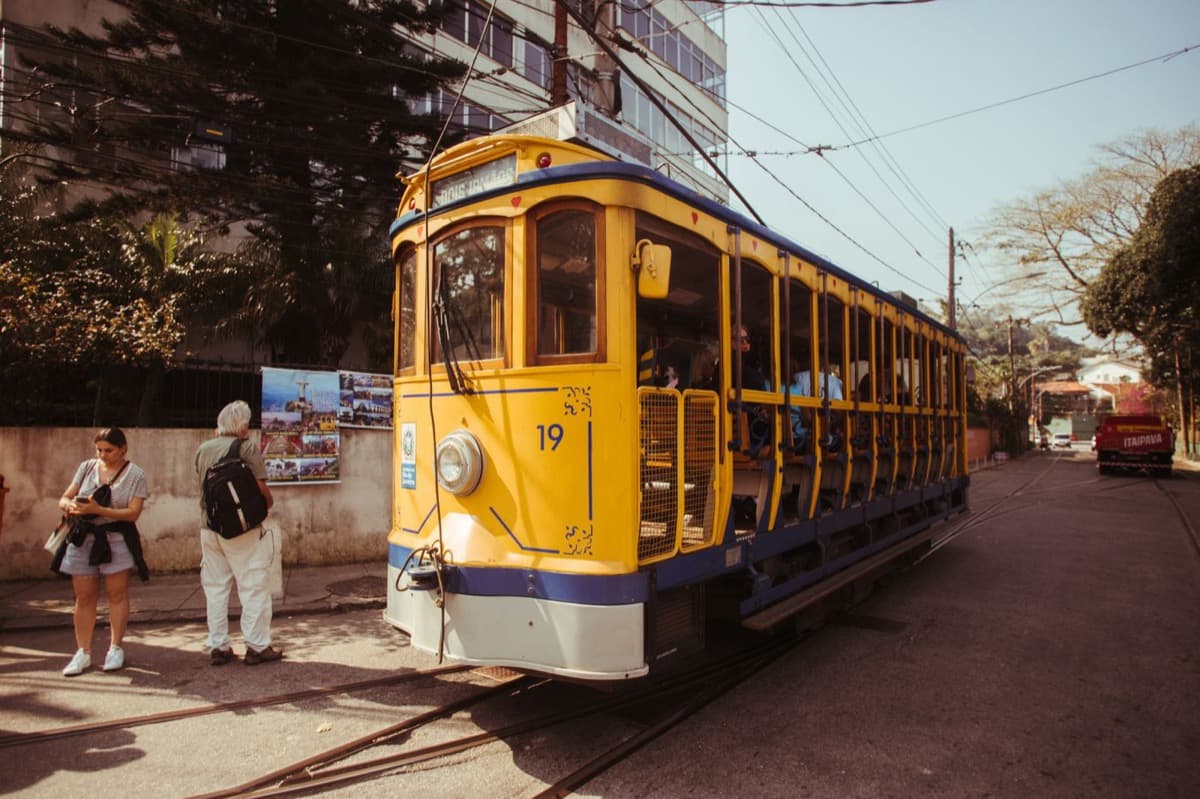
Largo dos Guimaraes: The Living Square
The social heart of Santa Teresa, a tram junction ringed by imperial-era houses, ateliers, and cafes.
- 6
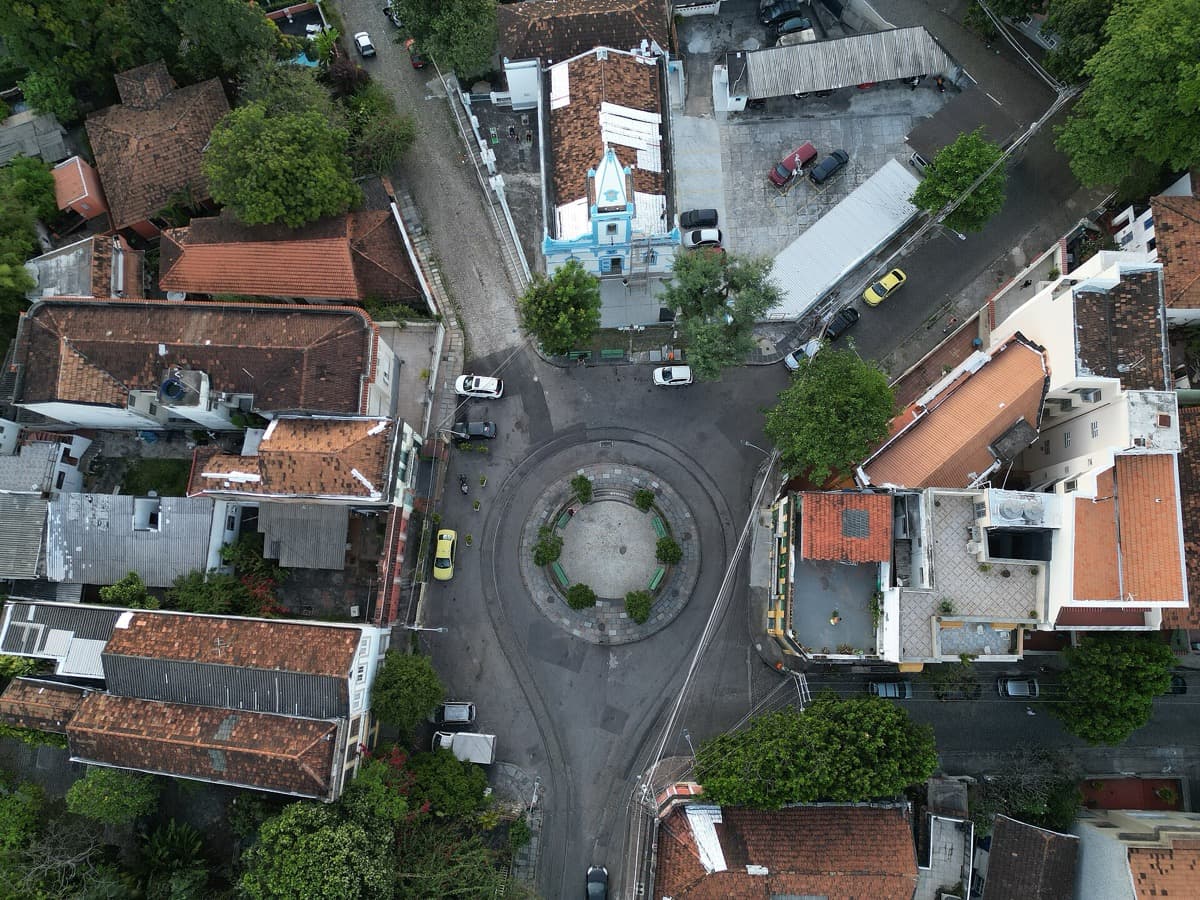
Largo das Neves: The Hill Exhales
A quiet, leafy square at the far western end of the hill, framed by a mid-nineteenth-century church and off the busy tram route.
Details
Best Time to Visit
Late afternoon on a clear day. The climb is cooler as the sun drops, the light over Guanabara Bay from the Parque das Ruinas turns golden, and both Largo dos Guimaraes and Largo das Neves come alive in the early evening. Weekdays are calmer than weekends and Carnival. Aim to reach the hilltop viewpoints before sunset.
Pro Tips
- •Ride the yellow tram up from the Carioca station in the centre for the full arrival across the aqueduct, then walk the hilltop at your own pace.
- •Do the two hilltop stops, the Chacara do Ceu and the Parque das Ruinas, back to back; they sit side by side and are linked by a footbridge.
- •Check current opening days and hours for the Museu Chacara do Ceu before you go, since museum schedules change.
- •Carry small cash in reais for the tram fare and for cafes, as not every spot on the hill takes cards.
- •Save time at the Parque das Ruinas viewpoint; admission is free and the panorama over the bay is the reward for the whole climb.
- •Ride up first, then let gravity help by walking gradually downhill toward Largo das Neves at the quiet end.
Safety & Precautions
- •The hill is steep and paved with old cobbles and tram rails that get slick after rain; wear sturdy, closed shoes with good grip and watch your footing near the tracks.
- •Rio's sun and heat are intense; carry water, wear a hat and sunscreen, and use the shaded squares to rest, especially in the middle of the day.
- •Keep normal city awareness in the historic centre and on quieter lanes: carry only what you need, keep your phone and valuables discreet, and prefer well-travelled streets and the tram after dark.
- •The Convento de Santa Teresa is an active cloistered convent; view it respectfully from the street, keep noise down, and do not attempt to enter or photograph through the walls.
Travel advisory: Exercise Increased Caution (Level 2).
Gallery
Related Reading
Go deeper on what you'll see, hear, and walk through.

Overview
Best Self-Guided Walking Tours in Rio de Janeiro (2026)
3 min
Overview
One Day in Rio de Janeiro: A Walkable City-and-Views Itinerary (2026)
5 min
Overview
Rio de Janeiro Travel Guide: How Many Days, Getting Around, Safety, When to Go (2026)
6 min
Thematic
What to Eat in Rio de Janeiro: A Food Guide (2026)
4 min
Deep dive
Parque das Ruinas: The Rio Mansion Kept as a Ruin on Purpose
6 min
Read the walk
The full story of Santa Teresa: The Bohemian Hill, in words. Prefer to listen? Play it narrated, from home or on location.
Introduction
Above the noise of central Rio de Janeiro, Brazil, a hill leans back from the city and chooses quiet over grandeur. Santa Teresa was once a retreat for the wealthy. Then its fortune faded, its mansions emptied, and something stranger moved in: artists, who found the steep isolation cheap and the ruins beautiful. This walk climbs that turn, reading each square, museum, and ruin as a layer of the same story.
Over six stops and about two kilometres, in roughly ninety minutes at your own pace, you will rise from the base of the hill to its far, leafy end. You begin at the Arcos da Lapa, the eighteenth-century aqueduct where a yellow tram crosses to start its climb. From there you reach the sealed convent that named the hill, the hilltop cluster where a collector's modernist house sits beside a mansion that became a ruin, the social heart of the neighbourhood, and finally a calm square where the bohemian hill exhales.
Each stop stands on its own, so you can linger where something holds you and skip what does not. Wear shoes made for steep cobbles, carry water, and let the grade set your pace. The hill rewards slowness. This is a place best read the way it was lived, unhurried, with time to notice tram rails, garden walls, and the light coming off Guanabara Bay.
When you arrive at the Arcos da Lapa, begin with stop one.
1. Bonde de Santa Teresa and the Arcos da Lapa: The Mechanism of the Hill
Stand at the base of the hill, where forty-two double arches march across the sky in two tiers of pale stone. This is the Carioca Aqueduct, known to everyone here as the Arcos da Lapa. It was completed in seventeen fifty, rising seventeen point six metres, and for generations it carried fresh water down from the Rio Carioca to the thirsty city below. Look up and you will see rails running along the top, because the aqueduct had a second life. When the water system moved on and the great structure fell quiet, engineers laid tram tracks across it in eighteen ninety-six, turning an eighteenth-century waterway into a bridge between the Santa Teresa and Santo Antonio hills.
The tram itself, the bonde, is the reason this neighbourhood exists as it does. It opened on the thirteenth of March, eighteen seventy-seven, first drawn by mules, and by the eighteen nineties it ran on electricity, among the oldest electric tramways in Latin America. Those small yellow cars are what made the steep, isolated hill reachable, and reachable cheaply. They are the mechanism of the whole story you are about to climb.
The bonde has known hard times. Wikipedia's history of the tram notes that it was named a national historic monument in nineteen eighty-five, then fell silent after a derailment in late August of twenty eleven that killed six people. It returned to the rails in twenty fifteen, rattling once more across these arches. If you ride it up from the Carioca station in the centre, you feel the neighbourhood begin exactly here, on the back of a two-hundred-year-old aqueduct that refused to be forgotten.
2. Convento de Santa Teresa: The Sealed Origin
A little way up the hill, behind high, plain walls, sits the building that gave this entire neighbourhood its name. This is the Convento de Santa Teresa, a convent of the Discalced Carmelites dedicated to Saint Teresa of Avila. Its cornerstone was laid in seventeen fifty by two sisters, Jacinta Rodrigues Aires and her sister Francisca, on land granted by the governor Gomes Freire de Andrade, the Count of Bobadela, where an older chapel had stood since sixteen twenty. The first nuns entered by seventeen fifty-seven.
Before the convent, this rise was called the Morro do Desterro, the hill of exile. Afterwards it became the Morro de Santa Teresa, and the neighbourhood took the saint's name from these walls. It is a quiet kind of power, to name a whole quarter of a city from behind a closed door.
And the door is closed. This is a contemplative, cloistered order, which means the nuns live enclosed, apart from the world. You cannot go inside, and that is the point of this stop rather than a disappointment. Records of the convent note that its modest design came from the military engineer Jose Fernandes Pinto Alpoim, the same hand that worked on the Carioca Aqueduct down below, which is partly why the convent had water so high on the hill.
So the origin of bohemian Santa Teresa is not a salon or a studio. It is a sealed monastery, ascetic and silent, that named everything above it and then turned inward. Stand at the wall, notice how little it asks to be noticed, and carry that quiet with you as you climb.
3. Museu Chacara do Ceu: The Collector's House
Near the top of the hill, on Rua Murtinho Nobre, a low modern house sits inside a green garden with the whole city falling away beyond it. This is the Museu Chacara do Ceu, once the private home of Raymundo Ottoni de Castro Maya, a Rio businessman, patron, and collector who…
Full narration for this stop unlocks with the tour.
4. Parque das Ruinas: Art Over Grandeur
Only a short step from the collector's house, on the same hilltop and linked by a footbridge, stands the stop where this whole neighbourhood explains itself. This is the Parque das Ruinas, and it is exactly what its name says: a ruin, kept as a ruin, on purpose. The mansion was…
Full narration for this stop unlocks with the tour.
5. Largo dos Guimaraes: The Living Square
Now the hill opens into its front room. This is the Largo dos Guimaraes, the social heart of Santa Teresa, where several streets meet and the yellow tram swings through on its route. The square takes its name from Joaquim Fonseca Guimaraes, a resident whose house up the road…
Full narration for this stop unlocks with the tour.
6. Largo das Neves: The Hill Exhales
At the far, western end of the hilltop the neighbourhood grows quiet, and the walk comes to rest in a leafy square called the Largo das Neves. It is smaller and calmer than the busy heart you have just left, framed by a modest church and a scatter of bars under the trees. The…
Full narration for this stop unlocks with the tour.