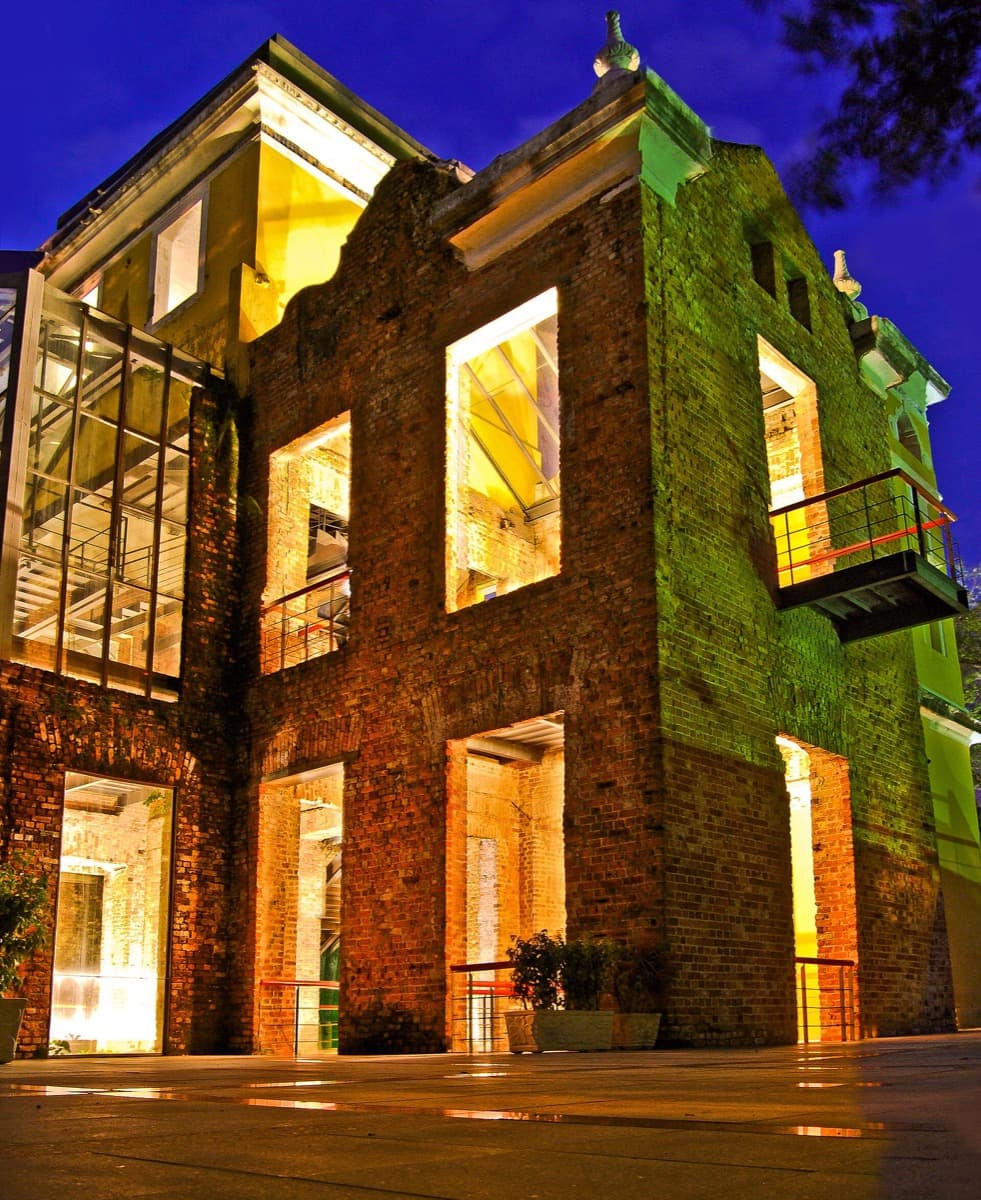
On a hilltop in Santa Teresa, Rio de Janeiro deliberately kept a mansion as a ruin. The Parque das Ruinas is a roofless Belle Epoque house that the city chose not to rebuild, and that single decision turned a collapsed salon into a free cultural centre with one of the finest views over Guanabara Bay. It is also the clearest physical statement of how this whole hill chose art over grandeur. Where another city would have restored the mansion to its former shape, Santa Teresa left the broken brick walls standing and threaded steel walkways through them, treating decay as raw material rather than a wound to hide.
A salon at the top of the hill
The story begins with a wealthy family, not with artists. The mansion was built in the late nineteenth century for the physician Joaquim Duarte Murtinho Nobre, and the street outside still carries the Murtinho Nobre name today. His niece, Laurinda Santos Lobo, was a patron of Rio's Belle Epoque, and through the early twentieth century she ran a celebrated cultural salon inside this house. Musicians, painters, and writers climbed the hill to gather in her rooms. For a few decades, this was one of the beating hearts of the city's creative life, a private home that functioned as a public stage for anyone Rio counted as talented.
That arrangement was typical of the period. The elite cultural life of the time often gathered in private houses rather than public institutions, and a hostess with taste and money could shape a whole scene simply by opening her doors. Laurinda did exactly that until her death in 1946. When she died, the salon died with her, and the mansion began a long, slow fall.
Forty years open to the sky
Hear a stop from this walk
Largo das Neves: The Hill Exhales
For roughly four decades the house stood abandoned. The roof went first, then the interiors, and eventually the mansion was a shell open to the weather, its grand rooms exposed to the tropical sun and the rain that rolls off the hill. On a slope full of faded fortunes, this was the most dramatic fade of all: not a house that grew shabby, but a house that lost its roof and kept standing anyway, a hollow frame of masonry with the bay glittering through its empty windows.
This is where most such stories end, in demolition or in an expensive restoration that erases the years of neglect. Santa Teresa did something else.
The decision that defines the hill
When the state government bought the site in 1993 and reopened it to the public in 1997, the architect Ernani Freire did not restore the grand mansion. He kept the ruin. Steel walkways now thread through the broken brick walls, galleries and an outdoor stage sit inside the shell, and the complex includes the Ruth de Souza Theater, where open-air performances play out against the view. One of the best viewpoints in the city opens over Guanabara Bay and the centre of Rio, framed by the ragged edges of the old house. Admission is free.
The choice to preserve the mansion as a ruin, rather than rebuild it, was an architectural statement about memory and loss. A restored house pretends the collapse never happened. A preserved ruin insists on it, and then puts the collapse to work. You do not stand in a museum reconstruction of Laurinda's salon. You stand inside the actual walls, with the sky where the ceiling used to be, and you look out at the same bay her guests once looked at, through a window that no longer holds glass.
That is why this stop is the thesis of the entire neighbourhood. Santa Teresa was once a retreat for the wealthy. Its fortunes faded, its mansions emptied, and artists moved into the cheap, steep isolation and found the ruins beautiful. The Parque das Ruinas is that whole arc compressed into one building. A salon became a ruin, and the ruin became a cultural centre. The grandeur was allowed to decay, and the decay was chosen over the grandeur.
Reading the ruin on foot
The park sits right beside the Museu Chacara do Ceu, the former home of the collector Raymundo Ottoni de Castro Maya, and the two are linked by a footbridge. That pairing is worth understanding, because the two houses answer the same question in opposite ways. The Chacara do Ceu is a collector's home that survived, rebuilt in the 1950s as a clean modernist residence and filled with European and Brazilian masters. The Parque das Ruinas is a patron's home that did not survive, and was kept exactly in its unsurvived state. One preserved the art and lost the original house. The other lost the house and made the loss itself the exhibit.
Walk the two back to back and the hill starts to explain itself. Then keep going down toward the Largo dos Guimaraes, the living square where the tram swings through and the cafes and ateliers cluster, and finally out to the quiet Largo das Neves at the far end. The ruin is the pivot in the middle of that walk, the moment where the neighbourhood stops being a collection of pretty facts and becomes an argument you can stand inside.
Stand where the roof used to be. Look out at Guanabara Bay through the broken frame of a window. The city spreads out below, the light comes off the water, and behind you the empty rooms of a dead salon hold their shape without their purpose. That is the whole story of Santa Teresa, told in brick and open air, and it costs nothing to read.
You can walk the full climb, from the aqueduct at the base to this hilltop ruin and beyond, on the self-guided Santa Teresa audio tour. Explore more of Rio de Janeiro.
Sources
- Parque das Ruinas, Wikipedia. Overview of the mansion's history, its forty years of abandonment, and the 1993 purchase and 1997 reopening as a cultural centre under architect Ernani Freire.
- Parque das Ruinas, Rio Cultural Secrets. Details on Joaquim Duarte Murtinho Nobre as builder, Laurinda Santos Lobo as his niece and salon host, her death in 1946, free admission, the Guanabara Bay viewpoint, and the footbridge to the Museu Chacara do Ceu.
- Parque das Ruinas, Rio Memorias. Local heritage reference on the salon of Laurinda Santos Lobo and the site's transformation.
- Roamer, Santa Teresa: The Bohemian Hill. Fact-audited walking-tour narration for the six-stop climb through the neighbourhood.
Brazil eSIM· 10% off with ROAMER10
Ready to experience it?
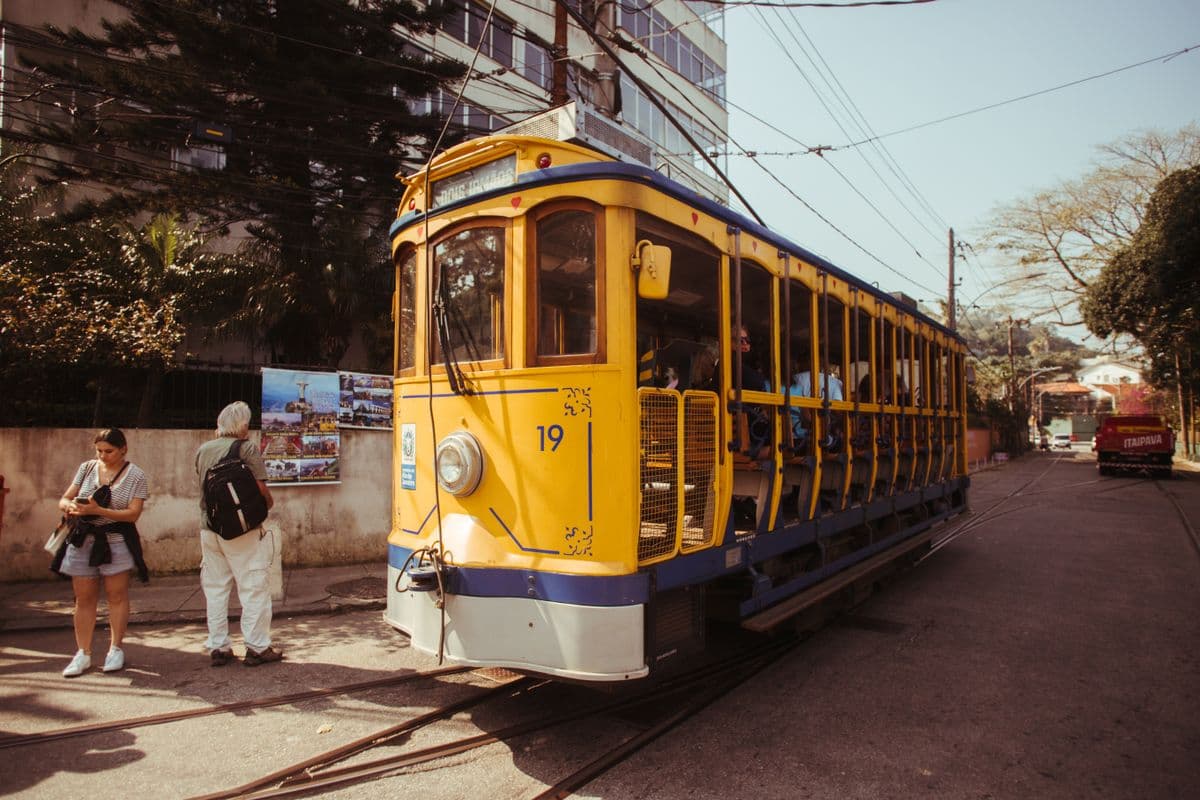
Santa Teresa: The Bohemian Hill
90 min · 2 km · hard
More from Rio
Explore more at your own pace.

One Day in Rio de Janeiro: A Walkable City-and-Views Itinerary (2026)
Rio de Janeiro Travel Guide: How Many Days, Getting Around, Safety, When to Go (2026)

The Rio Behind the Beach: Why the Old Centro Is the City's Real Origin

What to Eat in Rio de Janeiro: A Food Guide (2026)
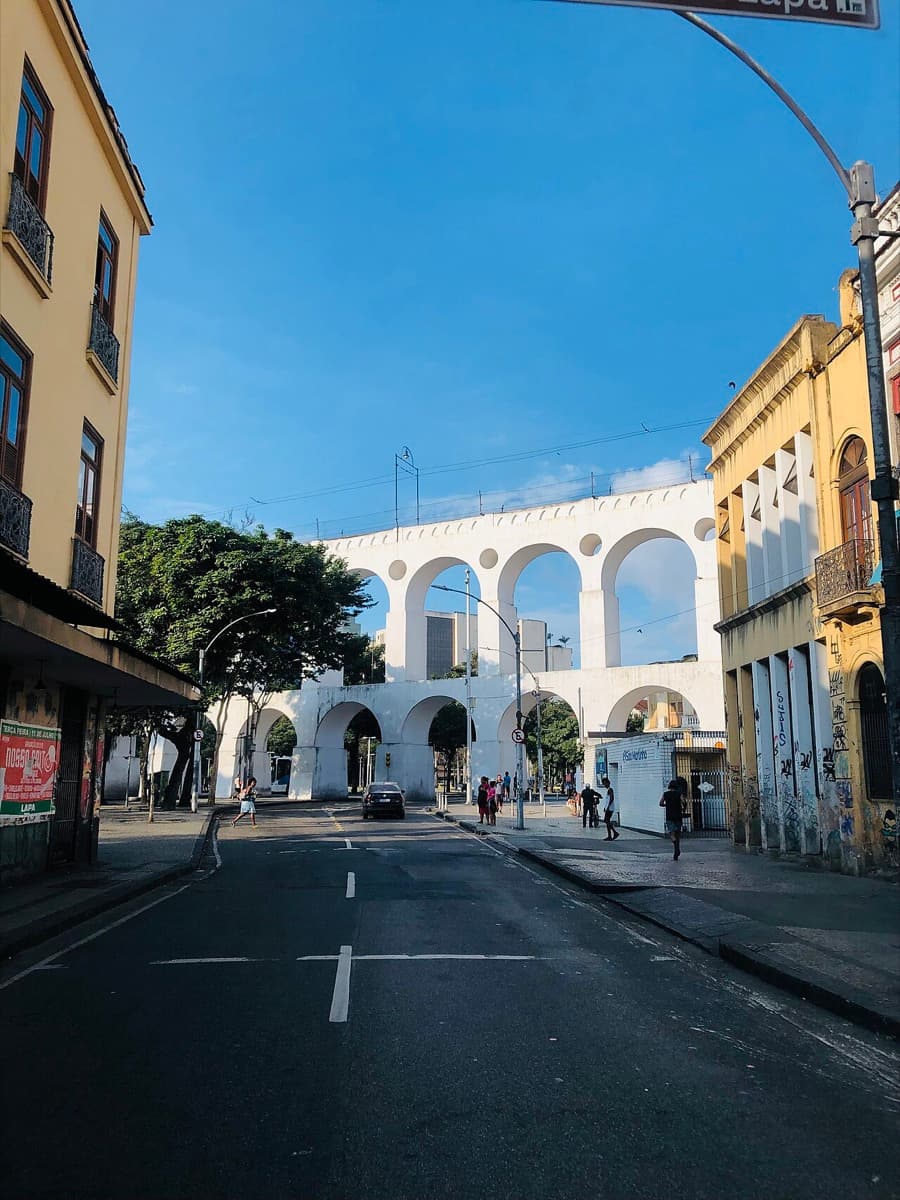
Arcos da Lapa: The Rio Aqueduct That Became a Tram Bridge