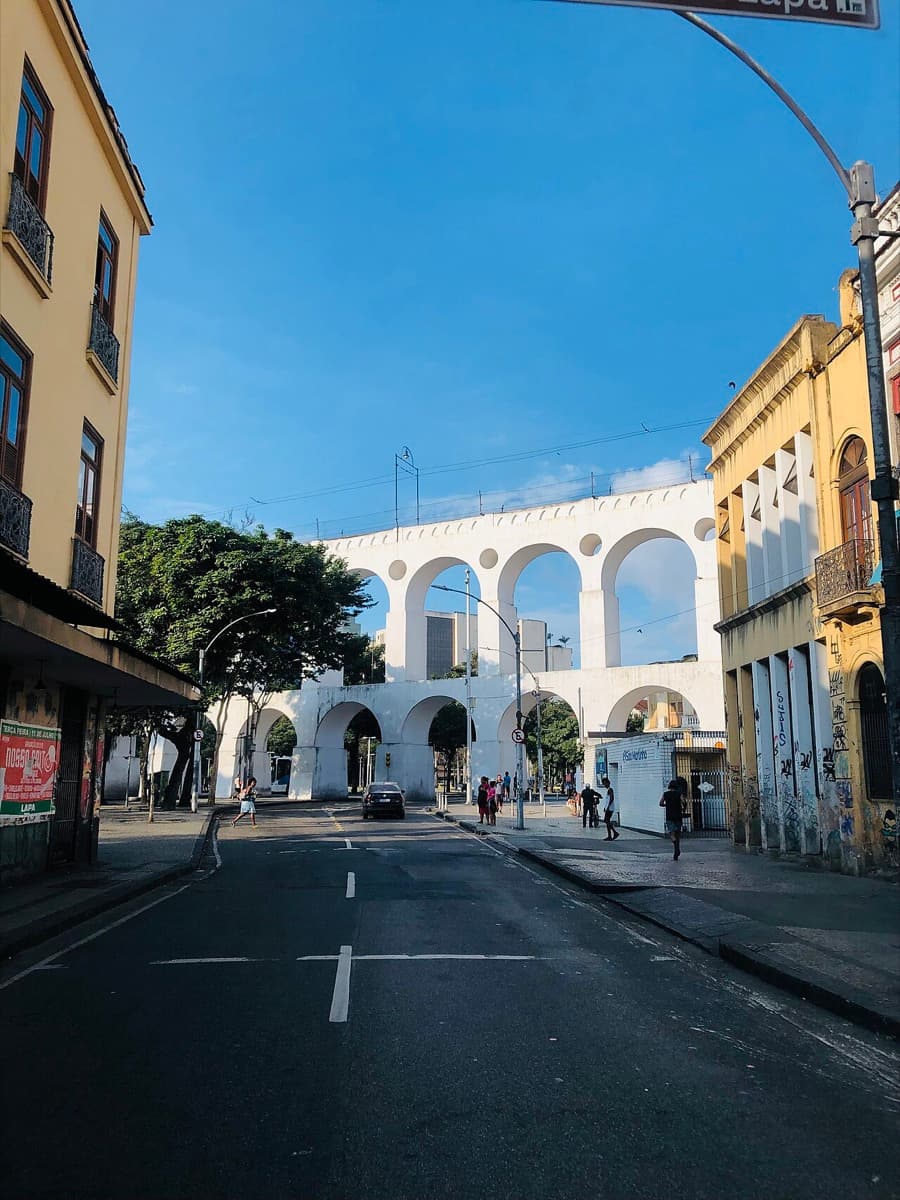
The great white arches that stride across Lapa in central Rio de Janeiro were not built to carry a tram, or to be photographed at night with samba spilling underneath. They were built to carry water. The structure now known as the Arcos da Lapa is the Carioca Aqueduct, an eighteenth-century piece of colonial engineering that brought fresh water into a thirsty city, and only much later became the bridge that hauls a tram up to the hill of Santa Teresa. Read the arches as infrastructure, not scenery, and both the neighborhood below and the neighborhood above start to make sense.
Built to move water, not people
The aqueduct went up in the middle of the eighteenth century. Construction began in 1718 and was completed in 1750, directed by the Portuguese military engineer Jose Fernandes Pinto Alpoim under the governor Gomes Freire de Andrade. Its job was straightforward and vital: bring fresh water from the Carioca River down to the population of a growing colonial port that could not simply dig wells to its needs. Water was the constraint on any tropical city's growth, and moving it reliably across the low ground of the downtown was a serious engineering problem. The arches were the answer.
The scale is still impressive in person. The most monumental segment runs about 270 meters long, with two storeys of stacked arches, forty-two of them in total, reaching a maximum height of roughly 17.6 meters. Standing beneath them you are looking at a piece of working colonial infrastructure that predates the imperial court, the belle epoque city, and everything Lapa later became. When the Portuguese crown arrived in 1808 and turned Rio into an imperial capital, these arches had already been carrying the city's water for more than half a century.
From water channel to tram viaduct
Hear a stop from this walk
Biblioteca Nacional: The National Library
Cities outgrow their old machinery, and by the end of the nineteenth century the aqueduct had done its work. It was deactivated as a water channel late in the 1800s, its purpose overtaken by modern supply systems. But the structure itself was too monumental and too well built to demolish, so Rio did something practical and inspired: in 1896 it adapted the aqueduct into a viaduct for a tram line, the Bonde de Santa Teresa. The arches that had carried water now carried a small yellow tram, climbing from the downtown up to the bohemian hill above. A colonial water channel became a nineteenth-century transit bridge without changing a stone of its silhouette.
That reuse is the reason the arches sit at the exact hinge between two of Roamer's Rio walks. Below them is Lapa and Cinelandia, the belle epoque district of theaters and nightlife, where the arches are the neighborhood's signature landmark. Above them, reached by the tram that runs over the very top, is Santa Teresa, the artists' hill. The aqueduct is literally the bridge between the two, which is why it appears in both stories.
The accident and the return
The Santa Teresa tram is not just a heritage curiosity. In August 2011 a fatal accident on the line brought the service to a halt, and for years the arches carried no tram at all, standing as a monument to a route that had stopped running. Service was gradually restored, and in July 2015 a limited portion of the line reopened, putting the little tram back onto the arches it has crossed since 1896. The return matters because it keeps the structure alive as working transit rather than a fenced-off ruin. The aqueduct has now served the city, in one form or another, for nearly three centuries.
Reading it in place
Come to the Arcos da Lapa in daylight first, before the night crowds arrive, so you can actually see the engineering. Count the two storeys of arches and notice how the whole thing is a single long span of masonry, then look up and picture water running along the top, because that is what it was for. If the Santa Teresa tram is running, watch it cross, and understand that you are looking at an eighteenth-century water bridge doing a nineteenth-century transit job in the twenty-first century.
The arches anchor Roamer's Lapa and Cinelandia: Belle Epoque Rio and connect it to the hill above. They read best once you understand the Rio behind the beach, the inland downtown where the whole city, and its water problem, began. For where they fit in a day, see one day in Rio.
Sources
- Wikipedia, Carioca Aqueduct: construction begun in 1718 and completed in 1750 under the engineer Jose Fernandes Pinto Alpoim and governor Gomes Freire de Andrade, the purpose of bringing fresh water from the Carioca River, the monumental segment of about 270 meters with two storeys of arches totaling 42 and a maximum height of about 17.6 meters, deactivation as an aqueduct late in the nineteenth century, adaptation in 1896 into a viaduct for the Bonde de Santa Teresa tram, the fatal accident of August 2011, and the resumption of limited service in July 2015.
- Roamer tour transcript, Lapa and Cinelandia (rio-lapa-cinelandia-belle-epoque), fact-audited: the Arcos da Lapa as the Carioca Aqueduct and the tram link to Santa Teresa.
Brazil eSIM· 10% off with ROAMER10
Ready to experience it?
Lapa and Cinelandia: Belle Epoque Rio
80 min · 1.9 km · moderate
More from Rio
Explore more at your own pace.

One Day in Rio de Janeiro: A Walkable City-and-Views Itinerary (2026)
Rio de Janeiro Travel Guide: How Many Days, Getting Around, Safety, When to Go (2026)

The Rio Behind the Beach: Why the Old Centro Is the City's Real Origin

What to Eat in Rio de Janeiro: A Food Guide (2026)
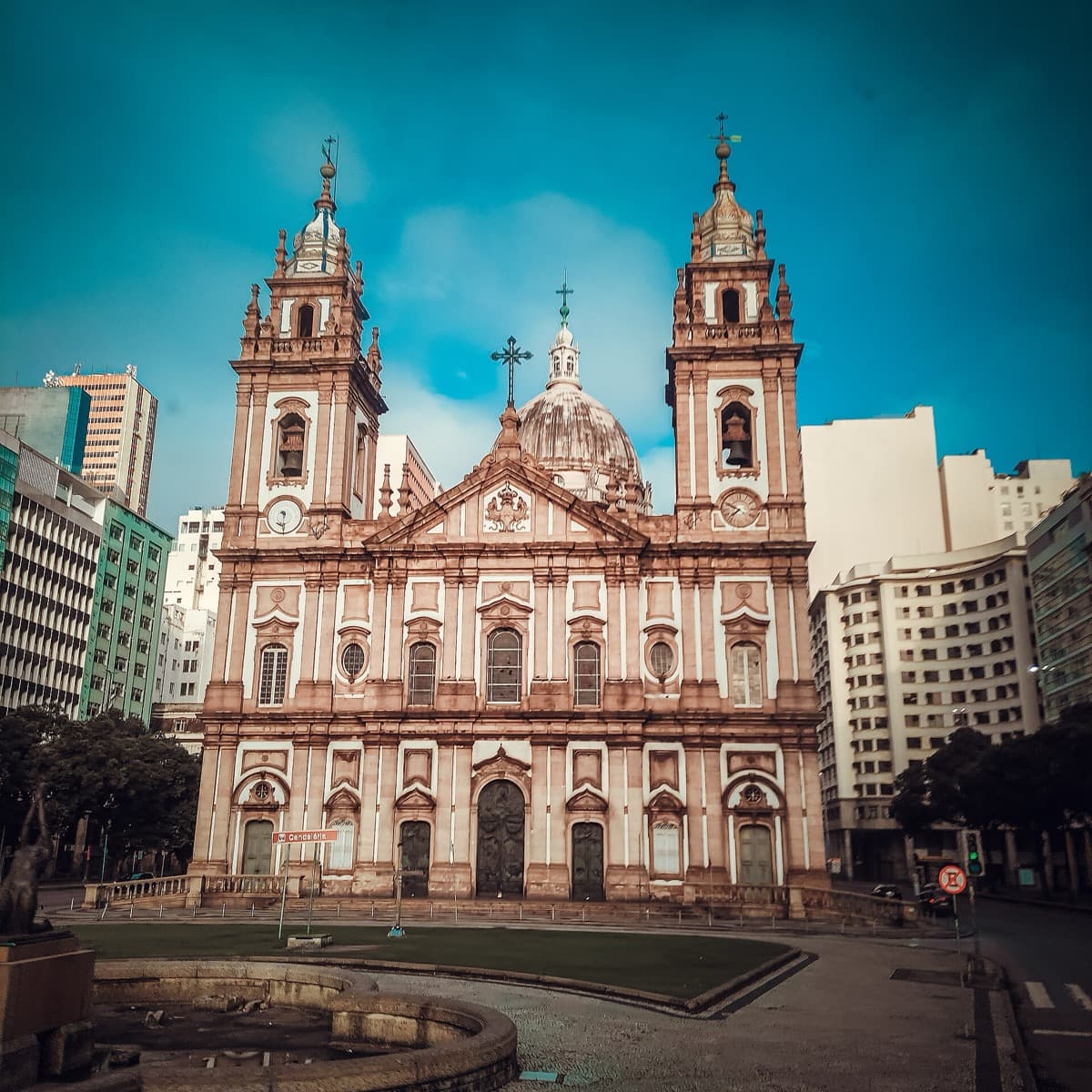
Candelaria Church: The Rio Dome That Was Carved in Lisbon and Shipped Across the Ocean