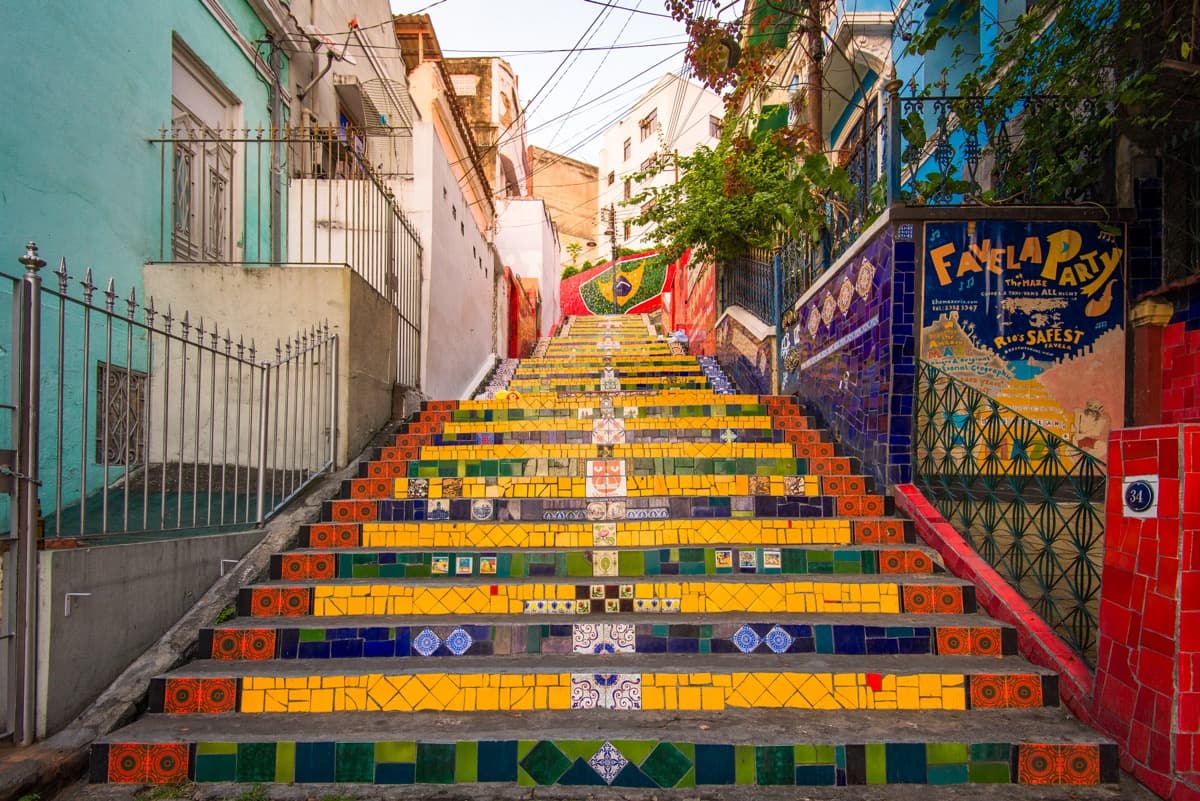
Walk the fifteen hundred metres where Rio tore down its colonial downtown to build a Parisian dream, and find the old white aqueduct arches and the street life of Lapa still standing beside the opera house, the national library, and the fine-arts palace.
Start · Escadaria Selaron: The Tiled Staircase
DirectionsStops
- 1
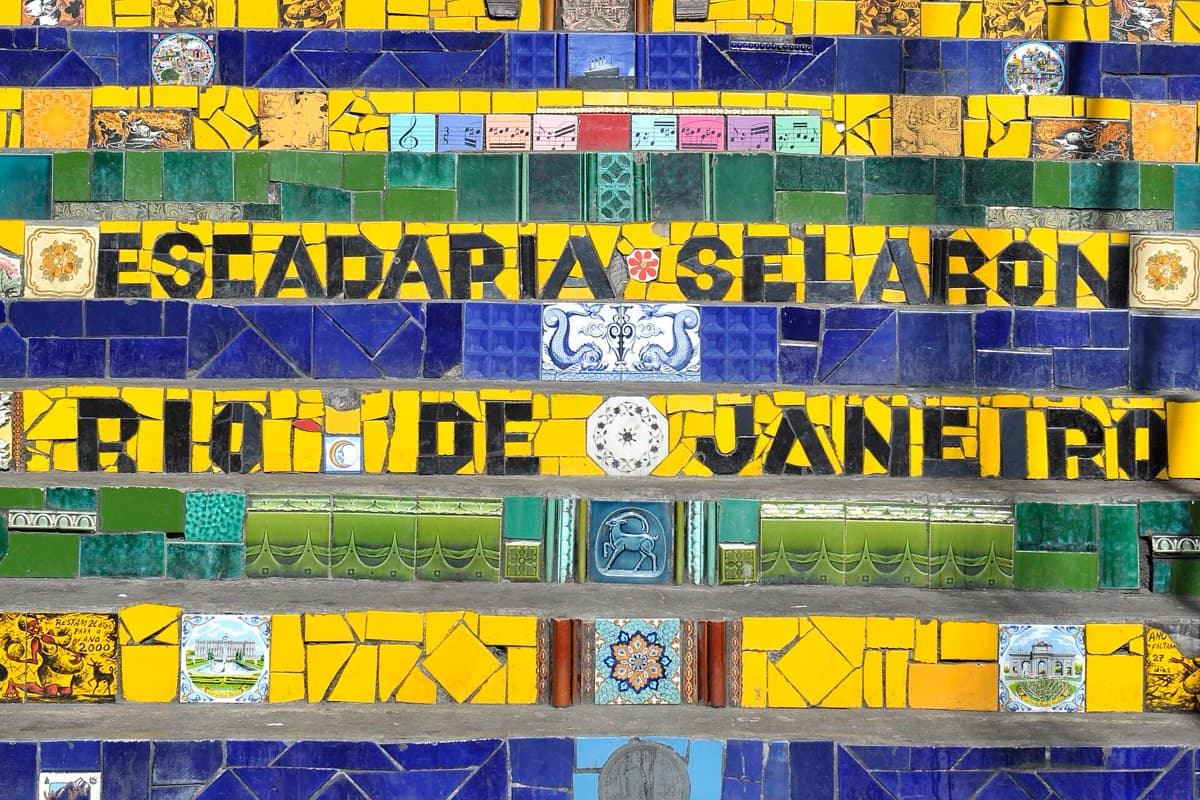
Escadaria Selaron: The Tiled Staircase
A hillside staircase of more than two thousand tiles from around the world, made by one immigrant artist as a tribute to Brazil.
- 2
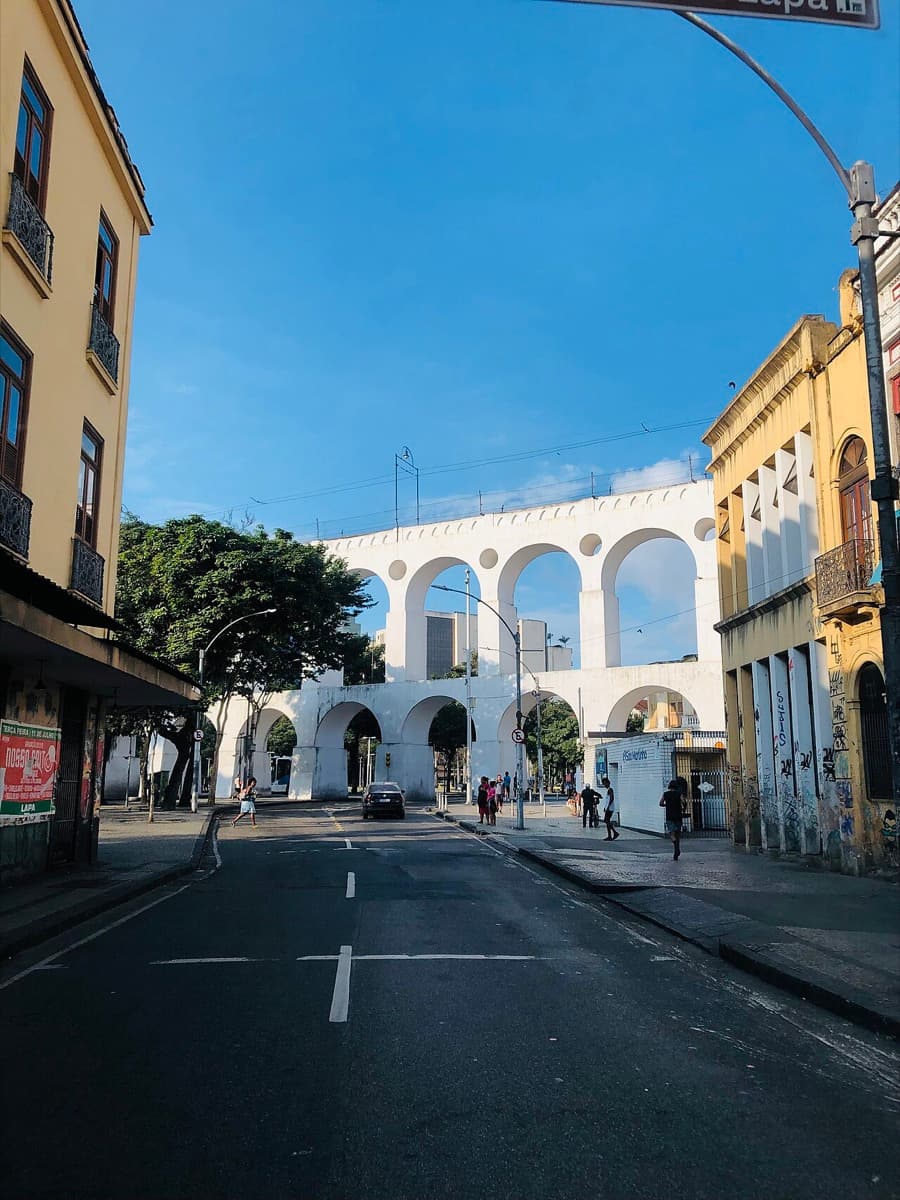
Arcos da Lapa: The Carioca Aqueduct
The great white arches that carried Rio's water for a century and now carry a tram, and the visual emblem of Lapa.
- 3
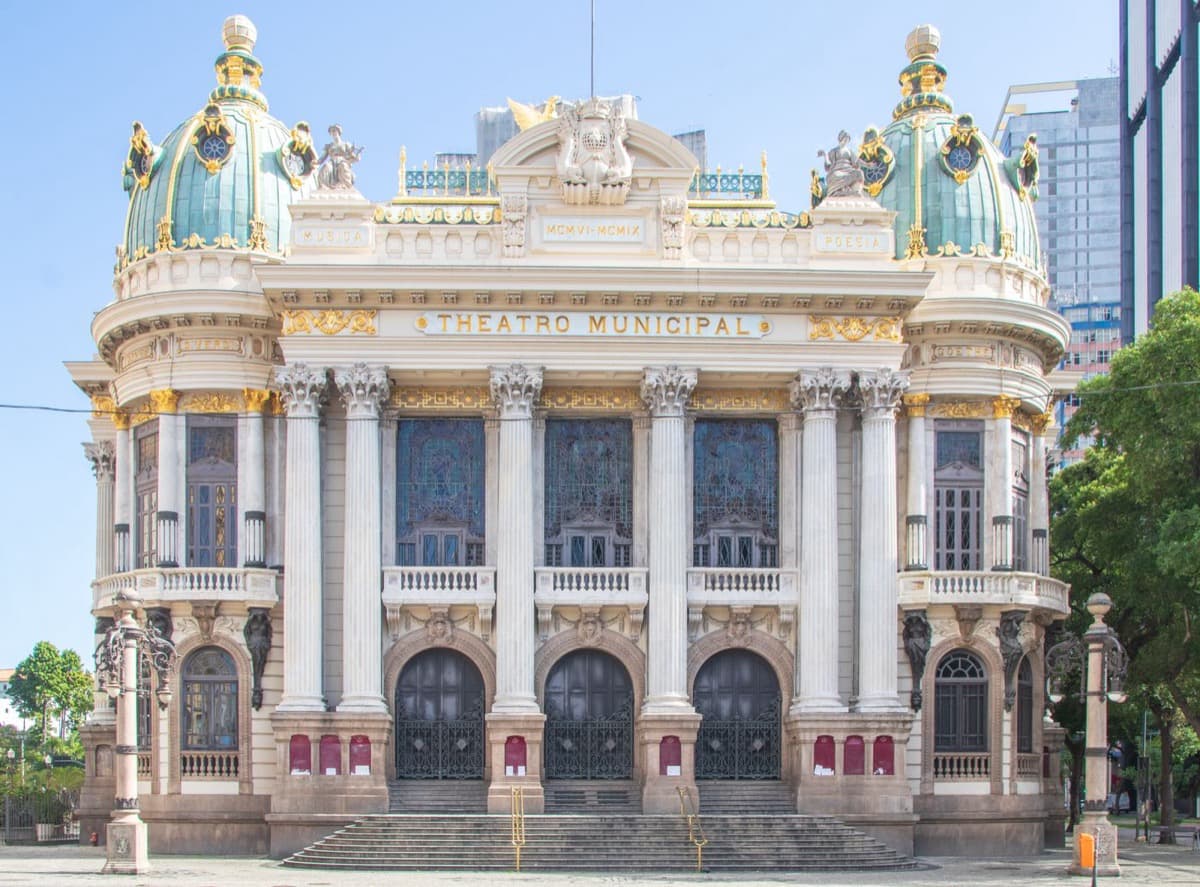
Theatro Municipal: Rio's Opera House
An eclectic opera house from nineteen oh nine, built on the model of the Paris Opera as the centrepiece of Rio's Parisian ambition.
- 4
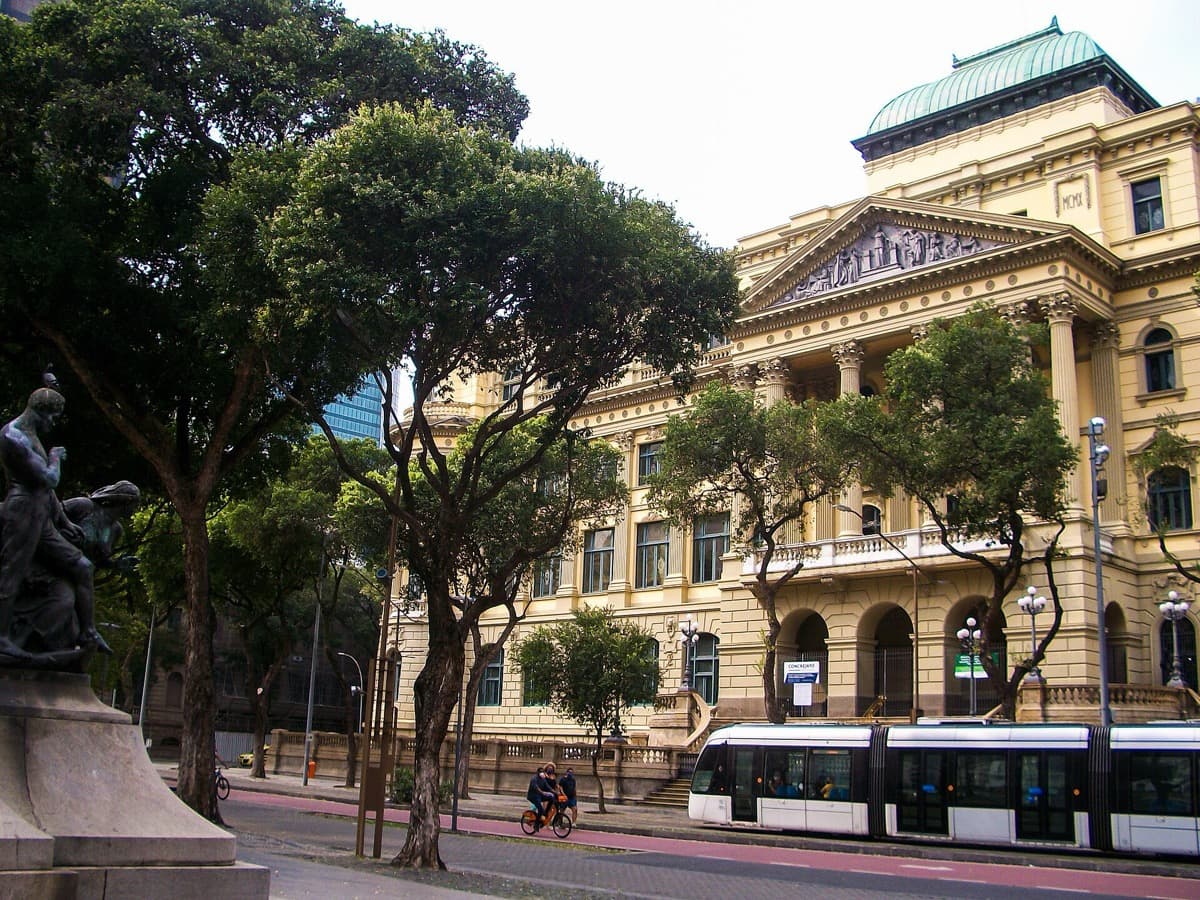
Biblioteca Nacional: The National Library
An eclectic monument of nineteen ten holding some nine million items, recognized by UNESCO as the largest library in Latin America.
- 5
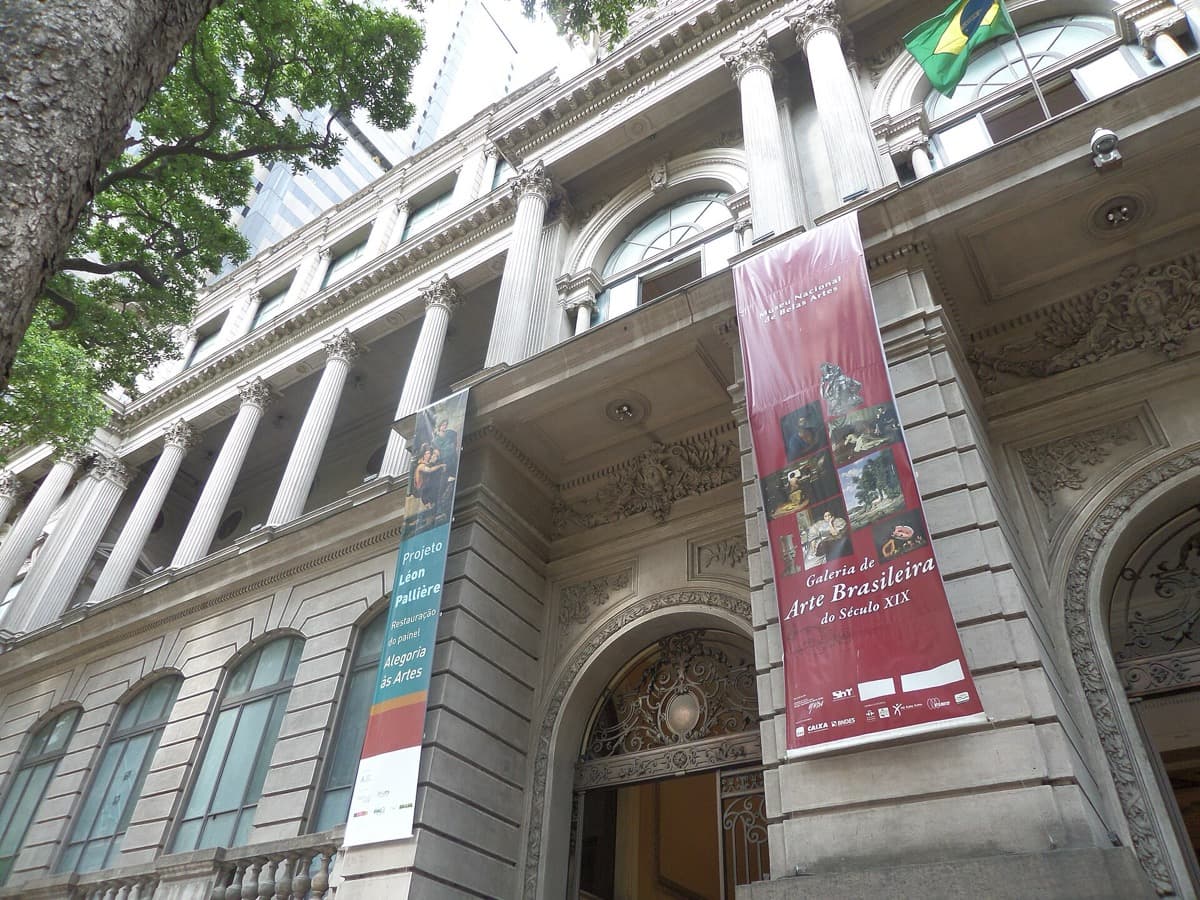
Museu Nacional de Belas Artes: The Fine-Arts Palace
An eclectic nineteen oh eight palace of fine arts holding some twenty thousand works, the third grand monument of the belle epoque core.
- 6
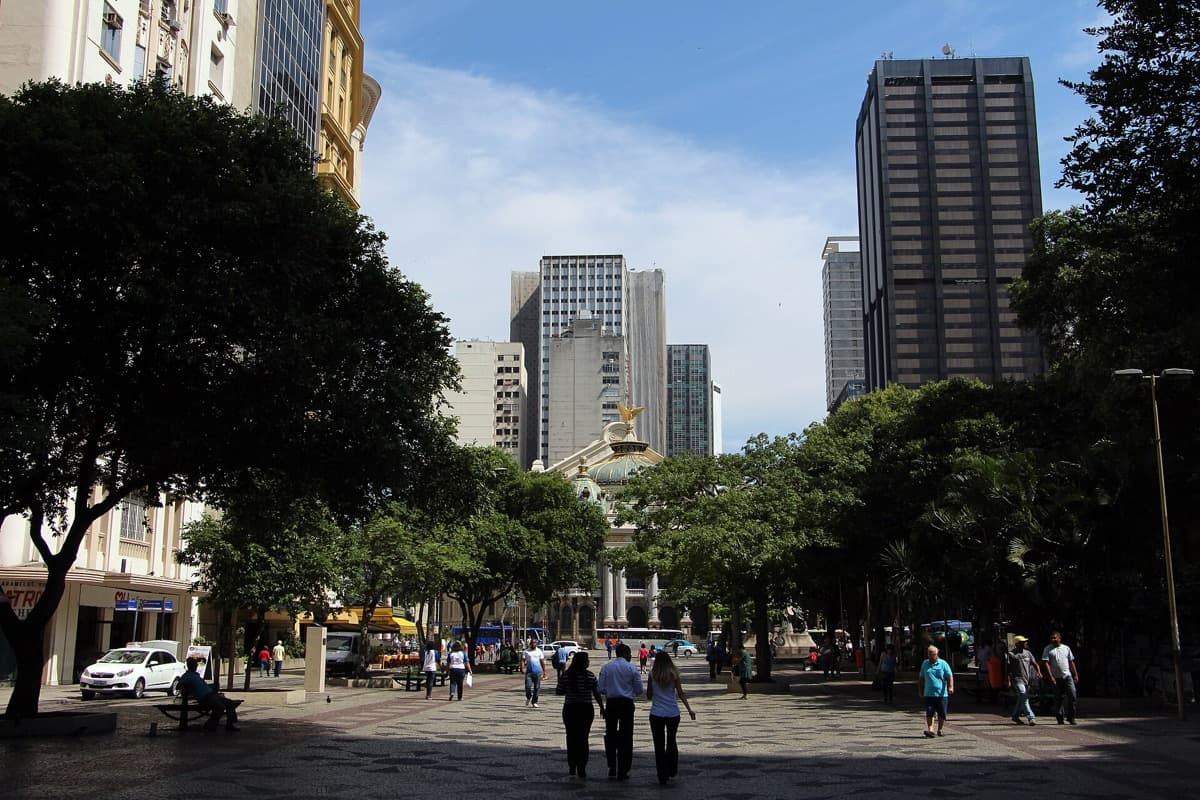
Praca Floriano: Cinelandia
The square that ties the walk together, framed by the grand monuments and nicknamed Cinelandia for its nineteen-twenties cinemas.
Details
Best Time to Visit
Late afternoon on a weekday is ideal. The light warms the white aqueduct arches and the pale stone facades, the heat of the day has eased, and you can time your arrival in Cinelandia for early evening when the square comes alive. Mornings are quieter and cooler for the climb to the Selaron staircase. If you want to see the Santa Teresa tram cross the arches, check its running times before you set out.
Pro Tips
- •Wear comfortable, closed shoes with grip. The Lapa streets and the Selaron staircase are steep and cobbled, and the tiles can be slick.
- •Carry water and start with a hat and sunscreen. The square and the avenue offer little shade in the middle of the day.
- •The three grand monuments are best read from outside first. The plaza views of the theatre, library, and fine-arts palace are free, so save any ticketed interiors for after you have taken in the facades.
- •The National Library offers free entry, so step inside if the timing works to see the eclectic interior up close.
- •Go slowly on the Selaron staircase and step to the side to let people pass. It is working neighbourhood stairs as well as an artwork, so let others through.
- •Look up constantly. The best details on this walk, the tram on the arches, the rooflines of the opera house, the mix of styles on each facade, are all above eye level.
Safety & Precautions
- •Central Rio can be busy and uneven, and the historic centre quietens after office hours. Keep your phone and valuables out of sight, stay on populated streets, and be extra aware around Lapa and the staircase after dark.
- •The tropical sun is strong and the middle of the day can be very hot. Pace yourself on the climbs, drink water, and use shade where you can find it.
- •Sudden heavy rain is common, especially in the warmer months. Cobbles, tiles, and the Selaron steps become slippery when wet, so slow down and watch your footing.
- •Treat the Selaron staircase and the working streets of Lapa with respect. These are living public spaces and a residential neighbourhood, not a stage set, so keep passages clear and be considerate of the people who live and move through them.
- •If you stay into the evening around Lapa, order and pay at the bar rather than an open tab, keep your drink and your card in sight, and do not leave a drink unattended. When you leave, book an app ride or use an official taxi stand instead of flagging a car on the street.
Travel advisory: Exercise Increased Caution (Level 2).
Gallery
Related Reading
Go deeper on what you'll see, hear, and walk through.

Overview
Best Self-Guided Walking Tours in Rio de Janeiro (2026)
3 min
Overview
One Day in Rio de Janeiro: A Walkable City-and-Views Itinerary (2026)
5 min
Overview
Rio de Janeiro Travel Guide: How Many Days, Getting Around, Safety, When to Go (2026)
6 min
Thematic
What to Eat in Rio de Janeiro: A Food Guide (2026)
4 min
Deep dive
Arcos da Lapa: The Rio Aqueduct That Became a Tram Bridge
5 min
Deep dive
The Escadaria Selaron: One Man, 215 Steps, and Rio's Answer to Its Own Grand Boulevard
6 min
Read the walk
The full story of Lapa and Cinelandia: Belle Epoque Rio, in words. Prefer to listen? Play it narrated, from home or on location.
Introduction
This is a walk about a city that tried to become Paris, and about everything of its own that it kept anyway. You are in central Rio de Janeiro, in Brazil, in the district of Lapa and the civic square just north of it, and over the next six stops you will cover roughly two kilometres in about seventy-five minutes, walking at whatever pace suits you. You can pause any stop, skip any stop, and pick the whole thing up again later. Here is the paradox you are about to read in stone and tile. At the start of the twentieth century, Rio demolished a dense colonial neighbourhood and cut a wide boulevard through the rubble, then lined it with an opera house modeled on the Paris Opera, a monumental national library, and a palace of fine arts. All of that grandeur, imported in spirit from Europe, was built just a few hundred metres from the old white aqueduct arches and the Lapa streets that carried Rio's own popular culture. Ambition to look like Paris on one side. The stubborn, homegrown Carioca reality on the other. The remarkable thing is that neither one ever erased the other. You begin at the eighteenth-century aqueduct, step to a tiled staircase made by one immigrant artist, then climb into the belle epoque monuments, and close in the square where high culture and street culture finally share one plaza. Take your time, look up often, and notice the seams where two very different cities meet. When you arrive at the Escadaria Selaron, begin with stop one.
1. Escadaria Selaron: The Tiled Staircase
A short climb from the arches brings you to a staircase that could not be more different from the grand stone monuments waiting ahead, and that contrast is exactly why it belongs on this walk. This is the Escadaria Selaron, a long flight of steps running up the hillside between Lapa and the neighbourhood of Santa Teresa, covered end to end in ceramic tile. It is the work of one man. A Chilean-born artist named Jorge Selaron began tiling these steps in nineteen ninety, working on them for the rest of his life. He was found dead on the staircase itself on January tenth, twenty thirteen. Over those years he covered two hundred fifteen steps in more than two thousand tiles, gathered from over sixty countries, a patchwork of red and blue and yellow that travelers sent him or that he collected himself. Selaron described the work simply as, in his words, my tribute to the Brazilian people. Look closely and you will see the layers of a project that was never really finished, tiles swapped out, painted over, replaced again, an artwork that kept changing as long as its maker was alive. Think about where you are standing in the argument of this walk. The monuments ahead were commissioned by a government determined to make Rio look European and modern. This staircase was made by a single immigrant, tile by tile, by hand, as a personal gift to his adopted country. Both are on the same hillside. Both are now things people cross the city to see. One is official grandeur. The other is folk devotion. The stairs are public, free, and open whenever you want to walk them, so take a moment before you climb toward the belle epoque.
2. Arcos da Lapa: The Carioca Aqueduct
Start with the arches, because everything else on this walk answers to them. This is the Carioca Aqueduct, the tall white structure that Cariocas simply call the Arcos da Lapa. Work on it began in seventeen eighteen, and it was inaugurated in seventeen fifty, built to carry fresh water from the Carioca River down to a growing colonial city that did not have enough of it. The governor of the day, Gomes Freire de Andrade, ordered the structure, and a Portuguese military engineer named Jose Fernandes Pinto Alpoim directed the works. The design looks back to Portugal, to aqueducts like the Aguas Livres Aqueduct in Lisbon, so even this earliest monument on the walk is already an idea imported across the Atlantic. Look at the scale. It runs two hundred seventy metres long, on two rows of forty-two arches, and stands about seventeen and a half metres tall at its highest point. Now the twist. By the end of the nineteenth century the aqueduct had stopped carrying water. Rather than tear it down, the city repurposed it. In eighteen ninety-six it was adapted into a viaduct for the Santa Teresa tram, which still rattles across the top of these arches today, climbing toward the hills. So a piece of colonial water engineering became a bridge for a streetcar, and then became the emblem of Lapa's nightlife. Stand here after dark and the arches glow above a crowd. That is the pattern to carry uphill and into the grand square ahead. Rio rarely starts from scratch. It layers the new life it wants over the old bones it already has.
3. Theatro Municipal: Rio's Opera House
Now you are standing in front of the clearest statement of this whole walk's argument. This is the Theatro Municipal, Rio's opera house, and it is the building that says, out loud and in marble, we want to be Paris. It was inaugurated on July fourteenth, nineteen oh nine, by…
Full narration for this stop unlocks with the tour.
4. Biblioteca Nacional: The National Library
A few steps along the same grand avenue brings you to the National Library of Brazil, and it belongs to the same burst of ambition that raised the opera house. The institution itself is older than the building. It was founded in eighteen ten, its first collections arriving with…
Full narration for this stop unlocks with the tour.
5. Museu Nacional de Belas Artes: The Fine-Arts Palace
The third of the great civic monuments stands on the same square, and it completes the belle epoque set. This is the National Museum of Fine Arts, and its palace was completed in nineteen oh eight, a year before the opera house opened. The architect was a Spaniard, Adolfo…
Full narration for this stop unlocks with the tour.
6. Praca Floriano: Cinelandia
End where all of it converges, in the open square these buildings ring. Its official name is Praca Floriano Peixoto, after Floriano Peixoto, the second president of Brazil, but almost no one uses that name. Everyone calls it Cinelandia, which means, roughly, cinema land. The…
Full narration for this stop unlocks with the tour.