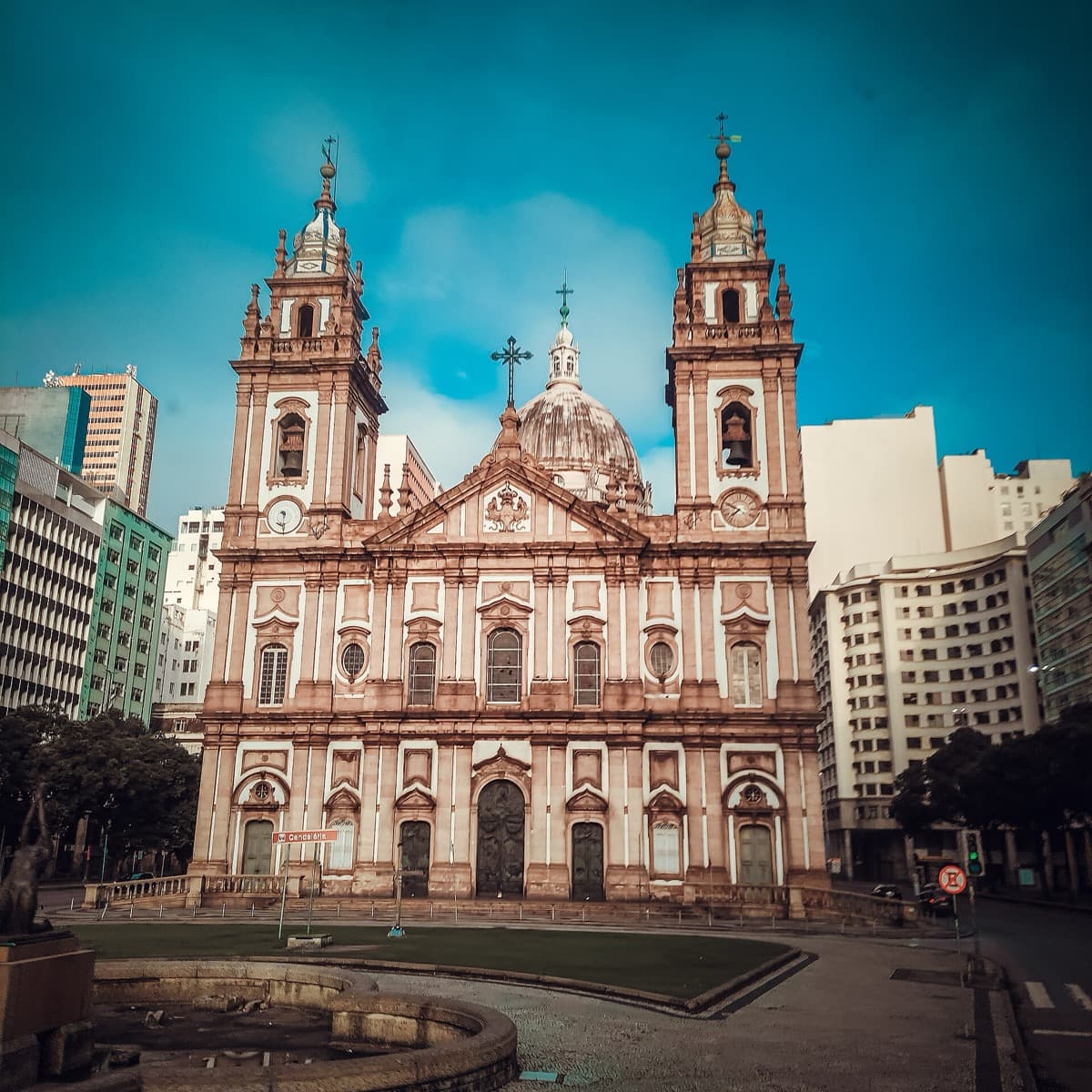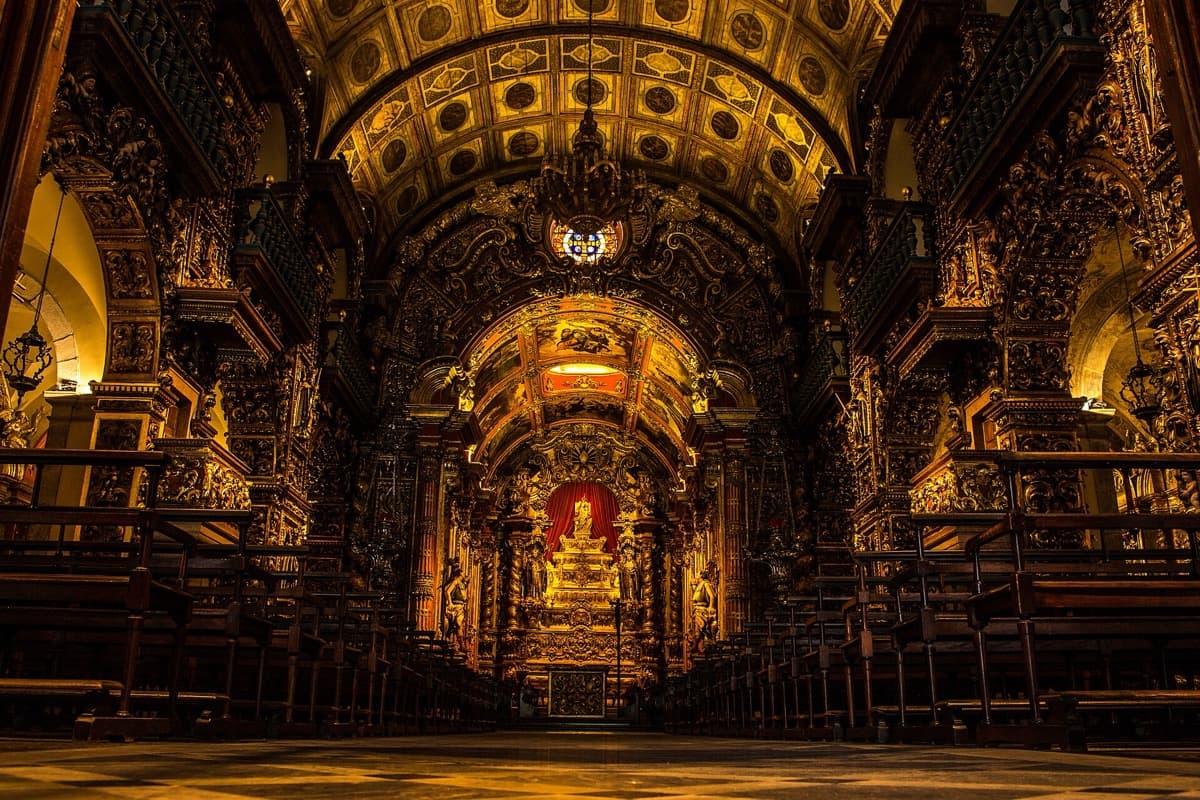
The Mosteiro de Sao Bento, founded in 1590 on a hill above central Rio de Janeiro, hides one of Brazil's most heavily gilded baroque interiors behind a deliberately plain exterior, and it predates the entire imperial story of the Centro that surrounds it. Almost everything a visitor associates with historic Rio, the fleeing Portuguese court, the coronations, the palace on the square, arrived later. This monastery was already more than two centuries old when the empire began. To stand inside it is to look at the oldest root of the colonial city, and at gold that outlasted the crown it was often mistaken for serving.
A foundation older than the empire
The abbey's history begins in 1590, when a settler named Manoel de Brito and his son, Diogo de Brito de Lacerda, donated land in the young port to Benedictine monks who had come from Bahia, the older colonial center to the north. The full title of the house is the Abbey of Our Lady of Montserrat, and it sits on the Morro de Sao Bento at the northern edge of the modern Centro, alongside the still-active Colegio de Sao Bento. That 1590 date is the fact to hold onto. It means the monastery had stood on its hill for more than two hundred years before Napoleon's armies pushed the Portuguese court across the Atlantic in 1808. The imperial episode that gives central Rio so much of its drama is, from the monastery's point of view, a late arrival.
That long life is why the building sits at the deepest layer of the colonial city. It watched Rio grow from a modest coastal settlement into a viceregal capital and then, briefly, into the working seat of a European monarchy. When the court finally did arrive, it reached even here. From 1808 until 1832 the monastery housed the Royal Naval Academy, folding a pre-imperial abbey into the machinery of the transplanted crown. The monastery lent its walls to the empire without ever belonging to it.
The plain wall and what it hides
Hear a stop from this walk
Mosteiro de Sao Bento: The Gilded Root
From the outside, Sao Bento is almost austere. The facade is restrained, the stone plain, the whole hilltop presence closer to a fortress of quiet than a showpiece. This is not neglect. It is a Benedictine habit of reserving splendor for the interior, for the space set aside for worship rather than for display to the street. The result is one of the most effective architectural surprises in Rio. You climb, you pass through an unremarkable door, and the interior detonates into gold.
The nave and chapels are covered in gold-leaf gilding, the dense carved woodwork of the baroque flowing into the lighter, more playful rococo, worked across the seventeenth and eighteenth centuries. There is very little bare surface. Columns, arches, altars, and ceiling carry carved and gilded ornament until the eye stops trying to separate one element from another and simply reads the room as a single field of light. Wikipedia describes the monastery as a primary example of Portuguese colonial architecture in Brazil, and the interior is the reason. This is not decoration applied to a building. The gilding is the building's argument.
The hands behind the gold
The gold has authors, and their names matter because they tie this final hill back into the whole colonial city below. According to the monastery's own history, the first great carver here was the Portuguese monk-sculptor Domingos da Conceicao, who lived from around 1643 to 1718. He designed and carved part of the gilding in the nave and the main chapel, and he sculpted the statues of Saint Benedict, Saint Scholastica, and Our Lady of Montserrat that anchor the interior's iconography. His work belongs to the earlier, heavier baroque moment, and it set the tone for everything added later.
The later gilding, executed between 1789 and 1800, is the work of Inacio Ferreira Pinto, remembered as one of the finest rococo carvers of colonial Rio. That name is the quiet link that ties the Centro together. Ferreira Pinto had also gilded the interior of the old coronation cathedral, the Igreja de Nossa Senhora do Carmo da Antiga Se, the church where Pedro the First was crowned in 1822 and Pedro the Second in 1841. So the same hands that gilded the room where an emperor received his crown also gilded this monastery on the hill. Walk the imperial Centro from the palace square upward and you end where a single artist's craft reappears. The gold of the coronation chapel and the gold of Sao Bento are, in a real and literal sense, the same story told twice.
Reading it in place
Sao Bento rewards a visitor who arrives knowing what to look for. Notice first how completely the plain exterior misdirects you, then how the interior refuses to let your eye rest, then how the older baroque carving of Domingos da Conceicao sits beside the later rococo work of Ferreira Pinto. You are looking at two generations of colonial craft in one room, and at a building that quietly outranks the empire in age.
This is an active Benedictine monastery, not a museum, and it keeps limited visiting hours and closes for services. Dress modestly, with shoulders and knees covered, keep your voice low, and be ready to step aside for worshippers. The approach is a genuine climb up the Morro de Sao Bento, so wear shoes with grip. A weekday morning is the safest window, before the Centro's business district quiets and before the tropical heat peaks. If you treat it as the endpoint of a walk that begins down at the water, the gold becomes the last word: older than the empire, glowing on a hill that watched the whole story unfold.
To walk the full colonial route that climbs from the palace square to this hilltop, see Rio de Janeiro.
Sources
- Sao Bento Monastery, Wikipedia: foundation date, the 1590 land donation by Manoel de Brito and his son, the monks from Bahia, and the roles of Domingos da Conceicao and Inacio Ferreira Pinto in the gilding.
- Mosteiro de Sao Bento do Rio, official history: the monastery's own account of its founding, artists, and interior.
- Mosteiro de Sao Bento, Riotur (Rio city tourism): visiting information and the description of the gilded baroque interior.
- Igreja de Nossa Senhora do Carmo da Antiga Se, official site: the coronations of Pedro the First and Pedro the Second and Ferreira Pinto's gilded rococo woodwork.
Brazil eSIM· 10% off with ROAMER10
Ready to experience it?
Imperial Rio: The Colonial Centro
90 min · 2.2 km · moderate
More from Rio
Explore more at your own pace.

One Day in Rio de Janeiro: A Walkable City-and-Views Itinerary (2026)
Rio de Janeiro Travel Guide: How Many Days, Getting Around, Safety, When to Go (2026)

The Rio Behind the Beach: Why the Old Centro Is the City's Real Origin
What to Eat in Rio de Janeiro: A Food Guide (2026)
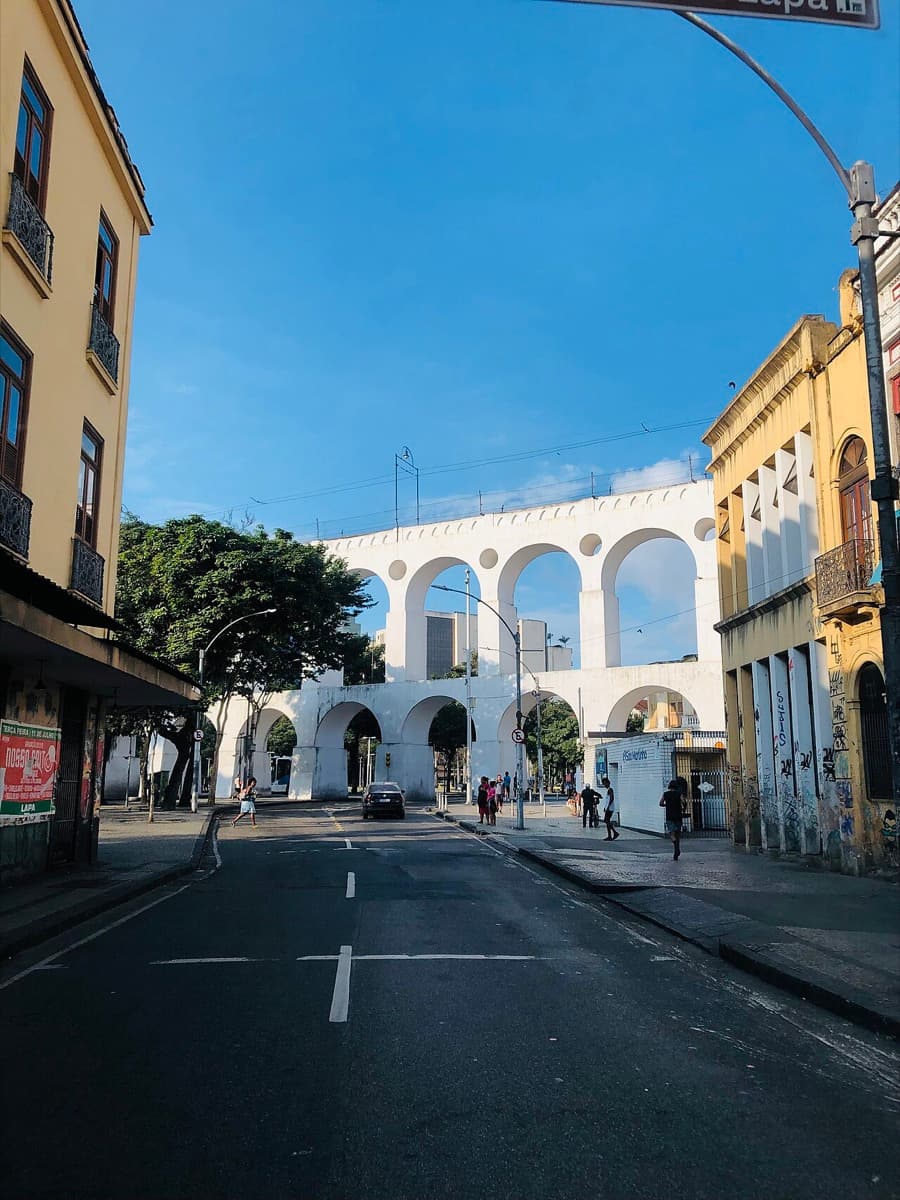
Arcos da Lapa: The Rio Aqueduct That Became a Tram Bridge