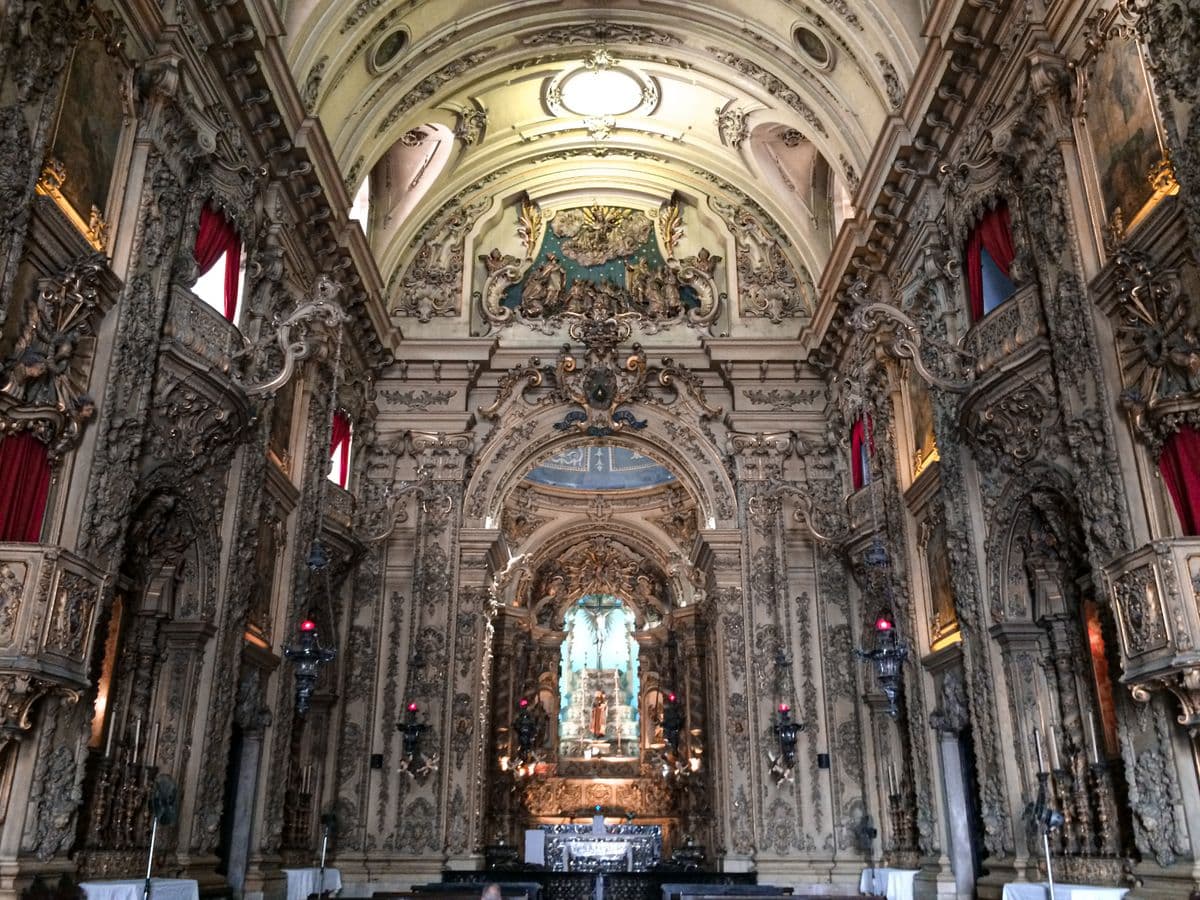
For one improbable stretch of history, this port was not a colony reporting to Europe but the seat of Europe itself in the Americas. Walk the palace square, colonial lane, coronation chapel, and gilded monastery where that story is written into stone.
Start · Praca Quinze and the Paco Imperial: The Palace on the Square
DirectionsStops
- 1
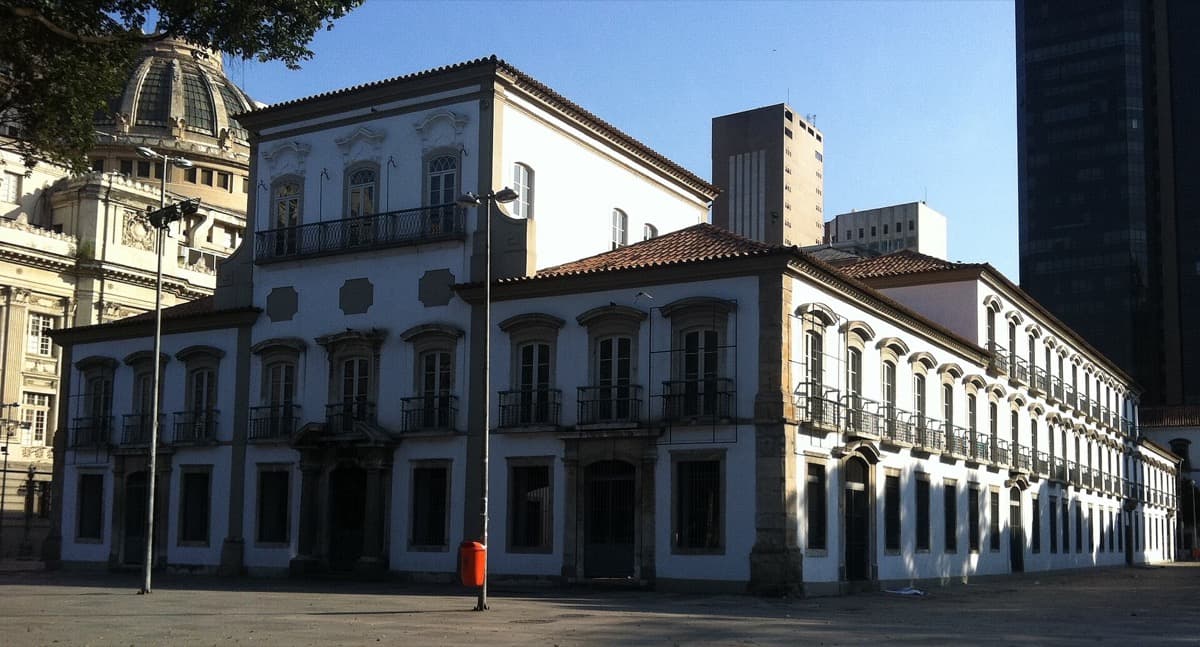
Praca Quinze and the Paco Imperial: The Palace on the Square
The riverside square and low white palace where a Portuguese prince declared he would stay, and where the law abolishing slavery was signed sixty-six years later.
- 2
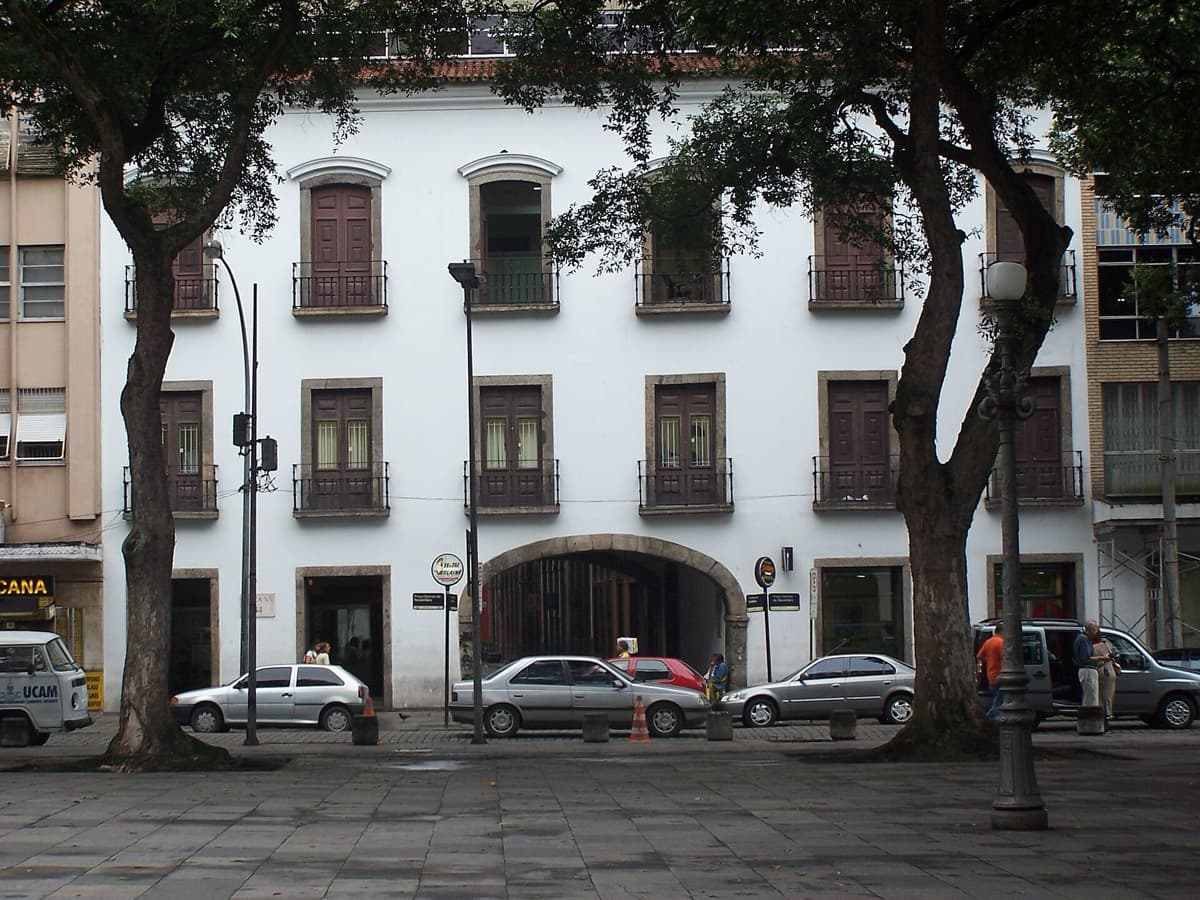
Arco do Teles and Travessa do Comercio: The Surviving Colonial Lane
A mid-eighteenth-century stone arch opening into one of the last narrow lanes where the fabric of colonial Rio still stands.
- 3
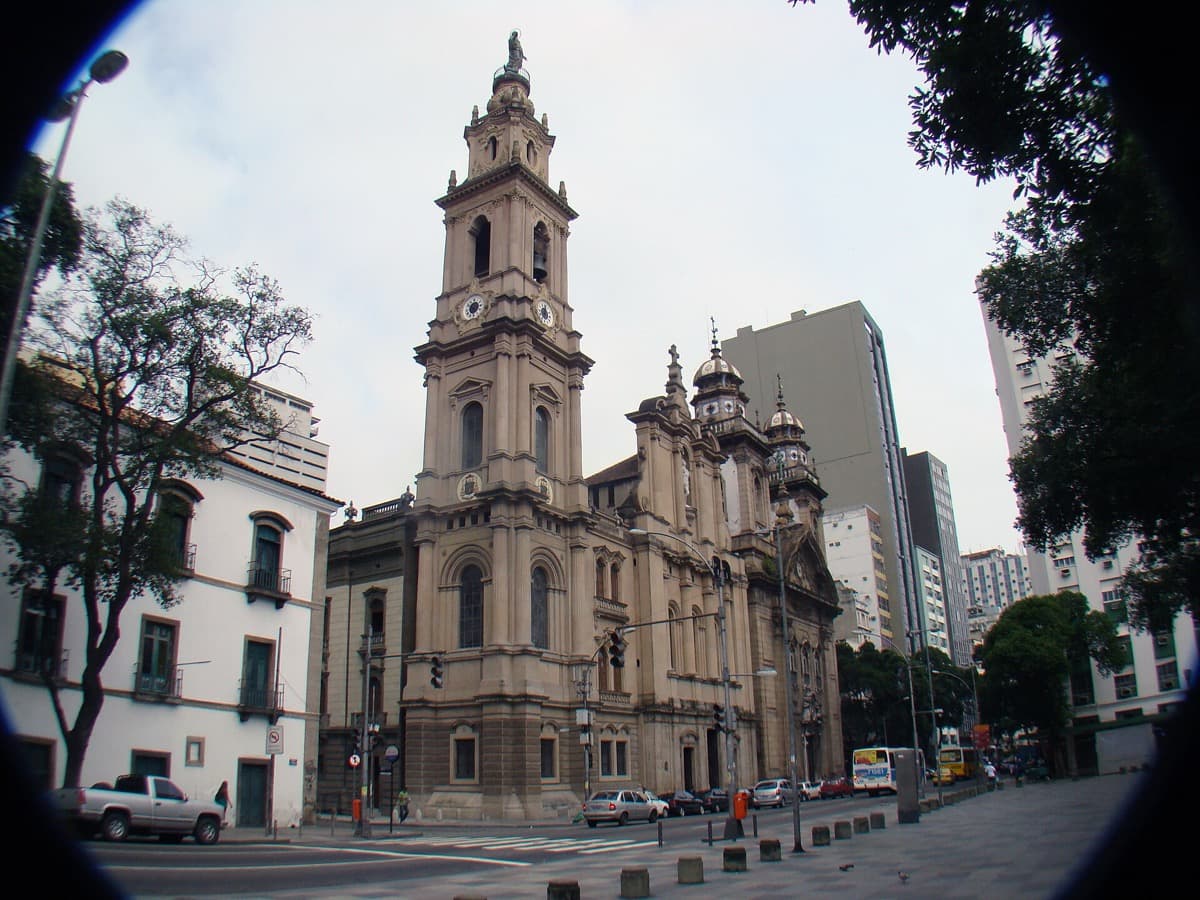
Igreja de Nossa Senhora do Carmo da Antiga Se: The Chapel of Coronations
The former royal and imperial chapel that hosted the only two Christian imperial coronations ever held in South America.
- 4
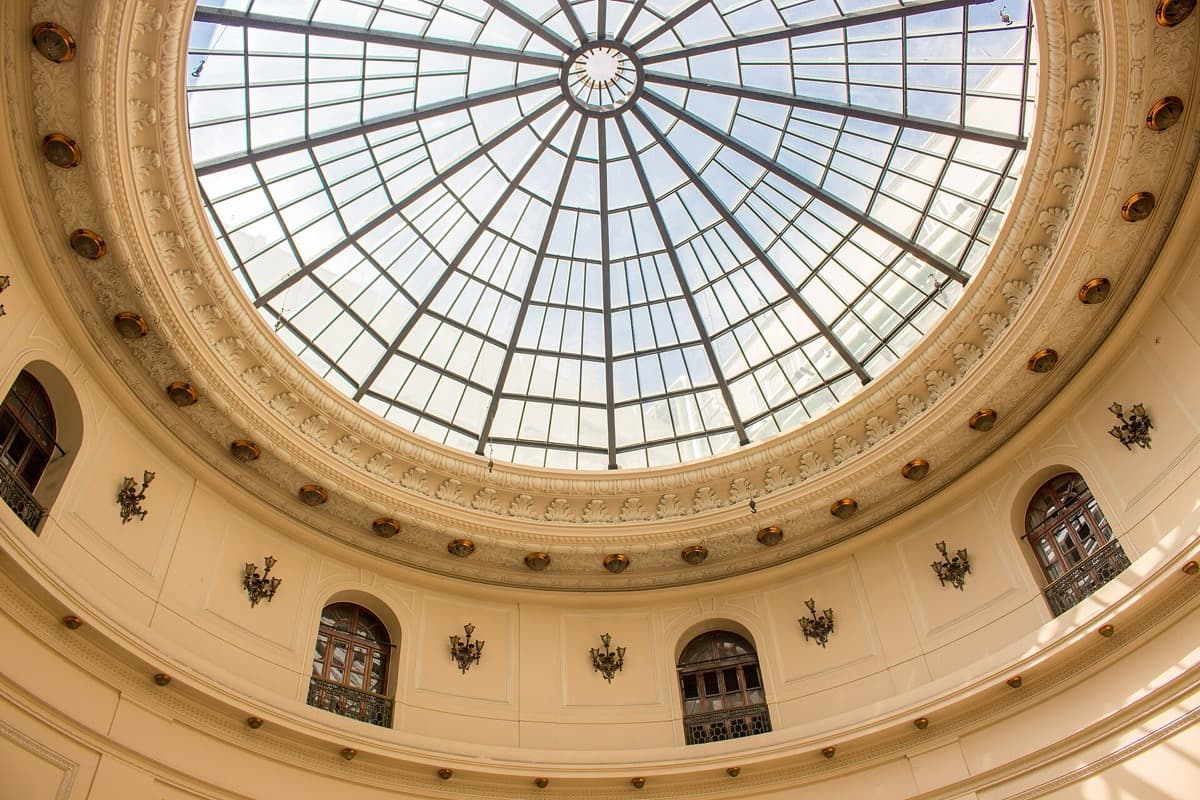
Centro Cultural Banco do Brasil: The Commercial Palace
A grand neoclassical rotunda built as the home of Rio's Commercial Association, marking the money of the nineteenth-century boom.
- 5
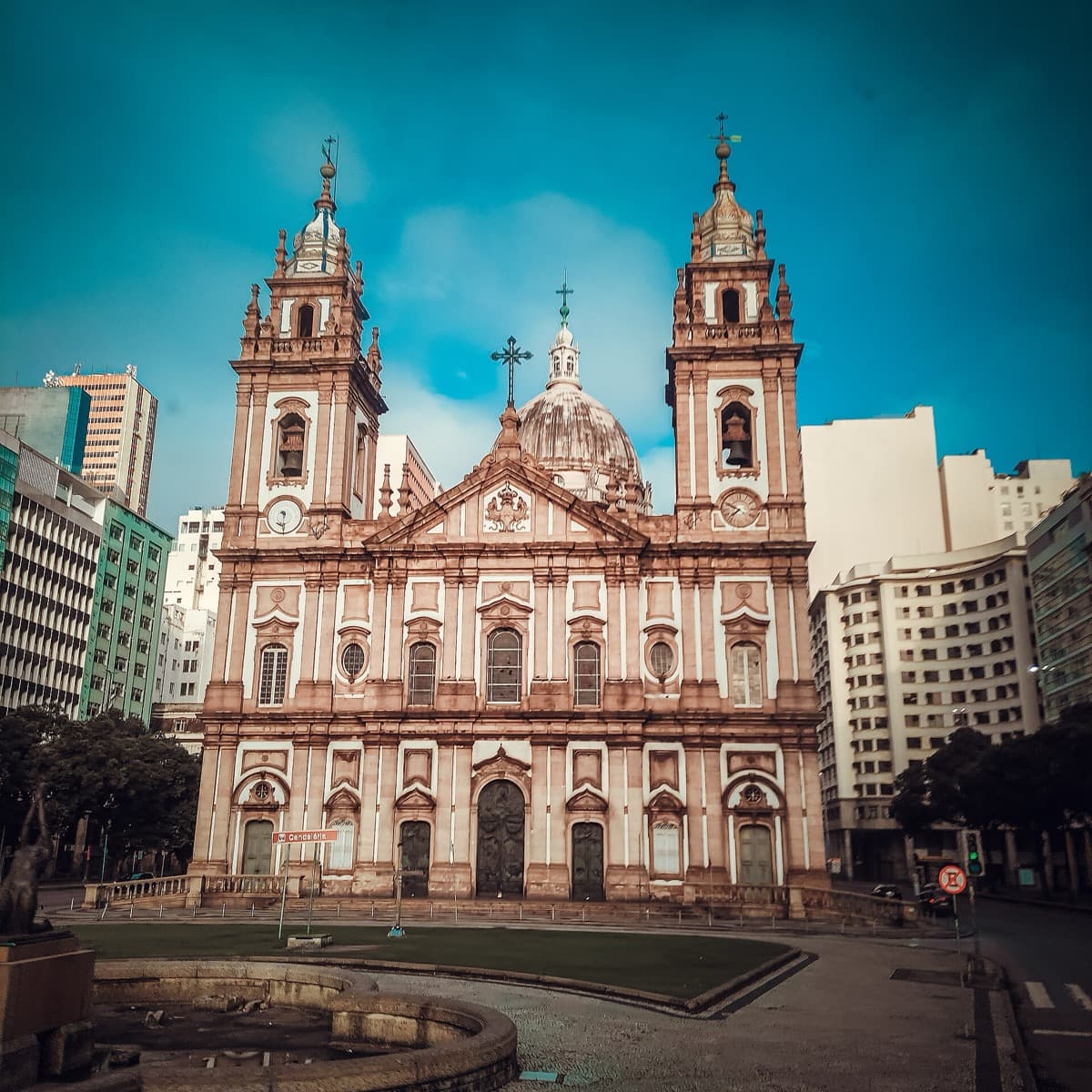
Igreja de Nossa Senhora da Candelaria: The Imported Dome
A monumental domed church whose crown was carved in Lisbon and shipped across the Atlantic, and whose steps carry a painful modern memory.
- 6
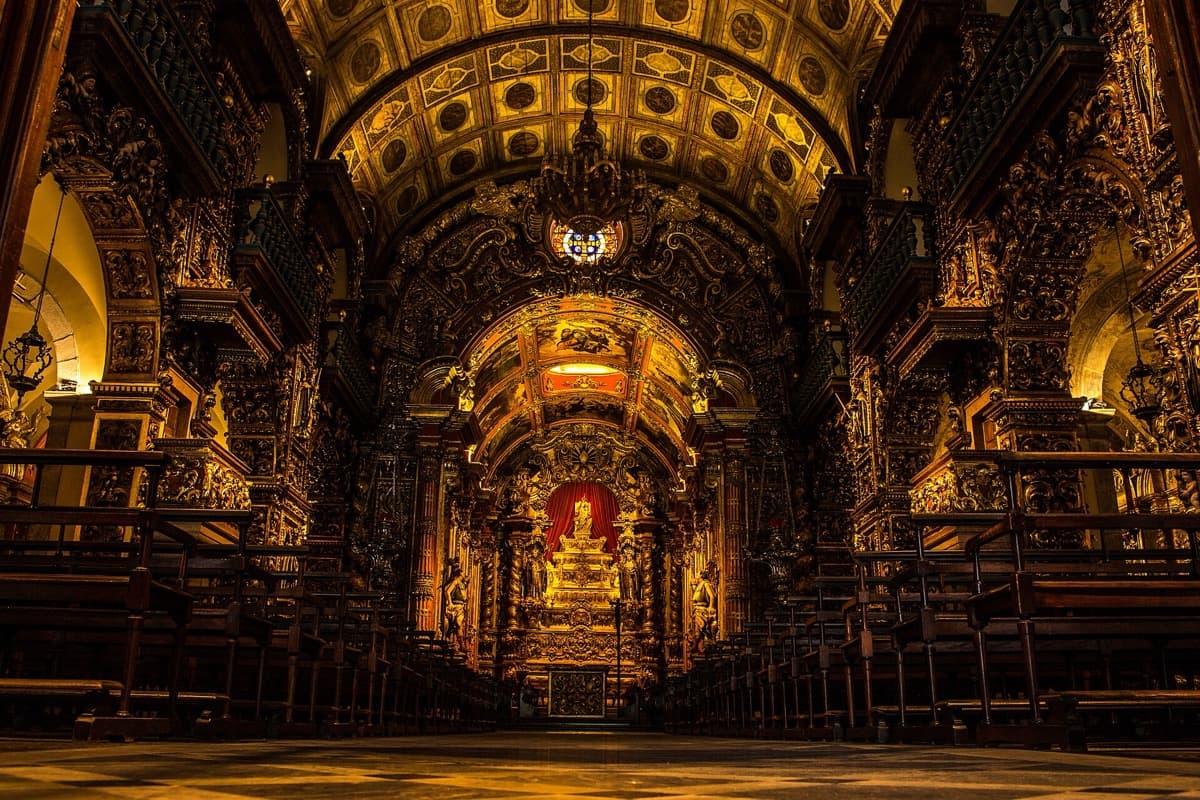
Mosteiro de Sao Bento: The Gilded Root
A Benedictine abbey founded in fifteen ninety whose plain hilltop exterior hides one of the most richly gilded baroque interiors in Brazil.
Details
Best Time to Visit
Weekday mornings, roughly nine to eleven, are ideal: the churches and cultural buildings are open, the Centro is lively with office life rather than empty, and the tropical heat has not yet peaked. Note that much of the Centro is a business district that quiets sharply on weekends and in the evenings, when some interiors close and the streets thin out. Aim to finish at Sao Bento before midday, and check the monastery's hours in advance, since its visiting windows are limited and it closes for services.
Pro Tips
- •Confirm opening hours before you go. The churches and the Sao Bento monastery keep limited visiting windows and close for Mass, so a morning start gives you the best chance of seeing every interior open.
- •Dress modestly for the sacred stops. Shoulders and knees covered will let you enter the coronation chapel and the monastery without hesitation, and voices should stay low inside active places of worship.
- •Wear comfortable, closed shoes with grip. The Travessa do Comercio has worn colonial paving and the final approach to Sao Bento is a genuine hill climb.
- •Do the walk south to north as laid out, from Praca Quinze up to Sao Bento. The route follows history upward, and ending on the gilded interior gives the whole tour its climax.
- •Carry water and start early. The Centro offers little shade between buildings and the tropical midday sun is stronger than it feels near the water.
- •Pause on the palace square before you move. Standing where both the Dia do Fico and the abolition of slavery happened is the emotional key to everything that follows, so give stop one a few extra minutes.
Safety & Precautions
- •Rio's sun and heat are intense. Bring water, sunscreen, and a hat, since the walk offers little continuous shade and the humidity climbs fast through the morning.
- •Sudden heavy rain is common in the warmer months and can flood streets quickly. Check the forecast, carry a light layer, and be ready to shelter inside one of the churches or cultural buildings if a downpour hits.
- •The historic Centro is busy and rewarding by day but empties and quiets at night and on weekends. Keep valuables out of sight, stay aware of your surroundings, favor daytime hours, and keep your phone tucked away on quieter lanes.
- •Treat the churches and the monastery as active places of worship, not just monuments. Silence your phone, avoid flash and check whether interior photography is allowed, keep your voice down during any service, and step aside for worshippers.
- •Keep your card in sight when you pay at cafes or counters, watch it tapped or inserted in front of you, and count cash out as you hand it over. If you leave the Centro after it has emptied for the evening, order a car through a ride-hailing app such as Uber or 99, or take a marked official taxi, rather than flagging one down on a quiet street.
Travel advisory: Exercise Increased Caution (Level 2).
Gallery
Related Reading
Go deeper on what you'll see, hear, and walk through.
Overview
Best Self-Guided Walking Tours in Rio de Janeiro (2026)
3 min
Overview
One Day in Rio de Janeiro: A Walkable City-and-Views Itinerary (2026)
5 min
Overview
Rio de Janeiro Travel Guide: How Many Days, Getting Around, Safety, When to Go (2026)
6 min
Deep dive
Candelaria Church: The Rio Dome That Was Carved in Lisbon and Shipped Across the Ocean
6 min
Deep dive
Sao Bento Monastery: The Gilded Rio Interior That Predates the Empire
6 min
Read the walk
The full story of Imperial Rio: The Colonial Centro, in words. Prefer to listen? Play it narrated, from home or on location.
Introduction
Here is a fact that sounds invented and is not. For a handful of years in the early nineteenth century, Rio de Janeiro was not a colony taking orders from Europe. It was the working capital of a European empire, the only time a European monarchy ever ruled from the New World. When Napoleon's armies marched on Lisbon in eighteen oh seven, the entire Portuguese court fled across the Atlantic, and in eighteen oh eight the Prince Regent Dom Joao made this city the seat of a global crown. This walk reads that story upward and inward, layer by layer, through the colonial Centro of Rio de Janeiro, in Brazil. Six stops, roughly ninety minutes at an easy pace, covering roughly two kilometres on mostly flat streets that end with a short climb. You will move from the open riverside square where a prince refused to go home, into the last surviving colonial lane, past the old royal chapel of coronations, a grand commercial palace, a great imported dome, and finally up to the oldest and most dazzling interior of all. It is a solo walk. Take it entirely at your own pace, linger where a place holds you, and skip whatever does not. The romance of a court in exile sits on a hard foundation, and this walk holds both the grandeur and its cost without flinching. When you arrive at Praca Quinze and the Paco Imperial, begin with stop one.
1. Praca Quinze and the Paco Imperial: The Palace on the Square
Stand in the open square and look at the long, low white building with its plain arcaded front. That modesty is a disguise. This is the Paco Imperial, and for a century and a half it was one of the principal political stages of Brazil. Wikidata records that construction began in seventeen thirty-eight and finished in seventeen forty-three, built as the Governor's House to a design by Jose Fernandes Pinto Alpoim. In seventeen sixty-three, when the colonial capital moved from Salvador to here, it became the Viceroy's Palace. Then in eighteen oh eight the fleeing Portuguese court arrived, and this became the Royal Palace of Dom Joao the Sixth, the improbable center of an empire run from the Americas. From eighteen twenty-two it was the city palace of the emperors Pedro the First and Pedro the Second. Two decisions made inside these walls still shape Brazil. On January ninth, eighteen twenty-two, a day remembered as the Dia do Fico, the day of I will stay, Pedro the First announced from a balcony facing this square that he would defy orders to return to Portugal and remain in Brazil, a decisive step toward independence. And on May thirteenth, eighteen eighty-eight, in one of these chambers, Princess Isabel, acting as regent, signed the Lei Aurea, the Golden Law that abolished slavery. Let that sit here in the same square. The empire's most celebrated moment of self-determination and its overdue reckoning with the enslaved labor it was built on happened at the same address. The building is a cultural center now, open and free, its old rooms holding exhibitions and a rare-book library.
2. Arco do Teles and Travessa do Comercio: The Surviving Colonial Lane
Just off the square, on its north side, a stone arch cuts through a row of buildings. This is the Arco do Teles, and it is a doorway into the older city the empire inherited. It was built in the seventeen forties by Jose Fernandes Pinto Alpoim, the same architect who raised the palace behind you, as part of a row of adjoining townhouses built for the Teles de Meneses family, the family that gives the arch its name. A fire in seventeen ninety destroyed much of that complex, and the arch is essentially what survived. Walk through it and the scale changes completely. This is the Travessa do Comercio, a narrow lane of old townhouses, worn paving, and iron lanterns, one of the very few places in central Rio where you can still feel the tight, human proportions of the colonial city before the grand nineteenth-century avenues cut everything open. Everything else around here was widened, demolished, or rebuilt. This lane kept its bones. There is a piece of twentieth-century fame folded in here too, and it is worth getting right. The singer Carmen Miranda, born Maria do Carmo Miranda da Cunha, was not born on this street. She was born in Portugal in nineteen oh nine, and her family emigrated to Rio when she was an infant. Her family later settled here, on this lane, where her mother is said to have run a boarding house at number thirteen. So this is not a birthplace. It is a family street, which is quieter and truer. Stand a moment and let the lane be what it is: a surviving fragment of the eighteenth-century port, still standing while the empire rose and fell around it.
3. Igreja de Nossa Senhora do Carmo da Antiga Se: The Chapel of Coronations
A block west of the square stands a church whose plain title, the Antiga Se, the Old See, hides an extraordinary claim. This was the cathedral seat of Rio until nineteen seventy-six, but its deeper importance is imperial. When Dom Joao the Sixth's court arrived in eighteen oh…
Full narration for this stop unlocks with the tour.
4. Centro Cultural Banco do Brasil: The Commercial Palace
Follow the axis running north and you reach a very different kind of grandeur. Where the palace and the chapel spoke of crown and altar, this building speaks of commerce. It is a monumental neoclassical structure whose foundation stone was laid in eighteen eighty and which was…
Full narration for this stop unlocks with the tour.
5. Igreja de Nossa Senhora da Candelaria: The Imported Dome
At the head of the avenue rises a great domed church, and its dome has a strange and telling story. Work on the present Candelaria church began in seventeen seventy-five, and it was inaugurated, still unfinished, in eighteen eleven. The dome itself was not completed until…
Full narration for this stop unlocks with the tour.
6. Mosteiro de Sao Bento: The Gilded Root
Climb the hill at the north end of the Centro, and you reach the oldest and most astonishing thing on this whole walk. The Mosteiro de Sao Bento, the Benedictine Abbey of Our Lady of Montserrat, was founded in fifteen ninety by monks who came from Bahia, on land donated by a…
Full narration for this stop unlocks with the tour.