Dotonbori and Minami: The Nation's Kitchen
75 min · 1.5 km · easy
Yes, you can see the best of Osaka in a day. Here is the route.
You cannot fit a whole merchant city into a single day, and you should not try. What you can do is walk the three areas that define a first visit, linked by one straight subway line: the warlord castle in the morning, the retro carnival of Shinsekai in the afternoon, and the neon canal and street-food kitchen of Dotonbori at night. This itinerary routes those three from castle to kitchen, and names the self-guided Osaka walking tour that anchors each block so the history walks with you.
A note on pace before you start. This is a full day of walking: the three audio walks alone add up to about 6 km, before the walks to and from stations, though most of it is flat and the three areas are connected by short subway hops. Grab an ICOCA card at any station, wear comfortable shoes, and treat the food stops below as part of the plan.
Morning: Osaka Castle, the tallest walls in Japan
Start early at Osaka Castle, when the park is cool and the tour buses have not arrived; the park itself never closes. Begin at the Otemon Gate and the giant stones of its courtyard, pass Hokoku Shrine, and go through Sakuramon to the Octopus Stone, the largest stone in the castle. From the plaza under the Main Keep, go down into the Toyotomi Stone Wall Museum to see Hideyoshi's buried wall, then drop into the Yamazato-maru, cross Gokurakubashi over the moat and leave by Aoyamon: about 1.4 km and 75 minutes, all inside the walls. This is the block to walk with the Osaka Castle: The Castle Beneath the Castle self-guided audio tour, which reveals the counter-intuitive truth of the place: it looks like the most permanent thing in Japan, yet it was built in layers. The keep is a 1931 tower in steel-framed reinforced concrete, paid for by the people of Osaka. The walls you admire were raised in the 1620s by the Tokugawa, the dynasty that destroyed Hideyoshi's heirs, and they include the tallest castle wall in Japan: the Honmaru's east face, above the east inner moat, about 32 metres high counting the part below the water. And Hideyoshi's own castle is still underneath, on permanent show since 2025.
The walk ends at Aoyamon, the gate nearest JR Osakajokoen station. If the merchant side of Osaka interests you, Dojima, where the Edo-period rice exchange traded, is about three kilometres west of the castle along the river, a detour rather than part of this day. The companion piece on the Dojima Rice Exchange, the world's first futures market is a good primer.
Afternoon: Shinsekai, the New World that time forgot
Hear a stop from this walk
Hozenji Yokocho and the Mizukake Fudo: The Hush Inside the Carnival
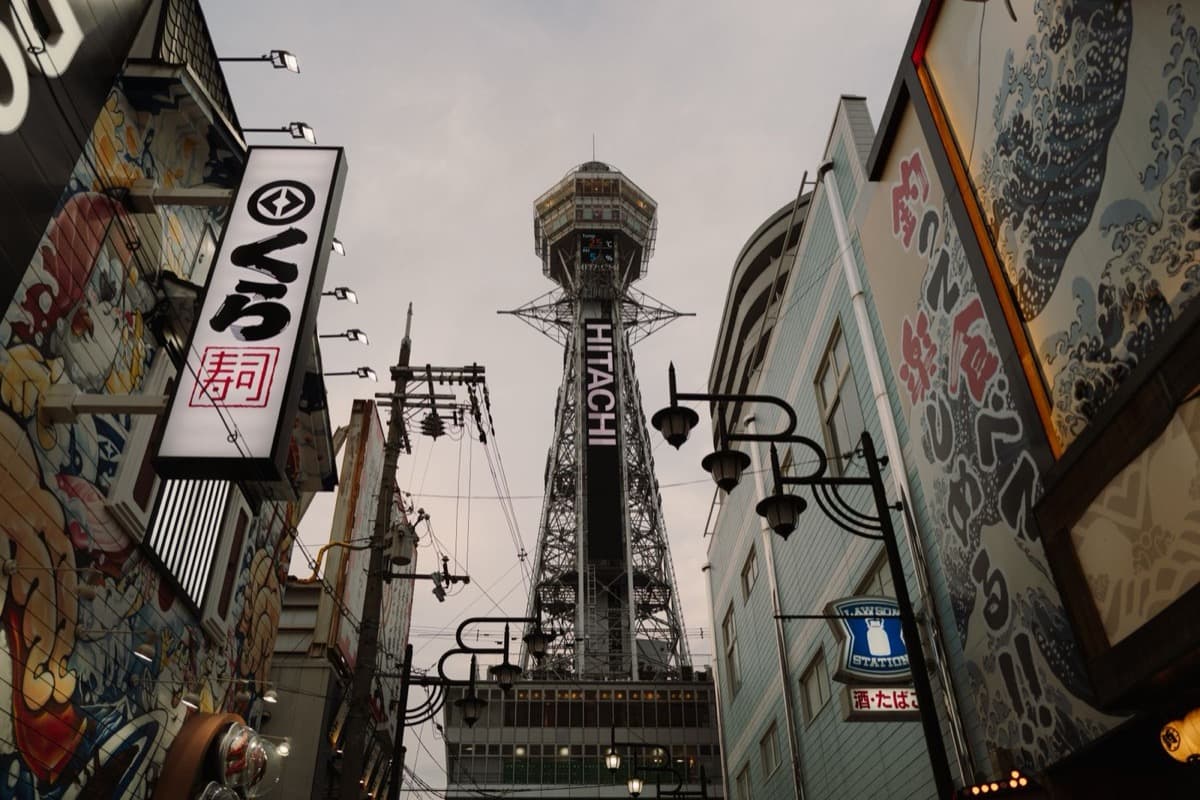
The castle walk ends at Aoyamon, about ten minutes on foot from JR Osakajokoen station, where the JR Loop Line runs south to Shin-Imamiya for Shinsekai, the district engineered in 1912 to be Osaka vision of the future and beloved today precisely because it never became one. Its centrepiece is the rebuilt Tsutenkaku Tower; around it run the retro streets of Jan-Jan Yokocho, hung with fugu lanterns and images of Billiken, the district lucky god. Walk it with the Shinsekai: The New World That Time Forgot tour, which follows the paradox from the tower out to Shitenno-ji, a temple thirteen centuries older, and the Abeno Harukas skyscraper, the actual future rising just to the south.
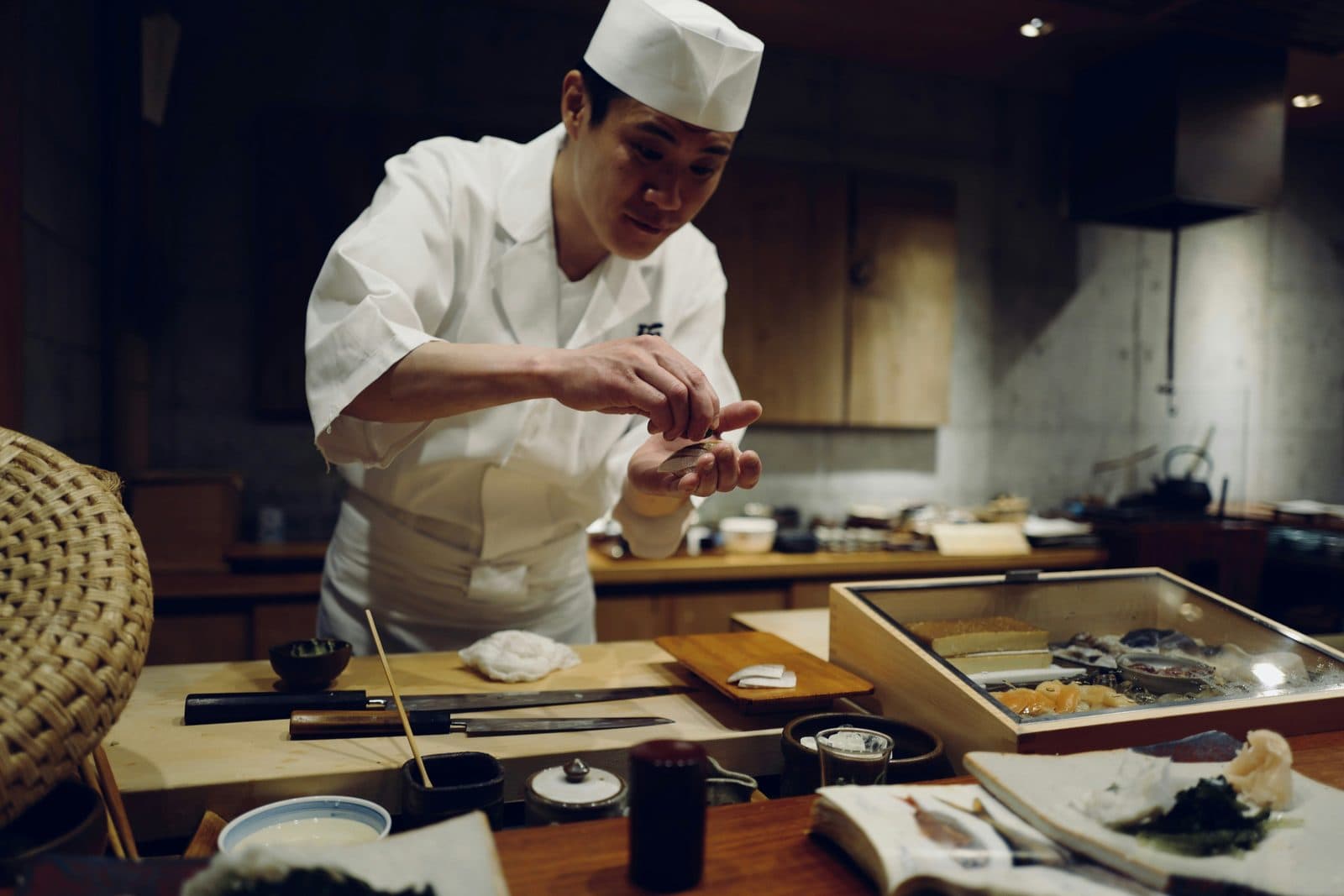
Shinsekai is also the home of kushikatsu, Osaka deep-fried skewers, and the district where the famous no-double-dipping rule was born. This is the right afternoon stop for a plate of them. See what to eat in Osaka for how to eat kushikatsu without breaking the one cardinal rule, and for the two lucky-god and Billiken stories behind the Billiken of Shinsekai.
Evening: Dotonbori and the nation kitchen
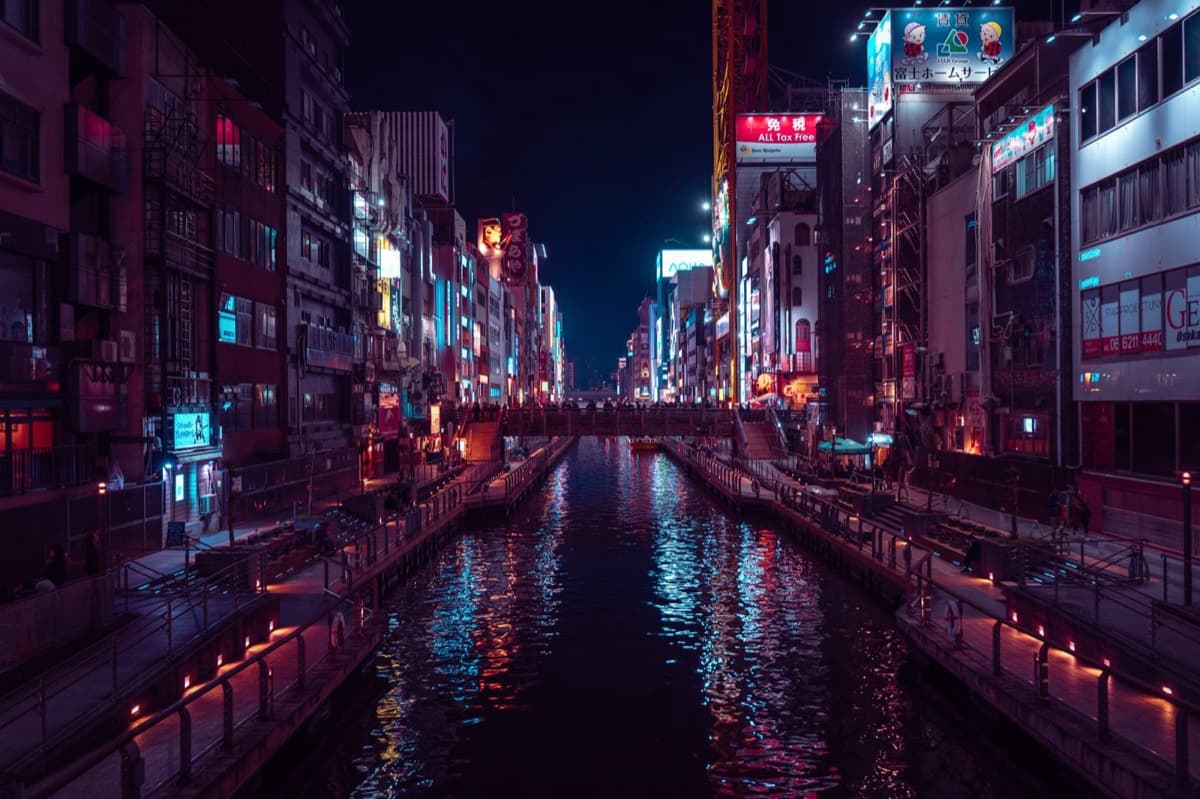
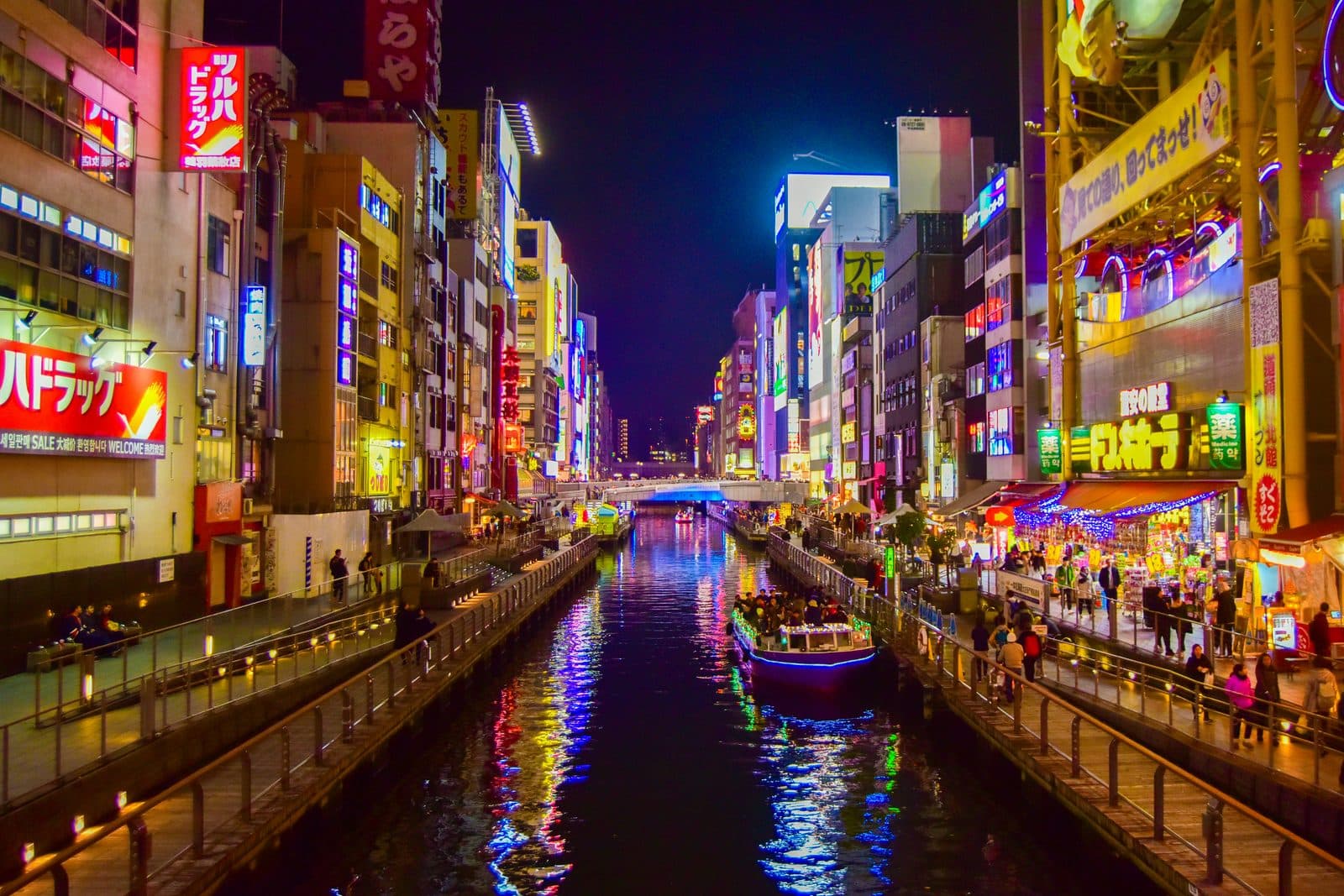
As the light goes, take the Midosuji Line north to Namba and walk into Dotonbori as the neon comes on. This is Osaka loudest street, mirrored in a canal dug by hand four centuries ago. Start at the Ebisubashi Bridge under the running Glico sign, then follow the water past the old theatre row and duck into the hushed stone lane of Hozenji Yokocho, where a moss-covered Buddha sits a block from the carnival. Walk it slowly with the Dotonbori and Minami: The Nation Kitchen tour, which shows how every gaudy surface sits on a dated, deliberate decision: a canal engineered on purpose, a district zoned for theatre, and a word this city coined for its own appetite.
End the day the way Osaka intends, at a table or standing at a stall. The tour finishes at Kuromon Ichiba Market, the covered arcade known as Osaka kitchen, and the blocks around Dotonbori are wall-to-wall takoyaki, okonomiyaki, and teppan counters. That is the point of the whole route: a merchant city that measures wealth in flavour, so let the day end in it. The Dotonbori canal founding story is a fitting close.
The one-day route at a glance
| Block | Where | Anchor tour |
|---|---|---|
| Morning | Otemon Gate, Octopus Stone, Main Keep, Toyotomi Stone Wall Museum, Yamazato-maru, Gokurakubashi, Aoyamon | Osaka Castle: The Castle Beneath the Castle |
| Afternoon | Tsutenkaku, Jan-Jan Yokocho, Shitenno-ji | Shinsekai: The New World That Time Forgot |
| Evening | Ebisubashi, Glico sign, Hozenji, Kuromon Market | Dotonbori and Minami: The Nation Kitchen |
Plan the rest of your trip
One day covers the essentials. For how many days Osaka really deserves, how to get around, and when to go, read the Osaka travel guide. For where the food culture actually lives, read what to eat in Osaka. For every route in the city, see the best self-guided walking tours in Osaka, or browse all Osaka tours. Every tour is free to start: the introduction and first stop play in full, and every later stop plays a short preview before an optional purchase.
Frequently asked questions
- Can you see Osaka in one day?
- You cannot see all of Osaka in a day, but you can see its essentials well. A focused day covers Osaka Castle, the retro Shinsekai district, and Dotonbori, three of the city most iconic areas, linked by the single north-south Midosuji subway line. Trying to add Universal Studios or a Kyoto or Nara day trip on the same day means giving up the city itself, so most travelers save those for a second day.
- What is the best area to base a one-day visit to Osaka?
- Base yourself in Minami around Namba or Shinsaibashi, on the Midosuji Line. Namba puts you a short walk from Dotonbori and Kuromon Market and one straight subway ride from both Osaka Castle (via Tanimachi 4-chome) and Shinsekai (via Tennoji or Dobutsuen-mae). Staying on the Midosuji Line keeps every stop on this route within about fifteen minutes of your hotel.
- How much walking is a one-day Osaka itinerary?
- The three audio walks add up to about 6 km, most of it flat: about 1.4 km inside Osaka Castle, about 3 km through Shinsekai, and about 1.5 km in Dotonbori. On top of that come the walks to and from stations and any wandering between food stops. Wear comfortable shoes and treat the food stops as part of the plan.
- Do I need to book anything in advance for one day in Osaka?
- Almost nothing. The castle park, Shinsekai streets, and Dotonbori are all free to walk, and only the castle keep interior charges admission (1,200 yen for adults, which also covers the new Toyotomi Stone Wall Museum; checked 18 September 2026). The one thing worth booking ahead is a busy kushikatsu or teppan restaurant on a weekend evening. The self-guided audio tours that anchor each block are free to start and can be downloaded in advance, so you can walk with narration even without signal.
Ready to experience it?
Dotonbori and Minami: The Nation's Kitchen
75 min · 1.5 km · easy
More from Osaka
Explore more at your own pace.
Osaka Travel Guide: How Many Days, Getting Around, When to Go (2026)
What to Eat in Osaka: A Food Guide (2026)
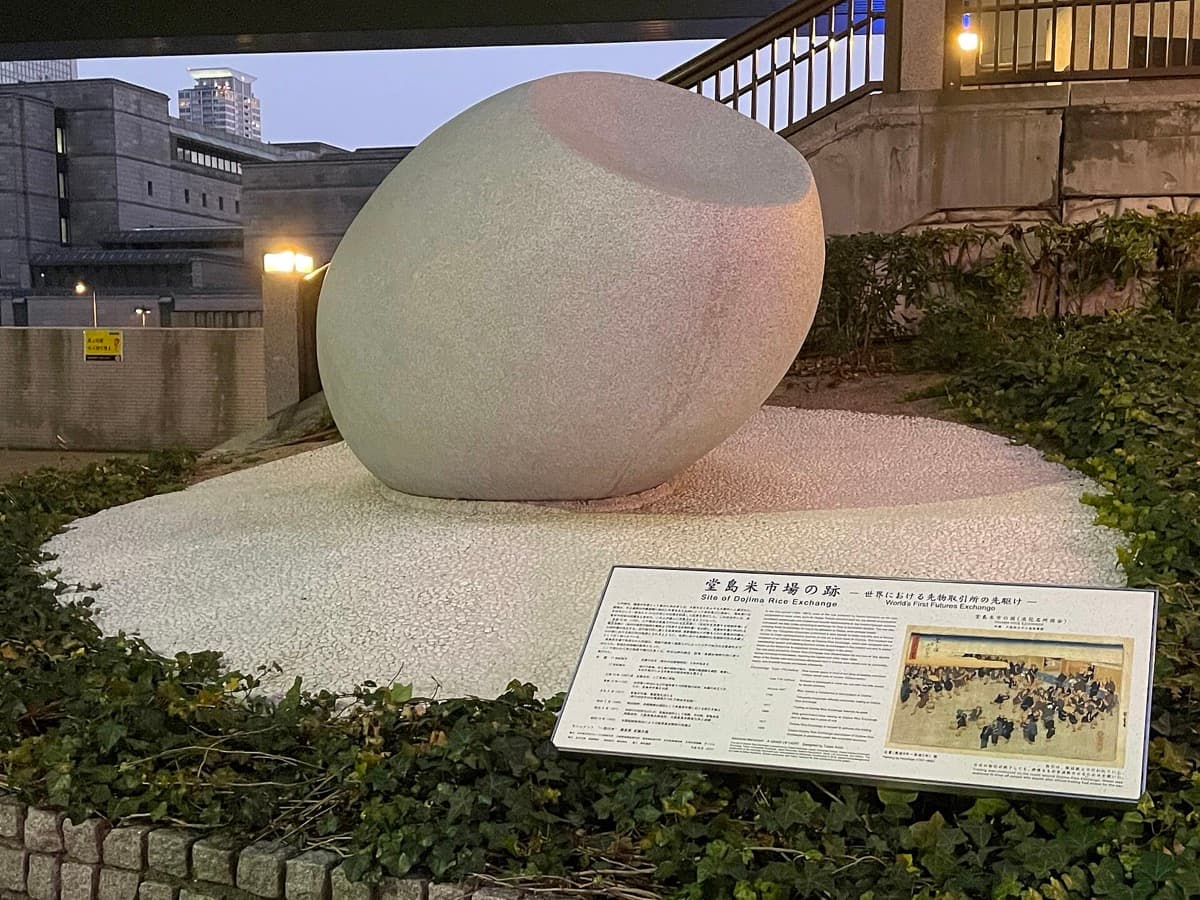
The Dojima Rice Exchange: How Osaka Invented Futures Trading Before Wall Street Existed
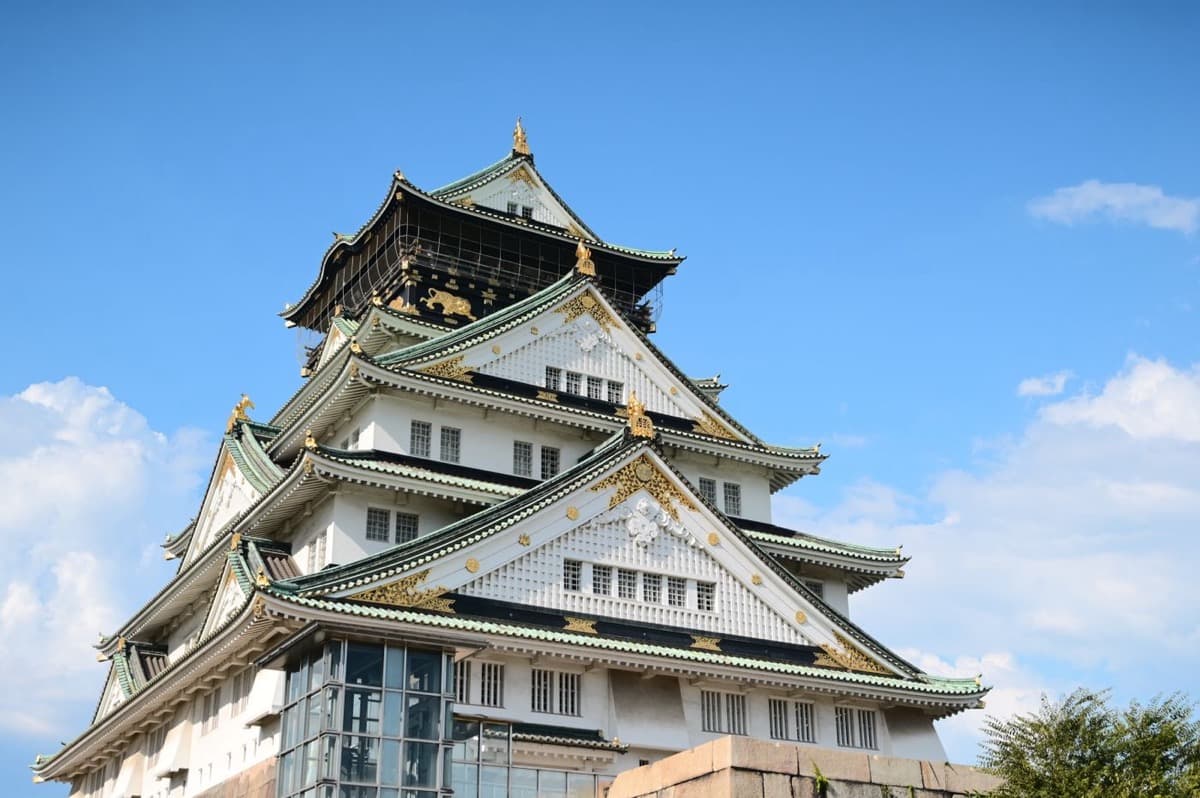
Osaka Castle: The Warlord's Fortress That Is Now a Concrete Museum
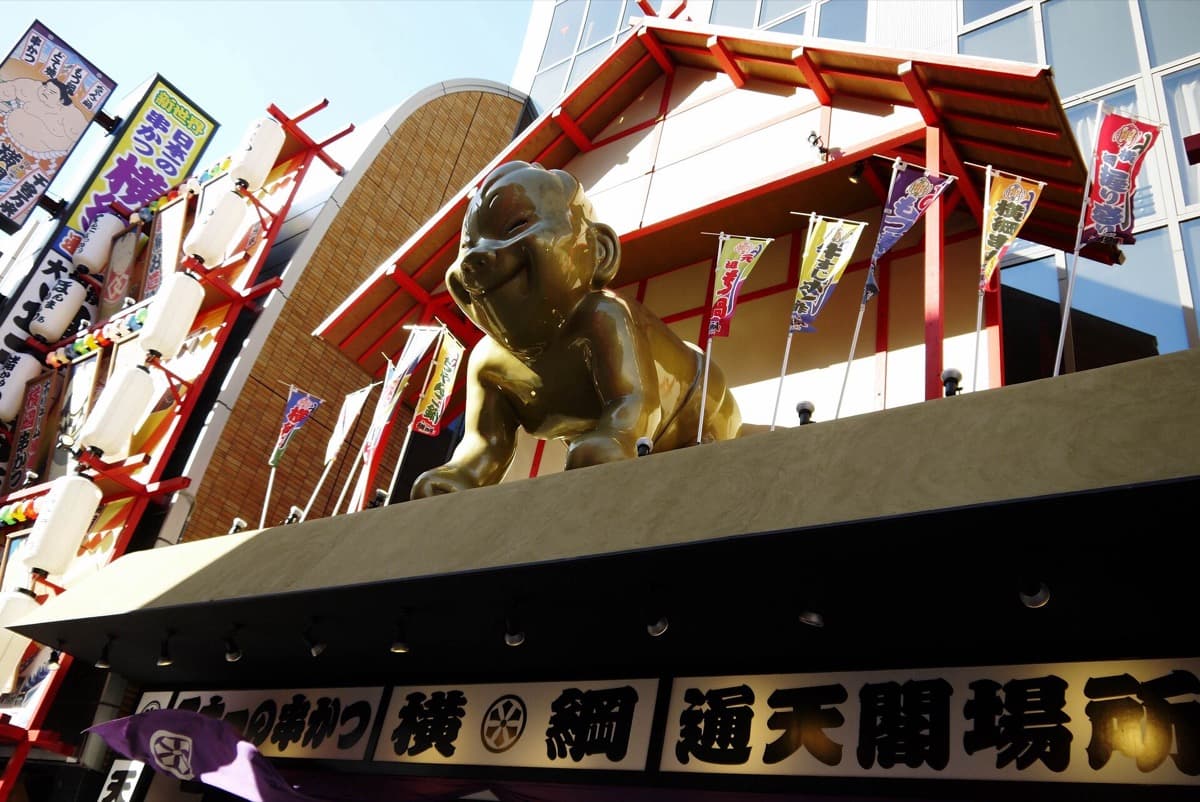
The Billiken: How an American Lucky Doll Became the God of Osaka's New World